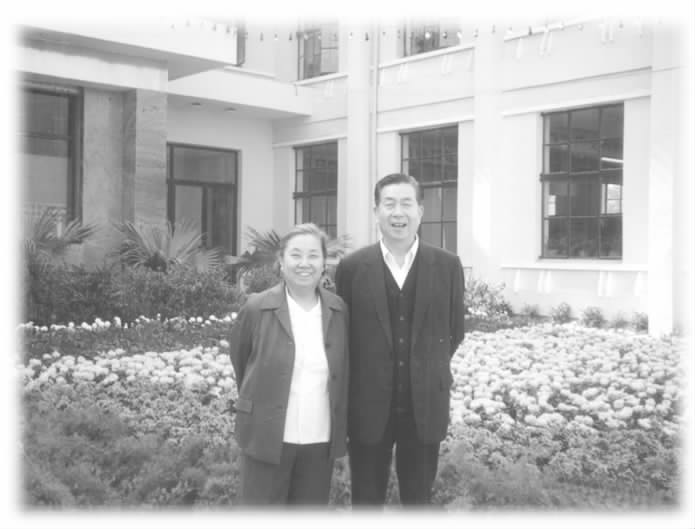
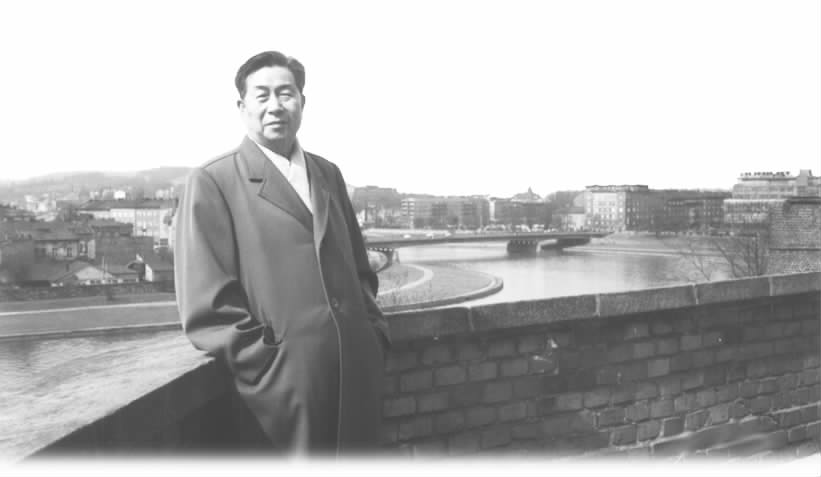
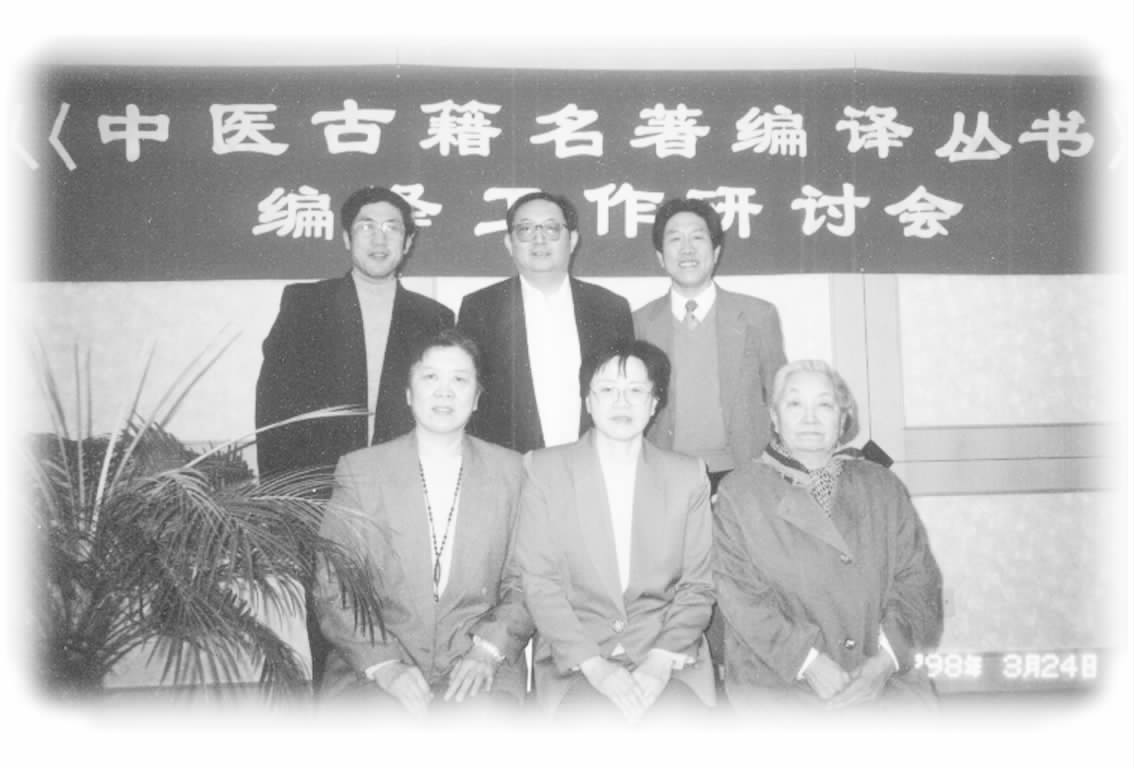
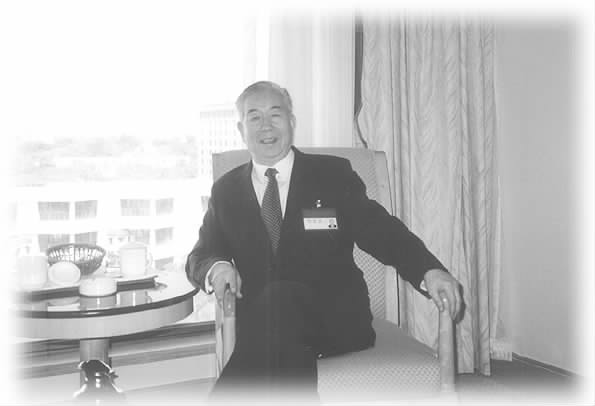
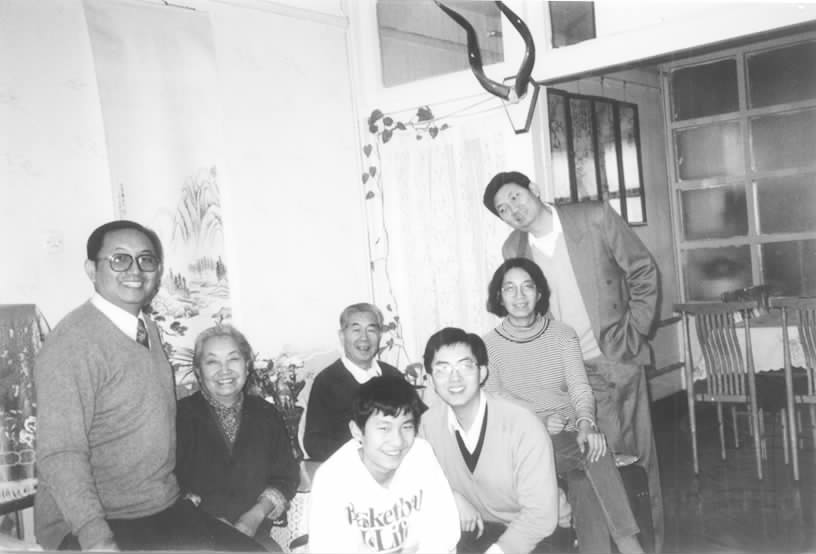
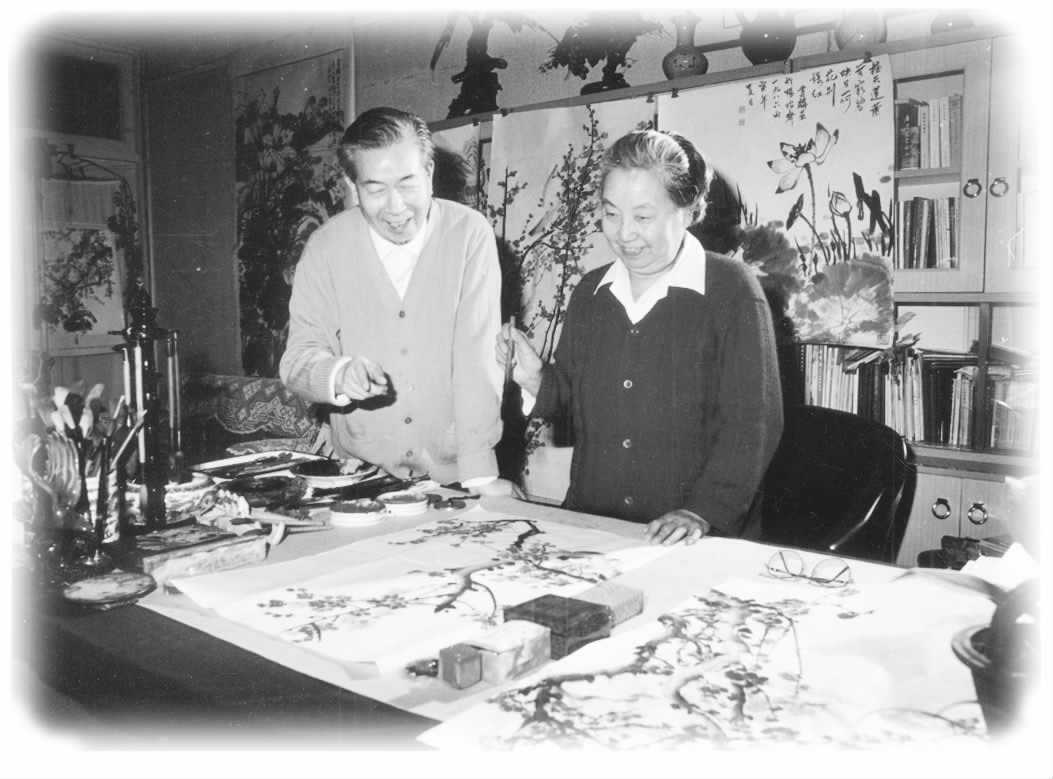
Old Cui — My Close Friend and Brother
Zhou Ming · March 2001
I have known Comrade Cui Yueli for nearly 60 years. Over those years, work contact or no work contact, in the anti-Japanese base or in enemy-occupied territory, we kept in close touch. We were comrades on the same front, close friends, brothers without reserve. When the news of his sudden death reached me, I was shaken; before his portrait I could not hold back my grief, tears streaming, unable to speak.
In 1941 I was transferred to the North Bureau Party School for study. We had a weekly current-affairs discussion, and Comrade Cui Yueli joined as a school staff member. That was how we met. We both came away with deep impressions. After study we played basketball together or walked off-campus to talk. In early autumn I came down with dysentery; to avoid infection, I was put in a room alone. He was the school's doctor and came often with medicine; so we had more chance to meet and talk. From childhood pranks to how each of us joined the revolution, we spoke of everything — and the conversation ran easily.
In autumn 1941, the Japanese launched a great mopping-up of our base. We were in the leading organs' area at Wakou Chuan, Pingshan — we had to move at once. My dysentery was not yet cured, and I was put into the patients' detachment, led by veteran Red Army comrade Chen Jun and Comrade Cui Yueli. The task was hard: besides patients, there were pregnant women and weaker female comrades. We moved into the great mountains of western Pingshan — a branch of the Taihang. The tallest peak was called Yunshangping; we were placed in a small hamlet on Yunshangping's north slope, halfway up the mountain, called Shangzhuangzi, with only five or six households and nearly twenty of us. Chen Jun was old and a veteran; to care for him, Yueli took up nearly everything himself — learning the enemy's movements, the terrain, and scraping together supplies.
The most dangerous thing was the supply-gathering. The mountain area was poor; the villagers' own grain was not enough to eat, and we had to go out to villages beyond the mountains. Each trip Yueli led the cook himself. One village, Maoshi, lay on the road the Japanese used when mopping up from Xiakou to Hongzidian; our militia often laid mines there. One day we heard explosions and knew the enemy was out. Yueli grabbed a rifle, pulled me along, and we ran down the mountain to gauge the situation and, with the Eighth Route Army and the militia, strike at them. Another time news came that the Japanese were about to climb the mountain. Yueli moved us higher at once and stayed back at Shangzhuangzi himself to handle any sudden situation. Because Shangzhuangzi was remote — a very small village deep in the mountains — the enemy did not come up. Their mopping-up dragged on for over a month. In that month Yueli hardly slept a calm night, and his high sense of responsibility, his composure, resourcefulness, and courage, left everyone with deep impressions. Every day I went with him to check the terrain and probe the enemy; it deepened our mutual understanding and our revolutionary friendship.
My wife Zhu Shiying was then working at the Pingshan County Party Committee, posted at Dong Huangni Village, where the Japanese massacre hit hardest. I heard that Shiying had died in it. As soon as the mopping-up ended I asked to detour through Dong Huangni; Yueli would not be easy and insisted on coming with me. In Dong Huangni, we found Shiying — still alive; we were beside ourselves with joy. But in the wake of the massacre, plague spread through the village, family by family. Yueli, setting his own safety aside, beyond treating the county cadres, went house to house treating the villagers.
In 1942 I was assigned to the North Bureau, posted at Handing Village; Yueli was also assigned to the North Bureau, posted at Laofen'gou — two li apart. We had more chance to see each other, ate together, played, walked, and discussed major matters at home and abroad. This was the period of our closest contact.
In 1943, to rebuild the Beiping-Tianjin underground Party — almost fully wrecked by the Nationalists — Comrade Liu Ren's Urban Work Department decided to send Yueli into the Beiping-Tianjin enemy-occupied area to rebuild the organization and open the work. At the time he had not a single contact, not a place to land. I had an elder brother, Zhou Longgao, a Party member from the Great Revolutionary period, long out of touch with the organization, then running a clinic in Tianjin. I wrote him a letter; Yueli hid it in the collar of his long gown. He took the alias Li Chunhe on reaching Tianjin, stayed at my brother's, and found work at the epidemic-prevention station as cover. He was skilled with relationships of every kind — gentle, hardworking — and the whole household liked him. When my brother was ill, Yueli gave him injections daily and helped nurse him. Later he often shuttled between Beiping and Tianjin. On the eve of liberation he used my brother to help move senior democratic figures into the liberated base.
In 1944 the base opened the Rectification Movement, and leaders from departments and Party organs at every level were recalled to take part. Yueli was recalled to Banyoudian, the Urban Work Department's location, in autumn 1944. Because underground Party comrades could not have outside contact lest they be exposed, he lived alone in a single room. I was an Urban Committee cadre, so I could come see him often — explaining the aim of Rectification, bringing documents, telling him the situation. That campaign was a wave of left-leaning over-expansion; a comrade who had crossed the blockade lines with Yueli was buried alive. He felt it very heavily; he did not believe there could be so many "Trotskyites" within our Party.
In 1945 Yueli was returned to Beiping; I was sent to Tianjin. November was cold; I had no work and no income, and had pawned even my winter clothes. Yueli came to Tianjin to see me; seeing how thinly Shiying was dressed, he went at once to an old contact and found her a fur gown. He often came to Tianjin to see me; I often went to Beiping to find him, sometimes staying with him. In 1946 my cover broke and I was pulled back to the liberated area, working on land reform in a county; only after liberation did we resume contact.
Beiping was the enemy's most important political, military, and economic center in the north. The White Terror was extreme. Yueli worked under the enemy's eyes — broad work with the common people, and work too on the Kuomintang's military and government power-holders. Every day he walked the knife's edge; at any moment arrest and death. Truly "his head hung at his belt." Yet his loyalty to the people's cause made him fearless; with composure and resourceful flexibility, not only did he keep his cover through five or six years, he rebuilt the underground from nothing into something, and from small into large — mobilizing, organizing, and moving ever more of the masses. The enemy could not break our organization; rather, we broke theirs from within and brought about the peaceful liberation of Beiping. A model case, no less, of our Party's underground work.
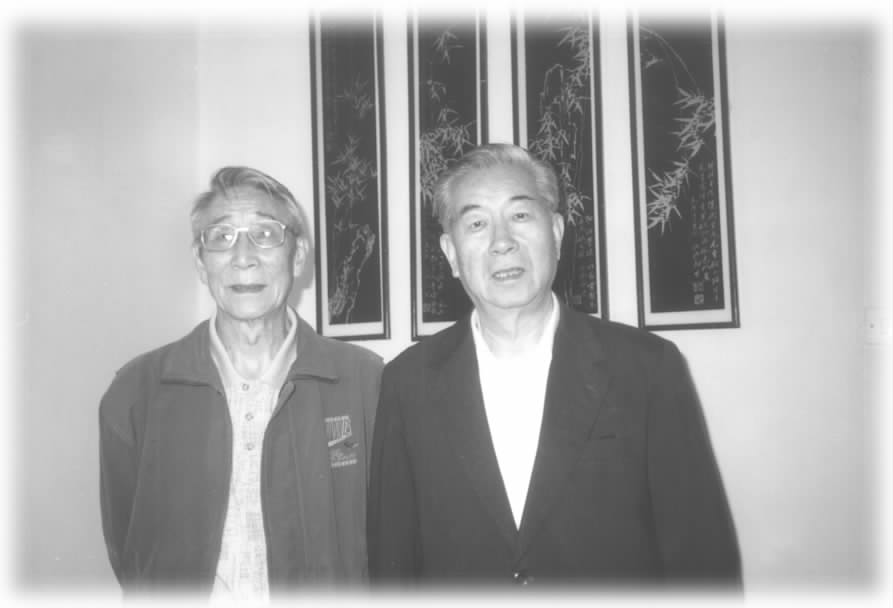
When the Cultural Revolution came, Yueli was framed and imprisoned; eight years without word, we could not see each other. I thought of him constantly. I heard that his whole family had been ordered to move to Jiaolin Jiadao, a poor quarter; I had my children ask after them, and I went myself to look at the two shabby single-story rooms. I did not dare enter then — it would only have brought trouble.
In 1975, released during the Cultural Revolution's late phase, I went to see him at the hospital. He was weak and his face puffy; one could imagine what he had gone through. Yet he showed no bitterness; as before, he spoke and laughed easily — did not bring up the torment, always attentive to the Party's image, unwilling to cast an ill light on it.
In our nearly sixty years of contact, I felt deeply how many strengths he had, worthy of remembrance.
His nature was open and candid, sincere and warm with people; he did not play at tricks, did not calculate, did not dwell on small matters, did not gossip; he loathed the schemes and the struggling against others.
He was approachable; high or low, he was warm, spoke freely, and made you at ease — yet he had his own judgment and never played the echo, ready to speak his view before anyone. At a city-committee meeting, the waitstaff, by old custom, poured water only for the heads; he raised the point at once — water should not be classed by rank; everyone at the meeting should have water. Even after he became an "official" he held no airs; everyone called him warmly "Old Cui."
He loved to help — rushed when others were in trouble. Long in the medical field, he knew hospitals and doctors, and many older comrades bearing wartime ailments turned to him for care; he never pushed them aside, and saw things through quickly. He never tired of helping place the sent-down children of old comrades into work back in the city.
His work went down into the grassroots. He cared about the masses; he went often to base-level hospitals to learn the situation and solve hard problems, and down into the countryside for investigation, offering ways to solve things. Beyond medical matters he watched the hardships of village people and passed the material to the right units.
Old Cui was politically firm, loved the people, was boundlessly loyal to the Party and full of confidence in its cause. Eight years of unjust prison, and he never voiced a complaint in front of others, never said a word against the Party; though his body was always ill, he worked diligently to his last breath. A Party member worth remembering; my closest friend and brother.
A Memorial for Old Cui, Three Years On
Zhang Wensong · June 2001
For decades we all called Comrade Cui Yueli "Old Cui." Those with an easy temperament tend to get that kind of affectionate handle — unchanging in life, unchanging in death.
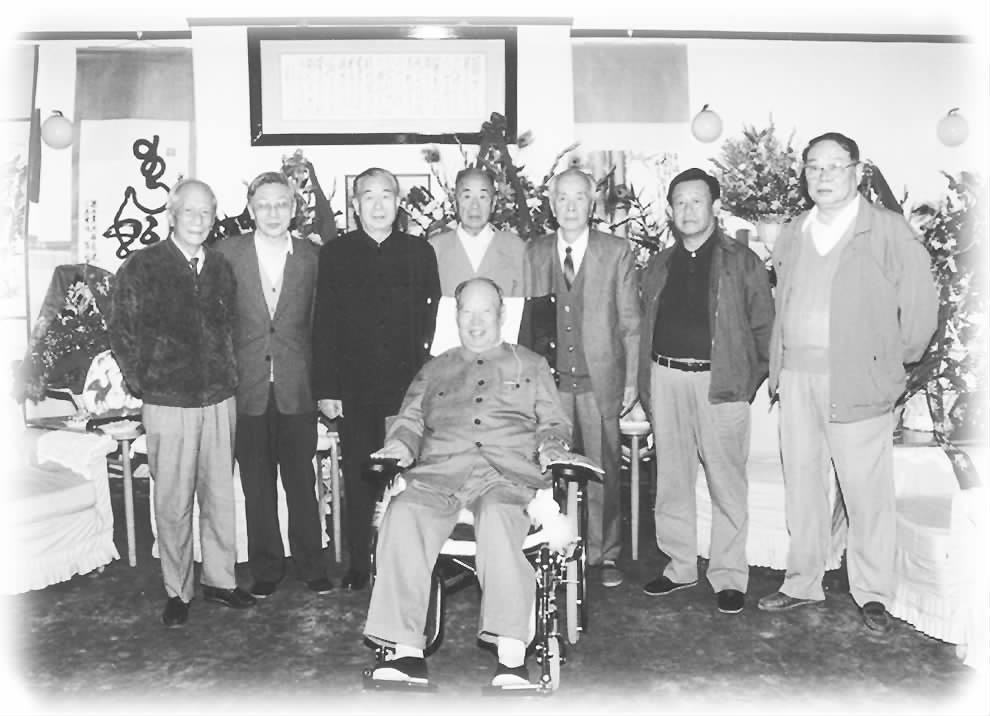
Old Cui was a man of quick action: say it and do it, clean and tidy, never dragging his feet; warm in nature, unchanged to the last. In the end he left quickly too — one stumble, down, and did not rise.
That day, hearing the news, my heart jolted, though I had long half-expected such a sudden ending — "his gait always in a hurry." Yet it struck me as unheard-of. That evening I went to see Shulin; she sat alone, sorrowful, and kept calm in speech — while I broke with grief, old tears streaming, could not hold myself.
Thinking back carefully, Old Cui's going so quickly seems to have been in his own anticipation too — he had prepared himself. That spring, asked to help chase my medical-record transfer, after I told him once on the phone I had not meant to press him again; he, on the contrary, kept calling every few days to ask whether it was sorted, and would not rest until it was. Soon after, he called again, asking if I had had my flu shot. I said not yet. He said: "You fear colds most — go get the shot, I'll call Fuxing Hospital." Within ten minutes, Dr. Li at Fuxing Hospital called: Minister Cui had called her and asked her to vaccinate me; I was to come at once. Old Cui said and did, and I went at once. Dr. Li, giving me the injection, smiled: "Minister Cui said he hates foot-dragging; he's all for vigorous action." I laughed too — a lifelike portrait of Old Cui in a sentence.
Now, looking back, Old Cui by then was already weak, his heart unsettled, and he stayed in. That Spring Festival we exchanged phone calls to greet; he said he only walked downstairs a little, rested most of the day, and to keep still he had stopped reading books and papers. Even so, he had not let my request slide and did what he could. I had not known at the time; recalling it, I feel ashamed.
I have been an old invalid, and for decades enjoyed Old Cui's particular care. In 1947, my lung illness flared and I coughed blood. He and I were both then underground in Beiping. Ill, I could not keep working, and reluctantly handed over my duties to him. That late autumn, under his and Comrade Li Xue's care, I was arranged to convalesce at Xiangshan and did not return to the city until before Spring Festival 1948. In summer 1948, my tuberculosis spread from lung to lymph and to the lumbar spine, with the spinal TB making it hard to stand or sit without pain. Effective drugs for TB were still few; to stop the disease, the Party organization bought me fifty gold-priced vials of imported streptomycin, and after his tiring day's work Old Cui would come to my lodgings each evening to give me the injection. Under his careful care the pain eased, and in October I was able to return to the liberated area to convalesce.
In truth Old Cui's own health was not good either. He had angina early on. Back in the 1960s he often said to me: "Don't think because you're always sick you'll live shorter — it may be that you outlive me, and I go first." He was still vigorous then, neat in dress, full of spirit, a lively man — I never took his words seriously. An old Chinese saying proved right: a chance word becomes prophecy — he really did go before me.
After stepping down, Old Cui stayed busy, holding many social positions — a man who couldn't stay still, running about all year, paying no mind to his heart disease. One year he went to Tibet. When I heard I was startled — how could he take such a risk? When he returned I asked; he said: altitude oxygen-thinness wasn't as bad as imagined; rest two or three days, take in extra oxygen, don't rush, get used to it, and you move normally. He spoke lightly, and said with some pride that he had now covered the whole country. Later I heard he had gone to the Northeast, climbed Changbai Mountain, and fell ill on returning to Shenyang — seriously. I called Shulin at once to ask, and learned that in the initial scramble they had used the wrong medicine; luckily Old Cui knew his own condition, switched to the right medicine he carried himself, and saved his own life. That year he was too ill to move and did not return to Beijing until the following spring. From then on his health steadily declined. He was a proud man, always wanting to be first, never soft — but after this brush he could no longer ignore his body. For several summers he admitted himself to hospital for snake-venom preparations, said to prevent thrombus. Sometimes speaking of illness he said he often felt palpitations, chest tightness, flared easily, and was much less strong than before — he planned to rest, do less. I took the chance to urge him to do less and mind himself. He answered: if old comrades have hard things, one cannot ignore them across the board; at most I sit at home and make a few more phone calls, ask someone for help — no strain at all.
Old Cui was warm-hearted, urgent in the public interest, glad to help — a man with the bold Yan-Zhao spirit of old. In the underground days, Comrade Yao Jiguang came to know him. Soon after Beiping's liberation, Yao was transferred to the southwest and, unable to take his family, entrusted his small son and an elderly nanny to Old Cui's home. Old Cui accepted at once. The old nanny was aged and sickly; he did not see her as a burden, treated her illnesses, and saw her through to her last breath. In that era, comrades helped each other through urgency without distinguishing yours and mine. Compared with today, where the seeing of profit overrides the sense of duty, it is another world.
Old Cui was also a man of rich feeling. Whether a joyous matter or an outrage, he was easily stirred. In November 1978, when Comrade Peng Zhen returned to Beijing from Shaanxi, comrades spread the news mouth to mouth; some one or two hundred went to the airport of their own accord to greet him. As the plane touched down, Old Cui, unable to wait, pushed to the front through the crowd, and clasped Comrade Peng Zhen's hand warmly with eyes brimming. The scene left Peng Zhen a deep impression; twice he said to me: "Old Cui has feeling — tears at the sight of you." In his later years, with his heart weaker, his feelings were more easily stirred. Once we both attended a forum on the publication of A Biography of Wu Han. When Old Cui's turn came to speak, reaching Wu Han's persecution he was overwhelmed — nearly unable to keep going. He stood and said: "I can't — I can't get too stirred; my heart won't bear it. I have to go." And he left the hall without looking back.
A man who did not hide his happiness, anger, or sorrow, whose feelings showed on his face; a man who spoke straight from the chest; a man of forthright temperament; a man looking up, cheerful — such a one is worth giving one's heart to. So Old Cui and I were — companions-in-arms for decades, hearts open to each other. Yet we were of different types. In his words: he was outward-facing, I inward. That typology is perhaps too simple — each character forms through complexity — but where mutual understanding and trust are deep, no subject untouched, no matter uncounseled, what does a surface difference matter?
To memorialize the departed is for those still living. Old Cui was cheerful and bright. Many years ago I saw Shulin sing Peking opera while Old Cui played the huqin for her accompaniment — a picture of harmony. In their later years, Shulin painted, Old Cui inscribed — calligraphy and painting joined. They gave me a painting-with-inscription once. I must soon mount it and hang it up, in memory of our precious past and our lasting friendship.
He Did Much Real Work for the Minority Peoples
Ma Yuhuai · March 2001
On the third anniversary of Comrade Cui Yueli's passing, thinking back on how — fifty years ago — he carried out the Party's ethnic policy and cared for the Hui community, my memory is fresh.
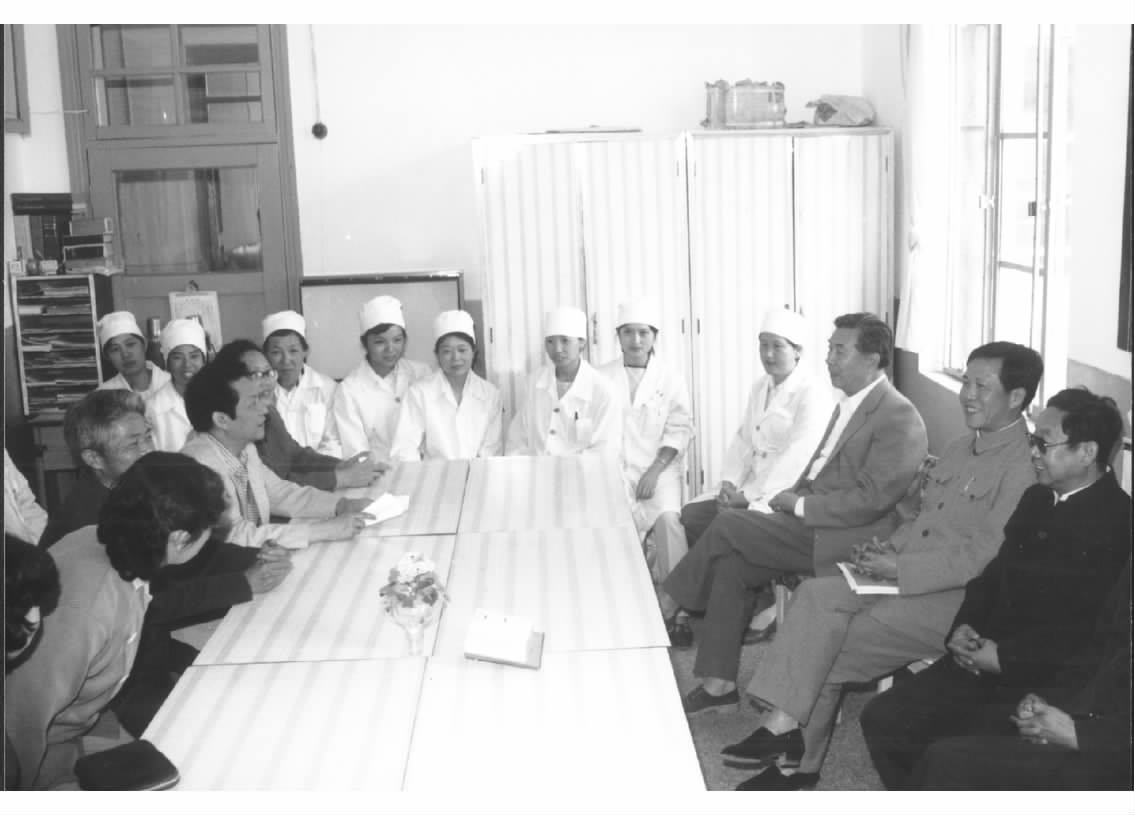
Comrade Yueli and I came to know each other on the shared revolutionary road. During the War of Liberation we both worked under Comrade Liu Ren's Urban Work Department of the Jin-Cha-Ji Border Region. I was then head of the Border Region's Hui Anti-Japanese National Construction Committee and secretary of the Urban Work Department's Hui Work Committee, in charge of mobilizing the Hui community to take part in the liberation struggle; Yueli led the underground work. So he and I faced the urban Hui work together.
He treated everyone with sincerity, and won the welcome and respect of the masses. He was especially careful in carrying out the Party's ethnic policy and respecting ethnic customs, and enjoyed a good name among the Hui. Conscientious in work, able to seize on the priority and pull the whole along, he gathered forces to win General Fu Zuoyi over — succeeding, and making an important contribution to the peaceful liberation of Beiping.
After liberation, the Hui gained politically, but the country faced hard times, everything needed building; living standards could not rise fast. The wish for work, medical care, better economic and cultural lives was urgent. Addressing education, employment, and medical care for the Hui was pressing. At the time I was director of the Beijing Civil Affairs Bureau, and Yueli headed the Municipal United Front Department. Faced with the low educational level inherited by ethnic minorities, ethnic education had to be expanded, opportunities opened for Hui youth — lifting political, scientific, and cultural levels, raising employment levels, gradually solving the de facto inequality left among our peoples. He attached great importance to ethnic education. Yueli and I reported to the Municipal Committee on the discontent and demands of the teachers and students of the three Hui schools — Chengda Normal, Northwest Middle, Yanshan Middle — who strongly asked the government to take them over. The Municipal Committee and government took it seriously, won the consent of the North China People's Government Higher Education Commission, and on April 7, 1949, formally took over Chengda Normal School. I served as principal, Yang Mingde as vice-principal; we set to reorganizing and remaking the school, and its teaching quickly got back on track — a fresh new face.
Northwest Middle and Yanshan Middle were still struggling. The Hui community urged the government to make them public and merge them with Chengda Normal into a Hui College. With the Municipal Committee's backing, Yueli and I brought the intent to the Higher Education Commission. The Commission at once formed a preparatory group, with me as head, to take the schools over and found the college. After three months of intense work, on October 6, 1949, the first institution of higher education for the Hui — Beijing National Hui College — was founded.
To address the narrowness of employment paths for the Hui, the municipal government decided that a certain quota in recruiting, transferring, and employing would go to ethnic minorities. The Hui and all circles warmly backed this. Yueli actively carried this through in his scope, with good effect on Beijing's ethnic work — and a model effect for ethnic work nationwide.
At the outset, city-wide medical conditions were poor; seeing a doctor was hard, admission was hard — for the Hui, harder still. Yueli and I arranged for the Puci Charitable Hospital (a private Hui hospital) to be taken over by the government and turned into the Hui Hospital. With Comrade Liu Ren's approval and guidance, we brought the Hui doctor Shen Chengzhang from Jiangsu to be its director, assembled a team of Hui doctors, and with government funding and equipment solved the Hui's hospital-care problem.
Comrade Cui Yueli always cared for and valued ethnic-minority work. He did a great deal of real work for ethnic-minority peoples.
Mr. Li — A Good Friend of Our Whole Family
Song Rufen · April 2001
Before Beiping's liberation, only a few comrades came regularly to my home to meet or discuss work — four or five. Among them were two "Mr. Li": one was Comrade She Diqing, the other was Comrade Cui Yueli. Comrade She was on the heavier side, and my mother called him, behind his back, "Fat Li"; Old Cui had a clean, delicate face and was thinner — she called him "Thin Li."
My mother was particularly fond of "Thin Li." Whenever he came, she was very happy. Why so? Of course out of respect for his near-death revolutionary courage. But also for two other reasons. First, "Thin Li" had a refined face and a gentle bearing. That may be hard to understand today, but half a century ago such a thing mattered to an older woman like my mother (formerly a primary-school teacher). People in Nationalist-held areas often imagined Communists as either thick, burly men or wild-haired storm types; seeing such a cultured underground leader, she was genuinely pleased and felt her son could take heart from such comrades.
The second reason: "Thin Li" cared about his comrades, warm toward them. Underground comrades held a strong affection for one another, and on this front Old Cui stood out — every visit to our home brought warmth. Others usually came in and out quickly — business done, gone — but at some point Old Cui had become my mother's close friend, and "Uncle Cui" whom my daughter loved. In early 1948, when I had pulmonary tuberculosis and coughed blood on rising, he had me come to the radiology department at Tongren Hospital to find him, and took the X-rays himself. Even after Beiping's liberation, Tongren continued to take chest films for me — later Comrade Yu Yiti, head of radiology, and Dr. Zhang took them for me; with good relations with "Dr. Li," they extended it to me as well.
After liberation, some comrades who once came often during the underground days, being busy, rarely called by; "Thin Li," his post higher now, still came often to see my mother. Not only my daughter adored Uncle Cui, but even my small granddaughter came to revere him as "Grandpa Cui" — once, because I wouldn't quit smoking, she phoned "Grandpa Cui" (then Minister of Health) to report me.
Weather holds unexpected storms; the Cultural Revolution swept across the country, and the Beijing Municipal Committee fell overnight. In September 1966 I was imprisoned at "Anti-Revisionism Fort" at the foot of the Great Wall, in the same cell as Old Cui. I was deeply dispirited then; Old Cui's reassurances helped me settle somewhat. After "Anti-Revisionism Fort" we parted, and did not meet again — until nine years later, in 1975, when he was released from Qincheng and came home. Then though his bearing was as before, his face was drawn and his eyes dull; he had been tortured at Qincheng, and some mental damage remained. Oddly, he would often lose his temper with others, but with me was both happy and warm.
After the smashing of the Gang of Four he soon recovered and was again at vigorous work; we were all glad for him. Unexpectedly, three years ago he had a heart attack on a trip away from Beijing. In 1996 I had surgery; one day he came by himself from Muxidi Building 22 to Building 24 to visit me. My wife and I were uneasy: "Why come and see me, when you are worse off?" My wife quickly saw him home. By then his head was heavy, his feet light; his gait was unsteady.
We did not imagine he would leave us so early. Whenever I recall the underground days half a century ago, the working years in Beijing after liberation, or the shared hardships of the Cultural Revolution, his handsome, stubborn face rises before me. Time passes, but our remembrance of him will not be erased. The Communist he was lives on in our memory.
A Few Recollections of Cui Yueli
Di Zicai · March 2001
Comrade Cui Yueli has been gone three years, yet the old days stand before me. He and I met in the autumn of 1939, in the fire of the "counter-sweep." We were both around twenty, both working at the CCP Jin-Cha-Ji North Bureau. I was a secretary at the Bureau's secretariat; he was a doctor at the Party School. When the counter-sweep began, the leadership sent the Bureau organs and Party School (each over two hundred people) into the mountains north of Fuping, Hebei, for guerrilla action. After a day's march of over eighty li, the Bureau people lodged at Shang-ganling village, the Party School at Xia-ganling, about two li apart. Fuping was then the one county seat in the Jin-Cha-Ji Border Region that the enemy had not occupied; the work had been opened earlier, our Party organs and mass organizations had a solid base, and activities had more favorable conditions. By mischance, after dinner that evening I asked the guard unit to post sentries near Wuwangkou village to the west. By eight that evening they clashed with Japanese troops out of Datong, Shanxi, moving on Fuping. Enemy shells and bullets rained on our two villages, and our two units moved into the mountain gorge to the northeast. We still had little clarity on either side's situation; this was our first such large-scale counter-sweep. After three days and nights of marching, we broke through the encirclement and reached Mazhuang, over two hundred li from Fuping. Three days and nights of movement — almost nothing to eat — the sick numbered many. I was in charge of the administrative affairs of those two-hundred-plus on the guerrilla move, and I went to the Party School many times to find Comrade Cui Yueli to treat the sick. The Bureau comrades all praised: "Doctor Cui Yueli is really good — he has saved us sick folk much trouble." That is how we met.
In early 1940 Comrade Liu Ren moved from secretary-general to head of the Bureau's Organization Department, and I transferred at the same time to Organization, where I often went to the Party School to brief on cadres and hear reports. Our contact rose. Further, my wife Hu Li and Comrade Cui Yueli were classmates at the Party School — deepening our bond.
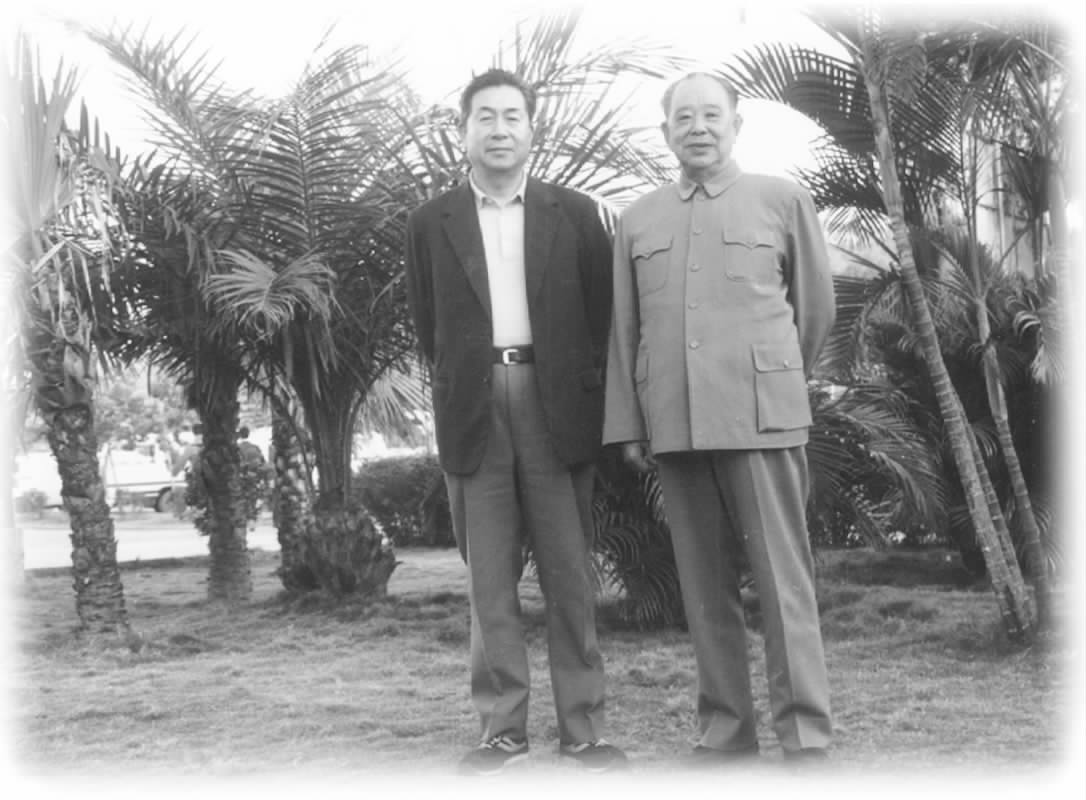
The 1941 great "sweep" by Japanese troops against the Jin-Cha-Ji Border Region ran from August 3 to October 16 — more than two months, the largest and cruelest. The Japanese brought 70,000 well-equipped troops, concentrated against the North Peak region, in an unprecedentedly brutal sweep — the "iron-wall encirclement" and the "three-alls." They hoped to wipe out Jin-Cha-Ji in one stroke. Under the Central Committee's instruction and Commander Nie Rongzhen's leadership, all our soldiers and civilians fought bravely and in the end broke the encirclement, winning a great victory. But base-area losses were heavy; about 80 percent of soldiers and civilians were wounded or sick — scarlet fever, hepatitis, malaria especially. Food and healing became the two great matters for recovery.
During the sweep, the Bureau organs moved with the army to the outer line to the west. At Liu-mu-yuan village west of Lingshou, Comrade Liu Ren suddenly had a stomach-ulcer attack, vomited blood heavily, and could not go on. The leadership had me take nearly ten guard and liaison staff to a nearby mountain to conceal and treat him. After a month, with his condition steadied, I was sent with a courier to the Party School's original dispersal area (around Gao-jia-zhuang and Su-jia-zhuang) to find scattered staff and students and to gather them at a planned assembly point for recuperation and to restart classes. I was to find Cui Yueli and Zhou Rongxin in particular, and have them dig up the concealed medicine and grain so that we could solve the food and treatment problems. Liu Ren also asked Cui Yueli to send several comrades who knew the area to Xingtang and Xinle to buy more medicine.
Liu Ren said, "Cui Yueli is a doctor of real experience and is familiar with Chinese medicine — have him put everything into treating the school's sick students and bring them back to health quickly for classes." In mid-November, when the Party School opened, I went with Liu Ren to the opening ceremony. Liu Ren said to Cui Yueli: "Comrade Yueli, in this cruelest counter-sweep you gave strength to the Party, did merit in treating the wounded — on behalf of the organization, thank you." Cui Yueli was so moved he almost could not speak.
Cui Yueli was from Shenxian, central Hebei, and had learned and practiced medicine in Anping at fifteen or sixteen. His forebears had kept a Chinese pharmacy in Anguo, sitting at the counter to see patients. Anguo was a famous Chinese-medicine distribution center in North China. He knew both Western and Chinese medicine. In war years, short of medicine, he drew on his heart of devotion to country and people, playing a large role on the health front and in urban underground work.
In November 1975 I was industrial secretary of Qinghai and came to Beijing for the national planning work conference, lodging at the Qianmen Hotel. An old comrade told me Cui Yueli had been released from Qincheng Prison and was living in a dormitory in the Chongwen district. The next afternoon I went to see him; he was out, a young boy was home, and I left my name and room number, saying I'd come another evening. Within two hours, he came to the Qianmen Hotel with the boy to see me. Nearly ten years of prison had ravaged his body and mind; his face was pale, his eyes a little dull. We had not seen each other for years and were beyond words to see each other again. He said he'd just come out, knew nothing of what had been going on, and asked me to brief him.
I told him straight: Lin Biao, the great villain, had died in a plane crash at Öndörkhaan in Mongolia, and the Lin Biao counter-revolutionary clique had been wiped out after September 13; that the Jiang Qing counter-revolutionary clique was desperately trying to seize Party and state power, with no rest at any level, and production and work everywhere were breaking down… and told him Premier Zhou was very ill. We spoke for over two hours. He was very moved. I urged him: "Getting out is good; recover first, and be careful talking with people you don't know well." Because we had both worked under Peng Zhen and Liu Ren in the war years, when Peng Zhen and Liu Ren were labeled "counter-revolutionaries" we two had been smeared as their "black claws," and were among the first "cowshed" victims in the early Cultural Revolution. Later Yueli was held in Qincheng for nearly ten years.
After the Third Plenum of the 11th Central Committee, through setting things right and the application of policy, we gradually returned to work. Comrade Cui Yueli went back to his own trade and became Minister of Health. Though his health was poor, he threw himself into the country's medical work, to take back the lost time — often out on trips, always down to the front lines of medical practice.
For nearly twenty years since, we lived in the same apartment building, both coronary-disease comrades; our meetings multiplied and feeling deepened. Yueli was plain in character, for country and people; a comrade of virtue, talent, and deeds. His stance was firm, his Party spirit strong; he was a vigorous innovator. I miss his openness, his approachability, his style of linking with the masses, and his revolutionary temper.
Through Storm and Mist, Remembering the Past
Liu Kexing · June 2001
As I pick up the pen for this piece, my heart is cold and mournful. Comrade Cui Yueli was loyal to the Party, his achievements remarkable; at the height of his powers, still pouring himself into the Party's cause, he was framed and ravaged in the inverted world of the Cultural Revolution, and left us too early, worn out in body and spirit.
I cannot help thinking of Comrade Li Bingquan. As his wife, I grieve that this selfless Communist was persecuted to death in the Cultural Revolution. Bingquan and Yueli had both been underground Party members in Beiping; they had a stretch of history-making cooperation — in laboring for the peaceful liberation of Beiping.
It was the latter half of 1948. Chairman Mao, deploying the Ping-Tianjin Campaign, called for "winning the central-army troops to surrender without a fight"; in mid-December he directly directed the talks with Fu Zuoyi. Beiping's peaceful liberation was a great victory of our army's joined military and political effort. The underground Party in Beiping did remarkable work.
As early as spring 1948, Comrade Liu Ren, head of the Urban Work Department of Jin-Cha-Ji, instructed the Beiping underground to find people connected to the top of the "Bandit Suppression Command" and work to bring General Fu Zuoyi around for peaceful liberation.
The Beijing Xuewei (the underground organization formerly in Beiping and Tianjin), under She Diqing and others, opened work carefully through many channels — including drawing out Fu's old teacher Mr. Liu Houtong to persuade him to accept talks. In autumn 1948, Comrade Cui Yueli, then secretary-general of the Xuewei, disregarding the enemy's tails and with life and death set aside, ran about for the peaceful liberation. He spoke with Liu Houtong many times, urging him to help Fu see the situation, hold the larger interest in view, preserve the ancient capital, and solve the Beiping question peacefully.
At the same time, the southern Ping-Tianjin Xuewei (the underground from Kunming, Chongqing, and elsewhere that had come to Beiping and Tianjin after V-J Day), under comrades Li Zhi and Wang Hanbin, listening to a report from the Zhiqing youth branch, learned about Li Bingquan's elder cousin Li Tengjiu, major-general chief of the Bandit Suppression Command's liaison office. The organization decided: send Li Bingquan to bring his cousin's thinking around, pushing Fu toward talks; transfer Fu Dongju (Fu's daughter, a Party member) from Tianjin to Beiping to urge her father to put down arms and negotiate.
In November 1948 the southern and northern Xuewei merged into one, jointly leading the Beiping underground. To keep a finger on Fu's thinking, Yueli kept single-line contact with Fu Dongju, meeting at Comrade Li Zhong's home at 62 Dong Huangchenggen — a Western-style cottage with a high wall, the home of what looked like a high official or rich man, good for cover. Almost every morning Yueli heard Fu Dongju's report on her father's state of mind, then passed it, via the underground radio, to the Central Committee. Commander Nie Rongzhen later said: to know the enemy commander's thinking on the battlefield this rapidly and accurately is rare in the history of war.
In early December, Northeast Liberation Army units had already entered the pass and completed the strategic encirclement and division of Beiping, Tianjin, and Zhangjiakou. Fu had no choice but to consider talks. Li Bingquan was assigned by the Party to go see Fu on behalf of the Beiping underground on the talks. On December 15 he led Fu's emissary Cui Zaizhi secretly out of the city to our front-line headquarters, opening the chapter of Fu's three rounds of emissary-sent negotiations.
The talks did not go smoothly. The first, on December 19, produced no result; on the 22nd the Central Military Commission ordered the annihilation phase; on the 24th Zhangjiakou was liberated; on the 25th the list of 43 war criminals was issued, Fu Zuoyi among them. On the 26th Fu's emissary Cui Zaizhi was urgently recalled by Bandit Suppression Command, and the talks broke off.
On the evening of January 1, 1949, Lin Biao and Nie Rongzhen met Bingquan and asked him to return to Beiping, face Fu personally, and convey the Military Commission's six-point instruction on the talks. On January 2 Bingquan set out for Beiping; on the 3rd he saw Fu and relayed the six points (including, "Fu has long been anti-communist; we cannot but list him as a war criminal"). Fu listened carefully but made no statement.
On January 5, per the Commission's instruction, Bingquan reported on his mission to the underground Party. At Li Zhong's home he met with Yueli and gave a full account; that day he returned to headquarters. That meeting with Yueli left a deep impression; his 1956 autobiography records it in detail.
After our army's strong offensive and the complex negotiations, an agreement was reached. On January 31, the ancient capital of Beiping returned whole to the people's embrace. One can see, then, the importance of Yueli's "Recollections of Winning General Fu Zuoyi to Defect" — its role in setting that history's record straight.
Yueli was a man of strong Marxist Party principle. His plain and kind character, his sense of justice, were universally recognized.
As the ten-year farce of the Cultural Revolution had just finished, and the common people emerged from the dread of chaos, social life was still muddy, sediment stirring up. Li Tengjiu, who had made a useful contribution to the Beiping talks, was already a CPPCC member at the outset of the new China. But during the Cultural Revolution he had been badly frightened, and in his old age was weighed down with illness. After the Cultural Revolution he was still coldly received, and finding care, and hospital admission, was hard. Later he told me himself: when he was gravely ill, it was Comrade Cui Yueli who got him admitted, so he was saved. As he said it, tears slipped out.
In the Cultural Revolution Li Bingquan was smeared by the rebels as a "betrayer-turned-enemy" — our loyal underground fighter turned into Fu Zuoyi's "negotiation representative." He was persecuted and died. I was made a "black-gang family member" and driven from our home. After the fall of the Gang of Four, Comrade Hu Yaobang ordered Bingquan's rehabilitation. At the time I was staying in an abandoned room at the Medical College; some people in the Chinese Medicine College's logistics, taking advantage of my absence, broke in, occupied the place, and carried off my belongings. I went to the college many times to demand the room back; they paid no attention.
At my wits' end, I wrote to Comrade Cui Yueli, laying out how certain people in the college had broken the law, pried open a private dwelling, and left me homeless. To my surprise, within a couple of days a warm reply came. He told me he had already contacted the college's president and asked him "to solve this quickly." Two days later the head of the logistics office came to apologize and the room was returned.
Yueli's upholding of what was right, his unbending standards, showed the Communist's noble devotion to the people. The letter of October 13, 1982, I treasure to this day; his deep friendship is carved in my memory.
Cui Yueli Was My Guide on the Revolutionary Road
He Zhao · April 2001
In autumn 1945, just after V-J Day, I returned from the liberated area to Beiping to do underground work. Soon my contact was transferred to Comrade Cui Yueli, and I came under his direct leadership.
I had been a young Beiping student; I'd spent only three or four months in the liberated area; I was a newly-joined Party member. Enthusiastic, yes, but very green. What communism really meant, how to be a Communist, how to do clandestine underground work — I knew little.
Old Cui met me on a set schedule — usually at Jingshan, Zhongshan Park, or the Taimiao (now the Working People's Cultural Palace). At each meeting, beyond hearing my situation and assigning specific work, he would speak about the political situation — what the communist ideal was, the task of the current stage, why a Communist had to keep improving and remaking himself. He also often spoke about underground discipline, keeping revolutionary backbone, concealment and lying low, accumulating strength, the mindset of long struggle, and how to handle enemy persecution. His reasoning went from the simple to the deep and was persuasive. At first, because he was a Party leader, my respect for him was mixed with a certain constraint and a hint of mystery. In time, I felt that his seriousness carried patience and warmth, and his caution everywhere came with ease — it left a deep impression. As for how to work, he truly taught me step by step without tiring. Once, on my way home from school, I happened to ride with a senior classmate in the same direction. Others said he was reactionary-minded, very active, possibly with political backing. In our casual chat he turned to how the Soviet Red Army had behaved in the Northeast, voicing complaint. I was sharply offended and could not hold back — I retorted that American imperialism had helped the KMT start the civil war, and that the Chinese people opposed it. When I reported this to Old Cui, he pointed out that I should not have engaged so directly.
He said: the fellow might have been deliberately probing; I should have quietly steered the talk away, not met it head-on, and observed the man afterward. He often reminded me that in student work you cannot rely on personal enthusiasm or rush for results. First get among them, blend deep in, become a real friend of the masses, build feeling, earn trust, and shift their thinking layer by layer. Don't show political color from the start — you'll be exposed, cut off from the middle majority, and damage the work. On meeting in public, he told me: never go straight to the spot; circle nearby first, watch for anything unusual. If you suspect a tail — whether on foot or by bike — deliberately take a quieter stretch where you can spot it, then cut through a busy street to shake it off. Change your look each time: a different coat, a different cap, a different bike; don't draw notice in dress or bearing. Later he handed me two contacts — progressive women I was to run, both working women much older than I was. How to move their thinking, how to gauge their work and awareness, how to raise membership with them — all of it he taught me piece by piece. With his patient guidance I went from a very green Party member to someone who could do some work for the Party.
In June 1946 the KMT launched full civil war, the underground situation deteriorated, and the organization had me pull back to the liberated area. I returned to the Urban Work Department of the Jin-Cha-Ji Central Bureau and took up cipher-translation work with the Beiping underground radio.
In winter 1948, the situation changed at root. The Liaoshen Campaign ended in victory, Huaihai was in sight, and the Ping-Tianjin Campaign was in active preparation. Comrade Liu Ren felt that once Ping-Tianjin began, contact between the Urban Work Department and Beiping's underground would be hard. It was the critical moment for the underground radio. To strengthen the underground force, it was decided I would return to Beiping to do cipher work.
Before I left, Comrade Liu Ren spoke with me personally — on the struggle, on my task, on secrecy discipline, and again and again, with weight, on revolutionary backbone. He asked me to set out quickly, not delay along the way, reach Beiping, and find Comrade Cui Yueli fast. Old Cui, as an Urban Work Department Party Committee member, oversaw all underground-radio telegrams; every cable coming and going was his. When I left I carried not only a new cipher codebook but eight photographed documents and specially-treated negatives — all to be handed over quickly.
On the early morning of December 1, 1948, deep cold, I disguised myself as a country woman from Dezhou, carrying a "residence permit" the Urban Work Department had forged. With an older man assigned to escort me, addressing each other as uncle and niece, we went by the traders' and peddlers' routes — traveling by day, lodging at night — and reached Tianjin three days later in the evening. The next morning, I took the train alone to Beiping.
All the way I agonized over how to reach Old Cui quickly.
My younger brother was an underground Party member under the Middle-School Committee; I'd hoped to reach him and through him reach upward. But midway, near the Cangzhou liaison station, I bumped into Comrade Yang Bozhen of the Student Committee, coming back from Beiping. In the brush past each other I asked urgently — only to learn my brother had typhoid, was seriously ill at home, and the organization had been light-touch with him. That path was closed. Nor could I casually open horizontal contacts with other underground comrades. What to do? All the way, I racked my mind, anxious.
What I never imagined — when I got off at Qianmen Station and headed for the exit, my eyes caught a glimmer: not far ahead, in the crowd, Comrade Cui Yueli was walking in briskly. His coat collar pulled high, a flat cap, a large face-mask — he was hurrying in, most likely to catch a train out of town. I could hardly believe my luck. I pushed through the crowd toward him and came right up to him. He started a little, and I whispered, "Let me find you quickly." He at once signaled me to go home and wait. That unlikely meeting — as if the spirit of Marx had intervened — settled at a stroke my greatest difficulty. My heart settled; I was overjoyed.
About two days later, Old Cui and Comrade Li Xue came to my home together. It was decided on the spot that I would move at once into Comrade Li Xue's mother's home. Comrade Li Xue's father was surnamed Jin; I would be cast as Jin-family niece, using the alias Jin Yiyi, and a small newspaper would run a fake "Jin Yiyi residence-permit lost" notice to give me legal cover. At this arranged "home," I began nearly two months of underground cipher work, until Beiping's liberation.
Within days of my arrival, the Ping-Tianjin rail line was cut by our army, and Tianjin was soon liberated. Beiping was surrounded; every day we could hear the guns. The talks with Fu Zuoyi for peaceful liberation continued. The dawn of Beiping's liberation was dimly visible; victory was in sight. But the KMT reactionary forces within the city were still rampant — military, police, gendarmerie, and secret police all running hard; the underground was under severe pressure; some comrades had been taken; the White Terror still hung over the city.
In this period, with contact between the Urban Work Department and the underground riding mostly on the radio, and with telegrams many, Old Cui came often in person to my residence to handle cables, beyond what the couriers carried. It was generally evening; he came on a bicycle with a Red-Cross medicine box lashed to the back. I guessed his public cover was as a doctor. By underground rules, we had a special sign at each visit to show safety — same for his contacts with other comrades.
One evening, long past dark, he should have come for a cable. I waited — and waited — uneasy. Finally he arrived. His face was grave, a little tense. He had hit a close call. He said he had gone first to another underground comrade. The sign was: if anything had gone wrong, chalk circles in white on the wall beside the gate. Of course, whenever real trouble hits, that sign needs the comrade's family or cover people to make. That day, at the gate, Old Cui saw no sign of trouble; he knocked, the door opened — and to his shock, several seedy-looking men, plainly secret police, stood inside. No retreat now; he wheeled his bicycle in, composed. It was a multi-courtyard compound with many households. The comrade lived in a room on one side of the passage between front and rear courts. As Old Cui neared the passage, through a window he saw more rough-looking men in the room — a stakeout. He knew something had happened. He kept walking, face calm, all the way to the rearmost court, thinking how to get out. He ran into an older woman there and said plainly: "I am a Communist. Please see me out." Without hesitation she picked up a child and walked him to the gate; at the gate she even said, "Come again when you have time." That woman, stepping forward without a moment's hesitation, saved him. He left and, not sure there were no tails, cycled for a while before coming to me. I felt my own fear as I listened. I was glad for his quick-witted escape, and deeply moved by that stranger woman's act — the fish-and-water bond of our Party with the masses.
After Beiping's liberation, whenever I met Old Cui he would bring this up. He had gone back looking for her, but she had moved — address unknown; he had not found her. He said, "In that danger, the masses helped us. I must not forget. I must find her." It was only after his death that I learned he had found her at last. Sister Xu Shulin told me: that old woman, Song Yuqing, living in Bei Zhugan in East City, was 101 years old this year. Soon after liberation he had found her. He and his wife visited her every year, and helped her financially many times. After his death, at Spring Festival, Sister Xu Shulin went to see her as before.
In both my underground periods, Comrade Cui Yueli was my direct leader. His rigorous and diligent spirit, his nimble and steady working style, his patient, step-by-step method, left a deep mark and shaped me deeply. Comrade Cui Yueli was my initiator and the guide on my revolutionary road.
Cui Yueli During the Siege of Beiping
Zhu Youqiong · February 2001
In January 1998 I was in Shanghai when my husband Li Shufan called from Beijing to say that Comrade Cui Yueli had passed on January 22. The suddenness shocked and grieved me deeply. Not long before, I had been in Beijing and spoken with him by phone; I knew he had severe coronary heart disease, but he was open-hearted and knew how to care for himself — I did not think he would leave so soon.
From the eve of liberation to now, over several decades, I have had much contact with him. At this sorrowful moment, past scenes flash through my mind one by one.
In the summer of 1947, I stayed on at Peking University after graduating, working in the liberal-arts faculty office, the dean's office, and the Beida Museum. In the year-plus that I was there, I lived in the "Tian" building of the women's Gray-Dormitory with a room to myself. The door had three keys: one mine, one with the female janitor who filled our hot water, and one handed by my fellow student Li Shufan to the underground Party. While I was at work, underground comrades used my room for meetings, contacts, and oath-taking ceremonies. Once I came home at midday and found three young men mimeographing leaflets; I asked where they were from, and they said they were students from Fu Jen University. Of all the people who used that room, I knew none by name. Only after liberation did I learn that Cui Yueli, Wang Hanbin, Wang Songsheng, and many other underground comrades had worked from there.
In December 1948, Li Shufan and I married, and the Gray-Dorm room had to be returned. We rented 62 East Huangchenggen near campus — a place that also became an underground Party liaison point.
In November 1948, the Liaoshen Campaign ended in victory, and the Ping-Tianjin Campaign was about to begin. To save the ancient capital, its cultural treasures, and the lives of 2 million people, the Beiping underground, under the Central Committee's direction, judged that — with the tide of events, the heart of the people, and the army at the city walls — the possibility existed to negotiate with North China's commander-in-chief Fu Zuoyi for a peaceful liberation. Through many channels and relationships, directly and indirectly, work was done on him. In the final direct-negotiation phase, three threads mattered most: Fu's teacher Liu Houtong; Fu's colleague Deng Baoshan, the deputy commander of the "Bandit Suppression Command"; and Fu's daughter Fu Dongju. All three were handled by Comrade Cui Yueli, secretary-general of the Student Work Committee of the Urban Work Department of the CCP's North China Bureau.
Cui's meeting place with Fu Dongju was at our 62 East Huangchenggen home. Fu Dongju was an underground Party member. To work on her father, Comrade Wang Hanbin, head of the Xuewei, had transferred her from Tianjin's Da Gong Bao to Beiping, and she lived in Fu's home. Dongju had been my classmate at Nankai Middle School in Chongqing, and later Shufan's and mine at the Southwest United University, so her coming and going at our home was natural. In middle school we had called her "Fu Dong"; later she formally changed her name to "Fu Dong."
The Party had tasked her mainly with keeping watch on Fu's state of mind. While we were at work, only our housekeeper Zheng was home. Every morning, Cui Yueli and Fu Dong met at our place, and she would give a detailed report on her father from the previous day — how his inner struggle was sometimes fierce, how he sighed, lost his temper, chewed matchsticks, once even pointed a pistol at his own temple. A daughter's eye knew the father's every wavering on the talks, his inner struggle, his shifts of mood. Cui Yueli wrote these up into cables, which his wife Xu Shulin hurried to the cipher clerk, then to the underground transmitter, and direct to Comrade Liu Ren at the Urban Work Department — who relayed them to the Ping-Tianjin front headquarters. The talks succeeded and Beiping was peacefully liberated. The "Beiping model" of peaceful liberation was born — and it sped up the country's liberation as a whole.
After liberation, once when I saw Cui, he said to me: "Xiao Zhu, during the siege I met Fu Dongju at your home every day. Did you know?" He added: "After liberation Comrade Liu Ren said Commander Nie (Rongzhen) had praised our intelligence work. He said: 'Your grasp of Fu's movements was remarkable — to know the enemy commander's movements and even his moods on the battlefield with such speed and accuracy is rare in the history of warfare. It played an important role in our correct judgment, our resolute decisions, and our sound deployments.'"
One must say: Comrade Cui Yueli made an important contribution to winning General Fu Zuoyi to defect and to the peaceful liberation of Beiping. His merit will not be forgotten.
Cui served at the Beijing Municipal Committee as head of the United Front Department, head of the Health and Sports Department, and Vice Mayor. As a reporter at Beijing Daily, I often had occasion to meet him at meetings, interviews, and story reviews.
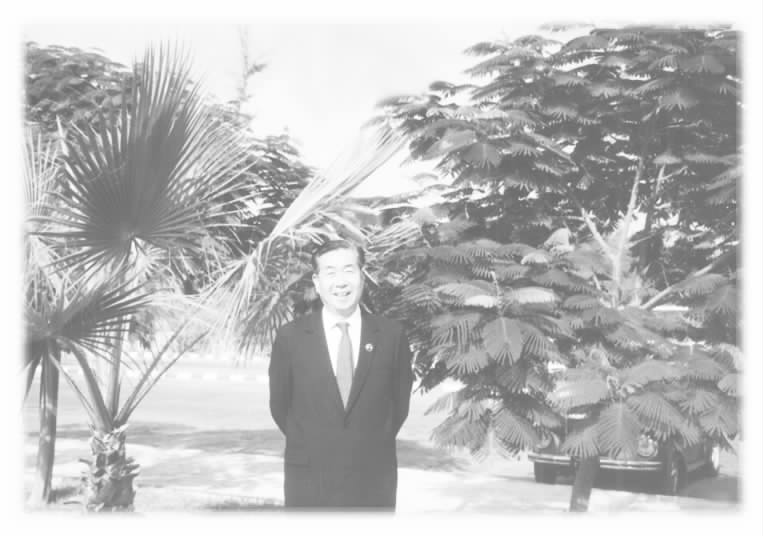
He was open of heart, approachable, always ready with a laugh. Those who knew him called him warmly "Old Cui." In 1966, coming out of some large meeting I ran into Old Cui, who called me to ride back to the paper in his car. In the car he said he wanted to visit Comrade Liao Mosha — Liao, charged over Hai Rui Dismissed from Office, had been struggled against and couldn't reconcile himself to it. Old Cui felt the essay was in no way a "poisonous weed of treason"; he wanted to urge Liao not to carry that burden. What he never imagined: because of the Gang of Four's framing and persecution, within weeks — in July of that year — he was himself suspended from work, and in 1967 arrested. Eight years of prison.
Once Shufan and I went to see the People's Art Theatre's preview of Spring Dawn in the Ancient Capital, a play on Beiping's peaceful liberation. We ran into Old Cui — the first time we saw him after his release. I walked over to greet him: "Do you still know me?" "Xiao Zhu — how could I not?" he said, gripping my hand warmly. Then he shook Shufan's hand and said gladly: "Isn't this Li Zhong (Shufan's wartime alias)?"
As Minister of Health, Cui concurrently served as head of the Association of TCM, the World Medical Qigong Association, the China Association of Integrated Chinese and Western Medicine, and other societies. He held firm to reform of the health enterprise, worked to open new chapters, and paid special attention to China's traditional medicine — pouring heart and strength into inheriting, developing, and taking Chinese medicine to the world. I once interviewed him specifically on the development and prospects of qigong; he gave many sharp insights. Though he was nearly seventy at the time, through regular practice the afflictions from his prison years had faded, and the vigor of his earlier days seemed to be returning.
In over sixty years of revolutionary life, Cui Yueli gave himself selflessly to the Chinese people's liberation and socialist construction. He has left us forever, but his noble revolutionary spirit and his fine character and style live on in our hearts — a model we will always learn from.
Earth's Fire Brought, Spring Brightly Shines
Xu Kang · March 2001
In the stone-heavy years before Beiping's liberation, Old Cui was one of the leaders of the Beiping underground Student Committee, and he made outstanding contributions to the student movement and to the city's peaceful liberation. I was an underground Party member then, and I had the good fortune to work under his leadership for a stretch. Fifty years have gone by, but the days are still vivid — as if yesterday.
I joined the underground Party in 1945 and entered the Beiping Normal College in the autumn of 1946 (commonly called Shida — Normal University — and later renamed officially). Comrade Yang Bozhen led me first; in June 1947 Comrade Cui Yueli took over. Our first meeting was at a comrade's home. Old Cui wore a light tan Western suit and looked handsome and cultivated. He said at once: "Good weather today — let's go out for a walk." I went with him to Zhongshan Park, and we sat on a bench under an old cypress by the moat. I briefed him on the anti-civil-war movement at Shida. I was a first-year then; first-years lived and studied at Shida's Second Campus on Shifuma Street. The only underground Party members I was in touch with were Liu Jixi and Liu Jingnan. But from the anti-brutality movement on, as the English Department's class representative, I met often with reps from other departments. In student clubs, in "May Fourth" commemorations, and especially in the anti-civil-war movement, I fought shoulder to shoulder with Zhang Qihua, He Dahai at the Second Campus, and Li Yinpei, Zhao Qingyuan, and others at my own campus. I quietly sensed they might all be Party members; they knew the campus better than I did and were more experienced. I said so to Old Cui. He said: "As things develop, Shida needs a unified Party branch, to lead the movement better; scattered-action won't keep up." He asked me, back at school, to open channels with Zhang Qihua and He Dahai. We set a date to meet at the Taimiao with the comrades at my campus.
It was a July afternoon, mid-month. At the agreed time I walked toward the east side of the Taimiao's gate and saw three people on a bench under an old cypress. One was Old Cui; the other two were Li Yinpei and Yu Guoxiu from my campus. I had known them from "May Fourth" commemorations; I also knew Yu Guoxiu was Li Yinpei's girlfriend. So I had no doubt these were the campus comrades Old Cui meant. As I approached, I suddenly saw Old Cui gesture — as if to stop me. I started to turn, but Yu Guoxiu had spotted me and smiled a greeting; I could only keep going. Li Yinpei rose and had me sit. The North China Student Federation had just launched a study-aid campaign; we began by discussing how to run it at Shida. Yu Guoxiu, having an errand, left first. Old Cui then stood and walked with the two of us slowly toward the back of the Taimiao. At the moat, no one around, Old Cui said with a smile: "Recently Xinhua Radio broadcast an interview with Yan'an authorities on the current situation — Chiang's government is surrounded by the whole people, and the student movement was called the 'second front,' given high evaluation." He drew two mimeographed copies of News Materials from his black leather case and went on: "This is the full text. Take them back to the comrades to read and study." Our eyes lit up. His voice, carrying the Central Committee's, set our hearts beating — we wanted to open the documents right away. Old Cui said: "Don't read them here. Read them back." We tucked them away and walked on with him west along the moat. As he walked, he spoke of the meaning of setting up a Shida underground Party general branch, and asked our view: "Who do you think would suit as a branch committee member — Zhang Qihua or He Dahai?" Li Yinpei said: "He Dahai is too exposed now, too 'red'; Zhang Qihua suits better." I agreed. "Zhang Qihua, then," said Old Cui. We set the next meeting for two weeks later at the Wanchun Pavilion on Jingshan — I was to bring Zhang Qihua.
The early-August afternoon was hot, sun overhead. Zhang Qihua and I raced up to the Wanchun Pavilion; Li Yinpei arrived soon after. We saw Old Cui watching from the pavilion to the west and walked over. Few tourists on the hill, yet people passed through the pavilions. We moved to a tree on the mid-slope and sat on the grass opposite each other — quiet, with view of comings and goings above and below. Old Cui opened: "By the Party constitution, branch members are elected by the members. Under our underground conditions we can only have the upper organ appoint. The Shida general branch will be the three of you: Comrade Li Yinpei as secretary, Comrade Zhang Qihua as organization member, Comrade Liu Honggang [my original name] as propaganda member. Ordinary school work is to be decided by the branch committee; bring especially important matters up. In running the movement, keep close liaison with the Student Federation; don't wait for directives. Recruitment still requires upper approval. For now each of you keeps the comrades you already liaise with — but introduce them to each other." The three of us introduced our contacts — twenty-five comrades in all. Old Cui continued: "Unite tightly with all the comrades. On campus there are also underground groups from Nanjing, and the Democratic Youth League — unite with them and fight together." Time went by in a tense, excited, serious murmur. The red sun was sliding west, casting on the pines and cypresses of Jingshan. Thus began the new journey of the Shida underground Party general branch on the slope of Jingshan.
Underground struggle is strikingly sharp and complex; conditions dangerous; a slip, and arrest. We had planned the next meeting at Zhongshan Park to talk about recruiting new members. Once the three of us and Old Cui converged at the waterside pavilion, with tourists around, we walked north along the rockeries on the west. Past the Tanghua Wu we ran into a beggar asking for money. Old Cui handed him a few coins. Beggars asking coins was common enough. This one was not in the usual tattered rags; none of us made much of it. A bit further north Old Cui said under his breath: "That beggar is following us. Something's wrong. Split up now. You three leave through the Sheji Altar; I'll go out the back. Same time day after tomorrow — I'll wait at the tea seats east of the Taimiao." He turned toward the back gate, and we cut into the Sheji Altar and out the front. Luckily no trouble. Two days later we met at the Taimiao again. Old Cui said: "That beggar was strange from the first. He came toward us; after I gave him coins he turned back and followed us. He was no beggar, he was a spy. Meeting in parks is no good anymore — we need another place." Though we tried, nothing suited — we went on meeting in parks.
After the autumn 1947 term began, Zhang Qihua and I moved to our main campus outside Heping Gate, and so could work easily with Li Yinpei. We still met Old Cui in the parks at intervals, reporting and receiving instructions. The English Department classrooms were all on the third floor of the newly-built Xiaozhuang Building of the liberal-arts block. Department chair Mr. Jiao Juyin had bought several American short-wave radios for the English Society so students could practice listening. After evening self-study I'd use them to catch Xinhua Radio. In mid-September I picked up news of Liu-Deng's army crossing the Yellow River south, and the editorial The PLA's Great Counter-Offensive. I took notes, turned them into leaflets, and passed them to underground comrades. At a later meeting with Old Cui at the Wulongting tea seats in Beihai, I briefed him on it. He was delighted: "I was just about to pass it to you! Since you can receive the liberated-area broadcasts yourselves, we won't need to give you News Materials from now on — that's safer too." People were around the tea seats, so Old Cui took us boating. Rowing our small boat, he said: "The PLA has shifted from strategic defense to strategic offense. The day of Chiang's collapse is not far."
"That editorial is important. For the first time it raises 'down with Chiang Kai-shek, build a democratic coalition government.' Let the comrades study it, see the situation clearly. Spread the news of the eve of the Liberation War's victory among the broad student body, so they can see where China's hope lies." After this meeting, every progressive student club under the Shida underground's leadership held current-affairs forums; we opened "Current-Affairs Review" and "Military Review" columns in the New Age wall newspaper, written by He Dahai and Cui Pengyun respectively, translating Xinhua Radio against the open papers and — in the style of Time's Military Review — spreading word of the Liberation War's victories and of the national situation.
One day at the end of September, Old Cui had an underground courier rush word to Li Yinpei: Zhang Qihua was not to go out; only Li Yinpei and I should meet him in the park. When we saw him, he said: "Zhang Qihua is on the blacklist. Stop his activity for now. Keep him on campus for a while, then prepare to withdraw him to the liberated area." He asked us to propose another committee member. Li Yinpei recommended Zhu Huang, saying Zhu was well-hidden, suited for organizational work; and that Zhu had family in Beiping where we could meet. Old Cui agreed: Zhu Huang would be the organization member. From then on we met at Zhu's home — 6 Taiping Street, West City, a single-gated courtyard. We set a safety signal: a few burnt coal-briquettes at the door; only with the signal could we enter. At our first meeting there, Old Cui instructed: "Branch work from now on follows a three-line arrangement. First-line comrades do open work; second-line do semi-open; third-line do only clandestine work. Branch members should be on the third line."
Since Shida had had no unified branch before, we couldn't follow the three-line setup. From the anti-brutality movement on, Li Yinpei and I had worked in the open. When the Self-Governance Association was founded, Li Yinpei was elected to its presidium. I was president of the "New Poetry Society" and a council member of the "Peace Clubs Federation." By Old Cui's instruction: Zhu Huang would do only internal Party work and take no open role; Li Yinpei and I would appear less, gradually withdrawing from the first line. The instruction was entirely right. Regrettably I was too young to grasp its full meaning. Zhang Qihua had been a standing council member of the Peace Clubs Federation; during his stand-down I took a bigger role in those activities; at year-end 1947, in the Self-Governance Association reelection, I was elected council member, chaired many meetings and led petition delegations. So at the August 19, 1948 mass arrest I was listed for "summons and detention" and hunted by the Kuomintang government — I had to withdraw to the liberated area.
Though Old Cui led us for only five months, his close watch on the situation, his calm analysis, his warm instruction to comrades, his high vigilance toward the enemy, his steady decisions in a crisis — all became a lifelong example. He kept watch over the comrades he had led in the underground. In 1995, after his serious illness, I visited him; he still spoke cheerfully of meeting in the parks before liberation. I wrote him a short poem afterward — it was printed in Beijing Evening News. Here it is as my tribute:
I remember still the dark clouds pressing the old city — underground fire sowing the radiant spring. On the slope of Jingshan our hearts were knotted together; at the Sheji Altar a single beggar startled us. At the tea seats we laughed as we drafted the call to overthrow Chiang; in a little boat we cheered at the news of the counter-offensive. Even in white-haired years you were as in youth — the spring wind and transforming rain still yours.
A Comrade's Bond Deeper Than Kinship
Xiang Ming, Yao Yan, Yao Ning · April 2001
Comrade Cui Yueli has been gone more than two years, but the tall figure that worked for the Party, for the revolution, for the people — unafraid of sacrifice, without rest — still stands clear and vivid in our eyes and hearts. The sincere care and help he gave to his comrades, the nobility that only a selfless, open-hearted person carries, stay in our hearts forever.
I met Comrade Cui Yueli in 1944 at the Qihelou Sino-Western Hospital in Beijing (today's Beijing Maternity Hospital). He worked there as a doctor; everyone called him "Dr. Li." My husband, Comrade Yao Jiming, was sent by the Party to Beijing for intelligence work; his open cover was administrator at the same hospital. That is how they came to know each other. Yao Jiming often said to me: "Dr. Li is not ordinary — perhaps he is a Party underground worker like us." Under strict discipline, they could feel it but could not say it; they came to respect each other deeply in silence, and became true friends.
At the hospital, "Dr. Li" cared warmly for ordinary people. Once, an old man, pressed by hard circumstances, had sold his daughter to a brothel; the director Zheng of Qihelou bought her back. Hearing of her plight, "Dr. Li" made arrangements for her to study at the hospital and trained her as a nurse. A few months later he sent her on to the revolutionary base, setting her on the revolutionary road.
There was a cook at the hospital too, Mother Yang. She lived alone with an invalid son. Beijing under Japanese occupation was cruel; white rice and flour were nowhere to be had; even cornmeal was hard to buy; day after day one stood in a long line for the Japanese-rationed "mixed flour." With prices rising, the common people's lives were barely endurable. "Dr. Li's" salary was low, yet he often helped Mother Yang from his own pocket and paid for her son's treatment. Even after liberation, when "Dr. Li" had become a senior leader of the Party and state, he kept Mother Yang at his own home all those years, with a peaceful life, until she passed.
In June 1946, under the Party's instruction, we left Beiping and were transferred to the Jin-Ji-Lu-Yu Military Region to take part in the Liberation War. Considering the long and dangerous road and the hardships of war, Comrade Cui Yueli and his wife, Comrade Xu Shulin, earnestly persuaded us to leave our months-old daughter in their care, to be raised as their own — easing our minds.
To win Fu Zuoyi's defection and the peaceful liberation of Beiping, Cui Yueli endured every hardship and set his own life aside. But for our daughter's safety he sent Mother Yang — with her life on the line in sun and wind, walking for days — to deliver the child safely to the Taiyue liberated-area orphanage in Quyang County. After the Huaihai Campaign's victory, taking advantage of a trip escorting prisoner-of-war Huang Wei to Shijiazhuang, I rode on to Shijiazhuang, found the Taiyue orphanage in Quyang, and brought back our healthy, lively four-year-old elder daughter. Whenever I think back, I feel that the comradeship, the friendship-in-arms, and the kinship between us and Comrade Cui Yueli and Sister Xu Shulin — and our family's gratitude — are beyond any words.
In 1957, Comrade Yao Jiming passed away from illness. A great grief for our family. In 1958 the organization sent me to Tianjin University for further study — five years. By then my elder daughter Yao Yan (who had stayed with the Cuis) had finished primary school and been enrolled by selection at Beijing Experimental Middle School (also known as Normal University Girls' Attached Middle School) as a boarding student. My younger daughter Yao Ning was only in second grade and could not live on her own. When Cui Yueli heard, he arranged for her at once as a boarder at Beijing Primary School. Later, learning that Yao Ning was too young to care for herself and missed her mother, he found a way to move her to Tianjin Experimental Primary School as a boarder, so that for the next three years I could spend weekends with her, looking after her study and life. She was happy, and I could study with a settled mind. I was the only woman in that cadre training cohort to complete the full five years and earn the college diploma.
After Yao Ning finished primary school, Cui Yueli transferred her to Beijing Girls' No. 1 Middle School as a boarder, and asked her to report her studies to him each week. By then he was Vice Mayor of Beijing and busy with affairs of state — so busy he could not always look after his own children — and yet for his comrade's children he poured out a father's care.
My two daughters have held fast to a saying of "not-father, yet more than father" Cui Yueli: "The master shows you the door; the practice is your own." Both have made their way in life — and that is inseparable from the raising, teaching, and cultivating of Cui Yueli and Xu Shulin. I believe they will never forget it, and that their deep remembrance will be a lasting force urging them forward.
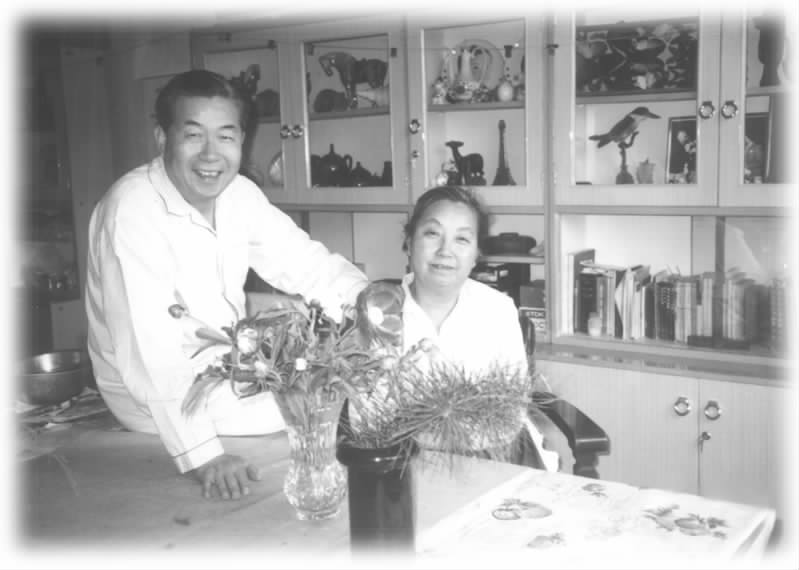
He Shaped Our Whole Family
Wang Guanghe · June 2001
Comrade Cui Yueli was my old leader. What I most often recall is the time working in the Beiping underground on the eve of liberation — he was my direct leader then, the one who helped me, taught me, shaped me most.
To look back, I have to begin with the ties between him and our family. Under the direction of Comrade Liu Ren, head of the underground, Cui Yueli was doing revolutionary work in Beiping. One task was to build contacts with democratic figures and grow the Party. Our family was one of his objects.
Our household was a complex one. After the resistance broke out, my father refused to serve the Japanese-puppet government and chose to be idle at home — a mark of national integrity. My fourth elder brother Wang Shiguang joined the Party in 1938, and in 1939 went to the liberated area. In middle school and Tsinghua he had been adept at radio; the underground had him set up Tianjin's secret transmitter — and he did it outstandingly. Under his influence, our parents listened often to Soviet and Yan'an broadcasts, and sympathized with and supported our Party's work. My second elder brother Wang Guangqi had returned from America and served as economic advisor to then-Vice-President Li Zongren; Li's youngest son even lived at our home for a while. My fifth elder brother Wang Guangfu was a KMT air force hero — he shot down eight and a half Japanese planes — and was favored by KMT air-force commander Wang Shuming, who had visited our parents. This mixed composition both showed our parents' open-minded progressiveness and, as a practical matter, made our home excellent cover for underground work. Cui Yueli understood all this.
Underground work was single-line contact; I do not know when or with whom at our home Cui first made contact. I first met him in 1944, when he came to see my mother. She was not Party, but progressive — supporting the resistance, sympathetic to the Communists; if he came with something to ask, she would help. Later I slowly learned that, to buy drugs for the liberated area, Cui had also approached my third elder brother Wang Guangchao. Wang Guangchao, a PUMC graduate, ran a clinic at home after PUMC closed post-Pearl Harbor, and through Cui obtained drugs for the liberated area and treated underground comrades. My fourth sister-in-law Wang Xin, who joined the Party in 1937, may have known Cui earlier still; when her child was four or five, Cui helped her return from Beiping to the liberated area — but KMT agents tailed them, and they had to turn back to our house. The agents followed to the door. My mother and third brother went out to cover, gave the agents money, and sent them off. Later the underground successfully brought her to the liberated area.
From my sixth elder brother Wang Guangying's recollections, you can equally see Cui's influence. In 1942 Guangying graduated from Fu Jen University, pursued a master's while running a modern chemical plant in Tianjin, and was actively looking for a way to Yan'an to take part in the resistance. In 1944, Cui asked him to meet; Guangying was delighted. They met at Beihai — at the lakeside east of the main gate, deep among the trees, quiet, few tourists in that out-of-the-way spot. Guangying came out plainly: "I want you to introduce me to Yan'an." Cui smiled: "Haven't you set up a chemical plant in Tianjin already?" "That's for a living; I think the real way is Yan'an." Cui patiently answered: one more person for the revolution is better than one less — but given your circumstances, at Yan'an the Party would likely still want you to do business. Don't set business and revolution against each other: to do business for the Party is also a contribution to the revolution. Guangying has not forgotten those words; he says his later development in business is tied to that conversation.
My fifth elder sister Wang Guangping was more directly brought into the ranks by Cui Yueli: in late 1944, while she was a nurse at Beida Hospital, Cui began to meet her on a schedule — helping, teaching her — and in early 1946 sent her to Comrade Liu Ren at the Urban Work Department in liberated Zhangjiakou. Her joining the Party, later going to the liberated area, entering the Bethune Medical University — all inseparable from Cui Yueli's cultivating hand.
My eldest sister Wang Guangmei — her choice to forgo a doctorate in America and throw herself into the revolution — Cui Yueli had a great role in. In our family Guangmei was the eldest daughter; unlike the rest of us sisters she was outgoing, knew many people, often received our home's guests and had dealings with the KMT dignitaries who came. Li Zongren had wanted her to tutor his son several times; Guangmei, unable to refuse outright, had a classmate from her English class substitute. Wang Shuming had wanted to hire her as a secretary; she politely declined. She was a research student at the Christian institution Fu Jen University with outstanding grades. The underground knew her well and had been watching — and guiding. That guidance was Cui Yueli's work. Guangmei has not forgotten: first, he introduced her to progressive pamphlets; he met her at the Taimiao, Beihai, the National Library; he taught her the revolutionary way. Later, through her, journals were distributed to progressive faculty at Fu Jen; and she briefed Cui on people she dealt with. Gradually her understanding of the Party deepened, and she worked actively on what the organization assigned. In 1946 she finished her master's and stayed on as a teaching assistant, while preparing for doctoral study in America. It was then that Cui began to urge her to join the Party. Having read much progressive writing — above all On the Self-Cultivation of a Communist Party Member — Guangmei felt she fell short of the standard: "I haven't reached the standard; I can't join yet." Soon the situation changed. With the U.S. as mediator, KMT–CCP talks opened in Beiping. The CCP side of the Executive Headquarters urgently needed English interpreters. Sent by the Party, Cui looked for candidates. Trusting Guangmei, he sought her out and asked her to take this work at once. She did not answer immediately: she had studied science, feared she wasn't sure in military and political vocabulary; and she had received admissions from several top American universities — hard to give up. Seeing her hesitate, days later Cui handed me a note for her. The note said: if you do not take this assignment now, the Party will not be in contact with you again. After all those years of teaching, how could she hesitate any further? She told Cui at once that she would go. To prepare she subscribed to Beiping's only English paper. Soon Cui gave her a note with the rendezvous at Cuimingzhuang, where Comrade Li Kenong received her. From that moment, Guangmei joined the revolutionary ranks. To this day she has not forgotten what Cui Yueli did for her revolutionary road; she remembers him with deep feeling.
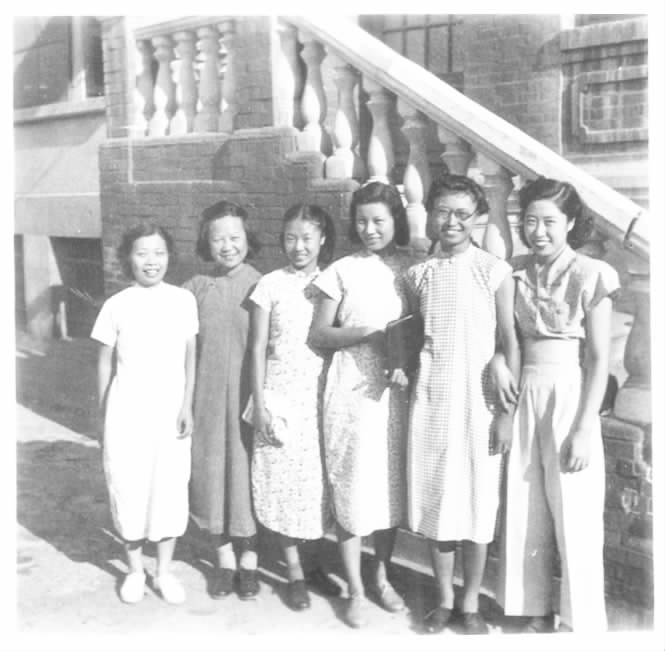
As for me: at the Normal University Attached Middle School, influenced by progressive classmates like Gan Ying, I began to draw close to the Communists. In 1944 I tested into Peking University Medical College, and from that time on Cui Yueli began to help and teach me. He met me often at the National Library, the Taimiao, Beihai — quieter spots — and walked me through the history of social development, On New Democracy, The Communist Manifesto, the situation in the war of resistance and the war of liberation — to raise my class consciousness. In June 1945, in the summer break, Cui took me himself to the Urban Work Department in Fuping County for training, and showed me the Jin-Cha-Ji Border Region. I saw the liberated area at last, learned many new things, came away with much. After V-J Day on August 15, I returned with the Department to Beiping. In October a Party classmate was arrested; to prevent his betrayal from implicating other underground workers, Cui had me transferred at once to Liu Ren at the Zhangjiakou Urban Work Department. Nothing happened, so I came back to school.
From late 1946, Cui Yueli led me on single-line contact. My work was chiefly that of a messenger and custodian. When he had something, he would use my home phone to notify me, and I would meet a named comrade at a named place with a named signal. Usually that comrade handed me propaganda material, and I distributed it to those who should get it. We met on bicycles in quiet alleys. If martial law or some incident broke the contact, Cui would call to restore it. He helped me shed the tension and unfamiliarity, taught me the lessons of underground work — secrecy above all. Even among us siblings, none of us knew who was a Party member; only later did we silently understand about each other.
I remember once Cui called: a comrade would be coming to live with us; be ready at any time. I told my parents; without even asking who, they agreed. The man was Comrade Song Rufen, one of the underground's leaders; for cover, he rented our front courtyard with his family and stayed until liberation.
In the underground years, I came to know Cui Yueli's firm revolutionary will and rich experience first-hand. His work was meticulous, thorough, low-key, and effective. From my family alone, several of us were deeply influenced by him; how many in Beiping must have been drawn to the revolution by his hand, we do not know. We remember him. The people will not forget his contributions to the revolution and to the people. His help and teaching to me, I will carry in my heart forever.
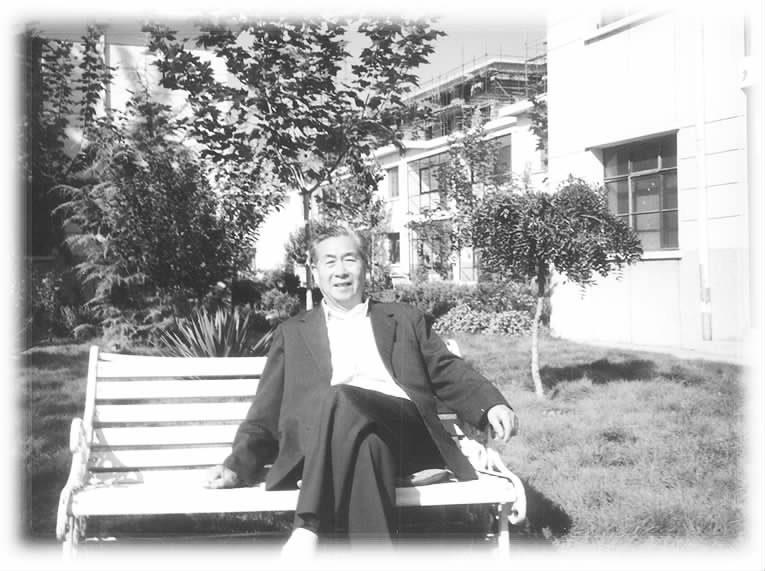
"Brother Li" Led Me onto the Revolutionary Road
Li Zuhui · September 2001
Comrade Cui Yueli was the one who sent me on my revolutionary road — and my most admired elder brother.
In 1942, Tianjin had fallen; the Japanese occupied great tracts of China and visited inhuman humiliation and oppression on its people. The resistance was afire across the country.
My eldest sister Li Zuhua and my second sister Li Zuxiu (renamed Li Qi) had joined the anti-Japanese ranks in the central Hebei countryside in 1938. My second sister went north with the 120th Division. My eldest sister, at the struggle's need, moved from the countryside into the Tianjin underground, under cover as a primary-school teacher. She returned to Tianjin waiting day and night for someone from the underground to make contact. In the autumn, a young man from Beiping came to our home — gentle in his long gown. When he identified himself as the contact, my sister's eyes filled with tears. "I've found the Party," she said, like a lost child returned to its mother.
This young man used the alias Li Daozong; my sister had us call him "Big Brother Li" (Li Dage). He was warm, bright, and straight, deeply respected by the whole family. My sister reminded us always to guard his real identity strictly.
Our home was at No. 5 Wu Ma Road on Huangwei Street, a big compound off the street. Four other petty-trader households lived there too; their social ties were complex. Across from the main gate was the Japanese military-police headquarters; our place was searched and harassed at times, and watched by puppet soldiers and spies. In such a dangerous setting, under the enemy's nose, underground resistance work went on. My eldest brother Li Zuying was a lawyer in Tianjin; Big Brother Li used the cover of being his secretary. He often moved secretly between Beiping and Tianjin, and soon built a liaison station at our home. Through inside contacts he gathered enemy intelligence, and organized activists to mimeograph leaflets and resistance news bulletins. They worked by a small kerosene lamp in a damp, dark little room in the middle of the night. Through family, friend, and classmate ties, distributed one-by-one, the material went out — spreading the call of anti-Japanese salvation and the Communist Party's program, rousing the people to take part.
Through this time, under Big Brother Li's leadership and care, I, Li Xuzong, and Guo Xu were brought into the Party, and a branch was formed. Each time he came secretly to Tianjin he was as ever — bright, full of energy, composed. When he convened Party meetings he had me and my second nephew (Li Shaozong) act as couriers and lookouts — we played by the gate while watching for strangers pushing in. One day two drunk Japanese military police staggered toward our door; I ran in to warn him. In a flash he had mahjong tiles on the table and a few of them playing a game. The Japanese wandered the courtyard, pushed open the door, saw the card game, and in the end simply grabbed two chickens and left. A heart-racing moment — it made us all sharper.
Every time he came, no matter how busy, he sat with us and talked — of how the people in the liberated areas outwitted the enemy, of how the Eighth Route Army and New Fourth Army fought bravely and sacrificed without fear. He told us: keep the resistance through to the end, and the Japanese will be driven from China. The dark and the hardship are for a time; the dawn is ahead. His teaching inspired us. We only hoped to throw ourselves into the revolutionary torrent sooner.
In 1945 Japan surrendered, but the KMT reactionaries, backed by America, began civil war, set up dictatorship, suppressed revolutionary spirits. Under the underground's organization, the people of Tianjin rose in mass marches — against civil war, against dictatorship, for democracy. I was then a first-year at Girls' No. 2 Middle School and joined in actively; for the first time I felt that unity is strength, and saw more clearly the reactionaries' suppressing face.
As the KMT intensified its plans to wipe out the Eighth and New Fourth armies and hunted down the underground's best cadres, even cruelly suppressing anti-Chiang patriots and progressive youth, the struggle grew ever more dangerous, and the underground hid deeper. In this period, the liaison station under Big Brother Li's direction sent batches of progressive young intellectuals to the liberated area — to join the revolution. I and Li Shaozong were one such batch.
January 2, 1946 is the most unforgettable day of my life. Big Brother Li came to Tianjin in a rush and decided to take me and Li Shaozong out that very night. Hidden from my mother and relatives, we boarded the train that evening and followed him out of Tianjin; we spent the night at his small clinic in Beiping. That night he sewed a small note into my cotton gown and told me: "This is an introduction letter. Guard it carefully. When you arrive, give it to the school principal — he'll arrange your studies." The next morning he himself saw us to the train station and handed us to a roughly forty-year-old woman in village dress; we were to call her "Auntie." "If anyone asks on the road," he said, "say you're going back to Grandmother's with Auntie — Grandmother is gravely ill." He held my hand warmly: listen to Auntie on the way; study well; don't cry for home; learn to be on your own, be strong. Reluctantly we parted at the station.
We three took the train to Qinglongqiao and got off. The KMT had set a checkpoint at the station crossing, searching travelers strictly. They made Auntie open her bundles, turned them over one by one, patted her down; we two carried nothing. We were only thirteen or fourteen; we hid frightened behind Auntie. They gave us a glance and waved us through. Past the checkpoint we breathed out. We got straight into a cart that had been waiting and sped for the liberated area — Zhangjiakou. For two nights we stayed in villagers' homes on the way.
Auntie told us: each host was a liaison station; the cart driver was a courier; the road was a route the Eighth Route Army had opened. On the third day we reached Zhangjiakou. Auntie handed us safely to the Urban Work Department and left. The Department's people were warm, found us food and lodging, called us "Young Comrades." For the first time we felt the warmth of comrades.
We stayed at the Department a few days, then studied and worked at the Bethune Hospital for a month. When we heard that the Jin-Cha-Ji Border Region United Middle School was about to open, Li Shaozong and I rushed to enroll. The principal who received us was Hao Renchu — tall, big-eyed, kind — an educator of real learning, we were told. I handed him the note Big Brother Li had sewn into my gown. He said happily: "You came from the occupied zone to join the revolution — warmly welcome. You're our first class; many more from the occupied zone will come. Take this school as your home; any trouble, come to me." A warm current rose in my heart; our eyes filled and tears fell uncontrollably — as if we had fallen into a kinsman's embrace. I had not imagined that small note could matter so much, that it could shape my life. From that moment we stepped into the revolutionary ranks.
In 1948 I joined the army from school, studied at the Jin-Cha-Ji Military Region Pictorial's photography training class, and stayed on at the pictorial. When Beijing was peacefully liberated, I entered the city with the troops. Days later, with the leadership's permission, I took two days' leave back to Tianjin. Everyone at home was in different posts, all in important work. What stirred me most: my sister told me, "The one who led our liaison station, the Big Brother Li who brought you to the liberated area himself — his real name is Cui Yueli. He's working in Beijing now, as head of the Municipal United Front Department. Back in Beijing, go on behalf of the whole family to see him. We all miss him."
Back in Beijing I rushed to find him. Meeting, we were both glad and moved. Though he now held a leadership post, he was as warm and approachable as ever, as forthright and bright. Glad to see me, he said: "Ah, Xiaohui's grown — and a PLA soldier, too. Do well from here on." He asked in detail about the family — so dear to him.
Thinking back to those years he led the Tianjin underground, what hardship and danger he had passed — and come through with courage and strength. Now he carried the revolutionary optimism still, going forward to newer challenges, giving himself to the work of building New China.
In 1953 I transferred from the army to Beijing Daily as a photographer. Due to events of history, in 1965 I went with my husband to Inner Mongolia, where I worked over ten years. In 1979 I moved to Health Daily as a photographer; Cui Yueli became Minister of Health in 1981 — once more my superior. A coincidence, a piece of luck.
Comrade Cui Yueli fought for the revolution all his life — selfless, unafraid, boundlessly loyal to Party and people. He gave himself without reserve to the Chinese people's liberation and socialist construction. In his later years especially, he gave deep attention to our nation's traditional medicine, pouring heart and strength into the inheritance, development, and world-spread of Chinese medicine, and into the compilation and publication of its classics. His selfless spirit, his noble character, and his fine style are things we will always learn from. He brought me onto the revolutionary road — I will never forget.
An Outstanding United-Front Worker
Sun Fuling · March 2001
Three years have passed since Comrade Yueli left us. In the years before his death, every Spring Festival the old comrades of the Beijing Federation of Industry and Commerce gathered with the old comrades of the Municipal United Front Department, and he always came. We celebrated the festival — and, more than that, as veterans of long acquaintance, recalled together the achievements of the Party's united-front policy, missing the decades gone by and the friendship forged weathering the same storms. In the last three years Yueli could no longer come. We all miss him.
In the late 1940s, the times were unsettled. In 1948 my father wanted me to study in America, but I — after being beaten in Tianjin in 1947 for stopping two American soldiers from molesting Chinese women — was filled with indignation and would not go. I loathed the Kuomintang's corruption and had no thought of running with them to Taiwan. Neither Taiwan nor America: I lived by my own old line, "If this place won't have me, another place will; if nowhere will have me, I'll go join the Eighth Route Army." In Cao Yu's play Sunrise, Chen Bailu — in that society, unable to rely on Pan Yueting, unwilling to throw herself on Jin Ba — is in truth the figure of the intellectual of the day.
The whole society was changing; the old was about to crumble. My father pressed me to come to Beijing in his place; I had no exploiter's past, was still young, could do some work. A few progressive old classmates of mine were already in Beijing — Zheng Huaizhi, Wang Gang, Xing Fujin (Fang Qun), and others — so I left Shanghai for Beiping. Zheng Huaizhi was then in united-front work; he told me he was a Communist. I had known this as early as the 1930s — he had been to Yan'an, and while in Chengdu (1941–1943) secret police had tailed him. Though we were together daily, we never asked, never spoke of it — it was secret and unspoken. After Beiping's peaceful liberation he put his Party membership into the open. He worked in a unit under Comrade Cui Yueli. And so I came to have working contact with Cui, and joined the Occupational Youth Alliance (an affiliate of the Youth League; Xu Liqun and Zhang Xueyan were comrades there), later the Youth Federation.
Through that link, many activities sought me out. At the March 1949 forum of representatives of all circles in Beiping, Peng Zhen, Ye Jianying, Liu Ren, Zhao Zhensheng, Wu Han, Qian Duansheng, Lei Jieqiong, Li Leguang, Pu Jiexiu, Wang Gang, Wang Zhicheng and others took part — few are still living. I first met Comrade Cui Yueli at that meeting. He was warm and approachable. By then the story of his going alone during the siege to visit Mei Yiqi was already well known.
Cui took the united-front object's thinking seriously, and helped it. Shao Lizi had witnessed my marriage; when he came to Beiping as a negotiation delegate for the KMT–CCP talks, I went to see him, and from Zhang Yuechao, a KMT staffer, I heard that the KMT would not lay down arms. I told Zheng Huaizhi. Zheng later told me my news had reached Comrade Zhou Enlai that very evening. Zheng then urged me to go and "probe further." I neither knew how to probe, nor did I wish to, being of no party or faction. Cui, through Zheng, passed a frank criticism to me: do not cherish illusions about the Kuomintang. In November of that year, my uncle Sun Yueqi led the entire KMT Resources Commission to defect, returned from Hong Kong, and happened to be at our home when Cui came to see me — and to meet Sun Yueqi. My uncle understood little of politics; he thought Marxism–Leninism was a religion one worshipped. Cui taught him at length.
From then on, I took part as a representative of the business community in many activities — the particulars I didn't always know, but the decisions to name me were surely linked to Cui: deputy secretary-general of the All-Circles Representatives' Forum, deputy secretary-general of the Beijing branch of the Committee for World Peace, secretary-general of the Federation of Industry and Commerce preparatory office, and so on. Cui was bold in work, with resolve. Once, the Beijing branch of the Committee for World Peace was to sign a friendship agreement with a Japanese Sino–Japan friendship group; Cui was its acting secretary-general, yet he decided I should sign on the branch's behalf with the Japanese representative Miura Hachiro.
During the old Wu Fan, I was asked to "confess" matters — and never could clear the bar. I knew no one at the Grain Bureau; I could not fabricate a bribery; the case dragged on. So I was "liberated" later than most. The Military Representative at the municipal Federation was very solicitous, and personally helped me comb the books — which, I think, was also the view of Cui and others. Only during the Cultural Revolution did I hear that during Wu Fan there had been grain missing from the Grain Bureau, with workers placed under review for it.
During the Cultural Revolution I was a target. Workers struggled against me, saying I had been "protected by the black Municipal Committee" in the Anti-Rightist campaign and not labeled Rightist. Only after the Cultural Revolution did I learn the facts of Anti-Rightist: Cui had seen the newspaper galley proofs and told the paper's comrades not to put my name, and another comrade's, in them. Once the press lit up this or that, one would certainly be labeled Rightist. In 1957, with the tension of the Anti-Rightist work, my nerves were strained; I came down with a serious neurotic disorder; the organization had me go on leave. Cui said to me specially: rest well, let the mind ease, don't be too strained; let some "capitalist" things simply sit in your head for now. He added: life is not easy, dying is not easy either — take good care to recover. I was beyond grateful.
Cui was this way not only with me but with my family. My wife Huang Zhi was then at the Beijing Association for Promoting Democracy; because she did work with businesswomen, the organization transferred her to the Federation to do work with families of business people. The Federation's family work had real results in the socialist transformation. In 1956 the Central Committee convened a Women's Business-Work Representatives' Meeting — Mao Zedong, Liu Shaoqi, Zhou Enlai, and others received a delegation that included my wife. Her younger brother Huang Jing was working at a Tianjin trading firm; he had studied transportation in college. Cui said — why have him work outside his training? — and had him transferred to the Transportation Administration. All these we carry in our hearts.
Through the decades I was close to Yueli. I thought of him often. After his release from the Cultural Revolution, I went specially to see him. While he was ill and after his passing, I still often went to see him and his wife Sister Xu Shulin.
What I have set down here cannot fully represent our relationship, for some of the work with me he did through other comrades. But by his bearing in work and in life, he was a good Party member — both understanding of the united-front object and helpful to them — an outstanding united-front worker.
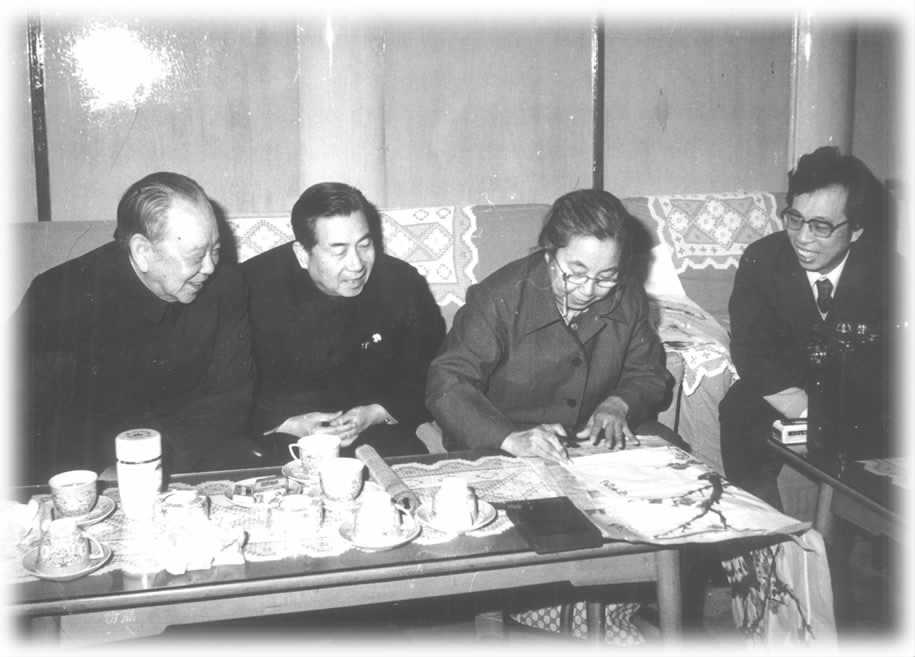
Resolved to the Communist Cause; Lofty Character, an Exemplar
Liu Yong · May 2001
Comrade Cui Yueli has been gone more than three years. From Beiping's peaceful liberation in 1949 until just before his death — almost half a century — he and I were in close contact, at work and in life, helping and caring for each other. His manner of going into the real situation, close to the masses, skilled in investigation; his plain, economical speech, clear of view, never wasting words; his care for comrades, his concern when they were ill — these scenes rise before me often.
*(I)*
Cui Yueli was a diligent student all his life. In youth he had been an apprentice and a doctor; he built a rich stock of medical knowledge and capability. He joined the revolution in 1937 and the Party that same year; in January 1934 (elsewhere reported as 1943) he moved to the Urban Work Department of the Jin-Cha-Ji Central Sub-Bureau; in March he was sent to Beiping–Tianjin for underground work, using his trade as a doctor for cover.
After Beiping's peaceful liberation in 1949, public order was unsettled and complex. Municipal Party Secretary Comrade Peng Zhen instructed the Municipal Public Security Bureau: eliminate the confusion with speed; bring order back to normal. Concretely: on enemy secret-service systems and armed insurgent elements, conduct further investigation and move "top first, bottom later; armed first, civilian later." The Bureau had much material in hand but lacked knowledge of some individuals' specifics and current conduct — making execution difficult. When Feng Jiping, head of the Second Division, reported this to the municipal leadership, Liu Ren said at once: have the former underground leaders of each system brief your people. Soon after, at Feng's invitation, Comrade Cui Yueli came to brief — Director Tan Zhengwen, Feng Jiping, and I (then secretary of the Bureau Party Committee and head of the First Division) among the few attending. Cui said: on Comrade Liu Ren's orders, I shall brief you without reservation on what you need to know.
His briefing was given without a single page of notes in hand — all from memory. He focused on the medical system, but also covered enemy secret-service matters in other areas. His account was rich, orderly, clean and quick — a remarkable memory left a deep, unforgettable impression. After that briefing, until he served in turn as head of the Municipal United Front Department and of the Health and Sports Department, several things stand out:
Xu Zongyao, head of the Kuomintang Preservation Bureau's Beiping Station and a chief of secret police, by his position and his crimes should have been shot. But before liberation he had provided our underground with much important intelligence, handed over the Beiping Station's personnel register, ciphers, and radios — a useful contribution to the revolution. Liu Ren told the Public Security leadership: "Xu Zongyao may be treated with leniency, crime weighed against merit; do not shoot him — prison, for his reform." Xu was later granted amnesty; at Cui Yueli's recommendation he was then elected a member of the Beijing CPPCC. Following the leadership's intent, Cui arranged Xu's case well.
Song Yuankai — doctor trained in England and Germany, holder of two doctoral degrees — had real standing in medicine. Published noted papers, rich clinical experience, some fame in the medical world. Before liberation he had been close to Kuomintang dignitaries and secret-police heads; as a high-suspicion case he was arrested and sentenced. Early on, the Beiping Public Security Bureau took over the city's Police Hospital but lacked good doctors; officers' illnesses were hard to treat. Feng Jiping, inspecting a labor-reform farm, found this medical talent — without specific crimes — and the farm leadership, reporting, said Song had behaved well, confessed, abided by law, treated officers and inmates at the farm clinic with good effect. Feng suggested commuting his sentence for early release by law. The municipal bureau agreed; Cui supported it. After release, Song was placed at the Public Security Hospital; after a short trial period, at Cui's recommendation the Municipal Health Bureau named him Medical Director of the hospital. One after another, two other reputable doctors were selected from labor-reform inmates — sentences commuted or waived — and placed at the hospital; after short probation, they filled departmental leadership. Cui also recommended several good doctors from other Beijing medical units be transferred in, raising capability. Before the Cultural Revolution, the Public Security Hospital was among Beijing's higher-ranking hospitals; Song Yuankai and internal-medicine head Wu were often invited to consultations on difficult cases at other hospitals.
Pu Boyang, a German-trained student who received his Heidelberg MD in 1926, served at Beijing's Yamamoto Hospital on returning home; was a close friend of Lu Xun. Before liberation he ran a private clinic and was in touch with Cui's underground. After liberation, at Cui's recommendation, he served as a Beijing people's representative, a CPPCC member, and adviser and head of pediatrics at the Public Security Hospital. He joined the Peasants and Workers Democratic Party. Under his influence several of his children took up work.
*(II)*
After 1956, as I moved from First Deputy Director of the Municipal Public Security Bureau to help found the Municipal Party Committee's Political-Legal Department, I saw more of Old Cui. In every post — United Front head, Health and Sports head, Vice Mayor — he finished his work well, with striking results. Whenever the Standing Committee discussed his portfolio, his briefings were concise, clear of view, foreseeing and with resolve — affirmed and praised by Peng Zhen, Liu Ren, Tianxiang, Wan Li, and other leaders. A deep impression.
At the Health and Sports Department, in his investigations, once he went deep into the neighborhoods — not afraid of grime or weariness — shouldered a dung-hod and, following Shi Chuanxiang's example, scooped waste from a residential compound's public latrine. It inspired the sanitation workers and taught the cadres; it became a story people passed around.
In the early days after entering the city, Comrade Xing Xiangsheng, just over thirty, had an eye condition worsening by the day — newspaper headlines he could see, the text he couldn't. With heavy work and mounting anxiety he tried several hospitals; none could diagnose, none could treat. At his wits' end, Cui learned of it and took him to see the great old doctor Shi Jinmo. Shi said: medicine and injections will not help — which alarmed Xing further. Shi then reassured him: you are a young man with old-age eyes; go to the spectacle shop and have glasses fitted. After fitting, relief. Old Xing, speaking of it later, had no words for his gratitude to Old Cui and Dr. Shi.
In 1962, I caught a cold; incautious with the medicine, I developed serious tinnitus and deafness. I shrugged it off at the time — thought it would pass in a few days after the fever. But Liu Ren and Cui Yueli took it very seriously. With his deep medical background, Cui said to me: you cannot be careless with this — if not treated at once it will worsen and you may go entirely deaf. He had me admitted at once to Tongren Hospital, and with the hospital he organized experienced Chinese-and-Western specialists for consultation and treatment. My condition stabilized, slight improvement.
In 1963 Cui himself contacted Shanghai medical departments and had me admitted to Huadong Hospital, with Shanghai's ear specialists in consultation. A month and more of hospital treatment brought only mild improvement, short of hoped-for results. With the Cultural Revolution's arrival, under the rebels' dictatorship and then sent down to labor, I received no treatment at all; the condition worsened; both ears went deaf.
But Cui Yueli's medical ethics, his care for the ill, his manner toward his comrades are carved in my heart.
*(III)*
After the Cultural Revolution began, at a Beijing Hotel meeting of the Municipal Party Committee, most cadres at section-chief level and above were declared "counter-revolutionary revisionists" — some suspended, some dismissed for examination. I and Cui Yueli were both dismissed for examination, under the rebels' dictatorship. That autumn, this group of "counter-revolutionary revisionists" — "black gang elements" — were all gathered at the Tsinghua tree-planting base outside Juyong Pass in Changping County, later famous as the "Anti-Revisionism Fort," wire-fenced, armed guards day and night. There we wrote materials under review and joined the autumn harvest and tree-planting work. The "chiefs" were continually pulled out and hauled to struggle sessions in the city. At the Fort Old Cui and I shared a room. He was hauled to the city less often than I was; each return he came back with spirits fine, breath magnificent, unbothered. I was hauled more, often in physical struggle, and the political-legal-system rebels knew no bounds — at some sessions physical punishment was severe, my arms twisted, head bleeding, body in pain, spirits low. He would lift me with cheerful stories — how Comrade So-and-so, held in the enemy's prison, had sat on the tiger bench or had bamboo slivers driven under his nails without a fuss: what is this we endure? At the Fort we exchanged views, shared feelings, consoled and helped each other. His help to me was great.
*(IV)*
Coming back from the Fort, we were placed separately under rebel dictatorship, lost touch, no news. After Lin Biao's "No. 1 Order," we were sent down to Lucheng County, Shanxi, for labor-reform. After Lin Biao's September 13 incident I soon returned to Beijing, and only then learned that Cui Yueli was still held in Qincheng Prison. He was released in April 1975, after eight years. I had been freed and could move freely; I visited him many times at Longtan Hu Bei Li, Second Row, Building 4, Unit 3. At first we were both much moved; tears came to my eyes. He was blank, slow to respond, his hand trembled as he wrote — painful to see. But his heart was open and cheerful; he and his wife Xu Shulin helped each other through, and with his medical knowledge he worked with his treatment and recovered relatively quickly.
While he headed the Ministry of Health, his record is widely recognized. After stepping down at the end of his term, he took on — by count — some eleven social posts and honorary titles; the real number was higher (he was also honorary head of the Guangming Chinese Medicine Correspondence College, not on the list). This confirms Cui's disregard for age, his full-out use of remaining strength, his care for the Party's cause — the lofty character of "a Communist strives without rest, until life itself rests."
Comrade Cui Yueli firmly believed in communism, was boundlessly loyal to the Party, served the people with his whole heart. He loved to study, went deep into the real situation, investigated and researched. On matters of right and wrong his stance was clear, his principles held, his responsibility accepted. His revolutionary spirit, his noble character, his fine style, and his selfless dedication will always be a model to us.
Knowing Each Other, the Friendship Grew Deeper
Wang Gang, Wang Zhicheng, Xue Min, Cheng Zhaowu, Xue Yuzhen, Dong Guogang, Shen Wen, Bai Baogui, Luo Juda · March 2001
After the Municipal Committee entered Beijing in 1949, it was set up at the former German Embassy on Dongjiaominxiang. Cui Yueli's office and ours were in one big room on the second floor, west side of the compound. Living and working in one place — no beds, tatami laid on the floor. A single table, two or three chairs; whoever needed to write, used them. Drafts went on a pad on our knees while sitting on the floor. Old Cui was our leader, and lived the same way as we did. Later he and his wife were given a small side-room, and were apart from us — though only next door. Sister Xu Shulin was then a middle-school principal, also busy; she wasn't home every night, and Old Cui still lived within this big collective. Old Cui was our leader, but without airs, without officialdom; he was easy with everyone. Work had no off-hours; we worked until finished; all-nighters were common. On evenings with nothing pressing, lying on the tatami, we talked freely — of everywhere under heaven — and Old Cui joined the bachelors' row. He was candid and true; he said what he had to say; no detours.
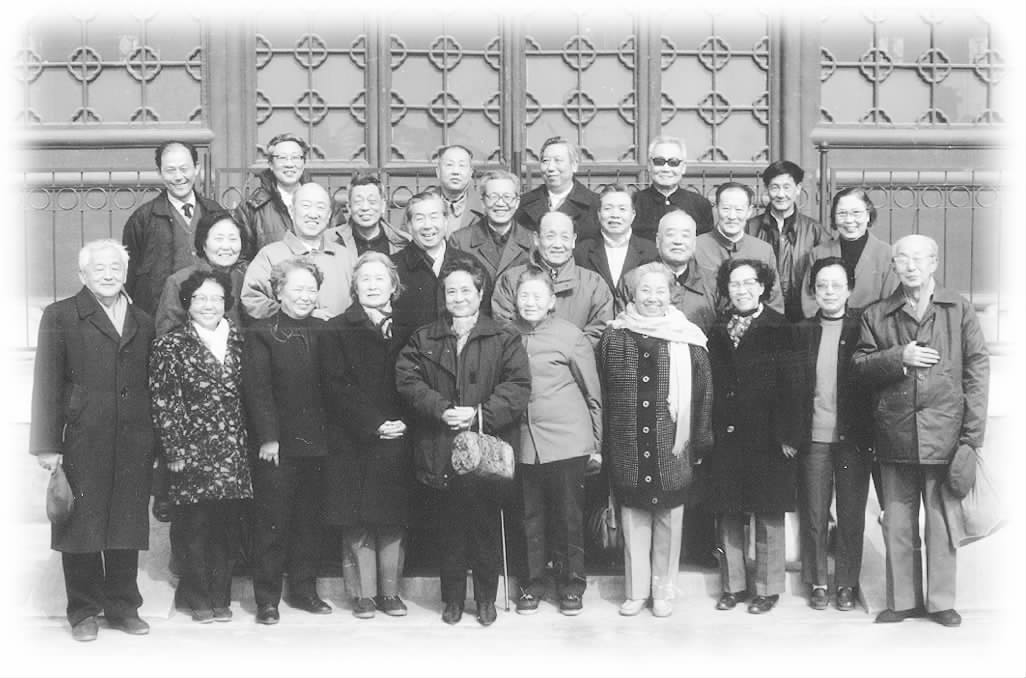
The Committee had just entered the city. One of our main tasks was to propose the list of delegates for the municipal forums of representatives from every sector. Peng Zhen and Ye Jianying presided at these forums, hearing opinions, suggestions, and criticism from every walk of life on Beiping's policies after the Party's entry. We liaised with these representatives (professors, scholars, experts, businesspeople, local elders), gathered situations and reflections, and in visiting explained key policies, writing up reports promptly for the Committee leadership. These forums laid the initial ground for Beijing's later All-Circles People's Representative Conference and CPPCC. Cui Yueli and the unnamed "Old Cui's place" office then became the United Front Office.
At the Committee, Cui Yueli bore the task of grasping and carrying out the Party's united-front policy. The theory and policy of the Party's united front were not deeply understood by every comrade; he had to fight against both the right and the "left" in the work, advancing on two fronts of struggle. In a climate where many took "left" as a mark of glory, he was often misunderstood, and often ran into one problem or another. But he was loyal to the Party and unafraid, held to principle, bold and skilled at consolidating and developing the united front, conscientious in carrying out the Party's correct line and policy.
Some concrete results came quickly. To bring the democratic parties into land reform: the Jiusan Society alone organized over 90 members, about 30 percent of its membership at the time. In the "Resist America, Aid Korea" arms donation drive: the Revolutionary Committee of the Kuomintang gave 1.5 billion yuan (old currency), the price of one fighter plane. Together the Revolutionary Committee, the Peasants-Workers Democratic Party, and the Jiusan Society gave 1.8 billion (old) in cash. The Democratic National Construction Association and the Federation of Industry and Commerce gave 64.8 billion (old), the cost of four planes — exceeding the quota, helping the Korean people in their fight against aggression.
After the 1958 rectification, then-Municipal United Front head Cui Yueli carried through to the democratic parties the "Three With" principle: "political-ideological education as commander, the work post as base, the practice of profession and the practice of labor as foundation — service and transformation combined." Under this call, the municipal Revolutionary Committee held 16 professional forums on literature, history, philosophy, foreign languages, transportation, etc., and ran an exhibition of members' writings and translations, showing 261 works by more than 50 members, including Wang Kunlun's play Qing Wen, Xu Baoju's Princess Wencheng, and more. Chinese–Western medical experts in the Peasants-Workers Democratic Party — Qin Bowei, Liu Shihao, Chen Bangxian — completed research and writing projects for the 10th National Day as gifts to the Party; some were named advanced workers; the great old Dr. Pu Fuzhou was awarded a gold medal by the central Ministry of Health. Old Cui often reminded us: a Communist working in a democratic party must especially guard against bourgeois individualism, study hard, stand firm, walk straight, act straight. He said it and he did it.
Cui took our work arrangement seriously. With us he built out a united-front liaison network: every university and relevant unit's Party organization had a united-front committee member; under each were Party members or non-Party activists in touch with professors, specialists, scholars, and prominent figures; we gathered the situation and responses promptly. Cui led us personally to call on people — visiting like friends, chatting easily, making friends — learning the situation, gathering reflections. On the way there and back he told us what to discuss, how to discuss, what to watch; his own work was the example. With prompt legs, ready mouths, quick hands, our material was truthful and timely, and leadership took it seriously. Peng Zhen praised us in person, and said that Chairman Mao valued our material — at the start of each day's work he asked for these reports first. For speed, after Cui's review our pieces were carbon-copied at once for the municipal leadership.
Cui's way of making-friends-and-talking was different from gathering opinions at formal forums. The latter was broader in reach; but this more artisanal, carefully-wrought method has its own strength. In ordinary visiting you hear much that comes from the heart. As Kou Zhun says in a Peking opera: "Without small talk, the big business won't happen." Often the real matter comes only at the door, shaking hands goodbye: "I had something more to say to you, Elder Brother!" Old Cui showed us this united-front method through both word and deed; for those of us used to a life among intellectuals, it was an education.
Cui then lived at No. 10 Taijichang Street and worked and lived with us every day. Work was genuinely tense; even Sundays we rarely left; the United Front Department was our home, and Cui its head. Our group lived well together — almost everything was shared, from "confessions" of personal histories to love-life skits and absurd legends — told casually whether to seek counsel or to hope the group could help one's own good dream come true. On the other hand, our Party-life was serious and strict, leaders and ranks fully equal. Life sessions every two weeks, real criticism and self-criticism; arguments in these sessions were sharp and earnest, sometimes red-faced and thick-necked, as if quarreling — not settling until right and wrong were laid bare. Old Cui's conclusions usually carried the room. Public and private were clear-cut: anyone who used a piece of official letter paper for a personal note had to speak of it at the small-group session and make self-criticism. We were frugal: an envelope used on both sides was torn open, turned inside out, pasted again, and used twice more. Wasting public goods meant a small-group talk: why? Measured against the Party member's standard, are you up to it? What to do next? Such strict organizational life did not make us cramped; it felt like the great family of the Party, comrades helping you grow healthfully — real political care.
Some comrades were stubborn, headstrong, fond of hard reasoning. At times, sending material up for Cui's review, they argued fiercely over a phrase; he, seasoned, patient, would stay calm after their argument, at most saying, "Why are you so stubborn?" When an argument wore him out he'd say, "You chew words to bits — always so many things. Stop arguing, write it my way." Thinking back later, his way was the right one. However fierce the argument, the trust remained, no grudge.
The United Front Office work under Old Cui, on the surface, didn't look "formal" — we worked day and night without distinction — but everyone was glad, without grudge, busy by habit, busy with zest. Especially on study, Cui set a great example.
The Committee's United Front cadres were mostly intellectuals — mostly Tsinghua and Peking students and teachers; our section heads were professors and associate professors. We small fry, especially the few middle-school students among us, had the calf-not-fearing-the-tiger drive and also, inevitably, a sense of being a head lower than the rest. Cui saw it clearly, and gripped political study tight — from the root raising all of us, especially the younger cadres. At one political-study exam, Cui graded himself; the small fry did well, and he encouraged us — strengthening our confidence in theory and in work.
His seriousness in political study was one thing; in traditional Chinese culture his persistence was another. He had no formal degree, yet amid endless work he always pulled time to read — earnest study of works like the Shiji. Truly precious. A leading cadre, after his work, flipping a casual book to relax, is natural enough; but he dug into old classics, which in those days was rare. In our memory he never played cards for fun.
He taught us much, but we never heard him teach "philosophy of life in the world." Some leaders dodge taking a stand on sensitive questions, to avoid error. Cui loathed that style. If you won't offer a view on what's in front of you, you've lost the function of a leader; by the time a situation has become clear to everyone, anyone can judge correctly, and what is leadership for? In 1952 he went to Shanghai to speak on Wu Fan; some high-salaried private-firm staff asked: "In the socialist period, how high will the people's living standard be?" He answered: "Not yet as high as yours is now." Some thought this reply unwise; today it looks plainly truthful.
We cherish those years. A close revolutionary family, in harmony, without officialdom, without flattery, urging each other on, growing together. So after the Cultural Revolution, each of us, at our new posts, as if by silent agreement held a shared wish: we would meet once a year to visit Old Cui and reminisce — a joy for the later years.
Now Old Cui has gone before us, but at our gatherings he once cried: "Our group — even if only two of us are left at the last, I propose we still meet!" Warm, sincere, candid, forthright, hopeful words — they have become a last testament of true feeling he left us. Though we're all now in our seventies and eighties, we still keep this gathering. To speak truly and see one another true — a rare and good fortune in life, truly worth cherishing. Close acquaintance deepens affection; affection deepens knowledge; knowledge lengthens feeling. Old Cui has left, but in life's journey our hearts still travel with his.
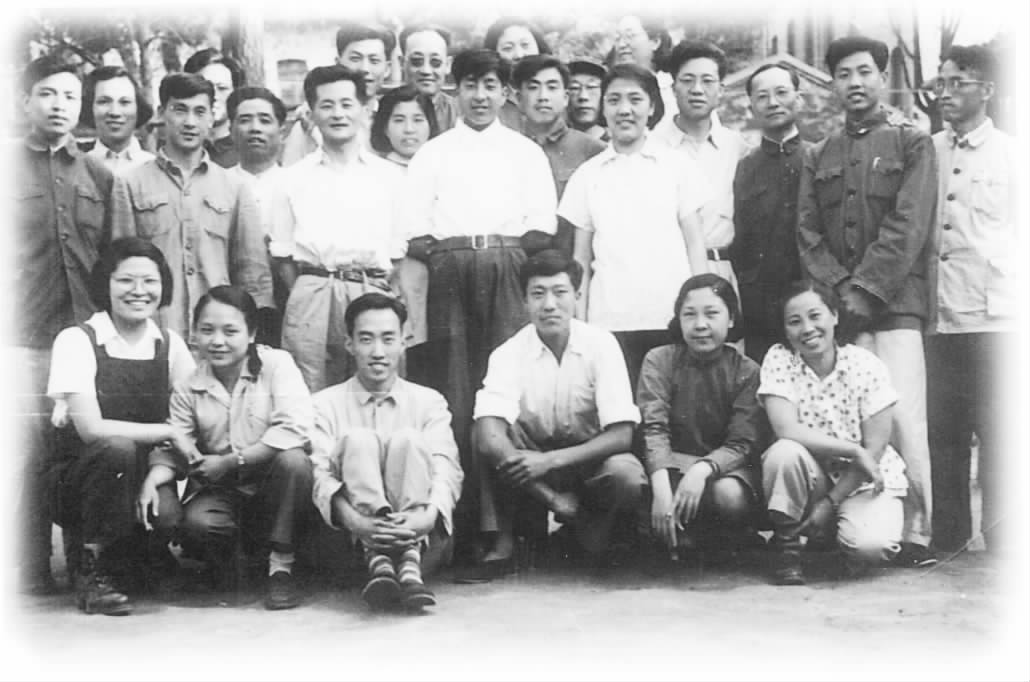
Memories That Cannot Be Erased
Zhang Lianyun · March 2001
I met Old Cui fifty years ago.
Soon after Beijing's liberation, I was notified by my underground Party group that my Party affiliation had been transferred to the Municipal Committee's Policy Research Office, and that I should report shortly. The day I went was a high day for me. I met Li Bingtai, Wu Weicheng, and many comrades; they took me to meet the office's leader, Comrade Cui Yueli. Though it was our first meeting, he treated me as an old friend, asking about my work, life, social ties. I told him about my work at Zizhong Primary School. Old Cui listened smiling, asking a question now and then. The whole talk felt natural and sincere. I had not imagined that this first meeting would lead to a working bond of decades.
Before liberation, we had founded Zizhong Primary School, at my old family home, No. 4 Yizi Alley on Fuyou Street; I taught there and lived there. To open the work and to use the family's standing, I joined the Revolutionary Committee of the Kuomintang at the end of 1948. After liberation, hearing that the RCKMT urgently needed an office, I lent the south wing of our courtyard for them to set up the Beijing local body. Old Cui, on behalf of the CCP Beijing Committee, came to call on the preparatory office. He was 29 then — fine of bearing, in a clean gray uniform, on a bicycle. After he left, several preparatory comrades praised him highly: capable, sharp, an able young man — and felt closer to and more trusting of the Communist Party for it. I was struck: a brief meeting, and Old Cui had drawn out such warm reviews.
In 1951 I was transferred from Beijing Primary School to the Municipal Committee's United Front Department. After handing over my school work, I had a letter from Old Cui pressing me to report sooner. My time at Beijing Primary had been hard; leaving, my mood was bad. Even though moving to the Municipal Committee was a happy thing, it was still a new place; my heart was uneasy. His letter was warm. Once at the United Front Department, my contact with him grew daily.
The Department was at Chaihualan then — a Western-style single-story compound, with rows of north and west wings, broad glass corridors, and a courtyard with flowers, shrubs, and a few rows of vegetables. The staff were few; aside from the head Li Leguang and Comrade Wang Gang, the elders, the rest were in their twenties or thirties. Most of us lived in the offices or the Chaihualan dormitories — together morning and night, a vigorous, striving, warm collective. Though Old Cui was a leader, he was easy and approachable; we young people often gathered to chat with him — state affairs, department work, our own thinking, this matter, that person, picked up freely; at the lively bits we'd burst out laughing.
Old Cui was good at cadre work — sincere with every comrade in the department. He knew each young person there, knew our temperaments, our thinking, our work, our families, even our views on each particular thing. He cared about each of us; if anyone was ill, he came to check. With this care, the relationship between leaders and ranks was warm; whoever had something on his mind was glad to tell Old Cui. He often chatted with me — my family, my view of traditional ethics, my analysis of loyalty and decency. Although thoughts and feelings I let slip in those talks were often refuted by him, I still poured out everything to him. We young people had mostly had higher education; many came from large families. To shake the pride and softness off us so we'd settle into work, Old Cui criticized us often, very directly. He often said: real learning is got in work. Don't think because your ages are close that you'll come out the same — a few years of work and the differences will be great. Some progress fast, some slow. Each must study hard, work hard. Plain words, but with deep philosophy: heaven rewards diligence. I have held it in my heart.
In the 1950s, to be known by the organization and trusted by leaders was a great fortune. Old Cui let every comrade in the United Front feel that knowing and trust. Out of it grew a strong cohesion in the department; we did our work in good cheer and spirit. The years at the United Front were the most joyful and most cherished of my decades of work.
At one Party-group meeting, Old Cui and I argued over a matter raised by a family. I was no match — I'd say one sentence, he had three waiting for me. In the end I couldn't bear it and, saying "Old Cui, I have my view of you," turned and walked out of the office. This is the only unhappy thing in our decades. I have not forgotten it; with time and with experience I have come to feel deeply that for a subordinate to argue openly with a leader, to confront him face to face, is itself a sign of the leader's democratic style. In our day, that style is precious.
In 1957 and 1958 I had two further talks with him that left a deep mark. The first was as the "blooming" turned to Anti-Rightist; I could not turn the corner. I kept thinking: weren't we asked to help the Party rectify? How did it suddenly become Rightists attacking the Party? How could we keep the people's trust this way? My inner struggle was fierce. I had even spoken at the Party-committee "blooming" meeting and said some hard things. Just then Old Cui called me to his office. I expected a strong scolding; to my surprise, he calmly and patiently spoke to me about the country's situation and about the Anti-Rightist work. From his words I felt that he had long understood my situation. He told me, too, that when the Municipal Committee's leaders had asked about my conduct in the rectification and Anti-Rightist, he had answered: "Zhang Lianyun's awareness is rather low." In that high tide, that answer let me dodge the heavy hat of "politically reactionary" — clearly, it was to protect me. I told him plainly what I was thinking, too.
In the latter half of 1958, my husband Che Muqi was labeled a Rightist. I had hoped against hope that he wouldn't be — heaven didn't follow the wish. My heart was very heavy; I had a strong urge to pour it out to someone. The first I thought of was Old Cui — the person I trusted most. I went straight to his Taijichang dormitory; it was a Sunday evening. He listened as he ate, and asked me, "What do you mean to do?" I thought it through — the years with Lao Che, especially our two children — and said, "He is still young; a family will help his reform." Old Cui said no more, only nodded sympathetically. What could he have said? His silent assent to my choice was the greatest support and comfort.
After becoming a Rightist's family member, I deliberately kept away from people; I did not seek Old Cui again. From 1958 to 1960, the Great Leap, the great steel-smelting, the People's Communes — three great campaigns came one after another, then Anti-Right Deviation. In 1957 (typo, should be later) I was transferred from the United Front to a rural middle school in the back-hills of Haidian — a hard place. I worried I might not even keep my Party membership. With nowhere to turn, I summoned courage and wrote to Old Cui for help. After that, every transfer of mine — from the school to the Education Bureau to Jishuitan Hospital — owed something to his direct help.
In 1964, a comrade at Xuanwu Hospital and I were both named deputy Party-committee secretaries. In those days, doing Party work was a very important post. Old Cui was then head of the Municipal Health and Sports Department. Because of our family-class issues, some at the organization said Old Cui's "cadre line" and "organization line" had problems. In years of class-struggle emphasis, such comment was heavy. Old Cui surely knew, but he stayed himself, and used what room he had to care for those in difficulty, and on his Party spirit boldly promoted able cadres of conscience.
Later, the United Front's old hands met once each Spring Festival. Once a year to gather with Old Cui, to talk and laugh — pure joy. Slowly the Spring Festival meeting became something I awaited. At Spring Festival 1993, Old Cui said he wanted to give each of us a gift. In May I received a letter from him with a gift — a "longevity" character calligraphy in the style of the Empress Dowager Cixi. The letter and the character weighed heavy in my heart.
Three years ago Old Cui left, suddenly. It took me a long time to come out of grief. I often think: in our decades together, with all the genuine help he gave me, I never had the time to say a word of thanks before he was gone.
Endless Longing, Without Limit
Gao Kai · February 2001
In early 1951, I was transferred from school to the Beijing Municipal United Front Department to serve as Comrade Cui Yueli's secretary — about two years. We worked day and night, took no Sundays off, lived on the supply system, and life was hard. Yet those years were the best stretch of my life. Beyond the right Party line, the country's overall good situation, and the general clean honesty of cadres at the time, the chief reason was Old Cui's direct influence on me. He poured himself wholly into the revolutionary cause — really, working without minding his life — and at the same time studied very hard. He was firm in struggle against the enemy, and full of warmth toward comrades and friends. He lived plainly, with a clean style, neat in dress, vigorous in bearing, modest and courteous toward people. We were studying then a famous line from Stalin: "A Communist must be made of special stuff." I thought to myself: Old Cui is exactly such a Communist.
*He is made of special stuff*
In those two years, Old Cui served as Deputy Head of the Beijing Municipal United Front Department, assisting Head Li Leguang, while concurrently holding many other posts: secretary to Comrade Peng Zhen; deputy secretary-general of the Beijing People's Representatives' Forum of All Sectors. During the "cleansing of cadre ranks" he was concurrently deputy secretary-general of the Beijing Loyalty-and-Honesty Study Committee. In the Wu Fan, he was the chief examiner of seriously-violating businesses; he was also assigned to lead more than a hundred Beijing cadres to Shanghai to support that city's Wu Fan. When New China hosted its first major international conference — the Asia–Pacific Region Peace Conference — he served as deputy secretary-general; afterward, when the national Resist America Aid Korea Committee (the "He Da" general office) was established, he served as standing deputy secretary-general for several years, assisting Liu Ningyi and Liu Guanyi in running its daily work. When the Chinese People's Resist America Aid Korea Comfort Mission went to Korea, he served as deputy secretary-general of the Mission's general body, going to the Korean front to comfort the Volunteer Army… These concurrent roles were not nominal but the central tasks of each period; he took part in the leading and organizing. I saw him direct and arrange in bold strokes — work tense, busy. At the same time, much specific, fine work had to be done, mainly the concrete problems of senior democratic figures asking the municipal leadership for help (recovering confiscated property, finding lost antiques, inviting eminent doctors, sorting out friends' or relatives' jobs, and so on). Comrade Peng Zhen and other leaders would refer matters to Old Cui. He looked into each carefully and handled it well, and whether he could solve it or not, he wrote a respectful brush letter to every democratic figure with an answer — work done thoroughly, with care.
I used to think: in carrying heavy tasks, Old Cui could lift the heavy with ease, could be both broad and fine, could swing the broad axe and chisel the small detail. He often returned to the Department past midnight from meetings here and there, and at his desk at once worked on stacks of documents, on department affairs, on letters of request, instruction, report, and reply. I sat beside him helping with copying and the like. One night I dozed off on the sofa; when I woke I saw Old Cui still writing under the lamp, with his own coat draped over me. Embarrassed, I apologized again and again. He said: "Young people lack sleep — that's normal; not your fault; just don't catch cold." He was only 31 himself.
*A study spirit beyond the ordinary*
What astonished me more was the study spirit he held in the snatches of time amid intense, busy work. From his cadre file, I knew he had only completed the fifth year of upper-elementary; afterward, all by self-study. His knowledge was wide; he read much. He read Marx, Engels, Lenin, and Stalin in their originals, one volume after another. Marx's philosophy especially drew him; many times I saw him discussing dialectics at home with Sister Xu Shulin. He read fiction too in the spare hours — the popular Soviet novels of the day, Days and Nights, The Young Guard, and others, he had read. Talking with young people he could quote from memory the protagonists' names and the standout lines. Once, at a recess in a People's Representatives' Forum, he chatted at length with Mr. Lao She; standing nearby, I heard him show real familiarity with Lao She's novels. He loved books; on trips and at meetings he often carried one along, and read at any pause. His bearing was cultivated, knowing books and rites; people unfamiliar always assumed he came from an intellectual family. At one Department meeting, in the heat of an argument, an old district secretary pointed at him and at Comrade Du Ruo and said, "You intellectuals…" — Du Ruo had been to college, and Old Cui had not even been to middle school.
In 1952 I went with him to Shanghai for the Wu Fan; he served as deputy director of the Shanghai Laozha District Production-and-Frugality Committee (the Wu Fan command). The director, a former regional secretary, asked me quietly: "Director Cui's learning is broad — what university did he graduate from? Where did he teach?" I told him: "Old Cui came from a poor peasant family. As a teenager he joined the Eighth Route Army and was long in underground work; his knowledge is mostly self-taught." The old regional secretary nodded with admiration. More remarkable: in those tense, busy spaces Old Cui not only read but practiced calligraphy. Several times, deep into the night after work, he would, full of vigor, practice brush characters; he would write a few and ask me to grade them as "A, B, C, D," then write again and ask again. Over time his characters grew finer.
These extraordinary working and studying spirits are deeply printed in my memory.
*He says he's "of low standard"*
What made being with Old Cui especially comfortable was his approachability — his openness, frankness, and sincerity. The team head Wang Zhicheng often quarreled with him over different views, even arguing right at his bedside; he would argue back, both pounding the table — yet got along well afterward. Under his influence, comrades in the Department often debated and yet united in cooperation. Top to bottom, even the orderlies, called him "Old Cui"; anyone dared to raise an opinion with him; he treated each subordinate with care and equality. What he wrote, time permitting, he would have me read first: "Stand a guard for me — see if there are any problems?" I had just started work, knew little; how could I see problems? But once I rushed to his room delighted: "Ha! I caught three typos in your draft!" The Department's office head He Liping at the time scolded me on the spot: "Is that any way for a secretary? How can you treat a chief like that?" Old Cui said to He Liping: "His learning is high — he's just helping me fix mistakes." When I went out with him and met other leaders, Old Cui would introduce me: "This is Gao Kai, my new secretary, very active; he helps me a lot." His humility shamed me, and warmed me. Old Cui took the views of those below very seriously. After every United Front meeting he would ask my opinion of his report; in front of him I had no reservation, and once said his speech at a particular meeting was "of low standard." He was not at all upset, even acknowledged it like a self-criticism: "I prepared in haste; didn't speak it well." I should not have repeated this remark to others; it sowed the seed of trouble later.
In the 1955 anti-counter-revolutionary campaign, I and two other comrades became key examination targets in the Department's campaign. Almost daily, examination meetings; arbitrary criticism, looking for our political-historical problems. After half a year of investigation, none of us had any. The matter could have ended cleanly, except that I wrongly questioned: "Why struggle first and investigate later? Why not investigate first?" — and complained that some of the things said at the meetings insulted and damaged my dignity, which displeased some on the leadership group. In January 1956, they convened a special branch meeting on me, read out a draft "resolution" listing several "crimes," the first (and chief) being "attacking leadership," with the only example being my saying "Director Cui is of low standard." The resolution passed; I was purged from the Party.
After the meeting I appealed; Old Cui forwarded my appeal to Comrade Fan Rusheng (then head of the Municipal Organization Department). Just two months later, Zang Yusheng, secretary of the Municipal Committee Party Group, came to the Department himself and convened another special branch meeting on my case. He announced: the campaign aimed at political-historical questions and must be separated from solving questions of thinking. Gao Kai's political history is now clear; what remains is only an issue of thinking; the Party Committee thus felt the previous handling was inappropriate, and asked for re-discussion. At the meeting many comrades spoke up for me; the resolution from the previous meeting was easily rescinded; my Party membership was restored. What moved me most was Old Cui's speech: "Gao Kai said my speech was of low standard; I am of low standard — that cannot be called attacking me, much less opposing leadership." He said many words of encouragement. I was moved to tears. I knew well why he had said before all the staff that he was "of low standard": to protect and free me. As department leader, weighing nothing of his personal honor — what a wide chest he had!
This was over forty years ago, yet the scene is vivid; whenever I recall his care and affection, I cannot calm myself.
*Professor Tao Dayong recounts the past*
At Spring Festival 1986, the former United Front comrades gathered at Zhongshan Park, and Old Cui said: "I used to be very 'left,' carried out many 'leftist' things; only when the Cultural Revolution put me in prison did I deeply feel how dreadful and harmful 'left' is." I think Old Cui's earlier carrying-out of "left" policies was the limit of the times — hard to avoid in those conditions — and he carried much helplessness inside.
In summer 1987, while convalescing at Beidaihe with the eminent economist Tao Dayong, vice-chair of the central Democratic League, he told me a story: in the Bloom-and-Speak period of 1957, Tao had attended a forum convened by Zhang Bojun; he was late, said little. He never imagined that as Anti-Rightist began, Chairman Mao would label that forum "the Six Professors' Meeting" (Fei Xiaotong, Zeng Zhaolun, Qian Weichang, Huang Yaomian, Wu Jingchao, and Tao Dayong) and define it as the "Zhang–Luo Alliance's brain trust." In an instant, criticism of him poured down. Beijing Normal University also held a school-wide struggle session against him. Tao said: "When the meeting broke up, my back ached and my body hurt, my spirit unbearable; suddenly an attendant called me, said a leader wanted to see me, and led me to a small room behind the meeting hall, asking me to push the door open myself. Inside was Cui Yueli, head of the Municipal United Front, alone. He said warmly: We know your past history; what problems you may have in this campaign will eventually be sorted; you must bear up under the campaign's blows, hold firm. As we parted, Director Cui took my shoulders in both hands and urged me not to lose heart." Tao said: "I was being shouted down by everyone; life seemed without hope. Director Cui's talk that day was a great encouragement." Tao remembered the brief meeting in such detail decades later — a deep mark.
Later, when I mentioned this to Old Cui, he said: "Tao Dayong was already a progressive professor before liberation, lecturing on socialism; he said nothing out of bounds in the Bloom-and-Speak. Only because Chairman Mao defined the meeting that way, the city had no power to change it. I knew intellectuals value reputation most; being struggled against by his own school's students would be a heavier blow on the spirit. I most feared he might not bear up and meet some accident — so I went specially that day to comfort him a little, do a bit of thought work; under helplessness, I did what I could."
*Crossing out the names of Sun Fuling and Li Yizan*
Of the cadres and democratic figures Old Cui had protected, who knows how many; unless I asked, he never spoke of his good deeds. One I lived through. Also during the 1957 Anti-Rightist, the Beijing Federation of Industry and Commerce held a series of meetings to mobilize denunciation of "Rightists" in business circles. By then I had moved to Beijing Daily as a reporter; the paper sent a team and put me, temporarily, in charge. In every campaign, a common phenomenon: some, to escape disaster, bend facts to label others, showing their own activeness, attacking others to protect themselves. The Federation's meetings showed it: thirty or forty prominent business figures were denounced by name; Vice Chairmen Sun Fuling and Li Yizan were both criticized as "anti-Party, anti-socialism." At the time Old Cui was the municipal leader handling the business sector's Anti-Rightist work. I sent the reporters' draft to him for review, and seeing the names of Sun Fuling and Li Yizan, he paused a long while and said: "They have cooperated with the Party for years; the remarks denounced from them carry no clear anti-Party content — leave them out of the paper." Experience told us: in the heat of a political campaign, to print a few of someone's snipped remarks could draw a great pile of criticism, hard to undo. Old Cui struck out those names and several others — in effect, protecting them. Mr. Sun Fuling now serves as a vice-chair of the National CPPCC and has made many contributions to socialist construction. Mr. Li Yizan died in 1984, having served as vice-chair of the Federation and deputy head of the Municipal Forestry Bureau. History has shown Old Cui's protection was wholly right.
*A woman cadre's age, kept secret*
To ordinary cadres and the masses, Old Cui was equally caring. In the 1951 cleansing of cadre ranks, every organ ran a Loyalty-and-Honesty study; each cadre was required to recount his or her past in a small group: from when to when, where, doing what — to keep a baseline on every cadre. At one unit, a woman cadre wept when she heard the requirement. Privately I learned that this woman, very career-minded, married late in her thirties and had hidden several years from her husband; she feared that talking openly about her past in the campaign would let him learn her real age and cool. Old Cui, then concurrently deputy secretary-general of the Loyalty-Honesty Committee, went down himself and inquired, came back to weigh things across the board, and with Comrade Liu Ren's approval decided that any cadre unwilling to talk in the small group could instead speak privately with personnel — so long as one truly accounted for one's history, the loyalty-honesty requirement was met. This not only relieved her, it was a meaningful policy adjustment, helpful for uniting cadres broadly. Old Cui specifically charged her unit's leadership to keep her age a secret. He said: "We must do nothing that could harm a personal life."
*Saving a production-team chief*
After the 1957 Anti-Rightist, I was sent down to do labor at Lugu Village, Babaoshan, in the western suburbs. One day in 1958 I suddenly saw Old Cui and Zhao Zhuyan come to see me — the Municipal Committee had had him go down for a stint. He took a small room in Lugu and often had me show him into the villagers' homes; old, young, men, women — he could talk easily with all of them, learning the village's actual conditions. The Great Leap was in full swing; the production team planned to gather every household's pigs into the brigade's pig farm. Old Cui differed and had me write a piece, "Pig-raising should walk on two legs — public and private," signed by both of us, sent to Beijing Daily; the paper held it for "not according with the situation."
In the countryside then, struggle meetings were also in vogue; for any small mistake there'd be a session at the field's edge or, in the evening, at the village school. The Lugu production-team chief was named Zhang, originally a hired hand, poor since boyhood, past forty and never married — alone — taking three meals at a widow's home. The widow was about his age, with several grandchildren. They looked after each other's daily needs. But suddenly the village buzzed with rumor that the chief and the widow were "improper." A few cadres who had had friction with the chief wanted to seize the chance for a struggle session.
Hearing this, Old Cui flared in anger and had me summon the village Party secretary and several cadres to his room. He sternly criticized those who wanted the session: "Search your conscience. You all married and had children in your twenties; Chief Zhang has lived as a single man all this time. You don't help him find a wife — you destroy his finding a partner. Is that right? He has the right to take that widow as his wife; she has the right to remarry too. But she is already a grandmother. In the countryside, for a grandmother to remarry — how hard! Neighbors' fingers will jab her back; her sons and daughters-in-law will be ashamed to lift their heads. This is the work of feudal thinking — but what good way is there now? Let them have their private contact. Given the special situation, you should understand them. Show some restraint, won't you? If you hold a session and humiliate them publicly, you'll not only end their contact, you may push someone to a disaster — drive the woman to the river. To whom would that answer? What good is it for anyone? I beg you — don't hold this session; sympathize, protect, and help them." The longer he spoke, the more feeling came; he reasoned in and out. The village cadres nodded and nodded. Afterward, as the secretary and cadres did the work, the rumors quieted. Chief Zhang continued his "three meals a day" at the widow's home — and never knew how Old Cui had protected them.
*Holding the firm faith that communism will prevail*
Time goes slowly, the past like clouds — yet many memories of Old Cui are vivid as yesterday. Writing this piece, my emotions wash together; I cannot sleep. The longing has no end. Story after moving story comes welling up — too many to write. I think again of Old Cui's last appearance at the United Front old-comrades' gathering, where he spoke of the winding road to communism. He said: "The Cultural Revolution's lessons need further summing up. To realize democracy in the country, the Party must first practice full democracy. Personal cult cannot be allowed; one-man rule must be opposed. The current Central leadership is good — but in 10, 20, 50 years' time? So we must practice democracy, continue reform, ensure no great problem comes again. But China is vast, the population huge, peasants the majority, feudal influence heavy, bureaucratism and graft many and complex; do not fancy a smooth sail; setbacks and turns are still possible. Yet however winding the road, however long the time, communism will be realized in the end."
I think: from his youth, Old Cui joined the revolution holding the communist ideal; in his eighties, he still firmly held the conviction that communism would prevail. The world today is greatly different from twenty or fifty years ago; in another twenty or fifty it will change much more — China will be built into a great, prosperous, developed socialist country. May Comrade Cui Yueli's spirit in the heavens see the changes here on earth with joy.
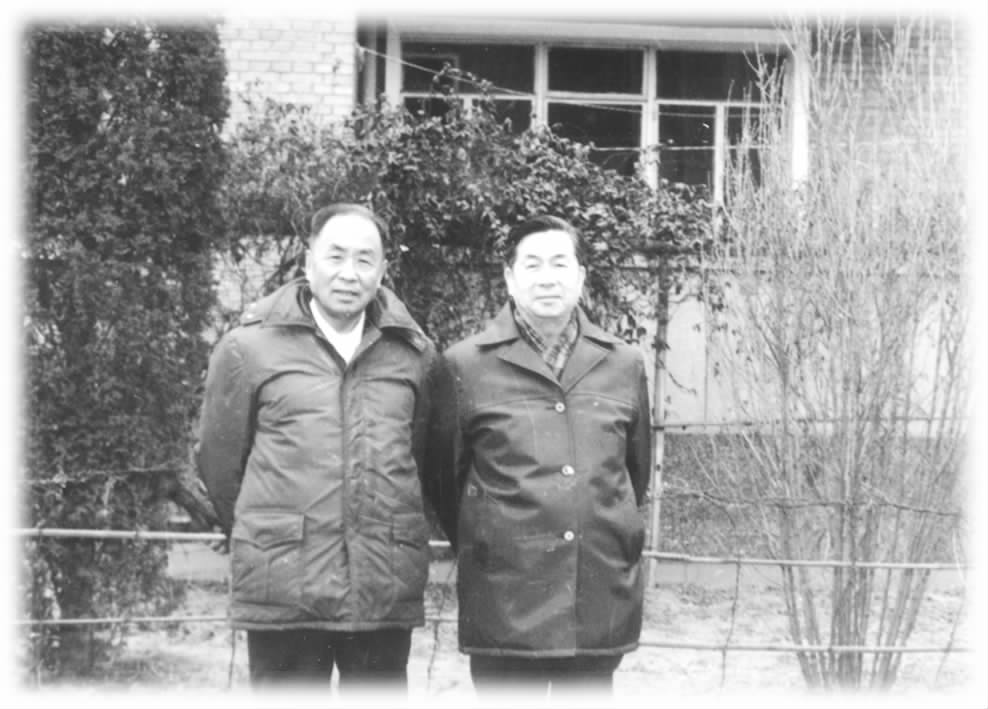
Comrade Yueli Understood "Me" Best
Jiang Lixun · February 2001
Approaching the third anniversary of Cui Yueli's passing, in January 2001, the old comrades who had worked at the Beijing Municipal United Front Department gathered in a small meeting room at the Beijing CPPCC — recalling the 1950s under Cui's leadership in united-front work, and the annual gatherings after the Cultural Revolution when we used to meet him. Scene after unforgettable scene rose before us; everyone sank into warm, stirring feeling. In the discussion, Comrade Zhang Lianyun said with deep feeling: "When we remember Comrade Yueli, we each feel that Yueli understood 'me' best." The "me" she meant is each of us. I have felt it myself: in those days, Yueli cared for me in study, nurtured me warmly in work, and looked after me in daily life.
When the Municipal United Front Office was founded in April 1949 I was twenty-one — the youngest. Though my assignment was "internal" work, Yueli often took me out visiting figures from every circle, to forums and investigations; or had other comrades take me. Through direct contact I became familiar with the work and came to know many. A core of united-front work is to know many people and stay in touch — so as to carry the Party's principles and policies across to each sector and hear views back. Yueli often stressed in study and planning: not only know many people, but learn each side of their situations; make friends who will tell us the truth, reflect reality, offer suggestions. If they are friends, treat them sincerely: convey their views and requests, help solve their difficulties. In the annual and quarterly plans, "making friends" was listed separately, with numbers and names, and periodic short biographies to be written. Under his guidance I made friends in ethnic and religious circles; those friends gave strong support to our ethnic-religious work. Because each comrade had a circle of friends, whenever a major event occurred at home or abroad, the Department could gather opinions quickly and report to the Committee in time — giving leadership firmer ground for setting and adjusting policy.
Another feature of Cui Yueli in work: the spirit of going deep into reality and opening new ground. In 1941, sent by the Urban Work Department of the North China Bureau under Jin-Cha-Ji, he came to Beiping to open anti-Japanese underground work — with almost no social connections on arrival. A few years later he had opened a new scene, making many friends in medicine and in education, and recruiting Party members. On the eve of Beiping's liberation, the Urban Work Department told the Student Committee to win over every expert, scholar, professor, and eminent figure who could be kept. In the press of the task, some prominent figures he did not even know; he went to call on them himself, declared his identity, and mobilized them to stay and help build the new Beijing. He demanded the same open-ground spirit in our work. For instance, in organizing the anti-imperialist, patriotic movement among Beijing's Catholic circle — as we organized clergy for study — Yueli had me live in the Catholic bishop's residence, eat and study with over thirty priests; in more than two months of wide contact, we understood each other better, made a circle of friends, and went deeper into the reality of Catholicism — fertile ground for the work that followed.
United-front work requires contact with figures from all circles outside the Party; it demands a certain political and professional level. So Cui valued our study of political theory, principle and policy, and professional knowledge. Newly come to the office, he told me to draw up a study plan. I wanted to study political theory systematically, and drew up a list including The State and Revolution, A History of the CPSU(B), The Communist Manifesto, Political Economy, and more. Yueli read it and said: "These are important — read them. But for you now the priority is On New Democracy, The Chinese Revolution and the Chinese Communist Party, History of Social Development, Modern Chinese History — and especially the Resolution of the Second Plenum of the Seventh Central Committee. Grasping these, you can do the work at hand." I revised the plan by his guidance; after some study and practice, I had a broader grasp of China's reality, the current revolution's nature and steps, the Party's line and policy and measures. Thinking clearer. On top of this, Yueli often joined our group study and discussion, sharing his reading and his analyses, from which I benefited much.
In everyday life, Yueli cared for me in ways I'll never forget. In spring 1949, barely a month after I joined the Department, he came on his bicycle to visit my home, meeting my whole family. Later when my family moved to Nanchizi and then to Bensi Alley, he still came — always on his bicycle — asking after our daily lives, chatting casually like a family member. He took me to his own home many times, and even took me to his village in Shenxian, Hebei, where I stayed for four or five days; by that time we knew each other through and through.
In the three-hard-years period I was sent down to Wulituo Brigade of Shijingshan Commune in Fengtai District for labor. By then Yueli had moved to the Health and Sports Department of the Municipal Committee; I went to say goodbye before going down. He happened to be out, so I left a note. The next day he called, encouraged me to train myself well in the countryside; he said it was a very good opportunity to learn. His call cheered me. What moved me more: in winter 1961, the hardest time in the countryside, with many commune members edema-stricken. I was Party branch secretary of the 4th small team at Wulituo. One day, Cui Yueli and Zhao Zhuyan came out to visit me. Just then the teams had been newly divided, taken on as accounting units; the common canteens had been disbanded; members had been given private plots. Conditions were still severe but the peasants' mood had steadied. I briefed him on this. He listened carefully, urged me to hold on, said things would turn around before long, and that temporary difficulty would pass. His visit warmed me, and strengthened my confidence to get through.
Forty or fifty years on, these things come back vividly.
A Recollection from the "Younger Generation"
Miao Shuwan · June 2001
In March 1951 I finished study at the Municipal Party School and was transferred to the Municipal United Front Department. There were only seven or eight people in the office then. Soon comrades from universities and middle schools joined and we grew to over twenty. Li Leguang was head; Cui Yueli was deputy head; Wu Weicheng, Wang Zhicheng, and Wang Gang were section heads; below them, staff officers great and small. The Municipal Committee had then a clear rule that no one address leaders by official rank — only as "Comrade." So at the Department we'd customarily call the head "Comrade Leguang"; the rest, including Cui Yueli, formed an "elder generation" and a "small fry generation": "Old Cui," "Old Wu," "Old Wang" (Wang Zhicheng and Wang Gang) on one side; "Little Gao" (Gao Kai), "Little Jiang" (Jiang Lixun), "Little Wu" (Cheng Zhaowu), "Little Dong" (Dong Guogang), "Little Xue" (Xue Yuzhen), and me on the other. The relationships between leaders and led, between comrades, were close and harmonious.
When I joined, Cui Yueli was just 31 or 32. He struck me as capable, decisive, and tireless in study. He often studied through the night and reported on time the next morning; for sleep he'd nap a little in the car on the way to a meeting. He often said his level was only primary-school; in fact his knowledge was wide. I deeply respected him.
His knowing, caring for, protecting cadres came out in countless small things. In 1957 the Municipal Committee streamlined its organs, sending a group to education and health work. I was originally to stay, but I very much wanted to go to a hospital, and once let it slip in chatting with comrades. Old Cui heard of it, called me in to ask, and arranged my move to Chaoyang Hospital. Cheng Zhaowu, who was then his secretary, had loved planes since childhood and dreamed of flying; transferred from No. 4 Middle School to the Department in 1951, he kept the love alive — reading aviation magazines and building plane models in his off hours. When the air-force academy enrolled, Old Cui actively supported his applying — and he became an excellent pilot. After the Cultural Revolution, he helped found the China Aviation Museum, translated much aviation material, wrote teaching materials — a specialist in our country's military aviation.
In the early 1950s the Municipal Committee worked in three blocks — morning, afternoon, and evening — and after nine at night the work often ran into the small hours. The Department's "small fry" mostly lived in the dormitory next to the office, rarely going home on Sundays. Old Cui lived in the inner room of his office; with any spare moment he'd come chat with us. Some Sundays he'd take us "small fry" out to swim at the Summer Palace; at noon, like the rest of us, he'd eat a piece of bread with cold water; we played until four or five and went back. We were on the "all-found" system then — only a little pocket money each month, life rather hard yet full of joy.
One Spring Festival break, he asked me, Shen Wen, and Cheng Zhaowu to visit comrades' homes with him. At my home it was lunchtime; we were having stuffed pancakes; he sat with my family on small stools around the small table, ate, and praised my mother's pancakes. After lunch he chatted with the neighbors in the courtyard. When the neighbors later learned he was a Municipal Committee cadre, they all said how approachable he was.
After the Cultural Revolution, the old United Front comrades all missed him. From 1986 on we gathered once each year around Spring Festival; our shared wish was simply "to see Old Cui." He was practicing calligraphy, and wrote a "longevity" character (shou) for each of us; for me — being young — he wrote "blessing" (fu). At each gathering he spoke to us about the situation, about the way of "cultivating life," wishing us all to learn from Comrade Wang Gang and live long. Just as we were preparing for another gathering before Spring Festival 1998, he suddenly left us. The news struck us with great grief.
Old Cui — you have gone before us. We are all now in our seventies and eighties. Even if the yearly gatherings become hard, we will keep in touch by letter, phone, and card to the very last.
Learning Comrade Yueli's Seek-Truth-from-Facts Style
Zhao Zhuyan · February 2001
In the summer of 1958, by the leadership's arrangement, Comrade Cui Yueli went down to the Shijingshan Commune in Fengtai District for an extended grassroots stint. I was then in the Industry-and-Commerce group of the Municipal United Front Department; he asked me to come along to Shijingshan. I had gone straight from school into the bureaucracy and was glad to train at the grassroots; with my section's approval, I reported to the commune.
1958 was the year of "oppose right deviation, rouse spirits, fight upstream." That May, the second session of the Eighth Party Congress laid down the general line — "go all out, aim high, build socialism greater, faster, better, and more economically" — and soon the country saw the Great Leap and the People's Communes. Under the guidance of the "Three Red Banners," every sector across the country built up a frenzy of bold-and-fast doing. As the 1981 Resolution on Some Questions in Our Party's History later noted, lacking experience, lacking knowledge of economic laws and of China's situation, in haste for results we exaggerated subjective will and effort, and "left errors marked by high targets, blind orders, the wind of exaggeration, and the 'communist wind' overflowed seriously." It was in this atmosphere that Cui Yueli went down to Shijingshan.
The newly-formed Shijingshan Commune oversaw six brigades — Beixin'an, Bajiao, Babaoshan, Yamenkou, Xihuangcun, Wulituo. Most of his time, Cui lived at the commune compound in Beixin'an Town and at the Babaoshan Brigade headquarters in Lugu Village, until after the wheat harvest of 1959 when he returned to the Committee. Amid sky-high targets and the wind of exaggeration, he held to starting from local reality and seeking truth from facts. The impression has stayed with me.
In 1958 the country took up the cry to "catch up with British steel within fifteen years"; not only did steel firms push for output, with victory bulletins constant, but a mass movement of melting scrap iron by folk methods spread through urban and rural sectors. Soon after Cui arrived, on a visit to Babaoshan Brigade, the brigade head told him villagers had smashed iron pots to do folk steelmaking — what they smelted was all junk. He smiled and said: if folk methods can't smelt qualified steel, let's get the members back to farming and side-line work; let's support the steelworks workers in steelmaking. From then on he often told commune and brigade cadres: with Shijingshan Steel here, plus a power plant and a special-steels works, the commune should mobilize members by local features to grow more vegetables and develop side-line production — boosting collective and farmer incomes and providing rich non-staple foods for the workers. He warmly approved Babaoshan Brigade's hiring an "old vegetable hand" from Lugouqiao Commune in Fengtai to teach planting; he spoke many times with the old man, sought his experience and views, and urged him to help the brigade plant well and plant much. He praised the commune's later side-lines — a dairy and a fishery. He stressed in particular: develop pig-raising as both collective and household; do not slight either.
Each June, the broad rural lands north of the Yangtze come into wheat harvest. On June 8 came reports that a county in some province had averaged 2,105 jin of wheat per mu on five mu; in mid-to-late June, another report from another county claimed test plots of over 4,300 and 4,600 jin per mu. After wide investigation, Cui felt the soil here was not bad and the manure plenty, but the best wheat plots yielded only 400–500 jin per mu, none reaching a thousand. Discussing with cadres and members, he asked carefully again and again: with our wheat at a few hundred jin per mu, how many jin of seed do we sow per mu? After tillering and ripening, how many spikes per mu? How many grains per spike? How many grains per jin? After we ran the numbers together, we judged that several thousand jin per mu here would face many unsolvable problems. Cui said: each place's conditions differ; we must learn from the daring spirit of the high-yield places, but we must, more than that, take measures from our own actual condition — and aim at some increase next year.
Around National Day is wheat-planting season in Beijing. He discussed it at Babaoshan with the brigade. Setting from the actual, on the broad fields we modestly increased the seeding rate; on a few small experimental plots (a handful of beds) we tried deep plowing and dense planting at 100 jin per mu. Result: in the spring, the deep-plow dense plots came up so thick they lacked air and showed "yellow blight" — we had to thin them. The fields with the modest seeding-rate increase yielded across the board, some reaching about 800 jin per mu — far above the previous best.
In his stint, when at the commune he ate and lived with the commune cadres; when at the brigade, with the brigade cadres. He'd cycle from village to village or walk. In discussing work with cadres, he listened carefully, never imposed; cadres were glad to discuss with him. Many said: "Director Cui's stint here — he's approachable, seeks truth from facts, doesn't 'sail with the wind,' and often relays the Committee's spirit on rural work, very helpful to us." In 1959 he returned to the Committee as head of the Health and Sports Department, and kept up his friendship with the commune cadres. Before the Cultural Revolution, the commune leadership invited him several times to come back and see the development.
The Shijingshan stint was over forty years ago, and Yueli has left us, but his style — seeking truth from facts — will always be our model.
The Respected and Beloved Old Cui
Wang Maichu · May 2001
In late January 1998, returning home from Guangzhou, the first thing my eye fell on was Comrade Yueli's death notice — sorrow flooded me. From 1949 I had worked under his leadership; he was approachable, with no airs of office, and we all called him "Old Cui."
Old Cui loved working people, his heart linked with cadres and the masses. He was always among them, with deep feeling for the laboring people.
In the 1950s, the late Beijing model worker Shi Chuanxiang's deeds were a household story. After Old Cui became Vice Mayor, he and Mayor Wan Li went down to Shi Chuanxiang's sanitation team to carry the dung-buckets — it caused a stir across the city. Mayor and Vice Mayor working with night-soil collectors became a story spread widely. While people thought it remarkable that Old Cui would carry waste, he didn't think so himself: I am a working person, he said — I was, and I still am — only the division of labor differs; in a leading post, do more for the laboring people. He said it and lived it. Around him, the "laboring people" — sanitation workers, elevator operators, drivers, housekeepers, barbers, and any poor people he came across — received from him sincere care, help, and support beyond counting. In work, what he most considered was: is this policy good for the laboring people? Will they accept it, support it? He never sat in an office to make policies; he held to going deep, investigating. His meticulous, vigorous style was rooted in his deep feeling for the people.
He was loyal and pure to Party and people; he loathed the enemy and the rotten elements within the revolutionary ranks. During the Cultural Revolution he suffered cruelly under the Gang of Four, was tormented inhumanly at Qincheng for eight years. Through all those iron-windowed years he held fast to faith in the Party and the people, fighting Lin Biao's and the Gang of Four's clique with resolve — the Party spirit and revolutionary backbone of a Communist. Once at a Democratic League forum marking the centenary of Wu Han's birth, he denounced the Gang of Four's cruel persecution of Wu Han, and broke into sobs unable to speak. Too stirred, his heart troubled, he left the hall before it ended; once home, his heart attack came on. Whenever I think of it I weep.
A widow of a senior democratic figure — five people, three generations, in one damp single-story room — hoped for a flat for her last years. When the matter reached Old Cui, he said nothing, picked up the brush and wrote up materials for the relevant unit, attesting that her late husband had served the Party in the peaceful liberation of Beiping and had worked with Comrade Dong Biwu. Old Cui wrote: "Chairman Mao said, 'No one can forget those who have done good for the people.'" In one go, three large pages of testimony — to help her get a flat.
Old Cui was indeed a fit leader — his persistence in his cause, his diligence in study, his care for subordinates, his openness, sincerity, forthrightness — these are deeply printed in our memories. The days under his leadership were truly a "golden time" of my life, never to be forgotten.
Minister Cui Through an Orderly's Eyes
Wang Chunling · March 2001
It has been more than three years since Director Cui passed; I miss him deeply. Though I worked with him only five years, we kept in touch decades, and whenever I had a problem I couldn't solve I went to him. To follow such a chief is my luck. His teaching set the course of my striving; his help, his everything for me, I will never forget and could not repay. Conscientious and responsible in work, hard at study, treating comrades like brothers — he is a model I will always learn from.
In 1950, I was transferred to the Beijing Municipal United Front Department as an orderly. My work was mainly to look after Comrade Cui Yueli's daily life — and the office's cleanliness. I was 15 then; he usually called me "Little Imp." On my second day he gave me his door key and the new bicycle the organization had issued him. So my bike was the best in the Department. With the supply system in force, the Director was entitled to the "small kitchen" — in fact a simple meal, one dish and a soup. I fetched his meals morning, noon, and evening; with his work day-and-night, mealtimes were irregular; if he came back late I'd ask the small canteen for whatever they had — a single bento with rice and gruel. He often said: "Eat what there is — fill the stomach, that's enough." The Department was newly set up; the supply system was uniform; the allowance was modest. The work-day was three blocks — morning, afternoon, evening — over ten hours and still felt short, often into the small hours. Everyone worked as if one body. Director Cui was particular about cleanliness, and at work he was not afraid of grime or weariness; moving rooms and cleaning were my job, but he insisted on doing it with me — brush and rag in hand — until every corner of the bath and the room was spotless.
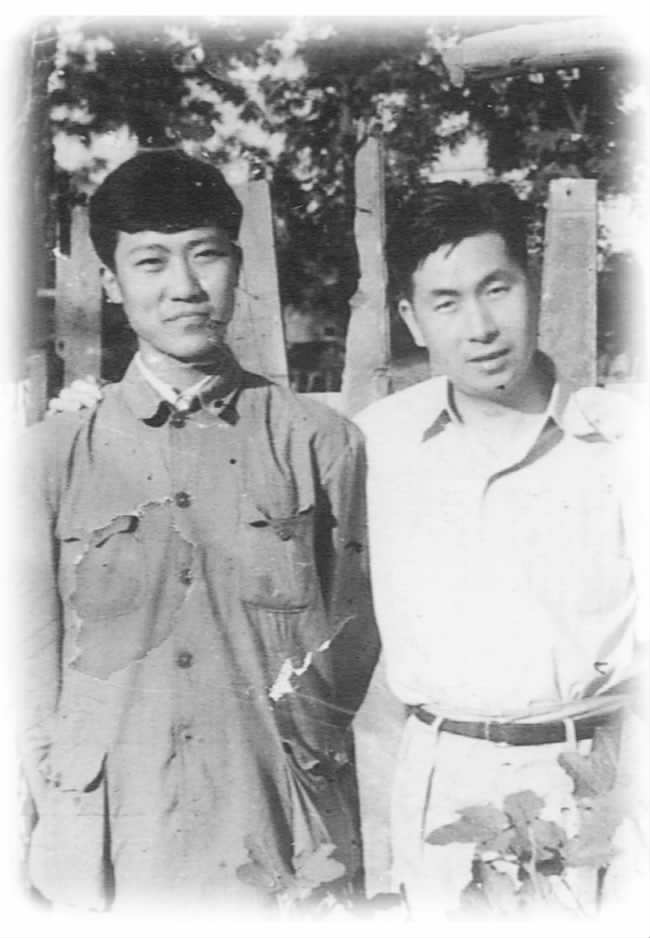
Director Cui cared for me with particular warmth. One noon I had finished cleaning the meeting room and dozed off on the sofa; I woke to find the room full — his meeting had begun — and his coat over me. Seeing me wake, he smiled: "The Little Imp is tired — sleep a little more." I sat up, embarrassed, and went to pour tea for the guests.
His work was very busy. Of an evening, the desk would be stacked with documents; he handled them firmly and quickly. Sometimes a comrade would write up materials and have me bring them to him to review; the next day, returning the document to its author, I'd find the brush had cut three or four pages of writing down to three or four lines.
He valued document study. Textbooks of college and middle school often sat on his desk. I also handled the Department's office supplies and books; each month a small budget for books — before each purchase I asked what he needed. He studied hard, with stunning will: I would have slept and woken once, and his lamp would still be on.
He was strict with me too. I attended the Municipal Committee's evening school and had homework morning and night. When Old Cui spoke with me, it was about study; he urged me to grasp the time. He'd say, "A day past is a day gone; a minute past is a minute gone; in this life it does not return." He told me many tales of self-taught success. He spoke clearly and persuasively; I listened with relish; the words remain. He cared for my political progress too. I joined the Youth League at 15 and applied for Party membership at 18 — but family-class trouble blocked me. Director Cui still had his secretary inquire at the Municipal Organization Department; learning it could not be solved soon, he called me in: "Be a Bolshevik outside the Party."
I worked at the electric-machine plant for five years, then five more in support of the petroleum industry. By 1965, when the Beijing-Tianjin oil survey team I belonged to had found oil and was to be turned over to the Petroleum Ministry, the administrative staff would have to be reassigned by the organization. I thought of seeking out Director Cui — he was then standing Vice Mayor. One summer evening in 1965 I went to the city government to find him; he had me in at once, set down his papers as soon as he saw me, shook my hand, sat me down, and asked after me as if I were family. When I explained, he was very warm and promised to help connect things. The next day he forwarded my transfer letter to the Personnel Bureau. After waiting at home with no news, I went again. He said: "Set your heart at ease; in the waiting time, read more books." Later I learned my file had circulated half the city — mostly because of family-class trouble and my lack of a good education, many units would not take me. In the end, it was thanks to Director Cui who said, "Chunling has worked at the Municipal Committee since she was so young, all along very hard — why won't you take her?" — that I was placed at the Dongsi Office of the East City District, where I worked until retirement.
A Good Leader and a Good Friend
Jiang Zaifang · July 2001
I met Comrade Cui Yueli in the early 1950s. He was especially warm with comrades, one with the masses — a fine leader, and a close friend and comrade. We never called him by title; custom was a warm "Old Cui."
In the early 1950s I was a resident physician and part-time Party-branch secretary at the Beijing Children's Hospital. Li Tong was Youth-League-branch secretary; Hu Yamei was the union chair. Our political-study zeal ran high; we regularly organized the three senior directors — Zhu Futang, Wu Ruiping, Deng Jinjin — to study The Communist Manifesto, A History of the CPSU(B), and A History of Social Development. The study atmosphere was free and lively. Director Deng asked the most questions; as young Party members we often couldn't answer, so we'd invite Comrade Cui Yueli to join the study. Though very busy, he came regularly to our discussions and answered. The free discussion and the thick atmosphere of study of those days were — in my experience — unmatched before or since; I still miss them.
At liberation's first batch of land-reform work, originally the Children's Hospital had no quota, though the directors much wanted to take part. One evening I ran downstairs to Old Cui's home and called out to him; we met, and I pressed the request — the Children's Hospital should have a quota. The result was one quota; Director Wu Ruiping went to Hubei. In the second batch Hu Yamei went to Hunan. Director Wu and others received a great education from the experience.
Old Cui required young Party-member medical workers to be "both red and expert" — to grow into the Lin Qiaozhi or Zhu Futang of our age. For us young "double-shoulder-loaded" Party members it was pressure and motivation at once. Strict with us, he also earnestly cultivated us. From 1955 to 1959 I studied pediatric tuberculosis in the Soviet Union as a research student at the TB Research Institute. Returning in late 1959 to the Children's Hospital as deputy chief of Internal Medicine, the Beijing TB Research Institute then asked that I be transferred; the Children's Hospital would not release me. The standoff ran two or three years. Sensing it was hard to settle, Old Cui once asked me: "Could you play a bigger role at the Children's Hospital or at the TB Institute?" I said, "Nowhere do I play a big role — let the work's need decide." I was then transferred to the TB Institute and set up a special pediatric-TB research office. Old Cui supported it; that year a 1963 medical-college graduate was assigned to me as an assistant. Soon I set up a pediatric ward at the Institute and continued overseeing the TB ward at the Children's Hospital and the pediatric work at the Municipal TB Prevention Institute. Old Cui once thought of setting up a dedicated pediatric TB hospital; for various reasons it never happened, and after the Cultural Revolution the plan was set aside. Back from the Soviet Union I felt the Party organization's support and use was great; I was glad. I did some work in pediatric TB, and Old Cui always introduced me as a little specialist to anyone he met.
At the start of the 1966 Cultural Revolution (I had been at the TB Institute only about three years after the transfer), I took part in the movement at the Institute, struggling against the "old Municipal Committee" hard. One evening an all-institute meeting was held, and we sat on the ground in the courtyard. Suddenly someone stood up: "Let Jiang Zaifang denounce Cui Yueli." Unprepared, I flinched and stood and said, "Old Cui — Old Cui has no anti-three words or deeds." The chair said: "You still call him 'Old Cui.' He is an anti-three element. What class feeling is this?" A cold rushed up my back; I sensed I was about to be pulled out on display. Luckily a comrade shielded me: "Jiang is a 'three-gate' cadre, without class-struggle consciousness." I got only a cursing.
Two years later I was tagged "a sprout of revisionism" and "a Soviet-revisionist spy," pulled out for dictatorship and forced labor. After the Gang of Four fell and Old Cui was released, I went to see him; he was then in a small two-bedroom place by Longtan Lake, a little dazed, hands unsteady. I remember that day I walked with him a full loop around Longtan Lake, talking as we went. He was very glad — eight years' hardship, as if another life. Of the Cultural Revolution he felt only pain, but never said how he had suffered or what grievances were his. His concern was only how to make up the eight lost years with more work. His loyalty to the revolution taught me much.
A Symposium in Memory of Comrade Cui Yueli
Beijing Association of Senior Medical Workers · June 2001
In memory of Comrade Cui Yueli, the Beijing Association of Senior Medical Workers held a forum at the Beijing Health Bureau on June 11, 2001. Attending were Shi Yu, Shi Jinxiang, Li Zhenmin, Li Jian, Zhang Zhidong, Wang Zhilian, and other comrades. We looked back on Old Cui's outstanding contributions and brilliant record during his leadership at the Beijing municipal and central Health bodies — especially on revitalizing Chinese medicine, caring for intellectuals, cultivating young cadres, and on his work style: going deep to investigate, approachable, vigorous in action.
Cui Yueli was firm in character, dared to speak and act, open and selfless. He had a deep understanding of and deep feeling for traditional Chinese medicine. He put enormous work into revitalizing it and poured his whole heart in. Even in retirement, he followed TCM's development without letup, writing letters to central leaders Jiang Zemin and Hu Jintao, to the Central Advisory Commission, the National CPPCC, and municipal leaders with proposals for revitalization. To the director of the State Administration of TCM alone he wrote 18 letters, setting out the theory, method, and steps of revitalizing and developing Chinese medicine.
"Chinese medicine has thousands of years of history; Western medicine came to China only about 200 years ago. Our nation's survival and reproduction have depended on Chinese medicine. Chinese medicine is a treasure of the Chinese nation." This was a line he often spoke. While he headed the Municipal Party Committee's Health and Sports Department, he actively advocated and organized "Western doctors studying Chinese medicine." The city ran several full-time study classes for Western-medicine doctors in TCM; after graduation the trainees continued under senior TCM doctors. Most grew into accomplished integrated practitioners. He also advocated opening TCM hospitals — every district and county TCM hospital in Beijing was established in that period. In city- and district-run general hospitals, Chinese-medicine departments were added; at the municipal TCM hospital, a TCM research institute was set up.
After his transfer to the central Ministry of Health, he went on caring for Chinese medicine. In 1985, at a national TCM hospital directors' conference, he stressed that TCM hospitals must highlight TCM's features and should be headed by TCM practitioners. Stressing the features, he said, did not mean rejecting integration — the relationship of Chinese and Western medicine must be set right. After that meeting, TCM hospital directors were gradually replaced with TCM practitioners.
Cui Yueli cared for intellectuals with special warmth. Many old specialists received his political and daily-life care.
Cui Guchen, the senior specialist at the former TB Hospital, was labeled a Rightist in 1957, his spirit pressed. Cui Yueli went to his home to talk heart-to-heart and do the thought work. Learning that Cui Guchen had been labeled for saying at a meeting "the hospital should put medical care first," he faced down the risk and, after consulting with the grassroots Party organization, reversed the verdict in early 1959 and invited Dr. Cui to attend the 10th National Day observance — the latter was deeply moved. While at the Municipal Committee, Cui Yueli attended a Party-branch meeting at Xuanwu Hospital that discussed a resident doctor's Party application. That doctor, now a specialist in his seventies, still remembers it vividly.
During the 1958 rectification/anti-Rightist period, Cui stayed at Tongren Hospital. He convened a forum of so-called "problem" medical staff and said: "Anyone with criticism of the Party — say it to my face. Speak, and I guarantee you won't be labeled a Rightist." Many intellectuals spoke freely; he declared on the spot that speakers would be "nothing." So Tongren Hospital's Rightists were few.
He often went to the grassroots to learn about intellectuals' lives; wherever there was a difficulty or illness, he visited and helped solve practical problems. Jishuitan Hospital's German specialist Müller lived in an inconvenient single-story; he wanted to renovate but lacked funds. Cui had him design the plan and had the hospital arrange the work. Anding Hospital's Wei Yulin was ill and had trouble commuting; Cui had the unit ensure the specialist's use of a car. In the three hard years, some senior specialists' wages were low and life was hard; Cui had the relevant units grant them a monthly living subsidy of 100 to 300 yuan.
He valued the cultivation of young cadres — strict, yet caring. In the 1950s, when a young cadre newly transferred from finance-and-trade to health, Cui called him in, asked him to adapt quickly to the new environment, and said: health is a place thick with intellectuals; you must mobilize their enthusiasm to run a hospital well. Learn by doing; ask what you don't know — I can teach you. He took the young cadre many times on visits to medical staff's homes and showed him the method. Cui emphasized lifting cadres' theory: nearly every year he arranged study classes for hospital-level leaders — reading Mao's On Practice and On Contradiction. He valued service attitude in medical staff: every three months a comparison, which pushed improvement. In cold winters he often called hospital leaders at midnight to ask the ward temperature; if below standard, he required them to go to the boiler room and help stoke the fire. Under his strict demands, some grassroots leaders simply slept at their hospitals.
Cui cared deeply for grassroots hospital construction. In his central Ministry years and in retirement, he often went to district and county hospitals to learn the situation and help. Once he went to Wuji County's TCM Hospital and saw poor conditions; County Head Liu Ri said the county had no money to improve them. Cui had the county submit a report, then instructed the Ministry's Finance Department to designate 100,000 yuan for the hospital. Hebei Hengshui's Harrison Hospital, in a poor old base area, had inferior equipment. Cui took the Party-committee secretary of Tiantan Hospital on an inspection and had Tiantan send a CT unit to Harrison, with technicians to install it, and to train Harrison's CT technicians and neurosurgeons. Under his care, Harrison received Tiantan's support and grew quickly — establishing neurosurgery outpatient and inpatient wards and greatly improving local care.
Months before he passed, he still called and sent people to Guantao County People's Hospital — one of Hebei's poorest — to help address its technical backwardness. Specialists from Beijing's large hospitals held outpatient clinics there and taught; the county sent doctors to Beijing for further training. The hospital's technical level rose, its finances improved, and — more important — the local peasants got better care.
(Drafted by Shi Jinxiang, Shi Yu, Wang Zhilian.)
Remembering Old Cui's Working Style
Zhang Tong · July 2001
Three years have passed since our good leader Cui Yueli left us. Three years ago, at year's end, Wei Mei (now Party-committee secretary at Friendship Hospital) and I had two pots of azaleas in full bloom ready, and had agreed to go see him. We did not imagine that morning he would suddenly fall ill and leave us. Tears in our eyes, we carried the two pots of azaleas to his portrait and set them down quietly — looking at his kind smile, unwilling to leave for a long time.
Just before this Lunar New Year's Eve, I ran into Little Li, a driver at the Ministry of Health. Mentioning the anniversary, he was deeply moved, and could not forget the scene at the old Minister's funeral. He said: "The day Director Cui passed, no one notified us drivers, but every one of us got to the hospital to say goodbye. The old Minister was approachable, caring, warm — he won people over." I too remember the people holding flowers that morning, stretching from Beijing Hospital all the way to Dongjiaominxiang — an endless line — hoping to see the beloved Old Cui one last time, wishing him a safe journey.
In 1957 I transferred from the Municipal Organization Department to Jishuitan Hospital, newly opened the year before. From the founding of the Committee's Health and Sports Department through the Cultural Revolution, I worked under Cui Yueli the whole time. His teaching and influence upon us is deep, and still carved in our hearts.
Old Cui cared for the people with his whole heart. Anything touching their interests, he took up himself — vigorous, seeing things through. In the late 1950s, registration for key hospital departments was very hard: common people queued from the afternoon of the day before, through the long night, and might still not get an orthopedics slot. Cui heard of it. That evening he came to the hospital and told us: go to Shijingshan tonight, stay there, take the first morning bus back tomorrow and queue for registration — feel the difficulty the people face in seeing a doctor. We said, from tonight we will investigate and solve the problem. So, except for the director Meng Jimao, all hospital-level leaders took shifts watching the front gate — from afternoon through the next morning's opening — recording every arrival in detail. Two days of continuous data showed most of those blocked were from out of town and the countryside. We reallocated the staff in trauma orthopedics outpatient and emergency; opened registration; guaranteed same-day treatment; reallocated beds, adding orthopedic beds, speeding turnover, shortening waits for admission — meeting patient demand to the maximum.
For a stretch, the orthopedics department was badly short of the vine drugs used in the traditional bone-setting tradition. Director Huang Leshan told Cui he had tried camphor-wood shavings as a substitute — they reduced swelling and eased pain — but could not find the wood. Soon after, at a Health and Sports Department meeting, Cui asked me to stay after, saying he had found a large sack of camphor-wood shavings at a trunk factory. Knowing we grassroots cadres moved by bike or bus, he specially sent a car to bring the sack to the bone-setting department. Old Dr. Huang Leshan was moved: "A mayor with ten thousand things to do, and he doesn't forget my small one — he truly holds the common people's affairs in his heart."
Cui valued the hospital's clinical development and helped us open new technology and raise our professional level. In 1963 Shanghai's Sixth Hospital successfully replanted worker Wang Cunbai's severed hand — the country's first. Cui at once organized us to go to Shanghai to learn. The head of Jishuitan's hand surgery Wang Shuhuan and I spent two full weeks observing there. Back in Beijing, at our report, when we said finger severances were more frequent than hand severances and that finger vessels were much finer — the anastomosis much harder — and that we were preparing to train basics on fine-vessel anastomosis, using rabbits (severed-ear replantation), since ear vessels could be reconnected and other vessels would follow, Cui listened carefully and asked what difficulties we had. I answered plainly: we had neither fine enough needles nor a surgical microscope. Dr. Wang was using a 2x pair of spectacles from the Shanghai Wuliangcai shop found in storage, and ordinary surgical needles; we hoped for specialist needles. Cui decided on the spot: a development team of Beijing Wuhua Medical Equipment Factory and the Jishuitan hand-surgery unit, with Director Wang as technical advisor. Cui discussed with Comrade Wan Li and secured special steel; and found the Jiuxianqiao Electronic Tube Factory to help — using their tungsten-wire-drawing machine for tube filaments to draw steel wire into fine wire, then making needles from it. Meanwhile Dr. Wang went with a Wuhua engineer to Anshan Steel to visit its needle factory for lessons. After much back-and-forth we made a fine needle of arc 3/8, chord 6 mm, diameter less than 0.23 mm. Throughout, Cui's support was constant. With his encouragement I also found my old New Fourth Army comrade Zhang Xilei; with the engineers at her Synthetic Fibers Research Institute, we developed a 300-denier capron suture thread, dyed deep blue, nontoxic. Later we improved it further, fixing the suture thread of the right length to the needle's tail — a needle-thread used in animal experiment and in replantation surgery. Dr. Cao of Shanghai's Sixth also imported Jishuitan's rabbit-ear experiment to the Sixth promptly.
Cui was both strict with cadres and caring. His arrivals at the hospital were never announced; sometimes he'd already toured outpatient and the wards before finding us. So many things he learned in real time, and his criticism or praise was on point — you couldn't help but be convinced. To this day, the old comrades of Jishuitan's Party committee, talking of the past, always recall Old Cui's teaching to the committee. Once at a life session, committee member and personnel-section head Chu Weize criticized Party-committee secretary Rong Ziqing as not democratic enough, the rank file a little afraid. Another member echoed him. Before I and Comrade Guo Ziheng (standing deputy director) spoke, Lao Rong couldn't bear it, stood, picked up his cloth satchel, and walked out. With the chair gone, we adjourned. Old Cui heard of it quickly, called Lao Rong in — two days away. On the third day, Cui brought Rong back, declared the committee session continued. Cui opened roughly thus: "Inside the Party, we need democracy; we must be able to hear different opinions, even criticism. Who dare claim to be flawless jade with no shortcomings? Don't be tigers' backsides nobody can touch…" Words of weight — he was teaching us. In a looser atmosphere, the committee session held both serious and calm. In truth Lao Rong's work results were solid: diligent, devoted, focused wholly on personnel training, clinical development, management — strategic and forward-looking. But he had shortcomings too; even tributary, not to be ignored. Old Cui kept Rong living with him — two nights of frank talk, affirming the merits, pointing the faults. That is real care for a cadre.
Old Cui most despised cadres speaking falsely, "riding the air." As the Municipal Committee's journal Frontline's opening put it: balloon-like, drifting with the wind, saying what everyone says, avoiding offense for the sake of the vote — the "village-worthy" style (the man-pleaser, without principle). He opposed big talk, empty talk, disconnected from reality, not solving problems — favored grounded, step-by-step, real good deeds for the masses.
In early 1966, the country was called to study Lin Biao's so-called "Four Firsts." The city organized its hospitals to send teams out to learn. On their return, people said at the places they'd visited politics was prominent — the political atmosphere thick; at the hospital gate, Chairman Mao quotations in bold; quotations on the wards; they read daily without pause. Old Cui listened, then asked: a hospital is not the Marx-Lenin Academy studying politics; just by talking, can politics cure disease? Medical staff study Marx-Lenin, Mao Zedong Thought, to resolve scientific worldview and method, and to set whole-hearted service to the people. Don't make big theatre; don't let the wind cue rain.
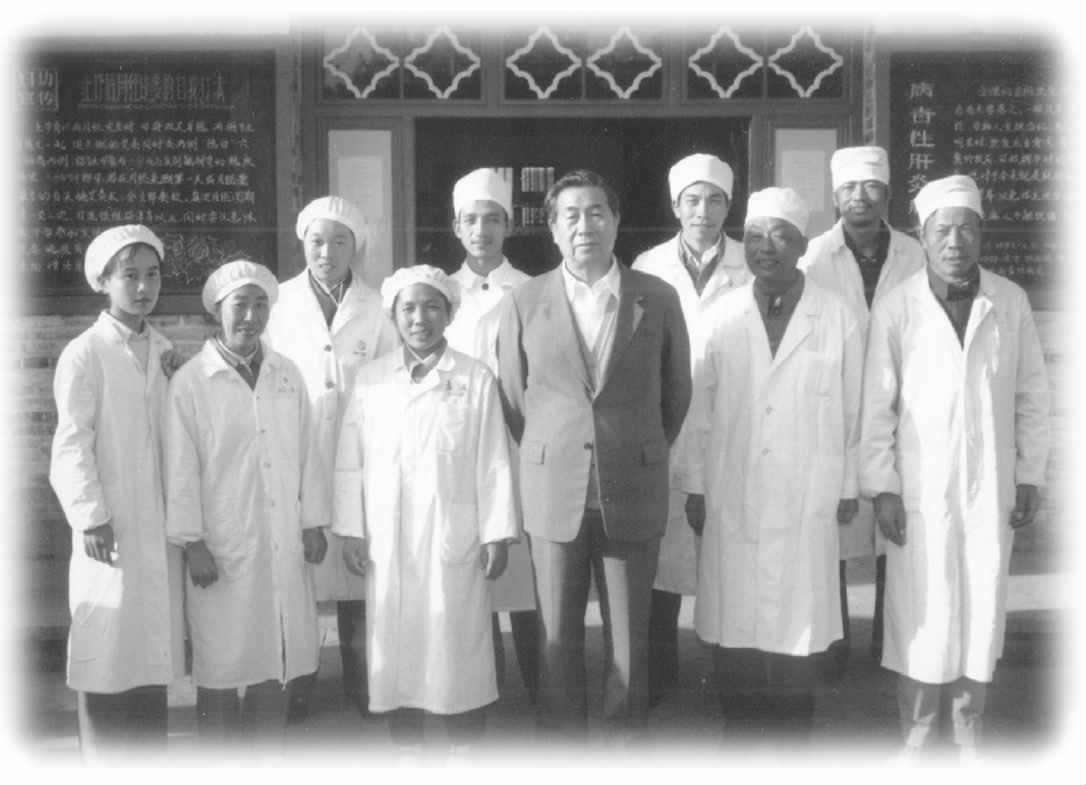
His words cut through the disease of the time; thinking of them today, they feel close. A pity they are now forgotten by some, and even turned on their head.
A drop reflects the sun's light. Old Cui's working style was the expression of his revolutionary spirit, the sublimation of his wholehearted service. We would learn his working style, and more than that, the fiery heart — loving the people, loving the Party.
(Cui Yueli and his wife in 1988.)
Our Across-the-Generations Friendship
Wang Jincheng · June 2001
More than three years have passed since Old Cui left us. Whenever I recall our nearly 30 years of acquaintance, scene after scene — his face, his laugh — rises before me.
My first meeting with Old Cui was in August 1959, when I was a 22-year-old Peking University Medical College graduate waiting for assignment. Old Cui was then head of the Municipal Committee's Health and Sports Department. It was a small forum: Old Cui, Comrade Gan Ying, our college leadership, and four of us students. Director Cui began smilingly, first congratulating us on approaching graduation, then asked after our plans — were we willing to stay in Beijing? Beijing welcomes you, he said; we hope you'll stay. We introduced ourselves and our ideas. Director Cui warmly slipped in a few questions here and there; the atmosphere was easy. I said I came to PUMC from Chengdu in 1954, my family all in Chengdu, my girlfriend Chen Wanzhu at Sichuan Medical College; I was willing to stay in Beijing but also thought of going back to Sichuan. That forum was my first step from school into society. That the Party and government paid us such attention was beyond our imagining; and Director Cui's eager eyes looking for talent are printed in my memory for life.
Soon after, a dozen of us were assigned to Jishuitan Hospital. The hospital leaders treated us as family — another feel of the Party's warmth. Later I learned that Director Cui had stressed repeatedly in hospital-leader meetings: know your talent, respect it, cultivate it, let it work. Under his leadership and care, in only a few years Beijing hospitals' thin technical ranks were fundamentally improved.
In the business of transferring my fiancée Chen Wanzhu back to Beijing after her graduation, I felt again his emphasis on cultivating talent. In 1961, after graduation, Chen was assigned to Yibin Prefecture People's Hospital in Sichuan. I asked hospital leaders to help transfer her to Beijing; Comrades Rong Ziqing, Zhang Tong, Guo Ziheng and others negotiated on multiple sides; the local side agreed to release her; but Beijing's household registration was frozen — could not be solved for the time being. So I wrote Director Cui directly. Not long after, Beijing's Personnel Bureau approved the transfer, and she was assigned to Jishuitan. Later I learned Old Cui had coordinated this personally. Two or three years on, he still remembered my idea of going back to Sichuan, and — to keep backbone talent in Beijing — handled, so seriously, a minor matter for someone with no family tie. Later, when we saw him at Jishuitan and thanked him, Old Cui simply smiled at us, an elder's smile, looking at the two of us, still unmarried.
At the end of 1962, the hospital's Party committee decided to send me as team doctor for the China Acrobatic Troupe's visit to Japan, and told me Cui Yueli wanted me to come to the Municipal Committee for a talk. Old Cui urged me to obey the troupe's leadership, and asked me during the visit to learn about Japan's urban sanitation and garbage handling, how Japanese see a doctor, hospital fee systems, and so on. China and Japan were not yet formally in diplomatic relations; I was only three years out of college, and now responsible for the health and safety of 50-plus people. I knew this was his trust, and what it weighed. On the trip I gave my all: protected the troupe's health, and on the way aided a Japanese friend. Reporting to Old Cui afterward, I was praised. That was our last meeting before the Cultural Revolution.
I worked hard and studied the profession; in 1966 I rose to chief resident in orthopedic surgery. Then came the Cultural Revolution and its blows. In that havoc I was labeled a "black sprout," ordered to "confess" the "secret-police tasks" "Dog spy Cui Yueli" had assigned me, and struggled against under many charges — "settle accounts in autumn with the capitalist-roader's faction," "stubborn bourgeois reactionary line," "keeping a reactionary black diary" — and an "interim Party group" announced my expulsion from the Party. The workers' propaganda team, once in the hospital, still ran the extreme-"left" script; for my criticisms, in 1970 they used the "6-26" medical personnel going to support the frontier to "gloriously send down" Wanzhu and me to the Shougang Qian'an mining-area hospital.
We had two children then; a family of four spent over eight years there.
After the Gang of Four fell, Guo Ziheng took over as Jishuitan's Party-committee secretary. To restore and strengthen the technical ranks, he wanted to transfer us back, but Shougang refused repeatedly.
In the summer of 1977 I went to Beijing Friendship Hospital to see Zhang Tong — Jishuitan's former Party-committee secretary, now Friendship's. She said Old Cui was a patient at Friendship and took me to his ward. Fourteen full years since 1963. Prison had aged him; I, past forty, broke down like a child meeting a long-separated kin — years of grievance welled up and I cried aloud. Learning my situation, he wrote at once to Comrade Zhou Guanwu. After over a year of effort, in November 1978, Chen Wanzhu, our three daughters, my half-paralyzed old father, and I returned to Jishuitan.
Back at the hospital, I redoubled my work. At 40 I resolved to study English again, to make up the lost time. I forgot meals and sleep; from late 1981 on, I went to the U.S., Italy, Switzerland, Britain, Ireland for study and exchange, mastering the knowledge and technique of artificial joint replacement. In 1984 I performed China's first hip-rotation osteotomy for juvenile and adult hip dysplasia. At year-end I passed the WHO's English exam and was sent to Japan for rehabilitation medicine study.
My last meeting with Old Cui was January 1988 — he had just been discharged from the hospital, sent me a New Year card, and said that after a Shenzhen trip he would come to my home; he asked me to invite Zhang Tong and Guan Yuhui. On January 30 we gathered; he ate the home meal I made, and we took a photo. Hearing me grumble about an unfair promotion, he did not answer directly, but wrote in farewell: "Guard against arrogance, rashness, and excess of words; give your mind and effort, and follow nature. No anger, no worry, no vexation — an easy heart lengthens years." He said these words were from an older gentleman at the CPPCC; I leave them with you. That was the last time he taught me face to face; I have kept it.
From 1959 to 1988 we knew each other for nearly thirty years. Through changes of station and office and through the storms of the times, we were always friends across the generations. He called me "Little Wang"; I called him "Old Cui." In my growth, when things went well he was quietly glad; in difficulty he stepped out to help. In his heart I was a technical backbone and intellectual for the Party and the people. In my heart he was a kindred leader, a kind elder. In thirty years I hosted him for only one simple meal at my home, and he gave me opportunities for success that no sum of money could buy. Today I am a chief physician, a professor of orthopedics, an expert with special state stipends — and he sleeps in the earth. People say a gentleman's friendship is plain as water; ours was comrades' friendship — clear as ice, pure as jade.
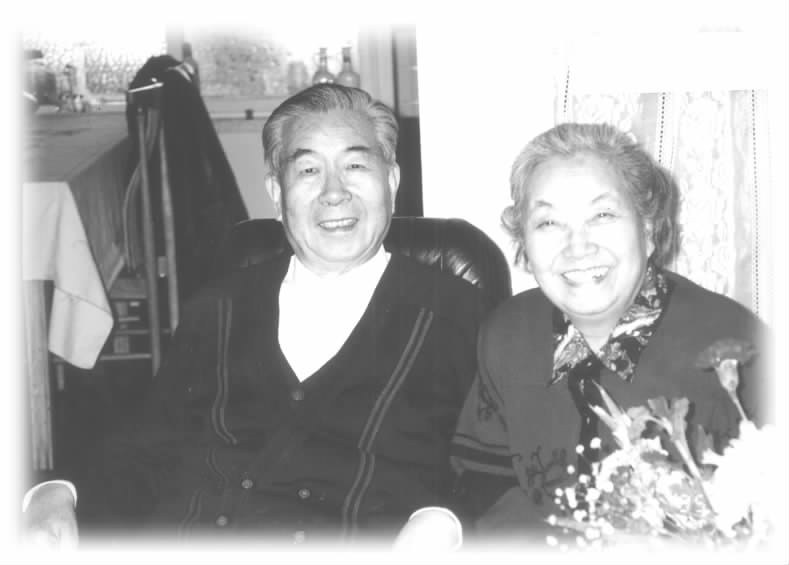
Unforgettable Years
Gan Zhangzaonan, Jin Zheng, Zhao Zhuyan, Wang Runzhi, Lu Shi, Wang Enrong, Zhang Yaqun · May 2001
In the summer of 1959, to strengthen leadership over health and sports, the Municipal Committee set up the Health and Sports Department and named Cui Yueli its head. From that founding through the outbreak of the Cultural Revolution in 1966 we all worked under his direct leadership.
Old Cui was approachable, warm with comrades, glad to help; in work he went deep into the real, investigated, opened new ground, and got things done. His carrying-through of the Party's policies bore fruit we remember still.
Day to day, Old Cui rarely sat in his office. Most of his time was in outpatient clinics and wards at grassroots medical units; in the evenings he often visited grassroots cadres or doctors at home — learning the medical staff's inner thinking over ordinary chat. He "hated evil as an enemy"; on problems he found, he pressed the leaders of the relevant units to solve them. In 1964, as Vice Mayor, he still concurrently headed Health and Sports; later he took on the United Front Department and became deputy chair and secretary-general of the Municipal CPPCC. Busy as he was, he used Sundays to go to the grassroots, guide work, help solve problems. One Sunday he took Comrade Zhang Zaonan to Xiaotangshan Sanatorium in Changping County and the TB Hospital at Wenquan in Haidian; when Xiaotangshan's leadership said they couldn't secure saplings to green the grounds, Old Cui quickly contacted the relevant departments and the saplings were found.
Because Old Cui had done medical work in the liberated area and, under cover as a doctor at Tongren Hospital before liberation in the underground, had built wide ties among Beijing's senior medical specialists and Party-member doctors over many years — and because before heading Health and Sports he had headed the Municipal United Front Department — by the time he took over at Health and Sports, his solid style and open forthright nature quickly won the trust of city hospital leaders and medical staff. People were glad to tell him their situations and suggestions, and to hear his views. On this foundation, Cui often stressed that health units are concentrations of intellectuals; to raise medical quality, the Party's intellectual policy must be earnestly carried out, to mobilize their sense of responsibility and initiative to the maximum.
In line with the spirit of the 1956 Central Committee meeting on intellectuals, Cui said plainly: carrying out the intellectual policy begins with knowing the intellectuals in your own unit — political trust, work support; for the senior specialists, respect for their constructive views. Instructing on the Maternity Hospital he said: "Do the work on intellectuals well — for the eminent specialists like Comrades Lin Qiaozhi and Chen Benzhen, bring their role fully into play; consult them often on things; treat them with respect." He asked us to know them — their temperaments, their families — so the work could be done in a tailored way. He warned us: "As worker-peasant cadres, mind your manner of speech; only then will the work reach their hearts."
In the early 1960s, Beijing set up the Second Medical College, and the Committee transferred urology specialist Professor Wu Jieping from PUMC to head it. To bring out his expertise, Cui proposed establishing a Urology Research Institute at Friendship Hospital with Wu as concurrent director, and drew urology backbone doctors from other city hospitals to staff it — creating conditions for clinical research. Friendship Hospital's urology became one of Beijing's earliest and best kidney-transplant centers.
Deng Jinjin, deputy director of the Municipal Children's Hospital, a famous pediatrics specialist, had a weekly ward round in which the hospital's doctors took part and pediatricians from other hospitals joined; it was well received. Cui praised this warmly and asked all hospitals to formalize senior-specialist and department-head rounds to bring out their roles.
Wei Yulin, director of Anding Hospital (a psychiatry specialist), was elderly and lived far; sometimes he could not come for rounds or consultations. On learning this, Cui required the hospital to send a car to fetch and return him, so his role could be kept up.
At Jishuitan, the Party committee, taking the views of the famous orthopedic specialist and director Meng Jimao, moved the Trauma Orthopedics Department from its initial two subspecialties (trauma, corrective surgery) to build out new subspecialties — hand trauma, burns, pediatric orthopedics — led by mid-career backbone doctors from pre- and post-liberation cohorts. Each general hospital made similar adjustments in its key clinical departments. History showed this organizational setup became the foundation for later talent and achievement.
In the early post-liberation years, the Municipal Committee and government supported new building — Friendship Hospital, Children's Hospital — and the expansion of Tongren; around 1958 they built Jishuitan, Xuanwu, Chaoyang, and the Maternity Hospital. New hospitals drew staff from many places; management needed strengthening. Per the Ministry of Health's hospital-work conference spirit, at Cui's urging a team was organized to draft hospital-work regulations. Though the draft was never formally issued, the drafting — which took in a wide range of views from leaders and from medical staff inside and outside the Party — raised and unified understanding among health-administration and hospital leadership, and pushed hospital institution-building and management visibly.
Cui often stressed: hospitals carry the tasks of "producing talent and producing results"; so they must continually educate staff on being "both red and expert," organize study of On Contradiction and On Practice, and let dialectical materialism guide practice — so that over years a cohort of specialists would emerge. Based on his understanding of how senior specialists and mid-career backbone doctors grew, he proposed and pushed a relatively strict resident-training system, stressing "laying the foundation and drilling the basics" through the resident stage — the "Three Basics, Three Stricts" ("Three Basics": basic theory, basic knowledge, basic skills; "Three Stricts": strict management, tight organization, rigorous attitude). Every hospital had to build a set of ward-round and case-discussion systems favorable to raising quality, enlivening scholarly atmosphere, and speeding training — and to make them bite. Strict demands on residents meant higher demands on attending physicians and department heads in turn; kept up for years, the effect on talent was clear.
Cui asked hospital Party committees to take up service-attitude rectification several times a year, praising good practice, criticizing bad tendencies, and educating in wholehearted service. Against the problems in some wards, he asked for stronger daily work — especially basic nursing — and fewer unnecessary companions staying overnight, to keep wards tidy, clean, and quiet for treatment and recovery. Before the Cultural Revolution, the city's general hospitals kept companion rates below 10 percent.
Cui strongly approved of clinical research combined with practice, stressing both innovation and a factual scientific attitude. Hearing that toxic dysentery was badly harming children (even killing), he went to Friendship Hospital's pediatrics head Zhu Shouhe and asked him to research it. Zhu and colleagues applied hibernation therapy to help patients get past 24 hours (within which they often died); mortality fell from 22.3 percent to 4 percent. They next studied Shanghai's use of atropine; mortality fell further to 1.4 percent. But atropine's toxicity was high; with the Pharmacology Research Institute of the Academy of Medical Sciences, they found that the Chinese medicinal shan langdang improved microcirculation like atropine but with much less toxicity. In April 1965, Zhu reported to Cui, and they decided to use shan langdang; mortality dropped below 1 percent. The method spread nationwide. Later the institute synthesized the active compound — commonly called "654-2" — with the same effect.
In 1960, press reports said a site had succeeded with "willow-branch bone-joining." Jishuitan's Party-committee secretary reported to Cui; he said at once: do not apply in clinic lightly — animal experiments first. Several tests at the hospital showed no graft took. At Jishuitan, hand-surgery doctors often hit the difficulty of small-vessel anastomosis in treating hand trauma; they practiced on rabbit ears. Microsurgery was then a blank field in China; materials had to be made ourselves. With Cui's support, Party-committee secretary Zhang Tong and hand-surgery head Wang Shuhuan worked with the municipal medical-equipment plant and the synthetic-fibers experimental plant many times; finally they produced the capron suture thread and the needle — finer than hair — needed for small-vessel anastomosis. Replantations of severed fingers and hands succeeded with these — and laid the basis for further surgeries at Jishuitan (free omental flaps, toe-to-thumb reconstruction), bringing the microsurgery specialty to advanced levels at home and abroad.
Cui took implementing the Chinese-medicine policy seriously. Knowing well the specialties of famous TCM doctors like Zhao Bingnan, Guan Youbo, Huang Leshan, he asked hospitals to assign assistants to senior TCM doctors to inherit their clinical strengths — and at the same time to place and use the graduates of the "Western doctors studying Chinese medicine" classes, encouraging them to continue learning from senior TCM doctors and, on the basis of summation, to advance. Under this guidance, through organization and the efforts of mid-career doctors, talents inheriting and carrying forward the senior TCM specialists' strengths gradually appeared.
Professor Zhang Zhili of the Municipal TCM Hospital's dermatology — a former "Western doctor studying Chinese medicine" — had studied dermatology specialist Zhao Bingnan's clinical experience with single-minded focus, carrying the tradition forward and developing it. With his good outcomes in dermatology, his reputation grew city-wide. In the last decade or so the clinical load grew heavy; unhappily he fell ill and passed last year.
At Cui's suggestion, Friendship Hospital periodically invited the senior TCM doctor Xi Peiling from the Municipal TCM Hospital for consultation on its internal-medicine ward. Xi's prescriptions were effective for some difficult cases, kindling in internal medicine a zeal for "Western learning Chinese." Though Xi has passed, his legacy in internal-medicine consultations bore fruit — some doctors can now write TCM prescriptions based on TCM's pattern-differentiation theory.
In the early 1960s, after many private TCM practitioners joined state or collective medical units and their incomes fell — some senior TCM doctors' wives having no work — Cui, with the Health Bureau, approved monthly technical subsidies of 50–200 yuan for more than 60 senior TCM doctors. At a time of generally low wages, this entirely relieved their worries and let them settle into hospital work.
Late in the Cultural Revolution, on his release, Cui heard that senior TCM doctor Huang Leshan was ill at home; he specially invited Comrade Gan Ying to visit him together.
On the whole: from the founding of the Health and Sports Department to the Cultural Revolution was an unforgettable seven years. Under Old Cui's leadership, through the health administration and the hospital Party committees, the medical-technical staff felt both pressure and motivation; medical, teaching, and research levels advanced markedly. At national specialty meetings, city-affiliated hospitals' papers grew visibly. At the 1964 National Surgery Society meeting, Jishuitan alone sent over ten doctors with more than twenty papers exchanged. In the mid-1980s, after the State Council document on professional-technical title reviews, city-hospital backbone doctors were all named professors or chief physicians. Into the 1990s, city hospitals produced many better-known specialists, some elected to the Chinese Academy of Engineering. In 1975, upon Old Cui's "liberation," many old hospital leaders and doctors went to his home to see him.
(Cui Yueli in 1985.)
Old Cui Lives Forever in My Heart and My Family's
Wei Shaojie · June 2001
I met Old Cui in the hard year of 1960. He was then head of the Municipal Health and Sports Department; I was at the Tong County Culture-and-Education Department. On our first meeting, as a subordinate I of course called him "Director Cui." Half-joking, he said: "I'm still growing — how can I not get taller?" Then, more seriously: "We're comrades — I don't like others calling me 'Director.' 'Old Cui' or 'Comrade Yueli' is closer." At the county committee I had been used to people calling me "Director Wei"; even those without titles at the county committee were called "Committee Member So-and-So." By comparison I felt ashamed. From that day I never called Old Cui by his title, and I learned to stop letting others use mine.
I remember Old Cui saying at a reporting meeting: "Our Party is a Party that serves the people wholeheartedly. If a Party member puts on official airs and carries bureaucratic pomp, how can one say he shares hardship and joy with the common people and serves them?" Each time he came to the county from the city, he never brought a secretary; he had me accompany him to Yongledian Commune, one of the poorer ones. There were a few old poor-peasant households he would visit two or three times a year, asking after the cold and warmth. In the three-hard-years period, even filling the belly was hard. He learned in detail about their labor, distribution, whole-household life — took careful notes — and ate the commune's big-pot meals with them. "Eating," in fact, meant a bowl of wild-greens soup from the common canteen with very little cornmeal. Even so, he never failed to leave the grain tickets and the money as required. It was only just before returning to the city that he would call the commune secretary together to work out how to arrange production and life, to try to reduce the malnutrition, edema, night blindness, and digestive illnesses then widespread.
Once he and I went to the toilet together, and he saw me bleeding. "What's going on?" he asked. I said, "Always out in the villages, no sight of any oil on the plate — I'm constipated, and have hemorrhoids." "Why haven't you had it treated?" "I'm in the countryside day and night; back at the county I rush to write and report; my own portfolio — culture, education, health, sports — I can barely keep up with; no time for hemorrhoids, which aren't a real illness." Soon after, when I went to the city to report on health work, Old Cui held me back and asked me to turn in the self-defense pistol the county committee had issued me for going down to the villages so he could have the Department store it in the safe. When I reached the office, Zhang Zaonan told me Old Cui had already set up my appointment at Kuanjie TCM Hospital, and had personally spoken to the county Party secretary for me — first cure the hemorrhoids with a new TCM method, no surgery. And so, the hemorrhoids that had plagued me for years were gone. Hearing too that my wife Zhao Yongshun, a village schoolteacher, had hemorrhoids, he arranged her treatment at Kuanjie over summer break. Even now when my wife and I recall this, our hearts feel warm.
During the Cultural Revolution he was unjustly imprisoned for nearly eight years. I, too, was wrongly held for examination by the Military Control Commission for over a year, my Party membership suspended, my wages withheld; I was sent to a mountain gully at Erdaoguan in Huairou County for nearly six years of labor. After rehabilitation and return, when we met he asked if I had any grievance. I said yes. At national liberation, I had been transferred out of the Fudan University underground Party in Shanghai, wearing the Shanghai Military Commission armband to take over KMT old-regime personnel; how could it be that "revolution, revolution" — and I had become a counter-revolutionary? He taught me: "The revolutionary road is our own choice. The Party and the people are our mother; we all love our mother; but the mother too may strike her child by mistake. Can we, for being mistakenly struck, bear a grudge? Look forward; go on with the communism we chose, unburdened, and strive to life's end." I have kept his teaching.
Later I got in touch with my eldest brother and nephews in Taiwan; my wife got in touch with her elder brother and niece. When they could not understand the suffering our family endured in the Cultural Revolution (two of my siblings died of it), we repeated Old Cui's words to them, and were understood. Old Cui further encouraged my wife and me to keep contact and exchange with our Taiwan kin, to do a bit of united-front work. A nephew of mine who is a university professor in Taiwan, under the family influence, opposed Lee Teng-hui's "two-state theory" and became a well-known scholar for One China. When the children's maternal uncle came to the mainland to invest, Old Cui and Sister Xu — both retired — joined our family gathering as "my friends." Old Cui chatted easily with them, told them stories of KMT–CCP cooperation, and urged them and their Taiwan friends and kin to come back to see.
He said we are all descendants of the Chinese nation; before, our country was often bullied by imperialist powers; now we must unite and build our country well to stand among the world's nations. Old Cui was truly a fine cadre of our Party's united-front work. Friends and kin felt him approachable, open, sincere. Under his encouragement many of our kin were among the earliest to invest on the mainland. After Chen Shui-bian took office Taiwan's economy worsened; many small and medium firms failed; but our kin's mainland ventures all flourished — a win-win model. These kin now believe that "Taiwan independence" is a dead end; they support One China and hope for the "three direct links" and reunification soon.
I have a daughter who graduated from Beijing's No. 4 Middle School in the Cultural Revolution and was assigned to a chemical plant. She developed asthma; the hospital said she was allergic to certain chemicals — an occupational disease. She wanted a change of environment. I said, "A plant of over three thousand — everyone else manages; can't you?" One Sunday she had an attack at home and was rushed by ambulance for oxygen. Hearing of it, Old Cui criticized me for failing to be factual: "She is different from others — allergic constitution — there must be a transfer arranged; the plant leadership will be reasonable." Later my daughter moved to an institute and the attacks stopped. She has always thanked Old Cui, saying Uncle Cui and Auntie Xu loved her more than her parents, that Uncle Cui saved her life.
In April 1981 I was transferred to the State Family Planning Commission. Newly set up with only 60 cadre slots, without bureaus, it had only a general office and five divisions; I headed the foreign-affairs division. Once Old Cui returned from abroad and turned in a pen a host unit had given him. I told him such small gifts should be personal. He said, "You run the foreign-affairs specifics — register every gift received, turn in what should be turned in, sign and take what may be personal." For such a small thing a leader like Old Cui, so meticulous, was rare indeed. Some leaders would be pressed repeatedly and drag their feet on turning in gifts; going abroad they would not keep to the rules; reminders would sour their faces as they sought excuses to carry more. A stark contrast with Old Cui's clean and selfless character.
This April, on a visit home to Huzhou, Zhejiang, I went specially to Kunshan near Shanghai — a concentration of Taiwanese mainland investment. Many friends who had met Old Cui asked after him; I told them he had passed three years ago; they were all grieved, feeling good people ought to live longer. They said: thank goodness they had come to the mainland; otherwise, medium and small firms on Taiwan could not have survived. As one voice, they missed and thanked Old Cui.
Those who love others are loved in turn. May Old Cui, whose spirit is in the heavens, rest. His life was the life of a loyal communist soldier, a shining example among leading cadres. He will live forever in my heart and in my family's.
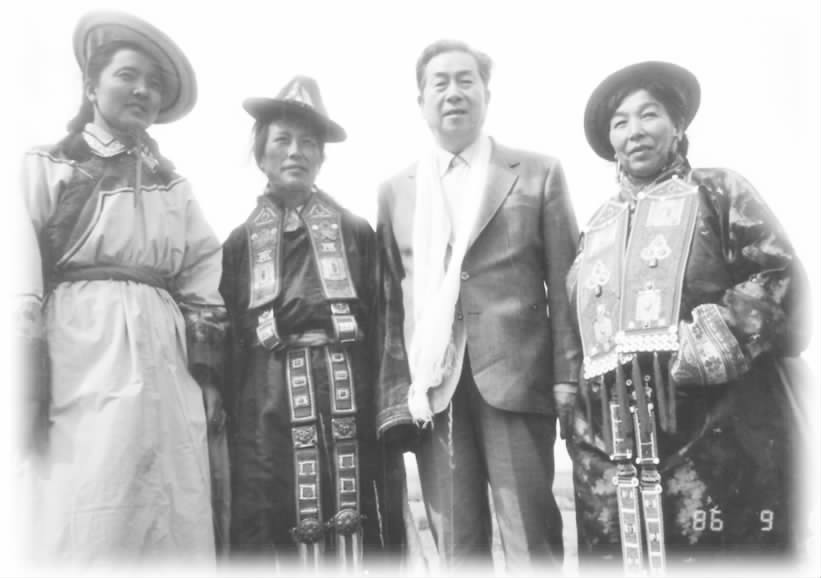
A Courier's Memorial Service
Lu Shi · May 2001
Comrade Cui Yueli had a strong sense of organization. He respected superiors, but more than that he was good at uniting comrades inside and outside the Party — sincere with people, especially caring for those below him. This was a fine character formed by long years of underground Party work in stern, dangerous conditions.
In 1942, Comrade Cui Yueli was sent from the old liberated area to Beiping for underground Party work. At Beiping's Donghua Hospital he came to know a young woman lab technician; in 1943 he secretly cultivated and brought her into the Party as an underground courier. This woman courier was clever and brave; she often traveled to and from Dajue Temple in the Western Hills (one of our Party's secret liaison points), delivering intelligence and documents. Each round trip by bicycle took three or four hours, and she always completed the task. Cui Yueli would brief her in detail on dodging searches and handling emergencies. In 1946, when KMT secret police began to tail her, Cui's vigilance told him her cover was likely exposed. He at once arranged for her to hide at Professor Ma Wenzhao's home at PUMC; not long after, she was transferred out of Beiping to study at the Bethune Medical University in the liberated area. This woman courier was Comrade Liu Yi — who, after liberation, became director of the Beijing Health Education Institute and Party-committee secretary at the Beijing TB Branch Hospital.
During the Cultural Revolution, Comrade Liu Yi fell gravely ill and was struck by the political assault; she retired on medical grounds and was placed under the neighborhood committee. She passed away in April 1979. Because the Cultural Revolution had only just ended, many old revolutionary cadres were still under the shadow of "capitalist roader." When we, as family, raised whether a memorial could be held, the neighborhood committee said: we have no money or strength for a memorial; go back to the old unit. The old unit said: she retired into the neighborhood; not for us to handle. Hearing of this two-side neglect, Cui Yueli was uneasy. Of course he had not forgotten the courier of more than thirty years before. If an old comrade who had worked a lifetime for the revolution could fall into a no-one-handles-it state, what effect would it have on living comrades and on family? Facing this great matter of putting things right, he called the Municipal Health Bureau at once: "There must not be no one to handle the after-affairs of an old revolutionary comrade." The duty officer said: "I'll report to the bureau leadership." He set down the phone, felt it was not concrete, picked it up again and said firmly: "There must be a memorial. Notify me — I will attend." Then with feeling he said to Comrade Liu Yi's family: "If they all won't, we will. Even if there's no money, even if you stick a dry branch in the ground, we'll hold the memorial." Soon, with the Municipal Health Bureau's coordination, the Municipal TB Hospital organized Liu Yi's memorial. Cui Yueli arrived on time. Several hundred — leaders of relevant units, colleagues, and family — attended. From his act, everyone felt the Party's warmth — and felt that our Party's old tradition of cherishing cadres had come back.
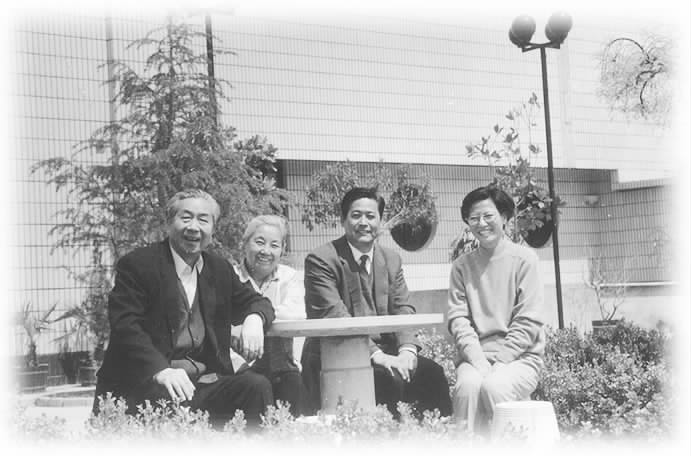
Comrade Yueli — Heart with the Masses
Yueli, with his heart turned to the people — recollections of his time at the Beijing People's Committee
Some of us who once worked at Cui Yueli's side · September 2001
For us, the work he did from September 1964 through the first half of 1966 as Vice Mayor of Beijing seems still to have happened only yesterday — too deeply was it imprinted on us. His habit of thinking always for the grassroots and for the masses is the most precious spiritual inheritance he left us. He will always be our good leader and our good model.
Yueli's chief duty at the People's Committee was to assist Comrade Wan Li, then Municipal Committee secretary and standing Vice Mayor. The year-and-some was not long, but he took on a great range — making the offices revolutionary, sending educated youth to the countryside, neighborhood work, family planning, war-readiness file-sorting, urban "Four Cleanups," some forestry, public security, and the offices' internal work. He still concurrently headed the Municipal Health and Sports Department and the United Front Department; at year-end 1964 he was elected to the Municipal Standing Committee. His outstanding marks were approachability, vigorous action, and a heart held always with the grassroots and the masses.
*Going deep into reality, improving style, all for the grassroots.*
Yueli put much effort into helping Wan Li make the offices revolutionary. The chief shortcomings then were four: too many documents and meetings, bloated personnel; weak going-down to the grassroots, weak ties to reality and to the masses; sloppy, careless work style; weak grassroots-stint investigation.
Under Wan Li's guidance, Yueli kept going down to bureaus, divisions, and neighborhoods to learn and to guide work. At municipal leadership meetings and at the People's Committee compound's full-staff meetings, he spoke several times to the leading cadres about improving thinking and style — saying plainly: don't sit on high in comfort; don't lapse into subjectivism, paper-pushing, official-court manners, special privilege; solve the question of style by the work system. Per the Standing Committee's rule, Mondays and Tuesdays were meetings and writing; Wednesday cadres went down to labor; Thursday, Friday, Saturday were grassroots research. He also pointed clearly to the need for ideological-political work in the state organs and for guarding against the corrosion of bad thinking. As he ran this, Yueli praised the good — like the Chemical Industry Bureau, Forestry Bureau, Grain Bureau — and dared to point and name when work was poor.
We remember vividly how he handled the People's Committee itself. Under his direct command, the offices sent some comrades to long-stints in Qingbaishi (Mentougou) and Machikou (Changping); many went to the rural Four Cleanups. To check the work, Yueli went with cadres into factory shops, stores, hospitals, neighborhoods to take part in labor and stints. He often went to the People's Committee's General Office mail-and-petition desk to talk with us, to learn the people's voice; he received visitors regularly and read many letters from the masses. On documents and bulletins touching the people's interests his instructions were specially concrete. For instance, on cases the Public Security Bureau reported — drownings in the canals while swimming, deaths from falling masonry during city-wall demolition — he took them very seriously and instructed promptly, looking into the management problems of the relevant departments. Under his guidance, in those two years the People's Committee's outgoing documents fell sharply.
*Living it himself, approachable, always concerned for the masses.*
In Yueli's term, both inside the offices and at the grassroots, the general report was: dealing with him was easy, he was easygoing, no airs. Soon after taking office, to mix with cadres, he canceled the leadership's small canteen and queued for his food like everyone else. To improve the food, he specifically had the canteen master go to the Beijing Hotel to learn cooking. He never used a special car commuting. There was a small garden at the west of the compound — pretty, and long closed to staff. He opened it after taking office, and even called personally to make sure ordinary employees could watch films there together with city leaders. When ordinary comrades brought difficulties, he helped where he could — cadres or drivers, treated alike. He even attended ordinary cadres' weddings to congratulate them.
Before he came, individual leaders had been autocratic, undemocratic — and had done things that left cadres and staff unhappy: at meetings, they kept naming people to teach the rest to keep quiet. Many comrades' spirits had been pressed; democratic life was abnormal. After patient inquiry, Yueli set things back to themselves; spirits eased; enthusiasm rose. Personnel were trimmed, but efficiency rose; the offices' atmosphere righted; the relationship of leaders and led grew warm.
*Hands-on, vigorous, sharing the masses' hardship.*
To address the heavy strain on front-line workers, under Wan Li's lead, Yueli convened the relevant departments to study which front-line jobs were the dirtiest, the bitterest, the most exhausting — and how to free workers from heavy physical labor, with the offices' own revolutionization as a side benefit. With the relevant departments' help, the People's Committee's General Office investigated and chose three cases: hand-carrying night soil; hand-cracking honeycomb-coal; hand-shoveling and hauling garbage. After reporting to Wan and Cui, they instructed: solve them quickly, vigorously, with effect. Three days after the survey, Wan Li and Yueli decided themselves to carry night soil with model worker Shi Chuanxiang, to feel the dirt, the bitterness, the exhaustion. They chose a few residents in Huashi Street, Chongwen District. Wan Li, Yueli, several staff and Shi Chuanxiang took up the dung-buckets, scooped out night soil one ladle at a time at each home, carried them to the cart — splashes hit their necks and clothes; the smell stayed for days. Both leaders were already in their fifties; Shi let them carry only half-full buckets, but those still weighed forty or fifty jin. After the carry, the two leaders sat down at once with the relevant Sanitation Bureau leaders, and clearly demanded that the buckets come off the workers' shoulders quickly — and that they propose plans to do it. As Yueli heard the bureau's report he gave concrete instruction: how to build public toilets; how to retrofit the carts; he instructed responsible cadres to grip this matter and resolve it step by step in a short time, working to free workers from heavy labor. Under Yueli's direct supervision, public-toilet construction and cart retrofit moved fast; large numbers of buckets were set down.
The other two dirty-bitter-exhausting jobs were also markedly improved over a stretch of work.
In our impression, Cui's handling of these three cases best embodied his character and his style — he genuinely thought from the heart of front-line workers, of their hardships, and was welcomed by them. In the workers' words: "Who would have thought a 'big official' from the city would come down to solve our problems?" The day after the two leaders carried night soil, Beijing Daily reported it; soon after, Municipal Committee and People's Committee cadres went down in turn to dirty-bitter-exhausting places to work alongside the workers, advancing a fine atmosphere of leadership going down to the grassroots and serving the people.
(Summary of a talk by several former People's Committee comrades; arranged by Comrade Peng Xueyuan.)
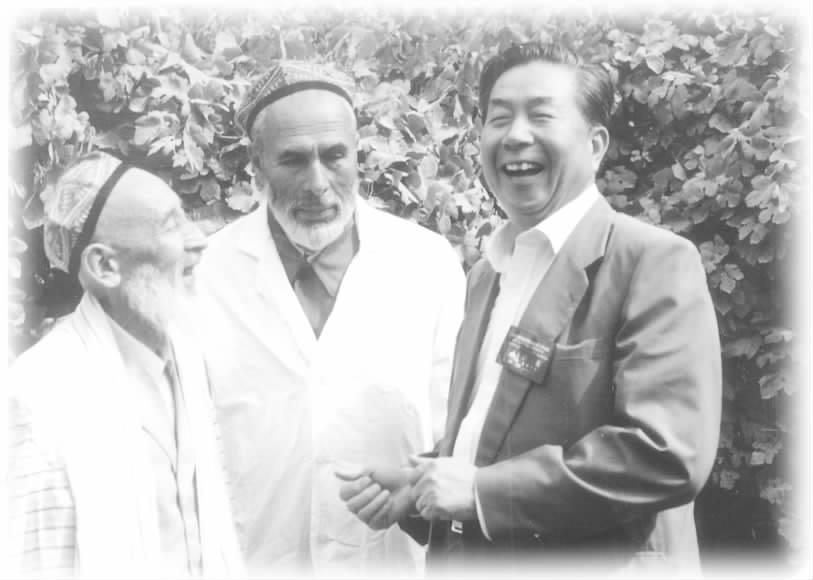
Deep Remembrance of Comrade Old Cui, Servant of the People
Liu Shangde · September 2001
It has been more than three years since Comrade Cui Yueli left us. He went so suddenly that when I heard the news I was shaken — beyond believing. Two days before, when I had visited his home and chatted, he was bright in spirit, talking and laughing. I told him Spring Festival was near and gatherings were many — to control himself and not get too tired. He said, "It's all right; my condition has been steady this year — basically nothing has flared." Two days later, how did he leave us? With so many things still to do, so many people still needing his help.
Comrade Cui Yueli was my old leader, but more than that — my fine teacher. He always cared for my life and my work; he was an elder, and an old friend. A virtuous and respected senior, his revolutionary spirit, fine style, lofty character, and selfless dedication have always been a teaching to me.
I had the good fortune to be Yueli's secretary twice. The first was when he served as Vice Mayor of Beijing — late 1965 to the first half of 1966. The second came in 1978, when Old Cui served as Vice Minister of Health. By then, after suffering the Gang of Four's framing and persecution, his body and mind had been badly worn; he was still recovering, and needed someone familiar at his side. By the organization's arrangement I was transferred from the Beijing TCM Research Institute to the Ministry.
In September 1964, when Yueli became Vice Mayor and assisted Comrade Wan Li in the standing work of the People's Committee, he served concurrently as acting secretary-general; head of the Office Party Committee; head of the Municipal Committee's Health and Sports Department, United Front Department; deputy chair of the Municipal CPPCC, and so on. Heavy load. After taking office at the People's Committee, he set vigorously to improving its style, teaching cadres to go deep, link with the masses. He set Wednesday as labor-down-to-the-grassroots, and led by example — repairing the Jingmi water canal, planting trees. Once at Changchun Street and Zhanlan Road, in greening planting, he proposed planting along streetsides not only ornamental but flowering and fruit-bearing trees. The Parks Department worried about random picking. He said, "What of it? When fruit comes, who eats — what's the difference? Cities are for greening and beautifying." Later, the Parks Department did indeed plant evergreens and ornamentals, and many peach and persimmon trees, along the streets.
At a People's Committee compound full-staff meeting, Yueli announced: titles forbidden — comrades, or directly "Old Cui." He said: leader and led, all comrades, no high or low — equal. After moving to the Ministry of Health as Vice Minister, he likewise told the bureau chiefs: call me "comrade." His style was democratic, approachable, frank — sharply unlike a few earlier leaders at the People's Committee. He often went into divisions to learn, processed letters from the people, periodically received visitors, canceled the small canteen and ate with everyone in the big one — one with the people. Whether peers or subordinates, drivers, cooks, service staff — anyone with something to say came to him; nothing was off-limits; all called him warmly "Old Cui." At that time most of the General Office cadres were down at "Four Cleanups"; few were left in the offices. Because the democratic atmosphere was good, spirits were easy; the work load was heavy but morale high; tasks went well. To this day everyone remembers it.
In 1978, as Vice Minister of Health, Old Cui took charge of TCM and medical education. He held his portfolio close and tight. He valued cultivation of health-tech personnel highly. On any trip or meeting elsewhere, he would observe local higher medical schools, TCM units, and health schools. Once at a Jiangxi meeting he visited a local health school and learned it had been built in a high lightning-strike zone — every storm season, students and staff suffered casualties. He instructed the local leadership at once: choose a new site and move; if money is short, the province and the Ministry can subsidize. On TCM inspections, finding some counties without TCM hospitals, he instructed county and general hospitals to set up TCM departments, hoping conditions would let every county have one in time. He cared about the inheritance and development of TCM, that Chinese medicine and ethnic-minority medicine keep their character and bring it forward.
He paid special attention to medical and health work in ethnic-minority areas. On a Xinjiang inspection, he went deep into minority counties, towns, villages — in person to Shihezi Medical College and to county hospitals and health centers to see conditions. He saw county hospitals with poor equipment and poor sanitation, with no consultation room, not even a chair in the corridor; ward walls peeling, no quilts on beds — bare boards.
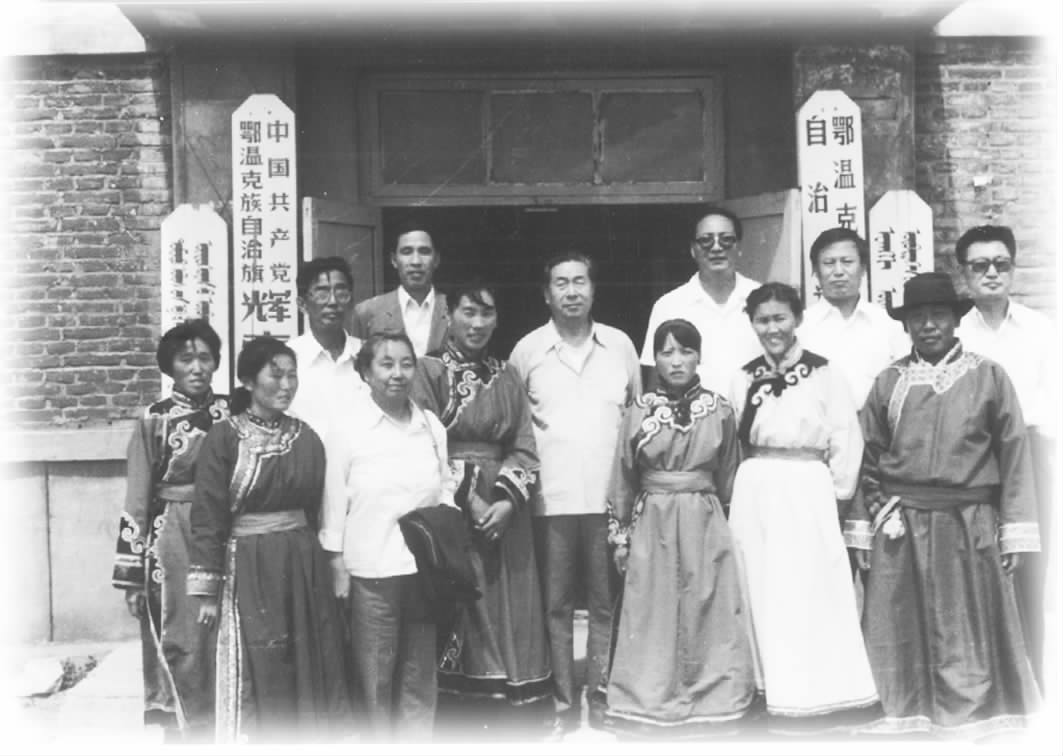
He saw patients and women with babies sitting on dirt floors for IV drips and waiting; nurses, fearing duplicate names, sticking numbered tape on a child's forehead; a Shanghai medical team doing uterine-prolapse surgery for women without a ward — only an empty schoolroom over the holiday, the women on floor mats in rows. Old Cui was heavy-hearted and said, gravely: "This isn't a hospital — it's a refuge for the sick. So many years since liberation, and minority areas' care is still this poor; this many difficulties — it must be improved fast." He went to medical schools and asked in detail about the lives and work of the medical and teaching staff sent from Shanghai, Beijing, and other cities to support the frontier — learning that wages were low, housing poor, vegetables few; with weak local cultural education their children's schooling and employment were difficult; and many medical-and-teaching personnel's rooting in the frontier was thus shaken. He exchanged views with the autonomous-region's culture-and-education committee and with health-system leaders, asking for prompt measures.
"Going out is for work — first, no sightseeing; second, no gifts; third, simple food and lodging" — this was the rule he laid down each time he traveled or inspected. He kept it himself. Once on a Jilin trip, a host gave him two baskets of apple-pears; the staff didn't report it and brought them back. Learning of it, Old Cui at once had his secretary mail money to Jilin. Another time, at a Shanghai meeting, I and a TCM Department comrade, on commission from Ministry comrades, helped buy clothes and other items; learning of it, Old Cui insisted I bring them out for him to see, asking in detail whether anyone had given special favor or whether a unit had given gifts. As a Minister, sightseeing on a holiday during a trip would be unobjectionable. But many times I traveled with him, he never visited a famous mountain or river. His clean and selfless example is a model.
Working at his side, I was deeply taught. He taught me: as a leader's secretary, words and acts matter; understand the leader's intent and carry it through truthfully; do not use proximity to power for private gain; you must be modest and careful, diligent, conscientious, thorough — to complete every task assigned. Not only a working style, but a way of being. His teaching I will not forget.
He was glad to help — within his portfolio or beyond it, near or far — if anyone asked help and the matter could be done, he never refused. Each morning at work he came with many letters — sometimes a dozen — to be passed to relevant units to handle, with results to be reported. At lunch, I'd report on what had been arranged that morning.
He concurrently headed the Ministry's discipline-inspection group. That was the time of "setting things right" — many old comrades persecuted in the Cultural Revolution had not yet had their cases settled; they had many work and life difficulties. Old Cui took the matters in hand himself, asking the relevant units to settle policies quickly and to help. Busy as he was, he kept his mind on every side of the country's work. He suggested, for instance, the radio's morning news theme be changed to a more cheerful, lighter rhythm. Learning that the country's "Third Line" facilities held much excellent equipment and high-level science-and-technology talent that wasn't being used to full effect, he proposed jointly with relevant ministries to the Center that Third-Line factories convert to civilian production. Sichuan's later-developed Jialing motorcycles and other products are examples of military-to-civilian conversion. Military-to-civilian opened a new way for the vigorous growth of military industries — Old Cui has a share of that merit.
For decades Old Cui did good for the masses — relieving distress, helping the poor, saving lives. The cases are many. Once a young man had leukemia and had a fever for over ten days; his anxious parents somehow learned where Old Cui lived and ran to ask his help to find a good doctor. For a stranger, to save the patient, Old Cui called the director of the Tumor Hospital that very night. After all-out treatment, the young man recovered, finished his studies, married, and had a child. His parents told everyone: "We met a good man — Director Cui saved my son. We can never repay it." Old Cui lived very plainly. With his wages he supported his elders and several children in school — life was not easy. Yet he often went to see, or had me send money to, the elders who had sheltered him in the underground — supplementing their lives. Such cases are too many; even in my few years in his office I cannot tally them, much less count how many lives he saved or how many people he helped over a lifetime.
Old Cui's life was open and aboveboard, an honest heart. Of high office or low, of close kin or stranger, no official airs, no posture — all treated alike, warm and approachable. His bright laugh still echoes in my ear.
Water Returns to the Sea — All Meanings Run Deep
Zhu Guoben · January 2000
The new century has just begun, the new millennium opens at the same time. Time is unfeeling and feeling at once. In a glance, two years have gone since Old Minister Cui Yueli left us.
In these two years, in unceasing remembrance, people often grasp this philosophical truth: a person's life is short, and it can also be eternal. When his life dissolves into a great cause, that life lives on with the cause. Comrade Cui Yueli was, above all, a revolutionary. The legendary brilliance of his early revolutionary years still awaits gathering and arranging by later hands. The latter half of his life met the age of reform and opening, and he had the fortune to become a leader of a generation in China's health enterprise. His outstanding contribution to the revitalization and development of Chinese medicine is what people will not forget.
In his work and in his bearing toward people, Cui Yueli had a sincere, candid, advancing spirit. He firmly believed Chinese medicine is a great treasury, and the people's health cannot do without it. In appealing for, defending, planning, and orchestrating Chinese medicine, he was always on solid ground, full of dignified spirit, pouring his whole heart in. He said: "'Service to the people' is not an empty phrase. The majority of the people are peasants. With no Chinese medicine in the countryside, what service is there?" He had been in Beijing's leadership for many years and cared especially for the capital's TCM. In early 1987, when he was 67, the State Council decided to remove him as Minister of Health. The document had reached the Ministry's Party Group; it had not been formally announced. Cui Yueli called the Beijing Health Bureau director and the head of the TCM Division to a Ministry meeting. After a few opening sentences he read the appointment-and-removal decision of the Center and the State Council. He said: "I am no longer Minister, but as an old comrade I hope Beijing will lead in TCM work — that the Municipal TCM Administration be set up as soon as possible." He had not the slightest of the "pre-retirement syndrome" some cadres show at fifty-eight or fifty-nine; he was full of devotion to the cause, no private mind, no concern, knowing he was no longer in the post yet still working with all his strength to get things done.
He sought truth from facts and dared speak it. On TCM's major matters, he wrote candidly and selflessly to Central and State Council leaders. In carrying out TCM policy, he did much to bring about rehabilitation and placement for senior TCM doctors who had borne unjust treatment. He went deep to investigate, with special care for villages, pastoral districts, grassroots units, village doctors, and ethnic-medicine personnel — striving to address their difficulties. When he found some general hospitals not valuing TCM work — the TCM department tucked into a corner — he was uneasy and spoke directly: "I've been to many people's hospitals; to find the TCM department I don't even need to ask — sniff and you'll know: where the toilets are, the TCM department is next to them." After his repeated reminders and criticism, general hospitals' TCM departments improved.
He valued "Western learning Chinese" and integration work. Once, Guang'anmen Hospital opened a "Western doctors away-from-post studying Chinese" class; I went with him to the opening. The class had only about twenty students, the room simple, the ceremony plain. Cui spoke warmly, on the spot. After, I thought: he was retired, and had a cold; "for such an event, just send someone from the TCM Administration; you don't have to come." He said, "'Western learning Chinese' is important. Guang'anmen has run many cohorts and held to it well; I attend each one (opening or closing). You should support it from now on as well." He added: "Western learning Chinese — once the Western doctors have learned Chinese medicine, integration has its base. Integration is not just a TCM principle; it is a principle of all health work — a great policy."
Cui Yueli was open-hearted and generous; the older he grew, the more even-tempered he showed himself. In the early 1990s a middle-aged Hunan TCM doctor sent him an article expressing worry about TCM's prospects. Cui forwarded it to me and asked me "to convene some small forums (about ten people) at the Association of TCM, so that everyone can fully express strategic opinions on how TCM may develop soundly." He added that this doctor's "scholarly article had some views worth taking, but the tone and the mood were not. Scholarly debate must be even-tempered — lay out facts, reason them through, open contention. Otherwise aim and effect cannot be united." Cui's style was famously broad-axed, decisive — yet for so important a scholarly debate he arranged things so calmly and carefully. It taught me much.
Cui Yueli often said he himself had not originally worked in Chinese medicine — that the leadership had set him to TCM work and only then had he come to know it; only after great investigation did he discover the field had many policy problems. "If those policy problems aren't solved, TCM won't be treated fairly, and the enterprise won't grow soundly." Precisely for this, his views on TCM were uncommonly practical, objective, fair; combined with his deep understanding of the people of China and our traditional culture, they were far-seeing and shrewd.
"The wind in the cold pine — the sound is from old times; the water returning to the great sea — meanings are all deep." Cui Yueli's heart was the color of blood; his words were as he was.
On the great stage of life, some can only be seen close — striking for a moment but not standing the test of history; others stand the long view — the further from history, the more their value emerges. Whatever happens to TCM at home and abroad, whatever the difficulties and turns, success or setback, gain or dullness, people will think of Cui Yueli's name. That is what does not die.
(Sister Xu Shulin, front row right; Comrade She Jing, front row center, with the editorial board of Translation Series of Famous Chinese Medical Classics.)
Moving Words, Earnest Hope
She Jing · January 2000
Two full years have passed since Comrade Cui Yueli left us, but his face and voice still echo in our minds. In his luminous life there were many moving moments — most unforgettable, the scene of the last meeting he attended.
In early January 1998, the China Association of TCM was holding the founding conference of its Emergency Medicine Branch and the national workshop on essential Chinese patent drugs for emergency in TCM hospitals. Before the meeting we had sent the old Minister an invitation. Although his age was high and serious illness was upon him, hearing that an Emergency Medicine Branch was to be founded and that many emergency-medicine specialists would attend, he gladly accepted.
I remember January 4 — the temperature was very low, the north wind howled, the cold pressed in — yet his step into the venue was as bright as ever. Some comrades said: "Director Cui, it's so cold today; please mind your health." He answered briskly: "Today is a great day; I don't feel cold at all." He waved often to greet the TCM emergency-medicine specialists.
At the meeting he listened seriously to the specialists' speeches, nodding at times in approval. When his turn came, he was a little stirred. He said: "I had not prepared a speech — I only meant to come and offer congratulations. But seeing so many specialists today, I feel very glad, and I have many things to say." He looked back over the development of TCM emergency work, especially the founding of the TCM Emergency Cooperation Group in the early 1980s. Pointing to Professor Wang Jinda seated beside him, he said he had known the professor early on, and praised the decades of selfless dedication and dogged pursuit Wang had given to TCM and to the theory and technique of integrated emergency care; he congratulated Wang on his fine results and hoped he would press on. He went on: TCM is broad and deep; TCM emergency theory has rich content and is an important part of TCM scholarship; strengthening TCM emergency work and advancing TCM emergency theory is the key to changing the image of TCM as the "slow doctor." TCM emergency theory must be excavated, organized, and continually advanced — but the work is hard and needs generation upon generation of people of will and responsibility to explore and to practice.
He looked finally at the mid-career and young TCM specialists; his voice trembling, he said: "The future of TCM emergency scholarship and enterprise depends on the young. Carry forward the older generation's striving spirit; learn TCM theory deeply, thoroughly; do not stop at the surface, do not give up halfway." His words warmed everyone — old specialists or younger scholars, TCM-pharma entrepreneurs or administrators, all moved by his fervor for the cause and his TCM emergency work, and answered with warm applause. No one imagined this would be the last word he gave at a meeting in his life.
His words made me think of the immortal contribution he made to TCM throughout his life. His footprints reached every corner; he had personally visited many TCM bodies to investigate; for the cause he poured his heart, organized a series of major policies and measures; even the last meeting he attended was for TCM. His shining figure and great deeds will live forever in every TCM worker's heart; his last words will always urge us forward in striving for the field's vigorous growth.
The Key to Revitalizing Chinese Medicine Is Talent
Fu Shiyuan · July 2001
Three years have passed since old Minister Cui Yueli's death. The TCM community remembers him deeply. With one voice we praise that during his term as Minister of Health he valued TCM work, conscientiously carried out the Party's TCM policy, and made an outstanding contribution to revitalizing and developing the field.
After the founding of New China, under Chairman Mao's personal care and guidance, the Central Committee set the TCM policy, pointing the direction and giving strong assurance for the field. In the 1950s, Mao criticized and corrected the Health Ministry's chief leadership for slighting and excluding Chinese medicine, and the field developed greatly: a great number of TCM hospitals, colleges, and research academies were founded; conditions were created for clinical, teaching, and research work; TCM took its place; the field truly became an important part of New China's medical and health enterprise.
The Cultural Revolution was a calamity for the Party, the country, and the people; the loss is hard to bear recalling. TCM was a hard-hit area, the damage worse. Stirred by ultra-left thinking, criticism cast TCM as feudal medicine; studying TCM, working in TCM, was "restoration." Many old TCM doctors were branded "ox demons and snake spirits"; TCM hospitals and colleges were dismantled or merged. By count, in 1975 only 175 TCM hospitals at county level or above remained.
After smashing the Gang of Four, the Third Plenum of the 11th Central Committee opened broad ideological-line setting-right and brought a great historic turn — and a good turn for the recovery and development of TCM. Comrade Yueli reached the Ministry of Health at this time as Vice Minister in charge of TCM. One can imagine how hard the work was then, how heavy the task. He did not flinch; despite the wounds and ailments from his eight years' wrongful imprisonment, he gave himself to the work — forgetting himself, working as if for life. Through serious investigation he found the chief problems and the chokepoints holding TCM back, and timely raised the ringing call to "revitalize Chinese medicine" — to alert and rouse the field; he actively sought, and leaned closely upon, the correct leadership and strong support of the Central Committee and State Council, fully carrying out Document 78-No. 56 endorsed by Comrade Deng Xiaoping. The field recovered fast — and many breakthroughs and major developments came. In 1982, "Develop our country's traditional medicine" entered the Constitution for the first time; in 1985 the Central Secretariat issued an important directive on TCM; in 1986 the State Council Executive Meeting decided to establish the State Administration of TCM, with 100 million yuan in dedicated annual funds, and granted tax exemption on the production of TCM herbal slices. The Center and the State Council's correct decisions were the key — but Director Cui's role was very important. As Tian Jingfu, then head of the TCM Division, said: had Cui not headed TCM and been Party Group Secretary, those reports to the Center could not have come out of the Ministry.
My earliest contact with him under his direct leadership was during the famous Hengyang Conference of 1982 he convened personally. The Hengyang Conference was important: its main aim was to set right the running direction of TCM hospitals and the teaching direction of TCM colleges, plainly proposing to highlight the features of Chinese medicine and to keep and carry them forward. At the conference he cried with vivid metaphor: "Don't hang Mei Lanfang's signboard and sing pop tunes" — a phrase still imprinted on every attendee. During the meeting he sat in on the small group revising the higher-TCM teaching plans and said: TCM's revitalization and development depend on talent; to solve the lack of successors and skill, TCM education must be done well, training TCM doctors with real ability — not "neither Chinese nor Western, two half-bottles of vinegar." He held that teaching plans should compress Western-medicine courses, slim content, and increase TCM hours — TCM must be learned well and learned solidly. As many comrades did not yet understand, his vision was not fully realized at the time. By today, the chief problem in TCM education is still the question of professional direction; the training target still has not escaped the "master both Chinese and Western medicine" mode. The result is to weaken TCM's teaching effect and to shake students' professional thinking in differing degrees.
Cui knew well the laws by which TCM doctors grow — not only good lectures and good theory, but early clinic and much clinic. He praised the master-disciple method. Therefore he valued strongly the building of clinical-teaching bases for TCM colleges: on one hand, urging and using necessary administrative means to designate qualified TCM hospitals as teaching hospitals for higher and middle TCM schools; on the other, actively renovating and expanding affiliated hospitals. In 1984 the State Planning Commission allocated 500 million yuan for renovating and expanding medical-college affiliated hospitals; Cui directed that 150 million go to TCM-college affiliates. Through joint examination by the Ministry's Planning-Finance Department, the TCM Division, and the State Planning Commission's Social-Development Department, seven affiliated hospitals were finally selected — Heilongjiang, Jilin, Liaoning, Tianjin, Shanghai, Chengdu, Nanjing — and after expansion their scale and conditions for medicine, teaching, and research improved greatly; some still keep advanced standing today. To solve the Beijing TCM College's clinical-teaching base, Cui personally worked the Beijing Health Bureau and the relevant TCM hospitals. In 1985 he led a team to the newly built China-Japan Friendship Hospital for an extended stint — to settle its running direction and structural reform — and clearly proposed that it must be a teaching hospital for the Beijing TCM College, with corresponding TCM clinical departments and 400 TCM beds. In 1986, with TCM having its 100 million dedicated funds, Cui directed: priority support for affiliated and teaching hospitals of local TCM colleges.
Through his survey and careful calculation, Cui knew that relying on dozens of state-run higher and middle TCM schools was not enough — and that with TCM bodies recovering and being newly built, the shortage of various TCM personnel would be sharper. So he supported and cared about social forces running schools, like the Peili, Jinghua, and Guangming correspondence schools then in Beijing — supporting them and working many sides to win better conditions from authorities and host units. Cui personally negotiated with He Dongchang, vice-minister of the State Education Commission, to solve the diploma question for students of people-run universities. Despite his repeated calls, the State Education Commission did not approve. He was very angry. In spring 1989, when the Guangming correspondence university held a meeting of branch heads and counseling-station heads in Beijing, Cui and several other retired old ministers were invited. As I (then head of education at the State TCM Administration) was explaining the diploma issue to the attendees, Cui cut in with steam: "Old Fu, you sing the same tune as the Education Commission — don't go on!" It really left me hanging. But after the meeting I thought: an old Minister, retired, still pressing for diplomas for grassroots TCM personnel — to mobilize their study and lift the TCM corps' overall quality, to address the lack of successors and skill — I understood his heart. So I did not mind his manner, and from then on we worked harder with the State Education Commission's self-study office to push provincial, municipal, and autonomous-region self-study exams in TCM specialties — opening a more ideal channel for those who studied TCM in many forms to gain proper diplomas.
Cui worked with resolve, but he was quick-tempered — many of his old subordinates know it. He flared at me again in July 1990 at the National TCM Science-and-Technology Conference in Shanghai. Speaking on behalf of the new China Academy of TCM team, when I said "the academy's problems are problems of advancing forward," he cut in: "The academy is in a mess — what 'problems of advancing forward'?" I froze, embarrassed. Off-meeting I thought: with disunity in the team the academy had indeed lost much, with bad effect nationally. Cui spoke harshly because he loved the cause and the academy. Because his demand was for the cause and not personal, I not only did not mind but admired him more. At Spring Festival 1994, Comrade Zhang Fenglou and I went to his home to pay New Year respects; he took my hand and said: "Old Fu, your temperament is really fine — I criticized you many times and embarrassed you; you didn't mind. I'm sorry, I wronged you." He called Sister Xu over, introduced me, and gave me their Painting Album signed by both. His sincerity, his openness, his frankness commanded my respect.
TCM personnel are scarce, and the shortage is sharper in countryside and grassroots. Following the spirit of the CCP Decision on Reform of the Education System, Cui proposed reforming the structure of TCM education — appropriately enlarging the number and intake of college specialties and middle-school programs, broadening the categories, training more TCM and pharmacy and nursing personnel for the countryside and grassroots — staff who would stay and could be used. To carry this out, the former TCM Division and later the State TCM Administration adjusted the development plan for TCM education, deciding each province, city, and autonomous region must run at least one TCM school; higher TCM colleges and qualified middle-school programs (with examination and approval) would run college-specialty classes; vocational-technical TCM schools were to be advocated and supported, with funds drawn from the dedicated TCM line to improve conditions and enlarge intake. With the Education Commission's support, higher TCM education added new specialties: TCM pharmaceutical engineering, TCM nursing, management, health-and-rehabilitation — to meet society's growing need.
Cui stepped down as Minister in 1987 and became a member of the Central Advisory Commission. Before stepping down he told us: he had managed TCM many years yet did not understand TCM; once he stepped down he would study it. I thought he was just saying so. Later he indeed went to Guang'anmen Hospital to listen to the Western-learning-Chinese class, and I was told he studied very seriously — rarely missed a class without reason, often discussed teaching points with the teachers. Through study he loved TCM more and saw too that learning TCM was hard — one notable difficulty being that TCM classics' archaic language was hard to read. So an idea sprouted: translate the TCM classics, especially the canonical works, into vernacular — for ease of study and for spreading TCM knowledge. He worked as he ever did — say it, do it, vigorous, see it through. He organized the writing team himself, drafted plans, contacted publishers, sought social sponsorship for funds. In 1988 the first six classics in the vernacular series came out — the Suwen of Huangdi Neijing, the Lingshu, the Nanjing, Shanghan Lun, Jin Gui Yao Lue, Wenbing Tiao Bian — at striking speed. Then his illness and a funding crunch held things up several years. I had thought he might let it go; the work was wearing. But Cui did not. As his health turned and as funds were found, he asked me at once to recommend an editorial team and, in January 1998, in the Ministry's meeting room, presided in person at a meeting to lay out further work on the vernacular series. I had no idea this would be our last meeting; my last time, as his old subordinate, to hear his work mobilization and take a task from him.
Beloved Director Cui has left us forever. But he left us his brilliant record of revitalizing and developing TCM, his revolutionary spirit and noble character — urging us on to strive and complete his unfinished cause.
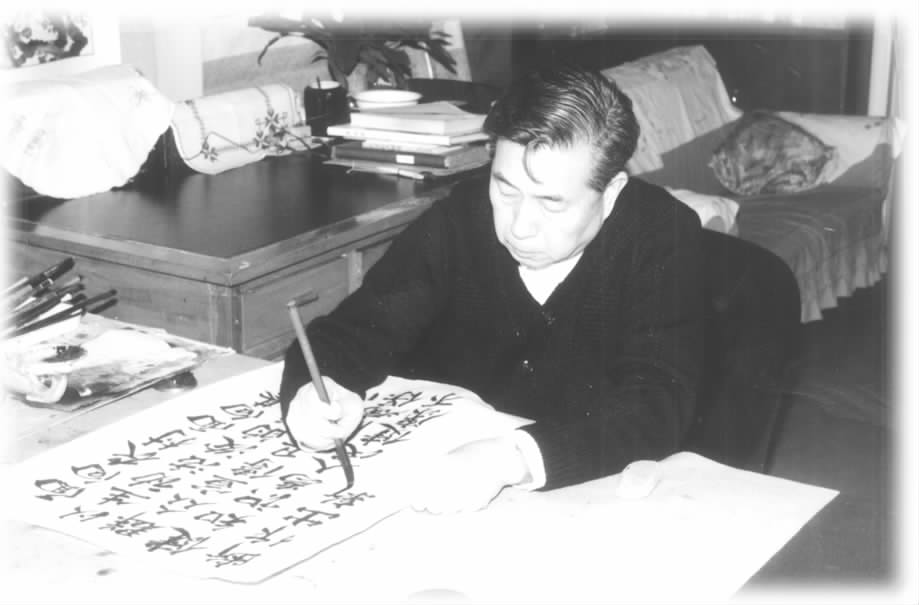
A Red Heart Shining a Thousand Autumns
Jiao Shude · January 2000
Comrade Cui Yueli, former Minister of Health, was diligent his whole life — a red heart, a true gall — devoted boundlessly to the great revolutionary cause of the Chinese Communist Party. His great deeds are hard to set down in full. To mourn him I composed a couplet:
Selfless and unafraid, virtue with the people — great deeds, hung in history. For Party and country, bowing to the last — a red heart shining a thousand autumns.
It can stand as a portrait of his life.
Director Cui loved the Party's health enterprise. He labored mind and spirit for the health of millions, never sparing himself in building a people's health enterprise with Chinese characteristics — pouring his heart into the work to the very last moment of his life.
In office, he did vast work on our country's health and care, and on medicine's development, education, and research. His record is on every lip. As a TCM doctor, what I most miss is his active and firm carrying-out of the Party's TCM policy — meticulous, unwavering, never bent out of shape.
In 1978, Comrade Deng Xiaoping personally endorsed Document [1978] No. 56. Cui acted vigorously and soon convened the Hengyang Conference, firmly carrying out the TCM policy. In 1979, with his strong support, the All-China Society of TCM (now the China Association of TCM) was founded. In 1981, under his care and guidance, its Internal Medicine Society's founding meeting and first scholarly exchange was held in Wuhan; the old Minister attended and spoke. The next year, the National TCM Emergency Conference was held in Shanghai…
The China-Japan Friendship Hospital is the largest hospital in our country with both Chinese and Western medicine. In 1984 Director Cui cared deeply for its opening and visited many times to oversee preparations, often giving very specific instructions — how many TCM beds, how many Western beds — and again and again insisted that the TCM beds be in the main inpatient building. One can see his weight on TCM.
In work and at meetings, he pointed many times to the thinness of TCM and the youth of integration work, saying policy needed a tilt. He reported many times to the Center and the State Council on the state of TCM and integration. In 1986 the Center and State Council notified the founding of the State Administration of TCM; following their instruction, Cui poured great heart into preparing this dedicated body for managing TCM.
After his retirement, he still planned and labored for TCM going global and for carrying forward our nation's fine culture, making many friends and uniting many comrades. Ten-some days before his death (January 8), he convened in the Ministry's grand meeting room a forum of senior TCM doctors and specialists to discuss publishing the Translation Series of Famous TCM Classics — to first edit and translate 100 famous TCM works for foreign friends in the world's "TCM fever," helping outside readers truly understand TCM, recognize TCM, learn TCM — making a contribution to TCM going global and to humankind's health. At the meeting Cui gave a heartfelt, thought-provoking address with concrete instruction.
His face, his laugh are still vivid; his words still sound in my ear — yet he has left this world. As one of the participants, my mourning is hard to put in words. I will turn grief to strength, not betray his entrustment, and with the specialists work to complete this task — to console the old Minister's spirit in the heavens.
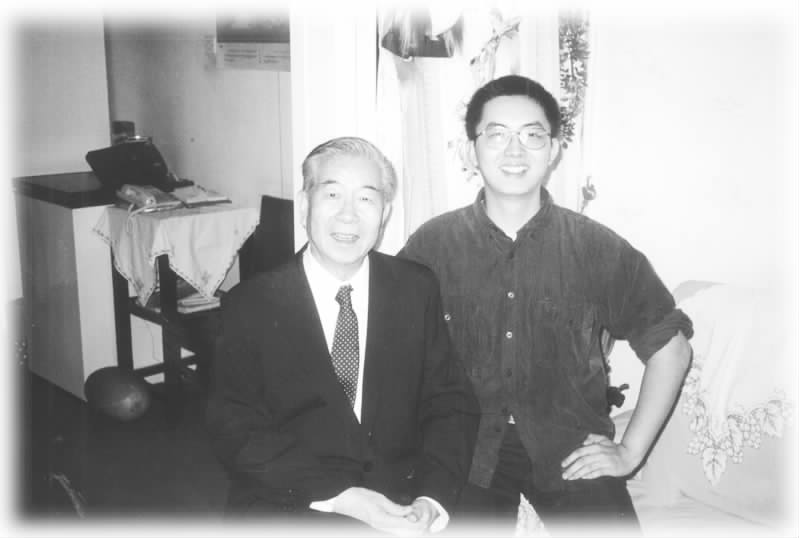
Standing Without Shame Between Heaven and Earth; Aspirations Never Forgetting National Medicine
Lu Zhizheng · January 2000
Time flows; in a glance two years have passed since our beloved old Minister Cui Yueli left us. His clean and clear bearing, his self-discipline and selflessness, his devotion to the Party's health work and to TCM, his openness and approachability — all stir our reverence and longing without rest.
I recall the years when he was Minister of Health, just after the smashing of the Gang of Four. The country was deeply disrupted; in this state, Director Cui organized survey teams and led them himself to every province, autonomous region, and municipality, going deep — and on the problems found, set to solving them at once. Health work recovered and grew quickly.
In the surveys, he found that TCM had been the worst hit. Before the Cultural Revolution there had been 371 TCM hospitals; afterward only some hundred-odd remained, most with Western medicine in the lead and TCM only as a secondary. By the Party's TCM policy, Cui understood deeply that TCM is not only a great matter for the prosperity of the Chinese nation, but a great matter for building a socialist health enterprise with Chinese characteristics and for contributing to humanity's prevention and care. So with a proletarian revolutionary's spirit and the force of stemming a flood, he did much effective work — concrete in several pivotal moves:
1. April 1982: convened the National Conference on TCM Hospitals and Higher TCM Education in Hunan — the famous Hengyang Conference. The meeting raised high the banner of TCM revitalization in the 1980s, plainly proposing to "keep and carry forward TCM's features" and addressed seven questions including the lack of successors and skill, TCM education, integration. It is the programmatic document for setting things right and truly carrying through the Party's TCM policy. Reading it again now, seventeen years on, it still feels close and right — in line with the Party Center's and President Jiang's instruction to "develop our country's medicine and carry forward the national spirit."
2. In 1982, when the country revised the Constitution, Cui briefed and discussed with NPC leaders, and "developing modern medicine and our country's traditional medicine" was formally written into Article 21 of the Constitution of the PRC — our basic law, with the highest legal force. This gave a key guarantee for TCM's growth.
3. To carry through the Center's instruction to "place Chinese and Western medicine on equal footing" and to "not abandon Chinese medicine," Cui reported many times to the Center. In January 1986, with State Council approval, the State Administration of TCM was formally established to take charge of TCM and integration. A turning point for TCM, a milestone of revitalization.
4. After the Cultural Revolution had reduced TCM hospitals sharply, Cui pressed many times and won 100 million yuan a year in dedicated funds, so that TCM hospitals across the country grew quickly to over a thousand — and ethnic medicine also achieved welcome results.
These are major examples; concrete ones are many more.
In 1987, when Cui stepped back to second-line status, he could have rested in body and mind for a happy late life — yet he never set aside the Party's reform-and-opening and the four modernizations. He cared about TCM's rise and fall; ill and aging, he attended every relevant meeting. On January 2, 1994, in the spirit of "let a hundred flowers bloom and a hundred schools contend," he convened a TCM Strategic Development Discussion to focus on scholarly debate, analyze the present, find the chokepoints, propose recommendations to the Central leaders — laying out plainly TCM's hardships, full of confidence in TCM going global, predicting the 21st century would be TCM's century. On August 6, 1997, when the China Association of TCM held my "60-Year Practice Anniversary, Scholarly Forum, and Disciple-Acceptance Ceremony," Cui came on time — affirming and supporting the traditional TCM master-disciple form, and hoping all the country's eminent TCM doctors would take some disciples to inherit their academic thought and clinical experience and keep TCM's level rising.
On January 8, 1998, Cui convened in the Ministry's first meeting room a forum of Beijing-area Chinese and Western specialists (including the publishing world). With self-raised funds he was planning to compile the Translation Series of Famous TCM Classics, gradually translating the Chinese vernacular base into many foreign languages — to use as TCM teaching materials for training qualified personnel and to introduce TCM systematically and completely to the world's people. A great enterprise of merit for the present and benefit for the long ages. The participants were moved by his "retiring without resting" spirit and gave warm support. Sadly that meeting was the last farewell. Pre-Spring-Festival activity had been heavy; over-tired, on January 22, 1998 he passed unexpectedly. His passing is a great loss to TCM.
What can console us: Cui's edited Chinese Medicine: Reflections and the writings he left sketch a great vision — to carry forward the national spirit, revitalize TCM, and build a socialist health enterprise with Chinese characteristics. Reading them lifts the spirit. This is the great wealth he left, fully embodying the broad heart of a communist who gave a lifetime for Party, country, and people. Many Chinese and Western medical scholars who have read his pieces have come to clarity of direction and gained self-respect and confidence — feeling deeply that "what is national is what is global." Only by following TCM's own laws, perfecting ourselves, and gathering the strengths of medicines from every country for our use, can we stand in the world's medical forest and benefit humankind. In recent years, papers have appeared in journals with clear-pointed, original views on reform of TCM clinical, teaching, and research — of value to TCM's growth.
Beloved Director Cui — though you left us too early, your noble character of openness and forthrightness, your tireless revolutionary life devoted to carrying forward the treasure of Chinese culture and revitalizing TCM, are forever a model for us. We will surely do our jobs solidly to fulfill your last wish, take active part in the editing of the Translation Series of Famous TCM Classics, and strive without rest to bring TCM to the world.
A Model We Felt Warmly
Feng Kexi · April 2000
Comrade Cui Yueli and I were not originally acquainted; I had only seen his name in newspapers and documents. By chance an episode of warm acquaintance opened up between us.
It was the early 1980s, soon after setting things right. Yueli was Minister of Health; I, after my own "rectification," became Vice Mayor of Chongqing. At a national health-work meeting in Nanning, Guangxi, which Yueli presided over, I attended. One evening, walking on the hotel lawn, we happened to meet. He asked about me and about my views on health work. I spoke frankly; he was interested, and asked me to put some of it on paper.
Soon after, in spring 1985, I suddenly received a notice that the Ministry, invited by the Polish government, was forming a delegation that would also visit the Soviet Union and France, and Director Cui invited me to come along. That rare chance gave me ten-some days of life with Yueli. In contact I heard him speak much that gave one pause. He said: setting things right has opened a new vitality for our country; treasure it. We can no longer thrash about; we cannot walk backward. He said: we should see that the world is changing greatly and quickly; our vision must keep up with the times, our thinking must look far, our work must be truthful and concrete. He said: liberating the mind means no more rigidity. Whatever — yourself or others — take in the good, set aside the bad: that is the Marxist seek-truth-from-facts spirit. These words gave the figure of a far-sighted politician.
In Moscow, Warsaw, Paris — sightseeing and chatting — Yueli spoke spiritedly of the Kremlin, Rodin's sculptures, Chopin, the Auschwitz camp. For an "old revolutionary" to know so much across so wide a range is rare.
In Warsaw we were interviewed by television and the press; the work should have fallen to him. He had me do it. I managed it as best I could. Afterward he said, "You handled that with grace." I said, "Not betraying the task, I'm fortunate." I bring this up to show: in Yueli I truly felt — not in slogans but in action — the united-front spirit of treating non-Party people with sincerity.
Afterward, both busy, our contact was not much. On a Beijing trip I once called at his home in Muxidi. In the late 1980s, after a long stretch apart, I received a phone call from him: "Have you run into trouble lately?" I asked, how did you know? He said, from united-front circles. He had once headed Beijing's United Front Department; he was familiar with such matters. I told him about the China Democratic League's recent League-Affairs Forum at Yantai. I said: it was an organized, led meeting, asking everyone to speak freely; everyone did, sincerely; perhaps a taboo was crossed again. But for the Party and for the League, my heart was clear. He listened and said, "Such things, in decades, are everywhere. Recognize what you should recognize; hold what you should hold. At any time, seek truth from facts; do not betray your conscience." A few sentences, ringing in my ears — and from someone with no prior tie, in high office — how rare.
In our few meetings, his learning, his open spirit, left a deep mark. I cannot help thinking: if we could have more politicians of this character, learning, and ability — and fewer hollow officials — how much closer we would be to the people; how much less thrashing in our social progress; how much more vitality in our socialism.
Yueli has left us forever; everyone misses him without limit. A model not self-touted but warmly felt — such a one will live on in people's hearts.
"If It Helps TCM's Inheritance and Growth, I Will Support It"
Han Xizan · May 2001
*Calling Lü Bingkui "teacher" before the assembly*
The TCM conference convened in Hengyang in April 1982 is a milestone in the development of TCM. Its historical place and function show only larger with time.
I attended the preparatory meeting as Tianjin's chief delegate. Director Cui delivered an important address on the conference's key content, importance, and agenda. Speaking on highlighting TCM's features and TCM's historical role, he said: in coming to the Ministry to take charge of TCM, beyond serious study of Chairman Mao's and the Center's writings on TCM, much of my TCM knowledge came with great help from Comrade Lü Bingkui. In this he is my teacher; I am deeply grateful to him and respect him.
These words of his are still passed on as a fine story.
*Approachable, answering every ask*
I remember in early spring 1993 when I was visiting his home. In the study I saw a plum-blossom painting by Comrade Xu Shulin and asked the Director if his wife could give me one. He agreed at once and said one would be sent.
Half a month later, a plum-blossom painting with the Director's inscription arrived at my home. During Spring Festival, Director Gao and TCM-hospital Director Yao, paying New Year visits, saw it and both wanted one — their earnest wish was plain. I had to write to Director Cui; within a month both wishes were granted.
What I find still harder to forget: when I wanted Director Cui to inscribe the title for my collected volume Sixty Years in Medicine, not only did he do it, he also wrote me a letter of congratulations. Whenever I think back on it, my heart still warms.
*"If it benefits inheriting and developing TCM, I will surely support."*
In 1991 the Zhang Xichun Scholarly Forum convened in Beijing. We had not specifically reported to the Director beforehand, yet everyone wanted to invite him the next day. That evening I was sent on behalf of Professors Wang Qi, Sun Fangzhou, and Zhang Tianren to the Director's home to invite him to attend and speak. I went under orders. He gladly agreed and arrived on time. At the meeting he said: "If it benefits inheriting and developing TCM, I will surely support." All present were deeply moved.
Director Cui attended every standing meeting of the China Folk TCM Research and Development Association and joined discussion of how to take work forward. Hearing some say the Association overlapped with the China Association of TCM and proposing it be dissolved, the Director firmly affirmed its important role, said it could not be dissolved, and proposed the two bodies should — on a clear division of labor — promote each other and grow together. By his recommendation, the Association clarified its direction, revised its charter, and through several rounds of social-organization rectification was not only preserved but did its work better and grew further.
Speaking of Chinese Medicine at the New Year's Start
Zhang Canjia · January 2000
A new century begins, all things renewed; it brings hope and light to the world. As a TCM worker, I place even greater hope in the new century. The new century inherits the achievements of the past — full of the sweat of earlier hands. So at this moment of looking ahead and back, we cannot but think of former Minister of Health Comrade Cui Yueli.
Director Cui threw himself into the revolution young, dedicated to saving country and people. After the Cultural Revolution, while running the Ministry of Health, he attended fully to health work and made major contributions in particular to advancing TCM and developing its scholarship. So at the second anniversary of his passing, our colleagues in the TCM field hold him in deep feeling and boundless remembrance.
While Director Cui ran the Ministry, and after stepping down until his passing, in carrying out the Party and government's TCM policy, on the actual situation he raised many correct views and assessments of TCM scholarship and took many corresponding measures for TCM scholarship and the field — and TCM grew and rose markedly. A few examples:
*One: Hold high the banner of inheriting and carrying forward our country's medicine.* This was Cui's restatement of TCM policy at the Hengyang Conference; it embodies the Party and government's basic spirit on TCM. Every science develops in inheritance and carrying-forward. Without inheritance there is no carrying-forward; inheritance is for carrying-forward; carrying-forward needs inheritance. This is the dialectic of scholarly development, the objective law.
*Two: Keep and carry forward TCM's features.* Cui especially noted: "Embody TCM's features — in diagnosis, treatment, emergency care, nursing, nutrition, case-record writing, ward management — restore and carry forward the features of Chinese medicine." Though aimed at the situation where "some TCM hospitals hung a TCM signboard but sang Western tunes," it has important meaning for all of TCM's clinical work and scholarship.
*Three: "I support integrating Chinese and Western medicine, but I do not support Westernizing Chinese medicine." This Cui said in answering a China Youth* reporter, adding: "There are three concepts we must keep clear: one is developing TCM; one is developing integration; one is developing Western medicine. We cannot use integration to replace the development of TCM. This is a matter of principle."
From these alone, one sees how deeply Cui understood the Party and government's TCM-work policy. Today, as the new century arrives, marking his second anniversary means following his last wish — inheriting and developing TCM scholarship and setting right the direction of the field — to console his spirit in the heavens.
In Memory, Two Years After Minister Cui Yueli's Passing
Gan Zuwang · January 2000
Professor Gan Zuwang of Nanjing University of TCM, a leading figure of Chinese medicine's otolaryngology, is now 88 years old. For decades he has plumbed TCM theory and worked at clinical exploration; his writings approach ten million words. When he saw Comrade Cui Yueli on Revitalizing TCM, he felt deep regret for having missed the chance of a meeting with the old Minister, and, amid debts of writing, took up of his own accord the translation-and-annotation of Liyue Pianwen in the Translation Series of Famous TCM Classics — the eldest contributor to that series. On the second anniversary of Cui Yueli's passing, he sent four short poems to send his mourning across the distance.
Tending Chinese medicine, his red gall true and loyal — twenty years he gave, faithful from beginning to end. A red heart's feeling lodged in Reflections on Chinese Medicine; his last teachings remain, the bearing of a man of state.
The Hengyang Conference he planned with his own hand — one torch lit a candle, lighting ten thousand schemes. He reopened the broad road, preserved the national essence; do not, even briefly, settle for ease.
Chinese medicine's root rests entirely on learning — the Translation Series his first plan. A regret left: he could not see it bound; may a fortunate man, helped by heaven, carry forward the family work.
Spitting out his food, gripping his hair — how few are the worthy? Yearning for a kindred spirit, no Bo Le to find. The supply-and-demand road broken, heaven plays its trick; denying a single meeting consoles only a stiff old scholar.
Looking Up and Down, No Shame to Heaven and Earth; Praise or Blame, History Judges Through the Ages
Li Zhizhong · January 1999
Old President Cui came to the Ministry of Health in 1978, after the Third Plenum of the 11th Central Committee, as Vice Minister, then Minister, in charge of TCM. Soon after taking office, facing the wreckage the Gang of Four had wreaked on TCM, on the basis of deep investigation, with the unusual courage formed in revolutionary years, he set firmly to broad-axed setting-right; in 1982 he convened the Hengyang Conference, of far-reaching significance in TCM history. Hengyang's theme was: keep and carry forward TCM's features; revitalize Chinese medicine. I myself, stirred by Hengyang's spirit, began my work on the science-of-TCM and on its "soft science."
Old President Cui served at the China Association of TCM for 18 years. In mid-March 1995, at a meeting of the Integrated Chinese and Western Medicine Association, President Cui asked: "Who is Wei Li from the TCM Association? Why don't I know him?" When he learned that Wei Li was my pen name, he laughed brightly: "You made me search for you! I read your articles carefully; I have already endorsed them to the secretary-general of the TCM Association, asking them to print copies and distribute them to provincial and municipal associations, hoping the field would study and discuss the question further." I was startled — he was already 75, and so attentive and sharp on a scholarly question. Frankly and humorously he said: "I support integration of Chinese and Western medicine, but I do not support Westernizing Chinese medicine. This view I drew from work practice; you set it out clearly in theory — that's theory and practice combined. Your analysis of the misconceptions about integration is in line with history and seeks truth from facts; so the final definition is scientific and persuasive." Then he said earnestly: "Comrade Mao Zedong's view on the relationship between Chinese and Western medicine is mutual learning, complementing each other, and rising together — starting from practice, raising clinical efficacy, serving patients together. As for creating a unified new medical system, that is a long-term goal of medical development. The Chinese-Western unified medical system did not exist in the past, does not exist now, and will likely take many generations of effort to be possible. To say a Chinese-Western unified system has formed today is not factual. The core of TCM scholarship's development now is still keeping its features and bringing forward its strengths. Only after TCM is fully revitalized will integration have a reliable foundation." His summing-up was concise, direct, accurate, and complete. As we parted, he urged me: theoretical research is important; soft-science research is even more a weak link in TCM; you must walk this road. He asked me always to send him any new soft-science article first.
In May 1995, the State TCM Administration and the China Association of TCM held a Symposium on TCM Basic Theory Research. Specialists at the meeting reflected deeply on forty years of basic TCM research from various angles. He spoke not a word; from start to end he listened seriously. Afterward he called and said upon meeting: "I plan to edit a book — to look back at the development of TCM and its scholarship since the Third Plenum, hoping to prompt people to make calm summation and reflection on TCM's history, present, and future, so that we can pick out a clearer road, avoiding wrong turns later on." He spoke gravely: "After hearing the specialists, I feel pressure. Chinese medicine should walk its own road of development; TCM bodies should highlight TCM's features. If the various ways of weakening TCM are not changed — or if under fine slogans Chinese medicine is quickly Westernized — we will repeat the tragedy of post-Meiji Japan eliminating its traditional medicine. Then we and your generation will be the criminals of history." He asked Comrade Zhu Guoben and me to assist him; to gather and arrange the good views and good articles from the past twenty years on the field's development, theoretical research, and strategic thinking; and to bring them to him. He asked that one volume be brought out before the TCM Association's term change — as the gift he, leaving the presidency, would offer the field. That became the Reflections on Chinese Medicine (Volume 1) under his editorship.
After Reflections came out in August 1997, response across the country was great — and there were dissenting views too. On December 20, on the eve of the Beijing TCM work conference, President Cui asked me to deliver him 200 more copies — beyond gifts to the conference delegates, he prepared to send to leaders and figures across circles who cared about and supported TCM. That day he was glad and stirred; once more I felt his sincere, open, broad chest, and heard his earnest teaching. Pointing to Reflections he said: "If a book draws only praise and no criticism or even opposition, that would be very strange." When I mentioned that some specialists planned to write reviews to recommend the book, he said: "Don't publish praising reviews in the press; we don't praise ourselves, and don't need others to praise us. Lay out the views and the arguments; will the public not see? I hope to lay out all the differing views from every side and let everyone analyze. What's wrong with that?" Gravely he said: "TCM's difficulty, summed up, is the 'two Westernizations' — in scholarship, not respecting TCM's own laws and using Western views and methods to remake TCM, that is one Westernization; in the management of clinic, teaching, and research, undigested borrowing of the Western set, that is another. Reversing the Westernizing tendency thoroughly may be a complex process — needing effort and bringing sacrifice. TCM in the last hundred years has paid much for this; if we can reduce the waste in the field and the loss in scholarship, what does some personal sacrifice matter?" He then said earnestly to me: "Zhizhong, you're still young — in theory and scholarship you should have a bookish air, but more, courage and backbone. Doing soft-science research, dare to hold the correct views you've thought through carefully, that come from science and from practice. Don't drift with the current; don't fear being misunderstood. I know you; many senior TCM doctors know you and support you better. Learn from them — their attitude in scholarship, their devotion to the work — and from their fine character and personhood. Differing views in scholarly questions are good. To revitalize TCM, to carry forward our fine culture, seek truth from facts, hold the truth — even meeting blows and slander, what of it? With the 'two hundreds' principle and the great policy of reform-and-opening, do we still fear being labeled Rightist? Generations of scientists pass; their results stay in the world. That is my attitude in life." His open, selfless words drew from me the lines: "Looking up and down, no shame to heaven and earth; praise or blame, history will judge through the ages." He laughed brightly and said over and over: "Good, good, good. The people's health needs Chinese medicine; we'll inherit and carry forward Chinese medicine, hold on, never let go." Leaving his house, two famous lines kept circling in my mind: "A heart without selfishness — heaven and earth open wide" and "I would offer my blood to Xuan Yuan." This was Cui Yueli.
He probably hoped I would understand his heart more deeply; on January 20, 1998, he wrote me again. He said: "In TCM's revitalization, differing views are normal. I do not advocate naming names in debate. I advocate hiding nothing of one's view, arguing it positively in deepening fashion, laying out each view, asking people from above and below and around to consider and assess, letting practice show which formulations, views, and predictions are correct, and asking comrades in clinic, teaching, research, and administration to choose." His exhortation was deep affection for me — and a demand on workers in the science-of-TCM and the soft-science of TCM. I had not imagined that the December 20, 1997 talk would be our last meeting, much less that the January 20, 1998 letter would be his last. Each time I think of it, the longing presses — tears come, and stir me up.
Old President Cui gave the latter half of his life entirely to Chinese medicine. He faithfully followed Comrade Deng Xiaoping's "respect knowledge," "respect science," and "science and technology is the primary productive force"; he held high the banners of "keep and carry forward TCM's features" and "revitalize Chinese medicine." In management he handled the relation of scholarship and the field correctly, always placing — by following TCM's own laws — the inheriting and developing of TCM at the head of revitalization. What is most precious: after stepping down from administrative leadership, he made wide friends in the scholarly world, became step by step an insider in TCM scholarship, and threw himself into the development and spreading of the productive force (i.e., scholarship). To make TCM easier to study for more people, and to take TCM to the world sooner, from 1987 he set to planning the vernacular translation of the TCM classics. After repeated specialist deliberation and his careful orchestration, the editing and publishing of the Translation Series of Famous TCM Classics finally took full start on January 8, 1998. To our pain, less than a month later he passed of a sudden heart attack. We firmly believe, with the broad effort of TCM workers, his wish will be realized.
Laozi said: "He who dies and is not lost — that is long life." Old President Cui is such a long-lived one. To remember him today is not to forget his teaching, to keep the mission, to strive for revitalizing TCM. Old President — rest. Until the day TCM shines, we will surely set out wine to honor you again.
Spring Thoughts
Li Zhizhong · January 22, 2001
Reading Mr. Hu Sheng's late-years self-account: "At fifteen I set my heart on study (Marxism-Leninism); at thirty I stood (wrote Imperialism and Chinese Politics); at forty I was perplexed (Great Leap Forward of '58). The perplexity went unresolved for nearly thirty years. At seventy and eighty I came to know a little of the will of Heaven; into the twenty-first century I peered just inside the gate. At ninety, no hope. Alas! May the offering be received." I was struck — by the impermanence of worldly affairs, the overturning of reason, the brevity of life, the wasting of years. It happened to be the third-year anniversary of Mr. Cui Yueli's passing. At this turning point of TCM's rise or fall — his soul tied to both worlds, the seen and unseen — if Mr. Cui were still here today... So I tossed and turned, sleepless. Then I thought: I have not yet reached the "age of obedient ears" (sixty), and I have been allowed to "leave my post early." Joy welled up — spring has come! Heaven has granted it to me! Heaven has shown me a sign!
The clock struck the hour; a slow breeze washed my face; thoughts settled — I took up the pen:
Cypress and pine green to the sky's edge; Autumn chrysanthemum, winter plum — bright too.
Cultural splendor — its source is long; Helping each other, flourishing together — never let it slip!
A thousand years of pattern-differentiation, tested in practice; With "abolish the medicine," what elixir of long life?
"Clear the source" — that is the road back to spring; In a humble lane, a single bowl, a single ladle — and faith added.
Note 1: Mr. Hu Sheng was a well-known contemporary sociologist, once president of the Chinese Academy of Social Sciences.
Note 2: Mr. Cui Yueli served as Minister of Health and as president of the China Association of TCM, with notable contributions to TCM's revitalization and development. In his lifetime he led, with Mr. Zhu Guoben and myself, the editing and publishing of Reflections on Chinese Medicine — and we formed a bond of friendship.
Note 3: "Pattern-differentiation" (bianzheng) is shorthand for "pattern-differentiation and treatment-determination" — that is, "trace the cause from the pattern; weigh the cause and determine treatment." It is a general summing-up of TCM's principles and process for preventing and treating disease.
Note 4: "Abolish the medicine" refers to "abolish the medicine, retain the drugs" — a current of thought, under the impact of modern scientism and Western-culture-centrism, that arose in China to "abolish TCM theory and keep the herbs."
Note 5: "Clear the source" refers to "set the root straight, clear the source" — that is, beginning from the study and research of the TCM classics, to clear away the influence of the "abolish the medicine, keep the drugs" current, so that TCM can develop healthily by its own inner laws.
Note 6: "Humble lane" and "single bowl, single ladle" — from Analects, Book 10: "A single bowl of food, a single ladle of drink, in a humble lane... and Hui's joy is not changed."
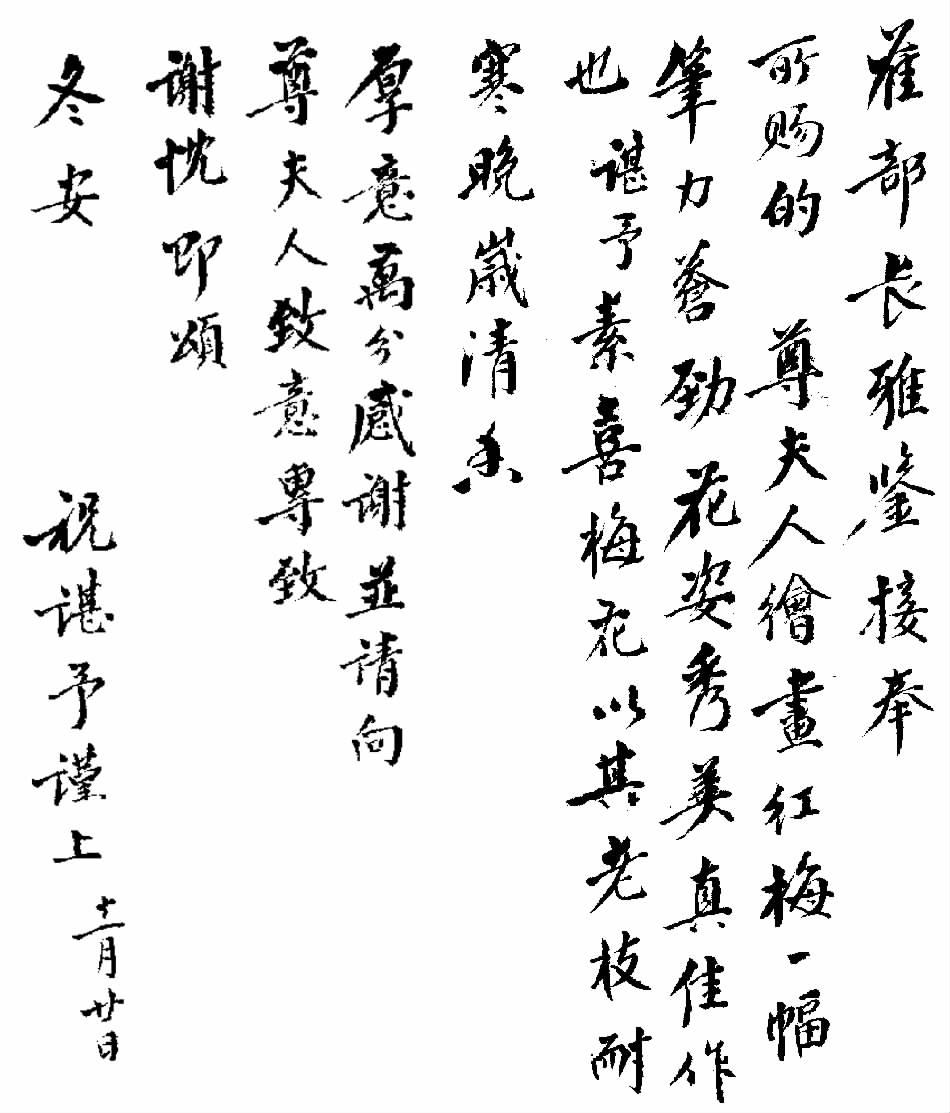
This Is the Working Style I Most Endorse
Wang Jian · August 2001
More than three years have passed since Comrade Cui Yueli left us. His working style — quick to consider, good at judging; once decided, put into action; once acted, seen through — is one I will never forget.
*I. One word, not two; said and done*
On January 28, 1984, at the Ministry of Health all-cadre Party-rectification meeting, Cui spoke plainly: "Starting from the Ministry's reality, I endorse Comrade Xiaoping's 'selfless and fearless, turn heaven and earth around.' Party-rectification must clear the three categories; rectify and reform at once, stressing effect." He went on about health work: "My priorities: first, Chinese medicine; second, prevention; third, the countryside and old-minority-border-poor areas." And: "TCM must be revitalized. Prevention-first is the health-work guideline; several thousand years ago the 'superior physician treats the not-yet-ill' marked preventive medicine's place — so epidemic prevention is of course a priority. Countryside, of course, is an always-remembered priority." And so he spoke, and so he acted.
In July 1982, Comrade Yueli came into my office (I was then deputy director of the MCH Department). On seeing me he asked loudly: "Wang Jian — in your decades of provincial and ministry work, tell me: how should health prevention be done?" I said: "Forgive me for speaking plainly. Strengthen the organization; set up three bodies: an Academy of Preventive Medicine (or Center); a Chinese Preventive Medicine Association; a Chinese Preventive Medicine University. The Academy should parallel the Chinese Academy of Medical Sciences; once founded, it should first run a graduate school, grow steadily, and prepare the University as preventive medicine's highest academy. The Association should parallel the Chinese Medical Association and begin scholarly activity nationwide at once." Barely had I finished when Minister Cui slapped the desk — "Good! Do it! Same as my thought. Tomorrow you go run the Epidemic Prevention Department — start now!" Before his voice faded he stood and went back to his office. Next day Secretary Wang came to tell me I was being transferred to the Epidemic Prevention Department. And the Chinese Academy of Preventive Medicine was set up at once, its founding meeting convened at once. Three years on, when I was 59, Yueli said: "Go found the Chinese Preventive Medicine Association — you'll be vice-president and secretary-general. First a preparatory group — you lead it." The Chinese Preventive Medicine Association was formally founded in 1987; within half a year each province, city, and region had set up branches, and the national body set up 23 specialty societies.
From then on, strong preventive-medicine research bodies and scholarly organizations from center to county grew up swiftly — changing the old situation in which preventive research was nowhere on the queue and preventive scholarly activity had no steward (the Chinese Medical Association had only one hygiene group at its second-tier level). Many comrades praised: "Minister Cui — decisive, one word not two, said and done, deeds completed, battles won — a great-general's bearing." His directives were clear, timely, thorough; he never ate his words. On July 27, 1982, he wrote to the Party-group members: "Add up the accounts carefully. Support Comrade Wang Jian's proposal for elimination and control of leprosy, TB, venereal disease; the disease-control plan must be seriously discussed again soon." Before that he had instructed the Epidemic Prevention Department: "Where there are leprosy-TB-VD control bodies, set up TB or chronic-infectious-disease departments at the epidemic-prevention stations." On October 6 he wrote again: "Director Wang Jian — I think we should form a China Leprosy Association. What problems are there? Tell me so we can solve them." His method of leadership — deep into the real, investigating, judging when judgment was due, carrying through to the end — I much endorsed.
Writing notes without grasping the real gets nowhere; grasping without results gets nowhere. Cui personally visited leprosy villages, personally inspected the Leprosy Prevention Research Center and the Association's establishment, and personally prepared for and chaired the International Leprosy Conference held in Guangzhou (over a thousand delegates from many countries, many led by their ministers). Foreign guests praised China's resolve and results in leprosy control. He instructed: "By 1995 we must reach basic elimination nationwide; after elimination, convene an international leprosy conference in Beijing to announce to the world that China has eliminated leprosy." Cui cared deeply for the sufferings of the country's 1.2 billion. Many times he went to the Ministry's Letters and Visits office on duty to handle letters and visits personally — things other ministers and vice-ministers did not do. He attended the national planned-immunization conference in person; he attended in person the national meeting held after a province eliminated a disease. In 1983, at the Shandong province-wide meeting in Qingdao on eliminating taeniasis, he told me: "Wang Jian — grip tight, grip real. We must eliminate quickly nationwide (Guangxi and Guizhou had already done so). Treat each disease that can be eliminated or controlled as a major health issue, and call on the whole population to take part." Over the next three to four years, in the country's great mass hygiene-and-eliminate-disease work, vanguards appeared everywhere and good news kept arriving: Shandong eliminated taeniasis; Guizhou eliminated it; Guangxi Autonomous Region too. Food hygiene rose markedly; food poisoning dropped greatly; malaria was eliminated in most regions; the food hygiene law was spread; the infectious-disease law and the border-quarantine law were promulgated; hundreds of food standards, hundreds of food-additive standards, and occupational-disease diagnostic standards were promulgated; dozens of "sanitary cities" appeared; thousands of counties eliminated parasitic disease and thousands basically eliminated leprosy.
In May 1986 I accompanied Minister Cui to Geneva for the 39th World Health Assembly. On the main stage he said: "By end-1985, the national incidence rate of acute infectious disease had fallen from 200‰ in 1949 to 8‰ — a 96% drop; the planned-immunization diseases — poliomyelitis from 4.06/100,000 to 0.15/100,000; diphtheria from 23.1/100,000 to 0.14/100,000; whooping cough from 251/100,000 to 4/100,000. Endemic-disease rates fell tens of times over: schistosomiasis from over 11 million in the early 1950s to 600,000; malaria patients from over 30 million to some hundreds of thousands; leprosy from around 500,000 to under 100,000; taeniasis patients from over 30 million to 5 million. Since the trial of the 1983 Food Hygiene Law, food poisoning nationwide has fallen 80%; the five big hygiene areas are now under rule-of-law management. Average life expectancy has risen from 35 to 67.9; infant mortality has fallen from 200‰ to 34.7‰." His speech was praised by the Assembly; many countries' delegates were astonished.
*II. Thoughtful and decisive; frank and unselfish*
In 1985, his thinking matured; in September he said to me: "To strengthen the country's hygiene-and-prevention bodies and raise the quality of hundreds of thousands of hygiene-and-prevention workers, to fit job-skill assessment and match the release of post-responsibility rules, we should compile at once a Hygiene-and-Prevention Workers' Post-Assessment Guide." He told me to "start at once and finish within a year," and noted: "Write concretely but not ploddingly, suited to the wide needs of the country's hygiene-and-prevention workers; from China's reality, not mechanically copying abroad; strongly scientific, policy-bearing, instructive — start from the real, summarize, generalize, rise above, guide the real. I agree to be listed as editor-in-chief. Hurry! Publish at once when done!" After 11 months of work, several reviews, several reports to him, Yueli said gladly: "Good! Issue at once!" Nine volumes, 52 chapters, 600,000 words — the five big hygiene areas, acute infectious disease, chronic infectious disease, parasitic disease, endemic disease, noninfectious disease, border-quarantine, health education, various tests, epidemiology, hygiene-prevention management, statistics, pest-kill plans, immunization, and so on — rich and practical. The book became the standard of assessment and improvement for 500,000 hygiene-prevention workers nationwide. From then on skill rose swiftly, and problems were solved.
I much endorse Yueli's thoughtful decisiveness. Once he'd thought deeply he gave instructions at once — never letting go, stating his views with no reserve (by note or by face-to-face), never putting off till morning, never treating lightly; once ripe, he slammed the gavel.
In the 1983 Party-group rectification, I heard some members sharply raised it with him: "Writing notes is not proper; not like a Minister" — and made much of it. Hearing this I wrote at once explaining how the directors supported this method: precisely because he thoughtfully and decisively solved the problems the lower levels couldn't pin down, work went smoothly. Besides, Cui's notes were built on going deep into the real, approachable and democratic.
On October 6, 1984, Cui wrote to me: "I think a China Leprosy Association should be formed..." We had been weighing whether to form a second-tier society or a first-tier association, undecided; when the note came we set it up at once and began work at once. That month, on the 22nd, the "Leprosy Prevention Research Center" was founded in Guangzhou. The same with the Anti-Smoking Association: when we below were still weighing, the Minister's note came and it was set up at once. Many things went like this — he saw what we had not yet seen. In 1982-83, the economy was in great change; commune clinics and border-quarantine stations had no income and were pressed. Cui instructed: "Fees should be charged." I recall in 1983 checking prevention work in Shenzhen — at the city epidemic-prevention station a notice was posted: "The station's charge of 2 yuan for encephalitis vaccination must be refunded at once." I told the director to report to the mayor: "No refund." At the border-quarantine station staff reflected: after disinfecting big Hong Kong trucks on entry, the city forbade charging. I told them: "Charging is a must — 1 yuan per truck is not too much." After I reported to Cui in Beijing he said loudly: "Why didn't you let them charge more! No-fee is not on." Afterwards over a hundred port-quarantine stations slowly got on their feet. Many problems we hadn't thought of — his note came, pointing direction and method, solving in time. Comrades all said such "notes" were very good indeed!
*III. Right and wrong clear; upright and unyielding*
I recall soon after I joined the Epidemic Prevention Department I went with Cui to Shanghai. Before sitting down at the hotel he asked: "Tell me — is Director Liu Meiting a rebel? The last Party group said he was; he's in Beijing Hospital — should I visit him or not?" I replied at once: "Of all the directors, he was the most out-front standing up to the rebel leaders. On January 17 the rebels seized the Ministry's power; the next day he said he opposed it; the third day, in the name of the 'People's Servant Fighting Team,' he posted a big-character poster against the '1·17' seizure, opposed the seize-power committee, opposed the 'revolutionary committee.' By March 10, Comrade Xiannian's speech and by March 23 Premier Zhou's both said the Ministry's '1·17' seizure was wrong. Liu Meiting is a revolutionary who dares to act!" Cui investigated further; next day after returning to Beijing he went to Beijing Hospital to visit Liu and told him plainly: "You are not a rebel; you are a revolutionary, a good comrade. Right is right; wrong is wrong. Rest and recover!" Liu let out a long breath and said: "Old Cui is a good Minister." Later, when Liu was gravely ill, Cui visited him again; at death he said farewell to the body and consoled the family.
On April 3, 1995, Minister Cui came to the Ministry to look in; I went too for some old-cadre business. We met below stairs. Cui said: "Tuesday-Thursday-Saturday a walk; Monday-Wednesday-Friday a chat. Come, Wang Jian — let's go up and chat!" As we sat, Secretary Wang brought over the April pay slip and reported orally. Seeing more than 400 yuan deducted for housing, Cui stood up at once and asked for the housing office's number, shouting: "Are you letting people live? Count for me — my monthly wage is over 1,200; you deduct over 400 for housing; I pay 400 for my housekeeper, plus water, power, gas, sanitation, and the rest — is there still enough for me to eat?! Think this over at once. I keep a detailed log of my daily expenses; last month's I've already sent to Comrade Li Peng. You don't think of the masses when you act!" Putting down the phone, he wrote notes to the sitting Ministry leaders. Comrade Cui always cared for everyone — and in raising an issue he never said "so-and-so has a grievance," but always used himself to protect everyone. In the end no one's wages were deducted.
*IV. Opening a new chapter of health work with Chinese characteristics*
Yueli's guiding thought was very clear. Day and night he weighed how, following Chairman Mao's "develop the great people's health work" and Comrade Xiaoping's "know national conditions, take the Chinese road of modernization," to start from China's reality and build a health work with Chinese characteristics.
On May 11, 1984, in a Party-group meeting he said: "Strengthen the leadership of TCM; truly grasp, truly do; strive to build a health work with Chinese characteristics." In April 1984 he called in the prevention field: "We must start from the real, do well at prevention, revitalize TCM, grasp rural health work — always starting from China's reality, continually summarizing and raising up, creating hygiene-prevention and a health work with Chinese characteristics." On September 7, 1982, at a Party-group meeting he said: "On the prevention side, some must charge. Commune clinics must charge; border quarantine must charge." From then on the big-pot-eating mould broke swiftly; we moved step by step toward a market economy, and prevention bodies began a new chapter.
On December 29, 1983, Cui directed on prevention work: "Put the weight on the countryside; found on reform, build up rural-prevention bodies. Commune clinics must grip prevention well with a realistic plan; each commune clinic director must personally grip it; arrange in full by local conditions, stress key points, seek truth from facts — five big hygiene, infectious disease, parasitic disease, endemic disease, occupational-disease control, mass health drives — neither conservative nor groundlessly 'high target'; what can be reached must be struggled for. Each place must stay with reform — leadership, steps, timely summing-up of new experience — to implement prevention-first, speed the pace, run our country's prevention work well, together break a new road, and create China's unique experience." And: "Hygiene-prevention work has a special place in our country; preventing and eliminating disease is a great matter in socialist cultural construction. We must, under Party Central and State Council and local Party-government leadership, work together to 'send off the plague god.'"
On December 10, 1985, at the Changsha national planned-immunization meeting, Cui said: "Grip planned immunization well and reach universal-coverage targets in two steps: by 1988, provincial-level coverage of 85%; by 1990, county-level coverage of 85%. This means thinking settled, work settled, propaganda and training settled; grip the grassroots, grip research, guarantee vaccine quality and vaccination quality — each place must press forward." On October 7, 1982, at a Party-group meeting, Cui called: "The overall health-work situation is to open a new chapter!" Two months after I took over the Epidemic Prevention Department I reported to him. He said: "Prevention has many things, wide scope, heavy tasks — grip hard, grip real. Grip acute, chronic, parasitic, endemic together. Each place, by reality, must make plans to eliminate or control each class of disease. Planned immunization too — grip specifically; put the diseases that are both severely harmful and treatable first; one by one grip real. Five big hygiene — grip food hygiene and food legislation first, using food hygiene to drive the other four. Prevention work must have Chinese features. Grip hard for a few years and the face will change; summaries will yield new experience; a new chapter will open." In 1983 I went with him from Shanghai to Qingdao for the Shandong taeniasis-elimination meeting, investigating on the way through Yanzhou, Jining, Tengzhou, Qufu — staying three days at Qufu. In chat he said: "We must earnestly carry through prevention-first, the TCM policy, and facing the countryside. One, grip TCM hard, revitalize TCM; two, prevention; three, the ocean-vast countryside — including old-minority-border-poor. All work must start from China's reality, oppose lying and empty words; think diligently, decide once ripe, once decided do firmly, once doing do well — always summarize your own new experience. TCM is China's most precious and richest heritage, the greatest treasure-house and the most distinctive; prevention too will surely yield Chinese-character experience; put them all together, and we will surely create a Chinese-style health work of our own. Learn what is good abroad, of course, but walk our own road, creating a health work with Chinese features. Do it! Selfless and fearless! Self-confident! We can surely do well!" When in 1987 I left the Epidemic Prevention Department to set up the Chinese Preventive Medicine Association, Yueli wrote me in his own hand: "The selfless is surely fearless; the self-confident have much pride."
Though Minister Cui has left us, his one-word-not-two, said-and-done, his thoughtful decisiveness, his unselfish frankness, his upright breadth, his clear love and hate, his extreme devotion to the people's cause, his seeking truth from facts, his deep responsibility for building socialist health work with Chinese characteristics — these, representing the Party's fine tradition, will stay forever in our hearts.
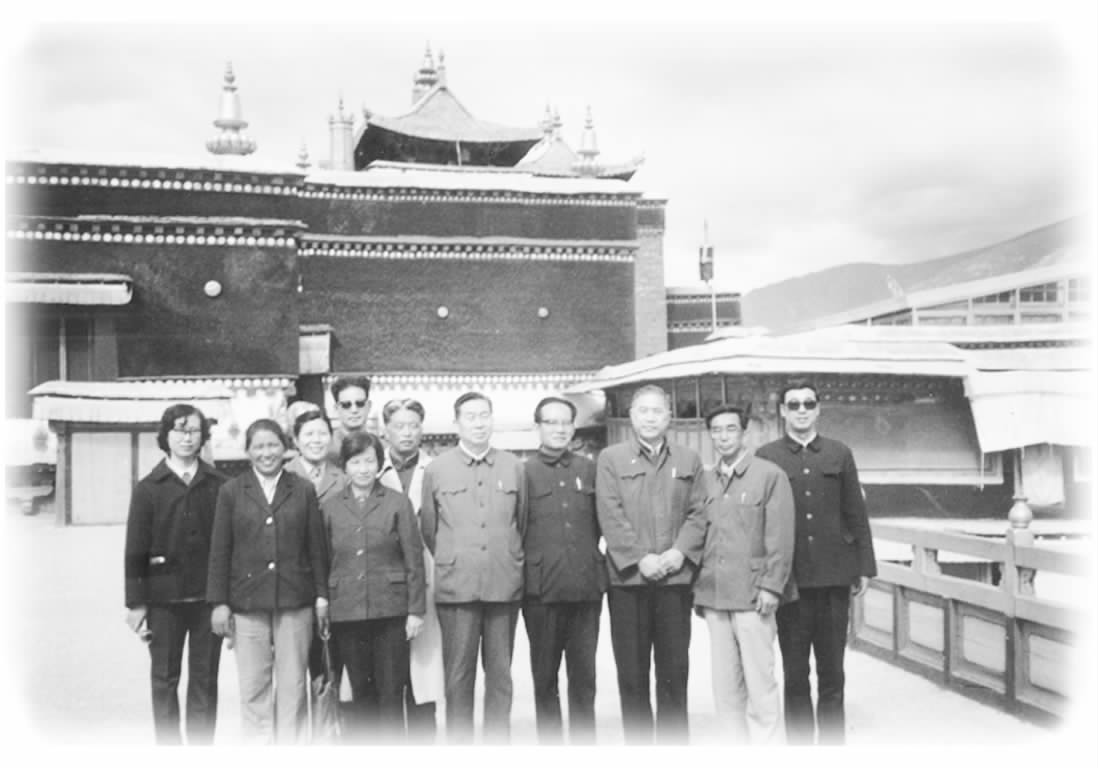
The Minister Who Gave His All for Minority-Nationality Health Work
Yu Junguang · January 12, 2001
Three years have passed since Comrade Cui Yueli left us, and still I deeply miss him. Again and again, I find myself thinking of how in his lifetime he valued and cared for our country's minority-nationality health work. The contributions he made to building and developing that work will stay forever in my memory.
After the Third Plenum of the 11th Central Committee, with the Party's work refocus and thorough setting-right, with the Party's minority policy, border policy, and the various health-work guidelines put into effect, minority-nationality health work too was restored and developed. But, because in these areas the economy and culture lag behind, the health base is thin, conditions poor, and because of long interference from "Left" thinking, health work in minority areas has developed slowly — out of step with national economic development, with a great gap from the needs of socialist modernization and the various peoples' health. How to change this was one of the major subjects facing Yueli when he took office as Minister of Health. He poured great effort into it, paid with arduous labor.
In September 1982, after the 12th Party Congress, the wind of reform blew across the land. One day Yueli asked us to prepare, in line with the 12th Congress's call to help minority areas speed economic and cultural development, a national minority-health-work conference. Though external duties kept him from attending personally, he still wrote a written speech, "Speeding the Development of Minority-Area Health Work." He stressed: we must use the 12th Congress's spirit to guide and push minority-area health work in this new period — a reform of major significance. On the basic tasks and the key work to be done, he set out his views. Under his attention, the Ministry of Health and the State Nationalities Affairs Commission jointly convened the "Second National Minority Health Work Conference" in Beijing, May 8-13, 1983, summing up and exchanging over thirty years' experience, raising understanding of minority-health importance, and setting the guiding thought, concrete tasks, and policy measures for the coming period. After the meeting, a Summary of the National Minority Health Work Conference was circulated; several documents were issued jointly with related ministries and commissions — on the training of senior minority medical personnel at the country's key higher medical schools, on inheriting and developing minority medicine and pharmacy, and on the implementation plan for economically developed provinces and cities to provide paired support for remote minority-area health construction — pushing minority-area health work into a new period of steady and all-round development.
Yueli worked in his own longstanding way — solid, through to the end. To push minority health further, and to push the Ministry's own style, he — with a heart sincerely for the brother peoples — went deep into the minority areas, holding to on-the-spot inspection and grassroots investigation. Based on the broad lands and sparse populations of these areas — large dispersion, small concentrations, settled clusters within the dispersion — he started from the real and guided by type. From the early 1980s on, he spared nothing: crossing mountains and ridges, through a thousand hardships, he went to every place where minority peoples are relatively concentrated. After his 1983 inspection of Yunnan's minority-area health work, the next year he led a thirteen-person group from the relevant Ministry departments and the Beijing Medical College to Tibet — footprints through ten counties and thirty-five medical-health units in Lhasa, Shigatse, Shannan and other prefectures. On that basis he put forward an overall conception for developing Tibet's health work. To land the paired support for Tibet, he also chaired, in Chongqing, a "three-party consultation meeting" of units supporting Tibet, and drew up "Several Points on Better Paired Support for Tibet's Health Construction" — landing the concrete tasks and policy measures. Later, from July 17 to September 18, 1986, the Ministry's old-minority-border-poor investigation group, led by Yueli personally, went to Liaoning, Inner Mongolia, Ningxia, Xinjiang, Gansu, Qinghai and visited over 170 medical, preventive, health-care, teaching, research, and farming/herding/mountain-district grassroots health units in various prefectures (cities, prefectures, leagues), counties (banners), townships (sumu), and villages (gachaa). He got to know construction and development there, and visited Ewenki, Oroqen, Daur, Mongol, Tibetan, Hui, Dongxiang, Yugur, Salar, Uyghur, Tujia and other minority hunters, herders, and farmers — asking about production, life, health care, and visiting TB and endemic-disease patients' families. Feeling the people's conditions, asking after cold and warm, he also talked widely with local Party-and-government leaders, health cadres, technical staff, and inpatients, and put forward "Several Points on Developing Minority-Area Health Work," published in Health News. He also inspected Guangxi, Guizhou, Guangdong, Hainan. Later Ministry leadership gave his approach high praise — saying it not only helped, by local conditions, each minority area set forward its health-development conception and promoted that development, but also gave the Ministry a reliable basis for decisions. More important still, this approach had an active effect on improving the relations between the central state organs and the autonomous regions, on lifting the spirits of grassroots health workers in remote areas, on strengthening national unity, and on building the habit of organs closely linking with the masses.
Wherever Yueli went, he paid deep attention to minority medicine. He learned that after the Third Plenum, provincial and regional health departments, in the setting-right, had widely valued rescuing minority medicine; it had been restored and developed to a degree, but many problems remained. The main one: apart from a few backbone figures, a large number of renowned senior minority-medicine personnel were of lower cultural and professional level; minority medicine faced the danger of being lost. Yueli pointed out: the key to change is to speed training. In Tibet, training a medicine-health force centered on Tibetan compatriots was to be the strategic focus; by many forms, many channels, many levels, speed training in medicine, health skills, and management.
He also proposed a series of measures for inheriting and carrying forward traditional minority medicine and pharmacy: use regular education together with apprenticeship; Tibet, on the basis of the Tibetan Medicine Hospital, the Tibetan Medicine Research Institute, and the Tibetan Medicine School, to set up a Lhasa Medical College in 1985, as a center for medicine, teaching, and research in Tibetan medicine; strive to restore the Tibet Medical Institute before 1990; Inner Mongolia, Qinghai, Xinjiang to continue to run well the Mongolian, Tibetan, Uyghur medical colleges; Gansu's TCM college to set up a Tibetan medicine department — to be placed in the Gannan Autonomous Prefecture and linked with the Labrang Tibetan Medicine College; where conditions allow, prefectures and cities (prefectures, leagues) should open minority medicine and pharmacy specialty schools — not large — to take up undergraduate training and on-the-job training; and allow senior-level minority medical personnel to take their own children as apprentices.
As minority medicine is an important part of minority-nationality health work, Yueli put forward three further points on how to develop it: (1) Minority-medicine research must keep up: strengthen research in minority medicine; the present focus of research should be to take existing experience and raise it up, to dig out, put in order, and translate proven traditional medical techniques and formulas. On this basis, combine medicine, teaching, and research. (2) In Tibet, Inner Mongolia, Qinghai, Gansu, Xinjiang and elsewhere, there are still senior minority medicine practitioners among the people; we should find ways to bring them together, bring out their role in training talent and translating classics. Relevant departments must handle their titles, wages, and living treatment generously and well. Current minority medicine personnel generally trained by apprenticeship; titles should be given by actual level. Those of higher attainment may be appointed professors, associate professors, or visiting professors. The old bias against apprenticeship-trained minority medicine staff must be changed; by actual level, appropriate titles must be given. When hiring or recruiting folk minority medical staff into state institutions, do not apply the usual worker/cadre pay grades — pay them at a level matching their actual skill. (3) Tibet and the northwest are rich in minority-medicine resources. Developing and using these natural resources not only solves minority-medicine supply difficulty and promotes the development of minority medicine, but also widely opens a road to wealth for the masses. Allow the health departments to invest, forming separate purchasing, processing, and marketing units for Tibetan, Mongolian, Uyghur medicine raw materials — they may recruit unemployed youth, with training under experienced senior minority practitioners, run in enterprise style, self-supporting in profit and loss. Each province and region should also set up minority-medicine plantations. In minority-medicine production, open up, dig hard for traditional prescriptions and patent medicines; not only allow their use, encourage production — but prevent misuse.
These views drew the Party's and state's attention. Under their guidance, Tibet, Inner Mongolia, Xinjiang, Qinghai and other minority areas took new steps in minority-hospital building, scientific research, and training talent — opening a new chapter for inheriting and carrying forward China's traditional minority medicine.
Through many trips of investigation together, I came to know his character more deeply: straightforward and frank; decisive; keeping his word, carrying through his actions; though high-placed, approachable; strict with himself and with his subordinates; clean and selfless; struggling with all his mind for a health work with Chinese characteristics, daring to break new roads. These revolutionary qualities left a deep impression on me. Yueli has left us, but his spirit inspires us still — to revitalize the health work of our many peoples and to create new glory.
Longing for More Talent in the Countryside
Wang Zhan'ao, Song Xin, Wang Daorui, Han Feizhou · June 2001
Minister Cui Yueli has been gone from us over three years, but we at Beijing Medical College — cadres and staff — will not forget this firm, truth-seeking, practical old man. For the conception, founding, and growth of this school gather his deep longing for talent and his utmost care for rural health.
*1. A late-night letter, full of heartfelt rural feeling*
1985 — the seventh year of reform and opening. February 21, the second day of the Lunar New Year. The people, just tasting reform's fruit, were immersed in the holiday's joy. Cui Yueli, then Minister of Health, with his mind on rural health work, braved the cold wind and drove out to Shunyi in Beijing's suburbs to discuss the development of rural health with grassroots workers.
Comrade Yueli had lived through the war years with the old-area people; that bred in him an uncuttable deep feeling for the broad masses. Because he often went to the grassroots and investigated, he knew rural conditions well. When the municipal and county health leaders spoke of the severe shortage of rural health talent, the old Minister said with some anxiety: this is not only a Beijing problem, but a nationwide one.
Reform and opening brought rural prosperity and rising quality of life. Yet the broad countryside, which holds 80% of the population, still lagged far behind in medical and health level. With his overall view, Yueli said pointedly: the key is talent shortage. At the time Beijing's remote suburban counties had a population of 3.718 million and 600 hospital beds. With growing economic strength, housing and equipment improved greatly — but health talent, few came, many left. There were only 1,934 doctors, a ratio of 0.5‰ per capita; and the educational structure was badly skewed, with those below technical-secondary level the great majority. Because the Cultural Revolution had broken and weakened talent training, in a landscape where everything waited to be rebuilt, even the cities faced shortages. Under the rules of talent movement under supply-demand pressure, the graduates of the first classes after the college-entrance exam was restored nearly all flowed to the cities; those going to the remote suburbs were few, and they too drifted back into the city. The old retired each year; the young came not; the pillar of rural health work was loosening — how could this not trouble the Republic's health head?
Analyzing the talent flow of the time: for a fairly long period, most undergraduate medical graduates would still be employed in the cities; the very few going to the remote suburbs would go to county hospitals; township clinics could not expect undergraduates. So county and township medical-health bodies needed senior medical talent urgently and in quantity. Under the Minister's guidance, all agreed: we must resolve to open a new path for training medical talent — solving our own problem ourselves.
That night, with a 38-degree fever and unable to sleep, Cui wrote a letter to the principal of the Beijing municipal government. It said: "Today I went to Shunyi County; the need for medical talent in the capital's suburban counties is a serious problem. If we do not speed training, as the farming masses' life keeps rising, we will be forced more and more onto the back foot, unable to let farmers see a doctor close to home." He formally proposed setting up a medical junior college in a remote suburban county, specially to train junior-college-level medical talent that would stay — to meet the countryside's urgent need for a considerable period to come.
The letter, full of his urgent concern, drew the municipal government's close attention. Within less than a month, six city leaders wrote approval comments in turn, all in words like "Strongly support," "Push hard to realize," "Do swiftly," "Implement swiftly." The Ministry, the municipal government, and the municipal and county health bureaus were of one mind — a common concern for training medical talent for the countryside.
*2. Repeated attention; a new school rises in the suburbs*
Cui Yueli, starting from China's rural reality, analyzed supply and demand in rural medical talent. Demand: large and long-term. Supply: for a considerable period, only junior-college graduates would flow to the countryside, take root there, and meet its pressing need for senior medical talent. So founding a medical junior college was, he held, a talent-training road fitting China's conditions.
His mood was urgent. While the founding was still being discussed, he had already instructed the Ministry to set aside 2 million yuan as dedicated funds, and asked Beijing Medical University and other schools to offer strong teaching help. On May 28 the same year, he wrote again to city leaders urging preparation — even proposing enrollment that very year. The heart's thirst for talent leaped from the page.
Under his repeated attention, the pace of establishing Beijing Medical College was swift. On April 9, 1985, the municipal Health Bureau submitted the project report; the Municipal Planning Commission, Culture-and-Education Office, and Higher Education Bureau all agreed. On November 29 the municipal government approved the founding of Beijing Medical College; construction began at once. Grassroots health workers, feeling the talent shortage to the bone, encouraged by the decision, worked with full zeal, day and night. Under joint effort on all sides — and with Yueli's personal attention and coordination — in just one year 80 mu of school grounds were built, 20,000 square meters of teaching space, a teaching staff of 49 assembled; management in place; the school basically ready to enroll.
On September 16, 1987, at Beijing Medical College's first opening ceremony, before 120 students from the remote counties, Yueli was deeply moved. He earnestly urged these rural children to study hard, grow in every way, and in three years serve their home places with their learning for the suburbs' health work. By that moment, the old Minister's anxious heart of over two years was eased. Thinking that from then on batch after batch of students would go to rural medical-health posts, a warm smile came on his face.
*3. Each year a visit; a little cradle for talent in his heart*
Beijing Medical College was Cui's "experimental field" for training health talent for the countryside; while still in the Minister's mind, it already belonged to "the rural." So Beijing Medical College is the country's first higher medical school to fly the clear banner of training medical talent for the countryside. It was born of rural need and grew with rural growth. Under the banner of serving the countryside, it developed swiftly and steadily.
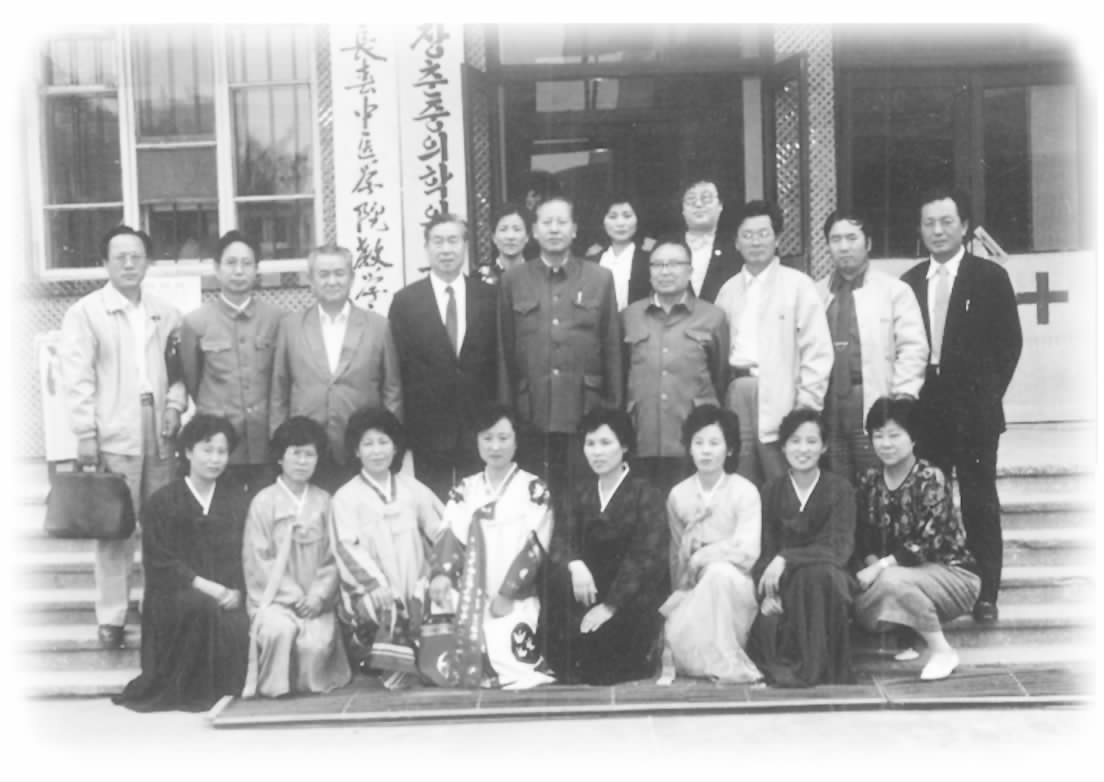
Minister Cui kept this "experimental field" always in mind; for over a decade he came almost every year. Each time he never simply asked the situation and listened to a report — he walked the grounds carefully, took the measure of study and school atmosphere; he sat knee-to-knee with students in the dorms to feel their quality. Each time he heard leaders' reports, what he cared for most was the teaching staff — even counting how many new professors, associate professors, lecturers. We felt keenly his extreme attention to the root question of talent, and admired his grasp of the overall and the key. His teaching graven in our hearts: as the old teachers recruited at founding gradually retired, the school's Party-and-government leadership and the VP for personnel went each year to famous universities in Jinan, Shenyang, Changchun, Tianjin and other cities to recruit young teachers, and invested much effort, money, and feeling in cultivating backbone teachers. Now the school has a suitably sized and reasonably structured teaching staff: 10 full professors, 31 associate professors, 90 mid-level — basically meeting teaching needs.
Beijing Medical College's staff have not let the old Minister down. The school now covers 120 mu, with over 10 million yuan in teaching equipment, 6 specialties, more than 1,000 full-time junior-college students, 1,000 evening-college students. Altogether we have trained 2,800 graduates for Beijing's countryside and grassroots, becoming the main source of senior health personnel for the remote suburban counties — called "our own school" by suburban-county health staff, and honored as the "little cradle" of suburban rural medical talent. Minister Cui is worthily its designer and its weaver.
*4. A parting talk — longing for many talents in the countryside*
In April 1987, at 67, Cui Yueli retired. Taking leave as Minister, he said from the heart: "When I bid farewell to the Ministry comrades and to the comrades-in-arms on the country's health front, what do I say last? One thing: use every means to train medical and nursing talent for our billion people. This is a hundred-year plan; intellectual investment weighs more than investment in buildings and equipment. Don't pass the anxiety of talent shortage like a relay baton from one Minister to the next." This was both his consistent working thought and a wish still unrelinquished in his heart. What he could not put down all the more was the sharp shortage of rural health talent. Beijing's "Seventh Five" could train enough undergraduate and junior-college medical students only to make up for 80% of natural attrition in city medical-health. The suburbs could hardly receive — and even less keep — university graduates; in the country's broad countryside, especially old-minority-border-poor areas, the need for senior medical talent was almost a wild wish. For a developing country like China with 80% of population rural, this supply-demand gap could not be closed in one or two years. But the masses have needs, and the right to them. The only way was to proceed from China's conditions, seek truth from facts, and by place and time, find effective roads. Here he stressed: the key is to carry through the many-level, many-channel, many-form guideline, and develop medical education strongly — especially higher medical junior-college education. Low investment, short cycle; the talent trained can go down, stay, be used — a good path for training higher-level talent for rural medical care, fit to China's conditions and rural needs.
With Beijing Medical College as a model, over a dozen medical junior colleges have since been founded across the country; graduates' employment has tilted to varying degrees to the rural grassroots, and a real and effective role has been played in training medical talent for the countryside.
Founding a school is not easy; practicing a line of thought good for the people needs firm conviction. The history of Beijing Medical College's growth is the history of our learning from Minister Cui his seek-truth-from-facts and people-hearted noble character. The more our work develops, the more we miss this dear and respected old man. We have no reason not to keep walking, always, down this road of training talent for the countryside.
An Unforgettable Symposium
Xie Yanggu · January 2000
Minister Cui Yueli has been gone for two years now. All his life the old Minister struggled for health work and cried out for the revitalization of our traditional medicine. More moving still: after stepping down from leadership, he did not forget the healthy growth of Beijing's TCM.
It was in a cold winter of 1990; I was then working at Beijing TCM Hospital. One day after a meeting at the Health Bureau, word came that the old Minister wanted to come for TCM research. The Bureau's facilities were poor; the compound had a power cut, no heating in the building, the meeting room cold as an icehouse. Worried about the old Minister's health, the leadership explained and asked that he come another day when heating returned. But he insisted. His resolve moved us, and the research meeting was quickly arranged in the seventh-floor meeting room at Xuanwu Hospital.
Around four in the afternoon, braving the cold, Minister Cui arrived on time. When the director introduced me, he said gladly: "Xie Yanggu — that's a fine name; Shandong's Yanggu County is where Wu Song fought the tiger. To do TCM you need just that dauntless drive." A single word, and the room warmed. Director She Jing introduced Beijing's TCM work. After listening, the old Minister praised: "Beijing's TCM has been well done in these years — basically every county now has a TCM hospital, leading the country. But see this: the temple is built — now invite the 'god' to enter." He then turned to training: in detail he asked about Beijing TCM College's course structure, the proportion of TCM and Western courses. Gravely he said: "For TCM's development, talent is the key. We need a cohort of managers who understand TCM and love TCM, and a cohort of famous doctors who have truly grasped the marrow of pattern-differentiation and treatment-determination.
TCM should master advanced scientific knowledge, use modern science to enrich itself — but never lose TCM's root! Think: one who can't even learn TCM well — how can he do TCM modernization well or integration of Chinese and Western medicine well?" On the direction of TCM hospitals he said pointedly: TCM hospitals must do TCM, must bring out TCM's features, must value the building of TCM specialties and disease specialties — not "hang Mei Lanfang's signboard while singing pop tunes." Why do the masses come to a TCM hospital? To see TCM. If your TCM features are thin, are you fit for them? Developing TCM is not to be spoken of from one discipline's angle, but from the people's interests. The people's health asks us to serve them with both modern and traditional medicine, relieving their suffering. The people need TCM — that is the cornerstone and motive force of developing TCM.
The old Minister cared for TCM with a firm tenacity, filled with a sense of mission to serve the people. The symposium went on past six. As we parted, he warned me earnestly: doing TCM work, besides the tiger-fighting drive, needs staying power. Long effort; more: reach out to the Health Bureau actively; win support from every side. I saw his car off. Before my eyes there rose the weary figure of the old Minister, hurrying through city and country, pouring out his heart for TCM.
Minister Cui, Is Life Well for You There?
Wu Shengli · March 2000
Minister Cui, you have been in another world for more than three years. In those three years I have looked up to the sky and asked more times than I can count: Minister Cui, is life well for you there?
What a cold day that was, when we saw you off. Your comrades-in-arms, your subordinates, your family and friends, and the countless people you had cared for and helped — with the deepest sorrow, holding flowers, came to say a last farewell. Inside the hall mourning music drifted low; scrolls without number bore your bright achievements, your noble character, the people's reverence for you. You lay among the flowers, eyes half-closed, as if praying for each of us: peace and happiness for all.
I — an old soldier who from my youth received your care — looking at you, my heart crossed time and space, and a thousand thoughts rose. It was in 1958, the "Great Leap Forward," when I, as a sent-down cadre from Beijing Daily, labored at the Sino-Soviet Friendship People's Commune in Shijingshan. That day, while I was cutting stencils for a small bulletin in the commune office, you came in full of spirit, sat across from me, and talked with me. That year I was 20, worried that I was wasting my best years in the countryside. You told me: cherish every chance to learn and be tempered; society itself is a school; with positive and serious attitude, do every matter well and live every day well. You were then doing social investigation in Shijingshan, and often came to the commune — I had more chances to see you. Each time, you encouraged and taught me: living on passion alone is not enough; you must have a head; you must know why you do a thing and how to do it better. Only so will passion last and a person mature. Minister Cui, truly you saw through to everything — both my strong points and my shortcomings. From then on I consciously trained and changed myself. In 1964, when I moved to Jinan with my husband, you urged me again and again: in a new place have a good beginning and a high starting point; work hard; stay calm in trouble. Minister Cui, I carefully lived up to your words. In Jinan I was strict with myself in everything. If at Beijing Daily I was still a "dragonfly girl," at Jinan Daily I was already a little eagle opening its wings. The major political reports, the National Day parade, were my beats. With great zeal and a clear head I worked and wrote. My printed stories and my work attitude were affirmed; I was named a Jinan city model worker — the only journalist so honored then.
In the ten-year havoc, I too took great blows, labelled a hand of the "Three Family Village," a bourgeois "black scholar," driven down to the countryside to hard labor. Again and again I could not puzzle it out — why striving upward was branded false? Again it was you who gave me courage and confidence. In 1975 you were released; as I was in Beijing, I went to your home to see you — there were still watchers at the door. A Republic-old-generation revolutionary of your deeds was not spared — smeared as a key figure of the "black Beijing Municipal Committee," a traitor, a spy. Eight years of suffering behind bars — how you endured it I truly cannot tell. Eight years' ordeal had aged you much, yet still you urged me to lift my spirits. Looking at you, my heart wept. I resolved to learn from you: not fearing hardship, striving on unyieldingly.
After the Gang of Four fell, you came to the Ministry of Health, leading the country's health work. To spread health education, with long vision you resolved to found a national-level Health Education Institute. I had returned to Beijing, and had the luck to take up this task, joining the preparation of the China Health Education Research Institute. In those founding days, under your direct care, we ran day after day between the State Establishment Committee, Planning Commission, Science-Technology Commission, and Ministry of Finance. At last the Institute was approved; all were overjoyed. The Institute's founding meant the country's health education had its "national team." You came to the Institute and urged us on through difficulty. Under your direct care, the Institute kept growing — from bare hands with not a room to its name, to a building of its own; it strengthened nationwide health-education guidance, fulfilling the glorious mission history gave it. The Institute's growth embodied the flourishing of China's health education — and held the heart's blood you poured into it.
When the terrible news of your passing came, I was stunned. Only two days before, you had attended our Institute's press conference in the Great Hall of the People and spoken, caring for the present and future of health education; you were still planning intensely — a set of books on Chinese traditional medicine, a further contribution to TCM; you had so many things still to do, even keeping in mind the health of the young housekeeper for whose heart surgery you had raised funds. Minister Cui, how could you let go of the cause you gave your life to, and the life you loved? I can picture it — at that parting moment, how you called out for life! In the deepest grief there is no word. Minister Cui, besides finishing the work you left, what else can we do for you? On the day of your farewell, the Institute's video and still cameras caught your last figure, caught the scene of people grieved to the heart.
Minister Cui, you have gone. I used to not believe in spirits, nor in a soul rising to heaven — but now I would rather believe it all is true.
Minister Cui, today Beijing's sky is clear and wide; clouds float in the distance. Minister Cui, is life well for you there?
At Minister Cui's Side
Wang Yushan · June 2001
Great men, common men — let others judge. Honor, disgrace, gain, loss — let them pass unmoved.
Three years have passed since our dear Minister Cui left us. Remembering the days and nights of working at his side, every scene is still vivid.
In September 1980 I was transferred from the Ministry of Health's TCM Department to be Comrade Cui Yueli's secretary — a post I held for three years. In September 1983 I left his side and was transferred to the Personnel Department. In between, in April 1982, Cui was promoted from Vice Minister to Minister; in September 1982 at the 12th Party Congress he was elected to the Central Committee.
I first met Minister Cui in the summer of 1980. One afternoon, the department leadership told me he had summoned me — they themselves did not know why. Imagine a minor clerk in a ministry summoned by the Minister; my mood is easy to picture. Trembling, I went to his office. He asked about my recent work, then asked me to write a report on my most recent trip to a grassroots medical unit — and to have it on his desk the next day. I did as asked. Later came word that a secretary was being chosen; leadership was sizing up several candidates. Some elders warned me: Minister Cui has a big temper, is sharp-tongued, scolds on a whim; many department heads fear him — don't ask for suffering. I said I would try not to make mistakes; fear would not help. Perhaps something matched between us — he chose me, and insisted on me. Leaving the TCM Department, I learned from the leadership that this had been in the works a long time: other Ministry leaders had also wanted me as secretary; the TCM leadership had politely refused. Cui, as the one in charge of TCM, pressed hard and urgently, and for the sake of the bigger picture they yielded. So, before handing over my old duties, I began working as his secretary.
Three years at his side — we got on very well. He was warmhearted, very kind, dear and worthy of respect — at once a strict teacher and a kind father. He never scolded me. From work to life, from being a man to handling the world, his words and example taught me much. His sense of time was extreme: for meetings, for trips, for work — whatever hour he set was the hour. His style was quick as thunder and wind, never tolerating dragging. He most detested leaders who ducked responsibility or passed the buck; his criticism never spared feelings. Some grumbled afterward; he never counted it against them. As long as one's work had results, he promoted them; sometimes he pushed against majority view to use someone. Such was the breadth of his chest, the strength of his devotion to the work.
In the 1980s, the Center repeatedly issued directives that Party members call each other "comrade." Cui had said it many times: "Don't call me Minister; call me Old Cui, or Comrade XX — that feels closer. Why keep the official title on the tongue? From the fawning sort it sounds all the more sickening. Why do Communists need such stuff?" By contrast some newer leaders were no match. One director I knew warned me kindly: don't call leader XX 'Old XX' anymore; they won't like it; call them 'Director XX.' Otherwise they will think you don't respect them and will make you wear small shoes. Compared with Cui's upright, plain mind, did those people feel no shame?
Comrade Cui was extreme in responsibility for work, gave himself fully to the cause, never condoned error. But with comrades and kin he was full of warmth and care to the smallest thing. In the early 1980s, communication equipment was still poor; long-distance calls meant going to the post office; urgent matters went by telegram. I went with him to many places; on arriving at each lodging he wrote home at once. At first I paid it no mind, until one day in chat he asked, "Why don't you write home?" I said, no need, nothing to say. He patiently criticized me for this idea, and told me: writing is both respect and care for the other, and an exchange of thought — in essence a kind of learning. "This time you don't write, I will write to Little Li [my wife]; from now on you must write yourself." In that letter he humorously praised my wife and raised hopes of her; she was deeply moved. Twenty years on she still mentions it to tease me; she treasures his handwritten letter.
[1981 — Comrade Cui Yueli's letter to Wang Yushan's wife Li Lüping.]
During the ten-year havoc, Comrade Cui was persecuted by the "Gang of Four"; body and mind were gravely worn. With the communist's firm belief and strong devotion, one can say he recovered gradually through work. In late autumn 1980, I went with him to Hebei's Hengshui region to investigate rural cooperative medicine and TCM-team construction. In Shen County we stayed in a farmhouse in Cui's old hometown. By day we went to the county hospital and commune clinic to investigate, held symposia; at night we slept on the same kang and he told of his revolutionary life — from leaving home in youth to do revolution, to intelligence work in the White area; from persuading Fu Zuoyi for Beiping's peaceful liberation to municipal construction after founding; from revolutionary ideals to personal life, nothing held back. Most moving: for nearly eight years imprisoned in Qincheng during the Cultural Revolution, in those vile conditions, he held to study, read Capital and other Marxist-Leninist classics a dozen times, memorized some chapters. An older proletarian revolutionary's high belief — love of the Party, loyalty to the country and people — cannot but fill us latecomers with reverence. Next morning, he rose as usual and went out to the fields to talk with villagers and old friends while working with them — both linking with the masses and learning the grassroots. A few times, caught in rain on the road, unable to drive on the mud paths, he walked on to the next commune clinic to learn its situation. For work, he skipped meals and slept less as a matter of course. Later on a Tianjin trip, Mayor Li Ruihuan at a banquet urged him repeatedly to balance work and rest, to watch his health.
*Spirit and bearing — a model for those to come*
After the Gang of Four fell, the Center arranged for him to work at the Ministry of Health. In the face of all-round rebuilding — especially the shortage of TCM bodies and professionals — Comrade Cui was heart-burned with urgency. He arranged and presided over symposia, on-site meetings, went deep to county and commune grassroots, investigated and offered targeted solutions to the Center and State Council — a systematic project to rescue our traditional medicine. At the time, some kindly elders urged him: TCM work is hard to grasp, internal disagreements are great, missteps touch on policy — there is precedent in the Ministry. Do a light job on it; best not to take it up. But he placed personal honor and loss outside. He said: "We are Communists; in office for a term, we must do real things for the common people. Not because it is a forbidden zone, much less for fear of losing the black gauze cap, do we delay the development of the whole cause — else how will the Party's seek-truth-from-facts line be carried out?" Precisely because Yueli held the common people always in his heart and himself alone outside, after years of heart's toil, a wholly new chapter in TCM work was opened, a solid base laid for TCM's healthy growth, and indelible historic merit established.
Those who know the Ministry's history know: as head of the Republic's Ministry of Health, Comrade Cui was the first Minister of Health elected to the Central Committee. That was at the 12th Party Congress, September 1982. When the news came many comrades congratulated him, praising his quick thunder style and his "knowing difficulty but pressing on" spirit. Yueli modestly said: "My election to the Central Committee is not my personal honor. I used to eat so many bowls of rice; I still eat so many now. I never thought I'd be in the Central Committee. It reflects the Center's attention to health work — a higher demand on us. We must redouble our effort at this post, do more real things for the masses' health, solve more real problems, and steadily raise the whole Chinese nation's health." Such is our old Minister — the bearing of a servant of the people.
*Drops and patches — earnest teaching*
In the three years as his secretary, one thing I remember deeply — a mistyped character. After I attended a workers-peasants-soldiers-students refresher class, I was checking a report draft and pointed out several typos. Minister Cui was pleased, praising my progress. But I said: "Two months ago on the first draft I already saw the errors; I just didn't dare say." "Why didn't you dare say?" he asked. "I wasn't sure; I feared you'd think me arrogant, not modest." "Now why do you dare?" "Because you pressed me many times to stop studying and come back to work — I felt your trust..." Before I finished he laughed aloud: "I knew this little trick of yours. I want you to speak the truth. Seek-truth-from-facts is our Party's fine tradition; one who won't dare speak the truth — how does he do big things? That time I felt your hesitation. You have a southerner's shrewdness and a northerner's openness. Very good. But never be complacent; strengthen study, overcome shortcomings, only so will you keep advancing." In twenty years I have always remembered this earnest teaching; in being a person and in work, I strictly hold to seeking truth from facts — neither bowing to the top nor the book, only the real.
I will never forget a day after New Year's 1998. At a meeting of Ministry-subordinate units that I did not attend, in the evening he called home and asked my wife; learning I was away he was set at ease, and gently chided: "Why don't you come to see me?" My wife said we had planned to visit him at Spring Festival. He was glad to hear it. On returning to Beijing I called him at once, and repeated that we would come at Spring Festival to pay New Year's respects. He kept saying he'd wait. But we never imagined that promise would be our last words — the last time we heard his voice of the strict teacher and kind father.
The years rush on; three years have passed in a blink. The man has gone; his bearing remains. The style, character, and knowledge I learned from Comrade Cui Yueli are carved in me, a benefit for life.
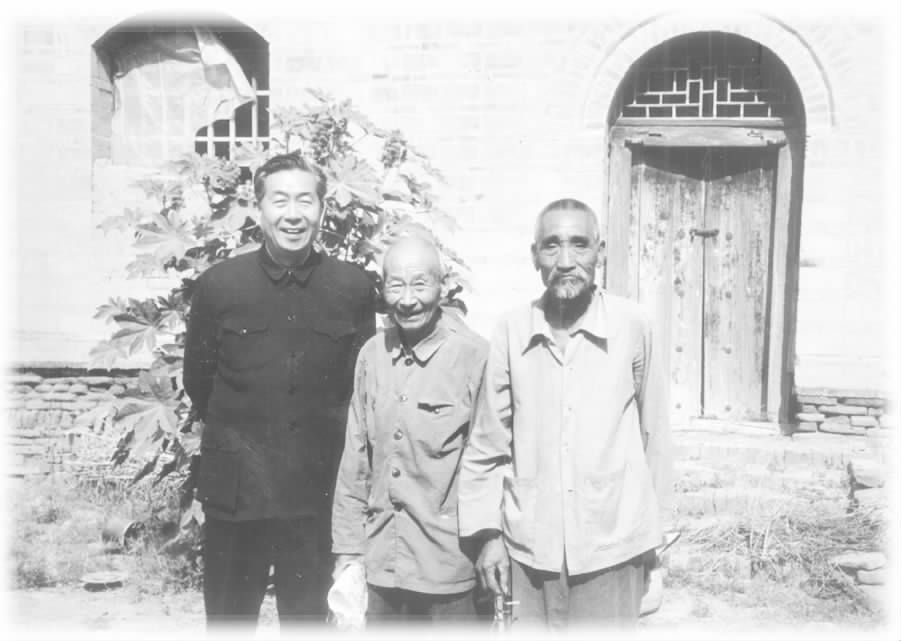
An Elder's Bearing, a Model for the Young
Zhou Ji'an · June 2001
In his life Minister Cui took leadership posts in many important places, and many comrades served in turn as his secretary. I served as his secretary fairly late, and for no long time — but I feel that period is one I will never forget, a lifelong benefit.
In early 1985 I transferred from the General Logistics Department of the PLA to the Ministry of Health, my first post being secretary to Minister Cui. Just a day out of uniform, with an uneasy heart I walked in the Ministry gate. The General Office Secretariat leadership began briefing me: document routing, letter registration, phone-log, meeting calendars, trip arrangements, then on to meals, safety... all-round, every side. I sat watching, listening, writing — busy beyond telling. Before so many fine, concrete, and somewhat tangled duties, my earlier unease grew into real fear.
The next day I formally began at Minister Cui's office. At the door he was just seeing a visitor out; seeing me, he told me to wait inside. I still clearly remember the furnishings: by the window a large but old writing desk, behind it an ordinary chair — the kind you see in government offices, with a white cloth cover. Behind the desk, against the wall, tall bookshelves full of books. I drew near curiously. Most were medical, of course; but to my surprise there were also many biographies, historical classics, military works, political commentaries — even a few of the hottest novels of the day. As I was puzzling over this, the Minister returned. I rushed back to the desk and stood. "A little nervous on the first day? What's your plan?" he asked before I could speak. "I thought I'd start from the concrete work — registering letters, arranging the calendar, and especially caring for your..." He cut me off: "These small concrete things don't matter; what matters is that you get to know the work of every department as soon as you can."
Perhaps seeing my alarm, he softened: "My personal matters are simple; don't spend much thought on them. I know the Secretariat has surely handed you a pile of tasks; I won't add much, only one: listen carefully in meetings. Formal meetings or private talks, as long as I don't tell you not to attend, you may sit to the side and listen — with heart, with mind."
Truthfully, at the time I did not fully understand why he set me so simple yet so deep a demand. But I followed it. Fifteen years on, these four plain characters have benefited me for life.
By his demand, my time at his side was very tight — but very rich. His calendar was always packed; even inviting someone to a meal he was talking work, talking business. So my mind was always full; the little notebook never left my hand. After meetings or after guests left, he would suddenly ask: "What do you think of what we discussed today?" At first I found it hard — unfamiliar people, complex business, and I was not a medical student to begin with — many professional topics felt as if I were a lost man in the mist. But I held on, and slowly came change, progress, even interest; from passive listening I moved to actively asking, actively thinking.
So there truly was no leisure for small talk or "building relationships." To this day people ask: "You were a Minister's secretary; why didn't you build yourself some 'connections'?" I answer: because I was Minister Cui Yueli's secretary.
All his life he thought of others, rarely of himself. On the broad side, he thought of the Party's cause and the country's health work; on the small side, he held even the growth of an unseasoned little secretary like me in his mind. What he valued was not whether I could mind his daily affairs well, but whether a young man could quickly grasp the work and become useful to the country. He wished his staff to put all their thought into investigation, accumulating knowledge, and growing capacity — not into petty matters, and certainly not on door-to-door visiting, idle talk, and relationship-building. This fully showed his vision and his breadth, his surpassing quality.
Some years later, after leaving his side, I took part in managing the Ministry's foreign-loan projects, with work-ties to nearly every department — medical administration, science and education, epidemic prevention, MCH, endemic disease control, and so on — and I could quickly step into each role. This I owe entirely to my time at his side — truly, I was "pressed out" by him. Over ten years on, I still feel the pressure. In these years I have changed posts four or five times but dare not slacken — as if the old Minister still stood behind me watching.
In work he demanded all heart, all strength, ever-striving; in treatment he did not contest, did not worry — was glad to take the back seat. He did it himself, and asked the same of his staff. It brings to mind my housing.
At that time I still lived in a one-room hut the army had assigned me before transfer — a little more than ten square meters, very far from the Ministry. Each morning I rose early, biked to the subway, then rode to catch the Ministry's shuttle. Going home was worse: often I couldn't leave on time and missed the shuttle, so I packed onto a public bus — sometimes an hour or two to get home. After some days I was worn out. A kindly colleague said: "A Minister's secretary worried about housing?" So I quietly mentioned it to him a few times.
One day he said to me: "Come, let's go see where you live." The car left the Ministry, went west, past Yongdinglu, turned into my army-family compound.
In my heart I was deeply conflicted, regretting I had raised it.
On the way back he did not speak. In the office he finally said: "Your housing is truly hard. But many in the Ministry have hard housing, and you have just come. We cannot give you special treatment just because you are my secretary. Could you wait a little longer?" I fully understood. After that I never raised it with him again. Only three years later, when I had long left his side and had moved to head the Loan Office, was I given housing under the Ministry's rules.
To have worked at his side, to have received his teaching, is a lifelong honor and benefit.
Forever Rooted Among the Masses
Bai Huqun · June 2001
In the days of working at Comrade Cui Yueli's side, I especially felt his deep-into-the-real, linking-with-the-masses working style. I was his last secretary as Minister of Health — not quite half a year — and of those months, two were spent at the grassroots on investigation.
His investigations had a few features. First, each one took a fairly long time. He scheduled one or two a year, each one or two months long. My first trip with him was nearly fifty days — through Zhejiang, Jiangxi, Guizhou, Guangxi — four provinces/regions, 13 prefectures and cities, more than twenty counties. It was the longest trip in my ten-plus years at the Ministry. Second, he often went to the most grassroots, the hardest places, to grasp the real situation. Nearly half of those fifty days were spent in counties and below — village edges, field ends, ordinary households. In the Qiannan Miao and Buyei Autonomous Prefecture he once went to a small mountain village; the car could not reach the village mouth. Cui led us off the car, onto the muddy path, into the raw cold of the late-November Yun-Gui plateau, to the villagers' homes. Hearing the visitor was a Minister, they looked blank at first — probably unsure what rank of cadre a Minister was; in their mind a leader was a village head or township head. But when they heard he came from Beijing, they felt the weight of the capital, and were deeply stirred.
In Guangxi, he chose a route through Longsheng, Sanjiang, Rong'an, Rongshui — all poor areas, some minority areas. The roads were mostly dirt; cars raised dust. Our little van was poorly sealed and choked us inside. When I proposed switching cars to the local comrades, he at once stopped me: "Even having a car here is not easy; don't add trouble to the local comrades." When we arrived, our faces and clothes were thinly dusted.
He investigated not only the real state of rural grassroots health reform, but also how the Party's rural enrich-the-people policies were being carried out in these poor places. New situations, new problems, thoughts and suggestions — he fed them back to the Ministry Party group at once; for some major problems he wrote personally to the State Council leadership. Each trip yielded some overall problems and lines of thought — a third feature. At the national directors' meeting in January of the following year, the situations and views he set out in his report were closely tied to these grassroots trips.
In March 1987, Cui stepped back to "second line." For nearly two more years I worked at his side. In this time, with an old comrade's high revolutionary responsibility, he still used every chance to go down and investigate. One longer stretch — forty-odd days in July-August 1987 — took him to Shanxi, Shaanxi, Xinjiang: the same old style, the same old method. In Xinjiang a day's drive sometimes ran 500-600 kilometers over desert and gobi, with very bad roads; by day's end I was worn out — and this was a man nearly 70. At a symposium in Ili, local comrades raised some minority-medicine policy questions; he had me call the Ministry at once, and asked that results be reported back quickly. Vice Prefect Liang, chairing the meeting, was much moved; on the spot he called on all attending to learn from Yueli's quick-thunder, truth-seeking, practical style.
After the 1989 reorganization I was moved to a working department. In a dozen years I often went down to investigate, but seldom again with time as long or reaching as deep as when I went with him. There are objective reasons — and subjective ones one cannot rule out. How to carry forward the Party's fine tradition of closely linking with the masses is still an important question in cadre-building. I miss the days at Yueli's side, and I will always miss this kind and dear elder who had so much influence on my life.
Endless Grief, an Across-Generations Bond
Jiang Shu'an · January 2000
January 22, 2000 is the second-year anniversary of my respected old Minister Cui Yueli's passing. Time is like an arrow; the sun and moon weave like a shuttle. I remember two years ago, in late January 1998, when I was stunned to hear of the death of my across-generations friend, the former Minister of Health and former Central Advisory Commission member Comrade Cui Yueli, on January 22. Tears poured; in grief I wrote:
The wire brought news; I scarce believed it true; Tears on the paper, heaven and earth grew dim.
Through more than a decade of war in the night, Liberating Beiping he built his merit.
A lifetime bound to the health cause, Revitalizing Qi Bo and Huang Di — a spring in the apricot-forest.
His earnest teaching I will never forget — Gathered memories of the elder, grief without end.
On the night of January 26, 1998, my fellow townsman, old Red Army veteran, and former Party-committee secretary of the China Academy of TCM, Comrade Wang Enhou, called me with the terrible news. I could not believe it. How could it be? Ten days before, on the morning of January 12, I had visited him at his Beijing home with Director Wang Zaijin of my office; he was full of spirit, sharp and alive, had talked much work with me, even given me the first volume of Reflections on Chinese Medicine that he had edited, and invited me to write for Volume 2. That very morning of Wang Enhou's call, I had received from Beijing his own words of congratulation on my World Traditional Medicine Doctorate — postmarked January 21, 1998. I did not want to believe it — yet the cruel fact broke my heart, and tears poured. On January 25, Health News ran the front-page headline in bold: "Worked for the health cause to the last breath: Comrade Cui Yueli has died of illness. By his wish, the funeral was simple; his body was donated to medicine." Ah! Heaven! You are unjust. Old Cui was a great good man, with much work still undone and many wishes unfulfilled. Why not give him long life? Old Cui — you left in too much haste. I know you were worked to death; thinking Spring Festival was near, not wishing to burden the medical staff, you took part in activity after activity while ill, hurrying for the health work. You had said to make your funeral simple, to donate your body. Your chest was tall as Taishan, wide as the sea.
Two years have passed, yet his face and laugh still rise before me. His contribution to Chinese revolution and to our country's health work I will never forget.
I remember, in August 1984 at a symposium on TCM work, you, then Minister of Health, listening to my remarks, took great interest, and after the meeting spoke with me, called me young and promising, and said you wanted to be my friend — and I was only 27.
A grassroots health-bureau director making friends with the Republic's Minister of Health — you can imagine how happy I was. After that, we often corresponded; every time I was in Beijing I visited. Whether in office and busy, or stepped down to second line, you received me warmly, and did your utmost to support my requests. In 1986 you wanted to transfer me to Beijing — something others would long for. But I said I did not wish to leave the old-area Macheng; I loved my hometown and its work more. You said you understood, and hoped I would keep at it, making more contribution to the old-area people. In 1992, on hearing I had won a scholarly award, you rejoiced and wrote in your own hand the couplet "The sword's edge comes from grinding; the plum's fragrance comes from bitter cold" — which has hung in my hall since. In 1993 our city held the first national rural-TCM scholarly meeting; you wrote directly to the Hubei Provincial Health Department asking support. In early 1994 our city built a new outpatient building at the city hospital; you wrote and telephoned to help us get funds. At the end of 1994, when I was misunderstood and work was hard, you urged me to stand straight and go boldly, saying "True gold fears no fire; a heart without self — heaven and earth open wide." In 1996 I said our TCM hospital construction lacked funds; you wrote and called again to help. On January 12, 1998, you were glad to hear the Jing-Jiu Railway had brought new vitality and hope to Macheng; you said you would come when convenient. Hearing Macheng was a national advanced TCM city, you urged me to strengthen TCM talent training and promised to help with training funds in 1998. Who knew that this meeting would be our last! Old Cui — the help you gave me is too much to tell.
Old Cui — rest. This old friend remembers you forever; health workers nationwide and the people of Macheng remember you forever.
Scattering Love Across the World
Wang Jieming · May 2001
Our dear Minister Cui Yueli has left us three years. I will never forget his support and care.
In 1983, in the first great wave of reform, I walked out of Hebei Provincial Hospital and, on the base of a suburban clinic, founded our country's first cerebrovascular-disease hospital. There was neither equipment nor money. We borrowed one microscope from a middle school to set up a lab; temporarily rented a village brigade's auditorium and hung cloth partitions for wards; used old oil drums remade as stoves to heat patients; made IV stands of bamboo; patients brought their own bedding. Because of our good attitude and our skill, patients grew in number. We decided to tear down the crude bungalows and put up a ward building. But if we couldn't pay when the building was finished, it would go to the construction company. The building was nearly done; we still could not pay. I was at my wits' end.
One day in November 1984, I was making rounds when I heard Minister Cui Yueli was inspecting a certain hospital. I was just an ordinary doctor; the intellectual's pride kept me from going to see such a big Minister. But after much inner struggle, for the cause I went bravely to that hospital and waited. About four o'clock after the meeting, I walked straight up to him and said: "Minister Cui, please come and see our hospital." He gladly agreed: "Let's go have a look." He went through it, patient by patient, asked about each condition, expressed satisfaction — but said with emotion: "This isn't a hospital — it's a refuge for the sick!" When he learned I was someone of real learning, someone truly meaning to do a cause, he asked: "What do you need?" I said: "Minister Cui, I can support myself by eating and developing on my own. But I can't pay for this building." He asked: "How much?" I said: "Three hundred thousand yuan." He said he would give us 500,000 — the extra 200,000 as a hospital-director's fund. Tears welled up; I bowed to him deeply. I said: "Minister Cui, I thank you, and on behalf of the many cerebrovascular-disease patients I thank you!" An hour or so after they left, he sent a car to invite me to dinner. He had me sit between him and Party Secretary Han Licheng of the city committee. I said: "Minister Cui, I am so happy I can eat nothing." I told him the story of our founding. When I said I often cried at setbacks and difficulties, and people called it menopause syndrome, he said: "That's not right! How hard it is for a woman to do a cause! Xiu Ruijuan is the same, isn't she?" After dinner, gladly he inscribed for me: "All for the people's health, all for the patients — founding a hospital with a dare-to-do, hard-struggle reform spirit — a fine model for the nation's health system." Did he only support me? No — this showed his deep understanding and practice of Comrade Xiaoping's theory of socialist modernization with Chinese characteristics.
He saw that reform and opening were China's only road, and for reform in the country's health work he boldly practiced and sought out experience. So he decisively nurtured this budding sprout. History has proved his far-seeing vision and his forward sense for reform and opening.
Encouraged by the inscription, riding the east wind of reform, walking the road of reviving enterprise by science and technology, with shendu (vigilance even when alone), practicality, and striving as my motto, and with love for my country and people, I developed the medical enterprise steadfastly. After that, he inspected our firm many times, heard my reports, and often taught me deeply.
Twenty years in a finger-snap. We are now a transnational medical group integrating research, production, operation, and service — including four medical research bodies, eight pharmaceutical plants, over ten pharmaceutical operating firms, five overseas companies, and dozens of cerebrovascular-disease specialty hospitals, with more than 400 production licenses, dozens of exclusive varieties, over ten nationally protected TCM varieties, and a large body of research and technology achievements. We also set up the Baoding Jieming Aid Society, doing much in natural disasters, Project Hope, and aid to lonely elders — repaying in double what the government once gave us.
Those who add flowers to brocade in the world are many; those who send charcoal in snow are few. When I first met Minister Cui, my cause had just sprouted; the future was uncertain. The gap between a Minister and a village barefoot doctor — how wide! Yet he without the least airs resolutely propped up our tender bamboo shoot of reform, helping it grow into a tall green bamboo — raising thousands of staff, benefiting many cerebrovascular-disease patients. I often think: life is short — to live is to live like Minister Cui, wholly for the people, sending love out into the world.
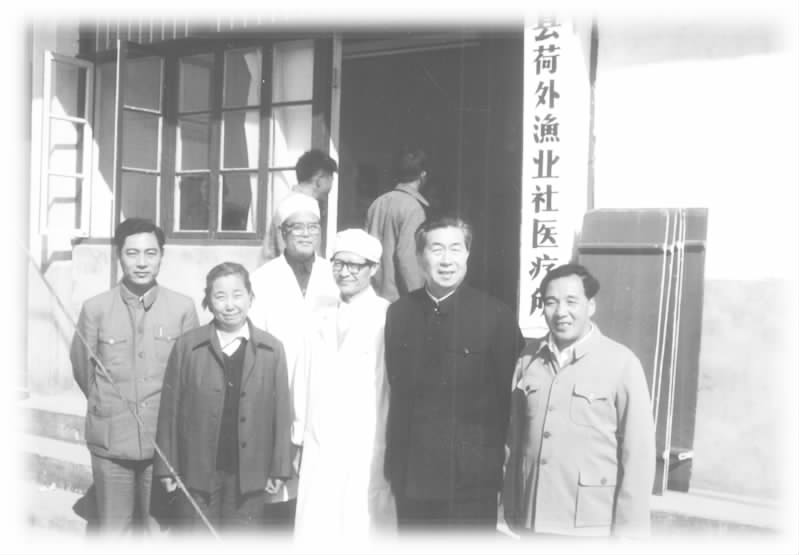
Hearts Tied to the People of the Old Mountain Areas
Yuan Shougui · April 2001
It was in the golden autumn of 1986. Minister Cui and his party inspected Hunyuan County, an old mountain area at the foot of the Northern Yue, Mount Heng. In my mind Minister Cui was a founding elder of New China who, at the peaceful liberation of Beijing, had made outstanding contribution to protecting the ancient capital's cultural heritage.
For such an old revolutionary I had long held deep respect. That he was coming, despite age and weakness, to inspect our Hunyuan County truly stirred us.
I was then director of the county TCM hospital and had the luck to meet him directly. I was very nervous, stiff. When my turn came to report, my nerves worsened; I nearly lost my words. Minister Cui, seeing my bind, smiled and asked my name, my age, my education, how many years I'd been director. His warmth eased me at once. When I had finished, he turned to his party and said: "This afternoon, let's go see the TCM hospital."
Hunyuan County TCM Hospital was founded in 1983. The Ministry had just held the Hengyang Conference, asking every county to run TCM hospitals well. Hunyuan County's Party committee and government, to carry out that meeting's spirit and revitalize local TCM, merged Chengguan Town with Chengguan Commune; the clinic that had belonged to Chengguan Town was turned into the county TCM hospital — changing the signboard. Manpower and funds were very tight. The hospital occupied old houses from the housing office; equipment was simple — only sphygmomanometers, thermometers, syringes, and a worn-out 50-mA X-ray machine; staff were drawn from the various townships. After a careful look, Minister Cui said with feeling: "Your conditions are too poor; our medical staff work too hard. Thank you — thank the county Party committee and government for supporting TCM." After inspecting Liyu Village in Jingzhuang Township, as he was about to leave Hunyuan, he said to the county leaders: in the country's economic difficulty, the Ministry of Health grants Hunyuan County TCM Hospital 100,000 yuan to improve conditions. As a medical worker, I was so stirred I could not sleep for nights. Minister Cui, on behalf of the Party Center and State Council, bringing such warmth and love to the old-area people — how could we not run the TCM hospital well?
The Ministry's earmarked funds arrived that very year. The first thing I did was buy land and build inpatient wards — from 24 beds to 40, basically solving the admission difficulty. We also bought a 200-mA dual-tube, dual-bed X-ray machine, and opened up the lab tests a county-level hospital should have. We sent staff away for advanced training to raise skills. The hospital took on new life: annual outpatient volume surged from a few thousand to 70,000 visits; bed utilization and turnover rose markedly. Annual revenue grew from tens of thousands to over half a million yuan; in turn it was named by province, prefecture, and county an advanced unit and a civilized TCM hospital.
Hunyuan's people will never forget Minister Cui's care and support for Hunyuan's health cause.
Minister Cui Supported Our Founding of a TCM Outpatient Clinic
Zhang Zaonan · June 2001
From its founding to today, every step of the Beijing TCM Specialist Outpatient Clinic is owed to Minister Cui Yueli's warm care and strong support.
In 1985, after I retired, I always wanted something to do — not for reward, but as old-age service. At a meeting of retired health-system cadres, I met two old comrades who had also retired — Liu Lin (former deputy director of Chaoyang Hospital) and Guo Yulian (former Party-committee secretary of Children's Hospital). They felt the same. We three old sisters got together and planned to open a distinctive, high-level specialist outpatient clinic — bringing together retired senior specialists and professors, giving them conditions to keep giving off their "residual heat." How wonderful that would be! But every start is hard. At the time each of us had one body and one head — no money, no house, two empty hands. What could we do? The first thought was to find Comrade Cui Yueli and win his support.
In June 1985 we three went together to the Ministry. Hearing three old ladies had come, he at once invited us to his office. Briefly we reported our thoughts, plans, and difficulties. He said: "A specialist outpatient clinic — a great thing for country and people. I strongly endorse it. Many old health-system comrades have retired in turn; you are gathering these retired senior specialists to use their strengths to serve patients — giving the old specialists an outlet, letting them serve in their old age, and contributing to Beijing's medical-and-health reform. First draw up a workable plan and show me; then we'll talk further." His few short words pointed the way for us; our hearts were at ease.
Stepping out of the Ministry gate, the sun was setting; evening glow spread over Houhai, reddening the capital. We three were especially happy. With Minister Cui behind us, no difficulty was too great. From then on, unheeding cold or heat, we sought out leaders, invited specialists, looked at houses. After more than half a year we found a siheyuan — old, but suitable — priced at 60,000 yuan. At the time, 60,000 was no small sum; again we three old ladies were stumped. We had to ask Minister Cui. One afternoon in late autumn 1985, with the specialist list and the house contract in hand, we went again to the Ministry. He was receiving foreign guests, schedule packed. By the time they left it was 4 p.m.; without resting, he received us in a small meeting room. His way was capable and decisive, fact-focused, to the point. Before we had finished reporting, he cut in and said kindly: "Fewer reasons — what problem can I solve for you?" We said: 60,000 yuan to buy the house, and a car to pick up and deliver the specialists. He agreed at once — the Ministry would lend us both. A great stone fell from our hearts.
On May 30, 1987, we held a simple founding meeting at the Nationalities Cultural Palace. Minister Cui came and spoke: "This clinic is one I supported with my own hand. A specialist clinic founded by retirees and staffed by retirees — the first of its kind nationwide, a gathering of famous doctors. You must run it well, run it with features. I hope you will carry forward the fine tradition of our medicine, fully bring out the old specialists' strengths, draw out some traditional distinctive projects, and better serve the people." At the meeting he gladly took the post of honorary director. The clinic opened on June 1.
Following his instruction, the clinic seeks quality, not size; the attending specialists are mostly nationally famous senior TCM doctors. They are high in medical ethics and skill; with decades of clinical experience, their cure rate in hard cases is high — many difficult and critical patients, under their warm and careful care, passed safely through crisis. Soon after opening, the clinic's name grew; hard-case patients from all over came. Clear social benefit.
Today the clinic has run for a full 14 years. Through hard going, every step owes to Minister Cui's support and teaching. Whatever difficulty we met, so long as we asked him, whether in the office, at home, or in a hospital bed, he always answered — even laying out the handling principles and solutions in full. He held policy justly, strictly, without slip. As our honorary director, when we wanted to give him some subsidy, he always declined, saying: "I am your honorary director of my own will — it is duty. I lack neither food nor clothing, nor money — I lack nothing; only hope you run the clinic better." Each Spring Festival we hold a specialists' gathering, and however busy or tired, he came on time.
Each time he said: I come, first, to see the old specialists and meet everyone; second, to hear firsthand what the old TCM doctors think of TCM management and development. I remember at the 1993 Spring Festival gathering he said warmly: "Six years on, the clinic must have some accumulated funds? You're still in the old tradition — thrifty, reluctant to spend. You are old. Money you earn yourselves, use appropriately for your own life — try to postpone meeting Marx a few years. At holidays give staff more festival pay; don't eat up and share out — raise welfare step by step." He cared specially for the old specialists' health, urging us to look after them, not overwork, and to solve their difficulties so they enjoyed long healthy lives. Minister Cui's heartfelt words warmed all of us. The specialists said: "Minister Cui is truly an intimate to us old TCM doctors."
Into the 21st century, the clinic has now received over 1.2 million difficult-case patient visits from home and abroad, with a total effective rate over 95%, praised and welcomed by the broad public.
We can reassure the old Minister: your pilot succeeded; your heart's blood was not spent in vain. We will carry the great cause of revitalizing TCM through to the end.