A Lifetime Poured into Revitalizing Chinese Medicine
State Administration of Traditional Chinese Medicine · February 1998
On January 22, 1998, our beloved Comrade Cui Yueli, after treatment proved unavailing, passed away. The news plunged the workers of our Traditional Chinese Medicine system into grief.
Comrade Cui Yueli was a leader of recognized prestige in our health sector, a time-tested communist soldier who made major contributions to our country's health enterprise. Over decades of revolutionary work he made outstanding contributions to the cause of the Chinese people's liberation. He made distinguished contributions to the reform and development of China's health enterprise. And he poured a lifetime of heart and strength into the revitalization and development of Traditional Chinese Medicine — building an indelible historical record.
We will forever remember Comrade Cui Yueli's major contributions to the revitalization and development of Traditional Chinese Medicine. After the smashing of the Gang of Four, Comrade Cui Yueli was transferred to the Ministry of Health, serving in turn as Vice Minister, Minister, and Party Group Secretary. He carried out the Party's principles and policies conscientiously. After the Third Plenum of the 11th Central Committee in particular, he organized the ministry's cadres to study, concretely and seriously, the ideological line the Third Plenum had set; grounded in China's reality of a vast population, a thin foundation, and many diseases, he argued that to safeguard the people's health and address China's health problems we had to give full play to the role of both Chinese medicine and Western medicine, and required all levels of the health administration to carry out the Party's health-work principles in full.
When the 12th Party Congress put forward the task of building socialism with Chinese characteristics, Comrade Cui Yueli had the ministry take up the question of what a medical and health enterprise with Chinese characteristics would look like. He said more than once: the coexistence of two different theoretical systems, Chinese and Western medicine, is China's greatest feature and greatest advantage in health; in particular, we must give full play to Chinese medicine and ethnic-minority medicine in preventing and treating disease in the countryside.
After the Cultural Revolution, the task of setting Traditional Chinese Medicine back on its feet was extraordinarily difficult: we had to sum up the lessons of history and rethink the path forward. Comrade Cui Yueli, together with other ministry leaders, went down into the field to investigate, and the Ministry Party Group submitted to the Central Committee the Report on Further Carrying Out the Party's Policy on Chinese Medicine and Solving the Problem of Succession in Chinese Medicine. The Central Committee endorsed the report and circulated it downward — a document specifically on Chinese-medicine work, issued from the Center to the whole Party. Comrade Deng Xiaoping wrote a personal instruction on it: "We must create good material conditions for the development and advancement of Chinese medicine." The document set out many major measures and had a far-reaching influence on what followed. Afterward, at the "National Conference on Chinese Medicine and Integrated Chinese and Western Medicine," Comrade Cui Yueli summed up the 30 years of experience since the founding of the People's Republic, corrected the serious errors committed during the Cultural Revolution in Chinese medicine and integration, proposed strong development of the Chinese medical enterprise and promotion of integration, and clarified for the first time the basic points of the Party's Chinese-medicine policy.
Comrade Cui Yueli went down to the grassroots constantly to investigate. He respected the laws of development of Chinese medicine and insisted on a scientific view of the path ahead for medical, educational, and research institutions of Chinese medicine. He organized and convened a succession of major meetings: the National Conference on Chinese Medicine Hospitals and Higher Chinese Medical Education; the National Conference on Research in Chinese Medicine and Integration; the National Conference on Integrated Chinese and Western Medicine and the Departments of Chinese Medicine in General and Specialty Hospitals; the National Conference on Ethnic-Minority Medicine; the National Conference on County-Level Chinese Medicine Hospitals. After each, the Ministry of Health issued matching documents making clear that institutions of Chinese medicine must keep and carry forward the features of Chinese medicine, and setting out a direction by which integration work could have different emphases in different institutions. These corrected the Cultural Revolution error that integration was the only path, and laid the groundwork and opened the road to revitalize and develop Traditional Chinese Medicine.
Comrade Cui Yueli insisted from the first that Chinese medicine and Western medicine be placed on equal footing, and stressed repeatedly that the Chinese-medicine enterprise was an essential element of building a socialist health enterprise with Chinese characteristics. Under his advocacy and active support, the weak foundations of Chinese-medicine institutions were considerably improved.
His contribution is seen also in the management system and funding. Summing up lessons from both sides, he concluded that for the sound, sustained, steady development of Chinese medicine, a relatively independent management organ and a dedicated stream of funding were both needed. As Party Group Secretary and Minister, he made the case to the Center many times for establishing a national Chinese-medicine administrative organ and a dedicated funding line. With the Party and State's attention, and his active effort, the State Council approved in 1986 the establishment of the State Administration of Traditional Chinese Medicine, with additional dedicated funding for Chinese medicine; provinces and cities set up matching organs with their own funding. With this administration in place and funding increased, management and investment in Chinese medicine were strengthened, and the enterprise entered a period of vigorous growth. Comrade Cui Yueli was also the earliest advocate and organizer of the work toward Chinese-medicine legislation, laying the groundwork for the rule of law in this field.
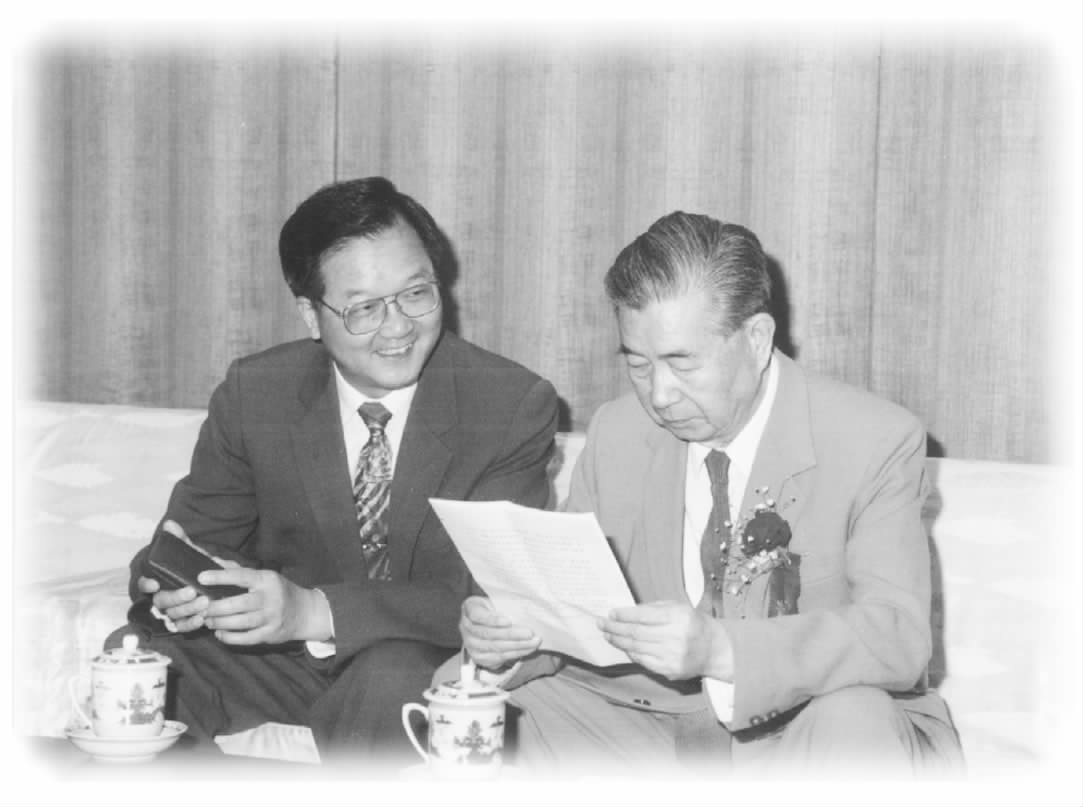
Comrade Cui Yueli, over his long revolutionary practice, developed a distinct revolutionary style.
He decided firmly and worked concretely, and at key moments showed uncommon daring and courage in making major decisions. He excelled in investigation and research; his footprints were in Chinese-medicine institutions across the country. Comrade Cui Yueli will always be our model.
After stepping down from leading posts, Comrade Cui Yueli kept following the reform and development of the Chinese-medicine enterprise with a deep sense of historical responsibility. He attended many Chinese-medicine meetings and gave important speeches, urging comrades in the field to seriously inherit and carry forward Chinese medicine and push it more broadly onto the world stage. On January 4 and 8 of this year, he attended meetings despite his illness, stressing the need to value emergency work in Chinese medicine and to do solid work in inheriting, sorting, and raising up the academic tradition.
Comrade Cui Yueli firmly upheld the line of the 15th Party Congress and the Decision of the Central Committee and State Council on Reform and Development of Health; he stressed again and again the need to carry out the policy of equal weight for Chinese and Western medicine, to guide Chinese-medicine development by Deng Xiaoping Theory, and to strengthen the solidarity among practitioners of Chinese medicine, Western medicine, and integration.
The twenty-first century is coming upon us, and the task of Chinese-medicine work is heavy and the road is long. Under the leadership of the Party Central Committee with Comrade Jiang Zemin at its core, we will strive to press on with the great enterprise of reform, opening-up, and modernization of Traditional Chinese Medicine.
A Banner for Revitalizing Chinese Medicine
China Association of Traditional Chinese Medicine · February 1998
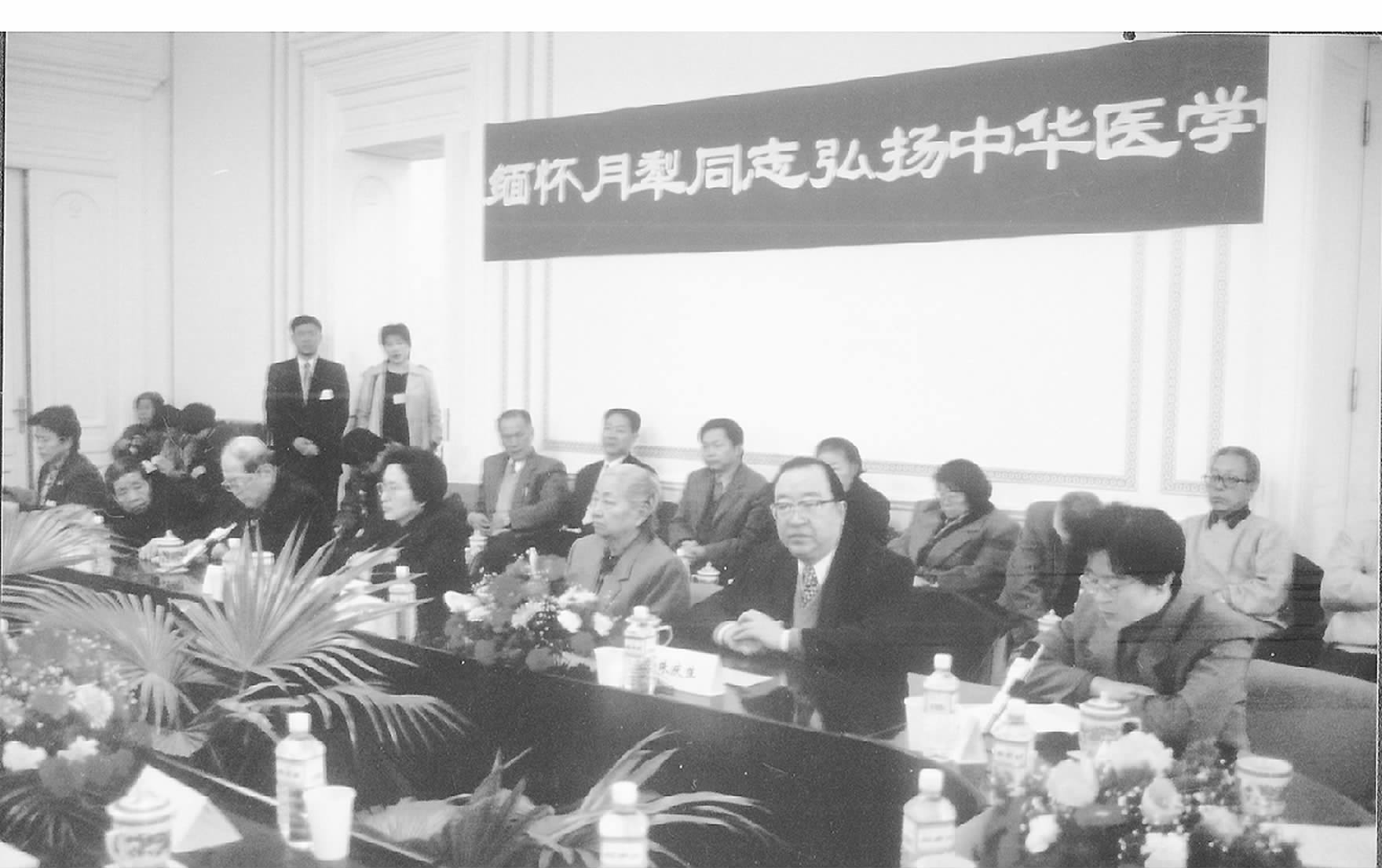
At the "Memorial Forum for Honorary President Cui Yueli" held by the China Association of Traditional Chinese Medicine with Beijing-area Chinese-medicine scientific workers, everyone recalled the past — and no one could contain the grief at the sudden loss of a mentor, friend, and good leader.
Our old president Comrade Cui Yueli was the great standard-bearer of the revitalization of Traditional Chinese Medicine under the leadership of the Chinese Communist Party, and the foundational figure in the contemporary development of the field. He took up the work of Chinese medicine at a pivotal moment between decline and rebirth. After the Cultural Revolution ended, by 1978, the long influence of "leftist" thinking had dragged Chinese-medicine research down, and the field faced a crisis of succession. Nationally, only one Chinese-medicine hospital remained, and most of that was Western-integration. In the face of this, he began with investigation, summed up the lessons, and set to cleaning up the mess with bold strokes. In 1982 he convened the Hengyang Conference, which laid the foundation for Chinese medicine in the new period. He comprehensively carried out the Party's Chinese-medicine policy, pushed forward the work of clinical practice, teaching, research, and administration, and helped the "equal weight for Chinese and Western medicine" principle take shape in practice. He worked hard on organizational building, founding the State Administration of Traditional Chinese Medicine, and establishing a system of scientific management through which Chinese medicine could develop relatively independently.
In our time, the two ringing slogans — "Revitalize Chinese Medicine" and "Preserve and Carry Forward the Character of Chinese Medicine" — are bound tightly to the name Cui Yueli. He held that "Chinese medicine should follow its own path of development, and Chinese-medicine institutions should highlight their Chinese-medicine features." On integration, he often said, "I am in favor of integrating Chinese and Western medicine, but I am not in favor of Westernizing Chinese medicine." He cared deeply about modernizing Chinese medicine, while stressing that reinterpreting and reshaping Chinese medicine through Western methods cannot be called modernization. He often reminded us that we must not let "the tragedy of Japan's post-Meiji suppression of traditional medicine repeat itself in China" — we had to work hard at revitalization.
From the founding of the China Association of Traditional Chinese Medicine in 1979, Cui Yueli served as its president for nearly 20 years. He regarded the association's work as an essential part of the Chinese-medicine enterprise, and did a great deal to advance scholarly development and to play the association's "bridging" and "linking" roles.
He placed great importance on the association's role in uniting the scholarly community. As early as the 1981 founding meeting of the Internal Medicine Society, he said: welcome and encourage everyone to press into science and create favorable conditions for it; debate from the wish to unite, respect others' results; separate scholarly questions from policy-ideological questions; unite the broad body of scientific workers. He said too that the association itself had to build out the necessary institutions and accumulate experience, gradually becoming a strong organ for uniting and organizing the broad practice of Chinese medicine around scholarly work.
He not only stressed "respect knowledge, respect talent" but was himself approachable, and through the association's scholarly activities made friends broadly across the field. He often said: without the development of Chinese-medicine scholarship, there will be no development of the enterprise. Chinese medicine's clinical, teaching, and research work must highlight Chinese-medicine features and bring out its strengths. Neither Chinese nor Western — what enterprise could that be? He valued both the raising of clinical standards and theoretical research, calling for "Chinese-medicine theoretical research to follow the Chinese-medicine theoretical system, using the viewpoints of dialectical materialism to sum up clinical experience, to enrich the theoretical treasury of Chinese medicine, and to carry forward the culture." As early as January 1985 he said: "Our associations at every level must seriously work to discover talent, cultivate the best. This must be among our central responsibilities," and hoped that "the country's eminent doctors will take as their own mission the training of a generation of fine disciples in what life remains to them, welcoming those who will surpass them. One generation surpassing the next — only then can Chinese medicine keep rising." He also urged, "Young and middle-aged comrades should learn from the senior experts, seek their counsel humbly, press on with determination, scale the peaks, and break through the hard points of science and technology."
President Cui was deeply concerned with the question of Chinese medicine going global. As early as the Second National Congress he proposed, "Further develop international scholarly exchange" and "let Chinese medicine gradually take root, bloom, and bear fruit in country after country." At the Third National Congress in 1997, he went further: "First, acupuncture, orthopedics, massage, and qigong will go global step by step," and "Beyond the central and provincial bodies, universities and colleges, hospitals, and research units should also attach importance to this, and pursue the work under leadership, with plans and organization." Early this year he was still raising funds himself and planning the editing, collation, annotation, and translation of the "Chinese Medical Classics Translation Series," hoping modern readers and foreign scholars could come to truly understand Chinese medicine through it. Up to the last moment of his life, he carried this project on his mind.
President Cui also placed great store in research on the strategy of Chinese medicine's development. To move Chinese-medicine decision-making and management toward science and democracy, in May 1997 he resolved to edit Chinese Medicine: Reflections, hoping that the field would sum up and reflect calmly on the history, present, and future of Chinese medicine — "and amid the comparison of different views, help people see a clearer path ahead."
At the Third National Congress he said with heartfelt weight: "This congress has gathered many of the country's distinguished experts and talents in Chinese medicine. To ensure the sound, rapid development of the enterprise, we must further raise the level of scientific management and decision-making, value the research and development of the 'soft science' of Chinese medicine, and have Chinese medicine serve the people of the world while contributing to the development of world medicine." Our old minister has left us. To the very last moment of his life, he held the enterprise of Chinese medicine in his heart. Every one of us in the field must hold his teaching fast and strive without slack to revitalize Chinese medicine!
Turned to Spring Earth, Still Nurturing the Flower
Health Daily · February 1998
Yesterday morning, leaders and staff representatives of Health Daily went to Beijing Hospital to take their last leave of former Minister of Health Comrade Cui Yueli. Looking at the old minister lying still among the flowers, his face and voice, his words of guidance to our health reporting, his care for the growth of the paper — all came back to us and lingered…
(I)
"The people rely on the Party as the tiger relies on the mountain; health work relies on communication." This was Minister Cui Yueli at our 1983 national reporters' meeting, quoting Comrade Wang Kunlun to make plain the importance of health communication — and his care for it. In his five years as Minister, he wrote dozens of letters to our two editors-in-chief, offering instructions on our work, from macro to micro. He asked Health Daily to systematically publicize the Party's principles and policies on health, and the models of health reform, with attached commentaries. With his strong support the paper's reform reporting gathered real momentum — with both point and plane — and we rolled out a series of reform models: Peking Union Medical College Hospital, Beijing Tongren Hospital, Shougang Hospital. The reports on Beijing West District using "large hospitals to lead smaller ones" for graded and specialized care, and on Chengde's dramatic turnaround in environmental sanitation, were also pushed forward under his attention. These pieces deepened the Party's health policies in people's hearts and helped the enterprise advance through reform and reform through development.
Comrade Cui Yueli also strongly championed using publicity to expose flaws in the health system and to press for solutions. In 1984, our Shanxi reporter wrote "What Are Ambulances For?" — exposing how some medical institutions were diverting ambulances to other uses, so that "ambulances did not rescue." The Minister immediately called the relevant bureaus together, drafted a "red-header" document on strengthening ambulance management, and had every locality check their practices. The phenomenon was effectively curbed.
(II)
"Building a socialist health enterprise with Chinese characteristics" — this was Comrade Cui Yueli's ideal, and he poured the work of a lifetime into it. He believed that China's condition — many peasants, a thin foundation — meant that Chinese medicine, our native feature, could treat illness without great expense. So he pushed for the revitalization of Chinese medicine, and at the Hengyang Conference proposed that Chinese medicine form its own character and that Chinese medicine, Western medicine, and integration develop in coordination as three forces. This spirit showed in the attention he paid to Health Daily's coverage of Chinese medicine and integration. At his suggestion, the paper opened a Traditional Medicine supplement, and he became honorary head of a correspondence-institute program for the revitalization of Chinese medicine.
"Chinese characteristics" also showed in his attention to our coverage of preventive health work and the building of village- and township-level health organizations. He proposed that the paper open a Public Health supplement, and asked us to report on Yunnan Province's reform at township and village levels. He saw in the Shanxi Linfen story — rejuvenating township hospitals through small specialty services — a way out of the rural health bind, and had it publicized nationally.
On family-bed care, Cui Yueli showed real foresight. He held that with an aging population, family-bed care would become a key part of community services and deserved support and publicity. Beyond urging strong coverage of Tianjin's experience, he took reporters himself into patients' homes to cover Beijing's family-bed work.
"What the people's health needs, that is what we attend to, what we publicize." Comrade Cui Yueli carried this out personally.
(III)
Comrade Cui Yueli gave deep attention and genuine affection to the growth of Health Daily. This reflected his value for the health system's "voice" and his hope that the paper become a bridge linking health departments to the people.
During his time as Minister, he attended four of our national reporters' meetings, giving an important address each time; they stay fresh in our memory.
He was very attentive to building the reporters' ranks. At the January 1983 national meeting at our paper, he called for expanding the corps of contributing reporters, training some who knew health work and had an interest in news. With his support the Ministry issued a document requiring each provincial and autonomous-region health bureau "to provide facilities and create conditions for our resident reporters — guaranteeing that each year they have one-third of their time for investigation, story-gathering, composing, and liaison with stringers and distribution work — and, where conditions allow, equipping them with cameras and recorders for interviews."
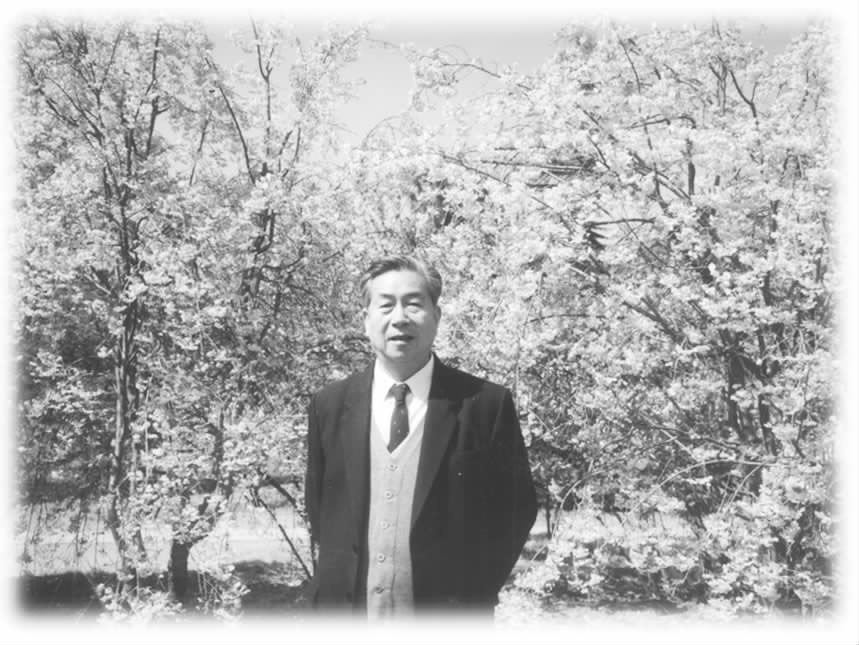
What is reassuring to tell the old minister: today Health Daily has bureaus in every province, and the resident-reporter corps has grown from under 30 then to over a hundred — a real force for the paper.
In a letter to the leadership he wrote, "The paper is made for the people and must have the people's support." He suggested we build ties with experts across the health system and form a stringer corps, "so that the paper becomes a link connecting experts of every kind." After stepping down, Comrade Cui Yueli said he would serve as a contributing reporter for us — and he did indeed write pieces for us in that role.
How to widen the paper's circulation was a question he raised repeatedly with our leaders. On January 3, May 26, and June 23, 1986, he wrote three letters on the subject: "Circulation of Health Daily to rural health institutions has become a key matter for raising the professional level of the three-tiered rural health network — which is to say, a matter of serving the 800 million peasants better. Put circulation at the center of the paper's work, or you will not break through; the paper cannot then be properly run, its content will be thin." "If you walk the mass line in publishing, you must first have a broad readership, or there is no mass character to speak of." Line after line, these letters breathed his care.
He also supported us on the question of our premises and the design of the supplement mastheads.
The man has passed; his example remains. We will keep his care for Health Daily in our hearts, and the spiritual wealth he left will drive us forward. We will not fail the old minister's hopes: we will make the paper better, and blow the horn of health reform louder.
Unforgettable Old Cui
Peng Ruicong · February 1998
To hear of Comrade Cui Yueli's passing was hard to believe. Just over ten days before, he and I had gone to Shunyi together to discuss the Shunyi Medical College's development plan. I knew he had had myocardial infarction and a ventricular aneurysm in recent years, and that something grave could happen at any time. He knew his condition, but the way he raced against time covered it over — we all overlooked, forgot, that he was a man carrying serious illness. Now what we dreaded has come, and I cannot settle my heart; many scenes rise before me.
At the end of last October, at Beijing Medical University's 85th anniversary, we held commemorations for the 50th anniversary of the Shifangyuan Health Clinic and the Beijing Medical medical team from the democratic-movement era. Everyone very much hoped Comrade Cui Yueli could come — these had all operated under the leadership of the underground Party's Xuewei. Despite his poor health, he came gladly, and could still name many of those present.
I cannot forget how many times Comrade Cui Yueli took part in the national medical-dialectics academic annual meetings. When the first was held in Nanjing in 1981, he stayed in an ordinary guesthouse, joined the discussions, organized forums, and saw that medical-dialectics teaching would be strengthened in medical colleges, instructing the Medical Education Department to compile textbooks. At the second meeting, in Beijing in 1983 — when he was Minister of Health — he wrote his own remarks, spoke to the necessity and importance of studying dialectics of nature, and called for attention to clinical-thinking methods. In 1990, no longer Minister, he took part in the fifth meeting in Tianjin. He played an important role in pushing the medical world to teach and study medical philosophy.
Comrade Cui Yueli's vigorous, plain, hard-striving style and indomitable revolutionary will are worth learning. In 1959, newly recalled from his downward posting in Shijingshan District to the Municipal Committee as head of the Health and Sports Department, he called me in to his office to discuss the proportion of Beijing Medical graduates who should remain in Beijing once the school was designated a national key institution — and that same night he drafted a report for the committee.
In that same year Beijing's patriotic health campaign took off. One Sunday I had just returned from Shanghai; the Beijing Medical University dormitories happened not to be taking part. That afternoon, after inspecting the campus, Comrade Cui Yueli called me in and scolded me sharply. In the late Cultural Revolution, on release from prison, a medication error had left him with a swallowing disorder; he practiced obstinately for years and finally recovered it. His thought then was simply: get healthy a day sooner, so I can work for the Party a day sooner.
After his death, his family told Beijing Medical University that he had always said, "I have signed the forms — my body is to go to the medical college." We urged the family to set that last wish aside, but they refused, and at their insistence Comrade Cui Yueli's body was sent to Beijing Hospital for pathological dissection.
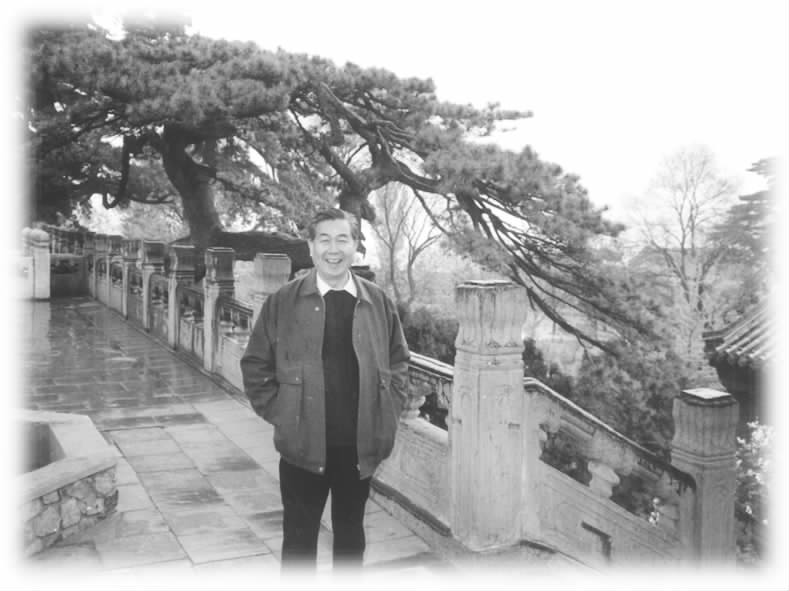
Comrade Cui Yueli has departed, but he will be remembered always — and that remembrance will be our force for moving forward.
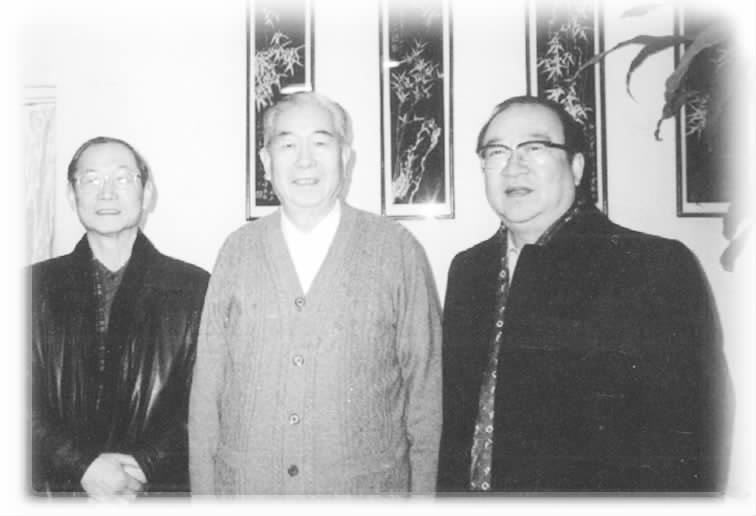
Comrade Yueli's Bearing Endures
Chen Minzhang · February 1998
At 10:35 a.m. on January 22, former Minister of Health Comrade Cui Yueli left us. The news came so suddenly that the nation's health community was shaken. I feel a deep grief that the Ministry has lost a senior leader of such distinguished record and rich experience.
Looking back, Comrade Yueli's contributions to leading the health enterprise during his tenure, and the spirit of total devotion with which he served the people's health, remain vivid. He came to the Ministry in June 1978; across his nine years there, his footprints reached 29 provinces, autonomous regions, and directly-administered municipalities. From the cities to the countryside, to remote old, minority, border, and poor areas, he came to know the grassroots health situation and accumulated a rich store of data and insight. Through thorough investigation, he set out a series of designs and conceptions for building a socialist health enterprise with Chinese characteristics; and through bold exploration in practice, accumulated valuable experience for the reform and development of the health enterprise. Under his leadership, the Ministry Party Group carried out resolutely and actively the Center's line of reform, opening-up, and enlivening, while standing firm on the Four Cardinal Principles in matters of political direction and major right-and-wrong — keeping our health work advancing along the correct track.
Two and a half years before his retirement I came to the Ministry. In that period of working contact I came to feel many distinct strengths in him worth learning. On reform and opening-up his stance was both firm and warm, and his thinking lively and open — sharp to the new. He went himself to the grassroots to investigate — covering every corner of health work — and on that basis seized on models that then guided the broader work. Those years, the annual national meeting of provincial health bureau heads held tight to the theme of reform and opening, bringing vitality into the health enterprise. Reform mobilized people, strengthened the management-responsibility system, tapped potentials, and offered society and the people more and better medical care. His clear stance and warm attitude in reform flowed from his unreserved devotion to the people's health — selfless and unafraid. We must learn from this forward-pressing spirit and continue it through the whole construction of the health enterprise.
A major feature of his was skill at seizing on the big issues — matters of principle, policy, direction — and decisiveness in making decisions. What left deep impressions include the following:
First, the cultivation of talent. He stressed training all kinds of personnel through many channels and at many levels, suited to China's actual conditions. In particular, training health-technical personnel of different grades for rural areas required reform in medical education — truly a strategic matter for the health enterprise, and a major one to be pursued long-term.
He stressed the importance of the "prevention first" principle and actively nurtured preventive medicine, emphasizing the building of grassroots preventive and health-care bodies, exploring paths of reform for these institutions to strengthen their vitality and efficiency. He actively supported setting up health-education research bodies to drive popular health-education activity, which helped strengthen the consciousness of "prevention first" among medical personnel and administrators and boosted the confidence of the preventive-care corps to build itself.
Leading the Ministry Party Group, Comrade Yueli actively carried out the Party's Chinese-medicine policy, warmly nurtured the development of Chinese medicine and other traditional medicines, served as president of the China Association of Traditional Chinese Medicine and the Association of Integrated Chinese and Western Medicine, pushed forward their scholarly activity, stressed preserving the features of Chinese medicine while developing, helped bring about the State Administration of Traditional Chinese Medicine, and actively pushed Chinese medicine and traditional medicine into the international arena. The field saw notable development in recent years. This too is a strategic matter — one of policy — in which our health enterprise can give full play to its own strengths and character.
He stressed often that the plan for building the health enterprise must consider the health of the great majority of the people — especially the farmers: we must base ourselves on providing the 800 million peasants with necessary medical care, and think about how to meet their growing health needs as they become gradually better off. This is a fundamental issue that must always be in mind in our health work and reform, especially for administrators — a matter that must be taken seriously in macro management and decision-making. Comrade Yueli often reminded us of this in many conversations, and stressed looking after and supporting the construction and reform of health work in old, minority, border, and poor areas. These leave a deep impression.
Comrade Yueli took spiritual-civilization construction and legal construction in the health system very seriously. He stressed again and again the importance of medical ethics and of the service attitude and thinking of medical personnel. He pushed forward health-related legislation and insisted on serious, firm enforcement of the laws already made. In the Jinjiang counterfeit-drug cases his firm stance strengthened everyone's confidence in upholding the law.
These policy- and direction-level matters are ones he raised often in many settings, and ones the Ministry Party Group discussed again and again — so they became shared concerns of the Party Group on major policy issues, and important viewpoints and elements in building a socialist health enterprise with Chinese characteristics.
At the handover ceremony before his retirement, his heartfelt words and earnest sentiments still stay with me; he placed heavy hopes on the growth of the enterprise. Today, we can say to him: the health enterprise for which he struggled and which he loved without reserve has made great strides. Especially after the Central Committee and State Council's national health-work conference, and the successful convening of the 15th Party Congress, the whole Party and whole society have turned their attention to the reform and development of health in an unprecedented way. Every field of the enterprise he cared for is advancing on a sound, steady, orderly course. We are striding toward the goal of "health for all by 2000," and the strategic aim of a health system with Chinese characteristics — covering service, assurance, and enforcement — is not far off.
The Old Minister Devoted to Chinese Medicine
Tian Jingfu · February 1998
At midday on January 22, when news of Comrade Cui Yueli's passing reached me, I was shocked and grieved. After New Year's Day we had still met several times. Looking back on almost twenty years of working under Comrade Yueli's leadership, my sorrow only deepens.
As a Vice Minister of Health, Comrade Cui Yueli had been in charge of Chinese-medicine work. He carried out the ideological line set by the Third Plenum of the 11th Central Committee, organized everyone to study and implement the Party's Chinese-medicine policy, and called urgently within and beyond the Ministry to carry through Comrade Deng Xiaoping's instruction: "We must create good material conditions for the development and advancement of Chinese medicine."
In April 1982 Comrade Yueli led in person the National Conference on Chinese Medicine Hospitals and Higher Chinese Medical Education, convened in Hengyang, Hunan. The meeting declared that Chinese medicine was a short link in the health enterprise and must be strengthened in manpower, materials, and funding, and that preserving and bringing forward its character was the foundational direction for development. These were the two fundamental issues for the field. Sixteen years of practice have proved that the Hengyang Conference's spirit had great guiding significance for the sound development of Chinese medicine.
After the meeting, Comrade Yueli wrote personally that "We are to make something happen in Chinese medicine." He was Minister of Health by then, with all the affairs of health work on his shoulders, yet the share of Chinese-medicine work on his agenda did not shrink. His article set out the Party's Chinese-medicine policy, the scientific nature of Chinese medicine, and its place and role in the people's medical care. He again stressed: "In developing the enterprise of Chinese medicine, we must take hold of two main questions: first, to carry out the Party's Chinese-medicine policy without wavering; second, that institutions of Chinese medicine must keep and carry forward the features of Chinese medicine." He added that our emphasis on carrying out the Chinese-medicine policy does not in any sense mean slighting or excluding Western medicine or integration. Unity between Chinese and Western medicine has always been our direction; they must learn from and promote each other — a principle upheld yesterday, upheld today, to be upheld tomorrow. Re-reading his forceful words today still moves to tears.
In February 1984 the Sichuan Provincial Party Committee and Government convened a province-wide conference on revitalizing Chinese medicine, and Comrade Yueli traveled to attend (I was along as his attendant). He delivered the address "Make a Greater Contribution to the People's Health," noting: Sichuan is one of the country's most populous and culturally developed provinces, a gathering ground of eminent doctors across the ages, with Chinese medicine holding an important place nationally and enjoying high repute. "When the Ministry of Health, in studying the call of the 12th Party Congress to build socialism with Chinese characteristics, turned to the question of what a medical and health enterprise with Chinese characteristics would look like — you here sounded the horn of revitalizing Chinese medicine. This meeting is of real significance!" Minister Cui's address drew a strong response. Under local Party and government leadership, a nationwide upsurge in Chinese-medicine development followed.
In June 1985, the CCP Secretariat and State Council jointly heard the Ministry's Party Group report on its work. The Central Committee's Decision on Health Work pointed explicitly, in response: "In line with the Constitution's provision to 'develop modern medicine and our country's traditional medicine,' we are to place Chinese and Western medicine on equal footing…" This decision identified the crux of the Chinese-medicine question — a concrete deepening of the Party's Chinese-medicine policy in the new period — and laid the foundation for a relatively independent management organ and for the policy of "equal weight for Chinese and Western medicine."
From the time Comrade Yueli took full charge of the Ministry's work, he never halted investigation into the history and present of Chinese medicine. He often spoke of how to place Chinese and Western medicine on equal footing — two sides of the work: one, for Chinese medicine to develop soundly, stably, and continuously, it needed a relatively independent management body and a corps of cadres strong in Party spirit and devoted to the field, to provide organizational guarantee; two, the Chinese-medicine corps itself had to strengthen from within, keep raising its clinical level. Neither could be missed. On January 4, 1986, Comrade Yueli, representing the Ministry Party Group, gave the State Council Executive Meeting (its 94th session) a detailed presentation of the request paper "The Ministry of Health Recommends the State Council Establish a State Administration of Traditional Chinese Medicine." Comrade Hu Ximing and I observed. After vigorous discussion, the meeting decided: (1) establish the State Administration of TCM; (2) increase the dedicated TCM subsidy to 100 million yuan; (3) evaluate technical titles for Chinese-pharmacy personnel following the TCM personnel series; (4) grant tax exemption to Chinese-herbal-slice factories. Comrade Yueli played the pivotal role in obtaining the Administration and these three accompanying policies.
After he stepped back to second-line status, Comrade Yueli had much to do socially, but the most of his energy still went to matters of Chinese medicine.
What in the end made him so devoted to it? I see these main reasons:
1. Strong Party spirit. The Party assigned him to lead the nation's health work, and he carried out the Party's principles and policies, including the Chinese-medicine policy, firmly. He thought and acted from the people's interest and the height of policy, and so held no prejudice.
2. Strong patriotism. He was proud of Chinese medicine — a gem of Chinese civilization. In briefings to foreign guests on our health work he would cover both modern medicine and, in greater depth, the medical traditions of China's many peoples, which he saw as our nation's pride.
3. Firm confidence in the scientific nature of Chinese medicine. He held fast to the directives of the Party's three generations of leaders and carried them through. As Reform and Opening progressed and Chinese medicine stepped onto the world stage, he called this the realization of Chairman Mao's foresight.
4. An open heart, selfless and sincere toward others. Older TCM doctors would come to the old minister to speak their minds and raise problems. The field called him both good teacher and good friend.
Comrade Yueli's sudden passing grieves us beyond measure. In mourning him, we must turn grief into strength — learning his utter devotion to the Party's Chinese-medicine enterprise, inheriting his aspirations, doing the work well, and so consoling his spirit in the heavens.
His Teaching Spurred Me On; Our Deep Friendship Crossed the Generations
In sorrowful memory of old Minister Cui Yueli
Zhu Guoben · February 1998
Old Minister Cui Yueli's sudden leaving — I could not believe it at first. He had always moved through things cleanly and neatly. Was even this hurried departure, then, part of his life's inherent style?
I remember him, I mourn him, but cannot start the sentence. On a Spring Festival card I sent him in January 1996, I had written two lines:
Often to sit within your counsel was to feel a spur; the depth of kinship across generations cannot be counted.
He was a leader and teacher I revered, and, in the truest sense, a comrade and a friend across the years.
Cui's contributions to the Chinese revolution and to China's health enterprise are many-sided. His first half of life held a legendary color; the second half began when he came out of the Gang of Four's prison, still hot of heart, and from his leadership post in health stood always in the front ranks of reform and construction — in particular, enshrining his name for ages in the work of revitalizing Chinese medicine.
I met him in the early 1980s, and we were in each other's company for close to fifteen years. His firm faith in inheriting and developing Chinese medicine, his clear views, and his capacity for getting things done — all overwhelmed me. His spirit and the force of his character drew me deeply. He had the daring of a general, the temper of a poet, the character of a man of honor. Upright and unbending, open and aboveboard, the same within as without; in work he looked far ahead, moved with vigor, dared to act and to take responsibility. To others he was frank, approachable, loyal through hardship. To grassroots cadres he almost always answered questions asked, replied to letters sent, responded to requests made. His phone never stopped ringing; people called him "the Lei Feng reception station that never closes." He had a deep understanding and original view of our fine traditional culture. Under the leadership of the Chinese Communist Party he was a standard-bearer of the revitalization of Chinese medicine. If Chinese medicine truly is revitalized in the days to come, people will never forget his name — for at a pivot moment between tradition and the future of the field, it was he who, for the Ministry of Health, proposed to the Central Committee and the State Council that the subordinate status of Chinese medicine be changed by policy and by organization, starting it on a path of self-directed development along its own laws.
In the years after the Cultural Revolution, when everything had to be restored at once, he, as one of the chief leaders of the Ministry, carried out firmly the line "Free the mind, seek truth from facts, unite and look forward," set things right on the health front, cleared away the influence of "leftist" thinking, and restored normal working order. Weak links — preventive care, rural health, Chinese medicine and pharmacy — he concretely strengthened. In the documents he helped draft — "Carry Out the Party's Chinese-Medicine Policy, Solve the Problem of Succession in the Chinese-Medicine Corps" and others — he kept Chinese medicine and Western medicine on equal footing, kept the integration policy in view, and worked tirelessly to see the State Administration of TCM established. He created an atmosphere of openness and cooperation between Chinese and Western doctors that had not been seen before. In 1982 he convened the famous National Conference on Chinese Medicine Hospitals and Higher Chinese Medical Education — the Hengyang Conference — which stated clearly that institutions of Chinese medicine must accentuate their features: that a "Chinese medicine hospital" must be what its name said it was. This began to turn around the Westernized phenomenon where Chinese-medicine hospitals "hung Mei Lanfang's name and sang Zhu Fengbo's tunes," and set right the direction for how such hospitals should be run. Then, to restore the rural stronghold of Chinese medicine, under his backing the strategic deployment of "a Chinese-medicine hospital in every county" was made — bringing Chinese medicine back to the people of township and county once more.
In 1986 I was transferred from Qinghai to the State Administration of TCM, but the next year Cui stepped back to second-line status. As always, whatever I wrote or spoke in my post, I'd send to him; he would read and reply within the day, without fail. On rural health, on higher Chinese-medicine education, on mentorship-based and continuing education, on the ranking of TCM personnel, on forms of integration, on the editing and translation of Chinese medical classics, on ethnic-minority and folk medicine, on medical qigong, on the building of TCM specialties — on all of these he poured enormous care, and he spoke of them with me many times. He said: to study these problems is to study our national condition, to study the distinctive character of China's health enterprise.
In the winter of 1990 he once told me about the Ping-Tianjin Campaign. I listened with keen interest, kept asking, took up much of his time. Not long after I wrote a short poem:
Riding to Beiping and Tianjin, his breath was a rainbow; a scholar's unburdened heart, yet still stout and vigorous — hardship did not dim his hero's will; always busy, for the common people, seeking out a doctor.
I had always been shy of strict meter and dared not send my attempts, so I tacked on a line of cover when I sent it: "A small poem copied from the press, close to old Cui's life — written in remembrance." He called after reading and said, "Ha — one look and I knew it was yours." On January 2, 1991, his 71st birthday, I sent another — A Gift to Master Cui:
Heaven and human hearts will both settle on you; startling the world, surpassing custom, yet easy within; you once steadied your grand passion with quietness — clear breeze, bright moon, the pine on the stone.
He seemed fond of this one. In March 1993, he copied it in regular script on half a sheet of xuan paper and gave it to me, inscribed "written for Comrade Guoben." I was ill at heart at the time, and receiving his calligraphy brought endless comfort. A few days later he wrote out the two characters jing qi — "quietness of spirit" — and sent them to me. I understood at once, and was grateful from the bottom of my heart for his care.
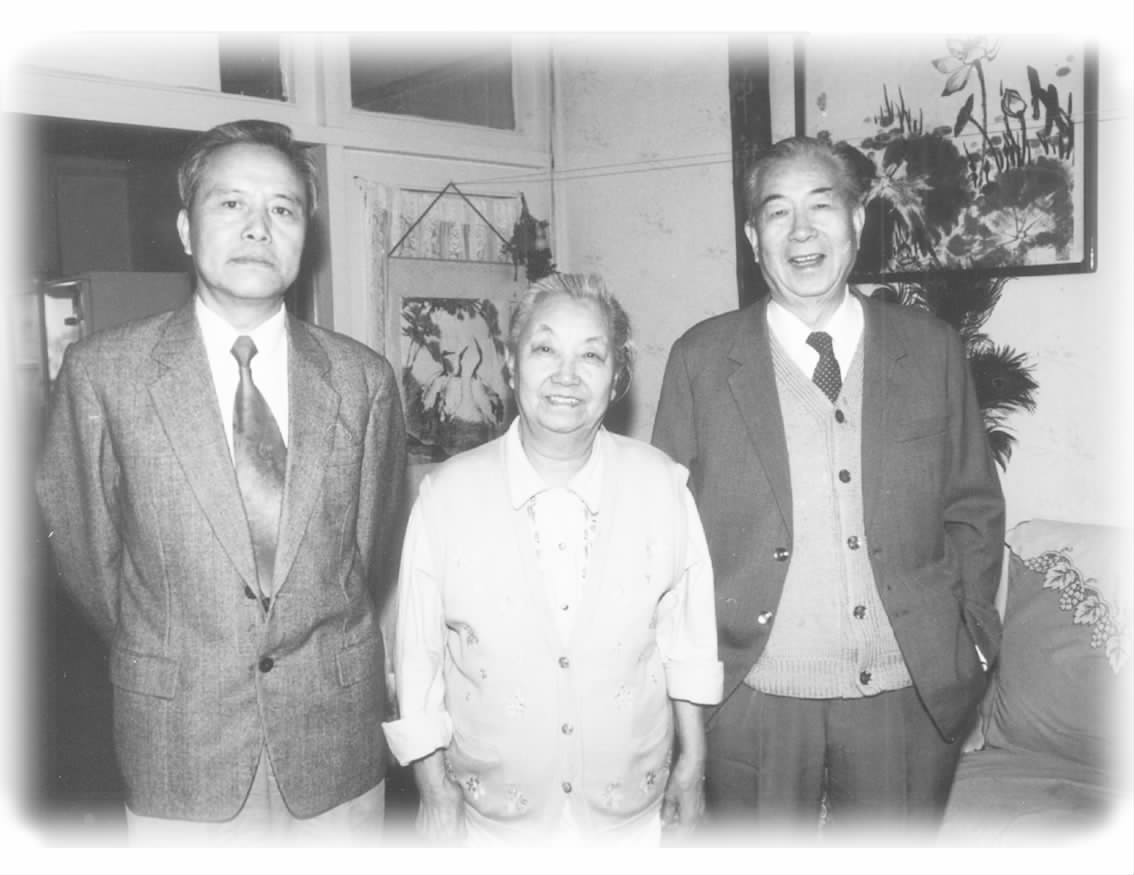
In the autumn of 1996, newly in my own second-line status, Cui invited me to his home, hoping I would make a systematic review of the past dozen or so years of Chinese-medicine work. I said it would have to start from calm thought, from sorting through the materials. He agreed. That became one of the reasons for the book Chinese Medicine: Reflections. The aim of Reflections, as he said in his preface, was: "In reviewing the path Chinese medicine has traveled in the past twenty years, we found that at the time many articles, from different angles, recorded, argued through, and explored the key issues of that arduous path — calm, deep summations and reflections on the past, present, and future, with no shortage of material on the 'soft science' and development strategy of Chinese medicine." "They remain a precious resource for decision-making and management of Chinese medicine becoming more scientific and more democratic." In truth, Cui's idea that Chinese medicine needed strategic deliberation had been long-held. On January 4, 1993, he forwarded to me a theoretical piece sent from Hunan, with a letter. The letter said: "Scholarly debate must be even-tempered — lay out the facts, reason things through, open the contest, or else aim and effect cannot be squared. Please consider whether you could photocopy this piece, say 20 copies, and convene small forums (about 10 people) through the China Association of TCM, so that people can give their views on the strategic question of how Chinese medicine is to develop soundly — opening a small-scale contention among the hundred schools, so that Chinese medicine may reach a preliminary, reasonably unified understanding that serves its sound development." For various reasons, that small forum was never held. In this same conversation he said: "To do Chinese-medicine work, you need two things: ambition, and backbone. Of achievements, cherish them together; of problems, do not avoid them. Where Chinese medicine has not been well done in a given place, don't keep singing praise-songs."
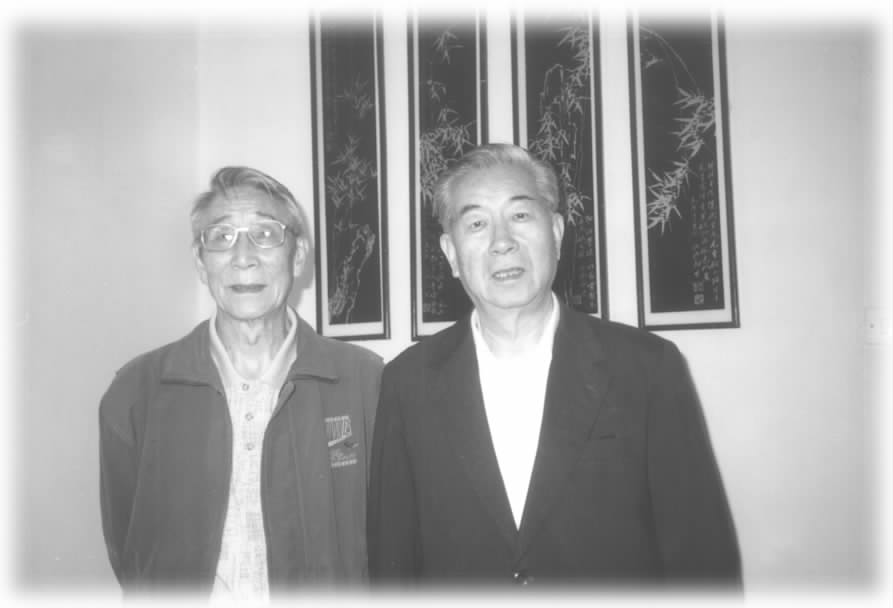
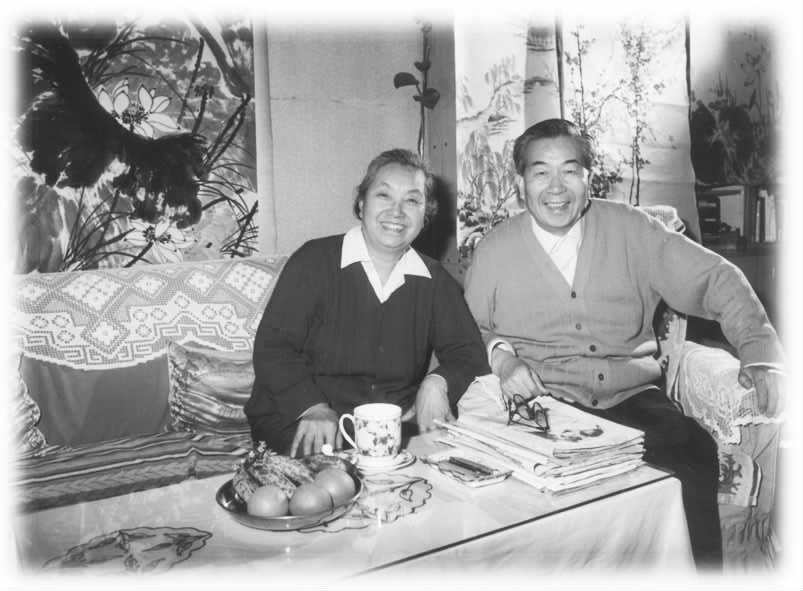
Last year I was compiling two books of my old pieces for publication, and wanted to include a photo of Cui and me. The photos I had on hand were all unsatisfying. Early in October I called him to ask whether he had one we could pick from. He said, "Aiya — why look? Come over, we'll take two." On October 8, I brought Zhang Dongfeng, a reporter for the China TCM News, to his home to take the photos. That day he was in fine spirits; the photos came out full of vigor, with a smile. He kept me for lunch. Last August, shortly after he stepped down from the presidency of the China Association of TCM, I wrote him a short note with a few suggested revisions for his written address to the Association's third congress, and tacked on two rough-and-ready doggerel lines with my brush: "Urging the spring ox, driving the moon's plow; slowly opening the autumn heart, making a neighbor of the book." I thought of his glorious and winding life, and wished in earnest that his later years might be easier, at ease. Just before Spring Festival, he sent me a Chinese painting — a plum branch done by his wife, Xu Shulin. The old limb stern and sinewy, the blossoms delicate, the whole alive — signed "for Comrade Guoben to improve upon. Painted by Xu Shulin, inscribed by Cui Yueli, January 1998." The calligraphy-with-painting I had long hoped for. Now the photo and the inscription have become my most precious keepsakes. Old Cui has left us — after the great-cold day on the lunar calendar — leaving me a smile that never fades and a plum that never withers.
A Bouquet of Red Roses for You
Huo Da · March 1998
Just before Spring Festival, I called Uncle Cui Yueli's home to pay New Year respects to him and Auntie Shulin. The voice that answered was familiar — I thought it was Uncle Cui himself, only strangely subdued. Without overthinking I said, "Uncle, it's Huo Da — how are you?" The voice on the line said, "My father has passed away." I froze — thought I'd dialed wrong and asked, "Is this the Cui residence?" "Yes." "Who is this?" "I am Xiaotong." That settled it — the son would not misreport his father's death. But the blow was sudden, without any preparation; I could not believe it, and said urgently, "How is this possible? Just days ago I saw him on television! When did it happen?" "The day before yesterday," Xiaotong said. "It was very sudden — only a few minutes, and…" I put down the phone; Weizheng and I didn't bother to change coats, and hurried to Uncle Cui's home. On the way we were silent, sunk in grief. Uncle Cui's extraordinary life ran before our eyes, like a grand film…
In 1920, Uncle Cui was born to a peasant family in Shenxian, Hebei, surnamed Zhang at birth — "Cui Yueli" being one of his many aliases in the revolutionary war years. In June 1937, at the life-or-death moment for the Chinese nation, at seventeen he threw himself into the revolution; that December he joined the Chinese Communist Party. In 1943, under orders, he came to the Beiping–Tianjin region; disguised as a physician, he worked in the underground Party — as member and secretary-general of the Beiping Student Work Committee, and as secretary of the White-Collar Work Committee. Under the White Terror, he and Auntie Shulin set their own lives aside to maneuver, one after another, against both Japanese-puppet forces and KMT reactionaries. Later, per the Center's deployment, he made an indelible contribution to winning General Fu Zuoyi's defection and the peaceful liberation of Beiping. In the screenplay I wrote over ten years ago, The Sword in Its Sheath, that spirited and shrewd "Dr. Li" was modeled on Uncle Cui. When he emerged from the winter's bite into the spring dawn of the ancient capital, he was not yet thirty. A founding merit-bearer of the Republic, and so young.
From January 1949 through the 1960s, Uncle Cui served in turn as Comrade Peng Zhen's secretary, secretary-general of the China Committee for World Peace, Vice Mayor of Beijing concurrently as head of the Health and Sports Department, and head of the United Front Department. He left the sweat of diligent labor on the very land he had helped liberate with his own hands. But the storm of the Cultural Revolution rose abruptly, right and wrong were inverted, and this meritorious old soldier was cast into prison. Long years behind iron bars brutally wore at body and mind. In hallucination he heard the prison's iron door clang, and a familiar voice: "Where is Comrade Cui Yueli? How can you treat him this way?" Ah — the beloved Premier Zhou! He called out in excitement: "Premier Zhou has come to save me — let me out!" Eight years of inhuman torment did not shake his belief in the Party and the people; he struggled against the reactionary machinations of the Lin Biao and Jiang Qing clique without yielding. "Generals die in a hundred battles; warriors return after ten years" — he lived to see the people's victory, the earth-shaking Second Liberation.
After 1978, Uncle Cui served as Vice Minister and then Minister of Health, and was elected a member of the Central Committee at the Party's 12th National Congress. In the new era of setting things right, the old "Dr. Li" took up his old trade — pouring mind and strength into healing the disaster the "four pests" had brought to the country, and bringing blessing to the people. He firmly carried out the line, principles, and policies since the Third Plenum of the 11th Central Committee, stressed investigation and research, held to reform, opening, and enlivening, organized the attack on cancer and other stubborn diseases, and worked to open a new chapter for the health enterprise and bring it to new heights. He was trained in Western medicine but valued the traditional medicine of the motherland just as much. He held that the long, rich, profound tradition of Chinese medicine and pharmacology is irreplaceable by any other discipline — at once one of humanity's ancient civilizations and one of today's cutting-edge research fields. To inherit and develop Chinese medicine, bring it to the world, and make a greater contribution to humankind — this, he believed, was the sacred, unshirkable duty of China's medical workers. He did a great deal to build the network of Chinese medicine, develop TCM education, sum up the experience of famous old doctors, and open up TCM research — pouring in heart and strength without tiring, as the cause of a lifetime. Despite illness he again and again inspected remote areas, worked to raise medicine budgets for ethnic-minority compatriots who lacked medicine and care, and improve their conditions. Wherever he went, the people sang and danced, welcoming a kinsman from Beijing. Those scenes of water-and-fish closeness, of milk-blending-into-water, are unforgettable.
In 1987, Uncle Cui stepped back to second-line status, and at the 13th Party Congress was elected a member of the Central Advisory Commission. Despite advanced age and clinging illness, he still kept watch over the reform and opening-up cause and the people bound up with it. This extraordinary man, shaped by long revolutionary struggle, is hard to tag with any single "specialty." As a former Minister in the health system, he could not lay aside the enterprise — in his seventies he still went down to the grassroots to investigate, presiding over the editing and translation of classic Chinese medical texts. As an old fighter of the united front, he drew together people from every field at home and abroad, laboring to promote Chinese culture, to build socialism with Chinese characteristics, and to work toward peaceful reunification. As an old Communist Party member, he carried the common people always in his heart, listened to the voices from the depths of society, reported popular sentiment to the Center and to leaders at every level, resolved difficulties for ordinary folk — and, in his illness, even went to the vegetable market himself to ask about the rise and fall of prices that touched every household's life. When the elevator operator in his building skipped a meal because of her shift, he saw it, and hurried on returning home to tell his family: "So-and-so has not eaten. Take her something, quickly." Such a dear and respected elder — gone! Gone too quickly, too suddenly, gone in a way that wrings the heart.
As we entered his building we met a stranger with a basket of flowers; we rode up together. The elevator operator, grief on her face, took us in silence to the fifth floor. No need to ask — everyone was going to the same place, to pay respects to the same man.
We were received by his sons, Xiaotong and Xiaopeng; the other children had not yet managed to return. In Uncle Cui's study — where he usually rested and received visitors — a large color portrait of him hung, the spare face and kind smile still there, only the bright laugh not to be heard again.
In front of the portrait the flower baskets were already massed — white callas, golden chrysanthemums — holding the people's endless sorrow. Xiaotong, with tears in his eyes, told us of his father's last moments: "On the morning of the 22nd, Father was to go to a TCM meeting. He suddenly felt unwell and decided on the spot to go to the hospital. Before he could finish dressing, he collapsed on the bed, unconscious. The doctors came at once to try to save him; at 10:35 he was pronounced dead. In truth, his pulse had stopped within minutes of falling — only no one was willing to believe it. They did everything they could…" Uncle Cui had worked himself to death. Though no longer in a leading post, this old Communist was still giving his all for the Party and the people, down to the last breath.
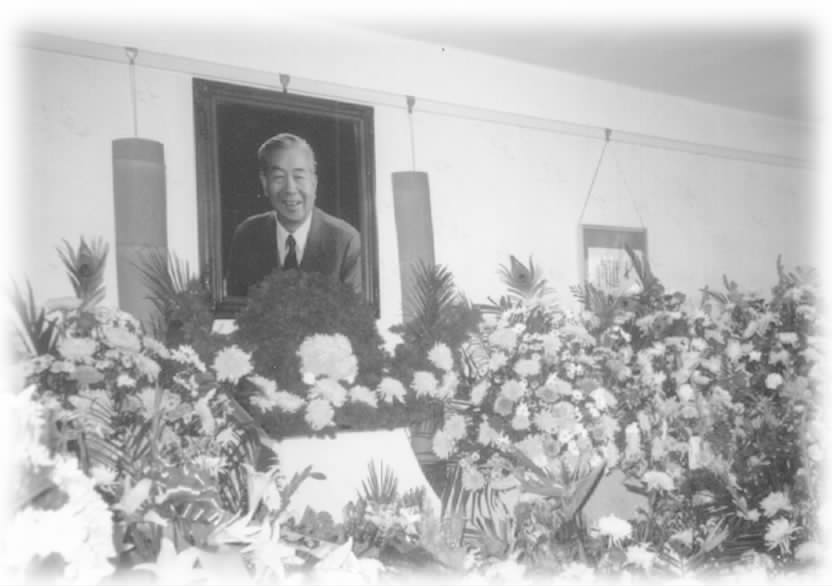
We went in to see Auntie Shulin, fearing she would not bear this sudden, lethal blow. But she was, unexpectedly, calm and composed, sitting in the living room that doubled as her studio, a few sheets of paper before her — as if she had just been writing, turning over the life she had spent beside Uncle Cui. Hard to imagine the strength by which she held back the grief within. A thorough materialist is without fear; this pair, who had lived the near-death of the underground years and the havoc of the Cultural Revolution, had long made their peace with life and death. Uncle Cui had spoken more than once about what should happen after he was gone: he had told the family to donate his body and corneas and not to keep his ashes. He truly realized "to come bearing only a heart, to leave without carrying half a blade of grass" — giving everything back to the people and the soil that nourished him. Xiaotong said, "Father didn't want a scene of grief — didn't like the pale whites and yellows of mourning flowers. He liked the true, fierce red rose!" That is the father in his son's eyes — a fitting note for Uncle Cui's life, which burned like fire.
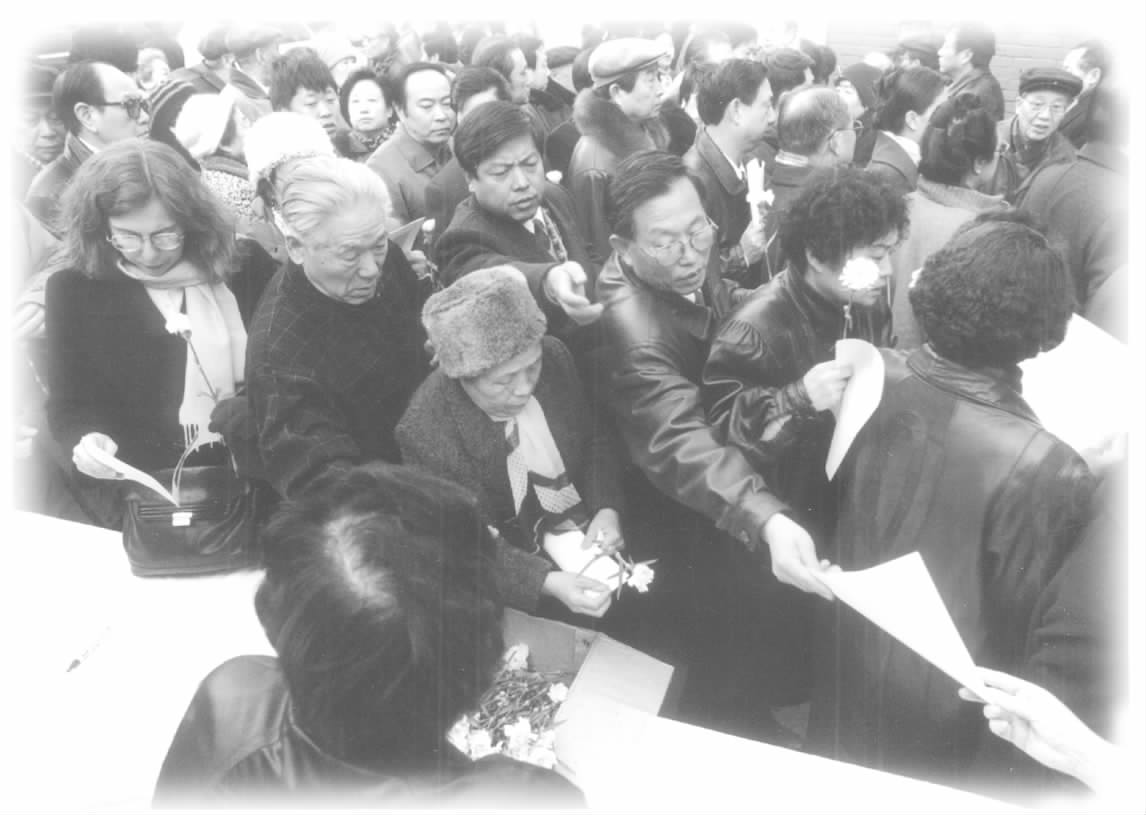
On February 10, the farewell ceremony was held at Beijing Hospital. Jiang Zemin and other Party and state leaders, Party and government organs, and many academic bodies sent wreaths. Mourning music moved softly; outside the hall a long line stood — old comrades-in-arms, old colleagues, medical workers who had long served under him, friends from many walks of life at home and abroad, and many ordinary laboring people from the depths of society whom he had once helped. Uncle Cui was open of heart, kind of face, kind in deeds; his whole life was one of doing good: he helped bring about the peaceful liberation of Beiping, sparing the ancient capital the fires of war and its millions the ravages, an immeasurable merit; he led the medical community to break through difficulties, save lives by the thousands and tens of thousands; he served as a clean official, working with diligence, loving the people, caring for the common folk, benefiting all around him… How could anyone forget? Now the people come to him from all directions — they remember his goodness — but with him gone they have no way to repay, and can only weep a handful of hot tears before his bier, for a final farewell.
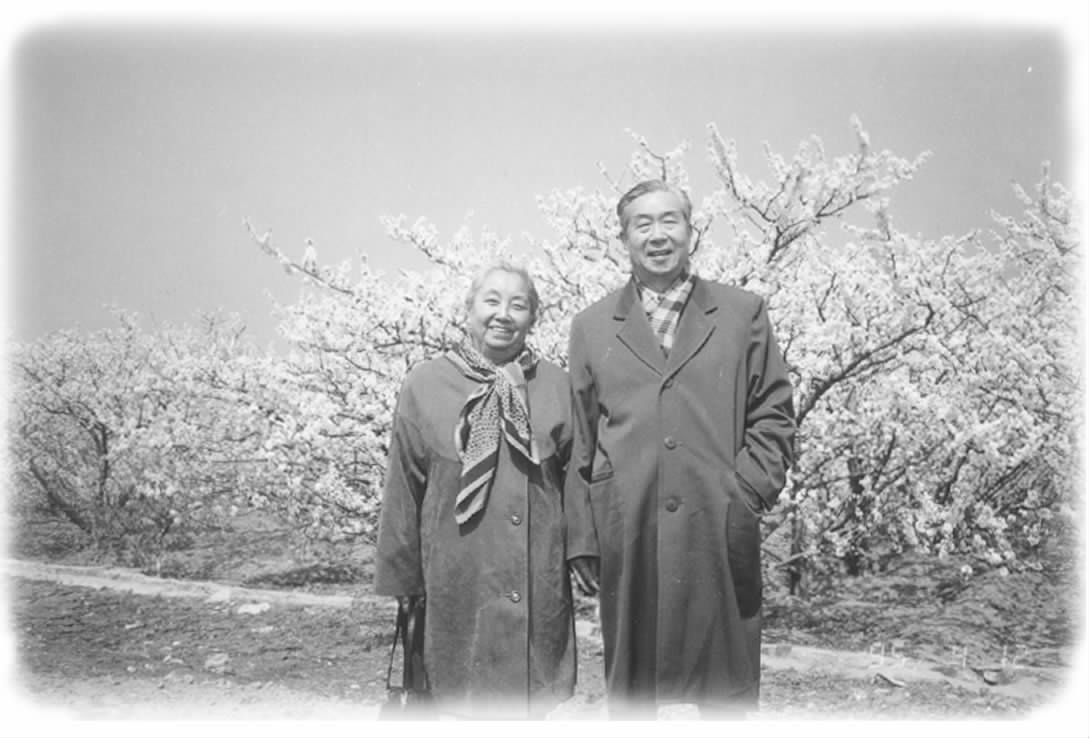
Weizheng and I, each holding a bunch of red roses, walked in. Below the banner "Mourning Comrade Cui Yueli with Deep Sorrow," beneath his portrait, hung the couplet we'd offered:
Open and selfless — a pure heart bright as the moon. Bowing out to the last breath — a public servant's style, hard as the iron plow.
This was the portrait of his life: a lifetime's struggle for communism, a lifetime's faithful service to country and people. His body lay among pine and cypress and flowers, his 78 years of luminous life complete. He had given everything of himself and now slept forever. Facing his portrait we bowed three times and laid the deep-red roses beside him.
The time came to lift him; his body was about to be taken to Babaoshan for cremation. We helped Auntie Shulin up from her wheelchair to look at him a last time. Here at last she could not contain herself — she threw herself forward, reached out a trembling hand, caught his arm, and murmured, "I will never see you again…" Then she knelt before the coffin and, petal by petal, rose by rose, scattered the red roses at its base to accompany him on his journey. Deep-red roses — the flowers he had loved, red as fire, fresh as blood, earnest and fierce, like his undying life, his unquenchable spirit. Uncle Cui — rest in peace.
A Grave Last Letter, an Earnest Hope
Li Zhizhong · February 1998
Our beloved old President Cui Yueli passed away suddenly of a heart attack on January 22, 1998. On January 24 I received a letter he had written by hand.
The letter was dated January 20. The people around him say that on January 21, returning from a CPPCC meeting, he added another line by hand to the outside of the sealed envelope. On the morning of the 22nd, the letter was still on his desk, and he was already gone.
I never imagined this letter would be his last. To read it now breaks the heart.
The letter was mostly about how to address the differing views in the development of Chinese medicine properly. He wrote: "In revitalizing Chinese medicine, differing views are normal. I do not advocate naming names in debate. What I advocate is: hide nothing of one's own view, but argue it positively, in deepening fashion, lay the views out, ask people from above and below and around to consider and assess, and let practice show which formulations, views, and predictions are correct. Discuss this among comrades in clinical, teaching, research, and administrative work."
For nearly twenty years our old president poured heart and strength into carrying forward our nation's culture and revitalizing Chinese medicine. He held throughout that "Chinese medicine should walk its own road of development, and Chinese-medicine institutions should highlight Chinese-medicine features." On integration, he often said, "I am in favor of integrating Chinese and Western medicine, but I am not in favor of Westernizing Chinese medicine." He cared deeply about modernizing Chinese medicine, while pointing out that reinterpretation and reshaping by Western methods cannot be called modernization. He reminded us repeatedly not to let "the tragedy of post-Meiji Japan eliminating its traditional medicine repeat itself in China."
Since the 1980s, with the new technological revolution moving on, more and more people at home and abroad have come — through the lens of the newly formed methodologies of systems science — to recognize that Chinese medicine has scientific principles distinct from Western medicine. So while a worldwide "TCM fever" has appeared, in recent years a current of reflection has also arisen within the field at home. Our old president, taking the moment, seized on this and in May 1997 resolved to edit Chinese Medicine: Reflections. He nominated Comrade Zhu Guoben and me as deputy editors to assist him. He proposed gathering pieces with real depth from the past twenty years on the development of Chinese medicine, to prompt scientific and calm summation and reflection on its history, present, and future, hoping that "in the comparison of differing views, people might pick out a clearer path."
After the first volume of Reflections came out in August 1997, the response across the field was substantial; the old president was very happy. He sent the book many times to TCM scientific workers and to leaders and friends from above and below who cared about and supported TCM. The last line he wrote on the envelope to me on the evening of January 21 was: "Send me more copies of Chinese Medicine: Reflections."
From his letter you can see how he viewed differing views in the revitalization of Chinese medicine — with an open, broad heart, an upright bearing, and a strategic vision that surveys the whole. His position was, in fact, the best path toward making decision-making in Chinese medicine more scientific and more democratic. That path holds five links: the responsibility to speak directly without reserve, scientific argumentation, broad participation in evaluation, the test of history and practice, and the production of "soft science" outcomes for use in decisions. This was the crystallization of his long years of struggle to revitalize Chinese medicine — and his earnest hope and weighty entrustment to us.
In his heart there was only Chinese medicine; only of himself was nothing. Had he heeded the doctor's advice on January 18 and gone into hospital, perhaps today's grief might have been spared. He valued Reflections in life because he hoped Chinese medicine would rise out of reflection. That he died running and calling for Chinese medicine deserves equally the deep reflection of those of us still living.
I know: the day Chinese medicine truly is revitalized will be his happiest. We will hold the old president's entrustment fast, and strive without slack to revitalize the field.
Advocate of Health Reform and Development
Zhi Junbo and Huang Yongchang · February 1998
During his term as Minister of Health, Comrade Cui Yueli made outstanding contributions in carrying through the spirit of the Third Plenum of the 11th Central Committee — freeing the mind, seeking truth from facts — and pushing forward the reform and development of the health enterprise.
Soon after he took office he led the Ministry's relevant bureau and division heads to do extended grassroots work at Peking Union Medical College Hospital, the Guang'anmen Hospital of TCM, and the China-Japan Friendship Hospital — running pilot reforms there, summing up the experience continuously, and reporting situations, problems, and recommendations to the Central leadership and relevant departments.
In 1984, the Ministry's Party Group summed up the practice of health reform around the country, and drafted the Report on Policy Issues in Health Work Reform. The State Council issued it as Document Guofa [1985] No. 62 to provincial, autonomous-region, and municipal governments and to ministries for implementation. In June 1985, the Central Committee and State Council jointly heard the Ministry's Party Group's report, and through Tongzi [1] No. 77 noted: "Over the thirty years since the founding, the development of the health enterprise has gained a foundation and scale, and made great gains. But because of the long influence of 'leftist' thinking, development was seriously affected, and there is a wide gap between the present state of health work and what social development and the broad masses of the people require." "To speed up development, health work must reform. We must liberalize policy, simplify administration and devolve power, draw funds from many sources, and run things together — Center, locality, and ministry; state, collective, and individual together; allowing private practice — to mobilize all sides for the enterprise, and bring health work alive." "Social benefit must come first, while economic benefit is also weighed." "The Ministry must direct its health-enterprise funds chiefly toward training health and pharmaceutical personnel — produce more talent, produce good talent, and gradually improve medical equipment as well." From here, health reform across the country, from countryside to city, from point to plane, gradually opened out — a new chapter began.
Comrade Yueli listened conscientiously to every reform proposal. His style was to go down deep into reality, his work bold; once he saw the right thing, he banged the table in support. He often said: reform may carry risk, but seize the root — fully mobilize the staff at PUMC, expand service, raise medical quality, improve service attitude, and through one's own effort improve medical and research-teaching conditions and staff treatment. Done so, it benefits the people; patients will welcome it. Shortcomings and errors are unavoidable, but do not fear them; if the major direction is right, shortcomings can be corrected in practice — if there are errors, the responsibility is mine first, as Minister.
To push reform and development further, Comrade Yueli at the 1986 national meeting of provincial health bureau heads gave a fuller exposition: the health enterprise concerns the people's birth, aging, illness, and death; "social benefit must be the sole criterion" is an extremely important guiding thought of our reform. Stressing its welfare nature does not mean the state must shoulder every cost in medical care. How much welfare can be enjoyed is constrained by the level of economic development.
For the state to take all medical care upon itself is, for a long time to come, beyond reach. Given current serious shortages in health funding and unreasonably low fees, the unreasonable fee system must be reformed, gradually moving to charging on a cost basis, so that medical units receive due compensation and can break even. Without that — given the state cannot bear it all and prices are unreasonable — hospitals run in deficit and will only worsen, no matter what kind of enterprise it is. So the Center said: health departments must consider social benefit first, and economic benefit alongside.
In his years as Minister, Comrade Yueli paid particular attention to the three strategic priorities: rural health, preventive care, and Chinese medicine. He worked notably on reform of grassroots rural health organizations, suiting them to the new conditions of the rural household responsibility system. In line with the State Council's spirit that rural cultural and health facilities should be run by state, collective, and especially by farmers themselves, he had grassroots rural health organizations adopt forms of state, collective, and private ownership. He worked hard to consolidate, train, and raise the rural-doctor corps; reformed the management and subsidy methods for township health centers; instituted forms of responsibility-rights-benefit; and improved the health centers — keeping and strengthening the rural network.
In that period, prevention work had many problems. Comrade Yueli summed them up as: "left," "light," "muddled," "covered," "low" — heavy "leftist" influence; treatment valued over prevention; muddled prevention systems; expectations the state would cover everything which it could not; low quality and skill of personnel. The way out was reform, with the strategic measures of "prevention first; treatment-and-prevention combined; fee-for-service; matched construction." He summed up and rolled out experience from certain Guangdong county and city epidemic-prevention stations that held to prevention-first, combined treatment with prevention, ran some items on a paid basis; and Hebei's experience extending maternal-and-child-care insurance. He pursued reform in border quarantine systems and service functions; many provinces and cities improved the matching of personnel, premises, and equipment for county-level preventive-care bodies, and put dedicated prevention staff in township health centers; the public-health departments at universities expanded their intake. Vitality in prevention work rose markedly.
On carrying out the Party and State's settled direction of inheriting and developing Chinese medicine, Comrade Yueli was unwavering and his record clear. The Hengyang and Shijiazhuang Conferences he convened in 1982 stressed that to develop TCM one must keep and carry forward its features, and that talent training was the standout issue, and worked out a series of measures. His report to the Center on revitalizing TCM drew instructions from several Central leaders. In 1985 the Central Secretariat noted: "We are to place Chinese and Western medicine on equal footing. On one hand, TCM is a unique feature and strength of our medical and health enterprise; we must not abandon it; we must preserve and develop it. On the other hand, TCM must actively use advanced science, technology, and modern means to promote its development." In January 1986 the State Council Executive Meeting again discussed TCM, and decided to set up the State Administration of TCM, with separate planning and finance accounting, and additional dedicated funding — bringing TCM into a new stage of development. By 1987 there were over 1,500 TCM hospitals nationally, 24 TCM universities, and provincial governments had moved to strengthen leadership over TCM. TCM's international influence was growing, and it had become an important channel of our science and technology going abroad.
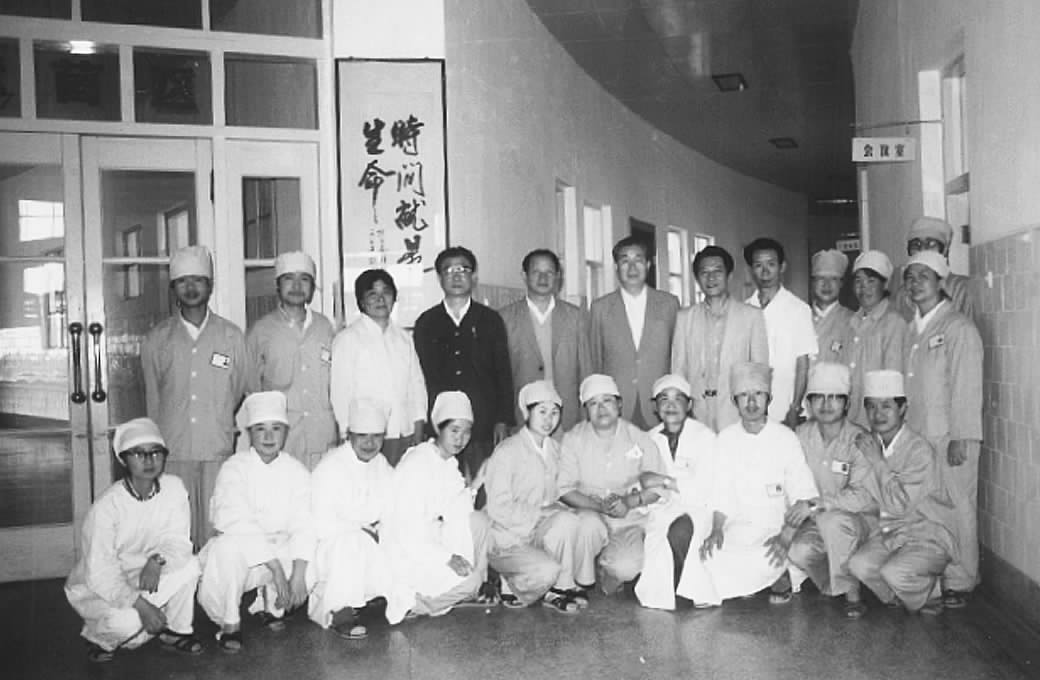
As Party Group secretary, Comrade Yueli always valued ideological-political work in the health system. He said many times: "Our health work must place medical ethics in an extremely important position," "actively explore the methods of doing ideological-political work well in the new conditions," "correct unhealthy practices and investigate disciplinary cases." Whenever he visited a county-level or higher hospital or a medical school, he would speak of three things to do well: first, sanitation — set the model; second, service attitude — not stiff, not snapping at patients, not deliberately provoking, not knocking against (giving a "nail" to bump). Third, look after both patients' and staff's lives, run the canteen well. He also had a habit: on inspection trips, to look at the public toilets — through one point seeing the general state of sanitation.
In April 1987, just before stepping down, Comrade Yueli handed me an outline of an essay he had drafted, asking us to use it as the basis for an article — "Building a Socialist Health Enterprise with Chinese Characteristics" — covering theory, practice, policy, measures, and experience, to provide reference for the whole national health system on theory, principles, and policy, so that the road ahead might be smoother and the results better.
A Few Matters from Investigations in Yunnan
Zhao Tianmin and Yang Wanze · February 1998
The passing of Minister Cui Yueli has brought our Yunnan colleagues in Chinese medicine and ethnic-minority medicine a deep grief. He poured his heart and energy into developing China's medical and health enterprise, especially Chinese and ethnic-minority medicine, and worked to the very last breath of his life.
Minister Cui paid close attention to TCM and ethnic-minority medicine in Yunnan's frontier. In the early 1980s, when the country was carrying out the spirit of the Third Plenum of the 11th Central Committee, opening to reform — and at the pivotal moment for the rebirth of Chinese and ethnic-minority medicine — he led the work in this field. After the Cultural Revolution, the task of putting the field back on its feet was extremely difficult: lessons had to be summed up, and the path of development thought through anew. Facing this, Minister Cui placed great emphasis on investigation and going deep into the actual situation; he proposed concrete measures and counter-measures for the problems found, and faithfully carried out Comrade Deng Xiaoping's instruction: "Create good material conditions for the development and advancement of Chinese medicine."
In the early 1980s Minister Cui visited Yunnan several times to investigate, going down to the grassroots to learn about the frontier's health work, Chinese medicine, and ethnic-minority medicine. In 1982, in Xishuangbanna, he saw that the prefectural Institute of Ethnic Medicine was small in scale, poor in equipment, and short of personnel. He pointed out that Dai medicine is one of China's four major ethnic medicines and must be excavated, sorted, and raised; that a Dai-medicine hospital and an Institute of Ethnic Medicine of suitable scale and Dai-medicine character should be set up; and that personnel training in ethnic medicine should be strengthened. He instructed the Ministry to allocate a special fund of 300,000 yuan for the construction of the prefectural Dai-medicine hospital and the Institute. After visiting the Xishuangbanna Botanical Garden, he told his accompanying staff that Yunnan's TCM resources were rich and should be developed and used. In 1983 he persisted, despite illness, in returning to Xishuangbanna for the founding ceremonies of the prefectural Dai-medicine Hospital and the Institute of Ethnic Medicine. In Simao Prefecture he visited the makeshift wards opened by the prefectural TCM hospital and saw that, despite the poor conditions and shabby buildings, the medical staff worked hard and warmly for the local people. He praised their spirit of running the hospital frugally, asked them to keep and carry it forward, and instructed the Ministry to allocate 300,000 yuan as the construction fund for the inpatient department, supporting the hospital's growth. In Chuxiong Yi Autonomous Prefecture, after seeing the prefectural TCM hospital's work and visiting its bone-injury department, he reminded the staff: Chinese medicine should walk its own road of development; build out TCM specialties well; highlight TCM features — only then will patients welcome it. He inscribed the hospital himself: "Revitalize and develop Chinese medicine and pharmacy; serve the people of every ethnicity in Yi Prefecture." Minister Cui also took rural grassroots health-organization construction and reform experience seriously; after looking into Yunnan's reform of township and village-level health bodies, he had Health Daily report on it.
On each of these visits to Yunnan, he held himself strictly — light entourage, no special hosting — which moved us greatly. The work he did to promote Chinese and ethnic-minority medicine in Yunnan will not be forgotten by the people of every ethnicity along our frontier.
Remembering Minister Cui's Care for Ethnic-Minority Medicine
Huang Hanru · February 1998
Beloved Minister Cui Yueli has departed. But the outstanding record he built up over more than half a century for the cause of the Chinese people's liberation, and especially the major contributions he made to the development of Chinese and ethnic-minority medicine, will stand as a monument in the people's hearts forever. As a worker in ethnic medicine who once received his teaching, I remember this venerable elder with profound feeling, and am deeply grateful for the attention and care he gave to Guangxi's ethnic-medicine work.
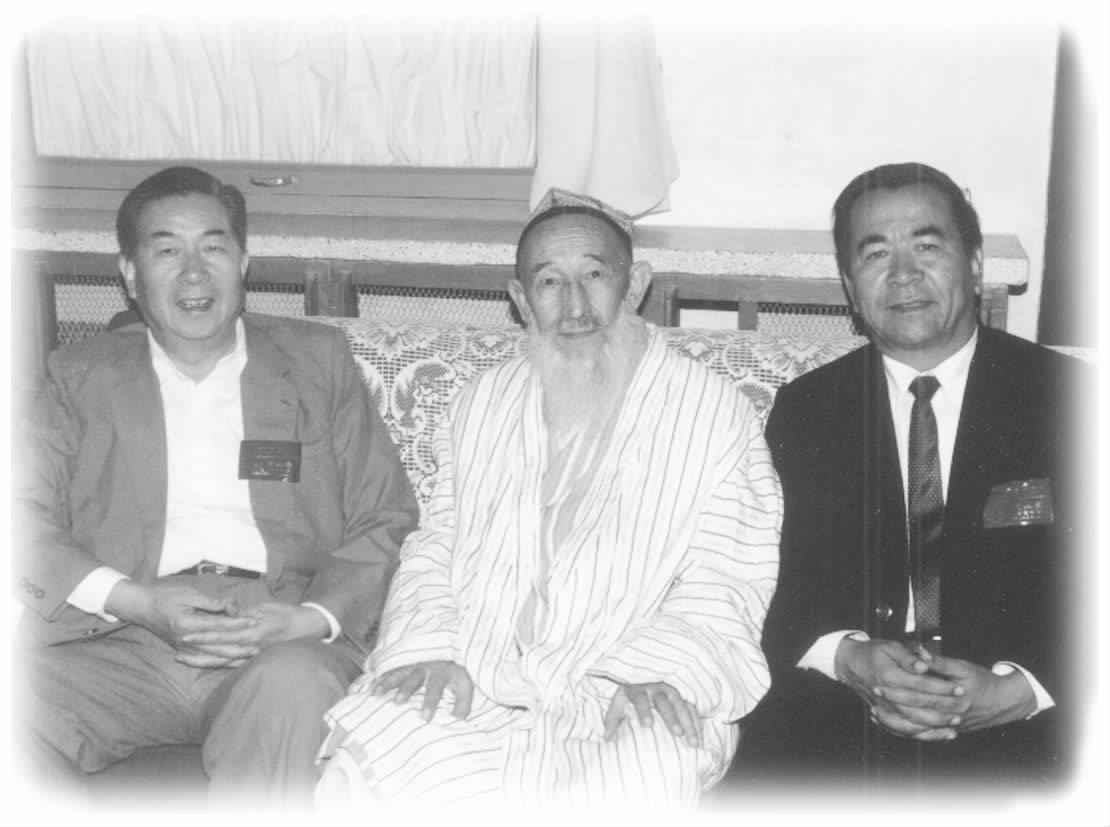
After the 1984 National Conference on Ethnic Medicine, in order better to excavate, organize, and raise up the Zhuang, Yao, and other southern ethnic medicines, the State Science and Technology Commission approved the establishment of the Guangxi Institute of Ethnic Medicine in May 1985. I was transferred from the research office of the Guangxi College of TCM to the provincial Health Department to take charge of preparing the Institute. From funds and land to staff and equipment, the work began with virtually nothing. Difficulties piled up before me — I had only just graduated as a master's student from the China Academy of TCM. How I longed for an elder's guidance and the leadership's support, especially that of the Ministry of Health, the State Ethnic Affairs Commission, and the autonomous-region leadership.
Just as the preparatory work entered a critical phase, in early December 1986 Minister Cui Yueli came to inspect Guangxi. Tireless, he went down to ethnic-minority areas — Sanjiang, Rongshui, Long'an — for investigation. Alongside rural health work, he paid close attention to the objective existence of Zhuang, Yao, and other ethnic medicines and to their important place in disease prevention and treatment. He looked into our Institute's preparation himself.
On the morning of December 4, accompanied by autonomous-region health-department leaders, Minister Cui drove to the Guangxi Institute of Ethnic Medicine and the Guangxi Ethnic Medicine Hospital, listening in detail to the briefings on preparations. In our small, very simple research-and-clinical office, he asked carefully about the work of excavating Zhuang, Yao, and Miao medicine, and conversed warmly with old Zhuang doctors Luo Jia'an and Guo Tingzhang, urging them to make more contributions to ethnic medicine in Guangxi. Director Lan Zongliu of the autonomous-region's Ethnic Medicine Hospital and I accompanied him throughout. When he heard that, for historical reasons, Zhuang, Yao, and other ethnic medicines had not been systematically organized in the past, that great numbers of effective methods and precious empirical formulas had survived only through master-disciple oral tradition among the people, and that some were on the brink of being lost, he urged us repeatedly: you must put strong effort into excavating and organizing Zhuang and Yao medicine, and into rescuing the precious clinical experience of the elder Zhuang and Yao doctors. There must be urgency; rescue measures cannot wait. He hoped the autonomous-region's Health Department, Ethnic Affairs Commission, and People's Government would give strong support. Hearing that the autonomous region had decided to make the Institute and the Hospital part of its 30th-anniversary construction projects, he showed a satisfied smile. That afternoon, despite weariness, he held a forum at Nanning's Xiyuan Hotel to listen again to our suggestions. The thoroughness and pragmatism of his investigation left me a deep impression. We told him we would redouble our efforts to advance Zhuang and Yao medicine and not betray his earnest hopes.
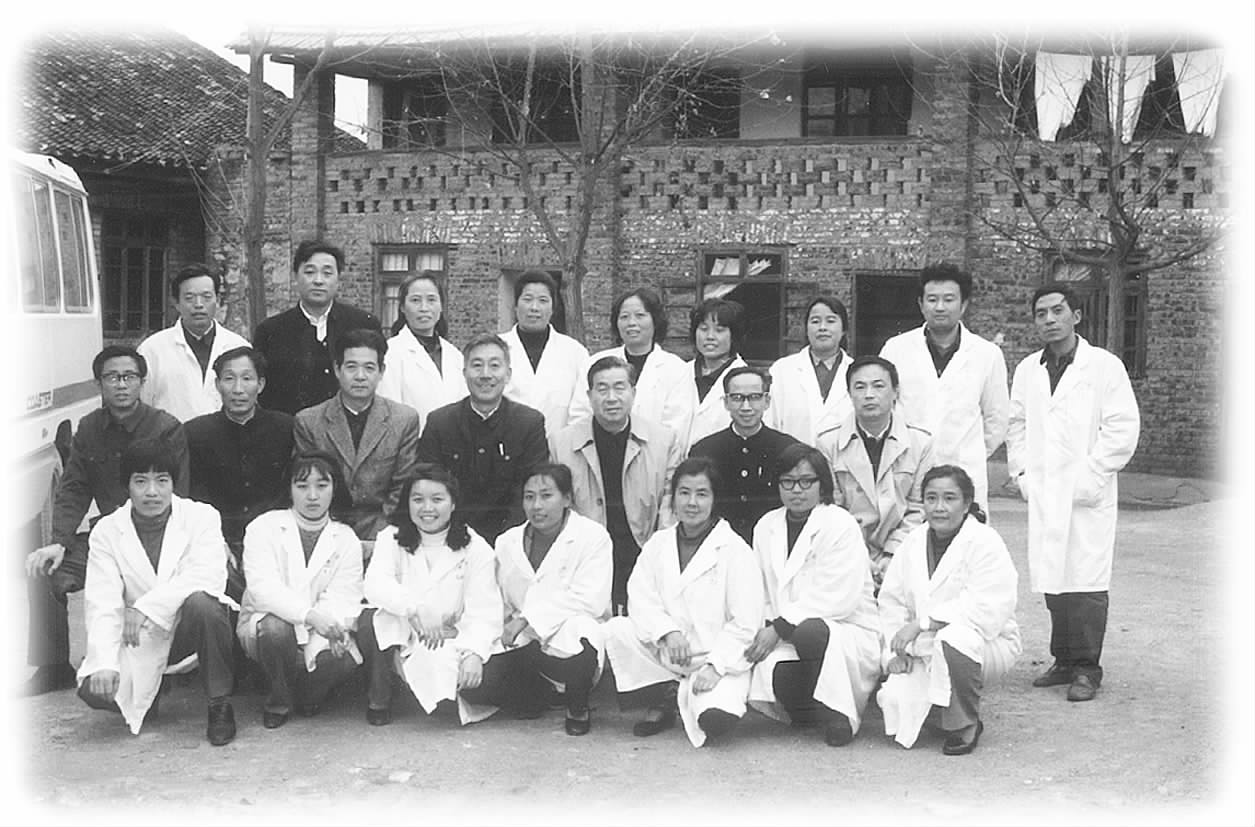
More than ten years on, with the warm care and support of Minister Cui and leaders at every level, our Institute has grown from a few shabby rooms and a handful of staff into a provincial-level ethnic-medicine research institute with over ten thousand square meters of building, nearly a hundred mid- and senior research personnel, more than a dozen research offices, an affiliated hospital, an ethnic-medicine newspaper, and a pharmaceutical factory. We carry dozens of research projects, including national- and ministerial-level ones, and have become an ethnic-medicine research base of the China Academy of TCM. The excavation and organization of Zhuang and Yao medicine have advanced markedly; Guangxi's rich ethnic-medicine resources are being developed and used appropriately. The ancient Zhuang and Yao medicines, like an old tree in flower, are taking their place again in our country's traditional-medicine forest with a fresh face. May the prosperity and growth of Chinese and ethnic-minority medicine — especially in our remote frontier areas — console the old minister's spirit in the heavens.
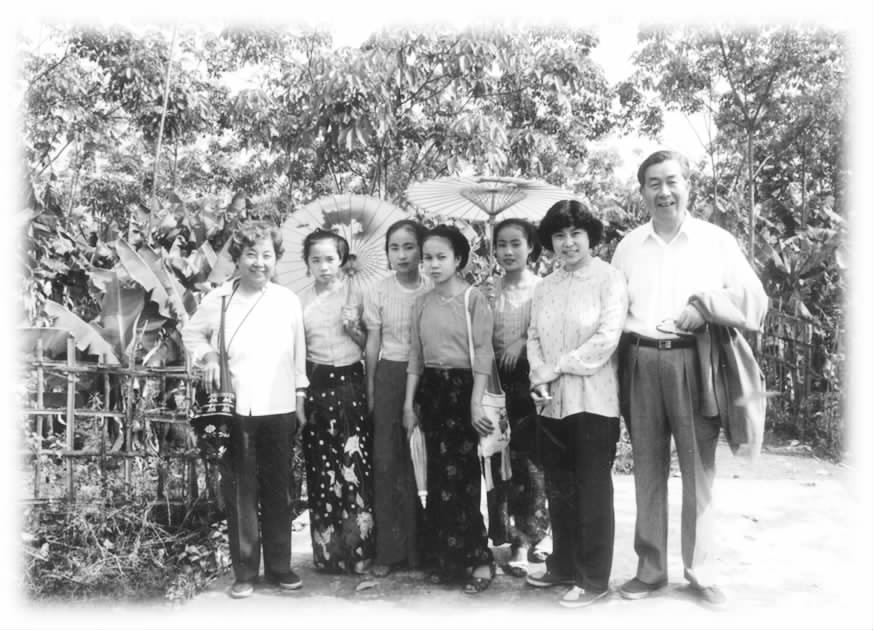
Remembrance from Overseas
Wang Aiqun · February 8, 1998
As the Spring Festival came, I made a transoceanic call home to pay New Year's respects. Unexpectedly, from the other side came Auntie Xu's grieved voice: Minister Cui has passed. The unexpected blow was like thunder in a clear sky. I put down the phone and turned at once to my husband. At first we sat in silence; then I saw his eyes redden, and I could no longer hold back — I broke into a wail of weeping. It was night here in America. Neither of us could sleep, and we talked nearly through to dawn. Beloved Minister Cui!
How we miss you. We had so often hoped to see you again on our next visit home, to have another long talk with you. None of that is possible now.
In November 1981 I was transferred to the Ministry of Health's Education Bureau. Minister Cui had just taken up oversight of medical education. He was at that moment with the Bureau's higher-education staff at a national meeting of higher medical institutions away from Beijing. At that meeting many medical schools raised the problem of how the lack of bodies hampered anatomy teaching. At Minister Cui's urging, ministry cadres put forward a proposal to "donate one's body after death." When they returned, the signature drive expanded within the ministry, and many older and younger cadres signed in turn. Many of those who signed have, by what I have heard, indeed had it done after they passed. Minister Cui in his own will held to it. Today, seventeen years on, I and many of those who signed bear witness to that history.
In 1982 he was appointed Minister of Health. With his rich revolutionary background and vigorous working style, he opened up the work quickly.
In 1983 he led some of the ministry's cadres in setting up at Capital Hospital for a reform pilot. As an ordinary worker on the spot, I saw and heard the difficulty of that period. The Center had only proposed "reform and opening" in the abstract; from top to bottom, no one yet knew how reform would be carried out, or what its outcome would be. Under Minister Cui's lead, the Ministry stepped early into reform. His drive came neither from grabbing first credit nor from showing off — it came from his Party spirit and his character. The hardships ordinary Chinese faced in seeing a doctor, getting admitted, and getting medicine had long weighed on him. He wanted to ride the wind of "reform" to address them. He was a Minister of high vantage and broad sight, good at seizing the moment. In the Capital Hospital pilot, departments first took up the contract responsibility system and the post-responsibility system, with task tied to pay. Staff energy rose at once; outpatient and admission rates climbed. Although there was praise from patients, what came along with it more often was doubt, blame, even harassment from outside or from certain prominent figures. But Minister Cui was hard-boned and held firm. He leaned closely on the elected hospital leadership team, headed by Chen Minzhang, and the reforms grew sounder and more successful. The Capital Hospital pilot truly set a model for hospital reform across the country.
Later I was lucky enough to be transferred to the Ministry's duty office. There, like the other young cadres, I worked beside Minister Cui — like green bamboo turning to greet the dawn. The teaching and care he gave us was beyond what any school or family could give. He had authority for younger comrades, but more than that, kindness. From the secretary and driver who worked directly with him to the cleaner who tidied his office — he treated them all as friends, attended to what they needed. He brought out from home the books he treasured, sorted them, and gave them to his secretary or driver to read; whenever there was a moment, he discussed passages with them. On the road sometimes he recited poems with them. When his secretary Ma Xiaowei's girlfriend came from the Northeast to visit, he worried she'd be lonely while Xiaowei was at work, and brought her to his home to chat with his wife and cook her his best dishes. A cleaning woman surnamed Liu died in a car accident; he was deeply grieved, attended the memorial in person, could not hold back his tears, and afterward helped her daughter through the formalities to come and take up her mother's post at the Ministry. The duty office had many young people; we liked the bustle, gathering at lunch so that whoever was on duty wasn't left alone. So long as he wasn't out, Minister Cui would come over with his lunchbox to eat with us. He talked and laughed easily, never seemed to tire. Sometimes he brought dumplings from home and shared them around — one for you, one for me — leaving little in his own box. Seeing that we had trouble heating our food, he gave me twenty yuan of his own to buy a large steamer for the office to heat meals or boil soup. Busy, I delayed for several days. He said, "Xiao Wang, you know — everyone's waiting for hot soup, you know!" I rushed off on my bike to buy it. He had me use the leftover money to buy pickles for everyone. Looking back, our young group was vigorous and warm — like a great family. He was its kind father. He was a man of flesh and blood, of practical sense, who respected human worth. He valued knowledge and ability, and was himself widely read and brilliant. So like a magnet he held the people around him close.
He had no airs of a "great minister." He always spoke with you on equal footing. The young people in the duty office liked to be around him — to hear him read aloud, to talk over things with him, to be on his trips out of town.
Minister Cui often said: 80 percent of our population is in the countryside; we cannot ignore the countryside in medicine and health work. Our point of focus must be the peasant. Whenever he traveled, he would go all the way down. He cared about the development of Chinese medicine and the strengthening of its corps; he cared about preventive medicine; he cared about peasants' housing sanitation and drinking-water sanitation. He never separated health work from the country's overall situation and the people's common interest. After visiting Shandong in the winter of 1983, he saw how rapidly the rural reforms had advanced and how peasant living standards had truly risen. He said: our work has to keep up with this development. Back in Beijing, he took the duty-office staff to peasants' homes in the Beijing suburbs — and indeed, the suburbs' development was no less impressive. He then called the whole Ministry's cadre corps to go for visits — so that everyone would understand reform better and serve the peasants better.
Some of those of us who once worked beside him now live and study abroad, far from home, like me. Yet he kept up with us as ever, often writing letters of greeting and encouragement. It was his urging that I seize the prime years of youth to pursue degrees and continue my studies in America. After my husband and I had finished our studies, he himself called to encourage us "to come home for a visit and exchange." In 1996 we were invited back for the 50th anniversary of our alma mater, Jilin University; my husband lectured in Beijing and Changchun. While in Beijing we called on Minister Cui and Auntie Xu. For overseas Chinese like us, when the plane landed at the Capital Airport, our hearts surged — Beijing is the sacred symbol of our motherland. Standing before Minister Cui, we knew well that here was a man of immortal merit for the peaceful liberation of Beiping. We felt a quiet awe and called him affectionately Uncle Cui — for he was one of those we had crossed an ocean to come and see. We did not know it would be our last meeting. Now he has departed; how can we believe that returning home we will not see this kinsman again? Beloved Uncle Cui — we miss you. We will not forget your unwavering loyalty to country and people; we will not forget your daring brushes with death in the underground; we will not forget the eight years of unjust prison and torment in the Cultural Revolution; we will not forget your uprightness, free of selfishness and vanity; we will not forget your meticulousness and diligence in work; we will not forget how you took blame on yourself and protected your comrades through every era; we will not forget the immortal achievement you wrought for the country's medical and health enterprise during your time at the Ministry; we will not forget your face and voice, your humor and warmth. Beloved Minister Cui Yueli — you live forever in our hearts.
The Real Skill Is Beyond the Books
Zhou Ji'an · February 1998
In January 1985 I went to work as a secretary at Minister Cui Yueli's side. Newly out of military service, I was unfamiliar with health work, so I dug up books on public health and hospital management to bone up on the eve of action. The Minister noticed and, while encouraging me, told me with weight: "The skill is outside the books — the success or failure of health work is also outside the hospital." I half understood and just nodded.
In June and July of that year, I joined him on nearly a month of rural-health investigation. The conditions of travel then were nowhere near today's; the four of us crowded into an old-style Volga sedan, jolting through the central Hebei plain, crossing the Taihang Mountains, going from Hebei into Shanxi. We avoided the main roads and called only on farmhouses. At each stop he asked the village cadres to lead us to two poor households and one well-off, and then to inspect the village clinic and township health center. The Hebei-Shanxi land in July was thick with damp heat — air heavy. He showed no trace of fatigue. He sat in the low farmhouses for four or five hours at a stretch each day, drinking bowls of cool tea, asking in detail: how many in the household, how many mu contracted, what crops grown, the seed-and-fertilizer cost subtracted, profit or loss; can your wife give birth at the township health center; where do the elders go when sick; have the children had their vaccinations? Whether honest peasant, sharp small trader, or village cadre full of new vocabulary — he could clear away their reverence in a few minutes, gain their trust, find a topic to share, and discover their hopes and praises, or disappointments and complaints, about health work.
Slowly I came to understand his teaching: "the skill is outside the books, the outcome outside the hospital." That is, the health enterprise must be considered within the wider economic and social environment. Family customs, agriculture, side-trades, fishing, herding — all make up the larger setting of rural health work. To probe the laws of the enterprise from the macro level of economic operation and social life — that was his openness and foresight. Those farmhouse exchanges, simple and small as they seemed, saw the great in the small: deep care and deep reasoning lay within them.
A dozen years on, the Minister's face and voice are with me still. As I remember him today, I can only redouble my efforts to carry forward his unfinished cause.
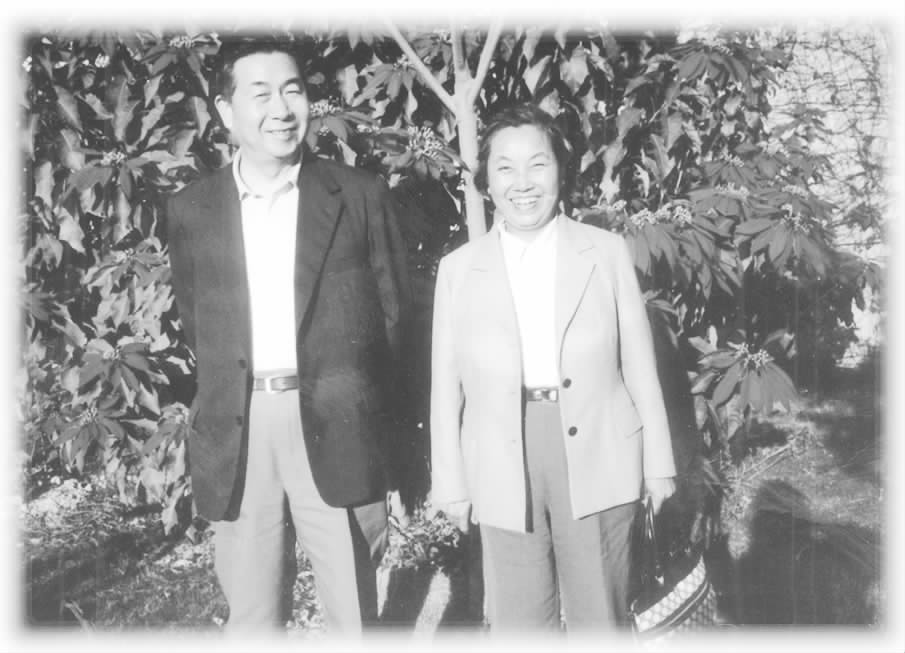
A Remembrance Never to Be Forgotten
Tang Yixin · February 1998
On Lunar New Year's Eve — when Chinese families gather — I unexpectedly received from the Ministry of Health a notice of his passing: Comrade Cui Yueli, Minister of Health, had died suddenly on January 22. I was struck dumb, refused to believe it, and after the shock could not hold back the waves of grief.
I think back to the evening of October 28, three months ago — at the opening banquet of the World Conference on Integrated Chinese and Western Medicine at the Beijing Hotel — when Old Cui specially called my wife and me to his table. We spent a happy evening together. As we shook hands in farewell, he was thinking about the name for the new study I was about to move into; he said his wife Comrade Shulin would think of one and he would inscribe it and send it to me. I never imagined this would be our last parting. Now the news has come, and I cannot accept this hard fact. Many things rise vividly. The elder's tall figure, his face and voice, keep coming before me.
I met Old Cui at a medical meeting in Changzhi, Shanxi, in April 1989. By then I had published several pieces on the Spleen-Yin doctrine in TCM, with some response at home and abroad. I never imagined that he carried in his head — could speak fluently of — my papers and the situation and research findings of many of our Sichuan colleagues in TCM and integration.
I never imagined that this man before me — the highest leader of our Republic's health work — could be so gentle a scholar and elder. The conversation moved from clinic to research, from the field to the family; his deep learning and clear insight commanded my respect, and his warm, plain manner dispelled my reserve at once. In an instant the distance between Minister and ordinary doctor closed; I felt before me an inexhaustible mentor and an elder with a parent's warmth.
After that, on every Beijing trip, Old Cui scheduled time for me first; often we would speak for tens of minutes, even an hour or two. He encouraged me to keep at it without slack. He suggested I gather and round out my Spleen-Yin work into a monograph that would fill that gap at home and abroad. Two years later I sent him the manuscript; despite age and pressing duties, he read it through carefully and gave me much guidance. With his backing, Studies on the Spleen-Yin Doctrine in TCM was published; and our subsequent research won a third prize at the China Academy of TCM's first International TCM Yisheng Cup, the special prize of Leshan's Science and Technology Progress, and others.
In 1991, Old Cui supported my call to gather effective empirical formulas from senior medical scholars across the country and compile Clinical Essentials of Effective Empirical Formulas of Today's Eminent Chinese Doctors. He said: "To gather effective formulas widely, sort them down from broad to focused, and put them to clinical use is itself an important scientific task in TCM. I welcome and support such organizing research." When we set to it, response from eminent TCM scholars was wide. With the draft done, some worried about the difficulty of selling academic books and suggested rebranding it for popularization; Old Cui clearly opposed. He said: "In the 1950s, Clinical Essentials of Chinese Medicine by Qin Bowei and others laid out clinical signs, traced and analyzed them, listed effective formulas — concise, useful — and ran into hundreds of thousands of copies, not enough to meet demand, almost a 'paper-of-Luoyang' phenomenon." He insisted we make this "a monograph of high scientific and practical value." We and the publisher kept to this. As he predicted, after publication it has been reprinted year after year, never enough to meet demand, and was named one of Sichuan's best books of 1994.
In my growth, how much of Minister Yueli's diligent watering soaked through. On October 27, 1997, when I expressed my gratitude to him, he replied: "It is your generation's struggle — inheriting, opening the way — that lets us continually open new chapters in TCM. My work is to do everything I can to clear the road for the rise of a new generation of eminent doctors." Old Cui has left us. How I want to hear once more his earnest teaching, gaze again into his kind eyes, see his tall figure once more. At this moment all I can do is, eyes brimming, put a few drops of memory and grief before his bier…
Three Meetings with Old Cui
Zhu Hansong · January 1998
Some days back, a friend called from Beijing with the news that old Minister Cui Yueli had suddenly passed. The shock left me speechless. I sat dumb with the receiver in my hand, until repeated calls of "Hello! Hello!…" brought me back. I put down the phone and sat numbly at my desk, looking up at the scroll he had inscribed for me two months earlier: "Guided by the theories of Chinese medicine, sum up clinical experience, raise the level of scholarship and the effectiveness of treatment." The ink still gave off a faint scent. The picture rose at once before my eyes: the elder unrolling the paper, bending over, plying his brush.
That had been two months ago, on a Beijing trip. Off the train I went straight to his home. At the sight of me he was visibly moved, rose at once to take my hand in both of his — warm — and pulled me to his side, asking with care about my work, study, and life of recent years. When he heard that the small, mountainous county-level city of ours, on the northwest frontier of Jiangxi, had seen the TCM enterprise grow markedly, he was stirred, wrote out the scroll above and a great horizontal "Take Flight" to give to me. As I made my farewells, he urged me solemnly to "study well, work well," with reluctance in his eyes. I was deeply moved to have such a kind, sincere friend across the generations.
I think back to a fall in the late 1970s, when I was still a medical student. By chance I met Minister Cui on a southern inspection tour. He asked kindly my name, hometown, field of study, and aspirations. I answered cautiously. He took out a notebook, listening with "mm, mm," writing with quick strokes — I assumed it was just courtesy, that a Minister could not really be listening to an ordinary student, and that what he wrote was probably some health-work directive. To my surprise, less than a month later, a letter from him arrived from Beijing. He encouraged me to study well, to bring out the legacy of our country's medicine; the road of TCM modernization rested on us young people; we were the future, the hope. Reading those warm words, those earnest exhortations, my eyes brimmed; I could not sleep for several nights for excitement. After graduation I was assigned to the TCM hospital where I now work, and often wrote to him. Busy as he was, he answered every letter, and sent me a copy of Chinese Medicine: Reflections with his inscription on the flyleaf. Every step of progress in my work owed something to his encouragement. I felt fortunate to have so tireless a teacher!
The second visit was in the spring of two years before, when I went with the leadership of the Jiangxi provincial Health Department to apply for a project at the Ministry. By then in second-line status, Old Cui, hearing of it, briefed us in detail on the conditions and the procedure for project approval and went with us to apply. When the approval came back in our hands, my hand trembled. We were fortunate to have such a leader who held the grassroots and the old revolutionary base areas in his heart.
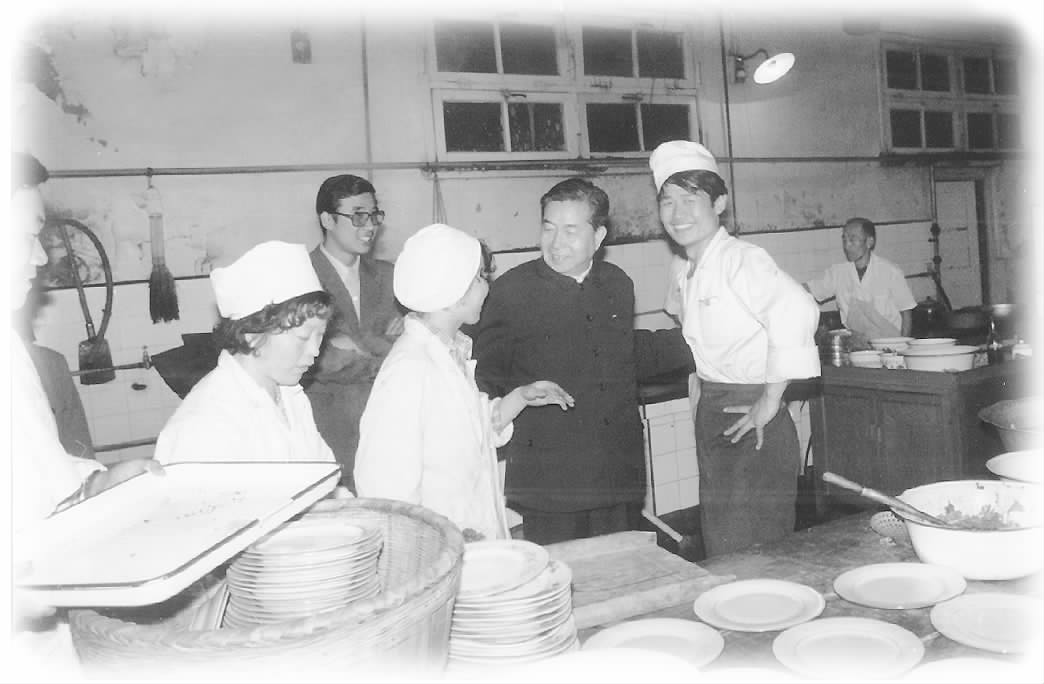
I tried to close the gates of memory, rose, and walked outside. Out there a cold wind whistled, dark clouds hung low, and snow in great feather-light flakes was falling — soon the nearby village and the distant ranges all wore silver. What floated before my eyes were bunches of small white flowers…
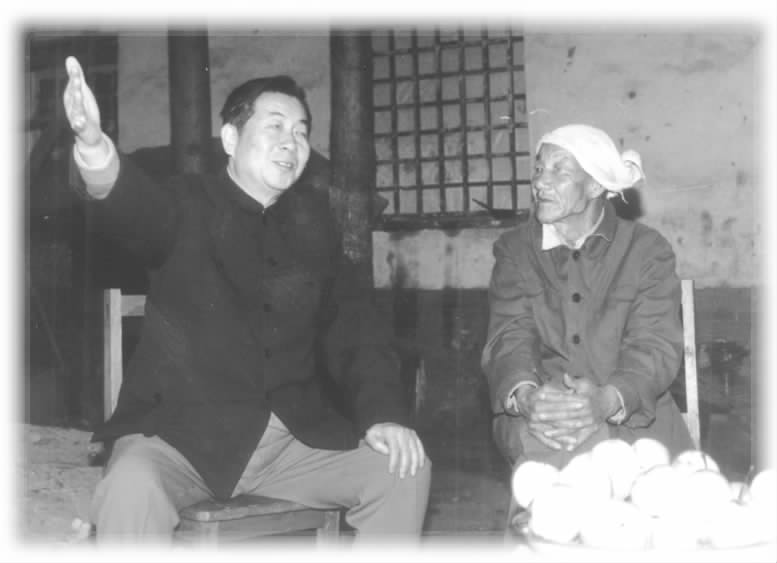
Selected Funeral Couplets, Condolence Telegrams, and Letters
Selected condolence couplets, telegrams, and letters
Fifty years we crossed — liver and gall through the hard times. Old tears for a fallen leaf; with what kindred now shall I talk? Chivalrous, you valued old friends; your hand reaching out in trouble. Heart hot, your gait hurried; only at exhaustion did you set down the load. You used to say you'd go before me — why so lightly now departed? A single fall becomes the prophecy; a white cloud, a crane, turning away.
— Zhang Wensong, Huang Ganying, February 1998
Shocked to learn of our old Minister Cui Yueli's sudden death of a heart attack. Minister Cui, for the people's health enterprise, labored a lifetime with outstanding record. On Chinese medicine he gave care and support on all sides — a place secure in history. I was a council member of the China Association of TCM for two terms, and many times received his teaching, gaining more than I can say, to remember my whole life. He planned to edit a Translation Series of Famous Chinese Medical Classics — farsighted, yet unrealized. I deeply hope the Ministry and the Administration will organize specialists to complete his wish, and so console him.
Virtue will endure with heaven and earth; a noble spirit hangs eternal in the universe. Your heart's blood for the Yellow Emperor's lineage — we inherit your aspiration to console Master Cui.
— Zhu Liangchun, an octogenarian of Nantong, Jiangsu, respectfully bowing · February 1998
Of the five elders of Hu-Xiang only the lone peak is left; the news comes, another is lost. The planning to this day carries forward the distinctive features; the great design from here, we praise the special merit. At the Hengyang Conference, the forest of medicine turned green; exchanges abroad, the apricot courtyard bloomed red. Craft guided West and East in news; far planning, deep loyalty — we mourn.
— Old Cui recently gave me "Medicine of Western Countries" (1998) — kept in remembrance. Liu Bingfan bows in mourning · February 1998
Shocked and grieved by Comrade Cui Yueli's passing; in the pain, my longing only deepens.
Comrade Cui Yueli was an outstanding leader of our country's medical and health enterprise; in leading the Ministry's work he gave enormous warmth and heart to Chinese medicine. To carry out the Central Committee's wise "revitalize Chinese medicine" policy, he labored with whole effort and fine planning — taking a series of sound, strong measures: summing up the clinical and scholarly experience of eminent old doctors; developing TCM education; strengthening clinical-base construction; opening up TCM research. The field, nearly smothered under the Gang of Four, was quickly restored and set growing again. Afterward he went on watching and guiding the field, still laboring its prosperity without letup. Mountains high one looks up to; the great road one walks. As a TCM practitioner who has given over half a century to the field, again and again in long contact with Comrade Cui Yueli I was moved by the height of his devotion.
Peach and plum do not speak, yet beneath them a path forms. His spirit and his record are worthy of every TCM worker's respect and remembrance. The road is long; as we mourn him we should learn his utter devotion to Chinese medicine, inherit his grand aspiration to revitalize it, and take on the burden of promoting and developing it — making concrete progress our deepest tribute to him.
— Deng Tietao · February 1998
Shocked to learn that former Minister Cui Yueli passed away in Beijing on January 22. The news brings sorrow beyond measure. A sage suddenly withers; a great star falls. I take up my brush in grief.
With discerning eye you knew the apricot grove — a great man of the Yellow Emperor's hall. In deep mountains you sought the treasures; no time to heed the rough path. Great wisdom, great courage — you raised the banner of distinctive character; the "Hengyang Conference" shows the spirit. Carrying forward our national essence as your charge, several crossings of the sea to Japan. Aged, retired — yet still galloping in the hundred-herb garden. Discoursing on Cang and Bian, bowing to the last; while breath remained the debate did not stop. Your works stand alongside sun and moon — lit in history's page forever. Now Master Cui has ridden the crane away; on what day is the return?
— Li Jinyong, in mourning · February 1998, at Hubei College of TCM
Greeting the new year at the great cold — suddenly a star has fallen, bringing pain. East Lake's water cold, yet words of welcome warm it; South Peak's clouds misted, the preface is written red. Prison years linked to national history; the affairs of the apricot hall leaned on your peace. Dawn breeze, setting moon — a loyal spirit passes; much grief entrusted to later generations.
Minister Yueli passed at dawn on the Ding-Chou great-cold day; having followed him for over a decade, I was shocked to hear and set this down in sorrow.
— Wu Junyu, in mourning · February 1998. Notes: "East Lake" refers to the founding meeting of the Internal Medicine Society of TCM; "South Peak" to the Hengyang Conference; "prison" to his imprisonment in the Cultural Revolution.
Minister Cui departs the world — the news shakes the apricot grove. TCM across the country weeps; we worry — who will carry our great banner?
— Qiao Baojun, Henan TCM · February 1998
Long the Yellow Emperor's way has been in decline; it was you who nourished it again into light. On the Western Hills the cold moon grieves the fallen star; a million comrades' tears fly. Past and present carry forward the old cause; Chinese and Western join in a new chapter. We rejoice to see the "three heats" warm the overseas tide; the apricot garden's flowers open fragrant across the seas.
— Xichang Songtao, Wan Yousheng · February 1998
Just before Lunar New Year's Eve 1998, suddenly hearing of Minister Cui's death, I was struck with shock and endless feeling. While in charge of the Ministry, he contributed enormously to our Party and country's health enterprise; on Chinese medicine he gave his heart and blood, nurturing on every side. Concurrent president of the China Association of TCM, at every national meeting he took Zhejiang's TCM situation and our provincial association's work to heart. One year, on a Zhejiang inspection, he visited the Zhejiang College of TCM. I was then president and reported to him. He praised our college's seriousness about TCM scholarship and the quality of our Journal — a great encouragement. He felt the college's site (the old Zhejiang University campus) was aged and suggested appropriate expansion, promising conditions for us later. We heard that on the day before his death, still ill, he had attended meetings and taken TCM work to heart. This serious, responsible spirit toward the health enterprise and traditional medicine will always be our model. I mourn with a quatrain:
At year's end the dread news — the medical world loses a great star. A life of deep sincerity; after his going the spirit remains.
— He (Zhejiang TCM Association) · February 2, 1998
Learning today that Comrade Cui Yueli, outstanding CCP member, former Minister of Health, and honorary president of the China Association of TCM, has passed away. His contributions to the revitalization and development of Chinese medicine were immense. He has ridden the crane west; I bow in heavy sorrow and offer warm regards to his family.
— Ren Jixue, Changchun · February 5, 1998
Shocked by the news of Minister Cui Yueli's passing. I, together with the old TCM colleagues at Henan College of TCM, express heavy mourning. Comrade Cui Yueli had outstanding records in the War of Resistance and the War of Liberation. As Minister of Health, he took TCM work in hand personally and made historic contributions to the revitalization of Chinese medicine and the inheritance of our nation's medical tradition.
What I will remember to my last day is the April 1982 National Conference on TCM Hospitals and Higher TCM Education at Hengyang, Hunan, which he convened personally. As then-president of Henan College of TCM I was a delegate and had the honor of hearing his address. After the ten-year havoc of the Cultural Revolution, the country's TCM corps faced a severe crisis of succession in personnel and skill; institutions were few and lacked TCM character — some hospitals hung TCM signboards but sang Western tunes. Inside the field there was worry that TCM might survive in name but die in substance. At Hengyang Minister Cui delivered his long speech, "We Must Make Something Happen in TCM." He opened by saying he had worked several days on the title alone — and those first words struck the delegates to the heart. The speech stressed that TCM education and TCM clinical work must keep and carry forward TCM character, train talent in diverse ways, solve the succession problem. He named the incorrect attitudes: slighting, discrimination, lip-service praise with actual exclusion, letting things drift, bureaucratism. The speech proposed concrete measures on TCM funding, integration, scholarly research, inheritance of ethnic medicine, and strengthened Ministry leadership. When he finished, emotion ran high; the applause lasted several minutes. In discussions, delegates kept saying, "TCM is saved," "This meeting is another milestone for TCM after Liberation." The Hengyang spirit still guides the field today.
After leaving the Ministry he stayed on as president of the China Association of TCM. As a standing council member, I watched him pour a lifetime's heart into developing and exchanging TCM scholarship. At every TCM meeting he organized or attended, he put forward guiding views for revitalization. Up to the day before his death, still ill, he attended a meeting. He truly gave himself to TCM, until he could give no more.
Today TCM is growing vigorously, with clinical, teaching, and research institutions springing up like bamboo after rain. Chinese medicine is taking the world by storm — a global "TCM fever" — and this is inseparable from his able leadership and outstanding merit.
His passing is a great loss for the Party and the people, a great loss for our medical and health enterprise. His deeds will enter the pages of history and live without fade. Though he has left us, the spirit with which he gave himself to the people's health enterprise, and the selfless spirit with which he strove to revitalize and develop TCM, will always urge us forward. He will be remembered by the people and the field for all time.
— Li Zhenhua, Henan College of TCM · February 2, 1998
Chest full of sincerity, work in the "green satchel"; governance kind to the Yellow Emperor's heirs; white-haired you labored and would not rest — merit full, spirit flown in the black night of winter.
Ambition reached the eastern lands, body settled in the north, voice high in the south of the Dipper, your study to the last had further still to go; your name passes to benefit the ancient Chinese land.
— Xu Baoyuan, a humble "end" of the medical tradition, bowing in mourning · February 1998
Shocked and grieved to learn that former Minister Cui Yueli has passed away. He gave a lifetime to the development of medicine and won praise from every quarter. His passing is a great loss for our medical field. I offer my deep mourning and warm regards to his family.
— Mi Borang, Shaanxi Academy of TCM · February 1998
A lifetime of striving for the revolutionary cause and for Chinese medicine, a record in history's pages. In my pain I offer the following lines:
Loyal to the country's affairs, secret service north of Yan — pushing peace, magnifying the national spirit — the crane returns! Your merit crosses the ages. Service in the forest of medicine: first gathering in southern Hunan — setting the course, inheriting and carrying forward the legacy — a star falls! Mourning beyond the Nine Springs.
— Zhang Canjia, Shandong University of TCM · February 1998
Shocked and grieved by Comrade Cui Yueli's passing; my deepest mourning. Regards to the family.
— Zhou Zhongying, Nanjing University of TCM · February 1998
Shocked by the news. Comrade Cui Yueli's passing — our Party has lost an outstanding communist soldier and our health front an excellent leader. My heartfelt mourning, and warm regards to the family.
— Shi Changyong, Liaoning Academy of TCM · February 1998
In office your heart was with the common people; out of office your worry was for the world. A plain body without ornament; a lifetime in defense of China. Originally a protecting spirit of the capital, then a savior of TCM. Two great achievements — every voice praises them.
— He Zudao, Fourth Hospital of Changde, Hunan · February 1998
The dread news shakes the long sky; doctors in the four seas weep for you. Red courage, loyal heart in great cause; farsighted, strategic, strange in merit. A pillar midstream, keeping tradition; the broad way, a new style. What you left in the people truly does not die; a sorrowful song as elegy for the hero.
— Sun Guangrong, Hunan Academy of TCM · February 1998
*Couplet offered by the painter Lin Kai's family*
Virtue enough to leave its fragrance — heart and tracks both clear; everywhere songs of praise on every lip. Kindness touched us; we had not wished you a happy Year of the Tiger, yet with ten thousand lines of tear-rain we send you home.
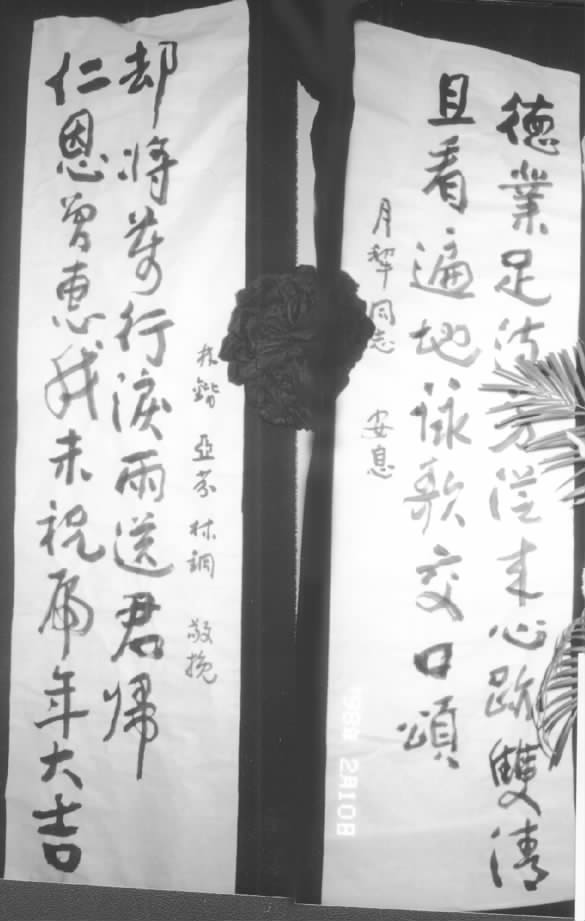
A great-general star has sunk, spring nearing dusk; a small window, sitting late, the moon as lonely as I.
— Wu Daolin · February 1998
Fifty cycles of wind and cloud, written in history; a life's virtue, always for the people. A unity calculated with the whole world; saving the dying and wounded, an earnest heart. With friends you gave liver and gall; listening to the people, a heart like a valley. At each old-friends' reunion, the empty seat is as if still you and we hear your voice.
— Xue Yuzhen · February 2001
Before the enemy, stern with righteousness; in office, clean and upright; with people, gentle and kind — selfless and unafraid; no shame to leave such a fine name in history. Strongly proposing a new road for Chinese medicine; diving into the classics, our national essence; saving us from chronic illness; guarding state and people — surely you leave a lingering affection on earth.
— Gu Pingdan, Wu Shengli, Zhao Zhuyan · February 1998
In work — a minister who stood up to heaven and earth; in character — a friend truly loyal and reliable.
— Feng Zhenbang, Guangxi Medical University · February 1998
Earth-fire shining in bright spring — the dragon's pool and tiger's den were ordinary matters; the apricot grove, seeded by your rain — white hair and a red heart, boundless affection.
— Xu Kang · February 1998
Shocked to learn of Comrade Yueli's passing. Great grief. Thinking back over our sixty years of fighting friendship from the war to after liberation — etched in the eye and heart. During the Cultural Revolution he took refuge in Ji'nan, and we talked long of national matters and encouraged each other. With him gone I've lost another kindred soul; the longing is beyond words. Comrade Shulin — restrain your grief, take care! May the children carry their father's aspirations and give their strength to the country.
— Su Yiran, Zhang Junliang, with their children · January 26, 1998
Shocked by Comrade Cui Yueli's passing. On behalf of Sichuan's TCM community we express deep mourning and offer our regards to the family. Over many years he gave Sichuan's TCM field earnest care and support; with his encouragement our province convened a pioneering conference on TCM revitalization in 1984, for which the Ministry awarded us the title "pioneer voice of TCM revitalization." In the ten-plus years since, our TCM has grown by leaps, inseparable from his backing. His passing is a great loss to the health world, and even more a loss to Sichuan's TCM community — a respected leader gone. We will inherit his aspiration and go on revitalizing and developing Sichuan's TCM. Comrade Cui Yueli lives on forever.
— Sichuan TCM Administration · February 1998
Shocked by Comrade Cui Yueli's passing; Shenzhou (Shenxian) county is sunk in grief. In decades of revolutionary life he was loyal to the Party's cause, giving himself to the last breath. He held the Party's interest uppermost, cared about the hardships of the people, kept close ties with them; he held to principle, weighed the whole, disciplined himself, sought truth from facts; he was upright, open, clean, plain; his heart was with his home district, working for its economic life, giving his effort. We mourn the loss of so respected a leader, so beloved a kinsman. We offer heavy mourning and warm regards. His spirit urges us forward; we resolve to turn grief into strength — to work hard and make his home district more prosperous. He lives forever in our hearts.
— Shenzhou CCP Committee, Shenzhou People's Congress Standing Committee, Shenzhou Municipal Government, Shenzhou CPPCC, Shenzhou Discipline Inspection Committee, Shenzhou People's Armed Forces Department · February 6, 1998
All of us at Bastyr University were deeply saddened to learn of Mr. Cui Yueli's passing. In our short acquaintance we were moved by his far-reaching influence on traditional medicine in China and the world, and by his approachable character. Our sincere regards to his whole family.
— President Joseph Pizzorno, Associate Professor Mark Nolting, Bastyr University (U.S.) · March 2, 1998
Shocked by Mr. Cui's sudden departure; deep regret and sincere mourning. My heartfelt thanks for the guidance and care he extended over many years. May Mr. Cui rest in peace.
— Dr. Yakazu Domei, honorary director of the Oriental Medicine General Research Institute, Kitasato Institute (Japan); president of the East Asian Medicine Association of Japan · January 24, 1998
Shocked to hear of Mr. Cui's passing; profound grief. He not only made enormous contributions to the development of medicine in China but also had deep understanding of and support for Sino-Japanese medical exchange. In the establishment of the Sasakawa Medical Scholarship program he gave warm guidance. Last December, at the program's tenth-anniversary event, we still shared its results together and wished him health.
He devoted a lifetime to the development of Chinese medicine and to its going global. By his will, his body is donated to Beijing Medical University — even after death, setting an example for the young. As we recall his noble character, we send our mourning. Please convey our condolences to his family.
— Okamoto Michio, chairman, and Nakashima Akira, president, Japan-China Medical Association · February 5, 1998
Shocked by the sudden passing of Mr. Cui Yueli, former Minister of Health of the People's Republic. Profound sorrow. Mr. Cui was not only a leader respected by the Chinese people but a good friend respected by the Japanese people. His outstanding contributions to China's health work, the development of China's traditional medicine, and the friendship and medical cooperation between the two peoples are beyond forgetting. In our mourning, we convey warm regards to his family through you.
— Principal Gao Heting, Chairman Nagura Sen, Planning-Office Director Hu Qing, Beijing University of TCM Japan Branch · January 23, 1998
Shocked and grieved by Mr. Cui's passing. Sincerest mourning.
I knew him for nearly twenty years; his warmth and courage for Sino-Japanese friendship and Sino-Japanese medicine cannot be forgotten. I recall 1985, when Sino-French diplomatic relations were still unclear. It was his wise decision that let the Japan-France-China immunology conference proposed by the Konishi International Exchange Foundation convene in Beijing and Shanghai. It advanced medical exchange and friendship among the three countries — a brilliant result in diplomatic history.
He did great work to develop health enterprises in China and Japan, improve the Chinese people's health, and introduce Chinese medicine to the world. The world cannot forget it, and I can only revere it.
Forthright in character, kind to others, he left us all a deep impression, engraved in our hearts. Most of my life has been devoted to Sino-Japanese friendship; limited as I am, I would give what small strength I have for the friendship of our two peoples, generation after generation. May his spirit, with doubled compassion, watch over us.
— Konishi Jin-uemon, chairman, Konishi International Exchange Foundation · January 27, 1998
Shocked by the passing of Dr. Cui Yueli, former Minister of Health. On behalf of the staff of the Western Pacific Regional Office of the World Health Organization, I convey sincere mourning and deep regards to Minister Cui's family and to the Ministry.
— Han Sangtae, Regional Director, WHO Western Pacific · Manila, February 4, 1998
Shocked by Comrade Cui Yueli's passing. Deep grief. This is a great loss for the Party and the state, and a greater loss for TCM. His life, from near-death missions underground to his service for the Party's cause and the health enterprise — in particular his struggle for Chinese medicine — has left us lasting impressions. We will remember him always.
— World Medical Qigong Association · January 29, 1998
Shocked by the passing of loyal communist soldier, outstanding leader of our health enterprise, former Minister of Health, and honorary trustee of the China Disabled Persons' Welfare Foundation, Comrade Cui Yueli. Profound mourning, and warm regards to his family.
Comrade Cui Yueli always cared about disabled people and actively supported our work on their behalf — making lasting contributions. He firmly supported the establishment of our country's first modernized rehabilitation center, the China Rehabilitation Research Center; he took active part in founding the China Disabled Persons' Welfare Foundation and long served as honorary trustee, mobilizing society for the cause; from 1985 onward he served as honorary president of the China Association for Blind Massage, pouring heart and energy into the field; he was deeply attentive to rehabilitation, organizing projects to correct polio, restore sight via cataract surgery, and others, bringing real benefits to the disabled. His care, and his support, won the loving esteem of our country's disabled people and workers in the field.
His passing is not only a loss for the Party and the state, but a great loss for China's work for the disabled. Though he has left this world, his spirit and deeds will be held forever in the hearts of the country's more than 60 million disabled people and our workers. Cui Yueli lives on forever.
— China Disabled Persons' Federation / China Disabled Persons' Welfare Foundation · February 4, 1998
Hearing of Minister Cui's sudden passing I felt boundless grief — my heart breaking. I cannot believe it. It is a great loss for the Party and the state, a great loss for our medical and health system. Chinese medicine, under his leadership, grew tremendously, radiating ever brighter light among world medicines. His passing is a great loss to the field. From my youth to now I have always had his teaching and care; every bit of progress in my work carried his heart. He cared deeply about Chinese medicine's place in world medicine, and before every trip abroad he made specific asks of me. My coming to America now is at his instruction: to open an International Exchange Center for Chinese Traditional Medicine, to carry on Sino-American medical-cultural exchange, to push TCM's development in the United States, and to use American knowledge and technology to serve the modernization of TCM. I will turn grief into strength, complete the task he entrusted, and with excellent results console him.
— Hu Shigang, International Exchange Center for Chinese Traditional Medicine · Washington, D.C., 8 a.m. on January 24, 1998
I was deeply saddened to learn in Washington, D.C., of our Chairman Cui Yueli's sudden passing. Through you I extend deep mourning and regards to Madame Xu Shulin and the family.
Minister Cui was always an outstanding leader. Over many years he made major contributions to the Chinese people's health. In recent years he accomplished unforgettable results in revitalizing Chinese medicine, advancing its development, and especially in opening the application and research of medical qigong in China and the world.
Minister Cui was open and aboveboard, sincere with people, glad to help, with friends around the world. His passing has taken from us a rare mentor-friend. Please say my farewells to the Minister for me.
— Tian Xiaoming, World Medical Qigong Association · January 30, 1998
Open, magnanimous, caring and protective of friends and subordinates, tormented by the Cultural Revolution yet still loyal — Old Cui has left us so early, so suddenly. Left his old wife, his children, and those of us who revered him. Is this real? Will we truly not see Old Cui again when we return to Beijing? Was last April's meeting really our last? It is too cruel. From now on we have lost an elder who truly cared for, cherished, helped us.
Looking back, we have known Old Cui exactly forty years. Through those forty years of wind and rain, unchanging were our respect for you and your care for us. Not everyone in this world is fortunate enough to have such truthfulness.
A thousand li away, we bow and see Old Cui on his last journey.
— Qian Junwei, Jiang Ruiling, bowing in tears · February 1, 1998
The news came too suddenly — this reality I cannot accept. But Father is gone, without time for a farewell.
Father's life bore so much suffering, and he did so much good. He helped so many — high official and ordinary alike. He had so many friends — colleagues and the young. He gave so much to society, reaching every corner of China's city and countryside. He opened a new age for Chinese medicine. He developed Beijing's whole medical system for its millions. He worked for the health of millions to the very last moment. Father did so much that these few words cannot express. I feel only that he left too early, too suddenly — too much a pity, too much grief, too hard to believe.
Just two days ago I received a letter from him and we spoke on the phone; Father asked me to donate his medical library, on his behalf, to the well-known American institution of Eastern medicine, Bastyr University. In his letter and on the phone he asked me more than once to do some work for Chinese medicine going global. I tell Father now: I will strive to complete this last wish.
Mother — please restrain your grief, take care of yourself. Brothers, sisters, and relatives — please handle what I cannot. Thank you.
Father — eternal rest!
— Son Xiaobin · January 22, 1998
Comrade Cui Yueli is a book ordinary and great, a book never fully read. With the passing of time, people's memory of him grows only stronger, only deeper…