Remembering Comrade Yueli
Xu Shulin · January 2000
Today is the second anniversary of Comrade Yueli's passing. I lived with him for 52 years. His single greatest trait was that he never thought of himself. At the office or at home, his mind was always on the people and the Party's work.
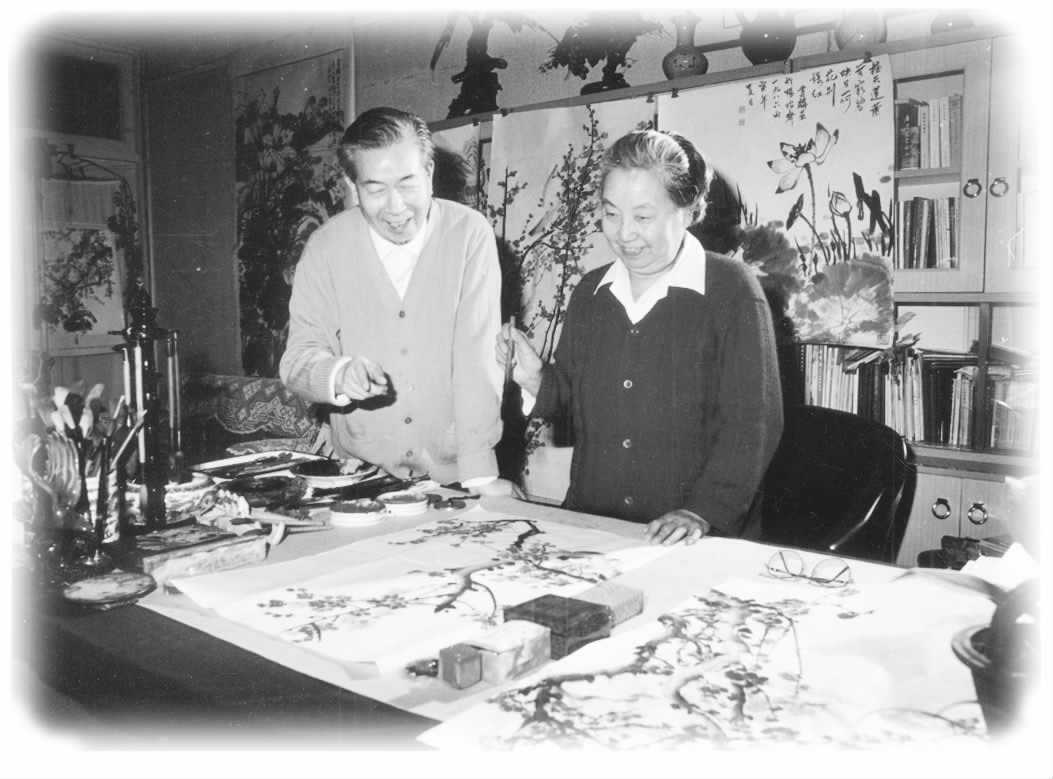
He used to say: what is building socialism with Chinese characteristics, and what is China's greatest characteristic? It is the more than 900 million peasants. That is why he kept his eye on the countryside. Each time he returned from rural investigation and saw how much our peasants depended on Chinese medicine while being short of doctors and drugs, and heard their urgent hope that Chinese medicine would grow, he resolved that its development was his unshirkable charge. That is how his warmth and love for Chinese medicine arose. Guided by the Third Plenum of the 11th Central Committee, he did a great deal of work on it, paid great effort, and saw some welcome results.
Chinese medicine serves not only our people but the people of the world. In recent years a TCM fever has appeared even in Western countries, which only deepened the responsibility of our TCM workers. Yueli often said: China is the homeland of Chinese medicine — we must not wait for foreign countries to develop it and then go learn from them. He felt keenly that inheriting and developing it required training a great many high-level TCM talents, and was worried by the field's crisis of succession. After leaving his post at the Ministry of Health, he still kept the work close; he kept writing to leaders and to specialists across the country, compiled Chinese Medicine: Reflections, and ran about calling for the training of high-level personnel, offering his counsel.
He hoped such training would happen faster and in greater numbers. Just before he left us, he resolved — old and ill — to take up in person the editing and translation work for a Translation Series of Famous Chinese Medical Classics. To our deep regret, he left us too early. To carry out his wish, Xiaotong has taken the lead in establishing the "Beijing Cui Yueli Traditional Medicine Research Center" to undertake the series' work. Though many difficulties still lie ahead, we believe that with everyone's effort, with the care of leaders at every level, with the help of many senior TCM experts, and with the support of those who care about the field, this cross-century project will be completed to a high standard.
"Standing in the world without shame to heaven or earth; the heart's aim never forgetting to be for the people" — this couplet that Comrade Chu Tunan wrote for Yueli was the one he loved most in life. After his passing it has become the portrait of his whole life. We will strive to learn his open and aboveboard spirit, his honest and meticulous scientific attitude, and his steadfast and tenacious working style, and run the Beijing Cui Yueli Traditional Medicine Research Center well — giving our share of strength and light to the development of our nation's traditional medicine.
Father Supported My Joining the Army
Zhang Shuhang · July 2001
The PLA's bearing made a deep impression on me. Every National Day parade — the even stride, the brave spirit — stirred my respect and love. From childhood I had quietly resolved: when I grew up, I would be a PLA soldier.
After finishing junior middle school in 1958, I went to Father's office to find him. Seeing me, he was surprised: "What are you doing here? Is something wrong?" (He did not usually let us visit him at work.) I said I had graduated and wanted to enlist. Father said: "You have just graduated from junior middle school — your education is not high. Our opinion is that you keep studying; you could apply to a military academy. If you truly want to enlist, we'll respect your wish. But the army is not only the splendor of the Tiananmen parade — you must be prepared to bear hardship." I resolved then and there to sign up.
At the mobilization meeting, the head of the armed-forces department said: "Enlist, and you must be prepared to fight; if you fight, there will be casualties. Chiang Kai-shek is clamoring to counter-attack the mainland; after enlisting, you could be sent to the Fujian front at any time. Though you've signed up, you may still reconsider." Five men raised their hands and withdrew on the spot. That night at home I spoke with Father. He said: since you want to enlist, you must be prepared to go into battle and to give your life for country at any time. As the child of a cadre family, all the more should you stand firm and answer the call. He told me about my cousin Shusen. Shusen graduated in 1950 from Bethune Medical School; when the War to Resist America and Aid Korea broke out, he wrote Father asking his view, and Father urged him to answer the Party's call. Shusen died in glory in 1952, aged only twenty. Father said: our good life now was paid for in blood by countless martyrs. All the more now, with Chiang's bandits loudly threatening, should we go to defend the motherland and liberate Taiwan. His words fixed my resolve. The next day I told the recruiting officer: as a Communist Youth League member from a revolutionary family, answering the country's call, I firmly enlist. And so I became an Air Force soldier.
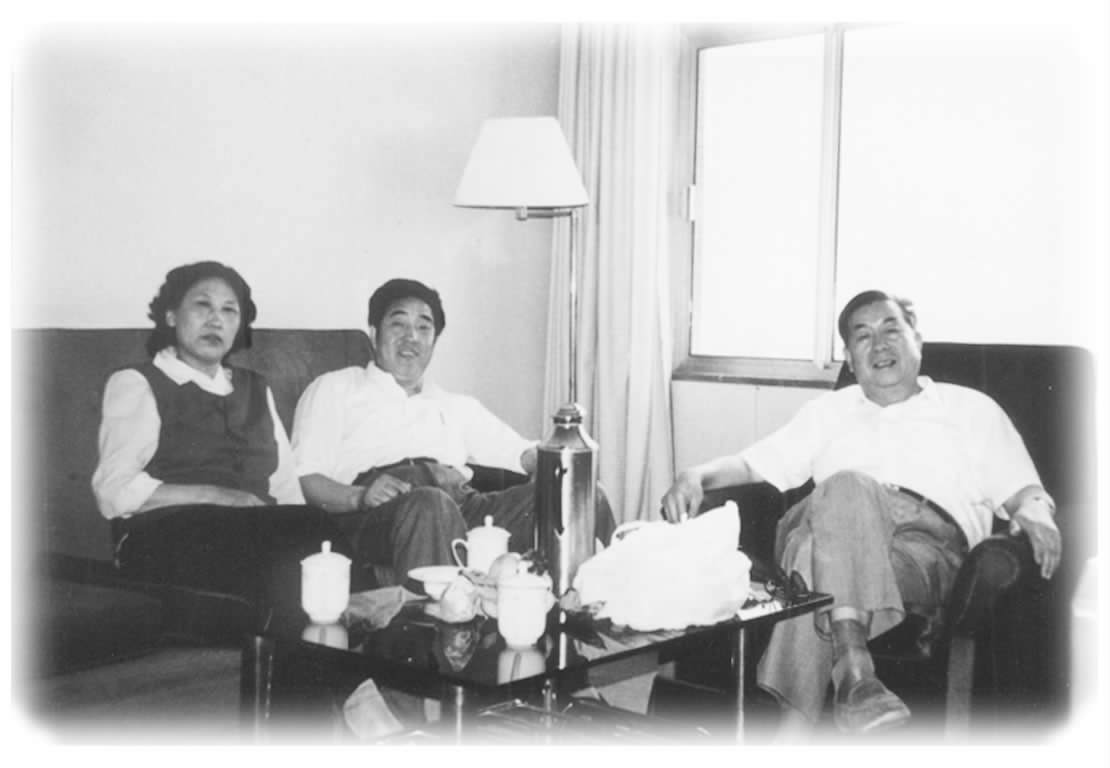
During the 1960 Sino-Indian border counter-attack, our units were mobilized and were told to prepare for deployment. I wrote home; Father replied at once: You should answer the call at any time and volunteer to go to the front. We firmly support it. That letter strengthened my will and kept me ready.
In 1968 Father was thrown into prison by the Gang of Four, and I, implicated, was forced to be demobilized and sent to Ji'nan, Shandong. Later when the army began to implement policy I could have returned to Beijing, but Father said: don't trouble the organization; since you've made your home in Ji'nan and the work is fine, don't move. When I retire I can come and stay in Shandong with you. By his word I put aside the thought of returning and have worked in Ji'nan ever since.
At every key moment Father put the Party, country, and people first and asked us not to weigh personal gain — to serve the people with whole heart. As descendants of the revolution, whatever the conditions, we must hold ourselves to the standard of a Communist Party member; revolutionary faith must never waver.
No Blood Tie, Yet Closer Than Family
Yang Jufen · July 2001
My birth father and my father Cui Yueli had been classmates — very close friends. My birth father went on to normal school in the county town and afterward taught primary school there. Later he joined the revolution and went to the Resistance United Military-Political University around Shijiazhuang. In 1942 the Japanese ran their "three-alls" policy (kill all, loot all, burn all) across north China, and in a bombing of his school my birth father died at twenty-four. I was only three or four. I do not really remember him.
The first time I met Father Cui Yueli was 1958, the year I graduated from junior middle school. Up till then my mother and I had lived just by each other, and she had fallen into a neurotic depression near torpor after my father's early death. Our household was very poor. When Father came back to his home district he made a special visit to us, asked carefully about my study and life, saw the four bare walls, and looked heavy-hearted. He said he would make inquiries back in Beijing and try to get me there to continue school. When he left, he gave me the five yuan he had with him. I kept the money in a small box and for a long time could not bear to spend it; later, just before I went to Beijing for school, I used it to buy a yellow-plaid long-sleeved blouse, which I wore for four or five years.
About a month after he returned to Beijing, he wrote back: come to Beijing to take the entrance exam. I was beside myself with joy. I passed into the Beijing Meteorological College, and on weekends stayed at Father's home. I had a new home in Beijing. When I went back to my village on holidays, everyone said I had changed — more lively, full of spirit, no longer sallow and unhappy.
Unexpectedly, in my second year I came down with tuberculosis. I had to be isolated and could not attend class; the school had me take leave. With only my dull-witted mother at home, I did not know what to do. In my helplessness, Father set aside his heavy work to come see me at school, and took me to the hospital for further examination. TB confirmed, I withdrew from school.
Father had me stay at his home to recover. He said, "With no one to look after you at home, how will you recover?" At that time his four children — my younger siblings — were all in primary school, our living space was not large, and I feared infecting them. It was the period of economic hardship — grain, oil, meat, eggs all rationed — food was expensive. Father and Mother's wages were not high; they supported eight or nine mouths and were always stretched thin; even careful, at month's end their pockets were empty. I really did not want to add to the burden. Father saw what I was thinking and said at once: "Your grandmother and our old nanny are at home to care for you — don't worry." So I moved into Father's home. There I received the most thorough care — even if my younger brothers and sisters went without, they kept my nutrition up. Because of the good treatment and rest, I recovered quickly.
In the 1966 Cultural Revolution, Father was imprisoned by the Gang of Four. Not until after Lin Biao's death at Öndörkhaan in 1973 were we allowed to visit. In prison, Father was overjoyed to see us, and wrote on the spot a poem for me:
Jufen's father was like an elder brother to me — fallen on the field of resistance, giving his life. The orphaned girl has become our own — neither of blood nor kin, yet dearer than both.
I could not hold back the tears. I could not understand why my good Father would be held in such a place. Father, turning it around, urged me with hope: he firmly believed he had no real problem, that he would be released soon. Release did not come until April 25, 1975. Every year since, on April 25, the whole family gathers to mark that day.
That day makes us think deeply, lets us remember the lessons of history, and stirs us to work harder for the people's cause.
My good Father has been gone more than three years. All this time I could not bring myself to set down anything in writing — as soon as I pick up a pen and think of Father, grief pierces me through.
I miss you, my good Father. I miss you so.
Between Cold and Warmth
Zhang Xiaotong · January 2000
My father, Cui Yueli, has been gone exactly two years. Time does not dim the remembrance — it makes it stronger. Like my love for my father: the deeper it settles, the longer it lasts.
He was a strict father, and held us to a tight line. He never let us use his official car; never let us act on his name for our own ends. Even making a phone call at home, if it ran long, would bring the scolding that we were "taking advantage of what belongs to the public." I remember as a child — though his work unit was across the street — he rarely came home. When he did for a meal, it would be broken off three or four times by calls. After I entered junior middle school, for three or four winter and summer breaks in a row he had me sent to the "Four Cleanups" work team, to eat, live, and work with the peasants. In my memory, I don't recall ever receiving a phone call from him; often a month or two went by without seeing him. That restrained distance lasted through his later years.
After he stepped down from the Ministry, every day was still crammed — only now at home, with guests, phone calls, letters, inscriptions; the daily hour of noon rest was often cut; sometimes he worked deep into the night. Age and illness were catching up with him, and he felt it. When I came over he would have me help with contacts and replies. In those days I finally felt the heat within him — knew he was burning his whole life as the fire of TCM's revival. In October of 1997 he called me and Sun Xianghong to his home and spoke at length about the work of translating and annotating the classics. At the end he said: I don't believe this cannot be done. I will organize; you help me. From that day our phone became a hotline — sometimes at six in the morning, sometimes past midnight, he would rouse me from sleep. We worried about his health, but for this project he raced the clock, thinking without rest. He drafted the editorial board and advisory lists himself, drafted the fund-management rules himself, collected reference material himself, wrote down ideas whenever they came and sent them to us one after another. In a letter to us he wrote: "Our translation and publication of Chinese medical classics is an important part of our nation's outstanding culture going global, and a great undertaking to benefit our descendants; the contribution to humankind's health will not be a slogan." He told me firmly that I was "to do the editing work entirely pro bono — not to take a single fen," and to make sure "every participant knew we were acting wholly to inherit and carry forward this great treasury, without any private interest." In that call, experts from across the country threw themselves into the work without regard to fatigue or pay.
No one expected that three months later he would hurry away, leaving a just-begun enterprise behind. At his farewell ceremony, unexpected numbers wept silent tears and held unspoken grief. The mountain of flowers, the endless couplets — perhaps that was the return of his love for the people, the rising of his blood into spirit. My heart could not rest: at whatever cost, I would carry on his wish, keep his fire-like heart hotter, redder. Today we have set up the Traditional Medicine Research Center in his name, with the "Pingxin Tang" clinic as its affiliated practice; here TCM specialists find a "home," and in clinical practice and research they make bold, meaningful attempts at the stubborn and rare. From this small ground we will give our light and heat to the inheritance and development of Chinese medicine, to its going global.
Father, Friend
Zhang Xiaoping · February 1998
The news of Father's passing came so suddenly — hard to believe. In the days since he left me, I seem to have swallowed all the grief in the world; for the first time I know what the ancients meant by "a pain that cannot be spoken." I have lost not only the father who cared for me most, loved me most — I have lost also the friend who understood me best.
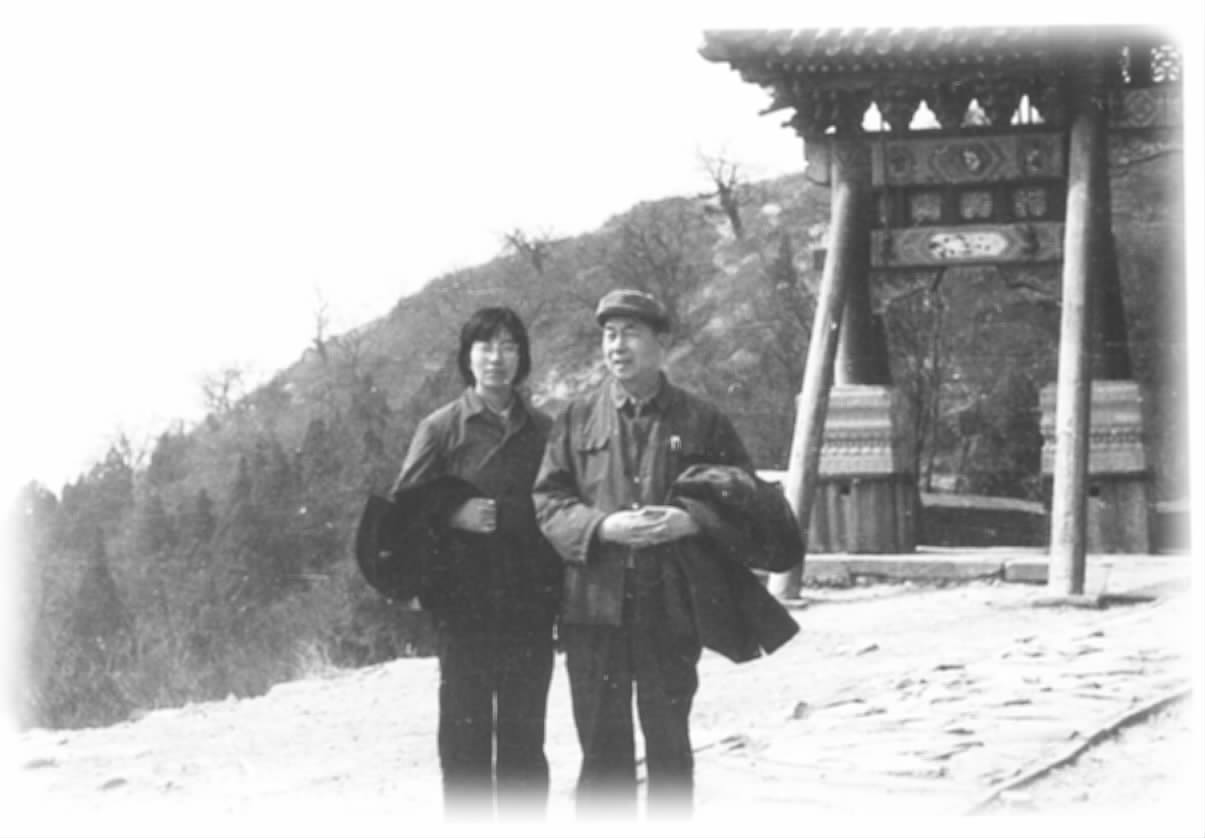
In my nine years in America, separated from Father by ten thousand li, perhaps just because of the distance from home I felt him even dearer. His style of being in the world taught me constantly, and became my spiritual support in a foreign country. In 1988 I went to America on my own funds to study. In the first days I could not find work to sustain myself, and did not know whether I could finish the degree; the pressure was heavy, and I missed home badly. Father wrote: "If you miss home you can come back at any time, so long as you have no regrets yourself. Do not think the difficulties too large. In America, the first thing is to have food to eat; the second is to study. If you can earn your bread, I'll be well satisfied; if you can also study, that's even better. So long as you can look out, there will be a way." His words stayed with me. Only he could say something that simple and true. Over the years he thought of me all the time; the letters he wrote me could be bound into a thick book. Every small progress I made he took as his own pride. Five years ago, a friend and I set up our own company in America; Father, who had always held money lightly, said to me: "Whether your company succeeds or not can be measured in two words — does it make money." He often reminded me that living in America, I should not carry over the Chinese ways wholesale. Whenever I came home on business or to visit, he asked about our company in detail, urging me to build links with other countries. When I told him our business had grown year by year and we had hired American employees, he was very happy. He wrote back at once: he had never imagined his daughter in America would have employees and become a "capitalist"; he was truly proud of me. Only Father would say something so plain — because he understood best the pride and joy of a Chinese person making a way in a foreign land.
After Father retired he had more time to write to me. He always treated me as a trusted friend. From his letters I learned how constantly he labored on TCM's development. He once said: China's two greatest contributions to humankind are its cuisine and its medicine; it would be a loss beyond measure if the wealth of Chinese medicine could not be handed on. As I watched the "Chinese-medicine fever" rise in the U.S. and European markets in recent years, and heard foreigners praise "Shi Quan Da Bu Tang" soup, I admired his foresight even more. He loved TCM with his heart; he understood it more deeply than most. He held that Chinese medicine was China's history and culture — and once history and culture are lost, they cannot be made again.
Father was warm and honest with people, kindhearted, and never forgot those who helped him. I remember as a child, he took me to see an old grandmother Song who had once saved his life from a Japanese soldier's blade. For years Father put aside money from his salary to send her, in gratitude. Even after I left the country, on one visit home Father still brought her a new quilt. He taught me to treat all people equally. He was to our household helpers as a kind father to daughters. He told me: we must not see them as servants. They help us; we must help them too. He said they were all young and should not cook for a lifetime; so he had them attend evening school alongside their household work — schools he contacted himself, fees he paid himself. Over the years three or four household helpers passed through our home; as each finished school, he placed them into proper jobs and brought in another. "One comes, one is cultivated," he said. His kindness and warmth brought warmth to every life he touched.
To lose such a kind, warm, clever father is deeply hard. I know no cost could bring him back. The huge warmth he gave me will be with me all my life. His style and character are my model for living.
I mean this piece in remembrance of my father, and as heartfelt thanks to every doctor and nurse who labored for his health, to every leader, friend, and colleague who loved him, to the driver and secretary who cared for him so closely.
A Small Matter
Zhang Xiaopeng · January 2000
In 1985 a few friends and I went to Shenzhen planning to set up a TCM clinic there. We negotiated with the authorities and reached an understanding, intending to begin preparations once we returned to Beijing. Before I had even returned, Father had heard of it. Back in Beijing, he called me in and asked: "You want to open a clinic in Shenzhen? They called me to ask my view. I told them to hold off on this." In this gentle way, Father turned me down.
He had always held us to a tight line, never letting us use his connections to do things — especially not in health, his own field. He never let us set foot there. But there was one exception: helping people see a doctor. While Father was in office, I lost count of how many patients I brought to the great hospitals; he never criticized me for it. He himself often wrote letters for patients, introducing doctors or connecting them to hospitals. Even as an inpatient on his own walks, meeting a patient in difficulty, he would put his own illness aside and run around to arrange consultations for them.
Once when I was home, Father suddenly asked, "Do you have any old army coats?" I asked what he wanted one for. He said that on his evening walk downstairs, he'd noticed that the old man who watched the bike shed was thinly dressed, and he wanted to find him a coat. That was how he cared — attentively, for everyone around him.
It sets me thinking of today. Some of our cadres use their power for graft and bribes, arrange their own children's lives, and when one man gets the Way, his chickens and dogs rise with him. Our Party's fine tradition and upright style are being eaten away; it is a pain to watch. Think of Father's generation of proletarian revolutionaries — their strict self-discipline and willingness to put the public before themselves, their spirit of wholehearted service to the people — worthy of each of us to learn from. I remember my father with deep love, and with boundless respect.
An Ordinary Man
Zhang Xiaobin · September 2001
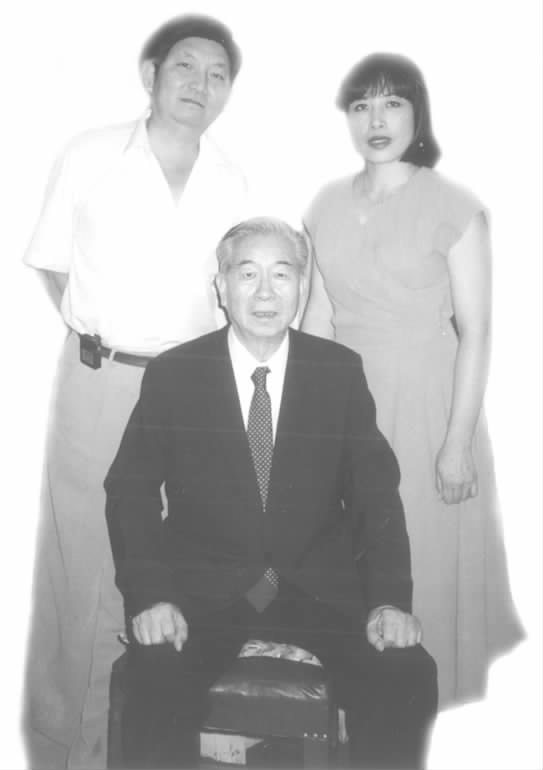
When my elder sister Xiaoping went to America in 1986 to study, she had only four hundred U.S. dollars on her — one hundred of which Father had given her, saved over from the living allowances he had kept from his many trips abroad. On her second day in America she started working: the money didn't cover a month's expenses. She studied and, on the side, worked as a housemaid — cooking, doing laundry, cleaning. Who could have known she had been a qualified doctor at home, or that she was the daughter of the People's Republic's Minister of Health? That was Father: giving away the good opportunities to others rather than to his own children. Because Father was an ordinary person, and so were his children.
When anyone was ill — a high official or a common citizen, a cleaner, an elevator operator, a driver; a relative or a stranger — wherever he was, at home or at the office or on a dusty road; at any time, a summer noon or a winter midnight — if asked, he answered. When anyone was in difficulty — over work, housing, wages; over having a policy applied; or just to vent frustration — if asked, he answered. For all the ordinary people, he lived up to his name: like a plow driven under the moon, he labored a lifetime. From joining the revolution at 16 to the last moment of his life, he was a man whose heart carried every ordinary person — because he did not think himself particular; power came from the people, and must be put to use for every ordinary person. An ordinary person, an ordinary heart, ordinary affairs — that "ordinary" is precisely what expresses the character and chest of a real Communist. And that same "ordinary" is what dissolved him into the thousands upon thousands of ordinary people.
Precisely because of his ordinariness, so many ordinary people loved him with an extraordinary love. In the White Terror, some sheltered him at risk of their own lives. In busy, strained work, some respected him deeply. In everyday life, some cared for him without reserve. After he left us, how many ordinary people remember him — remember his ordinariness, and the extraordinary feeling he gave to all the ordinary people around him.
These few sentences cannot fully say what this "ordinary" means — but such an ordinariness is forever in people's hearts, and the most precious.
Let us carry on this ordinariness. Only the ordinary is eternal.
In His Heart, Only the People
In his heart there was only the people — Afterword
Xu Shulin
I met Comrade Yueli in the winter of 1945, married him in the summer of 1946, and on January 22, 1998 he passed away — 53 years together. In that time he spent 8 years in unjust imprisonment through the Cultural Revolution, and though we were apart we thought of each other every moment; our hearts were bound together. Through 53 years of wind and rain, what I felt most strongly and understood most deeply was that he had a kind, fiery heart — boundless sympathy and love for the laboring people who had suffered under the old society. His greatest trait was to be rooted deep among the people, and the warmth he had for them came from inside, from the heart.
When I first knew him, he had just been sent by the Urban Work Department of the North China Bureau, alone, from the anti-Japanese base into the Beiping–Tianjin enemy-occupied area, to put down roots and open the work. Under the cruel, mad White Terror, he dissolved into the masses like a fish into water.
Wherever he went, whatever household he visited, he could quickly make friends with the old and young alike — as if family. Everywhere he went, people liked him, welcomed him, wanted to talk with him from the heart, hear him on the situation and on policy. The enemy's distortion of Communists — a "green-faced, red-whiskered, big-fanged" monster — disappeared; a handsome, cultured, kind young man took its place. The great principles of resistance and saving the nation were spoken in living terms — turned into household chat, storytelling, good talk. White-haired elders took him as a nephew; peddlers and coolies as a brother; young students as a kindred; children as a big friend. He was skilled at united-front work: scholars and professors saw him as steady and trustworthy; high officials and big merchants respected his reasonableness and hosted him as an honored guest. In the White Terror of the occupied zone, he seemed to have homes everywhere, never worrying for food or lodging, with a clear picture of the situation and keen information. He gave his sincere heart to the Party, to the people; and the people, at risk of their own lives, sheltered and helped him. Whether Beiping could be liberated peacefully touched the lives and families of millions; it was his love for the people that gave him the courage and wisdom to plunge in and out of danger, the strength and confidence to turn enemies into friends — making him truly the "envoy of peace."
After Beiping's liberation, because of his ties to the masses and his grasp of the situation, he served as political secretary to Comrade Peng Zhen, as head of the Municipal Committee's United Front Department, head of the Health and Sports Department, Vice Mayor, Deputy Secretary-General of the Committee for World Peace, and more. He held many posts and was very busy, yet he kept his working style of going deep into the grassroots and staying close to the masses. He cared about every comrade around him, knew their family lives, understood their thoughts and moods; anyone in trouble, he tried his utmost to help. He never looked down on those who had erred. Even those branded Rightists who felt their futures closing off, he comforted and encouraged. He often repeated Commander-in-Chief Zhu's line, "There are no people without use!" — meaning that everyone has strengths, and put in the right place, everyone can do useful work for the people. He was skilled at mobilizing, at bringing out each person's gifts. To work with him was to feel joyful and inspired; efficiency was high; results came.
The Cultural Revolution cast him into an unjust prison, and eight years of torment could not shake his revolutionary faith — they made him believe even more firmly in Marxism, even more firmly that the people create history. Whatever errors anyone made, history would keep moving forward. The moment he was given work again, he threw himself in. In every act he kept the masses in mind; his footing was always the people. As Minister of Health he often said the health enterprise was a service trade — service to the people. He paid special attention to old, minority, border, and poor areas, and always went to the grassroots, to the hardest places, to find problems and solve them. Even on foreign trips, he would look at other countries' villages, see how their laboring people lived, compare with ours, borrow their experience, improve our work, improve the people's lives. Even outside his portfolio, he put forward suggestions to the Center for improvement. He always considered matters from the people's needs. Even my painting and his calligraphy, to him, were "service to the people" — he said we must "answer every ask," so that people might find comfort and encouragement in painting and words. In his life, anything concerning the "laboring people" was "a big matter" — whether our housemaid, our driver, our secretary, or the elevator operators and cleaners in the building, or the nurses and doctors at hospital, or salesclerks and barbers — he was glad to talk and listen, and to learn from each. Whenever he knew someone needed help, he offered it at once. He kept to his own rule: once you say yes, do not forget, see it through to the end.
Everyone knows how in his later years he poured himself into revitalizing Chinese medicine. Many think he was a TCM doctor himself — in fact he trained in Western medicine, and was a doctor in the radiology department at Beijing Tongren Hospital in the underground days. His warmth for TCM came wholly from the people's need. Once put in charge of TCM work, the first thing he did was go through the countryside in 26 provinces, autonomous regions, and directly-administered cities, investigating widely and deeply. He drew a conclusion beyond doubt from the people: China's common folk cannot do without Chinese medicine; China's health enterprise cannot do without it. He said the great strength of TCM was that it saved money, saved trouble, and worked. For thousands of years, the people's health has rested on Chinese medicine — especially in the old, minority, border, and poor areas. He often said: this socialist country with Chinese characteristics of ours — our characteristic is our 900 million peasants; every work must start from those 900 million peasants. They cannot do without Chinese medicine. For TCM's growth he humbly sought out senior TCM doctors, made friends with them, listened as they assessed policy, explained theory, analyzed cases, summed up results. He often said: practice is the only criterion of truth — and over a thousand years, the practice of millions of people has shown TCM's scientific character. He began with higher TCM education, aiming to raise up a million high-level practitioners for the nation. For this he was anxious, for this he called out, for this he ran about without regard to age or illness, working to the last moment of his life.
I know — I know deeply — he was worn out. In the cause of the people he truly gave himself to the very end. What he held in his heart, moment by moment, were the tens of thousands of ordinary people.