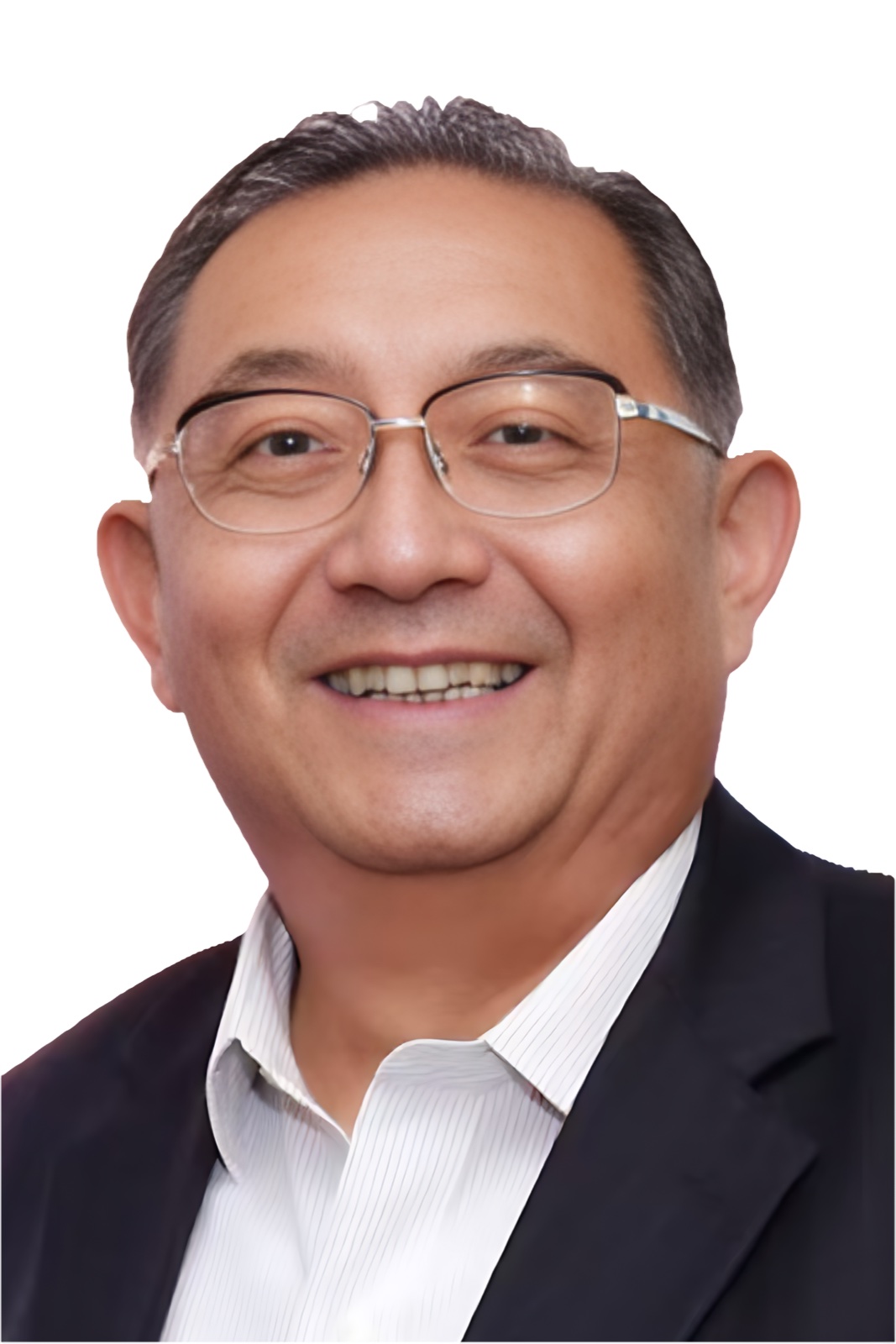
Zhang Xiaotong 張曉彤
The way of Heaven benefits and does not harm; the way of humans is to act and not contend.
Life
Zhang Xiaotong was born March 1948 in Beijing and died the evening of 17 February 2025 in Beijing, aged seventy-seven. Zhang Xiaotong's father was Cui Yueli (former Minister of Health and a leading advocate for the revival of Traditional Chinese Medicine); mother was Xu Shulin.
Youth: Beijing No. 4 High School
Zhang Xiaotong attended Beijing No. 4 High School (class of 1967, senior second year) and served as deputy head of the student union; by the second year Zhang Xiaotong was already being considered for Party membership. Classmates remember Zhang Xiaotong slipping off to the track to run laps after meetings ended; one winter weekend Zhang Xiaotong organized the entire class to bike back to Yongfengtun, the farming village where they had worked, and on another occasion persuaded them to join the Shi Chuanxiang sanitation crew for an afternoon of hauling nightsoil — "meticulous at planning and always the first to put hands in the work."
Early in the Cultural Revolution, Zhang Xiaotong and two classmates responded to the movement together under the joint pen name "Wu Haotong" (吳浩彤). Soon afterward Cui Yueli was denounced as a member of the "Peng Zhen black gang," and Zhang Xiaotong — now the child of a "black-gang element" — disappeared from public view.
Inner Mongolia: eleven sent-down years
In September 1968 Zhang Xiaotong was sent down to Tabusai Commune, Tumd Left Banner, Inner Mongolia. While most sent-down youth worked their way back to Beijing, Zhang Xiaotong became one of the rare "root-down" settlers — joining the Party while Cui Yueli was still unrehabilitated, and rising to village Party secretary and deputy township Party committee secretary. At the 1974 "pork-meat meeting," Zhang Xiaotong laid out the stake plainly: "My ambition is to change the backward face of Beiyuanzi village… It may take ten or twenty years, even thirty, even generations. If I can't finish, younger knowledge-youth will take it up."
Return to Beijing: a decade of searching
Zhang Xiaotong returned to Beijing in 1979 and over the next decade-plus worked at Shuangqiao Farm, the Beijing Municipal Farm Bureau, the State Family Planning Commission, and the school-enterprise arm of the Beijing Dongcheng Education Bureau; also ran a restaurant, managed the Longquan Hotel, and spent time on policy research at the health commission. In Zhang Xiaotong's own later words: "half a life spent building anew."
On 13 July 1984 Zhang Xiaotong was the lead author of the report Some Questions on Population Control and Population Policy, which drew approval from General Secretary Hu Yaobang: "He really used his head — well-grounded, well-thought-out, deep research."
Pingxintang: the work of reviving Chinese medicine
In 1998, fulfilling Cui Yueli's dying wish, Zhang Xiaotong resigned all public posts and founded the Beijing Cui Yueli Center for Traditional Medicine and the Beijing Pingxintang TCM Clinic. The name Pingxintang (平心堂) plays on the phrase "a calm mind wards off illness" — and the clinic became the first high-end private Chinese-medicine institution in China organized explicitly around the preservation of TCM culture.
Zhang Xiaotong set a number of firsts for the industry:
- Doctors take no commission on drug sales — "a Chinese-medicine doctor reads the pulse, not the patient's pocket."
- Senior and heavily-booked physicians are paired with assistants who pour their tea and remind them to rest.
- The Yueli Traditional TCM Award uses nomination only, with strict criteria: return-visit rate ≥ 70%, booking-fulfillment ≥ 80%.
- Every staff member memorizes Sun Simiao's On the Absolute Sincerity of Great Physicians; the clinic practices mutual evaluation among staff as part of its "culture of mutual virtue" (優合文化).
Under Zhang Xiaotong's leadership the Center has compiled and published eighteen classical TCM texts, including the Huangdi Neijing: Suwen.
Zhang Xiaotong was also one of the most visible public advocates for TCM. During the 2003 SARS outbreak Zhang Xiaotong organized experts to formulate a preventive decoction and distributed it freely; in 2006 led the team in publicly rebutting the "anti-TCM" wave; in 2015 submitted detailed written input during the National People's Congress review of the TCM Law; in 2018 received the industry's "Forty Years of Reform and Opening — Contributor Award." The essay series 《中醫,希望在哪裡》(Where Is the Hope of Chinese Medicine?) — four parts — on fortitude, diagnosis, damaged illness, and the breakthrough of medicines — remains the clearest statement of the revival Zhang Xiaotong worked toward, with the refrain: "The true lifeblood of Chinese medicine is efficacy."
Later years: illness
Zhang Xiaotong was diagnosed with throat cancer; the larynx and vocal cords were surgically removed, and Zhang Xiaotong thereafter spoke only through a Japanese-made voice device. Because of compromised immunity Zhang Xiaotong had to stay in temperature-and-humidity-controlled rooms, and was forced to give up both the swimming Zhang Xiaotong loved and the flute Zhang Xiaotong had played at performance level. In Zhang Xiaotong's own words: "the hospital saved my life but destroyed the rest of it."
Zhang Xiaotong fought cancer for twelve years, resisting over-aggressive treatment and insisting — "I'm hanging on to Chinese medicine and not letting go." Zhang Xiaotong continued to run Pingxintang personally until death. Zhang Xiaotong left written instructions that no farewell ceremony be held: "Let my best image stay in everyone's memory."
Character and craft
Seal carving and calligraphy were lifelong arts for Zhang Xiaotong: his copies of the Lanting Preface held the flavor of the Jin–Wei tradition, and his copies of Yan Zhenqing's Eulogy for a Nephew carried its grief; Zhang Xiaotong's seals in qingtian stone and chicken-blood stone — "韶華" (youth), "懸壺濟世" (hanging the gourd to save the world), "長風破浪" (riding the wind to break the waves) — circulate among close friends. Swimming and flute both reached professional level.
Zhang Xiaotong was outwardly gentle but inwardly proud, with exceptional self-confidence. When once invited to submit a memoir piece, Zhang Xiaotong attached a single instruction: "Not one character may be changed." Zhang Xiaotong's mother had once given him eight characters by way of self-description — "proud, self-important, careless of the world" — and Zhang Xiaotong said: "I admit it. I won't change."
Autobiographical Poem
The Self-Assessment poem below was shared by Zhang Xiaotong with son Zhang Xin on 4 November 2022, in answer to Zhang Xin's question "where does the spirit live?" Original 自評 followed by an interpretive English translation in italics.
起名即曉彤,半生創業中;
只忙東方紅,未等太陽升。
Named Xiaotong (“Dawn-Red”) at birth, half a life spent building anew;
busy with the Eastern Red, never waiting for the sun to rise.
自詡不凡命,那屑與人同;
運蹇不認輸,愛登最高峰。
Claiming an extraordinary fate, scornful of being like others;
when fortune wavered, refusing to lose — loving the highest peaks.
位卑憂國運,處難慮民生;
好管不平事,義正敢為爭。
Lowly in station yet grieved for the nation, in hardship still mindful of the people;
quick to right wrongs, righteous and unafraid to contend.
粗心隨己意,慮慢多妄行;
少顧他人意,常忽世人情。
Careless, following his own will, slow to consider, often acting rashly;
seldom heeding others, often missing the world’s sentiments.
老來思往事,似有幾分明;
細算功與過,無悔這一生。
In old age recalling the past, seeing it with some clarity;
tallying merits and faults — no regret for this life.
死後任評說,無惜利與名;
若論精神在,可共天地清。
After death, let others judge — caring nothing for gain or fame;
if the spirit endures, may it share the clarity of heaven and earth.
Photographs
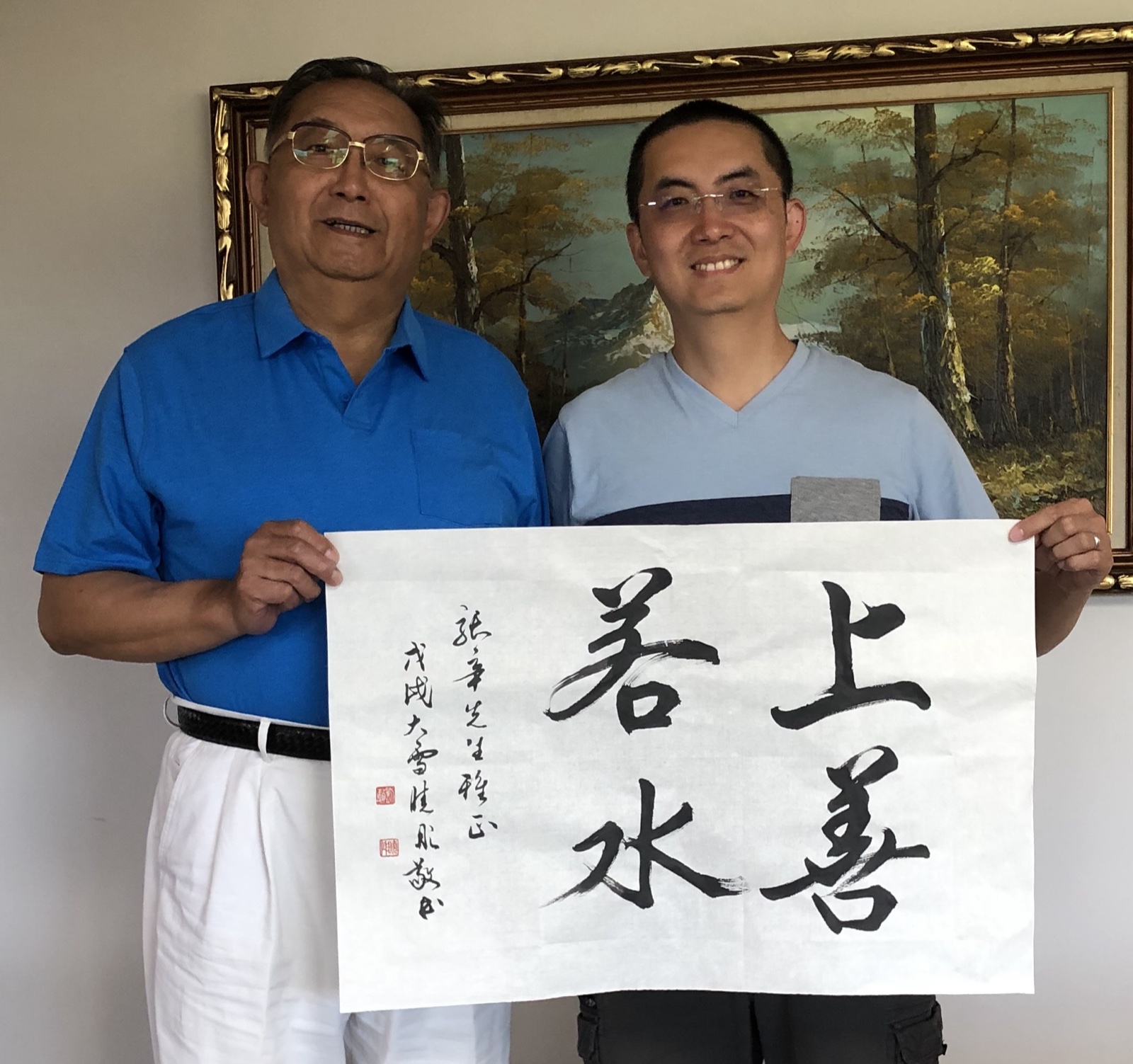
The Aspiration of Pingxintang (平心堂之志)
Pingxintang (平心堂) is the traditional Chinese medicine practice he founded. Its mission, in his own words:
開慧悟道 已解生命之謎
力興岐黃 帶來人類安康
Open wisdom, grasp the Way — solve the mystery of life;
Advance the art of medicine — bring health to all.
Oral History
Nine interview segments, numbered by topic. Segment 4 is translated from a human-proofread Chinese transcript; the rest are translated from auto-generated Chinese drafts still awaiting proofreading — treat those as provisional.
1. Oral History (口述歷史)
Full transcript (translated from an unproofread, auto-generated Chinese draft)
After my father came out, he went to the Ministry of Health and became Vice Minister, with responsibility for Chinese medicine. The thing is, he didn't really understand Chinese medicine. He had only apprenticed three years at a pharmacy as a boy — Chinese medicine, yes, but just herbs. Later, during the war, he was attached to a rear hospital, and of course they had to gather a few herbs that might treat something. But his main background, his underground-work cover, was actually Western medicine. He had been an X-ray doctor at Tongren Hospital, and when he first came into Beijing for underground Party work he was in the public-health vaccination service, giving people inoculations.
So he really didn't know Chinese medicine. But his style of work meant that the first thing he did, once he held this brief, was field research. Of China's twenty-nine provinces, municipalities, and autonomous regions he went to twenty-seven. He went everywhere — mountain country, the border regions, the poorest counties. When he came back he reported to the Central Committee: China's socialist health system cannot do without Chinese medicine; we must build a very strong corps of Chinese-medicine practitioners. At the time he said China needed at minimum five million Chinese-medicine doctors. And what do we have today? Only a little over two hundred thousand — nowhere near. Right after Liberation there were five hundred thousand. His target was five million minimum, of which at least one million would be high-level — that's what it takes to handle a nation's medical care, health, and cultivation needs.
So he came back and put everything he had into developing Chinese medicine — starting with money. In a State Council meeting, Zhao Ziyang presiding, he asked Zhao for one hundred million yuan — a sum that meant something at the time. Out of more than two thousand counties nationwide, only a little over a hundred still had a Chinese-medicine hospital; all the others had been dismantled. He used that hundred million as leverage: "If you want my hundred million, fine — the province also puts up a yuan, the local government puts up a yuan." He turned one hundred million into three hundred million, and within a few years every one of the two thousand-plus counties had its Chinese-medicine hospital back.
That's how he rebuilt the foundation. But once the temples were there, there were no gods — no Chinese-medicine doctors. Where were they? All in the "cowsheds" — labelled feudal holdovers, all sent down. So he turned next to liberating the old doctors. You've probably never heard of "conferred professorships." Professors are normally ranked up, yes? The first cohort of TCM professors was conferred — he went to the Ministry of Higher Education specifically and said, this old doctor, this one with experience and standing in his local community, he's a professor now; certificate issued on the spot.
That's how the talent pipeline was rebuilt. Otherwise — when TCM needs someone to lecture at a university, who is there? So he laid down hardware and software both, and averted the extinction of Chinese medicine. That is what he actually accomplished. But by the time he had finished that work, he realized the biggest problem facing Chinese medicine was Westernization.
2. The Westernization of Chinese Medicine (中醫西化)
Full transcript (translated from an unproofread, auto-generated Chinese draft)
The biggest problem Chinese medicine faces is Westernization. The slogan he raised at the time was "preserve and develop the distinctive character of Chinese medicine" — a slogan I think still carries enormous weight today. For Chinese medicine to survive, to be revived and to flourish, you have to follow that principle. It absolutely does not mean just "summarize the experience" — that's not the concept. It means reinforcing the entire theoretical system of Chinese medicine, strengthening every link in the chain.
Right? Your education system has to train me genuine TCM practitioners. You cannot train — as venerable Mr Li Jinyong put it — you cannot train the gravediggers of Chinese medicine. You have to train me real Chinese-medicine talent.
These many years I've realized there are three elements to how a TCM practitioner grows up. First, read the classics — study them, large amounts of them. Second, get to the clinic early — you have to practice, practice right away, use what you've learned, write prescriptions. Use it in practice, right? In the old days a child of primary-school age could write a prescription — it's not forbidden. Write small prescriptions for family, for friends, for younger kids: "Try this little formula, clear this minor ailment." That's how confidence and practical experience are built. Third, apprentice to a master — a renowned master. Without lineage there is no Chinese medicine. That is the character of traditional Chinese culture — without transmission it cannot exist. The TCM saying "a teacher for a day is a father for life" is about lineage.
Without those three, no real practitioner can be trained. Relying solely on the Western education model doesn't suit Chinese medicine. I'm just giving one example here — if you educate in that thoroughly Westernized way, you will not produce real TCM talent. So what TCM has to resist is its own Westernization.
At the time my father kept raising the banner of "preserving and developing the distinctive character of Chinese medicine and pharmacy," and kept warning: if you don't do this, watch out — you'll end up on the road Japan took to destroy its own Chinese medicine. What road was that? Japan took the road of "abolish the practice, keep the drugs." For instance: Xiao Chaihu Tang is Zhang Zhongjing's formula, and Juntendo developed the herbal medicine very well. But no one knew how to use it. What did they use it for? Treating hepatitis. Several patients died, it turned into a scandal, the head of Juntendo was arrested and sentenced.
What did that incident prove? It proved the road of "abolish the practice, keep the drugs" is a dead end. Today people chase after this or that Japanese product and call it good — much of this is blind following. If there is no high-level Chinese-medicine doctor guiding it from behind, even the best herbal medicine is useless, and if mis-used it can kill.
That is why I have always disagreed with the idea of over-the-counter Chinese medicine. There is no such thing. If you want to take Chinese medicine, you have to take it according to Chinese-medicine reasoning, based on a doctor's pattern differentiation. You catch a cold and you just grab some Huoxiang Zhengqi, or some Yinqiao Jiedu, and take it — no, it doesn't work. A damp-heat summer cold you treat with Huoxiang Zhengqi; a wind-heat cold you treat differently; a wind-cold cold you treat with guizhi, qianghuo. You cannot just grab something and say "it's OTC, I'll take it casually." That does not work.
Right now we have already begun to drift toward that "abolish the practice, keep the drugs" road. Why? Because the practice is going; the drugs are being made, following other people's prescriptions — manufacturing quality is its own problem — but the drug at least gets produced. That path of drug-only is wrong. Especially now, when the drug side is also being taken down a Westernization road, it is more dangerous still. This is how Chinese medicine and pharmacy are extinguished.
3. Chinese Medicine (中國醫藥)
Full transcript (translated from an unproofread, auto-generated Chinese draft)
If you use Western-medicine reasoning, Western-pharmacology reasoning, to manage Chinese medicine and herbs, something is bound to go wrong. You don't respect the movements of rising and descending, floating and sinking; you don't respect the four natures and five flavors. That itself is the single biggest obstacle facing the development of Chinese herbal medicine today.
Another thing: on the regulatory side, everything is now locked down tight. Think about how Chinese herbal medicine actually grew, all these years. Today they call it "in-house preparations." But look at the old drama 《大宅門》— how did those medicines come about? Someone was shut in a room, a formula was passed out, everyone tried it; it worked well, so the formula spread. Of course it wasn't really that simple — formulas were tried out over generations, each generation guided by the theory. Look at Tongrentang — their prepared TCM medicines all came about that way.
In the Song dynasty there was the Taiping Huimin Heji Ju — which was basically the drug administration of its time. They produced a book, handed down as 《太平惠民和劑局方》 (Formulas of the Bureau of the Taiping People's Welfare Pharmacy), which collected several hundred formulas. What were those hundreds of formulas? Remedies circulating among the people which the bureau judged effective and collected into the book. To this day, the formulas in that book are still fine medicines. Take Niuhuang Qingxin, for example — it is in that book. The very first formula in the book is "Jufang Zhibao" — "bureau-formula treasure" — now abbreviated Jufang Zhibao because it came from that bureau's formulary.
We compound that medicine, and with it we've saved how many critically ill patients at the brink. We package it in capsules — three capsules in and the patient is back. So: for all these years, Chinese herbal medicine — we are a great Chinese-medicine nation, the birthplace of it. What share of the international market do we hold today? Three to five percent. Shameful. Is it that the Chinese people can't cut it, or that Chinese medicine can't cut it? Neither. It is a policy problem.
We tie our own hands and feet, and foreign "Chinese medicine" floods in. Ginseng from Jilin gets shipped to Korea, repackaged as Korean ginseng, sold back at dozens of times the price. How can you operate like that? On the question of Chinese herbal medicine I believe the key problem is policy. Policy must be opened up. If it isn't, Chinese herbal medicine is dead. There will be no vitality left.
You keep calling for innovation — where does innovation come from? It comes from the people, from individual clinics, individual hospitals, individual old Chinese-medicine doctors. Take old TCM doctors: at Pingxintang, over seventeen years we've lost fifteen senior physicians. Each of those fifteen seniors had at least five to ten proven formulas in hand, developed over a lifetime — and every one of those formulas went with them, because you won't allow them to be developed. All gone.
If we were allowed to develop these things, we wouldn't just take the Beijing market or the domestic market — we could take the world market, because they treat illness, their efficacy is excellent. Each one represents a lifetime of effort, a lifetime of experience — and all of it was carried away. Why? Because our current policy manages Eastern medicine exactly as it would Western medicine. And is Western medicine even managed successfully? No, it isn't.
4. Medicine Administration (醫藥管理)
Full transcript (translated from a proofread Chinese transcript)
From 1835 to today, how many Western drugs has Western medicine used clinically?
Over seven thousand kinds — that's someone's count. I don't know how accurate; I just saw the figure in an article.
How many are still in clinical use today? Fewer than a thousand. Where did the other six thousand go? All eliminated — toxic side effects, drug resistance, you name it. They can't be used anymore.
So their whole system — review, trials, promotion — has not succeeded.
Think about it: seven thousand, now down to a few hundred — is that success? Why? Because they tested on rats, not on humans.
The moment they try on humans, it falls apart. Our Chinese medicine, on the other hand, was tested entirely on humans. They call us inhumane — but we're not.
You finish testing on rats, then move to humans — is that humane? You treat people like rats — is that humane? Right? See how this argument cuts?
What many TCM doctors actually do: they try a remedy on themselves first, then on family, then on relatives and friends. Once it works, they try it on patients. Once it suits everyone — this person, that person —
this good prescription gets refined and refined, continually improved, until it becomes a fine prepared TCM medicine — broadly applicable, not narrowly specific. It comes together as something excellent.
That's how prepared TCM medicines come about. So think about it: why are medicines we developed thousands of years ago still in use today? Because they weren't produced by the Western medicine-management system.
They're the product of our own Eastern Chinese system — one that grew from the people, from practice.
What we developed is, first, safe; second, practical. And yet — this fine tradition of ours has no successor. We've dismissed our own approach and picked up a Western methodology to manage our own Chinese medicine. That's why TCM today has fewer and fewer good days ahead.
5. Active Ingredients (有效成分)
Full transcript (translated from an unproofread, auto-generated Chinese draft)
The single biggest problem facing Chinese herbal medicine today is the fine-grained regulatory approach — the fine-graining of oversight.
What does a Chinese herb actually do? It uses its own bias to correct the bias of the body. What does it use to do that? Its four natures and five flavors — warm, cool, cold, hot, ascending, descending, floating, sinking — to adjust the body's imbalances and deficiencies. Not its "active ingredients."
Today the first thing people talk about is "active ingredients" — even the pharmacopoeia writes in terms of them. How absurd can "active ingredients" get? The ginseng plant's leaves contain more ginsenosides than the root. Which means, going forward, eat the leaves, not the root. Do ginseng leaves have ginseng's therapeutic effect? Of course not. This is just nonsense.
Zhang Canjia, the national TCM master from Shandong, told me this story from his early days of study. When he was learning to use the classical formulas, he thought fu xiao mai was useless. What is fu xiao mai? Pour wheat into water; the shriveled grains float — those are fu xiao mai. Empty husks. Is there any compositional difference from bread? Just a little more bran, as in whole-wheat bread. Seemed useless to him.
So whenever he saw fu xiao mai in a classical formula, he'd strike it out. And the formula would have no effect. Add fu xiao mai back in and the effect was immediate. Why? The "active ingredient" is like bread — you might as well chew a steamed bun, right? No. A steamed bun doesn't solve it.
What the formula uses is its ascending, floating qi. Can your modern science explain that? No, it cannot. But in practice, that is how it works.
So — if you use Western medical reasoning, Western pharmaceutical reasoning, to manage Chinese medicine and herbs, something is bound to go wrong. You don't respect the rising-descending-floating-sinking; you don't respect the four natures and five flavors. That itself is the biggest obstacle Chinese herbal medicine faces today.
6. TCM Research (中醫科研)
Full transcript (translated from an unproofread, auto-generated Chinese draft)
Look at the money our whole education system has spent — and what does it train? Gravediggers for Chinese medicine. Westernized talent. And our research: since Liberation, enormous sums have gone into TCM research, and only 3% of it qualifies as actual Chinese-medicine research. What does the rest do? Validation — "see, this helps Western medicine; see, this does that." All of it is research *on* Chinese medicine, not *in* Chinese medicine — it runs counter to it.
Vast sums, and nothing that advances on the Chinese-medicine path. We don't even match the Four Great Masters of the Jin-Yuan — they moved forward. They took the Huangdi Neijing, Zhang Zhongjing, and built on what came before, one step at a time, one disease at a time, solving them one by one. Wu Youke resolved warm-disease brilliantly — during epidemics he even put herbs into the wells to treat them. We don't even match that, do we?
All those wonderful things, historically — the five-movements six-qi system, such a profound framework — all dismissed as "feudal superstition." So what exactly is our research doing? From theory to practice, from the foundations to the clinic, none of it gets studied. What has all that money been spent on? Medicine, education, research, pharmaceuticals — as I've said before — all comprehensively Westernized. That's the state of it.
It is terrifying. I'm pinning my hopes on the TCM Law, but even that law as it stands is unsatisfactory — it still has many Western-medicine holdovers hanging off it. The one bright spot is that in President Xi's recent remarks he removed "integration of Chinese and Western medicine" — and that, honestly, solved a very big problem. The law can no longer invoke "integration" as a mandate, and that loosens a long-stuck bottleneck.
So my hope now rests on this law, and I've put a great deal of effort in — writing letters, pushing. It goes up again at year-end; it's already been through two rounds, and it's still not ideal, but at least better than before. Why am I working with Zhou Bing to publish Chinese-medicine material, to rescue Chinese medicine, to get the real thing out there? Because the situation really is urgent.
And it is so hard. To understand Chinese medicine, to truly know it, and then to go out and transmit it, promote it — that is an enormously difficult process, because understanding it in the first place is so difficult. We say "use the simple to manage the complex," and people feel Chinese medicine is easy — I can teach you to needle, you learn a few points today, and by this afternoon or tomorrow you can treat someone. That part is trivially easy.
But behind it is a deep, complete theoretical system. Without that you cannot become a good doctor, and Chinese medicine cannot be transmitted. That is where we are: learning a craft is easy; learning medicine is hard, because what you must adjust is three great moving circles.
The circle of human and nature: wind, cold, summer-heat, dampness, dryness, fire. The circle of human and society: joy, anger, worry, thought, grief, fear, alarm. And the circle of the person within: liver, heart, spleen, lung, kidney. To balance those three moving circles, to bring them into harmony — that really does take some skill. Every Chinese-medicine doctor treating a patient is writing, in effect, an essay — a tightly focused act of reasoning, spirit fully concentrated, truly in communion with the patient's mind.
Without that level there is no great physician. So training a good TCM doctor is very, very hard. And precisely on this question no one is in charge, and there is no policy support. Every physician law, every drug law, shouts "Chinese and Western side by side" and "we support TCM" — and in practice is killing Chinese medicine.
7. Core Efficacy (核心療效)
Full transcript (translated from an unproofread, auto-generated Chinese draft)
I originally had very little contact with Chinese medicine. It was only after my father's passing, in order to finish the classical-TCM texts he had wanted to publish, that I opened the outpatient clinic. Once the clinic was open and I was in contact with Chinese medicine, it was like Open Sesame — treasures of every color inside. The efficacy is astonishing.
My feeling is that almost every day Pingxintang is producing what ought to count as medical miracles. People don't recognize them as such — because each one is a single case, not a mass-treated cohort. But every one of those single cases is hard to treat; things you wouldn't have imagined could be treated.
For example: a woman in her twenties whose uterus hadn't developed — it was still the size of a seven- or eight-year-old's. Every major hospital had told her she could not bear children. Chinese medicine gave her a few regulating prescriptions, and a year later she came back carrying a plump son. Her Western-medicine doctor didn't believe it — "Is that really your child? It can't be."
Another case: a four-year-old boy with asthma from age two. The family had been to all the major hospitals in the country, spent close to two years in treatment, spent tens of thousands of yuan — still couldn't fix the asthma; the child's whole chest had started to deform. They came to us. Our physician diagnosed immediately: "This asthma — was there a cold before it?" The parent said yes. "What medicine did he take?" The parent said, "I just found some pills at home — his fever came down after he took them."
The physician said: "Your fever came down, but the inner pathogen wasn't dispelled. I'll give you a few doses; take them to push the inner pathogen back out to the surface, and it should resolve." The boy was supposed to return in a week for follow-up. He didn't come. We called to check. "He's fine — why would we need to come back?" Fine. Unbelievable.
The point is that Chinese medicine — whether it's minor, major, difficult, ordinary, acute, or chronic — has therapeutic advantages everywhere. It's not that Chinese medicine can't treat it. It's that the current level of Chinese-medicine practice isn't adequate — it isn't real Chinese medicine. As Li Ke put it: these doctors are "doctors who write Chinese-medicine prescriptions," not real TCM doctors. Without the reasoning, you can't have real efficacy.
Once you come into contact with what real, good Chinese medicine actually is, you see that miracles appear in their hands constantly — the diseases everyone else had given up on, they treat. That is why I have become a Chinese-medicine believer. It has an uncanny, superlative efficacy that no other medical tradition in the world can replace. Never.
8. Medical Ethics and Skill (醫德醫術)
Full transcript (translated from an unproofread, auto-generated Chinese draft)
On medical ethics — I have a very strong feeling about this: if a person has good character, good medical ethics, their skill will rise with it. Skill and ethics are tightly linked. Truly — it's a strange thing — if the ethics are poor, if the character is poor, the skill goes only so far and no further. It is sure to stall.
And what is medical ethics really? At its core, it is what you call the doctor-patient relationship, and the core of that is the question of efficacy. Efficacy is a matter of quality. Add the matter of price. If you've got poor quality at a high price, the disputes will never be resolved.
Conversely: if the physician has solid ethics and — more importantly — high skill, able to actually help the patient, and the price is reasonable, there will be no doctor-patient disputes. How could there be? You treated them, you helped them. Where's the dispute?
Today everything is twisted. Quality is poor, they can't treat the illness, and afterwards they push the blame onto the patient. "Who told you to eat radishes? Who told you to eat watermelon?" — push it onto the patient. And then the charges are sky-high. How can you expect no disputes?
Yesterday Dr Fei Kaiyang — deeply moving — in his nineties, saying "I can't work many more years, not much time left." He handed me his practitioner's license from the era of Dai Jitao — his original certificate. That is history now. I don't think anyone else still has one of those. Kept it at the bottom of a chest through the campaigns, didn't get confiscated, didn't burn it himself. It is effectively a relic of Chinese medicine.
And then he returned the Yueli Traditional TCM Award prize money we gave him last year — tens of thousands of yuan, still in the unopened envelope. "I don't want this money." The old man — we tell him repeatedly to raise his consultation fee, he won't let us.
He tells his patients plainly: "Let me tell you, of all the conditions I see, I can only cure forty percent of them." Utterly honest. "Don't assume I can cure every illness, every patient. Come try my medicine. If you're better, come back for a few more doses. If something is off, come back and I'll adjust."
What ethics. What character. He doesn't want fame, doesn't want money. Great Physician nominations — he doesn't even ask. You give him money, tens of thousands, he returns it unopened. That character, those ethics — can such a person generate doctor-patient disputes? Impossible.
And this is Chinese medicine's most traditional element. When my staff start, the first thing every one of them must do is commit Sun Simiao's *On the Absolute Sincerity of Great Physicians* to memory: "Whenever a great physician treats illness, he must calm his spirit and settle his intent, free of desire and craving, raising first a great compassionate and merciful heart, vowing to save all sentient beings from their suffering. If one in sickness or affliction comes seeking help, do not ask whether they are noble or base, rich or poor, old or young, comely or plain, enemy or kin, friend or foe, Chinese or foreign, foolish or wise — treat all as one, as if each were your closest kin. Nor should you look about anxiously for your own fortune or misfortune, sparing your own life. Seeing their suffering, feel it as your own; with deep heart grieve, never avoiding danger or difficulty, night or day, cold or heat, hunger or thirst, weariness — with singular mind rush to the rescue, without any thought of effort or appearance. Thus one can be a great physician for the common people; the reverse is a great thief preying on sentient beings."
Every one of my employees has to recite it. Why? Because our Chinese traditional material is profoundly higher than much of today's "ideological education." There's deep substance in it — it teaches you not only how to practice medicine, but how to be a person.
So for doctor-patient disputes, the core problem is that doctors today have not learned to be people. Today's young doctors haven't learned to be people yet, and already they want fame, they want money. Then it is impossible. Money never enough, fame never enough, ego never enough — promote online today, promote here tomorrow, lecture here, lecture there, all hype. That path does not solve anything.
You must restore Chinese traditional culture. Chinese medicine must speak the TCM tradition, speak the Chinese tradition. Now everything is modeled on the West, copy the West — and in the end what you get is neither fish nor fowl, you've lost your own and haven't actually learned theirs either.
The key problem today is preserving and developing the distinctive character of Chinese medicine and herbs. That is what I hold to. Hold to this and Chinese medicine can still live, Chinese herbs can still thrive. Abandon it and it is essentially at an end.
9. No One to Inherit the Craft (後繼無人)
Full transcript (translated from an unproofread, auto-generated Chinese draft)
What is the lifeblood of Chinese medicine? People think it is the long history, the cultural depth, the contribution TCM has made to the flourishing of the Chinese nation — and so it won't die out, will it? But when no one believes in TCM any more, when it has lost its efficacy, when everything has been Westernized — what do you expect? The real lifeblood of Chinese medicine is efficacy.
At Pingxintang, over these seventeen years, fifteen senior physicians have passed. No one is stepping up to replace them. Your Chinese-medicine university students — are they stepping up? I cannot find, out in the world, replacements at the level of the fifteen we have lost. When Dr Jiao passed — Jiao had taken on many apprentices, more than a dozen — but their way of thinking had already slipped into Westernization.
So once Jiao was gone, no one could treat ankylosing spondylitis as well as Jiao did. The condition is gone from the map — no one can treat it. How can you accept that? Today among the bone-setting physicians, so much of the family-transmitted knowledge is lost.
Look at the case of Liu Binggan's son Liu Baoqi, when he was practicing here. A decades-long distal-radius-ulnar separation — hand completely deformed. I watched him on the spot — "let me adjust this, examine this" — one twist, the hand was realigned. A decades-old complaint fixed in an instant. The patient could press the desk — they leapt up in joy.
A middle-aged woman teacher, cervical vertebra dislocation, no support left there; in the end her family had to prop her up with a gauge-8 iron wire so she could breathe, and she came all the way from Shandong. Every hospital refused her — who would dare take her? You'd be in court for the rest of your life if you lost her. She came to us; Liu Baoqi tapped in, tapped here, hand on her neck, one snap — and the patient — I thought, "oh no, we're going to have a high-level paraplegic, I was terrified." The next thing she said was: "My neck has strength, I can hold my head up."
Who can do that? These things have no successors. Tragic, how much has been passed down and now is being lost. If she went to Western medicine, how would they treat her? Plates and screws, tens of thousands of yuan in surgery — worst case a high-level paraplegic, the graft might not even take. Here: start to finish she spent less than three hundred yuan, including every good medicine, every plaster we could apply — less than three hundred yuan including consultation and medicine. Think about how marvellous Chinese medicine is.
Such fine things, lost. Why? Policy. Everything forbids these people to practice — this restriction, that restriction. No academic credential, no this, no that — we won't issue you a physician certificate; practicing is illegal practice. Forget transmission, forget training apprentices.
There are so many folk physicians. One medical-practitioners law goes out, and within a year — written up in the newspapers, claimed as an achievement — they've found 120,000 illegal practitioners. How many grassroots Chinese-medicine doctors do you even have in total? You find 120,000 in one year — that's wiping Chinese medicine out at the roots. At the township and village level, there is no Chinese medicine left.
Professor Fan Zhenglun went back to the county where he'd been sent down during the educated-youth years, in Ningxia. In one evening commune cadres and county cadres lined up for treatment, he saw patients past midnight. Why? Because there was no one — not a single decent Chinese-medicine doctor in the whole county. How can Chinese medicine develop? There is no talent; there are no people.
Take SARS. At the time we said Chinese medicine treats SARS — and it did, very effectively. At those quarantine zones, they carted our medicine in by the truckload and brewed it in cauldrons in the canteen. Not only were the suspected SARS cases all resolved, even everyone's pre-existing coughs got treated. So — can Chinese medicine go to the SARS front line? Yes. If it went, prescribed carefully, could it solve the problem? Yes. The question is: who will go?
Where are the people? You can't send someone in their seventies or eighties. There is no one. Chinese medicine isn't incapable — Chinese medicine works, it is a fine thing — but the Chinese-medicine doctors are gone. That is the tragedy. Such fine things, wasted.
Back then, treating encephalitis and so on — there were still doctors. Pu Fuzhou, in his day — Zhou Enlai took rhinoceros horn from the Forbidden City so they could compound medicine for epidemic encephalitis. Pu Fuzhou led the team. That solved the problem. Classes opened nationwide, the protocol spread rapidly. Today, if the next crisis hits — who would run that?
Where are the people? There are none. Say a head of state has a problem, this one, that one — you dispatch a doctor and the illness is solved. Where is the doctor? There is no one left.
Right now just on childbirth — how many doctors know how to treat it? Just days ago Dr Chai resolved a case — the top specialists at Peking Union Medical College Hospital had finished their examination and told the woman she simply could not have a child. A gynaecology workup — this condition, that condition, a long list. She had nowhere to turn, was told "go see Dr Chai." After Dr Chai she conceived, went to a Western hospital, was told: "This isn't viable. This child, if carried to term, will have this problem, this problem, this problem. You must terminate immediately." She didn't listen. A few days ago she gave birth to a healthy plump son.
The question is: do we still have doctors like that? How many in the whole country? We can't find five such physicians nationwide. How are we going to develop Chinese medicine? By rights there should be at least one like that per county. What we face in terms of talent is not "few successors" — it is "no successors at all."
Work
Essays
Two manuscripts by Zhang Xiaotong on the philosophical core of Pingxintang. Full English translations are pending; the essays below are in their original traditional Chinese.
As editor
Online media articles
Zhang Xiaotong — article archive → Including his《Where Is the Hope of Chinese Medicine?》four-part series, Pingxintang-era short essays, and tributes
Other creative work
Zhang Xiaotong's other creative work centered on seals (印章) and calligraphy (書法) — gallery coming soon.