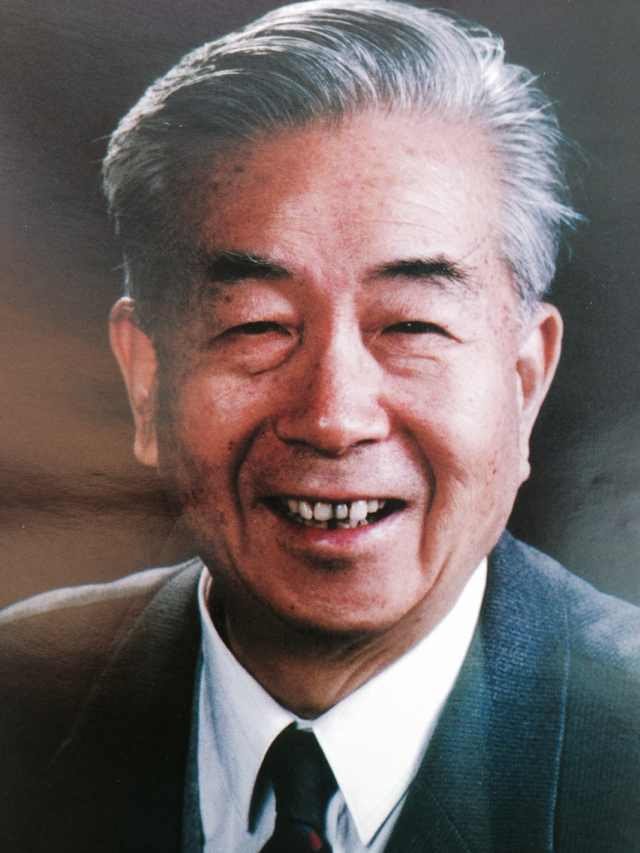
Cui Yueli 崔月犁
To stand — no shame before Heaven and Earth; to aspire — no forgetting of the people.
Life
Cui Yueli — originally named Zhang Guangyin (張廣胤) — was born in January 1920 in an ordinary peasant family in Shenxian, Hebei province, and died in Beijing on 22 January 1998, aged seventy-eight. His life spanned the War of Resistance Against Japan, the War of Liberation, the building of New China, the Cultural Revolution, and Reform and Opening. He served as secretary to Peng Zhen, deputy mayor of Beijing, Minister of Health, and member of the Central Advisory Commission of the CPC. He was one of the principal architects of the contemporary revival of Chinese medicine in the People's Republic of China.
Hebei childhood and apprenticeship (1920–1937)
The family were middle-peasants on the central-Hebei plain — neither rich nor desperate — but as Japan's invasion of the northeast brought rural collapse, Cui Yueli left primary school at thirteen and went to apprentice at the Western-and-Chinese Medical Hospital in Weibo Township, Shulu County. The three years were mostly menial work, but watching the director see patients he learned to write prescriptions, fill orders, and give injections — and a love for medicine took root. Two people shaped his childhood most: his grandmother, devout but warm and generous; and his mother, beaten and harangued all her life by his father. From these, a small heart's resolve grew — to resist arranged marriage and the cruelty of the old order. At Spring Festival 1936, carrying three silver dollars saved from his apprenticeship, he left home and worked his way north toward Beiping.
Joining the revolution: underground work (1937–1949)
He joined the revolution in June 1937 and the Communist Party in December of the same year. In 1938 he taught at the Resistance and Nation-Building Institute in Shenxian, Hebei, serving as branch secretary and instructor. In February 1939 he entered the Party School of the Central Committee's Sub-Bureau for the Jin-Cha-Ji Anti-Japanese Base Area as branch secretary of the school's office. In January 1943 he joined the Sub-Bureau's Urban Work Committee; in March of the same year he was dispatched into the Beiping–Tianjin region for underground Party work, serving successively as member and secretary-general of the Beiping Student Work Committee and as secretary of its Working-Staff Committee. He did a great deal of work to win over General Fu Zuoyi for uprising and the peaceful liberation of Beiping. Through the worst of the White Terror he held his ground — many times working among the enemy, setting his own safety aside, joining firm Party principle with flexible tactics — making outstanding contributions to the liberation of the Chinese people.
The early People's Republic: the Beijing Party committee (1949–1966)
From January 1949 he served successively as secretary to Peng Zhen; deputy director of the Research Office of the Beijing Municipal Party Committee; deputy director and then director of its United Front Department; committee member; secretary-general of the Beijing CPPCC, concurrently deputy secretary-general of the All-China Committee for the Defense of World Peace. He was elected a people's deputy of Beijing and an alternate delegate to the Eighth National Congress of the CPC. At the end of 1958 he became head of the Beijing Municipal Party Committee's Health and Sports Department; in September 1964 he was made deputy mayor of Beijing while continuing to oversee Health and Sports and United Front work, with concurrent positions as vice-chairman and secretary-general of the Beijing CPPCC and standing director of the China Peace Defense Committee. In this period he left durable marks in uniting Beijing's democratic parties and figures from every walk, in consolidating and developing the patriotic united front, and in advancing the building of the capital.
Persecution in the Cultural Revolution (1966–1975)
During the Cultural Revolution, Cui Yueli was framed and persecuted by the Gang of Four. Suspended from work in July 1966 and imprisoned in 1967, he spent eight years behind bars, suffering grievous injury to body and mind. Through it he held unshakably to his faith in the Party and in the people, waging resolute struggle against the retrograde acts of Lin Biao and the Gang of Four — displaying the firm Party character and revolutionary integrity of a Communist.
Minister of Health: the revival of Chinese medicine (1978–1987)
Rehabilitated in 1975, he became vice-chairman of the Beijing CPPCC. In June 1978 he was appointed vice-minister of Health, Party-Group member, and head of the Discipline Inspection Group. In May 1981 he took concurrent posts as deputy director and deputy Party-group secretary of the State Family Planning Commission, chairman of the All-China Association of Traditional Chinese Medicine, and was elected to the Twelfth Central Committee of the CPC. In April 1982 he was appointed Minister of Health, with concurrent positions as president of the Red Cross Society of China and deputy director of the National Patriotic Health Campaign Committee.
Through his tenure, he gave the highest attention to the traditional medicine of the motherland and devoted the energy of his later life to its inheritance, development, and going-out into the world. The 1982 Hengyang Meeting established the working principle of *preserving and developing the distinctive character of Chinese medicine and pharmacy* — the turning point of the contemporary TCM revival. In December 1986, under his sustained advocacy, the State Administration of Traditional Chinese Medicine was founded — giving Chinese medicine institutional independence to develop on its own ground. He served as president or chair of the Chinese Association of Traditional Chinese Medicine and Pharmacology, the World Federation of Medical Qigong Societies, and the Chinese Association of Integrated Traditional and Western Medicine, among others.
Later years and passing (1987–1998)
At the Thirteenth National Congress of the CPC in 1987 he was elected a member of the Central Advisory Commission. Though stepped back to the second line, he continued to attend to the reform of the health enterprise and frequently went to the grassroots for investigation. After retirement he gave all his strength to the cause of Chinese medicine — his greatest later-life wish was to organize the publication of the Annotated-Vernacular Series of Classical Chinese-Medical Works, preserving the essence of Chinese traditional medicine in accurate, systematic, readable form for the generations after him, and rendering it into Japanese, English, and other world languages. On 8 January 1998 he chaired the project's final editorial meeting; fourteen days later, on 22 January at 10:35 a.m., he died in Beijing.
He gave his whole life to the liberation of the Chinese people and the building of socialism. The couplet he loved best — "To stand — no shame before Heaven and Earth; to aspire — no forgetting of the people" — was both his motto and the portrait of his life.
Life Timeline
| Jan 1920 | Born in Shenxian, Hebei province (birth name: Zhang Guangyin). |
| Jun 1937 | Joined the revolution. |
| Dec 1937 | Joined the Chinese Communist Party. |
| 1938 | Studied at the Hebei Shenxian Anti-Japanese Resistance Academy; served as branch secretary and instructor. |
| Feb 1939 | Entered the Party School of the CCP Central Bureau in the Jin-Cha-Ji Anti-Japanese Base; served as branch secretary. |
| Jan 1943 | Transferred to the Urban Work Committee of the CCP Central Bureau. |
| Mar 1943 | Dispatched to underground Party work in Beiping and Tianjin; served as committee member and secretary-general of the Beiping Student Work Committee, and secretary of the Staff Work Committee. Played a major role in winning over General Fu Zuoyi for the peaceful liberation of Beiping. |
| From Jan 1949 | Served successively as secretary to Comrade Peng Zhen; deputy director of the Beijing Municipal Party Committee research office; director of the Beijing Municipal Party United Front Office, then head of the United Front Department; member of the Beijing Municipal Party Committee; secretary-general of the Beijing CPPCC; concurrently deputy secretary-general of the China Peace Committee. |
| Late 1958 | Appointed director of the Beijing Municipal Party Committee's Health and Sports Department. |
| Sep 1964 | Appointed vice mayor of Beijing, concurrently director of the Health and Sports Department and the United Front Department; vice chair and secretary-general of the Beijing CPPCC; standing director of the China Peace Committee. |
| Jul 1966 | During the Cultural Revolution, persecuted; suspended from work. |
| 1967 | Imprisoned; spent 8 years behind bars. |
| 1975 | Appointed vice chair of the Beijing CPPCC. |
| Jun 1978 | Appointed Vice Minister of Health; member of the Ministry's Party Group and head of its Discipline Inspection Group. |
| May 1981 | Concurrently appointed vice director and deputy party secretary of the State Family Planning Commission; president of the National Society of Traditional Chinese Medicine; vice chair of the China Committee for the Protection of Children. |
| Apr 1982 | Appointed Minister of Health and Party Group secretary; concurrently president of the Red Cross Society of China and vice director of the National Patriotic Health Campaign Committee. Elected to the CCP Central Committee at the 12th Party Congress. |
| 1987 | Elected to the Central Advisory Commission at the 13th Party Congress. Though retired from front-line duty, continued to devote himself to traditional Chinese medicine. |
| 22 Jan 1998 | Passed away in Beijing after illness, age 78. |
Compiled from the appendix "Cui Yueli — Life Sketch" of《Yueli》Memorial Anthology.
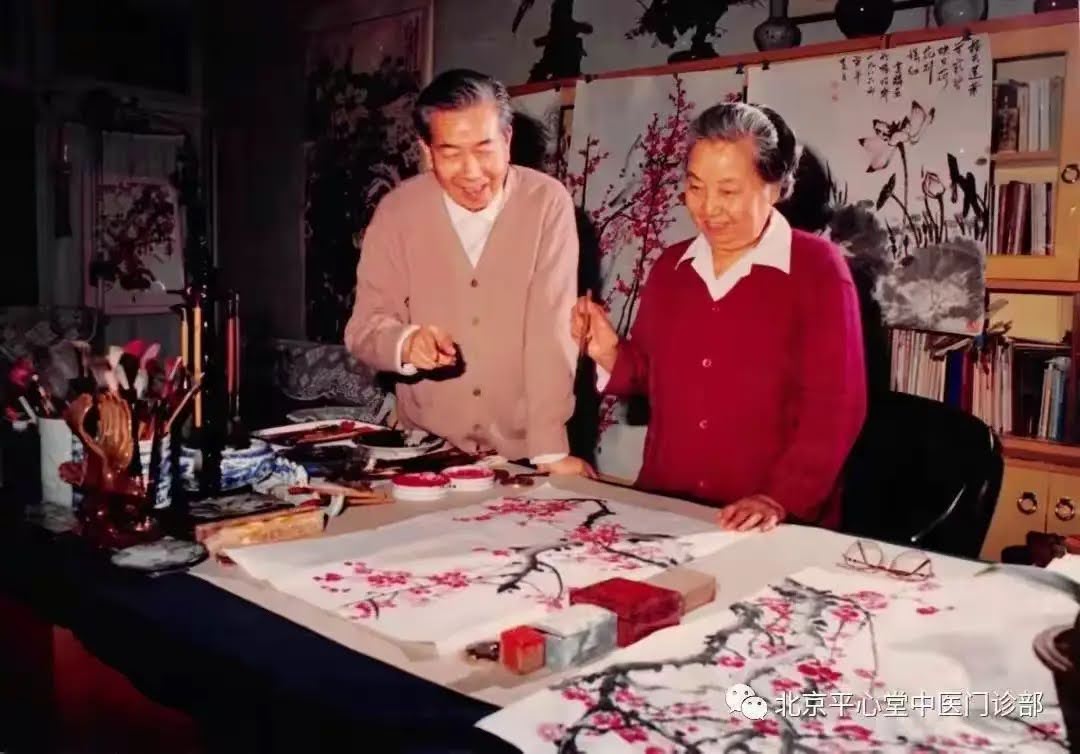
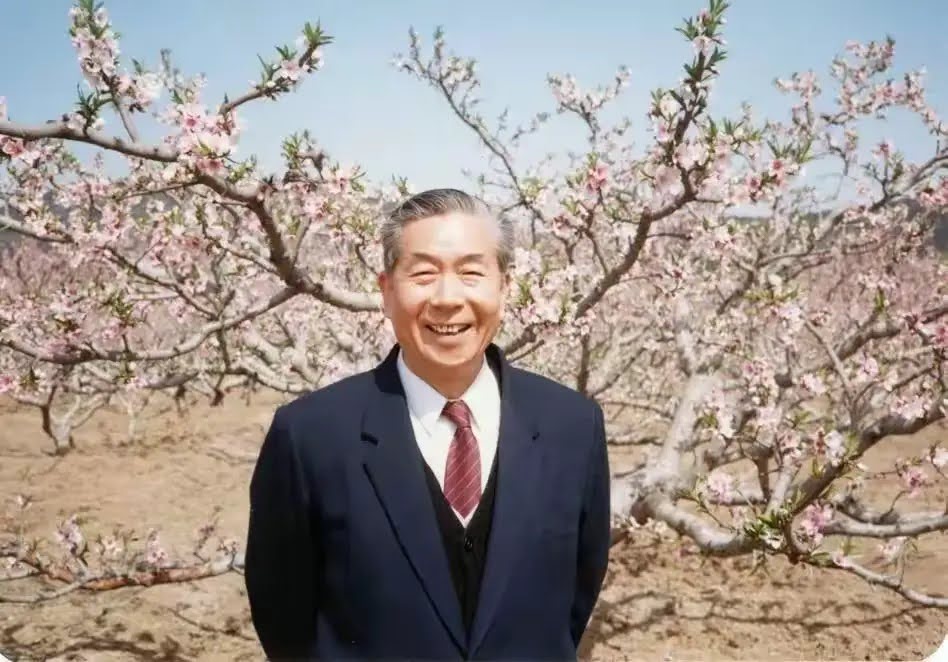
Photographs
Memorial Video
Full transcript (auto-generated, proofread; English translation)
"To stand — no shame before Heaven and Earth; to aspire — no forgetting of the people." This was Cui Yueli's favorite couplet in his lifetime, his personal motto, and the truest portrait of his life.
Serving the people was the starting point and highest principle of every action Cui Yueli took. His devotion to the cause of the Party, his belief in Marxism-Leninism, his love of country and of his people — all flowed from his deep affection for the people themselves.
In early 1948, Cui Yueli was given a special assignment by the Party: to personally bring General Fu Zuoyi — commander of six hundred thousand troops — over to the Communist side. It was the height of the White Terror in Beiping; the underground Party was deep in hiding, yet he could not hide. He had to face death itself, working openly for the Party.
In a Beiping crawling with secret agents, his exceptional wit and extraordinary warmth let Cui Yueli stay hidden among the common people. Time and again, it was the people who helped him slip past danger, supplying the Party's Central Committee with reliable, comprehensive, and timely intelligence.
He carried that gratitude all his life. In the end, Fu Zuoyi turned from darkness to light; the thousand-year-old capital was preserved; and the "Beiping model" accelerated the liberation of all of China.
Marshal Nie Rongzhen said of him: to grasp so quickly and so accurately, on the field of battle, the movements and even the moods of the enemy's highest commander — that is rare in the history of war.
In the years of peaceful construction, Cui Yueli held fast to seeking truth from facts. That principle, throughout the United Front work he led and through repeated political campaigns, shielded many comrades and spared the nation needless losses.
As Minister of Health, his heart was set on the people's well-being. To save and grow traditional Chinese medicine, he carried out the Party Central Committee's policy of equal emphasis on Chinese and Western medicine without wavering.
He traveled tens of thousands of miles, reaching old revolutionary bases, ethnic-minority regions, frontier lands and impoverished counties — going to the grassroots, asking the sick about their suffering, investigating and learning.
He reported clearly to the Central Committee: a socialist healthcare system with Chinese characteristics cannot exist without traditional medicine. He pushed to have the development of our traditional medicine written into the Constitution.
He fought for the founding of the State Administration of Traditional Chinese Medicine, secured hundreds of millions in dedicated funding from the State Council, restored TCM clinics in every county across the country, directed the building of orthodox lineage-based TCM education, rescued ethnic-minority medicine, and nurtured the rise of TCM policy science.
He championed Chinese medicine — asking that, on the foundation of its own self-improvement and self-development, it draw from the world's most advanced science and technology to deepen its research and renewal.
The more rooted in our own people, the more it belongs to the world.
At the Hengyang Conference, he was the first to openly oppose the Westernization of Chinese medicine.
Chinese medicine must follow its own laws of development, walk its own road.
TCM institutions must keep their distinctly Chinese-medicine character.
Even in his later years, Cui Yueli's heart remained tied to traditional medicine. His greatest wish was to preserve and grow what makes Chinese medicine distinctive, to ensure that successors would carry it forward, and to keep our nation's TCM at the lasting forefront of the world.
Cui Yueli received such extraordinary love from so many ordinary people because his heart was always with them. He poured himself into the lives of ten thousand ordinary people, into the body of the people themselves — embodying the character and the breadth of a true Communist.
The east wind quickens the dawn moon; the great earth awaits the spring plough. Comrade Cui Yueli — we will remember you always.
Documentary: 《岐黃殿堂一偉人》
A six-part documentary on Cui Yueli's life and work. English translations of chapter titles are provisional.
1. Introduction & the TCM Classics Project (引言與中醫古籍工程)
2. The War Years & Underground Medicine (戰爭年代與地下醫務)
3. Health Work After 1949 (建國後的衛生工作)
4. Meeting Chairman Mao & TCM Revitalization (見毛主席與中醫復興)
5. TCM Reforms Since 1985 (一九八五年以後的中醫改革)
6. Legacy and Remembrance (精神與追思)
Writings
《月犁》Memorial Anthology — Cui Yueli's autobiographical writings and tribute essays, compiled by Xu Shulin (2002)
《中醫沉思錄》(Reflections on Traditional Chinese Medicine, 2 vols.) — Edited by Cui Yueli; Hunan Science and Technology Press, centennial edition 2021
Cui Yueli — article archive → His own speeches and letters, family + colleague tributes, online media features