Taking the Revolutionary Road
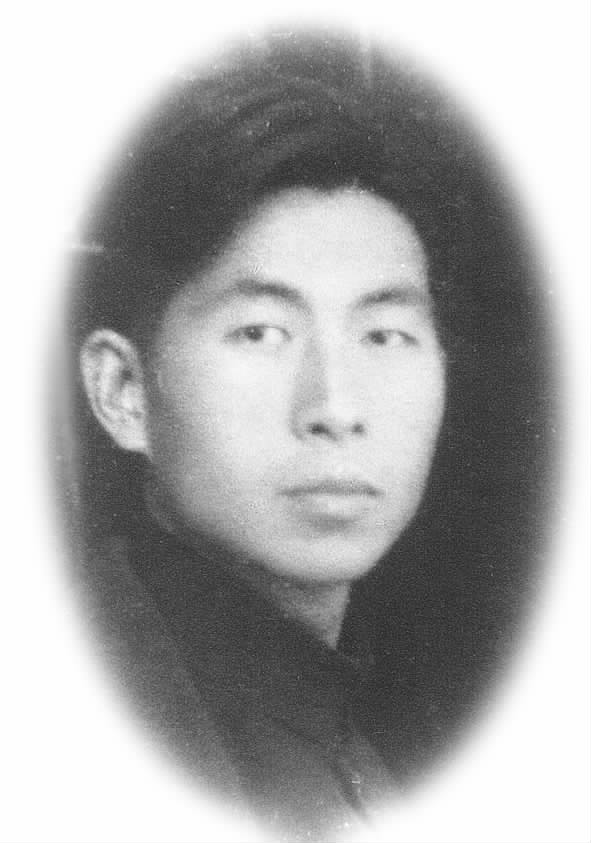
In January 1920, I was born into an ordinary peasant family in Shenxian (深县), a flatland county in Hebei province. The country was wracked by warlord conflict, by harvests that failed year after year, by people who could not get by — the great body of peasants struggled in deep waters and scorching fire. We were zhongnong — middle peasants — neither rich nor desperate; we did not go cold or hungry, and I could be sent to school. Most of my classmates came from poor-peasant families; their lives were so hard they had nothing to eat, nothing to wear, and they made tiny businesses to stay alive — selling tofu pudding, selling sweet potatoes. By the 1930s, as Japanese imperialism began swallowing the three northeastern provinces and the rural economy withered further, my family's life also grew harder and harder; we often lived on borrowed money. I remember when I was thirteen the household no longer had the means to send me to middle school: I left school after primary and went to apprentice as a tradesman.
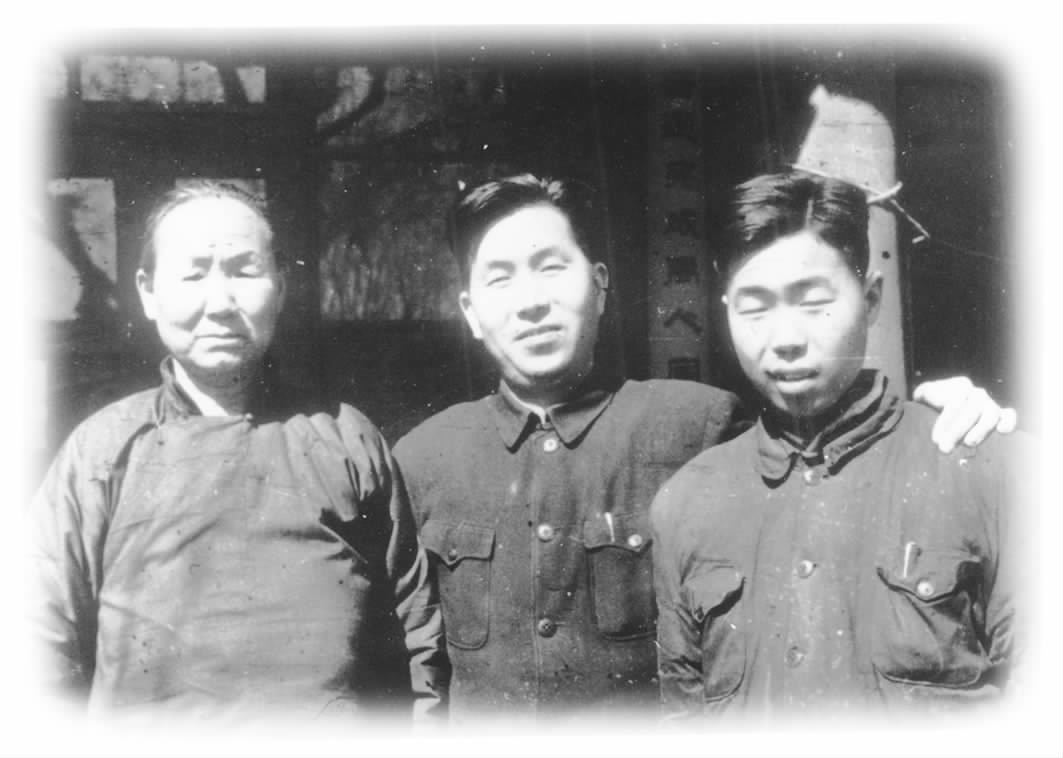
When I look back at my childhood, two people influenced me most. The first was my grandmother — a typical old-style country woman. She believed in fate; she loved to burn incense and worship the Buddha. On the first and the fifteenth of every lunar month she would burn incense to the gods; at festivals she would worship the Dragon King and the Kitchen God together. As a small child I was naughty and had no understanding of gods or immortals. Whenever Grandmother was bowing devoutly before the incense, I would seize my chance to pull the sticks out and toss them away — earning her angry words: she would call me an unfortunate end. What I most looked forward to as a child was the New Year, when our family would always slaughter a pig and steam buns. Sometimes I would take a little to give to a beggar passing by. Grandmother sometimes would not let me give so much, telling me only to give a corn-flour bun; but at heart she was very kind, soft of heart — she would only mutter a few words and never stop me. She wore herself out with housework, fell ill from exhaustion, and died too young. To this day, when I think of her, I cannot forget her face or her voice.
The second person who influenced me most was my father — strict, and not much for the household. In primary school my teacher was a normal-school graduate with a terrible temper, often beating his students. I was a little troublemaker, so I was beaten more than most: they would strike my head with rattan sticks until knots the size of jujubes rose, taking a month or so to subside. The mere sight of school made me afraid. The few times I skipped school, my father would punish me even more severely, beating me harder still. So I went to school under duress, getting only middling grades. My father had one virtue: he was sympathetic to the poor and loved making friends — small traders, beggars, men of every walk of life — he even knew one or two bandit chiefs. He was rough, overbearing, and unreasonable with his own family, but generous to outsiders; when our family's circumstances were good, he was famous in the area for his eating, drinking, and music-making — singing, fiddling, and the rest. He was also a fine farmer, plowing in furrows even and clean as a string; he played the bangzi fiddle especially well, and was indispensable at temple fairs and village operas — even other villages would come to fetch him when drought required them to sing for rain.
Besides Grandmother and Father, the person closest to me, the one I felt for most deeply, was my mother. She was an unfortunate woman; her life was washed in tears, and she never had a single good day. She was the only daughter in her own family, and after she married into ours she waited on her parents-in-law and her husband, raised her children, and held no standing of her own. She was often beaten and cursed by my father — beaten until her mind broke, weeping all night long. From this, in my small heart, a feeling of revenge took root: I even resolved that when I grew up I would avenge my mother — that I would beat my father within an inch of his life and only then be content.
I had three aunts on my father's side — they too were victims of feudal marriage. The eldest aunt married into a wealthy family; her husband was an opium addict who consumed the family's fortune. Their life was unbearable, and she threw herself down a well. The second aunt's family was poorer; her husband was a lazy man who drifted in idleness, never working, so she often took her child back to her parents' home. The third aunt's husband was a college student who looked down on country folk; she lived alone in an empty room and could not be said to share any married affection. Women lived this way; men too could not escape the bonds of arranged marriage. I had an elder brother whose marriage was also arranged: a wife six years older than him, taken in mainly as another pair of hands.
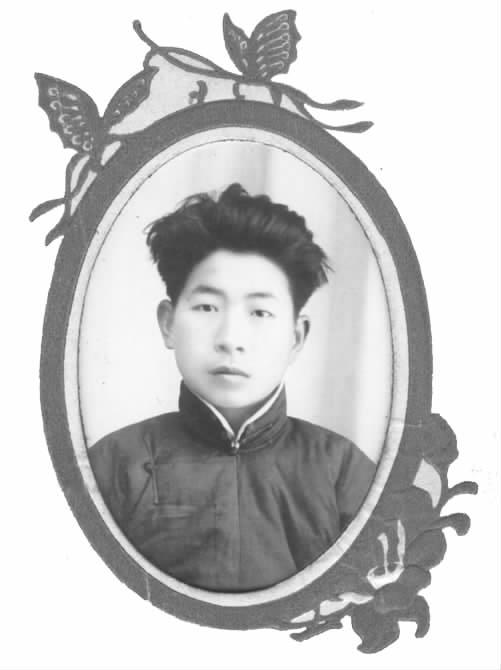
What I never expected was that, at thirteen, after I finished primary school, the same fate fell on me. The family found me a girl eight years older. When my firm protests came to nothing, the thought of running away from home took hold. I asked to go off as an apprentice, and my father agreed without a fuss. Soon he sent me to my elder cousin Liu Xijiu (刘锡九). Through his introduction I became an apprentice at the Western and Chinese Medical Hospital in Weibo Township, Shulu County. I made up my mind: no matter how hard it was, I would grit my teeth and stick it out to the end of my training, then become a doctor and save lives. From that day, I set out on a road of standing on my own feet.
The Weibo Township Western and Chinese Medical Hospital was a small clinic of Shulu County — only five people in the whole place. The director was a young man of twenty-seven or twenty-eight, fresh from Hebei Medical University, with not yet five years of practice. He had brought along his younger brother, and there were also my two senior apprentices — one twenty-five or twenty-six, the other only a year older than me. I had come to learn skills, and I worked with attention and zeal. The hospital was set up in a courtyard house with the full layout: four or five rooms in the north building; a pharmacy and operating room in the west; the south building was the wards, with a single earthen kang covered by a mat (patients brought their own bedding), holding at most two or three patients. But the director was a graduate of a real medical school, well-rounded in technique, capable with the common rural illnesses — and his name carried weight. Delivering a baby, a difficult labor, an emergency, dressing wounds, and so on — the outpatient line was long, often a dozen patients each day. We apprentices were not really there to study medicine; in practice we were the odd-job hands — fetching water, cooking, sweeping, washing clothes, doing every kind of work. We were there to wait on the director and his staff. They would play cards in the evening and I would pour their tea, fetch their water, often through the whole night, until one or two in the morning. If they said they were hungry, I had to make food for them at once. Sometimes they played past three or four o'clock, by which time I was unbearably sleepy; even a momentary doze would be cut off by a call. In those days I longed for one thing — to lie down and sleep, deeply, soundly, to my heart's content — that alone would have been bliss. What was hardest to bear: the next day they could sleep in, but I had to keep going, fetching water, sweeping, cooking again.
So I dragged myself through three years of hard labor — and along the way picked up some knowledge of medicine. Those three hard years gave me three things. First, I learned all the housework — washing vegetables, cooking — and was no longer afraid of bitterness or fatigue. Second, while watching the doctor see patients I learned alongside, and could handle ordinary colds and small ailments. The director was not a bad man; when there was an opening, he taught me how to write a prescription, fill an order, give an injection — all the work of a nurse. The greatest gain was that I came to love the medical profession deeply; in any spare moment I would study books on internal, surgical, gynecological, pediatric, pathological, and physiological medicine. From not understanding to understanding, I gradually grasped the basics of physiology and pathology, and with the director's permission could see ordinary minor cases. Three years of apprentice effort and practice gave me the equivalent of a present-day vocational-school medical level — enough not to misjudge a life — and laid the foundation for being a doctor after I joined the revolution. The third gain was the most fundamental: it changed my view of life. Living in society, hearing and seeing more of current affairs, I came to care about the fate of country and nation, and to grasp dimly that learning to be a doctor was not only for one's own future but should reach toward something higher.
Single life leaves much spare time, and many friends. At the district office next to the hospital I met some literary young men, and through them read novels by Lu Xun, Ba Jin, and others. Lu Xun's writing is dense and not easy to understand, but reading it interested me; Ba Jin's novels I loved more the more I read, and they shaped me considerably.
By that time the Japanese had occupied the three northeastern provinces and were pressing steadily into north China. The Japanese-puppet authorities had set up a fake autonomous government over twenty-four counties in eastern Hebei. Around 1931, as Japan's appetite became plain and the crisis of the Chinese nation deepened, a national awakening came on; stories of anti-Japanese volunteer corps and Big Sword brigades were circulating; the consciousness of resisting Japan thickened among the people. The newspapers regularly carried news of the Japanese killing and burning, and of Chiang Kai-shek's anti-Communist suppression — both made me think more and more. The papers called the Communists "bandits," but at home I had heard that the Communists were the ones who stood against the rich. Why exterminate them? In my heart there was an unspeakable mystery: what kind of organization was this Communist Party? When I heard friends discussing the times, exposing Chiang's policy of "settling internal affairs before resisting outside" — passive against Japan, active in suppression — though I did not yet fully understand, from then on a concern for state affairs was firmly planted in my heart. I sought out every progressive book and journal I could, hungry as a starving man for them, and joined often in the gatherings where state affairs were discussed. Together with the troubles of family and marriage, this gradually bred in me a dissatisfaction with reality — a wish to find a way out. State affairs and family affairs together pushed me to look for the road of revolution.
In 1936, the Marco Polo Bridge Incident broke out, Japanese imperialism began full-scale war in China, and the country's anti-Japanese feeling rose to a peak. In this surging atmosphere of common indignation, three currents in my consciousness — opposition to the rich oppressing the poor, resistance to arranged marriage, and the search for my own future — merged at last into a single resolve to fly out of the cage. That Spring Festival, taking with me three silver dollars saved from three years of apprenticeship, I left.
Three years of apprentice life were over, and the practical question of livelihood stood before me. I asked myself: where is the road tomorrow? I would not go back to my old home. I had a primary-school classmate named Feng Xiangshui (冯湘水), from a comfortable family, then attending Beiping No. 5 Middle School. We had been close, often helping each other, and had stayed in touch. After thinking it over again and again, I resolved to go to Beiping to find him. Just before Spring Festival 1936, I bid Shulu farewell and set out for the north.
On New Year's Eve, with my three silver dollars, I trudged thirty li to the town of Xinji. Hungry as I was, I dared not spend a single coin, and pressed on. Unfortunately, when I reached the bus station I found that buses had stopped for the holiday. There was nothing for it but to take a temporary bed at a "chicken-feather" inn for two-tenths of a yuan a night. Only on the third day did I catch a bus straight to Shijiazhuang, where I waited two more days; to save money I lived on snacks. That afternoon I bought a train ticket for two yuan.
The train moved slowly, swaying its way to Beiping; it was almost eleven at night when it arrived. Stepping out of the station, the first thing I saw against the curtain of night was the great Qianmen Gate — I had seen it on a cigarette pack before, and it felt familiar. But I could not get my bearings; I took the gate to face east. That mistake stayed with me for years.
Ah — Beiping was vast! As I looked around, I saw rows of rickshaws lined up outside the station, drivers calling out for passengers. A middle-aged man hailed me: "Sir, where to? I'll take you." Anxious to find Feng Xiangshui, I climbed in without asking the fare and said, "To Daerteao, in Beixinqiao." He stretched his legs and ran the whole way at a steady jog, dripping with sweat. About an hour later he stopped, turned, and said, "We're here." Only then did I ask the fare. He said three jiao. I could not bear it; I gave him five. Feng's school — Number 5 Middle, in Ximenglu Hutong — was famous, and I needed no directions. I found him at a student boarding house not far from the school. There were three to a room: Feng, two Sichuanese, and a young man named Liu Yanju, the indulged son of a landlord family. Hearing my story, Liu Yanju was sympathetic and proposed that until I found work he and Feng would share my keep. By the price level of the day, four or five yuan a month was enough to live on. Each morning I spent five cents on a bowl of porridge, a baked bun, and a deep-fried cruller; lunch was a bowl of lu zhu huo shao for one jiao; dinner cost five cents — twenty cents in all. So I went, looking for work and at the same time studying on my own at the boarding house — reading novels by Ba Jin and Mao Dun, working through Lu Xun's collected essays in earnest, reading the papers daily. I came to know many things. The "Seven Gentlemen Incident" — when patriots Shen Junru, Zou Taofen, Zhang Naiqi, Shi Liang and others were arrested by the Kuomintang government on charges of "harming the Republic" and put on public trial, with Soong Ching-ling and others speaking up for them in court — taught me which side truth and justice were on. I also lived through the December 9th Movement of 1935: students calling for democracy and against Japanese aggression, indignantly exposing Chiang's pursuit of civil war and his policy of non-resistance. It taught me much; I stood firmly with the students; in my heart, dimly, something stirred. Though I still did not know where the "Communist Party" was, my classmates' fierce words and progressive thought worked on me without my noticing. Of course, my unemployed condition kept me from joining their activities — but in my heart a yearning for "revolution" was rising.
I had come to Beiping to find work; otherwise sitting and eating my way through what I had would leave me with no way to live. While I was running everywhere through connections, with mounting urgency, I happened to meet a man from my home county — Cui Yufeng, who ran a small shop in Beiping selling printer's ink. He knew the head of general affairs at the Peking Union Medical College Hospital, also from Shenxian. Knowing I had three years of medical training and could see patients, he tried to get me a job there — but the foreign-run hospital refused. He stretched out a hand again, and through a subordinate of Song Zheyuan — a quartermaster stationed in the army camp at Gubeikou — he promised to find me a position. Anxious for work, I took the train that day to Shacheng, then a bus to Chicheng. From Chicheng to Gubeikou was over a hundred li of dirt road open only to ox-carts; I rode a battered ox-cart for three days to reach the regimental headquarters.
That winter was especially cold. I sat on the ox-cart in cotton jacket and trousers, shivering. The three days passed in the cart by day; at night I stayed in cramped, filthy little inns — pure suffering. The officer was helpful, said the regiment would take me on as a medical orderly and was waiting for me to report. The moment I stepped into the regimental office I saw an officer in tall leather boots viciously beating an orderly, and a feeling of resentment rose in me. I had naively thought this was a place of equality, without oppression. After what I had seen, I no longer wanted to stay. I told the officer who had introduced me that I could not do the job. Of course this was not the true reason. He gave me three or four yuan for the road, and I made my way back the way I had come. At Shacheng, in a small inn, I caught lice — every part of me itched unbearably. When I scalded them with boiling water, a layer of lice floated on the basin — there is no need to describe the disgust.
Back in Beiping, I returned to the unemployed life. Beyond running everywhere asking for work, when I had nothing to do I wandered the streets and the Tianqiao district, the "heaven" of working people, where many made a living by la yang pian peep-shows, by crosstalk, by wrestling, by fortune-telling, by selling folk medicine — and where prostitutes and ruffians mixed in too. It was the gathering place of the lower social orders, "men of every walk." Going there often gave me the chance to meet the real life of common people.
Five months passed, and I still had not found work. Just as I was at my wits' end, I received a letter from my elder cousin Liu Xijiu in Anping County. He was helping run a hospital there — the Yaoxi Hospital (the owner's name was Luo Yaoxi) — and asked me to come and help. Without a second thought, I explained to Feng Xiangshui, said farewell to the ancient capital where I had lived five months, and settled into the Yaoxi Hospital in Anping. Here I came into contact with the Communist Party — heard the heart-stopping stories of underground party members at work — and felt rise in me a strong desire to join the Party and devote myself to revolution. Anping had had Party activity for some time; it lay within the controlled territory of a base area in central Hebei. The Yaoxi Hospital had originally been a courier point for the Party organization. Comrades coming and going on various missions often stopped here; my cousin knew them all and gave them cover. There was a comrade named Wu Jianmin (吴建民), the prefectural party secretary who led work in several counties. I came to know him in June, helping with passing along messages. Half a year later, after a talk with Comrade Wu Jianmin, he stood as my introducer and brought me and my cousin Xijiu into the Party — in October 1937. The other introducer was Liu Pinduan (刘品端), originally a landlord's concubine, who had joined the revolution because she could not bear the oppression. Both of these introducers later gave their lives for the revolution. Comrade Wu Jianmin, on his way to Yan'an in 1941 to attend the Seventh Party Congress with Lu Ben, secretary of the Central Hebei Military District, was killed by enemy ambush while crossing the Tongpu Railway. Comrade Liu Pinduan, in 1941 during the Japanese great sweep across the Central Hebei plain, found nowhere to hide and detonated a hand grenade in the face of the enemy, dying heroically. I will always remember their revolutionary contributions: it was they who guided me into the revolutionary ranks and set me on the road of devoting my life to the struggle for communism.
Just before the Marco Polo Bridge Incident of July 1937, the central Hebei plain — under the leadership of the Chinese Communist Party — began local armed anti-Japanese struggle. The leadership of Anping's Yaoxi Hospital came and went often. There were three of us at the hospital: my cousin Xijiu and I were Party members, and there was a male nurse — so this was a very safe place. After the July 7 Incident, anti-Japanese feeling rose nationwide. Comrade Lü Zhengcao (吕正操), the leader of the central Hebei region, brought a regiment of the Northeastern Army to be stationed there, and made contact with the local Party. With both sides cooperating, the underground Party in central Hebei was very active. The Party was not yet fully open, so on the foundation of Lü's unit the Central Hebei Anti-Japanese Self-Defense Army was formed, and grew steadily through battle. Comrade Lü Zhengcao also visited Yaoxi Hospital. He wore a gray cloth uniform — a man in his forties, valiant and bold. There was also a fellow Shenxian native, my primary school teacher Comrade Feng Pengshou, who had joined the Party early and was already one of the heads of the political department in the central Hebei region; he too came often to the hospital. The Communist Party existed widely not only in Anping but throughout central Hebei; in the early years of the War of Resistance, organizations at every level had much activity.
At that time we were working under the direct leadership of the Anping County Party Committee. The county secretary, Yan Ziyuan, was an excellent cadre of our Party (after Liberation he was one of the heads of Renmin University; he is now in his eighties). Comrade Yang Xiufeng was the chair of the Southern Hebei Government Office (after Liberation he served as Minister of Education). At his initiative, in order to train anti-Japanese cadres at every level, the Southern and Central Hebei regions jointly ran a War of Resistance Academy — drawing several thousand passionate young people into this revolutionary furnace. Comrade Huang Jing of the Central Hebei District Party Committee and others often came here to lecture. Because my cultural level was very low, I could not work for the Party as well as I wished, so I applied to study at the academy; the organization approved my application. The academy had two branches: a People's Movement College and a Political-Military College. I went to the People's Movement College, which had over two thousand students; the Political-Military College had over a thousand. The president, concurrently, was Comrade Yang Xiufeng; the dean of studies was Shen Houci, a Kuomintang member; the academic director was Wu Yannong (Comrade Yang Xiufeng's wife). The academy invited as instructors well-known figures in their fields — for "Anti-Japanese Literature and Art," the noted writer Sun Li; for "Social Science," the well-read Wang Xiaolou. The academy emphasized training cadres able both in writing and in arms; one term lasted three months; the studies were intense, covering not only the principles and policies of the War of Resistance but also science and culture.
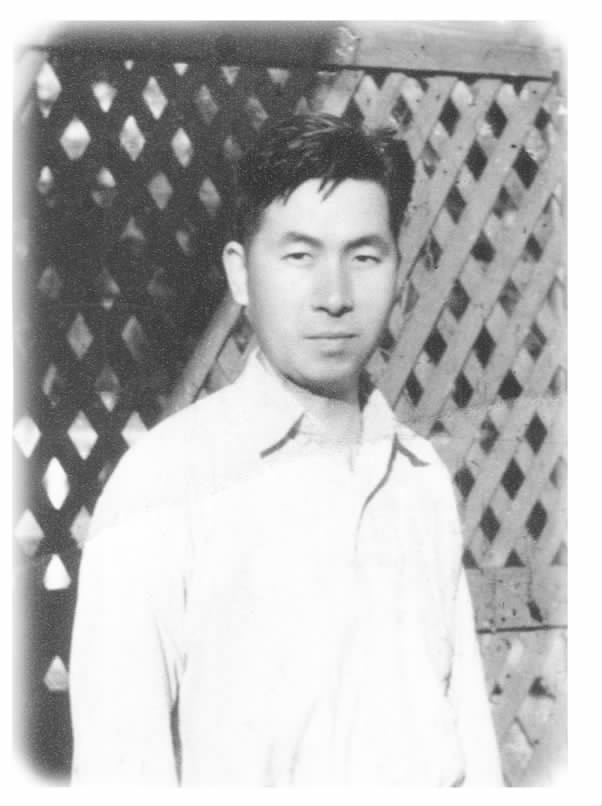
I entered in June and graduated in August. Because Party members at the school were few and not yet open, I was kept on at the school clinic as instructor and party-branch secretary. The branch work also included Comrades Wu Yannong and Wu Liren. Comrade Liren was an old comrade who had joined the Party in the civil war years; after Liberation he became president of the Sichuan Chemical Industry College. Their courses were international and domestic affairs and various practical subjects, very welcome among the students. In three short months of study my political and cultural level both rose quickly. To facilitate the work, the organization required me at enrollment to change my original name, Zhang Guangyin, to Zhang Zhipeng.
As the War of Resistance unfolded, the Japanese aggression became crueler. In October 1938, in already cold weather, the Japanese launched their first great sweep against the central Hebei region. To support the counter-sweep struggle, to preserve cadres and students, and to strengthen our fighting strength, the academy's party committee decided that all should disperse — students went down to grassroots districts to join the actual struggle. The academy headquarters personnel made every kind of war preparation, packing medicines and supplies into crates, with more than ten carts, and moving with the seriously wounded to designated locations. We were headed for a village called Hujiachi southwest of Shenxian. There had been an anti-Japanese self-defense corps here, but its makeup was too mixed and morale uneven — they scattered before the Japanese sweep even reached them. After we entered the village, we first dispersed the seriously wounded into ordinary people's homes, then hid all the medicines and supplies in solid concealment. Then, about thirty of us — after a brief mobilization and reorganization — threw ourselves into guerrilla combat. First I led the column in a hard charge to the northwest, pushing through before the encirclement closed. By that time we were entirely on our own; to find the Central Hebei District Party Committee, we wove around the Japanese — sometimes at speed, sometimes slowly — with the help of common people. Sometimes we lived in dense forests and villagers would come to bring us word of the enemy's movements; sometimes we moved within close range of the enemy and could see the very flames of their burning and killing. We circled and doubled back for over a month and finally forced the enemy to withdraw, having achieved nothing. We at last met the Central Hebei District Party Committee at Liyuanzhuang in Lixian, Central Hebei, and rejoined them.
At Liyuanzhuang I stayed less than a month before Comrade Zhang Jun, head of the District Committee's Organization Department, called me in and said that western Hebei urgently needed doctors and was transferring me there. Then Comrade Zhou Xiaozhou, head of the propaganda department, came to ask about my work. Two days later I went to western Hebei together with Comrade Li Changchun (head of the Central Hebei Cadre School), Comrade Chen Xueli (head of instruction), and Comrade Li Yaoting (the old county secretary of Lixian). On the way we had to cross the Pinghan Railway. With the help of the local Party organization, at midnight near Yongledian between Baoding and Dingxian we were sent across the railway. It was both tense and exhilarating: as we crossed, we held our breath; in the distance the long whistle of a train sounded; with our hands on the rails like two iron poles, crouched low, we crossed quickly. The western Hebei anti-Japanese base was the seat of the leading organs of the Jin-Cha-Ji anti-Japanese base of the Chinese Communist Party. Marshal Nie Rongzhen, the military region commander, and Comrade Peng Zhen, the secretary, were directing operations from Fuping in western Hebei. The four of us stayed one night at the Chennanzhuang guest house in Fuping. The next day, Comrade Zhang Ruihua, the central bureau's cadre department head (Marshal Nie Rongzhen's wife), spoke with Li Changchun and Chen Xueli and assigned them propaganda work. When Comrade Liu Ren, the secretary-general, spoke with me, he felt I was too young at nineteen and that my technique as a doctor was insufficient — so he first sent me and Li Yaoting to the Central Bureau Party School to study for half a year. I started in Class 2, then moved to Class 6; my classmates included Zhang Jieqing (Comrade Peng Zhen's wife), Li Ying, Sun Tonghui, Xue Zhi, and Song Mai. After our studies ended, the comrades dispersed in turn to their own posts. After speaking with Comrade Zhou Rongxin, the dean of studies, I stayed at the school clinic as the school doctor, and the organization assigned two small orderlies as my assistants.
The roughly three years of study at the Party School I spent working and fighting guerrilla at the same time, because the Japanese ran two predatory sweeps every year: a spring sweep to wreck spring sowing, and an autumn sweep to wreck the harvest.
I remember, in December 1939, the weather was especially cold; we joined our first counter-sweep struggle. Apart from books and supplies carried on pack animals, dozens of us had to walk with our packs. The supplies should really have been pared down to lighten the load, but Comrade Zhou Rongxin said the mountains were not the plains and we could carry them along. Each pack had a pair of chopsticks, a spoon, a pair of shoes; the Party School library was substantial — on Marxist-Leninist philosophy, including Capital and others. I read them earnestly between marches and battles; Capital was too dense and I did not really grasp it, but I picked up a great deal of other theoretical knowledge. Because of the constant moving, for ease on the march we ended up throwing them all away. The mountain paths were treacherous; the pack animals could not climb them. Once, crossing Mount Caozhui, we walked dozens of li up and down carrying the seriously wounded; we walked so far that our shoes wore through. Once on the mountain, the enemy did not dare come up — afraid of ambush. We rested three days and three nights on the mountain, getting by on unripe black beans gleaned from the terraced fields; many comrades fell ill with malaria, and a young comrade died of cold and hunger. At night we sent people down in the dark to a village to fetch a sheep, which the villagers cooked. So hungry was she that even Comrade Yang Huijie, who had never eaten lamb in her life, ate big mouthfuls of meat. After that, we carried roasted flour in our packs to solve the food problem. The Fuping mountains were a poor region; in good years the harvest fed people only half the year. We often filled our bellies with jujubes — until at the mere sight of a jujube we shuddered.
The situation grew steadily graver, the sweeps steadily wilder. Watchtowers and blockade ditches pushed into the base areas; life became harder and harder. Hard to eat, harder to move. Guerrilla units broke down from large columns into squads, wore civilian clothes, dug tunnels, and fought flexibly in small detachments. After the main forces moved into the western Hebei mountains, food, clothing, and equipment became more difficult still. At that time, the Japanese threw their main strength against the base areas while keeping a tacit non-aggression pact with Chiang Kai-shek; the soldiers and people of the base areas were driven to the brink of survival. The Japanese would surround a village, a township, would drive grown men, women, children, the old, all of them, into a mountain ravine, would bayonet the women and children, would mow down young men with machine guns — three or four thousand killed at one go.
From 1940 to 1943, we lived through cruel and bitter battles of life and death. In counter-sweeps we had no fixed dwelling, walking on our own feet, dozens of li a day, hungry and exhausted. Sometimes I would walk and sleep at the same time, falling on the ground in a daze. In the autumn of 1941 I led twenty or thirty lightly wounded comrades into hiding at Baihua Mountain in Pingshan County. The mountain paths were sheer; only one road led to Shangzhuang. We lived on a little grain and on melons and fruits, and to improve our lot we made dark-jujube wine and persimmon wine ourselves. Several dozen of us crowded into a little Grandmother Temple on the mountain for three months, until spring when the enemy withdrew. Those were exceedingly hard days; we held on with fierce, never-yielding spirit. Later, as the Japanese took more ground by force, their troops were spread thin; under the blows of our guerrilla warfare, even holding what they had taken became more and more difficult. But they secretly colluded with Chiang's army and turned the full pressure on the base areas. Along all the rail lines around Shijiazhuang, Baoding, and Beiping-Tianjin they built dozens, then hundreds of pillboxes; their blockade lines were everywhere reinforced. Under such conditions, in order to sustain the resistance, the central Hebei plain region developed tunnel warfare. Because the Japanese had taken the larger towns, in the mountains we could still move from one small village to another. The hardest thing then was the shortage of grain; the district Party School took the temporary measure of disbanding, distributing people to work in the various counties and districts. This is how I came to work at the Urban Work Committee of the Jin-Cha-Ji Bureau.
Underground Struggle in Beiping and Tianjin
In 1942, harsh as the struggle against the enemy was, the Central Committee saw that we would soon win, and put forward the slogan: defeat Hitler this year, defeat Japan the next. On the European anti-Fascist front the Soviets had won many victories, capturing Germans by the hundred thousand and more. Under the slogan of defeating Hitler and Japan, the Central Committee at that time called for opening up "behind-the-rear" struggle in the rear of enemy-occupied territory — we were already in the rear of the occupied zone, but we were also to push into the great cities and middle-sized cities the enemy held.
In this situation I was transferred to the Urban Work Committee of the Central Bureau. Marshal Nie Rongzhen was its chair; Liu Ren and Liu Shenzhi were vice chairs; the committee comrades also included She Diqing and Yang Bozhen, who had all worked in Tianjin and Beiping. Zhou Ming was the courier between Beiping and Tianjin. I went to the Bureau for over a month, mainly to learn how to work in occupied territory, how to make use of connections, how to maintain single-line contact, under the principle that to gain a foothold is itself victory. I was assigned to the Beiping-Tianjin region; the underground Party there was very weak at the time — most of its people had gone out to fight the war.
After studying for over a month, disguised as a merchant — I was only twenty-three then, in long gown and padded trousers — and carrying a forged residence permit for Dingxian stamped with a forged occupied-zone seal, I made my way from Fuping to Quyang, then to Dingxian, and from Dingxian boarded a train for Tianjin and Beiping to begin underground work in the great cities.
The moment I left the anti-Japanese base I was tense to the bone. The courier from Nanguantou village, Wang Jinshuan, was responsible for getting me through. His mother was very capable; she sometimes hid secret letters in her bun.
Because the Japanese inspected so tightly, you would get off the train at Qingfengdian or Dingxian and walk west into the base area. First you had to cross the blockade ditch — said to run from south of Beiping along both sides of the Pinghan Railway all the way to the Yellow River. The blockade ditch was several men deep, one or two zhang wide; the openings were spaced like the entries of a highway, a long way apart. Beside each opening were Japanese-puppet gendarmes and pillboxes — the inspections were tight. I always crossed in the early morning, five or six o'clock, when the sky was just lightening, residence permit in hand.
When I came out from the base area, the courier led the way along the wide road from Quyang to Dingxian. Puppet soldiers with great wolf-dogs inspected as you went. We pretended to be docile country folk, in long gowns, like townspeople. Every short distance there was another pillbox — about sixty li of them. Because I had left the base, taken off my uniform, put on a long gown — passing from a place that was almost completely insulated from the occupied zone into the occupied zone itself, where Japanese soldiers and traitors were everywhere — I was very tense. Wang Jinshuan knew a household in Dingxian; he had them send me to the train station. He was on familiar terms with the railway police, and he bought my ticket.
The first time I went to the train station I was very worried because the residence permit was forged. Once I was safely on the train, I found every kind of person aboard — women with red lips and fashionable dress, men with cigarettes and bowler hats — a glittering, gaudy world, utterly different from the base area. I could not stand this kind of city life at all.
## Standing Fast Is Victory
After I came out from the anti-Japanese base, I first found my footing in Tianjin and got a job as cover. Once I had work, I would often go to Beiping to make contact with progressive forces.
The time in Tianjin gave me a deeper understanding of the lower society of a great city. At first I posed as a small merchant living in a tradesman's hostel. Later I found Zhou Longgao, the elder brother of Zhou Ming. He was the chief of internal medicine at Tianjin's First Hospital — originally a Communist Party member from the Great Revolution era who had since drifted from the Party but remained sympathetic, deeply concerned about the anti-Japanese base. I told him about the international and domestic situation; after several meetings, out of his sympathy for the revolution and care for revolutionary comrades, he said staying at the hostel was unsafe and let me move into his home. He lived in a small house in the Italian Concession at the time; besides his hospital work, he saw outpatients at home. He looked the part of a wealthy doctor. The family lived upstairs; the cook and the rickshaw-puller lived in the basement. I lived in the basement with the cook and the puller. I told them stories of the anti-Japanese base, told them how the war was going, and quickly I was one of them; they were all very good to me, and sometimes scrounged together something good and would invite me for a drink.
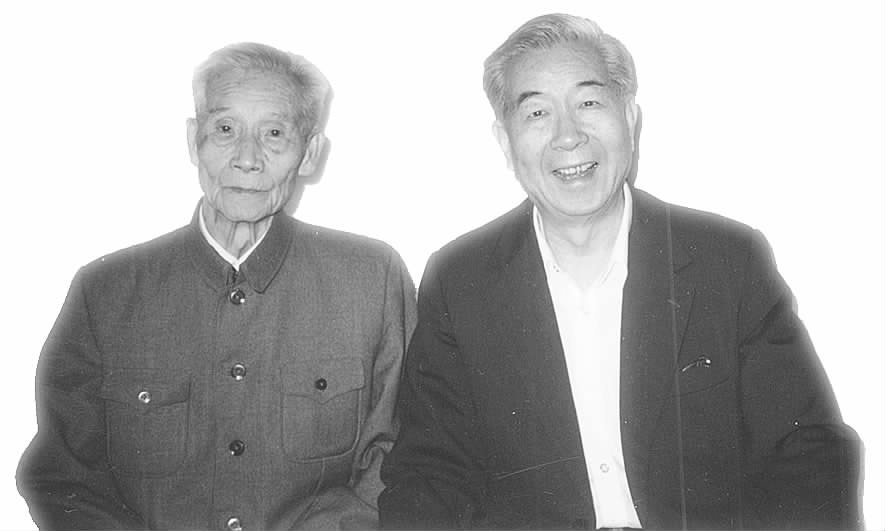
Zhou Longgao later helped me find a job in epidemic prevention. The work assigned to me was to give preventive injections to the prostitutes in the brothels. Because they feared that if disease was found they would not be able to take customers and earn money, they wanted to buy a clean certificate. At first I would not take the money; this drew my coworkers' opposition, so I had to take it — and then I would distribute it to those in difficulty. After that the colleagues working with me began to want to be close to me too.
Whenever I had a free moment I went to Beiping to make contact with progressive people. Later I felt that Beiping was an ancient cultural capital with a revolutionary tradition — a better place to do revolutionary work — so I gave up my Tianjin job and lived mostly in Beiping, though I still went sometimes to Tianjin to meet with underground comrades.
When I came out of the base area, Comrade Liu Ren, head of the Urban Work Department, told me to find a few people in Tianjin and Beiping who in the civil war years had had leftward leanings. One was Wu Jiwen, a graduate of the Peking Union Medical College, who had joined the Party in the Great Revolution era and later left it but remained a sympathizer. Another was Yin Yixin, son of Yin Tong, the great traitor of the North China Political Council, and an old classmate of Liu Ren's. After I found them, I told them about the international situation and the actual condition of the Communist Party — they were very glad. Anti-Communist propaganda in the occupied great cities was vicious; the Communists were painted in the propaganda as snakes and beasts. I remember at the gate of Beihai the Communists were drawn as a great venomous snake, as a creature half-lion half-tiger. Common people were sealed off; they did not know what the Communist Party was about, and the few intellectuals who knew of it knew very little. About the international situation, the domestic situation, the war in the rear — they knew nothing. We were doing mainly propaganda work, gradually bringing wartime propaganda materials in from the base in special leather cases (through Zhang Dewu of the New People's Society) for them to read in turn.
Among the contacts I was given was Dr. Wang Lanfen (her husband Wang Shiguang) — the third sister-in-law of Wang Guangmei. Wang Shiguang was at the time in the liberated area, and had been a secretary to General Nie. He wrote to Wang Lanfen asking her to come to the liberated area. Later I came to know other doctors as well — Wu Jiwen, Wu Jieping, Wang Guangchao (Wang Guangmei's elder brother), among others. We invited Wu Jieping to come to the base; he did not, and during the War of Liberation he went to study in America. Wang Guangchao had just married Yan Renying and they had opened a clinic in the old Xingbu Street. They could not go to the base at that time, but they were all very good — they all sympathized with the Communist Party. Wang Lanfen introduced me to her mother Dong Jieru, an old lady of about fifty, an intellectual, very concerned with politics and with her son. When she had me to dinner she asked me whether the base was hard, when the Japanese could be defeated — she was very patriotic. Because I came into the city only rarely and did not look the part of a city-dweller, the old lady saw me out and admonished me to be very careful — the Japanese were vicious; I must not let them find me out.
Later, through social connections, I sought out the families of Chen Fengtong and Ruan Muhan, hoping to take their children and family members to the base. Ruan Muhan's wife lived in Dayue Hutong with three children. We talked very congenially. I was only twenty-three then; she had been on the Kuomintang's left wing during the Great Revolution; Ruan was a Japan-trained law professor, then serving as court president of the Jin-Cha-Ji anti-Japanese base. She said: "I am no problem here; you take the three children." Her son was Comrade Ruan Chongwu; the two daughters were already in middle school; later, all of them joined the revolution at the base. Chen Fengtong was head of the Bureau of Agriculture and Forestry, a Japan-trained man; his family had long lived in Beiping; his wife had severe tuberculosis; they had three children, the eldest a daughter named Chen Xianju, working as a nurse. All three were sent to the base.
Through them I came to know Zheng Jianan. The great traitor Li Shouxin was Zheng's friend — at that time Li was "supreme commander against the Communists in Inner Mongolia." Zheng used Li's money to open a Western and Chinese Medical Hospital in the Beichizi Qihelou area, and served as its director. Zheng's brother-in-law was a Communist Party member, in the Jin-Ji-Lu-Yu base. I later worked as a doctor at Zheng's hospital. There was an old woman, abandoned by her husband, who came along with a small daughter to do our cooking. From the autumn of 1944 to the Japanese surrender, the residence permit I used was in the name of "Li Daozong"; when I went out I was called "Li Chunhe"; later I changed to "Li Xiannong." There I gave injections, saw a few patients.
Zheng Jianan had originally been Li Shouxin's chief medical officer, with deep personal ties to Li. Li Shouxin's home was a great mansion in Shijinhuayuan; his wife was sick and we often went to see her, to give injections. With superiors' permission, we agreed to try working on Li Shouxin. The original idea was to use Zheng Jianan to work on Li Shouxin — since the Japanese would sooner or later lose, get him to lean toward the Communist Party and the Eighth Route Army. Because we feared Zheng might speak too freely, it was decided I would go with him; we set eye-signals as our cue: if it seemed possible we would speak; if not, say nothing. We met Li Shouxin and made small talk. Li was not impressive in appearance — earthy, hazy-eyed, in a long gown like a landlord, very thin. When the Eighth Route Army came up, Li said: "The Eighth Route, the Communist Party — they are like poisoned water; wherever they go, the common people in that place become useless." When I heard that, I shot a glance and signaled Zheng to drop the subject. Li's tone showed his thinking was hostile to the Communist Party — he could not be brought over. After the Japanese surrender Li fled to Taiwan.
Through Zheng Jianan I also came to know Yu Yiti, He Huishang, Li Shiying, and other doctors, all graduates of Manchurian Medical University. Yu Yiti introduced me to a position in the radiology department of Tongren Hospital, where without a university degree one could not get in. I helped Dr. Li Shiying go to the base. Afterwards, using Li Shiying's name and credentials, I entered the Tongren Hospital radiology department, where Mr. Yu Yiti gave me cover for over two years.
## Appendix: Yu Yiti on His Early Association with Cui Yueli
— by Gao Yue
> One early-summer evening I called on Dr. Yu Yiti, formerly head of radiology at Beijing's Tongren Hospital. Nearly eighty, Yu had practiced medicine for over half a century — his medical art was excellent, and before Liberation he had also several times risked his life to give cover to our underground Party members. He had had an extraordinary association with Comrade Cui Yueli, the present Minister of Health. > > Yu Yiti had studied early at Tokyo Imperial Medical University, specializing in internal medicine and X-ray studies. He returned to China in 1934 and became an X-ray doctor at Peking Union Medical College Hospital. After the Pacific War broke out and the Japanese closed PUMC, the doctors scattered; Yu opened a small clinic of his own and lived hard. > > "In those days I often went to friends' homes to talk about how the Japanese were oppressing the people, and to look forward to victory in the war and to never being a subjugated people," Yu said. "Once at a friend's house I met a young man called Li Daozong, also a doctor. Young as he was, he gave the impression of being shrewd and steady. Every time he came he brought us news of the anti-Japanese guerrilla struggle, and we loved to hear it. > > "Through him we came to understand the Communist Party and the Eighth Route Army. Li Daozong often brought me copies of the Jin-Cha-Ji Daily, Comrade Mao Zedong's On Protracted War and On New Democracy, Comrade Ai Siqi's Philosophy for the Masses, and other revolutionary books. I would often take them out to read in the deep silence of night. The words in those books were full of feeling and reason; they spoke straight to my heart. After a long time, I came to know that Li Daozong was originally a doctor of the Eighth Route Army, sent from the liberated area to do underground anti-Japanese work. We were truly glad to have such a friend. Under his influence and with his help, I too began to do some revolutionary work. I would often tell Li Daozong what I had heard and seen, and helped buy medicines and instruments urgently needed by the Eighth Route Army, sending them through Li Daozong to the liberated area. > > "One day after victory in the war, Li Daozong came to find me. He said the Kuomintang was preparing to launch full-scale civil war; the secret services were searching everywhere for the Communist Party and the underground organization. To carry on his work, he hoped to find an open profession as cover. I placed him in my own radiology department to work, and changed his name to Li Shiying. In less than half a year, Dr. Li Shiying went from a complete outsider with no clue about X-rays to one capable of all the work. > > "At that time Li Shiying was the head of the Beiping underground Party. He worked the day, and at night was often at intense work; his eyes were always shot with red — you could imagine how busy he was. Sometimes underground Party leaders came to Tongren Hospital, on the pretext of physical examinations, to talk in the X-ray room. While they spoke in the inner room, I stood watch outside. Every Saturday afternoon Li Shiying would ride his bicycle to Yenching University to organize activities. The medicines, bandages, surgical knives, and instruments Li Shiying obtained were often stored in the radiology department and secretly sent to the liberated area. > > "In July or August of 1948, the Kuomintang secret service tightened its hunt in Beiping for Communist underground. Li Shiying suddenly did not return for several months. I was truly worried for his safety...!" > > "You had already joined the Party by then?" I broke in. > > Yu said: "I was not a Party member then, but my heart was already with the Party. After the liberation of Beiping, one day a man in Eighth Route Army uniform with the Military Control Commission armband came to find me. I looked — surprise and joy at once — wasn't this Li Shiying?" > > I asked Yu: "Did you see Dr. Li Shiying often after that?" > > Yu laughed warmly: "How could I not? Li Shiying — that is the present Minister of Health, Comrade Cui Yueli. After Liberation, Old Cui personally introduced me into the Communist Party."
In the base areas you depend on the masses; in occupied territory you must depend on them even more. No matter what kind of masses they are, you must be one with them — without that, you cannot stand. In occupied territory, finding a place to settle, with shelter and food, is no easy thing. With no kinship or old ties, on what basis would anyone shelter you? And without shelter, how could you work? Here I must mention several old ladies. Old ladies do not get much regard, but their homes were the best places I could rest. Counting them up, the old ladies who sheltered me at one time or another came to about ten: Old Mrs. Zheng (Zheng Ruhui's mother); Old Mrs. Song (Song Rufen's mother); Old Mrs. Xu (Xu Shulin's mother); Old Mrs. Dong (Wang Guangmei's mother); also an Old Mrs. Gao, an Old Mrs. Yu, an Old Mrs. Song Yuqing who had once saved me, an Old Mrs. Ma who had also saved me, an Old Mrs. Yang, and an Old Mrs. Wang (Wang Yongfu's mother). These ten old ladies, in my six years of underground work in Beiping — including over two years of Japanese occupation and the more than three years of Kuomintang rule — sheltered me, helped me, and played an important role.
Old Mrs. Zheng was very progressive in her thinking; her home was at Huanghuamen. She sheltered me there for over a year. Her husband had once served under Feng Yuxiang; he had since died. Her thinking was sympathetic to the Communists, opposed to the Japanese. Each day I went out to look up people and develop the work. It was while I was living there that we opened up the situation.
Old Mrs. Gao was Old Mrs. Zheng's neighbor — at that time a domestic servant. She later played an important role in sheltering She Diqing. Her own life was hard; after Liberation she was introduced to She Diqing's service.
Song Rufen's mother was a teacher — educated, also opposed to the Japanese, opposed to the Kuomintang — sheltering her son and us as well.
Old Mrs. Dong was Wang Guangmei's mother. She died in prison during the Cultural Revolution. Because this old lady was progressive in her thinking, many of her children took part in the revolution — Wang Guangmei, Wang Guanghe, Wang Guangping, even Wang Guangying later joined the revolution. I first met her in 1943, when she was already opposed to the Japanese. After the Japanese surrender, in our struggle with the Kuomintang, she helped us hide documents and gave us cover. When Wang Guanghe was my courier, the documents were kept at home, and Old Mrs. Dong hid them.
Old Mrs. Xu Han Deqing was also leftward in her thinking. Her eldest daughter and her eldest son-in-law were both Communist Party members; Xu Shulin too was a Party member. When I was living in Pichai Hutong, Li Xue — who managed the underground Party radio and its funds — was hidden there. Once a bundle of money was hidden in Old Mrs. Xu's keeping just as the enemy came to check residences and turn everything over. The old lady put the money in a quilt and lifted the pillow up for the enemy to look under, putting them off. If the money had been turned up, she could not even have said how much was in the bundle — she did not know — and she would have been seized at once. Li Xue had originally been living there; Old Mrs. Xu's vigilance was high, and on hearing that the wind was tight she had him move elsewhere. Just after he was transferred out, the enemy came to inspect.
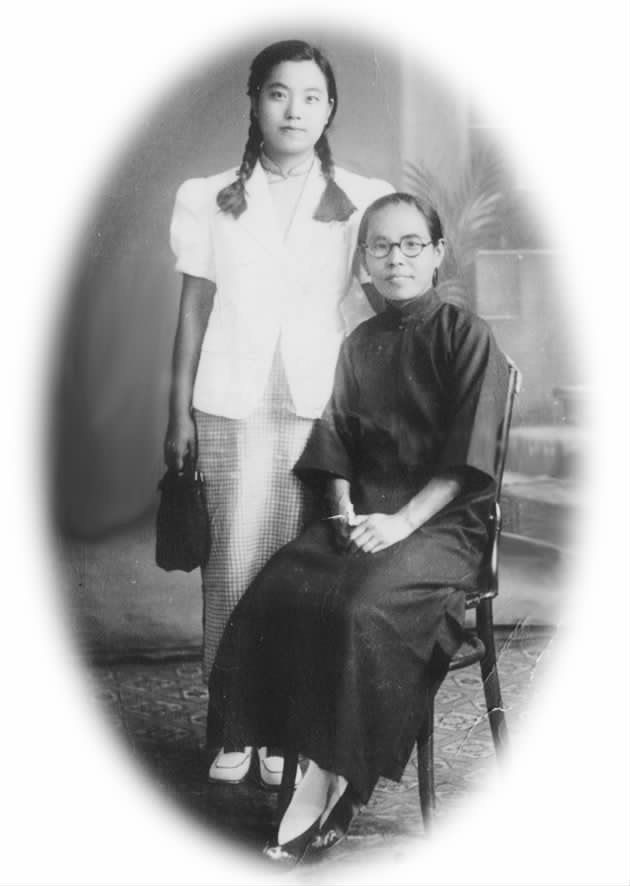
Old Mrs. Yu Gusi was an educated woman, a primary school teacher. She gave the radio cover for several years, at very great risk; the radio operator lived in her home. Her son had gone to the base and was killed in the war.
Wang Yongfu's mother — I knew her earliest. She had come from the Northeast at the time, a woman of about fifty, not very old; she too was anti-Japanese, sheltered our comrades. We all stayed there, hid documents there. Through the Kuomintang period her shelter was always working. She fell ill and died too soon.
Old Mrs. Yang had once sheltered Yao Jiming. Yao had been sent to Beiping to do underground work by Teng Daiyuan, chief of staff at the Jin-Ji-Lu-Yu headquarters; he was later exposed. Old Mrs. Yang minded the house for him while the secret service moved into the same household — every day she dealt with the secret service to put them off. From 1944 onward Old Mrs. Yang was with me, all the way through the late Cultural Revolution — for many decades she sheltered us, hid documents, kept in touch with comrades, and especially looked after our daily needs.
There was also Xu Shulin's sixth aunt-in-law. When one of our comrades was seized, she dealt with the secret service in the home; if she had not, regardless of her personal danger, warned me on the telephone, I might have been arrested too.
So the success of a revolution must rest on the masses. Chairman Mao said the strength of the masses is inexhaustible, though you cannot see it. Because Japan's war was unjust, and because the Kuomintang served the imperialists, leaving the great mass of common people in deep waters and scorching fire, of course they would be cut off from the masses — even these old ladies opposed them. So we must always keep the people in mind, whether before the revolution succeeds or after; in any situation, we must not forget them. We cannot remember them only in our hour of need and forget them once we have succeeded. The three great styles of work of our Party — connecting with reality, connecting with the masses, self-criticism — must never be lost; we must restore and develop them. Without them, cut off from the masses, the Party is left isolated — it has no real role. Communist Party members in China number over fifty million — that is not few — but China's population is over 1.1 billion: you are still in the minority. Without the support of the masses, without the masses standing on the same line with you, you cannot do anything.
In the Cultural Revolution, Old Mrs. Xu (Xu Shulin's mother) and Old Mrs. Song (Song Rufen's mother) both took their own lives; Old Mrs. Dong was held in Qincheng Prison and died there. To follow us into revolution and to come to so tragic an end — it grieves the heart deeply. The role these old ladies played was not one ordinary people could have played: sheltering radios, offering a home, daily life and rest. Without them, work would have been far more difficult. Old ladies were natural cover: convenient, and unlikely to draw the enemy's suspicion. They were unsung heroes; their contribution to the revolution was no less than that of the soldiers at the front. They had not joined the Party, but they were the equal of those who had — some Party members would not have played that role, especially the young and the students, who often could not provide cover. The role of cover is invisible, but it is exceedingly important work. They had merit before the revolution; that they were persecuted to death in the Cultural Revolution is heart-breaking.
In the War of Resistance years I came to know more people, the situation opened up — but it was still single-line contact, with the legal made use of to the maximum and the illegal compressed to the minimum. For so many years of doing underground Party work, every six months I returned to the base to report; otherwise it was all single-line contact. Through wide-ranging activity, by the time of victory in the War of Resistance, the underground organization had developed to a certain scale; we had also come to know some professors and upper-level figures — Lan Gongwu and Weng Duzhe, who had taught at Tsinghua and Yenching, among others. Later in the War of Liberation we came to know more and more people, including some upper-level well-known doctors. We expanded our social activity range and built up a body of experience. Single-line contact developed few new Party members; only individual students or staff would be brought in, also through me alone.
Over the years I sent many progressive young people to the liberated area to take part in the resistance. Travel between the base and the occupied zone depended on couriers; they carried letters, carried people, carried us across the blockade lines. Gao Xizhen and Yan Zhenlu were excellent couriers, very close to me — but both of them were killed.
From the overall view of the work, the assignments the organization gave me were carried out; we had a working base. By the Japanese surrender we had hoped the Eighth Route Army would enter the city, and we had been notified to prepare for them to enter. The Kuomintang, with American backing, was also preparing to enter — they had the conditions: cars, planes, warships. But we still made our preparations: Liu Ren's Urban Work Department in the Western Hills was reorganized into the Beiping Municipal Party Committee. The Beiping Municipal Party Committee at that time included Liu Ren, Zhou Xiaozhou, Han Zhuang, and others; I also met Zhang Xuesi, who later went to the Northeast and was responsible there for military work to win over the puppet army. The Japanese held Beiping at that time, negotiating with the Kuomintang — so the puppet troops who surrendered to the Communist Party were not large in number. Commander Zhu issued the order to attack actively, but the Japanese did not yield the great cities; seeing the Eighth Route Army's strength was not enough, they were colluding strongly with Chiang Kai-shek. We brought back from the Western Hills the city-entry notice and leaflets, posted them in the city, mobilized the masses to post them in Beihai, Dongsi, Xisi, and other places. At that time we sent Wang Guanghe out of the city to fetch them; he brought them first to Tsinghua and then into the city. We did this for two months — and then the Kuomintang's airborne troops arrived. At that time many still had illusions about Chiang Kai-shek; the people lined up to welcome the "national army." For a stretch the Communist Party could not act openly. Old contacts who had no illusions about Chiang were few. But as more and more "receiving" personnel came into the city, the people's hopes for a better life invested in Chiang Kai-shek were shattered: Chiang's officials were too corrupt — the Five Confucian Triumphs (gold, houses, cars, performers, money) — the people's lives did not improve; the Kuomintang grew more and more separated from the masses, and the people transferred their hopes to the Communist Party. So why we are anti-corruption today: because political corruption is more terrible than anything else; political power becomes a mere form, collapsing at a touch.
At that time secret communications and the secret printing house relied mainly on two men. One was Zhang Dewu, who used his Japanese-puppet identity to move back and forth, with documents tucked in his leather case — to look at him you'd have taken him for an old traitor, so he would not draw the enemy's attention. The other was Wang Yongfu, a colonel of the puppet army, very capable in dealing with all kinds of situations. These two went regularly between the base and Beiping. After fetching the documents — because we had no horizontal connections — only two couriers were used, with fixed contact points. The city was constantly inspected then, with checkpoints often suddenly thrown up at major intersections; because they rode bicycles and looked like students with bags under their arms, and because they knew the city, no problems arose. These two couriers brought us propaganda materials, documents, and printed matter. Because what we could print in the liberated area and bring into the city was limited — and because, as the student movement opened up united-front work above, we needed liberated-area books and Xinhua News Agency propaganda — we set up two small printing houses. One was near Xisi Dingzijie, west side, north road, fairly large, run by Comrade Zeng Ping. The other was in a small hutong off Erquan Lu — a foot-pedal press; Wang Yongfu found a worker who printed at night; the place was well concealed. We printed On New Democracy, On Coalition Government, and Xinhua broadcast news scripts. The press was small but its influence was great.
The radio was run by Comrade Li Xue; I gave cover. Pretending to do business, in Xisi we set up a shop selling and repairing bicycles and repairing radios — mainly for the convenience of obtaining radio parts. The radio Comrade Li Xue ran was set up in Yangyi Hutong, Dongsi. Comrade Yu Le also set up a radio. Comrades Xu Xin and Ai Shan, after training in the liberated area, were sent in to look after the radio; they worked at the telephone exchange as operators. In the War of Liberation we set up three radios in all — even if the enemy destroyed one, there was another, with another set held in reserve. Sending times, technical issues, and installation were Li Xue's responsibility; he made many contributions.
In the War of Resistance years we used single-line contact and could not run a mass movement. In the Japanese-puppet period the slogans "Win Peace, Oppose Famine, Oppose Civil War" were already opening up well among the students. This kind of mass movement required Party work, organized Party activity to support the mass struggle — and this required a set of underground arrangements. So radio, courier, printing house — all played important roles in supporting urban work. Mass movements went well in Shanghai, Wuhan, and Chengdu; Beiping echoed back and forth with these cities, which created conditions for our underground work to open up. In the late period of the War of Liberation various committees were established: the Student Work Committee, the Worker Work Committee, the Railway Committee, the Poor People's Committee, the University Work Committee, the Middle School Work Committee, the Literature and Cultural Circles Committee, the Staff Work Committee, and so on — the work went deeper and deeper, more specialized. The peaceful liberation of Beiping rested on two things: on one hand, the Liberation Army at the city walls forcing Fu Zuoyi to surrender; on the other, the urban underground mobilizing the masses, forming great pressure on the Kuomintang authorities. So Chairman Mao said that another front had been opened: the various struggles of underground work.
## Several Brushes with Danger in Enemy-Rear Work
In the spring of 1944 the Japanese sweeps in our rear became more violent than ever. In 1942, we put forward the general line of defeating Japan; Japan's defeat was certain. The Central Committee decided to open up enemy-rear struggle in occupied great cities — Beiping, Tianjin, Shijiazhuang, Baoding — to fit "defeat Hitler this year, defeat Japan next year," and after defeating Japan to take over the great cities. By the end of 1942, when the enemy was at the cruelest height of his sweeps in the Jin-Cha-Ji anti-Japanese base, I was sent to the Urban Work Committee (chair Marshal Nie Rongzhen, vice chairs Liu Ren and Liu Shenzhi). My task was to find friends working in occupied territory, restore the organization, open up activity. Liu Ren introduced me to several social connections in Beiping and Tianjin. Among them was Wang Shiguang — Marshal Nie's confidential secretary, a radio man — who later became a vice minister of the Fourth Ministry of Machine-building. His home was in old Xingbu Street, Beiping. With Marshal Nie's letter of introduction in hand, I went to find Wang Shiguang's wife Wang Lanfen — herself a revolutionary worker who had been seized by the Japanese during guerrilla fighting in western Beiping, then transferred to Beiping and bailed out home. I was to take her to the base to be reunited with Wang Shiguang. Wang Lanfen's father was governor of Jinzhou Province in Manchukuo; through her, we hoped to work on her father, urging him not to serve the Japanese.
In January or February of 1944, the courier led the four of us — me, Wang Lanfen, Zheng Jianan (the director of the Western and Chinese Hospital), and Yu Yiti (head of radiology at Tongren Hospital) — out from Beiping for the base. At eleven o'clock we boarded the train at Qianmen; just after dawn we got off at Dingxian. Because the enemy had not yet stirred, with only one sentry on duty and not paying close attention, we could take the chance to cross the blockade line. The deep ditches ran along both sides of the railway; pillboxes stood at the crossings; the enemy checked every passer-by's papers. The four of us walked west from Dingxian toward the Taihang Mountains. Having walked fifty or sixty li, around ten o'clock, just as we were about to eat, we heard that puppet soldiers were coming to sweep and seize grain. Locals, seeing how well we were dressed, thought it might be all right — the puppets probably would not come to this household — so they had us stay and wait. We were eating when the puppets came and seized us at once.
Zheng and Yu, both graduates of Manchurian Medical University, had leftist leanings but had not joined the Party — they were going to the base for a look — so after a few questions they were released. Wang Lanfen and I were both Party members; we were tied onto the grain-cart and driven fifty or sixty li toward Quyang County town. Wang Lanfen was only twenty-three; I was a few years older; the cart-driver was a peasant, and the puppet troops walked clattering behind. I found a chance to say to Wang Lanfen, "You follow my lead..."
At interrogation she began to weep: "My father is in the Northeast; I'm at school in Beiping; I want to marry Dr. Li, my family doesn't agree, so we ran away together."
The puppet asked me: "Is that so?"
I echoed: "Yes, yes — we want to marry, both families wouldn't agree, so we ran away. Eloping. Someone was leading us along; we don't know how we got here."
If the puppets had handed us over to the Japanese, it would have been finished. We were in Western dress, already on the edge of the base — one look would have told you we were headed there. There was a battalion commander among the puppets, twenty-five or twenty-six, named Hua Youmian — out of the puppet officers' academy. He had connections with our base, deliberately did not turn us over, asked a few questions and let it pass, asking us to find a guarantor to bail us out. While I had been working in Beiping I had already brought two people in; we had agreed that if I had any trouble, they would bail me out. One was Zhang Dewu, a senior member of the New People's Society, whom I had recruited into the Party. I wrote a note and he bailed me out. Wang Lanfen had an elder brother who served as chief of a Tianjin puppet police station; he knew his sister was a Communist; on receiving the letter he bailed her out. We were detained one full week in all. We had not made it across the blockade line; the courier was arrested, but later was bought out by the base. Hua Youmian sent us to Dingxian by truck, with troops escorting us — actually protecting us all the way. In Dingxian he took us to dinner and pointed out the great iron pagoda; he even said the Dingxian city wall was about the same length as Beiping's. So we returned from Quyang County to Dingxian, and from Dingxian back to Beiping.
Hua Youmian later joined the Communist Party and worked in intelligence, contributing greatly to the Party. In the Cultural Revolution, because of my arrest history I came under investigation; in 1975 when I came out of prison, I learned that Hua Youmian had been persecuted in the Cultural Revolution and his case was not yet resolved. I wrote a statement to Marshal Nie Rongzhen; the Marshal personally cleared his case and restored his military rank. He died of cancer in 1976.
In the spring of 1944 I had been doing underground work in Beiping for nearly two years. One day I rode my bicycle to Ganmian Hutong, north of the road in the east city, to fetch some documents from Dr. Wu Jiwen at the Peking Union Medical College. Dr. Wu Jiwen was a progressive — had joined the Party in the Great Revolution era — and Comrade Liu Ren had told me to keep contact with him. In his own clinic, I talked with him about the international situation and Japan's coming defeat. Coming out of his place, I tucked the documents into the inner layer of my house-call bag, slung it across the bicycle's frame, and had just ridden out the west end of Ganmian Hutong when from Dongsi a streamlined Japanese army car came up — a car carrying a Japanese officer. I squeezed the brake — and the brake snapped at once. My bicycle shot into the middle of the road. The driver had good technique and braked hard; the front of the car spun a 180-degree turn. Now I was in for it. Just as I was about to apologize, a passing tricycle puller shouted: "Don't just stand there — run! Don't you want your life?" I pedaled toward the east end of Jinyu Hutong; the army car turned around and gave chase. The colonel inside drew his sword and waved it out the window — but he and the driver were not very well coordinated, so the car kept lurching faster and slower; he hacked twice without hitting me; in the eastern half of Jinyu Hutong he hacked several more times — one stroke nearly caught me; my head almost flew off. Dodging the saber, I made it to the middle of Jinyu Hutong; on the south side a small alley led to the PUMC. I dropped my bicycle and ran in alone; a car cannot turn as nimbly as a man on foot, and so I shook them off. I turned again into an alley to the east, ducked into a great temple on the north of the road. A monk inside heard that Japanese soldiers were after me and quickly had me hide behind the great Buddha. I stayed behind the Buddha for twenty minutes, heard nothing, came out and told the monk what had happened — said I had dropped my bicycle at the door of a police station and the Japanese car had probably stopped there, and could he please go look whether they had gone. The monk was a good man; he went out at once and came back to tell me: after I ran, the Japanese had left; the bicycle was in the police station. I was very poor at the time; the bicycle was borrowed from someone — and an old one at that, otherwise the brake would not have snapped at one squeeze. If I gave it up, I would have no transport; besides, the document bag was still hung on it. I was only twenty-four, with the bold spirit of the young: go! I'll go fetch it. I went to the police station, saw the bicycle there. A man in the look of a chief came out; I told him I had run into the Japanese; the bicycle I had dropped was mine. He yelled: "Yours? You've made a great mess — how dare you offend the Japanese!" I murmured back, "I'll be careful, I'll be careful." "Come into the room!" My heart sank — perhaps he had found the documents. I followed him in; the house-call bag was on the table; nothing was outside.
"That bag is mine."
I went forward and grabbed the bag, said: "Look, I'm a doctor." I opened the bag, took out the stethoscope, the syringe, the medicine for him to see, then put them back, asked: "Anything else you want to look at?"
"No, go on."
It seemed the documents had not been found. I took out the bicycle and the bag, mounted up and rode home. You might say "tense" — it gives one chills to think back on it; my head, that day, would not be hacked off.
At the end of 1948 I was working on Fu Zuoyi. At that time I was secretary-general of the Student Work Committee, also handling upper-level united-front work. The Fu Zuoyi work I personally maintained; some other comrades had been doing it too, but they had been arrested one by one; only I was left, so I was very busy. One day I had asked She Diqing and Yang Bozhen to come to a meeting; the time came and She did not arrive. I guessed that She might have gone to find Liu Shiping. At that time Liu Shiping was living in the small red house at Xu Zhushi's home in Pichai Hutong. Xu Zhushi was my wife Xu Shulin's sixth uncle, who also did some cover work for us. She Diqing was secretary of the Student Work Committee, in charge of contact with Liu Shiping. I asked Shulin to telephone the small red house and ask why She had not come. A while later she came back to tell me, "The one who answered was a stranger."
"Then who?"
"I couldn't tell; he kept asking who you were, where you were. Probably something has happened."
When I heard, I was alarmed. "I told you to get clear by phone — and you didn't even ask, didn't even find out who answered."
I pushed off on the bicycle and rode straight from Nanwanzi Hutong in the east city to Pichai Hutong in the west city. Outside the little red house, my heart said: don't really let anything be wrong. Across from the small red house was a salt-and-oil shop with a public telephone. I dialed in to the small red house — a secret-service man answered.
He asked: "What's your honored name?"
"My name is Li. What are you doing?"
"Never mind what I'm doing — you come over."
I said: "Get someone of the household."
"We're looking for you; you have to come."
To say such a thing on the telephone! I said: "Are you going or not? If not, I hang up at once."
He had no choice; he fetched Shulin's sixth aunt-in-law. I asked: "Is the sixth uncle home?"
"He isn't," she answered.
"Will he be back today?"
"He won't."
"Tomorrow?"
"He won't, he won't."
That settled it — he had been arrested; the secret service answered the phone. If I had gone and knocked at the door, the moment it opened they would have grabbed me. They had first seized Liu Shiping's uncle, then left a watchman, to seize anyone who came; they would seize one and interrogate, then the next; Liu Shiping was arrested; She Diqing, going to find Liu Shiping, was arrested too.
They were now looking for me. Xu Shulin's sixth uncle was a man of position; after he was seized, her fourth uncle went to find a Juntong secret-service man. That man said: "Your brother himself has nothing on him; only that he has a relative named Li. If you can help us find him, we can quickly let your brother go."
Afterward, through indirect inquiries, I learned that Juntong was hunting for me; once caught I would be sent immediately to Nanjing under guard. But the watchmen did not catch me.
At the end of 1948, on the eve of Beiping's liberation, Juntong was seizing people fiercely. We had a comrade named Shi Lan who lived at No. 23 Damucang in the west city, in the home of Old Mrs. Ma — Old Mrs. Ma was the mother of a regimental commander of the Northeast Allied Army who had been killed. The old couple were both Communist Party members, sixty or seventy years old; Shi Lan was hidden in the old lady's home, under their cover.
One day a leader of our Student Work Committee, Yang Bozhen, said: "Have you seen Shi Lan?"
I said: "Haven't seen him."
"Shi Lan isn't careful enough about secrecy — there may be trouble."
I said: "I'll go and see." I rode straight from Nanwanzi to Damucang.
I knocked; a puppet soldier opened the door. There was no running — what was I to do? Well — go in. I pushed the bicycle in; Old Mrs. Ma was standing in the courtyard, signaling with her eyes, ignoring me — there was definitely trouble. I went into the back court; Old Mrs. Ma followed; she nodded, signaling for the neighbor to send me out.
When I went in, I asked the neighbor family: "Is this the Wang family?"
"No."
"The Zhang family?"
"No. Who do you want?"
"Has there been some trouble at the front there? I'm a friend of theirs; I came to ask after them on some matter."
"What are you up to?"
"I'm a doctor, named Li Xiannong. They are friends of ours. Look — New Year's is almost here; I came to call. Maybe their family is in trouble; could you take me out?"
The couple — they had a child of seven or eight; the husband, surnamed Li, from Shandong; one family lived in the three-room north house, fairly poor; the wife had bound feet, about fifty. She turned to her husband seated in the inner room: "Should we send him out, or not?"
"Go on, send him out and be done with it." A grumpy expression.
I said: "Right, and let's get clear — we are friends, all right?" I showed her my residence permit, told her where I lived. The old lady was decent; she took the small child by the hand and saw me out. As I pushed the bicycle along, I said: "Right, do come visit our home..." chatting our way out the door.
It turned out that Shi Lan, after his arrest, had given me up to the enemy — told them his superior was named Li, rode a bicycle, with my facial features.
After Liberation, I found Old Mrs. Ma. The moment we met, she said: "Oh, you really are blessed. You know — the secret-service man had been waiting for you all along; the moment you came in, he had gone out for cigarettes; the puppet soldier minding the gate was his attendant. If the secret-service man had been there, you would have been seized for sure. You came in just while he had stepped out for cigarettes — you came in and went out again — truly close!"
## Appendix: On the Beiping Underground Radio
— by Fang Ting
Establishing an underground radio — using the most advanced and quickest method to communicate secretly with enemy-occupied cities — Comrade Liu Ren had long planned, and had made long preparation for. In May 1942 Comrade Liu Ren transferred Li Xue, an operator from the Jin-Cha-Ji Bureau radio, to the Urban Work Committee. In spring 1943 Comrade Liu Ren brought operator Zhao Zhenmin from a unit in the Central Hebei Military District; in July of that year, Zhao was sent to Tianjin and given cover at the home of underground Party member Shen Erjing. Zhao Zhenmin's work was to copy down Xinhua's daily uncoded news transmissions; there was no communication with the liberated areas — the main thing was to get used to occupied-city life, to grasp the rhythms of underground work, to "drill the troops." In early March 1945, Comrade Liu Ren sent Ai Shan, He Zhao, Zhou Jian, Mian Si, and Fang Ting — five in all — to study at the military region's wireless training brigade. Comrade Liu Ren told them: studying wireless telegraphy is preparation for setting up an underground radio in Beiping, in readiness for the great counter-attack against Japan. After the Japanese surrender in August 1945, Zhao Zhenmin returned from Tianjin to the Urban Work Department. In July 1946, Zhao was sent to Beiping; by then Ai Shan, after probationary service at the military region's communications and liaison office, had returned to the Urban Work Department and begun communication with Zhao Zhenmin in Beiping. Zhao used a receiver Li Xue had built from a modified radio set, to receive — but could not yet transmit to the liberated area. In February 1947, on Comrade Liu Ren's order, Li Xue formally established the radio in Beiping; in April–May of that year, the underground radio and the Urban Work Department radio began two-way contact. From 1942 to 1947, nearly five years of preparation — only after every condition was in place was the Beiping underground radio set up. All matters of building it were handled single-handedly by Li Xue.
The radio's personnel included operators, cipher clerks, and couriers. The earliest operator was Zhao Zhenmin — trained in army radio with practical experience; though he had only worked in the countryside and never in a great city before, after a few years living in Tianjin and Beiping he gradually became familiar with the urban environment. He was the longest-serving operator. A Student Work Committee underground Party member, Wang Chaoxiang, was a radio operator at the Beiping branch of the Kuomintang Central News Agency's Seventh District Bureau Surveillance Station; he had open work as cover; in the first half of 1947 he was assigned to the underground radio. In the spring of 1947, Ai Shan, who had studied and apprenticed at the military region's communications and liaison office, was also sent into the city. The other four who had studied with her had been transferred to other posts before completing their training. The first cipher clerk for the underground radio was Cen Tieyan, directly under the Student Work Committee secretary She Diqing. In June 1948, Comrade Liu Ren transferred me, Fang Ting, into Beiping as cipher clerk. In early December 1948, with the Beiping-Tianjin Campaign already under way, to strengthen the underground radio, He Zhao — who had been doing operator and cipher work at the Urban Work Department for several years — was also sent into the city. The underground radio's couriers transmitted only telegrams; most went to Cui Yueli, others to the leaders of the various underground committees. Those who served at one time or another as couriers were Zhang Bin, Xu Shulin, Wu Kuande, Shen Qian, Ding Wen, and others. The underground radio personnel were all Communist Party members, mostly sent from the liberated areas. Apart from a few, they were originally young students of Beiping, familiar with the city's customs, able to adapt to the environment, suited to underground work. The Beiping underground radio was under the Student Work Committee, led by Cui Yueli. Li Xue was responsible for technical guidance and day-to-day work.
Without transmit-receive equipment, the radio could not work at all. In Kuomintang-ruled territory, although certain communications gear could be bought, receivers — and especially transmitters — were absolutely "prohibited" non-sale goods. Li Xue, in charge of building the radio, took great pains; the only way was to make them ourselves. With organizational approval, he opened a Longyun Electrical Supplies Shop on Xisi North Avenue, so that materials for assembling transmitters and receivers could be procured. A connection introduced by Cui Yueli, named Liu Zhiyi, was made manager of the shop. He had wide social connections in Beiping, and lived in a Buddhist nunnery convenient for cover. Li Xue was a stockholder; Zhao Zhenmin worked as an assistant, dealing with the day's business at the counter. With materials supplied through the shop, Zhao Zhenmin and Li Xue secretly assembled four transmitters: three remained in Beiping for use, one was conveyed to Tianjin for the Tianjin underground radio. Receivers were obtained through connections. Liu Zhiyi bought one, and through a contact bought another in Tianjin — together using two liang of gold. The third was modified by Li Xue from a shortwave receiver. With this, transmit-receive equipment was complete. Beyond Longyun Electrical Supplies, the underground radio had another point — the Ninety-Nine Photo Studio in Xidan Market. That was a "transferred" running studio; Li Xue was the "boss"; courier Zhang Bin was bookkeeper; courier Wu Kuande, on the pretext of night-watching the building, lived there.
For the safety of radio personnel and to make work possible, reliable connections for cover were essential. When Zhao Zhenmin first came to Beiping, the underground Party found him an open job as an electrician in the electrical workshop of the Beiping Vehicle Repair Plant under the Kuomintang Joint Logistics Headquarters. He changed his lodging twice but neither was secure; later he lost his job. In August 1947 he came to work at the Longyun shop. That spring he had moved into the home of "Aunt" Yu Gusi. Yu Gusi's home was already an underground Party liaison point; Zhao Zhenmin became Yu Gusi's "nephew." Yu Gusi was an educated woman, widowed early; her children had joined the revolution during the War of Resistance and were all in the liberated area; only she and a young grandson were at home. She dared the risk, was glad to give the underground radio cover, and often laid out her own savings to help with Zhao Zhenmin's daily life. In early 1949, Yu Gusi joined the Chinese Communist Party. When Ai Shan first came to Beiping, she stayed at Li Xue's father's home; later she lived with Wang Jue, a Student Work Committee contact, with Wang's mother giving cover. After Wang Jue went to the liberated area, my mother Fang Weiying became Ai Shan's "aunt," forming a new "family." Wang Chaoxiang in late 1947 lived together with Huang Junshuo. In summer 1948, Comrade Shi Zhong of the Urban Work Department arranged for her father Qian Jiansan, going to Bozhen to visit his daughter, to receive Comrade Fang Ting in person. Fang Ting returned to Beiping with the old man and lived in his home, calling Qian Jiansan and his wife "uncle" and "aunt." When He Zhao came in to the city, she was settled at the home of Li Xue's father at No. 49 La Ku Hutong in the east city. Li Xue and his wife Ding Wen lived at Bingbuwa Hutong in the west city, with Shen Qian and her father giving cover. Thus all radio personnel had reliable connections for cover, with legal footholds. These households, carefully arranged by the Party organization, were each a small fighting collective.
The underground radio was extremely secret — the target the enemy spent every effort hunting for and trying to destroy. In great cities the enemy maintained Telecommunications Inspection Sections, expressly to find and listen for unregistered secret radios. The Kuomintang Juntong Bao Mi Bureau's Beiping Telecommunications Monitoring Section detected an unregistered transmission and sent jeeps with detection gear out into Beiping; on 4 September 1947 they captured an underground radio of the Central Social Affairs Department at No. 24 Jingzhao East Street; the two operators were taken on the spot. At that time, our Urban Work Department's underground radio had been set up only half a year. When Li Xue returned to the liberated area in 1948, Comrade Liu Ren impressed on him that vigilance must be raised — even if it cost meals or sleep, the radio must be kept hidden. To prevent enemy destruction and ensure normal work, the underground radio took multiple measures:
1. Three underground radios were established, with three working teams. If one were destroyed, the others could still carry on.
2. Change of dwellings. All three radios moved house. Zhao Zhenmin's first address at Yu Gusi's home was 118 Old Drum Tower Street, later moved to No. 2 Maoer Hutong, Di'anmen. Ai Shan's radio was first set up at No. 12 Beijianting, Di'anmen; after a few months it was moved to No. 3 Yangyi Hutong, east city. Wang Chaoxiang's radio also moved from Sha Lan Hutong, Niu Jie, to West Caochang Twelfth Hutong, outside Xuanwumen. If a radio stayed at one place too long, it would be discovered.
3. Change of working times. Before September 1948, when the volume of transmission was low, the three radios took turns on the air, with their working times staggered. The text of incoming and outgoing telegrams was very short, so it was very difficult for the enemy to find the underground radio's signal; even if a suspicious signal was caught now and then, it disappeared quickly.
4. Change of cipher. The underground radio used cipher exclusively. The cipher was, with Comrade Liu Ren personally taking part, painstakingly composed together with the radio personnel. From 1946 onward, Comrade Liu Ren collected various editions of dictionaries with Li Xue and He Zhao, and bitterly studied several ciphers; the underground radio did not use a single fixed cipher. The codes were Arabic numerals and English letters as well. All four of the above measures used variability against the enemy.
5. All telegrams were transmitted in invisible writing. What the courier received was only a small thin slip of white paper; the courier himself did not know the content of the telegram. If anything unexpected happened, it was easy to deal with; if lost, it would not be a problem.
6. When the three radios were not at work, all were disguised in storage.
7. Couriers did not know the location of the radio; they fetched and delivered telegrams in alleys, with the locations changed often. Telegrams were transmitted at agreed times; once the two parties had exchanged, they parted swiftly.
8. By strict rules of the radio, the work of operator and cipher clerk were strictly separated; the two had no contact, so that even if a radio were destroyed, it would not be a complete sweep. On the eve of Beiping's liberation, with the situation changing rapidly, due to special needs operators Ai Shan and Wang Chaoxiang and cipher clerk Fang Ting briefly worked together — but the operators were still not allowed to know the content of the telegrams.
9. Radio personnel ceased all organizational life and broke off all social connections; they did not see relatives or friends, were not allowed in public places, did not go to cinemas or theaters, did not read progressive books and journals — they kept to themselves, "minded their own business."
The personnel followed all these measures strictly, ensuring the radio's normal functioning.
Comrade Liu Ren's guiding thinking in establishing the underground radio was very clear: the radio must be used on the cutting edge — must play its role at the critical moment. If time allowed, those concerned returned to the liberated area to report and receive tasks; or underground couriers carried the situations across; the radio was generally not used. In order to keep the radio open, daily contact was made at fixed times, but after the radio was set up the volume of work remained low for a long time. The radio's busiest period was the nine months before Beiping's liberation. As the Beiping-Tianjin Campaign won victory after victory and our army cut the Beiping-Tianjin road communication, contact between the liberated area and the city could only rely on the radio. This was the most important period in which the radio played its role.
After Liberation, the originals of the telegrams were turned in and cannot now be retrieved; based on what the cipher clerk could recall, the contents were roughly as follows:
1. Enemy military intelligence was a main item: enemy troop movements, including unit designations and the destinations of military trains, were often radioed to the liberated area. This intelligence came from a contact of Wang Su — Sun Guan, an underground Party member who was a dispatcher at the Beiping-Tianjin Railway Bureau.
2. In January 1949, with the Beiping defenders surrounded ring upon ring by our liberation forces, they built a temporary airfield at Dongdan Square. Our artillery shelled this place; at first the rate of hits was very low. The underground Party radioed the precise points where the shells landed in time to the Beiping-Tianjin front headquarters; our artillery progressively corrected the range and at last put the airfield out of commission.
3. To prepare the liberation army to attack the city, the underground Party — at the request of higher levels — made a detailed survey of the position, height, and thickness of every Beiping city gate and city wall, and radioed the data to the Beiping-Tianjin front headquarters. On the basis of this survey our army made its preparations for blasting in the assault.
4. As the city's liberation drew near, the Urban Work Department telegraphed instructions to the underground Party to mobilize the masses to protect the factories and schools and to safeguard cultural relics.
5. During our negotiations with Fu Zuoyi for the peaceful liberation of Beiping, the underground Party kept sending updates on Fu's position — including details of his shifting moods — through the underground radio to our army headquarters. Marshal Nie Rongzhen later remarked: "to grasp so quickly and so accurately, on the field of battle, the movements and even the moods of the enemy's highest commander — that is rare in the history of war; it played a major role in our army's correct judgment, its firm decision, and its proper deployment."
On 21 January 1949, the representatives of the Beiping-Tianjin front headquarters of the Liberation Army and Fu Zuoyi signed the Agreement on the Peaceful Settlement of the Beiping Question; from then on the peaceful liberation of Beiping was sealed. Fu Zuoyi drafted a statement of revolt and sent it through the underground radio to the liberated area. Besides the Beiping radio, Tianjin too had an underground radio. In early 1948 Comrade Liu Ren sent Li Xue to Tianjin to set one up; the location was chosen and the equipment outfitted. The operator was Cong Zhimao; the cover was provided by Zheng Jiliang and Zhu Xuelian, husband and wife. The cipher clerk was a Nankai University student who had received training at the Urban Work Department. The Tianjin radio went into trial operation in the second half of 1948, and into formal use in November. It played its role in the Tianjin liberation operation. The Beiping underground Party, under Comrade Liu Ren's leadership, made a major contribution to the peaceful liberation of Beiping — and the underground radio fully completed its task. The Beiping underground radio and the Tianjin underground radio had no incidents, were never discovered or seized — in great cities under tight enemy control and surveillance, this was uncommon. It was the greatest victory of the Urban Work Department's underground radio.
## Evaluating the Beiping Underground Work
In the War of Liberation period, in the Beiping-Tianjin region, especially in Beiping, underground work developed extremely well. Student movements, workers, ordinary staff, united-front work toward the upper levels of the enemy's army — one can say that we carried through the Central Committee's spirit of "uniting every force that can be united," isolating the enemy to the maximum, opposing the bureaucrats, the landlords, the bourgeoisie, and the Kuomintang die-hards.
In the Student Work Committee, I was in charge of upper-level united-front work and of work on the puppet army; this required contact one by one, so I was busy. The student movement was busy too — constantly organizing actions, demonstrations, posting big-character posters, leading various groups. In the course of the work, I had contact with parts of Normal University, Sun Yat-sen University, the North China Academy, the Sino-French University Agriculture College, and Peking Medical University. Later the Student Work Committee gradually unified; the higher-education institutions were unified into the University Work Committee. A great part of my time went into upper-level united-front work, keeping in touch with the well-known professors of the various universities — like Xu Deheng (the famous professor at Peking University), Zhang Xiruo, Lu Zhiwei, and others. They were representative figures: in every great university there was such a body of professors, at Furen University, at Yenching University, and so on. They had influence in society, across the country, and even internationally; uniting them around us had great significance for isolating the Kuomintang reactionaries. Because the Party line was correct, this work opened up well. As the war developed, the War of Liberation took the cities from the countryside, took the great and middle-sized cities, and isolated the Kuomintang's ruling power to the maximum.
The student movement was good across the whole country, also because of the Party's correct line. We had then established a Party organization; whereas before it had been single-line contact, now we could broadly mobilize the masses, with one branch per unit, large units divided into several branches; this brought the masses into motion. The students did two things: first, struggle work in the schools; second, demonstrations in the streets. Once during a demonstration against Li Zongren, ten thousand students came out; Li Zongren was at Nanchizi at the time. Students filled Nanchizi, Beichizi, the Library — all the way to Tiananmen — magnificent. Students linked hands, shoulder to shoulder, in rows, ten to a row, very orderly, carrying banners: "Oppose famine, oppose civil war, demand democracy." Very moving. The Kuomintang army and police all came out, but did not dare suppress at random. Sometimes the police were about to act and the students would shout at the Kuomintang officers and men: "Chinese do not strike Chinese, do not fight civil war." The army and police would not move — would slowly nod. In this way the Kuomintang army was disintegrated to the maximum; the War of Liberation came earlier than the Central Committee had expected.
Beyond upper-level united-front work and the student movement, work in other areas — like with staff — also opened up steadily. To work inside the enemy regime, or among the doctors, was a way of getting the situation inside the enemy organs clear, of obtaining materials, documents, and news in time — a very important channel. As to the other committees, each had its own work objects.
Our Student Work Committee also opened up work directed at the puppet forces. We had a comrade named Wang Su, in charge specifically of work to win over the puppet armed forces. I sometimes worked it out with him: before pushing into Beiping, planned use of all kinds of reliable social connections we had built up — to win them over — was very effective.
On the eve of Liberation, even if the upper levels did not revolt, the lower levels would: at Xizhimen, at Chongwenmen, the work was already done — they were ready to open the gates, and the moment those two gates were opened, the Liberation Army could enter quickly. Above, besides Fu Zuoyi, there was Huang Xiang of the 92nd Army and divisional commanders of several other armies. Because we did not take the city by force of arms, this was not coordinated with the Liberation Army's assault. But the Central Committee's line was originally on armed seizure — because if the enemy did not surrender, you would have to fight, so you cannot put one hundred percent on revolt. The eve of Liberation was a concentrated display of the strength of underground work. At that time the schools, the factories, the offices — all according to the order issued by Commander Zhu — sent people deep into every part of the Kuomintang organs to require the relevant personnel each to stay at his post, hold his ground, not follow the Kuomintang, protect property, protect cultural relics and factory equipment, and welcome the Liberation Army into the city.
In the preparations for armed seizure we also organized Beiping's pickets uniformly — students, workers, office staff serving as picket members, protecting factories and schools — and we printed armbands so that when the Liberation Army entered, the pickets could ensure an orderly welcome.
On the eve of Beiping's Liberation a great review was made of all our underground work — many-sided. Marshal Nie, in praising the Beiping underground, said that the situation in the enemy's highest command was understood so clearly — this was rarely seen in the history of war. Beiping underground work had a long foundation, and was indeed well done. Although Liberation came peacefully, most of the Kuomintang and puppet personnel were still in the city — there were also troops; many things, like looting, could have happened, but did not. Order was maintained excellently; after the entry too it was excellent. The Kuomintang Juntong placed agents to make trouble; but because our work was so well done, the head of the Beiping Juntong secret service, Xu Zongzhuo, surrendered, handed over many of the firearms used for assassinations, handed over the list of Juntong secret agents in hiding — playing a very large part in the public security of so great a city as Beiping after Liberation. After Beiping's Liberation no assassinations took place, and there was no surprise action against any leader. Whether by armed seizure or by peaceful liberation, the Beiping underground work laid the foundation for post-Liberation work; with cadres from underground combined with cadres entering the city, organs were quickly built up. The Party's correct line played an important role in the recovery of Beiping work. Since the War of Resistance, especially in the War of Liberation, Beiping underground work laid a very good foundation for post-Liberation work; later, as the Liberation Army moved south across the river, Beiping again sent out a great body of cadres — all originally underground Party members. Cadres were very scarce then; just after Liberation, with so many new systems, every aspect of the great cities needed people; cadres familiar with the city were needed by every organ. The great body of cadres trained up in underground work played a backbone role in carrying out the Central Committee's policy for the early Liberation period and in managing the cities. The achievements of Beiping underground work are far-reaching in their influence.
Work in the Early Years of the Republic
After Fu Zuoyi's surrender, the Liberation Army entered the city — exhilarating. I remember Xu Shulin and I were still in our underground-work clothes when we went to Qianmen to watch them come in; I had already moved to the Municipal Party Committee, but had not yet had time to change into uniform; the committee cadres wore the Military Control Commission's clothes.
The mood of the masses was extraordinarily high; they shouted "Long live the Communist Party!" and "Welcome the Liberation Army!" The army's vehicles and units drove slowly into the city; Marshal Nie Rongzhen stood on the tower of Qianmen, watching the Liberation Army enter and formally take over Beiping.
That Beiping was so quickly liberated had not been expected. The main reason was the correctness of our Party's line and policy: the people's army grew steadily; the people of one mind supported the Communist Party; the Kuomintang was corrupt; economically it was in trouble; its hundreds of thousands of troops were gradually disintegrating. At that time Fu Zuoyi nominally commanded six hundred thousand troops; in reality only over four hundred thousand — but the strength was still considerable. Even ten thousand crack troops garrisoned in Beiping would not have been easy to take. The reason peaceful liberation was possible was mainly that the Kuomintang army was tired of war, no longer wanting to fight a civil war — they felt there was no way out in it.
A Military Control Commission was set up in Beiping. Marshal Ye Jianying was its director; Comrade Peng Zhen was first secretary; Comrade Li Baohua was second secretary. Comrade Liu Ren entered the city as head of the Organization Department; Deng Tuo was head of the Research Office. Later Deng Tuo went to People's Daily; Li Baohua went to the Ministry of Water Resources, where Fu Zuoyi was minister and Li Baohua was first secretary. Liu Ren later served as deputy secretary and head of organization, then as second secretary. The Municipal Committee then had few people, but the work was very efficient — only those few veteran cadres and a few young cadres from the underground Party as their helpers, working day and night. The work efficiency just after the revolution's victory, and how little bureaucracy there was, are simply not comparable to anything later. The moment something came up, on-the-spot investigation was made and on-the-spot resolution; what could not be resolved was immediately taken back for instructions and quickly resolved. So how many problems were resolved in a day in those times! In about half a year, many things in Beiping were brought back onto the rails — no easy thing. With no experience whatsoever in managing a great city, you could say that hardly any oversights occurred in management; hidden dangers like assassinations and sabotage could all be discovered in time.
After Liberation, several of us comrades who had long worked in the Beiping underground became Comrade Peng Zhen's political secretaries: Zhao Fan, Zhang Wensong, myself, Wang Hanbin — that is, responsible for matters concerning lines and policies. For a great city just liberated, there were many new problems to study and resolve, and the work was very intense. We worked through the day; at night it was always two or three o'clock, sometimes three or four, before we slept; we slept only a few hours; the next morning we were up again to keep at it. Comrade Peng Zhen's working style was vigorous and decisive; he handled things crisply and cleanly without dragging mud and water. So the work efficiency was very high. My own attention to work efficiency was educated and shaped by Comrade Peng Zhen. What can be done today is not pushed to tomorrow; what can be done this hour is not put off to the next — for there was so much to be resolved at the time. Working day and night was how Beiping was so quickly restored.
Half a year later, Beiping formally established a Policy Research Office; Deng Tuo was its director; we did policy research. Today we are all very familiar with policy. Then, just after Liberation, we were unfamiliar with many policies. Just as Comrade Peng Zhen said to us: "You have not held political power; you are not familiar with line and policy; you do not know how to govern a state; this whole set of things needs much study; the policy questions to study are many."
After Beiping was taken over, because of my long underground work I had no managerial experience. Comrade Peng Zhen said we still had a student air about us, that we needed to become familiar with the Central Committee's principles, policies, and tactics, that we needed to investigate and study the actual situation, put forward views, and learn the methods of work — connecting with the masses, connecting with reality. The methods of work after holding power, after two or three years, were familiar to everyone. It was mainly that whenever Comrade Peng Zhen held a meeting he would speak: how to grasp policy, how to connect with the masses, how to put a question. He was particularly displeased when speech had no center. We learned then to grasp where the key issue lay. So in that period as Comrade Peng Zhen's secretary I gained a great deal — was much educated.
In 1949, after I went to work at the Municipal Committee, I was very busy. One important task was united-front work. The Central Committee was preparing to organize and establish the People's Political Consultative Conference (CPPCC), to understand the thinking and movement of democratic figures, and to elect the Central People's Government. Beiping held a People's Representatives Meeting; we consulted the various parties; under Comrade Peng Zhen's direct leadership we did united-front work, talked with democratic figures including Xu Deheng, Chen Yuan, Liang Sicheng, Wu Han. After the Military Control Commission, Wu Han became deputy mayor, mainly responsible for the Commission's work. I did united-front work and put forward the list of democratic figures, some to take part in the national CPPCC and some to be representatives in Beiping. Later Beijing also established a CPPCC.
When the first Representatives Meeting was held, the Central People's Government had not yet been established. In June, in Sun Yat-sen Hall in Sun Yat-sen Park, Chairman Mao gave a brief speech, raising two points. First: Beiping should serve as the capital, and would be renamed Beijing. Second: people's representatives represent the people; whatever opinions they have on the government, they should put them forward; democracy must be carried out.
After the Representatives Meeting, work in Beijing entered normal status; once a year a representatives meeting was held; later the CPPCC was set up and there were even more meetings. Before holding a CPPCC meeting one drafted reports; I often drafted reports together with the experts in the Research Office. Comrade Peng Zhen's working style was admirable: every report to the Central Committee, every report to people's representatives, was revised many times, and he would talk directly with those who took part in the drafting; whatever was inappropriate, whatever still required investigation, whatever did not fit the situation — it was always revised again and again. As for the report to the People's Representatives Meeting, after it was drafted, it would be revised three or four times sentence by sentence and paragraph by paragraph. In particular, the report was generally not given by Comrade Peng Zhen himself but by another deputy mayor. He would only concentrate the views from every aspect of the city's work and speak for an hour or half an hour. After the people's representatives heard it, they knew clearly what the city's work was mainly grasping — not like some who speak at length without anyone knowing what is being said, who cannot grasp the center. So Comrade Peng Zhen's style: in raising a question be clear; in proposing the means of resolving the question, be clear. In a sentence: raise the question, resolve the question.
The moment Liberation came I was working at the Beijing Municipal Committee. I could often hear Chairman Mao's teachings and talks. Comrade Peng Zhen worked extremely hard, attending Politburo meetings often until very late. As soon as he came back from a meeting, he would convey to everyone what Chairman Mao had said. Every two or three days we could hear something.
Working as political secretary under Peng Zhen was a great help to my level. Later I served as deputy director of the Research Office (Deng Tuo was director at the time); later again I served as director of the United Front Office.
In the recovery period of the capital, the work in every area was strongly policy-driven. Because Comrade Deng Tuo's theoretical, historical, literary, and policy knowledge was very high, he was made director of the Research Office. I had heard him lecture as early as 1939 at the Party School — on the Party's basic policies; he spoke very well; he also lectured us on philosophy, citing classics. Later, because the Gang of Four denounced the "Three-Family Village" group, he could not understand it and took his own life.
After less than a year of secretary work, the city again called me to do united-front work. In fact, while I was Comrade Peng Zhen's political secretary I had also been concurrently in charge of united-front work.
In Beijing I knew quite a few upper-level figures. The Municipal Committee established a United Front Office, and I was its director, beginning anew the contact with democratic figures.
In fact, after Liberation I was always in contact with them. Whatever opinions they had on work, on national policy — I could promptly relay upward. Many of these democratic figures in Beijing were of national standing — China Democratic League, China Democratic National Construction Association, Revolutionary Committee of the Kuomintang, and the rest. These democratic parties also included some well-known professors — Zhang Xiruo, Xu Deheng, Fan Hong — who had long fought the Kuomintang under its rule and had supported democracy. There was also a great body of democratic figures, in education, in medicine, in the various democratic parties, and Kuomintang military and political personnel as well.
We always treated the Party's united front as one of the Party's three great magic weapons. I remember that in 1941 Chairman Mao, in The Founder's Statement of the Communist Party Member, mentioned the three great magic weapons. I noted them down then. I felt these three really were the Party's three magic weapons. Some did not want to do this work, did not want to deal with non-Party figures. I felt this work was very important. Because in struggling against the enemy, if we did not unite every force that could be united, did not win over every person who could be won over or possibly won over, did not isolate the enemy to the maximum, our victory would be much obstructed. Before Liberation — especially in the War of Liberation period — and afterward, in the period of development, the Party gave great weight to united-front work. The first united-front meeting was chaired by Luo Mai (Li Weihan) and Comrade Liu Han; after it ended, we reported to Chairman Mao, conveyed our views in support of united-front work, and Chairman Mao took a group photograph with all of us as a memento. I did united-front work for ten years after Liberation — not only domestic but also international. International united-front work began in 1950.
We started with the Hé Dà — the Peace Committee. At that time Guo Moruo was its chairman, Peng Zhen its standing vice chairman, with another vice chair Chen Shutong and others. There was a body of democratic figures working there; Luo Longji served as head of propaganda. Because I had had much contact with upper-level democratic figures and had experience dealing with them, I served concurrently as deputy secretary-general of the Hé Dà. Liu Ningyi was the secretary-general, but he was chair of the trade unions and had a great many things to do, so the daily work of the office was mainly mine.
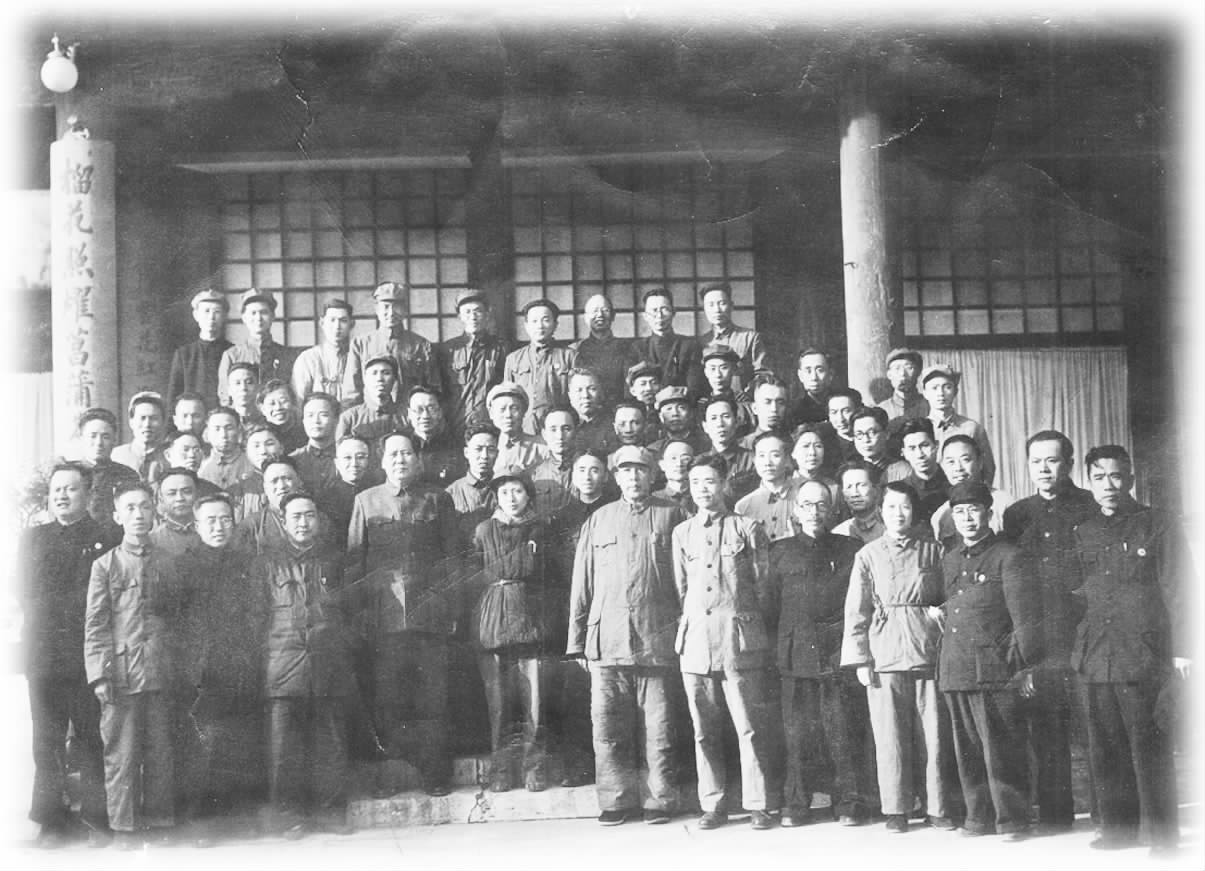
In February 1951 I went abroad for the first time, going to Berlin with Guo Moruo for the World Peace Council — international united-front work, opposing war, opposing atomic war (in fact, opposing the United States). I had been in Beijing several years and had never been abroad; it felt very mysterious. Premier Zhou named Comrade Liao Chengzhi to take charge; Guo Moruo was the head of the delegation. For some reason Liao Chengzhi did not go; I was secretary-general at the time; later the post was changed to Li Yimang. The weather then was very cold; some wore fur coats. Guo was head of delegation; the members included Cai Tingkai, Peng Zemin, the French interpreter Chen Dingmin, the Russian interpreter Yan Mingfu, the English interpreter Lin Qing (later ambassador to the UN) — all from the Foreign Ministry — and several democratic figures, twelve in all. The delegation took part in the World Peace Council in Germany, and at the same time visited Poland, Czechoslovakia, and the Soviet Union. Just before we left, Premier Zhou received us. I clearly remember that he said: when you go out, beyond what you should attend to at the meetings, please look especially at Czechoslovakia — among the socialist countries it was the best, with no economic destruction, with relatively good industry.
In 1951 we did not yet have large airliners and could only fly small planes. It took three days to reach Moscow, four days to East Berlin.
The small planes carried only a dozen or so people. In bad weather, in heavy winds — like the kind of strong winds in Siberia — the plane drifted and swayed; sometimes it hit a vacuum and would drop, and at the worst could even tear apart. Sometimes the plane fell so steeply that the body could hardly bear it. The interpreter on board (the son of the former office director) shouted: "Oh no, I can't take it! My heart's about to jump out!" It was my first time on a plane, too — I felt very uncomfortable, swaying back and forth, very tense. Old Guo said: "Lie down — that's better. Lie in the aisle." Once I lay down it really was better — I no longer wanted to vomit, no longer felt dizzy.
The first stop was Ulan Bator, Mongolia. We rested an hour or so. The Mongolian Peace Committee received us at the airport. Then we flew another two or three hours and reached Irkutsk in the Soviet Union, near the border. The weather in Irkutsk was very cold, more than thirty degrees below zero. We stayed in a hotel. Old Guo had a small room of his own; the rest of us crowded into one large room. The toilet was indescribably filthy. The people lodging there in their padded trousers and big leather coats were also very dirty. I felt — how could a hotel be like this? It was not even up to the Beijing Hotel. Before I had only seen socialism in novels; I imagined the Soviet Union as a socialist country with such a good life, with people so happy, with surroundings so beautiful — very idealized. I thought: how can the hotel of a socialist country be this bad? What is going on here?
The next day we reached Novosibirsk, with two or three hundred thousand people; the houses were all new. In the evening they hosted us at a ballet — Swan Lake. It was my first time seeing ballet; the Soviet ballet troupe danced beautifully. Afterward we were invited to a discussion. They brought out a guestbook for Guo Moruo to sign. I looked — Chairman Mao's writing was already in it: "Very good, very good — thank you all."
The third day, we reached Moscow. The Soviet Peace Committee chairman was the writer Fadeyev; most who took part in the Peace Council were public-affairs activists. I remember among them a Polish woman writer who had written a thick book. After that, I went on to East Berlin.
This trip abroad lasted a week. We first looked at some East German cities. The impression I got was that after the Second World War the East German people's life was extremely hard. In the countryside, the cooperatives had tractors but people ate potatoes; in the city, workers also had food trouble, taking industrial goods and watches and the like to the country to trade for potatoes. As honored guests, we got only two eggs a day; you could not have more; the oranges were shipped from West Germany. Food was rationed — bread, sausage, enough to fill us — but you could see how difficult things were. Compared to today's lavish eating and drinking in China, it was a world of difference. Because Germany had only just emerged from the war, the bombed-out ruins, the buildings, were not yet cleared; but you could also see the building style of capitalist development. Berlin was all four- or five-story buildings. Going west on the road to Halle, peach trees lined both sides. This gave me much inspiration when I later served as secretary-general of the Beijing Municipal People's Committee in charge of greening. By March the weather was not very cold; the trees already had buds. Pear and apple could also be planted. Greening was not just greening; you also combined it with the economy. East Germany impressed me as developed at a fairly high level; if there were no war, the East German people's standard of living would be quite high.
Going on to Czechoslovakia, I felt everything was small and exquisite; the roads were not very wide. The roads of Prague were rather narrow; the small squares were beautiful. In the great cathedrals were rows of black marble coffins of the emperors of various dynasties. The Czechs lived rather well; many of the houses were classical-style; there were no traces of war; Hitler had taken the country and they had quickly surrendered, hardly any fighting. We toured a Czech scenic spot — a hot spring — the great hot spring shooting high, beautiful, in a big building. Below was a river, with mountains as backdrop, and the river running through the middle of this little town — very beautiful. The summer retreat of the emperor also impressed me deeply; it had hot springs too. On the way back we visited a glassworks; Czech glasswork is famous in the world. I remember they gave us small glass pieces and said: "Our glass is good — picked up and tossed on the floor with a ka-cha, it doesn't break." The Czech-style rifle is also famous, but we did not visit the arsenal. The Czech leather shoes are also famous; in Beijing, Dongjiaomin Lane originally had a shop selling Czech leather shoes. We thought this small country had developed its economy very well — truly as Premier Zhou had said: "If you don't see, you don't know."
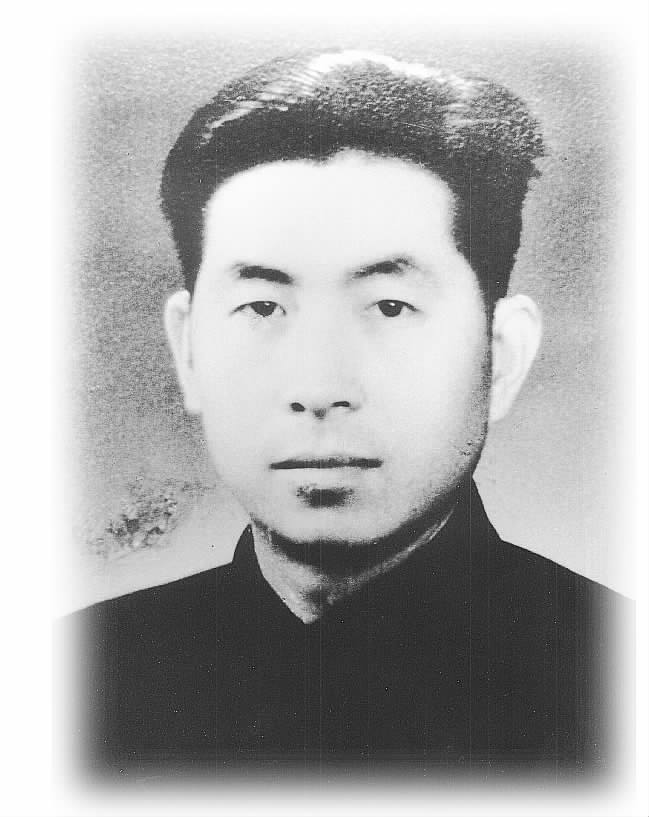
When we got to Poland, the feeling was different; it was a place where Germany and the Soviet Union had fought back and forth. The Battle of Warsaw is famous in the world; the city was bombed unrecognizable. There were also very few men; many of those building houses were women. We saw a monument: the locals there had been killed by the Germans. It seemed the loss here was even greater than in Berlin. In Czechoslovakia we had also seen a martyrs' tomb of those killed under German rule — tens of thousands of crosses around it, all killed by the Germans. In Poland we visited a human-burning oven — where Hitler had brought Jews and Poles, adults and children, and burned them whole in electric ovens; the women had their hair cut, the gold teeth pried out — in one room piled gold teeth, in another piled hair, room after room — the cruelty of fascism, its policy of extermination — you can see it from a glance.
We saw Moscow and Leningrad. I was very interested in Leningrad — entirely an old city. Although Leningrad endured a defense battle of two years, it was not destroyed; the spirit of Soviets resisting Hitler was extraordinary. After being besieged so many days, the relics were not destroyed. Now there is a panoramic painting on the theme of the Defense of Leningrad. Leningrad is on the sea; we also saw the ship Lenin used in the October Revolution. That ship is now a relic, moored in the river.
Leningrad has more than five hundred bridges, large and small, all very well built, with a typical Russian style. I liked it very much. Moscow too is good — all modern buildings. Hitler reached only the edge of Moscow but never entered, so the city was not destroyed. We admired the Soviet construction; the underground was very well built. We visited several stations; one, built by the Komsomol, was very fine. Later in Britain, America, France, Japan, I felt none of them was as beautiful as the Soviet underground. But in 1988 I went once to North Korea; their underground railway, in depth and finish, is first-class in the world. They use baked porcelain tiles for the stations, set into the walls in floral patterns of every kind. We also looked at some factories, including the Stalin Auto Works, which was said to produce one hundred and twenty thousand vehicles a year — really impressive. Today this counts for nothing of course. At the time, watching one car after another come off in a moment, we thought it remarkable.
On the way back from Moscow, Old Guo wrote a travel diary. He did not take the train but flew home for speed; Cai Tingkai and others also flew. Most of us went together on the train, by the Trans-Siberian line; Moscow to Manzhouli is a journey of six days; on to Beijing about another seven. Along the way, at the big stations, I would get off — wanting to see how things were in a socialist country. I saw some men in army uniforms begging for money — some with one leg gone, still asking. I did not understand: why would those who had taken part in the war against fascism still have to beg? Some thoughts began to form. Sharing a room with me in Moscow was Zhao Zongyao, an atomic energy expert; he and I were always together. He had just come back from America. After his return, he could not find the materials he needed in domestic libraries. One day he said he wanted to look at the great library in Moscow; he went twice; he found some materials and copied things into a notebook. One day he came back and told me, "My notebook is missing." We thought at first a thief had taken it; later it became clear it was the KGB watching him — they had stolen the notebook.
Coming back along the Trans-Siberian line, we passed through Siberia and Lake Baikal. Lake Baikal is beautiful. In the Han Dynasty Lake Baikal was within the Chinese map, belonging to the minority peoples. There at the stations too I saw beggars; common people in tattered clothes selling eggs. I felt uncomfortable: how can socialism still have these phenomena? In the Soviet Union when they served us fruit it was a very small apple, much worse than China's; the fruit at the stations too was very scarce. Daily articles were also very scarce; even pens were hard to buy. At a station, some Red Army officers met us very warmly, always wanting a glass with us. I gave one a fountain pen; he was very pleased. You could see how poor their light industry was. In 1956 Khrushchev, Mikoyan, and a marshal visited China. Mikoyan asked me: "You have not only cars, but also pedicabs, rickshaws, horse-carts — is the whole country like this?" I said, "Yes, the whole country is like this." He asked, "Big cities too?" I said, "Yes, big cities too." He said, "Your goods are abundant." Meaning we were rather well-off; our light industry was stronger than theirs. Soviet light industry in those days could never be lifted; the people's life was greatly affected; this question was never completely solved.
This was my first time abroad, with much air of mystery — especially going to a socialist country, going to the Soviet Union, the homeland of the proletariat. When I joined the Party I had raised my left hand, faced toward the proletarian homeland in the northwest, and resolved to bring about communism in China — to fight to the end for communism in all the world, no matter the cost. The Soviet Union was sacred in my mind.
That first trip abroad broke down my mysterious view of foreign countries, broke down the idea that everything foreign was good. I felt their construction too required great effort to recover; their poor, those who could not eat, were still many.
Later China hosted an Asian-Pacific Regional Peace Conference; representatives from dozens of countries came. The conference was held in 1952; I helped prepare it. The chief planners were Liu Ningyi and Guo Moruo, with us as their assistants; the Hé Dà working group was the base, and additional people were drawn in to prepare the Asian-Pacific Peace Conference. Three or four dozen countries' representatives came. The Party Central Committee and Chairman Mao gave it weight; Chairman Mao personally listened to the on-site report. Comrade Peng Zhen took the front in chairing; Premier Zhou personally hosted these foreign guests at meals, personally checking that the name cards on the tables were correct. Because such things had not been handled before — we had not held political power — these courtesies and arrangements were not very well known to us; but in the preparatory process for these meetings we learned a great deal.
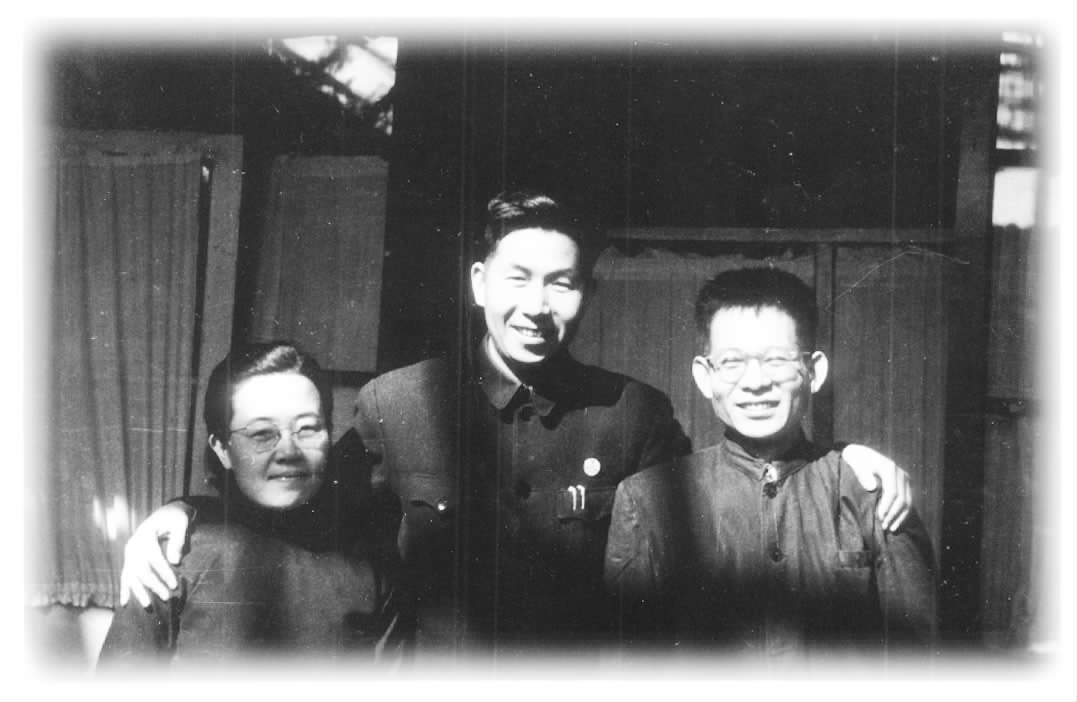
## The Three-Anti and Five-Anti
The first major campaign I went through was the Three-Anti and Five-Anti. I was specifically in charge of the Five-Anti work in Beijing, because I was director of the United Front Office. Beijing's industrial-commercial households were said to number fifty thousand, requiring asset assessment. The Three-Anti and Five-Anti made the deepest impression on me. In this process, Chairman Mao sent Jiang Qing to look into the situation of industrial-commercial households. I found two such households for her; she went to look on the spot, then reported to Chairman Mao. We promptly reported the situation to Comrade Peng Zhen; later Chairman Mao classified the industrial-commercial households into five categories: completely lawless, seriously lawless, lawless, half-lawless, law-abiding. This was a strategic opposition to tax-evasion and shoddy substitution in the industrial-commercial sector.
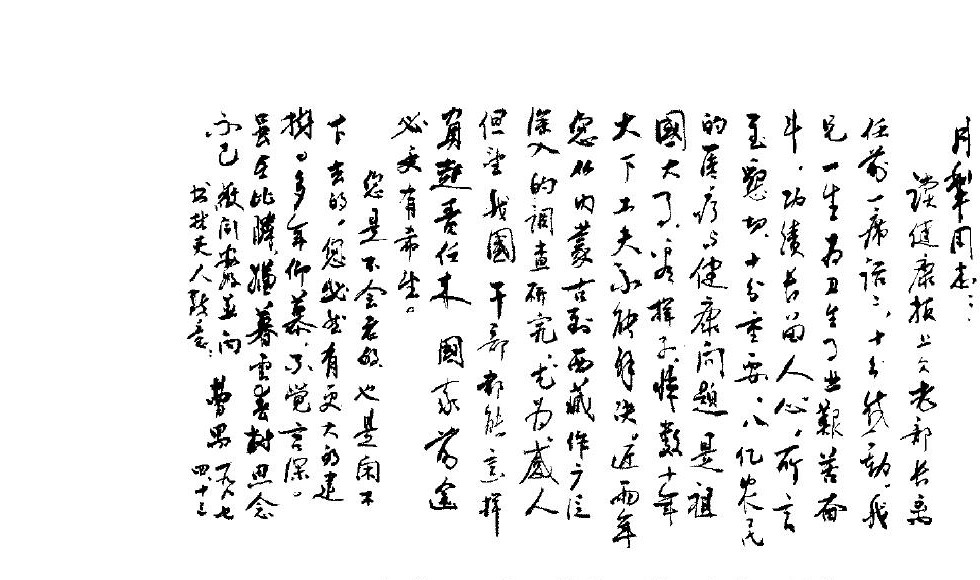
Another matter: the playwright Cao Yu was looking for material. I found him a relatively large industrial-commercial household to observe — to see how the capitalist confessed, what his attitude was. He sat face to face with the capitalist there; the capitalist did not speak; he did not speak either. Later, drawing on his actual experience, he wrote a play reflecting capitalists, Spring Sprouting, Autumn Bearing Fruit, which the Youth Art Theater staged. These two things — one was sorting into five categories, the other was a play written from the Five-Anti. In the Three-Anti and Five-Anti my policy level rose a step. Why classify capitalists? This was a concrete united-front question. Although there was tax evasion, only the seriously lawless few were struck at; the great majority of industrial-commercial circles were united around the Party. After this Five-Anti, the order of the Beijing industrial-commercial sector was much improved; tax evasion, evasion of duty, shoddy substitution decreased greatly. Today many problems of tax evasion, evasion of duty, shoddy substitution are tricks from the time of the Three-Anti and Five-Anti — sometimes even worse. After the Five-Anti, the whole national bourgeoisie drew closer to the Party, creating good conditions for the high tide of socialist construction in 1956.
Before the Five-Anti, just after entering the city, the capitalists had also engaged in hoarding to drive prices up. The Kuomintang had left little grain in the city; grain prices rose three times a day; the grain tigers used the chance to hoard. Several big grain-and-oil families in Beijing operated lawlessly; we discovered them and arrested them. I remember Comrade Peng Zhen had me discuss with the industrial-commercial department whether to crush the grain-and-oil tigers or to knock out their teeth and not let them bite anyone. The industrial-commercial circles said: "Knock out the teeth — arrest them, sentence them, let them out in a few years." So all kinds of unlawful behavior must be struggled against. If you do not struggle, it spreads and spreads, like an epidemic. This also marked the fact that, after entering the city, we had repulsed the bourgeoisie's offensive.
Beyond Comrade Peng Zhen, Comrade Liu Ren also handled day-to-day work. We strictly went by Chairman Mao's policy. After less than a year, in 1952, we went to Shanghai to help them with their Five-Anti. The head of the Central Committee's United Front Department, Li Weihan, went first; later, feeling the manpower was not enough, cadres who had taken part in Beijing's Five-Anti were transferred. Shanghai's industrial-commercial sector was larger, with more households. Before Liberation there was a saying: three Beijing industrial-commercial sectors equaled one Tianjin; three Tianjins equaled one Shanghai; some said ten Beijings equaled one Shanghai. Shanghai's industrial-commercial strength was relatively great. Later the Central Committee sent Comrade Bo Yibo to take command. Chen Yi was then mayor of Shanghai; he often spoke with us cadres taking part in the Five-Anti. My impression of him was very good — a hearty, frank man. Everyone gave great weight to policy, because once the Five-Anti came on, the struggle was very intense; today this one took his life, tomorrow that one jumped from a building. At one big meeting Comrade Bo Yibo said: "I came to the theater and saw someone jump down from upstairs — must have been a capitalist. We must pay attention to policy, must not extort confessions." Comrade Chen Yi too spoke; at the end always one phrase: "Nothing to it — go ahead boldly!" Because he feared everyone shrinking back, and the Five-Anti would not achieve much.
Going to Shanghai I remember I led about two hundred people, including cadres of the Beijing Women's Federation and the Trade Union — I led the team taking part in the Old Zhajia District Five-Anti. Old Zhajia District was a focal point of the industrial-commercial sector. Many big capitalists were on Nanjing Road; some of the big capitalists were famous, like Rong Yiren of the Rong family (now Vice President of China). He was rather young then; he attended every discussion. There were also other Shanghai capitalists, very famous. The cadres at that time played an important role in the Five-Anti. Those capitalists, seeing the cadres from Beijing come to Shanghai for the Five-Anti, knew the source was no small matter — it would not be easy to slip through; they must confess properly. Another piece of experience we had was: first study the size of the industrial-commercial household, the situation of its lawlessness, and its self-criticism, then check by the five categories. Shanghai's Five-Anti was relatively healthy.
## The War to Resist America and Aid Korea
After taking part in Shanghai's Five-Anti, in October 1951 the War to Resist America and Aid Korea began. The Hé Dà hung up another banner — the Headquarters of Resist America and Aid Korea — calling on the whole nation to resist America and aid Korea, to support Korea. We did this for two years. When we were abroad we also called for ways to aid Korea, to oppose imperialism. At home we organized large-scale mass demonstrations; the masses donated to buy planes — they specified Soviet planes. I thought the Soviet Union and we were allied, the relations were good; surely the Soviets would just give China the planes for Korea. In fact, we still bought them. The number of planes our Resist America Headquarters helped donate was not small, because everyone hated American imperialism. We had only just been liberated, and they were attempting to invade Korea, then to invade China — so we had no choice but to aid Korea.
Two years after the founding of the People's Republic, U.S. imperialism saw that the side it had supported had been defeated, and was unwilling to be driven out of China and out of Asia. In the Korean War, America sent troops to back South Korea against North Korea. In September 1951, America rallied South Korea under the flag of the United Nations, with about a dozen countries sending troops to back South Korea against North Korea and China. Some countries sent symbolic units — a brigade, a regiment, a battalion, a company, a platoon. Mainly America, sending hundreds of thousands. That same year, the Chinese People's Volunteers entered North Korea. The war lasted three years. In the end, the Korean People's Army and the Chinese People's Volunteers drove the U.S. imperialists south of the 38th Parallel. After negotiation, both sides declared a ceasefire.
Because the Korean People's Army and the Chinese People's Volunteers fought hard for over two years with no small casualties, the country organized a national consolation delegation. He Long was head of the whole delegation; under him were six branch delegations corresponding to the six great administrative regions; deputy heads included Mei Lanfang and Zhou Xinfang; the deputy head of the United Front Department, Xu Bing; the secretary-general was Chen Yi (the writer); I was deputy secretary-general.
We arrived first at Shenyang to inspect the cultural performance programs the various branch delegations would present. For a month or two we watched performances every day — song and dance, opera. Each branch delegation took several arts troupes; then one delegation at a time was sent to Korea. I went ahead to arrange activities.
I went by car from Shenyang to Sinuiju, on the Korean side of the Yalu River. Sinuiju had been bombed to a wreck. Once across the Yalu, on our side not a single bomb had fallen. The bridge on the borderline had been bombed in a strange way — the Korean half blasted out, our half not touched. So if a country has deterrent power, foreigners do not casually move against you. A Chinese must at the very least have patriotism — when you go abroad, if there is no strong country to back you, others will look down on you. Of course this depends on your own efforts as well — whether you make people regard you, regard your country.
In Sinuiju a Korean People's Army officer received us; he picked us up in a small truck. The roads were cratered and hard to drive on; North Korea is mountainous; on the mountain roads at intervals there were tunnels — when bombers came, the truck would dash into the tunnel. Along the railway from Sinuiju to Pyongyang both sides were full of bomb craters several men deep. The American military, to cut our weapons-and-ammunition supply, dropped bombs constantly, wrecking the supply lines; the railways, when wrecked, were repaired by night. Trucks on the highway would, on hearing the roar of planes, kill their lights and dive into a tunnel.
We set out at eleven in the morning and arrived at our destination at one in the morning; the driver was exhausted. At the Chinese embassy we ate a quick meal and slept. Before sleeping we discussed with the Korean authorities the matters of the consolation delegation and arranged the schedule.
First Kim Il-sung received the delegation leaders at Mt. Moranbong. Tens of meters underground at Moranbong was a small auditorium; the seats were planks. After the reception we rested two days in Pyongyang, then decided to go along the 38th Parallel from west coast to east coast; I changed into a Volunteer's uniform.
The two places that left the deepest impression were Old Bald Hill (Laotushan) and Triangle Hill (Shangganling). At that time, Lao She was also there to interview at Triangle Hill, gathering material. Old Bald Hill had been bombed wave after wave; the hilltop had been shaved down by several meters. The unit had dug deep tunnels into the hill; no matter how the planes bombed, they could not break through; even the command post was set inside. Triangle Hill was bombed worse — every tree blown out, the grass scoured away. Hundreds of planes bombed in waves, day and night; with each wave a few more meters were sliced off. A regimental chief of staff, just back from leave home, was inside a tunnel with a platoon of men; the tunnel mouth was blasted shut, they were all buried, and over thirty men were lost — crueler than in the films. The Chinese People's Volunteers, defending the homeland and the home villages, fearless of bloodshed and sacrifice — that spirit was lofty. Lao She returned and wrote Triangle Hill, fully reflecting the heroic deeds of the Volunteers killing the enemy and defending the country. Our weapons then were very backward — only machine guns, artillery, very few planes. Many times it was a charge: only when the troops occupied the position did we count it taken. Chairman Mao said, "Weapons are not the decisive factor; the decisive factor is the human being." "The decisive factor is the human being" did not mean a person without weapons would do; it meant that if the weapons were inferior but the men were brave and skilled in battle, this could make up for the weapons. Our Volunteers were like that. The more battles we fought, the more weapons we captured; with the support of our Soviet "elder brother," we also bought arms from them. Our weapons were much better than before.
In the last campaign I went to the Volunteers' headquarters, deep inside a gold mine. Peng Dehuai was the supreme commander of the Volunteers. Chairman Mao's son, Mao Anying, was killed by a bomb just outside the headquarters. Mao Anying looked very much like Chairman Mao; he had originally been at Liusuo; whenever there was a meeting with the Soviets, he served as interpreter — a very capable man, his Russian very fluent. When Resist America began, he requested to go to the front to be tempered. That day, he had gone out to fetch water and rations — a bombing came; he had no time to take cover; and was killed heroically.
One day, Old Peng and the commanders came back early and told us how the last battle to drive the U.S. and South Korean troops south of the 38th Parallel was fought. First a carpet barrage from artillery, then over a thousand tanks pushing forward. Today the Chinese army's weapons are quite advanced; if the Japanese came to take us on again, it would not be the equipment of those days when we fought the Japanese and Chiang Kai-shek.
Along the 38th Parallel we paid our consolation visits to the Volunteers and the Korean People's Army. At Kaesong there was little destruction; the houses were as before; not far from there was the negotiation site. At the negotiation site, U.S. military planes were parked; soldiers of three sides faced one another with live rifles.
The suffering the Korean people endured was very great. From Sinuiju to Pyongyang, no houses stood on either side of the road — all bombed out. The men were all at the front; the male-female ratio was said then to be about 1 to 10. Thirty-four years later I revisited Pyongyang — well built. The streets were extremely clean; greening and beautification were excellent. I had seen the traffic police of Switzerland — all women; Pyongyang is the second city I have seen with all-women traffic police. They held their batons, very poised. The big buildings I visited were managed extremely well. North Korea had ten years of compulsory education; if you got into university, the cost too was borne by the state. Looking at their spirit and their city management, it surpassed Beijing. The streets were clean and hygienic; the citizens were courteous. The Pyongyang underground is one hundred meters deep; the stations are extremely beautiful, all marble; the side walls are tile murals; seventeen stations, every one different. I have seen the underground in the Soviet Union, France, East Germany, West Germany, Britain, New York. I said, "Yours is first-class in the world; no other country catches up. Up and down everything is escalator; the air-conditioning is good too." There is waste and sacrifice in their construction too, but it is far less than war. As long as the line is good, the arrangements are good, production develops, the level of education rises — construction will not encounter big problems. Although China still has problems — like price rises, inflation — since the Third Plenum of the Eleventh Central Committee in 1978 we have undergone earth-shaking changes. Which household does not have a refrigerator, a television? Later I visited Korea again; I saw their people's life in this regard does not match ours. In their countryside one could not see television antennas; once across the Yalu River, our country's countryside is full of antennas. In these ten-odd years our changes are very great indeed.
## The "8.6" Conference
In early August 1964 the "8.6" Conference was held in Japan, against the atomic and hydrogen bombs. That year the U.S. had dropped the atomic bombs on Japan's Hiroshima; Japan after eight years of aggressive war against China was already exhausted; at home too the people could not get by, with grievances on every side; with Hitler's catastrophic defeat added, Japan declared surrender. Some upper levels of Japan had also opposed the war — for it had injured Japan greatly too. By incomplete count, Japanese aggression cost about twenty million Chinese deaths and over a hundred billion U.S. dollars in losses, bringing heavy disaster to China. In my home village, the people could not even sleep; every day Japanese soldiers and traitors came to harass. Few young men did not take part in the resistance; even if you did not strike at them, if they did not bayonet you, they would seize you and take you for forced labor. Like Liu Lianren — that was lucky to escape. How many died miserable in another land we do not know.
At the World Peace Conference, the masses of Tokyo, Hiroshima, Nagasaki opposed atomic weapons; the call to safeguard world peace was very loud. Demonstrations of several thousand were organized; Japanese police planes circled overhead, police on the periphery were on guard, but they did not suppress. We visited Nagasaki and Hiroshima. The deepest impressions: one was the hospital that took in those crippled by atomic bombs; the hospital held several hundred — some of them very old; these victims had lost their working ability and were kept by the state. Some had even lost the ability to look after themselves, could not move freely, needed care. The other was the exhibit of the atomic-bomb damage. Beyond the photographs of human casualties and ruined buildings, there were also objects exhibited — furniture, porcelain — at what distance, what effect on them; how steel and iron had been burned to look like what; with scientific clarity. The atomic bomb's main effect is the shockwave; if a person lay in a ditch tens or hundreds of meters deep, he would not be hurt. After the Second World War, the world's peoples wanted peace; world conditions stabilized relatively; using military means to invade and achieve invasion goals would no longer do; every country was developing the economy; some big countries were using economic competition to gradually penetrate and invade. Going to this conference, the deepest feeling was the destruction of war: in the world tens of millions had died, and so many had become disabled. There must be no third world war.
In 1964, China and Japan had not yet established relations. But some friendly figures were very good to Chinese people; the government did not appear; we stayed at the Diamond Drill Hotel. That hotel was very well managed, in good order; the staff were courteous. I asked whether they were all hotel employees. The host explained: they are mostly university students, working a few hours in the morning, going to class in the afternoon; few are full-time, saving cost. If a guest needed to order food or buy something, only a phone call was needed and a staff would quickly bring it. There were many kinds of restaurants on the streets; eating was very convenient. In Nagasaki I asked to stay at a Japanese-style hotel; we found a mid-grade Japanese hotel, completely traditional. Inside the door were tatami mats; one slept on the floor; the staff young women in kimonos, very gentle in attitude; at meals they knelt to serve guests. In Osaka, then Japan was not very developed; many small industrial-commercial proprietors had gone bankrupt. To promote friendship between the two countries, I was asked to give them a talk about our country's development of socialist production. In Tokyo we visited the affiliated hospital of Tokyo Imperial University (Tokyo Medical University) — even worse than some of our poorly equipped hospitals; the floors were not painted; the corridors were piled with broken boxes; the professors wore old suits, some with the cuffs worn through. 1964 was my first time to Japan. On the way back to China, we nearly met disaster.
This trip the head of the Chinese delegation was Liu Ningyi, then a member of the Central Committee, chairman of the All-China Federation of Trade Unions; the members included Zhang Xiangshan, Tang Mingzhao, Wu Xueqian, and me; we returned by the same flight. China and Japan had not yet established relations; we had to transfer through Hong Kong. We took a Japan-American Airways plane; the plane's performance was good, but two hours after takeoff the cabin crew told us the plane had developed a fault and had to fly back — clearly the fault was serious. The plane was over the vast sea, like a leaf. Wu Xueqian seized me and said, "Old Cui, are they about to hold our memorial service?"
To my right sat Zhao Puchu, chairman of the Buddhist Association, returning by the same plane. He calmly took out a scroll with writing on it. I asked him, "Old Zhao, what is this?"
"This is a Buddhist sutra given me by Japanese monks. Don't be afraid — there's something here protecting us."
"All right then — it's up to you."
The originally relaxed atmosphere went silent — not a sound, no one speaking; everyone held breath and waited. Time passed minute by minute. After two hours the plane landed at Tokyo's Haneda airport; four fire trucks waited on the ground.
> Photograph: Comrade Cui Yueli with Zhao Puchu, May Day 1989.
In the war when I encountered danger I did not feel much, because I could improvise and find a way out. On the airplane, there was nothing to do — nothing a human could save. If it fell, certain death. In the Cultural Revolution, in prison, I would think: better the plane had fallen, than to suffer this. If I got out, I would ask Zhao Puchu to write a poem describing the feelings on the plane. Later he really did write me a poem. Zhao Puchu's poem ran:
> Looking up at boundless sky, > Looking down at boundless sky; > Ten thousand red clouds above the Pacific — > As if floating above a lotus pool. > Laughter and talk arrive across the seat, > Angry waves still recall the East; > Subduing demons, do battle a hundred and a thousand times — > See: heaven and humankind are changing.
Tempered by the Cultural Revolution
In May 1966, beginning with "Hai Rui Dismissed from Office, Three-Family Village, Wu Han, Deng Tuo, Liao Mosha," the Beijing Municipal Party Committee was named. Jiang Qing wanted to seize the Beijing Committee, to bring it down. On the question of literary reform she said the Beijing Committee was "an independent kingdom — a needle could not be thrust in, water could not be splashed in." In May, Deng Tuo was denounced inside the Committee. Deng Tuo was a man of great talent — strong in philosophy, history, literature; his policy level was very high; he wrote articles fast; he served as president of People's Daily. He could not bear the sudden denunciation; in early May he took his own life. In early June, the North China Bureau Inspection Group took over the Beijing Committee, struck down Peng Zhen and Liu Ren.
They came first to the Committee building and demanded confessions from each department head. Everything became a haze of smoke. No one had any mental preparation, no one knew what was going on, what to confess. Nor did I. I had carried out Liu Shaoqi's revisionist line — beyond that I could not confess to anything else.
In early July, the criticism-and-struggle sessions against me began. At the Beijing Hotel over twenty of us were "struggled." I was at that time a deputy mayor, in charge of health, foreign affairs, hotel services, and the day-to-day work of the People's Council, also concurrently director of the Health and Sports Department, director of the United Front Department, vice chair and secretary-general of the CPPCC — much specific work. Because the Red Guards' fervor grew, the Beijing Garrison District nominally locked up Peng Zhen, Liu Ren, Zheng Tianxiang, Wan Li and the other principal leaders — actually placed them under protection — bringing them out for struggle so that the Red Guards would not seize and beat them. At that time the highest-ranking Beijing official still outside was me. Everyone lined up scrambling to struggle with me; every day there were one or two sessions — to the district to be struggled, to the various units to be struggled — for nearly a year. In free moments I cleaned, swept toilets. In the struggle sessions I wore a great placard, bent at the waist, three hours at a time. Once during a struggle session, the rebels of the Geological Institute coordinated with the rebels in the Beijing Committee; two students wrenched my arms back; I had to stand on the tips of my toes for three hours; in winter my padded coat was soaked through with sweat; my arms were ruined too — the tendons stretched. Cruel. In that year my home was ransacked several times; my children's grandmother hanged herself. The things at home were carted away; the family was moved into a workmen's shed in Hepingli — two small rooms, drafts on every side. By day I went to the office to do labor.
On 9 July 1966 — a little after nine in the evening — I came home, and an army cadre arrived (later I learned he was a chief of staff of the Garrison Division) with two soldiers, saying it was for "concentrated study." The two soldiers, one to a side, hauled me into a jeep and drove me to a regimental headquarters of the Second Division at Sanjianfang in Chaoyang District. I was kept there till the year's end. That very day was New Year's Eve; five or six soldiers came; one cadre summoned me; soldiers were lined up on either side.
"Are you Cui Yueli?"
"I am Cui Yueli."
"Have a look at this."
I looked — it was an arrest warrant. I thought of asking why I was being arrested, then thought again — he too was only carrying out an order; asking more was useless; you've got me, what then?
"All right, let's go."
A soldier came up and put me in handcuffs; we boarded the jeep, a soldier on each side guarding me, drove west. We set out around ten in the morning, drove for over an hour, reached the Xiaotangshan sanatorium — that place has a fine hot spring; through the springs into the mountain valley — and inside the valley I saw a great cluster of buildings, with a great iron gate. It was a prison.
Inside the prison, all my clothes were stripped off and replaced with prison clothes — I was given a pair of cotton shoes, a pair of unlined shoes; even my undershirt was changed; I could only wear one prison outfit — a black padded jacket, a black padded trouser, the shoelaces removed too. I kept an old, worn-through leather vest; even its buttons had to be cut off; the wristwatch was confiscated. I had brought four volumes of Chairman Mao's works, one Quotations volume, and went in with these. A great courtyard within a courtyard; two iron gates; inside, a four- or five-story building; entering the building, another gate; outside the cell an iron gate, inside a wooden gate — five gates in all.
The day I was seized was New Year's Eve, late 1967, early 1968.
I lived alone in a single room, six small paces wide, ten small paces long; in the back was a small window of about a foot square, sunlight could come in; the window had iron bars. During exercise time I counted: ten cells per floor, one person to each cell; no one ever saw anyone. The prison gave one exercise period a week, to take some sun. Outside the cells were perimeter walls all around; on top, a platform where two soldiers stood guard. The opening of the door had a small square frame; one prisoner at a time was let out for exercise, one in only when another came out; half an hour each.
Morning: a bowl of thin porridge, a piece of pickled vegetable, a small wo-tou corn bun — in winter the wo-tou was cold and hard. Noon: two small wo-tou, a bowl of vegetable soup; in spring the soup had only a few leaves of vegetable, not even washed, the roots cut in too — at the bottom of the bowl was still mud. Evening was the same. All four seasons the same.
Wearing handcuffs, I slept facing the floor on one side, the light from above on me; I could not turn over — turning, the handcuffs cut into my hands like the back of a knife. Four years like this. As a result my right leg was pressed long enough to atrophy. Just after I came in, sleeping, I would unawares turn over, and the guard would call me out to stand against the wall through the night — without my having committed any offense. During exercise, because I was not full I walked slow; the soldier behind would kick me twice. The room had a chamber pot, running water, a heater built of cement in a circle, no edges or corners. The room held only ten things: a bag of tooth powder, a toothbrush, a porcelain mug, a set of prison jacket and trousers, a mattress, a quilt, a pair of broken shoes, an inner shirt, a small worn leather vest. In winter, half-fed and very cold; the heater ran from five or six in the evening till nine, then nothing; not full, not warm; the quilt was thin; underneath was no straw, only a thin mat; not even a pillow; sleeping I pillowed my head on the broken shoes; by nine I was shivering. There was no food in my belly; by ten the belly began to gurgle; I simply could not sleep. There I came to know why the proletariat had to make revolution. Doesn't The Internationale say: "Arise, slaves wracked by hunger and cold"? Wracked by hunger and cold is unbearable. This life lasted five straight years; only after Lin Biao's downfall was there any improvement.
At that time Kang Sheng had reported to the Central Committee, proposing: "The four counter-revolutionary elements Liu Ren, Xu Zirong, Feng Jiping, and Cui Yueli have sold out the Party and state's core secrets; they deserve to die ten thousand times. They must be cuffed, and severe blitz-style interrogation must be carried out, to make them lay down their arms." In that environment, Xu Zirong, I heard, died in prison after not too long. He was fifteen or sixteen years older than me; I was the youngest, forty-seven when I went into prison; before the Cultural Revolution my work had been so intense and yet I had never been hospitalized, never had a serious illness — a cold at most; my constitution was very good. Liu Ren had his cuffs taken off as soon as Lin Biao was crushed; he too died in prison. Feng Jiping sat in prison for nine years, even longer than me. After the Cultural Revolution he resumed work as Beijing Municipal Party Committee secretary; he died of cancer in 1986. Liu Ren was eleven years older than me, had stomach trouble and heart disease too — how could he bear it? That he held on those few years was already not bad. I had my cuffs taken off in 1972 after Lin Biao was crushed — in prison I wore handcuffs for four full years and two months.
Year after year, month after month, an indefinite sentence. I did not even know whether the family knew where I had gone. I had thought it would be a month or two; but half a year passed, then one year, two — would I really not get out even after three? Later I made up my mind: as Li Yuhe says in The Red Lantern, "I'll sit through to the end of this jail." I was not going to get out in this life. Only with this thought could one settle the heart and sit on. Best of all would have been labor reform — you could see the sun, see the earth, see the green things on it; though you had lost freedom, there were still people to touch, you could lead half a human life. Next would be a firing squad — no need to suffer this. The torment was too cruel. At a firing squad, you cry "Long live the Communist Party! Long live Chairman Mao!" — a crack — and it is over. What's so terrible about that?
After Lin Biao was crushed, life improved a little — sometimes there was a steamed bun, a little oil in the dish.
When I first came in I paced day and night around the room, drew a stroke each day — counting one month, two months, three months... ten... after a while I just stopped. The days had no end in sight; I would not get out anyway. Out — either firing squad or labor reform. Maybe I'd never get out, would die inside.
I thought about why I was being put in prison, what my problem was supposed to be, what was in their minds. I should put it together so as to refute them point by point: I am not a counter-revolutionary.
> Five gates of the jail open for me, > Head high I stride right in. > A revolutionary cadre has done no crime — > Chains on my body, my heart still smiles. > Beaten again, forced to confess: > A whole life's record — clean as can be. > The light of Chairman Mao's thought shines through; > The reed gate, the spring breeze, will open of itself.
If Chairman Mao's policy were carried out well, I would still get out. Not long after I came in, I made this jingle, reflecting the mood at the time.
Then came three months of blitz interrogation. Later, recalling this stretch, I obtained Kang Sheng's order from the Ministry of Public Security; in the back was the directive: "Blitz-style interrogation. Make him lay down his arms."
"Did you go to Dongsi Liutiao?"
"Dongsi Liutiao — I went there often, ordinarily."
"I'm asking you whether you went."
"I went specifically — I can't remember when."
"Damn it!"
"Bang! Bang! Bang! Bang!" They struck me head and face with several fists. "Did you go or didn't you?"
"Maybe I went."
"If you went, say you went! Where in Dongsi Liutiao?"
I said: "I really can't recall where. I don't remember clearly. Maybe — when I was at the Hé Dà as deputy secretary-general, our secretary-general Liu Guanyi lived in Dongsi Liutiao after Liberation; I seem to have gone to his place."
"What kind of door?"
"Second gate, maybe?"
"What did it look like?"
"A square courtyard."
"What number?"
"Can't remember clearly."
"What the hell, can't remember — you damn well know..."
"Bang! Bang! Bang! Bang!" One round and my whole face was swollen. The next day my eyes were swollen so I could not see. Sometimes I had to clench my teeth — if I did not, my teeth would have been knocked out.
Not full at meals, not sleeping well at night. At interrogation, although there was a seat I was not allowed to sit; if I sat, mid-question they would shout, "Stand up!" — and I would stand from eight in the morning to eleven or twelve, then from two in the afternoon to eight at night. Back to the cell for vegetable soup and wo-tou. Out of anger I could not eat, and that was that. After eight: nine, ten, eleven, twelve — sometimes till two in the morning. One round was three days and three nights, then a rest of two or three days, then beating again.
After a beating, fearing they had killed me, they would have me go back and write material — five sheets of paper, a bottle of ink, a dip pen. With nothing to write, I wrote: "carried out Liu Shaoqi's revisionist line; my proletarian consciousness was very low; I did not go by Chairman Mao's directives."
I'd hand it in; at the next interrogation they'd curse: "Damn it! You write only this? Your own problems and you don't know? Are you trying to die?"
I'd say I had nothing to write. "What do you mean nothing to write!" A kick sent me sprawling, and another beating followed — I could not even stand up. Both my lungs swelled; I held myself rigid for fear my heart would be broken.
After nearly three months of blitz interrogation, my eyes could not be opened at all; walking, I held them open with my fingers. After four or five months my face went down; both lungs hurt with breathing.
"What number in Liutiao?"
"I don't know."
"What do you mean don't know! You damn well know and won't say."
They wanted to make Liu Ren into a spy. Whether Liu Ren was a spy — how would I know? Liu Ren joined the Party in 1927; I joined in 1937; he was over ten years older than me; how could I know his work circumstances? To say he is a real spy or a fake spy — how could I say! Later, they said whenever I mentioned Liu Ren I had to add the title "great spy"; if I did not say it that way, "watch out for yourself."
After that I would only describe matters and not name names — because saying "Liu Ren" got me beaten. That too is a way of struggling.
Seeing they could not get out of my mouth "Liu Ren is a great spy," they began to use the apparatus.
Each interrogation was: one chief interrogator, one deputy, one whose specialty was beating, two recording — five people in all. They would lean me against the wall; one of the recorders would push me, give a tug on the cuffs, and the cuff would cut into the flesh — blood would flow down the sleeve.
"Is Liu Ren a great spy?"
"He is not."
"Damn it! Is he?"
"He is not."
This went many rounds; the details I cannot now recall clearly. But this was the way they tried to make Liu Ren into a great spy.
Next was the investigation of Wang Guangmei. They wanted to make Wang Guangmei into a spy, then through her implicate Liu Shaoqi, saying he had collusion with spies. On the Wang Guangmei matter the beatings were even worse than on the Liu Ren matter. This was the key reason they had seized me. Because in 1944, when I was doing underground work, I had come to know Wang Guangmei. She was then in the physics department of Furen University; her studies were good; she had originally been intended to study in America. Later it was I who persuaded her to stay. After Japan's surrender, Ye Jianying represented the Chinese Communist Party Executive Office in talks with the Kuomintang and the Americans — called the Three-Person Group. There was a shortage of English interpreters; I urged Wang Guangmei to interpret for Ye Jianying. After negotiations broke down, Ye Jianying took her to Yan'an. Her studies were very good then, her English was very good, going to America was no problem; from primary school through middle school she had been at the top, in university she was a star physics student. In Yan'an, she married Liu Shaoqi.
They were determined to get out of my mouth that Wang Guangmei was a spy. Why force me to talk about Dongsi Liutiao? Because at Liutiao there had been a Japanese intelligence office, and afterward perhaps the Kuomintang intelligence office also occupied it; the details I did not know clearly. So they kept asking which gate, what number — and beat hard.
I started misleading them: "What number? Number 1."
"Like hell, Number 1!"
"Then Number 2, Number 3 ... Number 17."
"Damn you, you know damn well it's Number 17 — why don't you say so. It is Number 17. What were they doing there?"
"That I really don't know." Another vicious beating.
In the end they had me write down what kind of gate, what number, in Dongsi Liutiao. I wrote it down. They wanted to use this to support Wang Guangmei being a spy.
"Did Wang Guangmei go to Liutiao?"
"I have no idea whether Wang Guangmei went to Liutiao. My contacts with her were always at the Working People's Cultural Palace." (At that time the Cultural Palace was called the Tai Miao; once a week we met there.)
"Has she really not been to Liutiao in all those years in Beijing?"
"That I really don't know — over the years she'd have gone to many hutongs; she might have."
"Damn you — you know perfectly well she went, and you say she did not!" — twisting my meaning. Their interrogation method was to beat their subjective wish into my mouth.
"Write down which gate of Liutiao Wang Guangmei went to, what number — write it all down."
I said I had told it all; what was there to write? I wouldn't write. So they yanked the cuffs, pushed and beat me from behind, forced me to write that I had been to Liutiao with her, sign and put my fingerprint. I thought at the time: so this is how you "obtain evidence!"
For Liu Ren they put me through four or five rounds, three days and three nights each; for Wang Guangmei they put me through seven or eight rounds, each still three days and three nights.
There was another man, Zhang Dongsun, of the Democratic League, also a nationally known united-front figure. Before Liberation he was a noted professor, with feet in several boats, in contact with both the Communist Party and the Kuomintang. Under Japanese rule he had been arrested, and may have agreed to work for the Japanese. After the Japanese surrender, my superiors directed me to find Zhang Dongsun and tell him that the Communists were going to enter the city — to persuade him and the democratic figures around him to cooperate with the Communists, to put Beijing in good order. As it turned out, the Communists did not enter; the Kuomintang did. He was a professor at Yenching University, with standing not below that of the chancellor; he had connections in every direction; he may have had ties to the U.S. State Department. Politically he was a great spy, not an ordinary little one. After Liberation, Chairman Mao placed him as a member of the Central Government; he was over seventy then. In the 1950s, during Resist America and Aid Korea, he gave the United States the materials of the annual state budget. The specifics I did not know clearly. Once at Huairentang Chairman Mao said in a speech: "Zhang Dongsun stole our country's budget and gave it to the Americans." So I knew Zhang had relations with the Americans, was a great American spy. But considering that he had after all cooperated with us for a stretch, no severe action was taken; he was relieved of his Yenching professorship; he was given a house to live out his old age, and a monthly stipend. At that time the Beijing Municipal Committee was at the old German Embassy site; I was Comrade Peng Zhen's political secretary; Luo Ruiqing was concurrently director of the Beijing Public Security. Once we were playing billiards. Luo Ruiqing tugged my arm and said, "Old Cui, Zhang Dongsun has a radio; he says you arranged for him to install it."
"You go investigate. If the investigation says I arranged it, then I did. If it says I didn't, I didn't."
I did not know Zhang Dongsun had a radio, that connection with the Americans. His saying I had arranged it was equivalent to saying the Communist Party had told him to install it — to clear himself of guilt and pull me in. I did not even know about it.
They brought this matter up too, and put me through another two blitz interrogations, six days and six nights.
I said: Zhang Dongsun is a spy, Chairman Mao said so. But before this I did not know he was a spy. At the time, when superiors told me to find him, he was carrying out a directive; whether he was working as a spy — how could I know? When we were winning over Fu Zuoyi, didn't he take part too? After Liberation he was still a member of the Central Government. So many public security people, government members didn't know — how would I know? Besides, after Liberation I had no contact with him.
These matters together filled three months of blitz interrogation. In prison I made another jingle:
> Three corn buns a day — > The good time of life flowing eastward. > Chains on the body — true pain; > Loneliness without end. > Interrogated again and again, > Tortured into confession — fresh blood flows. > "Death" and "suffering" — neither do I fear; > What is precious in life is freedom. > A hero does not let tears fall; > The high mountain stands, never bowing its head.
Three months of blitz did not break me — not in mind, not in body — because I had done nothing to fail the Party and the people. Errors at work, possibly. But to say I was a spy or a traitor politically, that I had done evil — that does not touch me at all.
Before the Cultural Revolution, Chairman Mao had said: "If I tell you to charge, even into a sword-mountain, into a fire-sea — I would do so." My loyalty to the Party had reached the point where I would do whatever was asked. When I joined the Party I had faced northwest, raised my left hand and pledged: "to fight to the end for communism." All my life I have not forgotten it. To be made a counter-revolutionary, locked into prison, is too far apart from my real situation. I thought: "Within the Party I am no top-notch cadre, but upper-middle is fair. If a man like me went to prison, how many cadres would have to be locked up, struck down? The line on me is certainly excessive; if it is excessive on others too, then the Party's line is Left." This was my early thinking.
In the fifth year of imprisonment, after Lin Biao was crushed, the prison began to allow family visits — but they had to be approved by Wang Dongxing.
> Photograph: Comrade Cui Yueli's calligraphy — Yu Qian's "Song of the Lime Kiln."
The first family visit, four or five people came. By then Lin Biao was crushed; but I did not yet know what tangle of things he had done. We could read People's Daily by then; one day in the paper there was a summary by the Tianjin Education Bureau, with a phrase: "the absurd theory of use-it-first-learning, instant-effect" — that was put forward by Lin Biao when studying Mao Zedong Thought; how had it become "absurd"? I thought there must be trouble with Lin Biao. When the family came, they hinted that quite a few people were in this prison, some apparently of higher rank than I; I did not really believe — how could the Central Committee's leaders so casually be put in prison? They hinted that Peng Zhen too was inside. I believed it even less — Peng Zhen was at the time a Politburo member, secretary of the Central Secretariat — could one of such high position be in prison?
Only after I came out did I learn that Peng Zhen indeed went into prison. From the Beijing leadership Peng Zhen, Liu Ren, Fan Jin, Zhang Wensong, Ren Bin, me, and a deputy director of the Sports Commission Lin Yizhong, and others — at least over a dozen — had been imprisoned. Ren Bin died soon after going in, because he had asthma and heart disease.
The family thought I would be in mental anguish after years of imprisonment; instead I talked and laughed easily. The family visited every six months. Until the spring of 1973, my eyes had become very uncomfortable; I was let out to see a doctor; my heart took some comfort from this, though it also unconsciously increased my urgent wish to get out. When in the world would I get out? I would not stay there one more day, one more hour, if I could help it.
They took me to No. 6 Hospital to have my eyes seen; conditions there were relatively better, but soldiers watched outside day and night and I was not allowed out. The hospital had a director, Cao Weili, who tried every way to visit me, hinted that I should rest and recover; if my body got better I might get out sooner. But after a few days, suddenly I was sent back to prison. My spirit took a great shock from this; later I learned it was the Gang of Four stirring trouble; the prison atmosphere again grew tight.
That day was around five in the afternoon. The setting sun, the pallid sky, deepened my mood of grief. Back in my room I felt my head light; from the sky came voices — Chairman Mao's, Premier Zhou's, my mother's, the voices of past acquaintances; the voices were not clear; they spoke through the day and night; I spoke back to them. I began to break down — restless, unable to stand still; at night I was afraid of the empty voices; sometimes I saw people being chopped to pieces — terrified to death. This is the panic that long imprisonment forms in a person. The food they brought me I kicked away. I wanted very much to get out; I felt — confusedly — that Premier Zhou was going to rescue me, saying the prison wall was too thick, even sending in a tank could not break it through.
I really went mad. They brought a doctor from Anding Hospital to look at me. At that time it was not only I who went mad; Feng Jiping too, and after going mad cursed Chairman Mao; Fan Jin to this day has not fully recovered. Locked in a cell, no matter how a person thinks, he cannot think it through; in the end the mind breaks down.
After they gave me medicine, my four limbs went limp; I could not move; to wash my face I had to crawl over on my knees; I did not even have the strength to wring out a towel. This was because the dosage was too large; the cerebellum's motor nerves were damaged; the after-effects of this illness have not fully gone away to this day.
Half a year later I could walk; outside the cell I could not walk through exercise; my head was as heavy as a stone; without a stick I could only inch forward.
At the same time, from anxiety, both my eyes suddenly went blind; I could see nothing. This was unbearably painful; even labor reform was now hopeless. Only then did I know why people say to protect anything precious, protect it like the eye. Because the eye is too precious. Without the eye, not seeing anything is too painful.
Each day I took medicine, no longer agitated, but unable to move either. The eyes blind too; I could only lie on the bed; I groped to eat what was given. I do not know how long it lasted before I could sit up.
Several months later, in the summer of 1973, the family came to visit and were terrified — I was a different person, like a fool; from the medicine I had become lethargic; could not walk, speech not fluent, no feeling. Later the illness slowly eased. After this, for nearly two years, in prison I could only sit; I could not read; my head was painfully swollen. I would knock against the wall for some relief — actually grinding a groove into the wall. I slept poorly, walked little, every day like this. The cuffs were already off, life was somewhat better, but the bodily pain was sharper. After Lin Biao's downfall, the beatings were less, but they still pressed me to admit Wang Guangmei was a spy. I said: you can shoot me, but no beating. Beating violates policy. We struggled three more hours. They did not beat or use instruments — I said even less; I refused to lie. They pounded the table, threatened, used every means — borrowing a tiger's skin — wild for a moment, but truth was not on their side; against the facts, they had no power against me.
> Photograph: 1968 Cultural Revolution period.
Reading the paper, I saw the targets struck down were the landlord, rich peasant, counter-revolutionary, bad element, rightist, revisionist, capitalist, "stinking ninth" intellectual — eight or nine categories all "counter-revolutionary." If a cadre like me went into prison, how many people would be struck down? Chairman Mao — didn't you say revolution must be eaten one bite at a time; you can't chew if you take too much? You make landlords, rich peasants, counter-revolutionaries, bad elements, rightists, and the rest — these nine classes together with their families, so many people — into enemies; can you solve the problem at one stroke? At this point I was sure the Cultural Revolution line was Left. But the Cultural Revolution had been personally led and launched by Chairman Mao; I still did not have full confidence to say it was wrong. No one dared say it.
Only at the Third Plenum of the Eleventh Central Committee in 1978, when the Central Committee summed up the errors of Chairman Mao's Cultural Revolution, did I more systematically grasp that the Cultural Revolution line was completely wrong, Left, and had done enormous harm to the Party, to the people, to the country.
In those eight years of prison I did no work and my body was wrecked. By rights this period should have been the most productive of my life — by then I had some experience, my thinking was relatively mature, I had drive and decisiveness in work, had inherited the Party's fine working style, should have played a still greater role in the Party's work. But the upheaval of the Cultural Revolution plus the eight years in prison — from forty-six to fifty-eight, twelve years lost.
After eight years in prison, I held no personal grudge against Chairman Mao. On the contrary I still felt Chairman Mao was a great figure — his starting point was to make China good; only the line was wrong, becoming more and more Left. Even with all I had suffered, I did not hold personal account of gain or loss, of grievance.
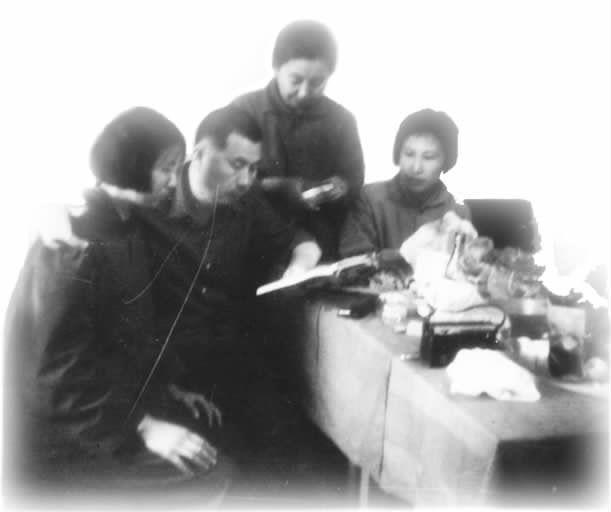
In the first five years of prison I still had the four-volume Selected Works of Mao, one Quotations; the Quotations had thirty-three chapters, and I could recite them word for word. Looking at things must not be made absolute — the good cannot be absolutely good with no problem; the bad cannot be absolutely bad with no merit. Those are mistakes. As Old Marshal Zhu said, even a labor-reform man has merits — he can work, he is not waste. The dialectical view is: everything in nature is temporary, is a process, is in continuous change and development. Anything in nature, in human society, has its arising, developing, growing, and perishing. So why is Marxist philosophy ever-young? Because it sees things as developing and changing — as a process; the old dies, the new is born. Chairman Mao advocated seeing the two sides of things, not making absolutes; with merits and faults — this conforms to dialectics. In my prison years I held on to this guiding thought to view things.
No one wants to sit in prison; but if I had to sit, how could I make this bad thing into a good thing? Chairman Mao said bad things become good things. The only way is study. When did I ever have such ample time to study Mao? I memorized the dialectical chapters and the well-written chapters of On Protracted War; I memorized On Contradiction and On Practice. They broadened my thinking, raised my theoretical level, laid a solid base. Marxist-Leninist works must be read more; but no matter how much you read, if you do not link with reality, do not link with your own world view, the use is not great. Marxist philosophy has two features — class character, and the practical character. Especially the practical character, against theory it is primary. Today our Party's "seek truth from facts" style precisely matches the principle that "practice is the sole criterion of truth."
In this period, through studying Chairman Mao's philosophical thought, my own ability to observe and analyze improved. About Chairman Mao, at any time I have always thought him a great Marxist, great statesman, military strategist, philosopher, poet — this I have never doubted. From my standing beside him at the founding ceremony at Tiananmen, when I was twenty-nine, I had revered him; his serious mistakes do not detract from his greatness.
After Lin Biao was crushed, I had the family bring me Capital, Selected Works of Marx and Engels, Selected Works of Lenin, World Geography, Selected Works of Lu Xun, and many other books. For all my years in the Party, I had wanted to read Capital and never finished it; this time I read it through three times in one go; I noted down chapter and section. This greatly strengthened my economic outlook in later socialist construction. Some cadres in cultural-and-educational work do not pay enough attention to the economic outlook. Marxist-Leninist thought cannot remain in the realm of thought; the social form of thought must be sought in the relations of economy — that is correct, that is materialist. The main thread of social development is economy; politics, law, morality, and ideology are all the superstructure. Marx's Capital helped me greatly — toward a thorough Marxist world view, on economy, labor, science, it helped me greatly.
Why is my thinking now relatively broad? On one hand I have been through tests positive and negative, bitter and sweet; on the other, I read World Geography with reality in mind. There were 124 countries in the United Nations then; I memorized their populations, areas, capitals, products, economic conditions, political systems. For example Africa had 47 independent countries then; I memorized them all; later when I visited African and South American countries, the details I could not know, but the general knowledge of those countries I had — it sat in my head. The accumulation of knowledge is not the work of a day, it is a long, painful process. In my prison years I read many books seriously, some by rote; this was very good for accumulation of knowledge and for theoretical level. Is this not bad-into-good?
The second bad-into-good: gaining superhuman perseverance. Without perseverance you cannot do anything; you will accomplish nothing in society. You must have perseverance and a fighting spirit. Whether for self, family, country, life, study — in the doing of anything, you must have perseverance. Without perseverance, in my view, one is hopeless. In prison I had been through the test of life and death; coming out, of fame, position, official rank, vanity — I cannot say I do not want them at all, but I want them little. Death does not frighten me; if differing views or struggle affect my career, I am even less afraid. Holding office or not — what is that?
In the matter of perseverance, beyond daring to struggle against every kind of incorrect phenomenon, the chief thing is in carrying through line, principle, policy — in the great matters of governing the country and serving the people, one must hold fast to what is right, to truth. Trifles do not affect great state matters; but if line and policy go wrong, it is no small thing. One Cultural Revolution and we are decades behind Japan. In 1964 I went to Japan and saw professors with the cuffs of their suits worn through; the floors of Tokyo Imperial University Medical Hospital had not been painted. Fifteen years later, in 1979 on my second visit, all changed; the buildings looked like high-class hotels. So the core is to attend to great matters of state, to whether line and policy are right; one must train this ability — only with it can one take part in great state matters. Otherwise, putting forward views or making complaints, none of it has effect; what you say is not pertinent; you do not understand as much as the men in charge.
I pay great attention to line and policy. For example, on Chinese education: can it walk on one leg of regular institutions alone? To raise the whole nation's level, on one leg alone is not enough; at the very least it is hard. There must be a second leg — for example community-run schools whose quality is not necessarily lower than the regular institutions. The state has difficulties; it cannot run too many regular institutions; it must vigorously develop non-regular institutions, so that thousands and thousands of young people, intellectuals, can have the chance to study and improve themselves. So that millions, by varied channels and forms of training, can adapt to a country with 1.1 billion people; so that the nation's quality may be raised. Especially in the countryside, more diverse methods are needed to raise science, culture, thinking, civility, on every side; in line with the rural reality, you cannot just run ordinary training classes; you can also run short-term, long-term, specialized universities — only thus can culture be popularized, profitable to the whole of agricultural production. I once raised opinions to those running education; if not changed, I raised them again — no matter who you are, I think I am right; until my view is proved wrong, I will hold to the end.
Perseverance is shown not only in work but in life too. Some people drag and dawdle; some leave things unfinished — that is a lack of perseverance. Without that foundation, a person cannot build a good style; as an official he becomes a bureaucrat, as a soldier no good soldier. So in my work, no matter how big or small, there must be a result. For example with letters from the masses, every letter that should be answered I answer. As a cadre, even more must one cultivate that style — to do things to the end.
I smoked over thirty years; before the Cultural Revolution I had quit many times without success. But after I went to the Ministry of Health in 1978 I made up my mind — to this day I have not had a single cigarette. To quit, quit thoroughly; have perseverance. Of course this is only a small thing of life; but it can train a person's perseverance.
One must have perseverance to support truth; truth is gauged by the test of practice.
These are several of my experiences of turning bad into good — turning sitting in prison from misfortune into blessing.
In prison I read Lu Xun's works; I read his essays again and again; his poems are excellent; I can almost recite them all. Through study, my own thinking and theoretical level rose, my cultural quality improved. I was a primary-school graduate, no schooling beyond a few years, less than half a year in a training class — my base was thin; I had only read books to do with my work. The prison gave me a rare chance to study, doing relatively systematic study; at the same time it tempered a strong perseverance — doing anything without fear of bitterness, without fear of using the brain.
When I was Minister of Health, I remembered a great many figures, some bureau chiefs did not remember as many. Once on a visit to East Germany, the East German Minister of Health — about my age — was famous for memorizing all the country's figures; in negotiations he cited many figures; I cited many too. Afterward our junior staff said the two ministers were evenly matched, both remembered so many — what supported it was perseverance. In study, some things must be by rote. To remember a phone number, a single digit wrong will not do. Not afraid of using the brain, not afraid of effort.
Third: the great line and policy of the state must be correct — this is the most important. If the line of governing the country is not correct, one swing of the knife and the loss is incalculable. The Cultural Revolution is a typical example.
After Liberation I took part in every kind of campaign — Three-Anti, Five-Anti, Anti-Rightist, Anti-Right-Deviation, the Four Cleanups, class struggle. Now thinking back, the shortcomings of each campaign, what was wrong, are clear. The communes — communes are bridges; communism is heaven; I went through it personally. The basic problem was the line was wrong, Left, and the loss was beyond redress. The Great Leap Forward of 1958, then the three years of natural disasters, eating tree leaves, people starving to death. In governing the state one must attend to line — this is paramount.
After five years of prison life, with no end in sight, what to do? Just as well a lifetime; you cannot keep being miserable for a lifetime; crying every day will not get me out either. So I made my own pleasure. I made another jingle, to use as a guide to fewer worries:
> Pleasure within prison — pleasure inexhaustible. > Pacing lightly, drifting into the clouds. (in the small room I had paced myself dizzy) > Three meals delivered to my mouth — > Better than retreat in deep mountains. (quiet, no need to entertain visitors) > Falling into deep sleep, not knowing dawn, (reverse — first half-night I cannot sleep, only at dawn can I doze off) > At dawn the hundred birds come to the phoenix. (in the prison courtyard the birds cry) > At first light the novice strikes the wooden fish, (the soldiers were all bald-headed, like little novices; in the morning, before the prisoners had finished waking, they kicked the door open) > At midnight the monk strikes the bell. (at ten o'clock the bell was struck in unison to make prisoners sleep) > The world fears entering prison — > How could it know that within the cell pleasure can be found?
In prison I missed home most. When the soldier's manner softened a little, you felt close to him. Only after five years were family visits permitted. On National Day we could see the paper. On May Day or October 1 there were always demonstrations organized; from 1949 founding ceremony through the Cultural Revolution, in the demonstrations I always stood behind Mao Zedong on the Tiananmen rostrum, so that when the Chairman asked which unit a contingent was, I could answer, or carry out tasks the Chairman gave on the spot. Beside him stood two: I, and Wang Dongxing, who took charge of security. Chairman Mao was tall and steady in bearing; the deportment of Mao, Premier Zhou, Liu Shaoqi, Zhu De all befitted a great country like China — splendid. From 1949 to 1966, seventeen years, every May Day and National Day I took part this way and helped organize the demonstrations. To National Day I had a particular and concrete attachment. Over a hundred thousand people in Tiananmen Square forming the characters "National Day" — truly a red ocean. Every October 1 there was a military review — tanks, artillery, army, navy, air force — truly mighty and majestic. I miss this scene especially. The country is so great, the people so jubilant — especially in the fifth year of prison I felt this strongly. I made this poem:
> The body in deep mountain prison, > The heart turned toward the capital, ten thousand flowers in bloom. > Apart no more than the breadth of a hand, > But thousands of mountains and ten thousand miles in weight. > Wife and children long for my return, > Year after year, month after month, no word. > When can I leave the prison — > Waiting only for the day the army renders judgment.
> Photograph: Comrade Cui Yueli with family, 1980s.
Leading the Health Work
After my release from prison in 1975 I spent three years recovering. On 21 March 1978 I came to the Central Ministry of Health. Comrade Jiang Yizhen was the minister at the time, with five or six vice-ministers including Qian Xinzhong, Hu Zhaoheng, and Huang Shuze. Comrade Jiang Yizhen spoke with me, said: I too sat in prison for years; I see your spirit has not yet recovered well; I'll give you a car and two secretaries; you can go anywhere in the country to look around. At work then, I still dared not speak; speaking made me tense. Because in prison they had given me the wrong medicine, my head was heavy; I could not walk; I had used a cane for three years. Comrade Jiang Yizhen had me go around the country to inspect health work. I went from Guangdong to the Northeast, traveled many provinces. This played a great role in turning my condition around.
The times were different. Wherever I went, people welcomed me happily — completely unlike being struggled and pressed in prison. In a good working environment, with good human relations, my mind returned to normal. When I had fallen ill, I felt my mind would not work; though it was reactive psychosis, the wound had been very deep. Steady inspections, steady recovery. I went to the countryside, to the grassroots, and came to know much about the situation of health work in different parts of the country, and the state of health work after the Cultural Revolution. There were many problems in health work after the Cultural Revolution, but the main issue was recovery. At this time Comrade Jiang Yizhen asked me what work I would like to take charge of. I said: let the organization assign it. He said: "You take charge of higher education!" I agreed. He also said: in addition, take charge of discipline inspection. Later he went to Hebei province to be first secretary; he had originally been in charge of TCM (traditional Chinese medicine) himself. About to leave, he asked me: are you interested in TCM? I said: that's fine, anything will do. So I began to take charge of TCM.
Taking charge of medical education helped me much; I came to know what China's higher education was about. But the main thing then was recovery, criticism of the bad results of the Left errors. I managed for some years, also went abroad — to the U.S., Canada, Australia for inspections of higher institutions. My interest in higher education was high; I felt deeply that higher education must be done well, must reach a real level. Higher education is the main means by which we solve the educational problem of one billion people; but at the same time we must also have adult education and many varieties of education suited to the realities of our country — that is, a non-regular educational track. Without this, the broad masses of workers, peasants, and unschooled young intellectuals would have no chance of further study. I always insisted on developing and strengthening adult education; relying on regular higher education alone cannot fully meet the needs of construction in economy and culture for our 1 billion-plus population.
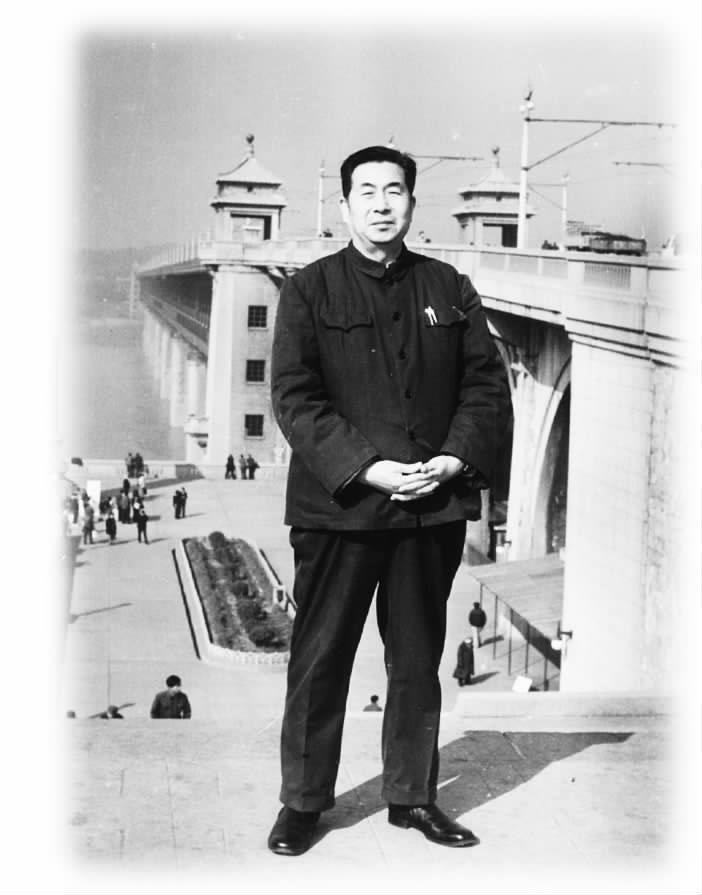
Building a health enterprise with Chinese characteristics requires giving weight to the development of TCM. TCM is a uniquely Chinese medicine; from theory to practice it is relatively complete; it has its own theoretical body and practical experience. We should develop TCM, Western medicine, and the integration of the two.
By that time TCM had been gravely damaged. Before the Cultural Revolution there were 371 county-level-or-above TCM hospitals nationwide. After the Cultural Revolution — although the Central Committee gave weight to TCM and Chairman Mao had given TCM very high evaluation, holding it would contribute to the world's people's health — the Left line of the Cultural Revolution had brought TCM to ruin, almost wiping it out. Many old TCM doctors were denounced as "monsters and demons," sent back to their home villages, forbidden to practice. Some medical institutions, lacking those old TCM doctors, ceased to function. Beyond that, the slogan of "integrating Chinese and Western medicine" turned out as "direct integration": TCM hospitals all gave way to Western medicine. Of the original 371 TCM hospitals, only 171 remained — equivalent to wiping out 200; of those 171, basically Western medicine held the power, the medical methods inside basically all Western. After the ten-year cataclysm of the Cultural Revolution, the number of TCM personnel fell by half. Now nationwide TCM titled professional staff numbered 340,000 — only 0.34% of the population, far below the 1% of the early founding period. Of these, a great part were of low and middle level; high-titled personnel only a small share. The state of the TCM corps was grossly out of proportion to the daily-rising needs of 1 billion people, and especially the 900 million peasants, for medical care. If things continued, if the Left line of the Cultural Revolution were continued, TCM would imperceptibly be wiped out.
Seeing this, we wrote reports to the Central Committee. The situation we reflected gradually drew the attention of many central leaders. Comrade Peng Zhen wrote me directly, calling for the development of TCM, the development of traditional medicine. Comrades Hu Yaobang and Wan Li, in central meetings, also called for the development of TCM, of Western medicine, of integrated TCM and Western. This correct line played an important role in the healthy development of TCM.
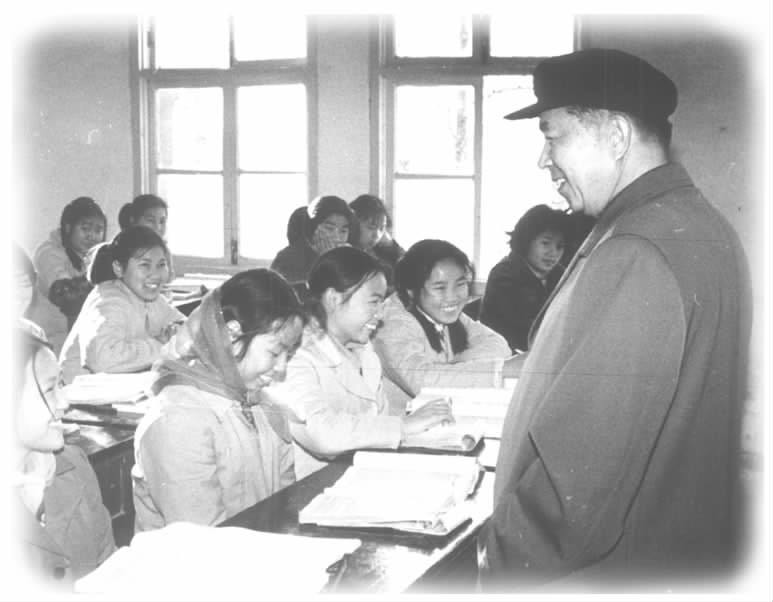
TCM had no money — it could not build hospitals nor train people; in clinical work, education, research, every area lacked corresponding strength. In 1982 I became Minister of Health. From the start, in Hengyang, Hunan, we held the National Conference on TCM Hospitals and Higher TCM Education — what is now known as the Hengyang Conference. At that conference we put forward the concrete line for developing TCM, and corrected the Left line. I said: of the 171 remaining TCM hospitals, all "hanging Mei Lanfang's signboard while singing Zhu Fengbo's tune" (a bel-canto musician) — that won't do. We must seriously develop TCM.
In the course of developing TCM we also linked to the development of other ethnic-traditional medicines: Mongolian, Tibetan, Uyghur, Dai, and so on. We also called for developing folk medicine: where there was a good prescription, a good treatment, we called for developing it.
Now nationwide TCM hospitals have grown to over 2,500 — meaning every county in China has a TCM hospital, and the ethnic-minority regions have ethnic medical hospitals. In Tibetan-inhabited regions, like Tibet and Qinghai, there are Tibetan medical hospitals; in Inner Mongolia there are Mongolian medical hospitals; in Uyghur regions like Hotan, Uyghur medical hospitals and specialist Uyghur medical schools have been set up; the Dai have set up Dai medical hospitals — though regular institutions cannot yet be set up. So traditional medical institutions developed. It seems this line was right.
Now every country in the world is interested in our traditional medicine. Capitalist countries — Britain, the U.S., France, Germany, Japan, especially Japan — are very interested in our traditional medicine. Japan's traditional medicine — Kanpo, Han medicine — is of one stem with Chinese medicine. After the Meiji Restoration, Japan, on the basis of German cytology theory, judged Han medicine unscientific and gradually wiped it out. The Japanese themselves see this clearly: in the matter of Han medicine they brought tragedy on themselves. We must learn from Japan's lesson.
TCM is, among the world's traditional medicines, the most complete — with its own theoretical system and a body of practical experience — a science. So Chairman Mao called it "a great treasure house" that "should be diligently excavated and improved."
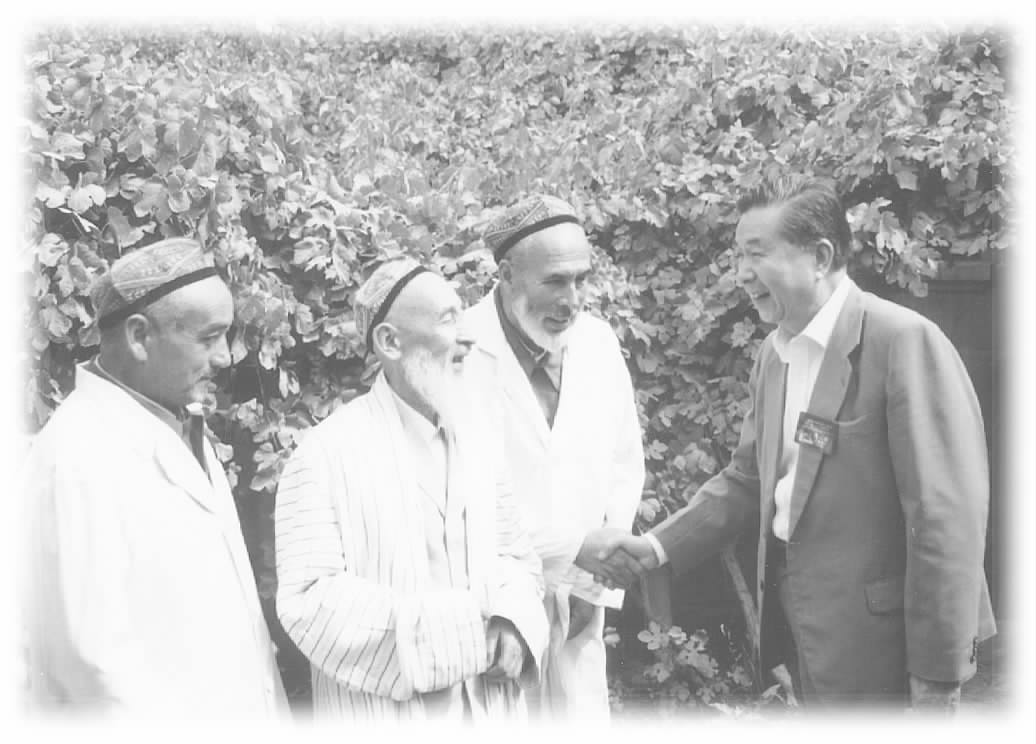
I went to a few countries and along the way looked at their local traditional medicine. In South America, some of the more backward peoples still have traditional medicine. Among Native peoples — Peru, for example — looking at the most backward places, I felt their traditional medicine could not really be called traditional medicine; it had a half-superstitious tinge, much like shamanic dance — no theoretical system, no body of experience. The U.S. and Canada have no traditional medicine. In Asia, China and Japan have a relatively complete medical theory, but after the Meiji Restoration Japan, learning the German style, said Kanpo — its traditional medicine — was unscientific and proposed to abolish it. After abolition, the Japanese now feel this was a wrong move. When I visited Japan in 1979, I spoke with the chair of the Japan Medical Association, Takeda. He said: "You in China have traditional medicine; we no longer do. This traditional medicine is the medicine of the 21st century; in the 21st century every country will recognize and emphasize it." There is reason in what he said. Japan's abolition of traditional medicine is a tragedy, an error. China must absolutely not wipe out TCM. The "unscientific" claim does not stand. We must acknowledge that TCM is a science, study this science; we cannot use the so-called "Chinese-Western integration" method to replace TCM. If we wipe out TCM, we will go down Japan's tragic road. I have not been to Vietnam, but I have been to Korea — basically the Chinese traditional medicine was passed over there; Vietnam, it is said, is similar to Korea.
Among China's regional traditional medicines, Tibetan, Mongolian, and Uyghur still have considerable strength; the histories of these three traditions are all very long. Uyghur medicine connects with Turkey and other countries; Turkey gives weight to traditional medicine. After our visit to Turkey, we set about quickly developing Uyghur medicine — this is also a contribution internationally.
Where traditional medicine still has more strength: one is India, another is Sri Lanka — mainly seeing patients among the peasantry.
In Europe — Germany, France, Switzerland, and others — there is no real traditional medicine. Visiting Switzerland I said, I hear you have a qigong school; I would like to see it. But their Health Ministry did not know of such a school; after long inquiry, they found a very crude one practicing mainly Indian yoga; Switzerland has no traditional medicine of its own. In European countries one basically cannot find a traditional medicine of any real strength.
In Africa I visited Senegal, Congo, Mali, Tunisia, and other countries. Tunisia has a research institute about at the level of our country's Dai medicine — in theory not even up to Dai medicine. Mali, also influenced by China, gives weight to traditional medicine, but it can only be called herbal medicine. In West Africa, with many French colonies, you cannot see any traditional medicine of much strength. From comrades who have been to East Africa I hear of nothing nationally influential.
In dozens of African countries we sent medical teams; among them were TCM doctors.
Looking at the whole earth, China's continuation and promotion of traditional medicine is relatively good — because since Liberation the Central Committee and the State Council have given it weight. But in recent years its development has met some crisis, because some people are unclear in their guiding thought; rather than developing TCM or developing Western medicine and integrating them in the process, they directly substitute Western medicine; though they say with their mouths that TCM is science, in their hearts they still feel TCM is backward; unawares they have wiped out TCM. So in the process of developing integration, we must first develop TCM. Now there is great push to integrate Chinese and Western medicine, to make TCM into modern medicine in one stroke; this is in fact wrong — first because that fast is impossible; second, the integration of Chinese and Western medicine is a natural integration in the struggle against disease; using TCM methods, Western methods, or both methods to deal with a disease may yield better results than either alone. It is by no means a mechanical method of turning TCM into Western medicine. To say one is "carrying TCM forward" while in fact wiping it out — on this matter, the leading comrades in charge of day-to-day health work do not yet understand clearly enough. This requires great effort to resolve.
When I led the Ministry of Health, I was determined to develop TCM and traditional medicine. After the Cultural Revolution, the development of TCM had a good start. The Central Committee's line of giving weight to TCM development is correct. If we develop TCM well, we can contribute to the health of the world's peoples. But looking at TCM's present state, we have not entirely acted on the Central Committee's spirit. Even though the Central Committee called for developing TCM, the established TCM hospitals were all integrated TCM-and-Western, leaning toward Western — losing many of TCM's good things, unawares treating it as unscientific. Even now this problem is not well resolved.
On TCM education, many old experts have raised the point that TCM colleges' education is neither Western nor Chinese; the people they produce are about at two-vocational-school level, not up to TCM university level — these are problems. Because TCM colleges are influenced largely by Western medicine; TCM students do not even study the Four Classics properly. This is a great problem in education. If we do not develop the main achievements of TCM, we cannot use TCM to serve the world's peoples well. Foreigners coming to China to study TCM cannot learn the most important things, because you have lost TCM's theoretical system, lost its rich clinical experience — what would foreigners learn? Western countries' Western medicine is at a high level and relatively good; what they come for is to learn TCM.
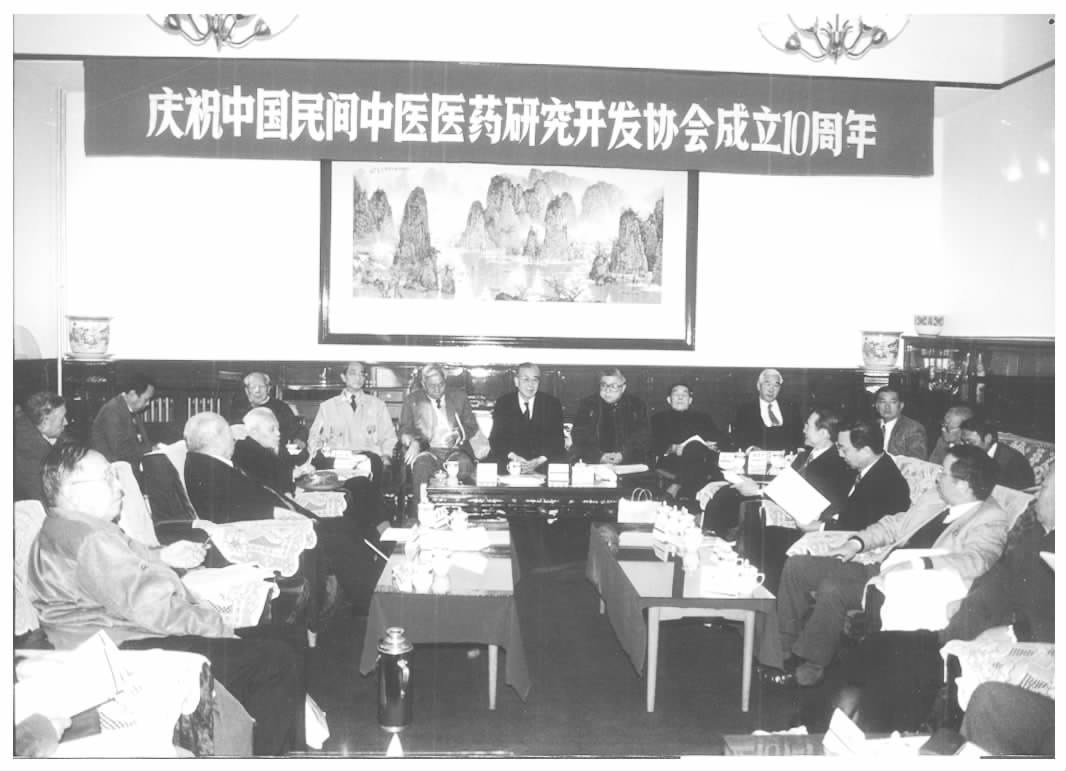
In 1979 in Japan, the dean of the Niigata Medical College said to me: I would like to be sister institutions with your TCM colleges in China — but not to learn Western medicine from you; what we really want to learn from you is TCM. I said: our Western medicine can have friendly exchange with yours, learning each other's strengths; you have abolished Kanpo, so the important thing is how we now train, in TCM education and clinical work, a great body of personnel who truly understand TCM.
The problem is that for years our eyes have been fixed on regular education. Regular education is of course important. But our TCM colleges are limited in scale; their training capacity is seriously short. With the existing 26 higher TCM colleges and 30 secondary TCM schools, the annual graduation total is only about 8,000. Without counting natural population growth and natural attrition of professional technical personnel, at this rate, restoring TCM to the early-founding ratio of 1% of the population would take at least 70 years. Therefore the foremost task in developing TCM is to do everything possible, to put out maximum effort, to train enough TCM personnel of sufficient quantity and quality. We must fully grasp that our country is still at the primary stage of socialism. With 1 billion people and a relatively weak economic base, with the state at present unable to put much money into TCM, we must mobilize energy from every side, adopt the line of running schools jointly — central, local, individual. Promote TCM education in many forms, many channels, many levels. One important method is to continue the practice of TCM apprenticeship. TCM apprenticeship is an important form of training TCM personnel, and an important educational method to maintain TCM's distinctive character. This historically formed educational system has been used long, not only because it suited the productive forces and social development of its time, but also because TCM as a discipline is strongly practical — especially in certain specialties, the special skills, the medical experiences and techniques of different schools, are even better suited to oral transmission and heart-to-heart instruction. TCM apprenticeship has its uniqueness in maintaining and developing TCM's character. Those who came up by apprenticeship and made achievements have inherited, in theory and method, prescription and pharmacy, the medical methods, styles, and school strengths of generations of TCM doctors. They have a certain theory and a unique practical edge. So apprenticeship as a TCM learning method is not a stop-gap or emergency measure; it should be planned for the long term.
The chief problem with TCM is the training of personnel. To negate apprenticeship entirely, leaving only a few old TCM doctors with a few apprentices, while everyone walks the road of master's and doctoral degrees — that's all the Western medical set; the TCM apprenticeship set is all thrown away. Without traditional teaching methods, you will not produce the more brilliant TCM personnel. So how to integrate well the modern methods with the methods of Chinese characteristics is a great question. If we integrate badly — if the way of training people is wrong — TCM's growth will inevitably be seriously affected.
If TCM does not use apprenticeship and uses only the present Western medical teaching methods — for example master's, doctorate — these methods can also be used; but old TCM doctors using the apprenticeship method to pass down their experience generation by generation is the best way. Now the students produced by TCM colleges can speak — but they cannot speak to the point; they cannot see patients. This shows a problem with educational method. If we do not increase TCM courses, do not link to apprenticeship, do not use the methods proven over millennia — to build a TCM corps will not be easy.
If we want to build a TCM corps able to bear the medical task of 1.1 billion people, with a strong body of experts, we cannot do it without one or two million TCM personnel. And these personnel must be of high level; without high level, TCM will slowly be lost. As some old TCM doctors say, although the buildings have gone up and the schools have been set up, the Western component is increasing; the TCM proportion is smaller and smaller. In the end, gradually, unawares, Western medicine will "digest" TCM — not consciously wipe it out, but unawares "digest" it, or "extinguish" it. Many old TCM doctors now say: in another ten or fifteen years, when our generation is gone, TCM is gone. Because in the 2,000-some TCM hospitals developed, although there are TCM courses and TCM treatments, the TCM proportion in the curriculum is rather small; mainly the Western proportion is large. To run a TCM college worthy of the name, we should turn it round. TCM colleges basically exist in every province and weight is given them, but the curriculum proportion is not standardized; and after graduation, when they go to hospitals to intern, learning Western medicine becomes the main thing. Internationally Western medicine occupies the dominant position; at home it is the same. TCM is always in subordinate position. If things continue thus, the development of TCM may break off. The graduates of these TCM colleges are neither Chinese nor Western, both Chinese and Western, only at vocational-school technical level. This is no good. TCM university should train at TCM university level; it should not train at "integrated Chinese-Western" vocational level. This must be corrected.
Administrators in TCM colleges only shout slogans and speak grand principles — these do not solve the problem. These problems for years have not been resolved, and were not entirely resolved when I led the Ministry of Health. After I retired in 1987 these problems became more pronounced, more obvious. They remain to be solved.
When I led the Ministry of Health, three things interested me: one was higher medical education, one was TCM, and one was prevention work.
Prevention work is important to any country. Prevention is always better than treatment after illness; whatever the illness, not getting it is best. Especially for China this is more important. First, we have a large population; second, we are relatively poor; the economy is not developed; the funds spent on health are small. This will be a long-term problem. If we do prevention well, we can save much money.
China's economic development level is relatively low, its scientific and cultural level is relatively low. Prevention's importance also lies in what national strength requires. From China's actual situation, prevention should be put in an important place. At Liberation our average life expectancy was only 35; today the average life expectancy is around 70 — this is a great achievement, also proof of the important role played by carrying out the principle of "prevention first, combined with treatment." So China's medical-and-health enterprise differs from foreign countries' mainly in three things: first, developing both Chinese and Western medicine; second, prevention first; third, the three-tier medical network. The medical network allows treatment near at hand, prevention near at hand — especially in the countryside, serving 900 million peasants — the three-tier network is especially important.
After I went to the Ministry of Health, I also concurrently served as standing vice director of the Family Planning Commission. Comrade Chen Muhua was Vice Premier of the State Council and concurrent director of the Family Planning Commission; deputy directors were the heads of various major ministries. Two matters of social and strategic significance: one was the Patriotic Health Campaign, also with the various State Council ministries taking part — Chairman Li Xiannian served as director of the Patriotic Health Campaign Committee; daily work was done by me as concurrent task. The other was concurrent work in family planning. I was Minister of Health for five years; for those five years I held these two concurrent tasks.
The Patriotic Health Campaign is also of Chinese characteristics. To raise the people's health knowledge — apart from regular school education, the Patriotic Health Campaign is another good education. At each festival, sweep clean, do not catch contagious disease, in daily life pay attention to hygiene — the Patriotic Health Campaign played a very important role in spreading health knowledge and health social education.
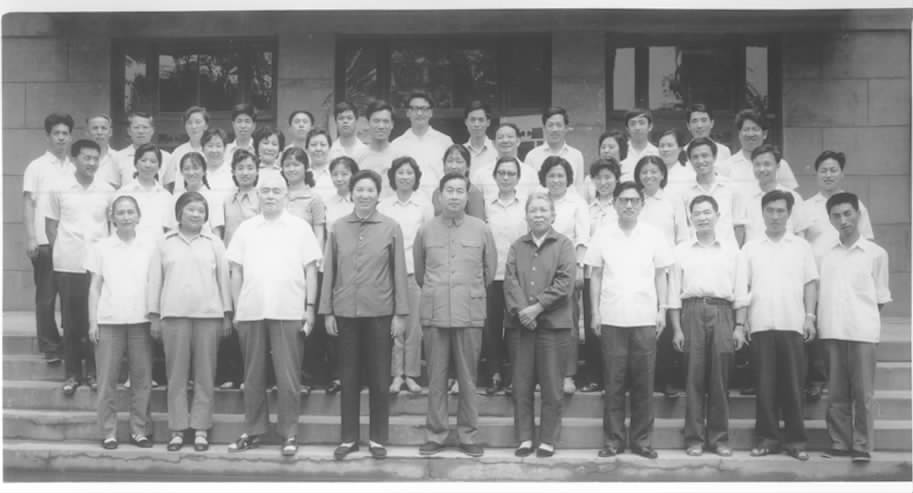
Our Chinese population is the largest in the world; the rural population is also the largest. Whatever work China carries out, as long as it is strategic in nature, cannot be cut off from the basic starting point of serving 900 million peasants. Whoever does not consider this, the work will not show results. Our country's rural population has long grown without plan; we want it to be planned. This work is rather difficult. A large population is a very important issue; especially with China's economy lagging behind, if the population grows further, economic development will be affected. So China makes family planning one of the basic state policies, a long-term strategic task.
I worked on family planning for over a year. The focus was the countryside. But I do not approve of using force; I do not approve of severely punishing peasants in order to do family planning. I think it must mainly rely on education, raising their knowledge level on family planning. In recent years much effort has gone into family planning.
In the course of family-planning work I formed some thoughts. The economic and cultural conditions of the countryside led to high birth rates. If they had cultural knowledge and the economic level rose, naturally they would not want so many children. On this question, force has produced many problems and has not entirely controlled the population. For a stretch in the countryside, regardless of male or female, only one child was permitted. I felt this could not be done. To insist on what cannot be done is to overshoot — to be Left. So Comrade Deng Xiaoping said: our Party must be especially watchful against "Left," which always rushes into things; rushing without regarding actual conditions produces a string of problems. In family planning, peasants in some provinces wanting a second child fled to the mountains. Bearing one child, dragging family along, hiding here and there; some were punished till family was broken and lives were lost — what kind of work is this? I do not approve of this method. We speak of Marxism. Two of its most basic things are: one, material production — labor; labor produces human society. Two, the production of the human itself; without humans, what society would there be? But too many humans have an effect on social development; we must solve this. But is it the case that with many humans social production must slow? Not necessarily. Important effect, but not the root of social development. At that time, refuting the forced approach, I gave an example: Japan, 370,000 square kilometers, over 100 million people, that dense — does it complain of too many people? Its economy went up. Britain, 250,000 square kilometers, 50-some million — the area of one Inner Mongolia region, of one Xinjiang prefecture — does it complain of too many people? Its economy is developed well. So the focus in solving the population problem is to develop the economy. In hard times, you needed coupons to buy meat; everyone fought for fatty meat. Now the economy is developed, meat is plentiful, no one wants fatty meat. What is this about? Has the population fallen? The population has grown; why is pork eaten more discriminatingly than before? Because the line and policy are right, the economy has developed; not because the population has shrunk, not because we eat or use less; mainly because materials have grown abundant. Of course if China's people were fewer, life might be even better, with economic strength comparable to a great country. Other countries limit family planning to checkups and surgeries — only China makes family planning a highly important work of social, mass character.
On health-related questions, we must start from China's national conditions. The Chinese-characteristics medical-and-health work I refer to is mainly the points above; building a Chinese-characteristics health enterprise must firmly grasp these points. On this base, arrange and carry out one's own work.
At the Ministry of Health I held to my views. On developing TCM, some put a hat on me, said I opposed integration of Chinese and Western medicine, opposed central policy. On family planning, some also put hats on me, said I did not stay in line with central policy. We doing Party work must take responsibility, must truly seek truth from facts. Comrade Deng Xiaoping said seeking truth from facts is the essence of Marxism. I am not saying my own theoretical level is high — I am saying our whole Party must seek truth from facts; that style must come first. Only thus can our enterprise develop, can we win.
On the TCM question we debated for over half a year; on the family-planning question, over half a year. I served as full minister for five years; in those five years I had no great achievements, only consciously focused on these aspects of work.
Observations from Inspection Tours Abroad
After the Cultural Revolution, in 1979 I went to Japan for the second time, to give an academic report on traditional Chinese medicine in Kanazawa. Arriving in Tokyo, I stayed in a thirty-some-story tower; I said to my Japanese hosts: "Last time I came, your tallest building was no more than ten stories; now there is one this tall." The host said: "In Shinjuku there are even taller ones." I had been to that area before — a busy district. After fifteen years, vast change; Japan's economy had grown fast; no more tattered-suited professors to be seen; on the streets people were neatly dressed, walking briskly.
When I reached Kanazawa, peony and herbaceous-peony were in full bloom; the hospital staff each held a peony to welcome me. The director was Kawasaki — extremely friendly toward China. He had a classmate who had served as a military doctor in the Japanese army; after the war he had become a war criminal, held in a war-criminal camp. Kawasaki had visited China in the fifties or sixties; as a Japanese senior figure he had first been received by Premier Zhou, then by Chairman Mao. He took the chance to ask the Chairman to release his classmate. China was then forming friendly relations with Japan, and Chairman Mao readily agreed. Kawasaki was deeply moved; he had specially written a small book recording his trip to China and the friendly meetings with Chairman Mao and Premier Zhou. When I went, he showed me the book. I stayed at the hospital guesthouse — fine quarters; on the wall hung photos of Chairman Mao and Premier Zhou, with what looked like incense burning before them. He said: "Chairman Mao and Premier Zhou are the ones I most admire — great figures of the world." He proposed sister-college relations with a Chinese medical college; I connected him with Beijing Capital Medical College; for the contact they specially set up a secretariat.
Living at the medical college guesthouse, I asked: "Could I see your countryside?"
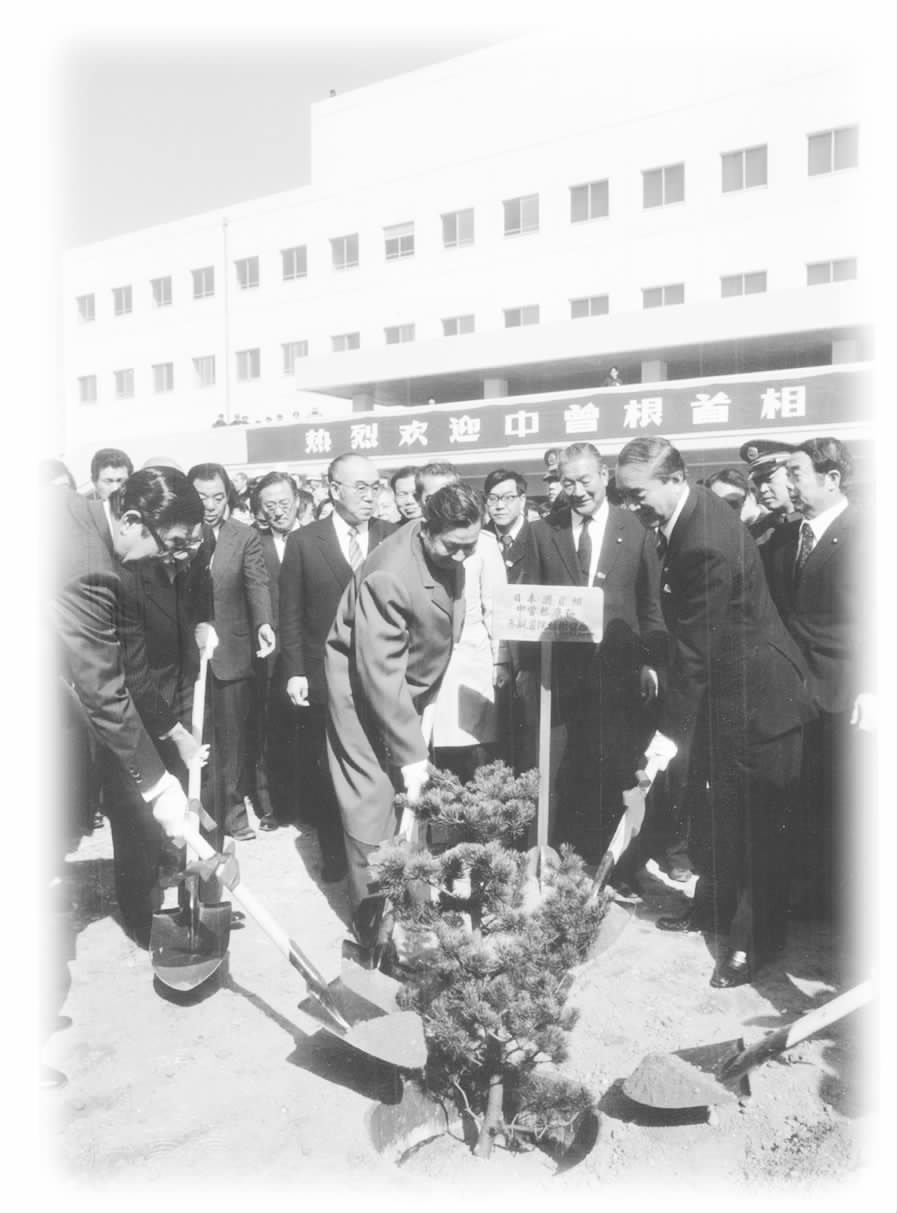
He said: "Of course you can — I'll arrange it. What would you like to see?"
"I'd like to see your village's grassroots medical institutions."
"Our village medical institutions are all private — none state-run."
"Fine; private will do."
> Photograph: Minister Cui Yueli with Japanese Prime Minister Nakasone planting a tree of friendship at the China-Japan Friendship Hospital, 1984.
I saw a small hospital with thirty or forty beds, and a small outpatient clinic. Then I asked to see a peasant household, see how they lived; he agreed. Some peasant households had a small car; some had two; some grew fruits, some grew vegetables.
I was a vice-minister of Health then. Kawasaki said to others: "This vice-minister, looking at our countryside, has views unlike others. Don't underestimate him because he's a vice-minister — sooner or later he'll be minister."
After I became minister, he said: "Look — I judged about right. When you came on inspection, it was not for sightseeing — you focused on the country's health matters and considered how to do the health enterprise well." Kawasaki and I were good friends; whenever he came to China I entertained him.
In September 1979, with autumn skies high and clear, the WHO funded China to send a delegation of ten to a number of countries — the U.S., Australia, Canada, Britain, Germany, and some Nordic countries like Denmark — for a planned three months. Because that was so long, we split into two routes. I led one — including a vice-dean of Sun Yat-sen Medical College, the director of Beijing's Second Hospital, the dean of Bethune Medical University, the director of Sichuan Medical College, and an excellent interpreter Wu Dashou (who in the Korean War had guarded American POWs and had very good English) — six in all. We went first to America. The route was Japan to Alaska to New York. We inspected for a month in the U.S. The WHO money was relatively little — $22 per person per day, not enough for board and lodging together; and the money was wired late. We stayed at the embassy; Chai Zemin was then ambassador to the U.S., and I knew him well — he had earlier been secretary-general of the Beijing People's Government. I said: "Old Chai, we can't go on; you've got to lend us money. Without money we'll stay here, and you've got to feed us too." He said: "All right." We went from Washington to New York, Philadelphia, Baltimore, Michigan, and a town nearby of fifteen thousand called Macon — the mayor of Macon even gave me an honorary citizenship certificate.
When we got to Seattle, the money was used up; even transport was a problem. One day we were going to visit the University of Washington Medical School; we'd hoped the school would send a car for us. The school said: "Make your own way." Afterward I asked Ambassador Wu: "Are American hotels all bugged?" He said: "Generally yes." I went back and cursed: "Damn it — what kind of country is this America? Material civilization without spiritual civilization. The Health Minister of the People's Republic of China has come to your country, and you don't even send a hair to meet him." We rented a car, got off at the medical school's gate. I said: "You go ahead; I, the head of the delegation, will come last." When they came to greet us, one came up — not the head; another — not the head; only at the last did they meet me, the head. Why? I just wanted to register my dissatisfaction. Whether because of my cursing or for other reasons, the medical school's reception of us was warm and friendly.
In their briefing I gave them a check-mate: "Seattle is so big. How do you handle medical care in the remote north?"
He said: "We've opened clinics in those places, but no one wants to go."
"If no one will go, isn't that hard for the people?"
"Some difficulty, but transport is convenient."
I said: "You Americans, with such a high level of capitalist productive forces, with such a high standard of living — how can you not solve such a small problem? You don't even keep up with our relatively backward socialist country. In our socialist country we send medical teams to mountain areas; for medical care the people have great convenience; now every village has barefoot doctors — doctors who do not leave production. Seeing a doctor is far more convenient than for you. Your system has worked health work into this; one cannot see superiority. By comparison, our socialist system is superior."
He could only ask me to give more advice.
In the medical school I saw wall posters by Taiwanese students; the Taiwanese student activities in America were very lively; mainland Chinese students were very few, especially in medicine.
From Seattle to Chicago, I climbed for the first time a 120-story skyscraper. Down to the 90th floor was a coffee bar — you could dance, drink coffee, drink tea, look at Chicago by night.
In Chicago I visited several hospitals. Touring a modern hospital I asked the cost. The answer was: $150,000 per bed; an ordinary modern hospital takes $100–200 million to build. Inside it was all modern equipment; the building was very fine. I was Vice-Minister of Health, in charge of higher medical education. Our medical-school-affiliated hospitals were the better ones; per bed about ¥10,000 then; theirs $150,000 — showing their level was higher, technique more developed, equipment more complete; but prices high too. Yet American salaries were high; eating, recreation, buying a car — the standard of living was still high.
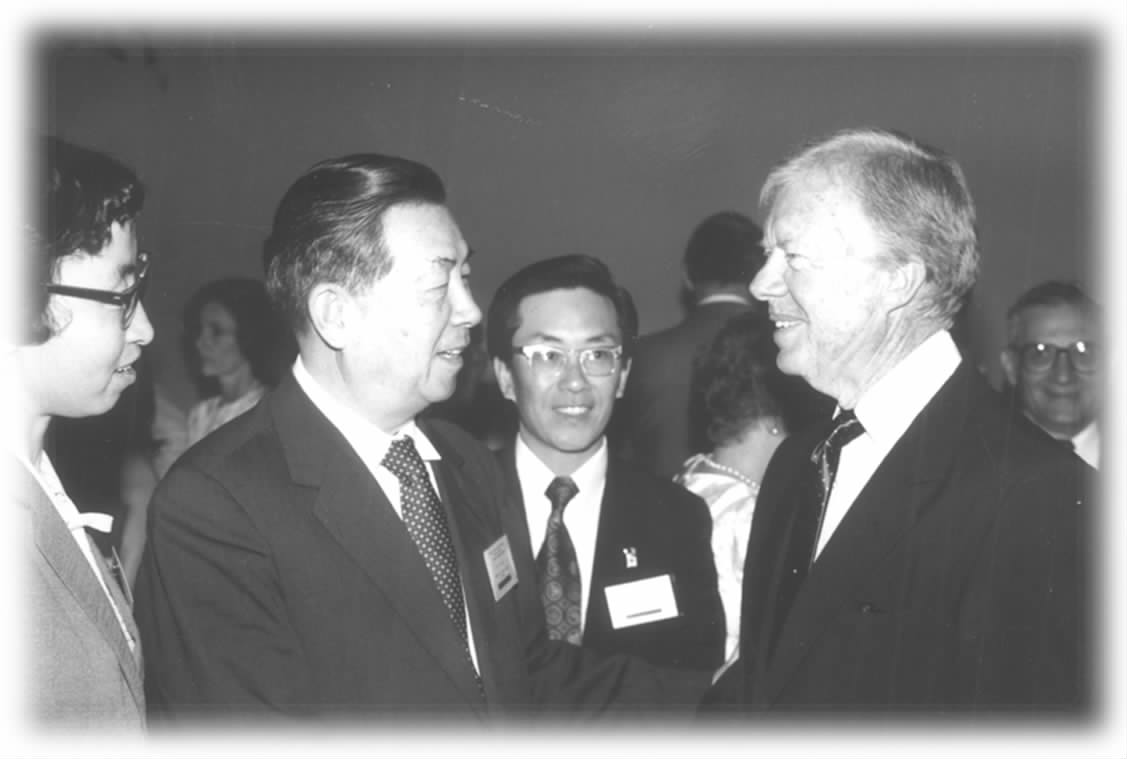
After my daughter Xiaoping got to Hawaii, she had to do everything herself. At home she had nothing to worry about, never thought of money — earnings sat there, you took some when you needed to spend; the standard wasn't high but enough. Once over there, you have to count money; American society is money. I read a press summary: a survey of people aged thirty to fifty-five — 50–60% disagreed with using money to handle human relationships. Apart from money, there should be family relationships, friendships, mutual help. Even in America, many feel human warmth has thinned. Another item was that an old Taiwanese went to America to see his son and the son immediately asked for room and board. In my U.S. days I had a deep feeling for this — restaurants want a tip; carrying luggage at the door, loading the car, want a tip; every move costs money; in capitalist society, without money you cannot move. Although America has many strengths in management, science and technology, productive forces, the thinness of human feeling, drugs, prostitution, AIDS, gangs — problems bred under private ownership — are hard to solve; only communism replacing it can root them out. Some young people now do not see this; they feel capitalism is superior to socialism. If our country had only 200 million people and you handed the other 800 million to America, its days too would not be easy.
In America I mainly visited some medical schools and modern hospitals. We had at one point proposed learning from foreign countries, importing advanced technology, and that the health system should borrow billions of dollars to build modern hospitals. I disagreed; I felt China was not suited to this; our economic level is low; we must learn from others starting from China's actual level. Their modern hospitals have helicopters on the roof; for an emergency, one phone call and the helicopter brings the patient to the hospital in minutes. China cannot do this — costs that high, the patient cannot bear, the hospital cannot bear. We must fit China's level of economic development; if it can solve the problem, that's enough. Of course quick + good + solving the problem is best, but our level does not allow it.
After returning home in 1979 I felt all the more deeply that everything must start from China's actual conditions.
After visiting America we went to Canada; in Toronto, exactly during their National Day, the local overseas Chinese hosted us. In Hamilton I met Bethune's grand-niece (or granddaughter); I told her this time I could not visit her home; welcome her to come to China; if I had a future opportunity, I would surely go to call at Bethune's home.
The chief starting point of this higher-education inspection was: how to make higher medical education suit the present situation. Because capitalist countries' education was being constantly reformed, our country must constantly reform too. Then our country had not yet reformed as broadly as now; we paid attention to others' reforms. For example at Hamilton's medical school: after entry, you took a test, then according to the curriculum and the supplied texts and references, divided into groups for study and discussion. The school had a very large library, designed precisely for this method of learning — beyond borrowing books, there were places for group discussion, and a small reading room — small, but very quiet. The school had no classrooms — as if the whole university was in the library. Problems in study were collected by group leaders, brought to the professors; everyone solved them together. I held a discussion with the students, asking: "What are the merits of this learning style?" They said: "This way we use our own brains. Not like before — the professor lectures from above and we have to listen even if we don't want to; that's no fun."
Apart from some content we cannot accept, capitalist countries' education has many usable teaching and learning methods.
In Australia, I visited the Sydney medical school — about the size of a Chinese medical school but with a long history, over a hundred years. Their leaders did not know much about China, and some looked down on China. After arriving I proposed: "Director, your professors are well known; could we meet them?" The director said: "Certainly, certainly." Less than twenty professors came to the discussion. I said: "Today I am very happy to meet you experts and professors. I have some questions to ask you. You have read journals about China and have a general impression of China's higher medical education. How do you see China's medical level?" They were too embarrassed to speak. I said: "If you don't say, I'll start — this is a discussion. From the basic side: I have visited higher medical institutions in over a dozen American cities, all relatively well known, also five or six modern hospitals — equipment good, technical level not bad; especially cardiovascular and brain surgery and other top techniques — we cannot keep up. Mainly because China's equipment is backward, research funding scarce — not because Chinese cannot do it. From the clinical side: I heard some introductions of disease species — some areas may not match China's. There is reason in what I say: first, China has a large population; second, China has many patients; third, China is economically and culturally backward, with many diseases. In America for example, tuberculosis and other infectious diseases are no longer found. Patients are few; experience is harder to summarize. Please, professors, experts, see whether what I say accords with reality. What I have said is the conclusion comparing China and America; your country's situation I do not know well, but you have more contact with America. I have come to consult — see whether you agree with our view."
Why did I speak this way? Because in America, while I visited some medical schools and modern hospitals, some, although polite in speech, gave off an air of arrogance. However that may be, I am after all a Health Minister of the People's Republic of China; though they treated me on the surface as a friend, the air made me uncomfortable. The dean accompanying me would skip some words and not interpret. I said: that won't do; every sentence must be translated. Some of them always feared offending the Americans.
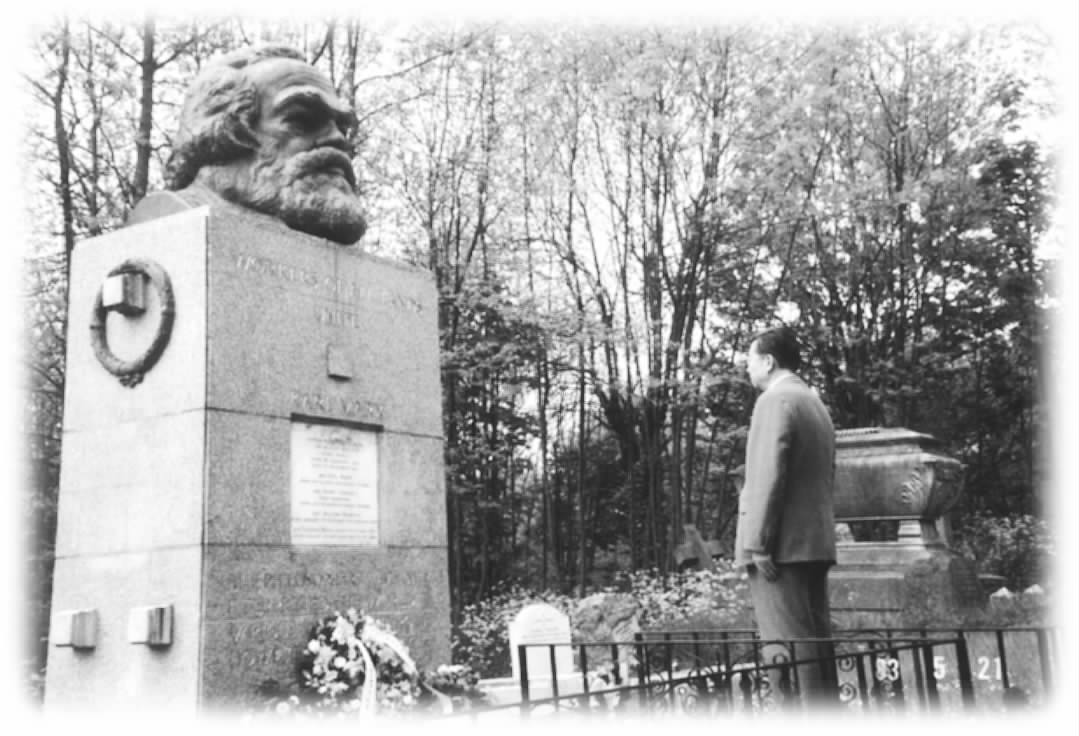
In Australia we toured a medical school carefully — on a peninsula less than an hour from Sydney. The town was small but I admired the school's reform very much. Our present education is seriously divorced from reality, divorced from economic construction; that medical school was not so. Once admitted, you were sent down to the grassroots to see patients; whatever disease you met, you would discuss — from theory, basics, the disease's onset, treatment. Not like ours, where two and a half years of basics — pathology, physiology, biochemistry, anatomy — are followed by clinicals; split into two stages, before and after disconnected. They closely combined basics with clinicals; after five years' graduation their thinking was flexible and open. We are not so. Raise an opinion and they say: "That's foreign," and insist on the two-stage view.
This trip lasted forty days. The deepest impression in those forty days was not the great American medical schools and modern hospitals, but the medical teaching methods at Hamilton, Canada, and at a small Australian town — very helpful for inspirational education and freeing the mind. Our health system has over a hundred medical schools and over five hundred secondary schools. I am very willing to carry out educational reform in the health system; but the educational system has not changed in many years.
In America I admired this: nurses, technicians, doctors all had a fixed time each year for further training. Even at eighty, an American can study a course they like. Only when education is run this way can the cultural level of the whole people be widely raised — meaning from child to old person, all have chances to study and improve. Nurses have nursing further-training centers; if a nurse has a month off in a year, she can browse all the world's new nursing journals — keeping at the advanced level. Not like us — what was discarded years ago abroad we still consider good; this is no way to develop technique.
Linked to this, I think back to April 1986, when I went to America to attend the World Health Consultation Conference Carter held in Atlanta — countries of Africa, Latin America and other Third World countries were invited; over two hundred came. He had cabled the Chinese government hoping China would send a representative. I thought Carter was holding this conference mainly to gild himself; China is a great country, with its own approach to medicine — no need to go. Unexpectedly he sent a second cable, welcoming the Chinese Health Minister. So I went. We set off early, first to America, then to Switzerland for the World Health Assembly. I led four or five members. In Atlanta, Carter received us; I gave him an inscribed painting prepared in advance. The talks lasted an hour. He was friendly toward China; on his China visit he had asked to ride a bicycle; security disagreed, but he went to Deng Xiaoping; in the end they arranged for him to ride in the morning when there were few people, with bodyguards on the streets. Foreigners in China want to experience riding in the kingdom of bicycles.
> Photograph: Minister Cui Yueli meeting former U.S. President Carter at an international conference, 1986.
Soon after the conference opened they had me speak. I spoke on prevention first, linked to the improvement of China's health situation, the rise in average life expectancy: men now to over 68, women to 72, average 70 — twice the pre-Liberation 36. This proves on one hand our life has improved, and on the other death rates from various diseases have fallen; lives have lengthened. After my speech the floor applauded warmly. Hearing that average life expectancy had doubled in some thirty years was indeed remarkable. Carter came up and embraced me. Our presence at this meeting was a success — socialist health spends little money, achieves much.
In 1984 (1985), the WHO had compared health and medicine between Shanghai county and a New York–area county. Shanghai county's medical expense per capita was relatively high in China — about ¥33 per person per year; the New York–area county was about $1,100 — a great gap. But Shanghai county's average life expectancy was 70; the New York county 72 — only two years more, at nearly three hundred times the cost. So do not believe that spending more brings better results.
In autumn 1986, as Health Minister, I visited Ireland, Britain, and West Germany.
We went first to Ireland. The Irish president had visited China; his wife had also visited. I heard the Irish president was a doctor and his wife was very interested in Chinese acupuncture. The next day the president received us at a great country residence. He was warm; because he was a doctor by training we talked very congenially; they were very interested in Chinese traditional medicine. Although I did not study TCM, I had had much contact with it; we chatted with him to good effect. As Ireland was a routine visit, we stayed a week and went around their country.
Ireland is a highly developed capitalist country; what most interested me was to see how advanced a capitalist country could become. Our Irish hosts asked how to plan the schedule; I said no matter what, I must visit the countryside. "The countryside? Easy" — they were enthusiastic. "Any village will do." We drove from city to city; en route we asked if we could get out; they readily agreed. We went to a peasant household — four people: an old couple and a young couple; no children. I said let me look at where you live — a small Western-style house, ground floor a parlor and kitchen, second floor bedrooms — very clean. I asked: are you rich peasants? They said no, we work for ourselves. Looking at the land they farmed, they were like middle peasants; if our middle peasants in China reached that standard, the Chinese countryside would be developed. The household had its own tractor, harvester. Then we saw another household — well-built house, warm welcome — three stories. I said I'd like to see your life and your farm. The owner was over sixty; he showed me his bedroom — sumptuous, carpeted; rooms for his wife, his son, his grandson. I asked: are you a rich peasant? He said: I'm a rich peasant — though not super-luxurious. He had a dairy farm and 5–6 workers. The workers' quarters were also good and clean. Rows of small houses — these can represent the upper layer of Irish countryside. How many mu he farmed I cannot recall; the standard of living in the countryside was quite affluent. In another place a house was good too; we wanted to look; the host agreed — not like some countries that pre-arrange for you. This was a middle peasant household, more people, also doing handicrafts, also relatively well-off.
I pay close attention to the countryside, for I came from the countryside. Our countryside is backward in economy, culture, and health. Ireland's economic level is high. Our middle peasants would consider a small courtyard not bad; sanitation in the rooms is poor. The Irish peasant household is fully electrified — cooking electric, washing dishes electric, washing clothes electric — our countryside is very far behind. After ten years and more of reform and opening, the Jiangnan coastal areas have changed greatly. Some places too are different. I went to some places in Jiangsu — almost like Irish countryside; small houses, very clean, take off shoes at the door. As long as our line is correct and the economic level rises, catching up to capitalism is not hard. Our economic, cultural, and health levels can rise quickly, but with a corresponding set of policies and methods. The Chinese ambassador in Ireland was a woman — wife of a former vice foreign minister, very good in English; the only female ambassador China was sending then. In Ireland I was put up in the President's room. China is a great country; with its few-million population, they took us very seriously; we had escort cars when we went out, just like for state leaders. The presidential room was truly luxurious; the bath had auto-flush, with massage; the tub was the size of a bed and a half. I asked them what their main remaining problems were; rural life was not bad; in the cities there was still unemployment; some had to go to Australia for work.
In Britain what I most wanted to see was where Marx had sat for twelve years in the British Library in London; when I went, that seat was still kept for him. The library has many things; I was from China, I believe in the Communist Party; the host took me to see where Marx had read and studied; I even sat in Marx's seat for a photo. I asked them: how many of Marx's books do you have here? I saw no Capital. I said: "Marx spent years here writing Capital; how can you not display it? You should display all his books. Since you do not fear Marx, why not display all his books?" They acknowledged.
> Photograph: Comrade Cui Yueli laying a wreath at Marx's grave, 1983.
Britain was then in elections; the Iron Lady Thatcher was a candidate. They said the leader had no time to meet me; I said no matter. The host who received us was a forty-something nobleman with a great expanse of land in suburban London. I asked: "How much property do you have?" He said: "My property is all in Switzerland; I go there twice a year to check on it and do business." He hosted me at meals and saw me to the airport — very warm.
In London I also visited the wax museum; the wax figures look real. From every English king through Thatcher — others had not seen Thatcher in person; I had — the figure was very lifelike. There were also figures from classic literature like Sleeping Beauty — bed, person, blanket — all real-looking. The museum has many sections — animal section, large historical section — very helpful for young people learning history. I also visited British hospitals and medical schools, and the famous Cambridge University. Cambridge is a venerable institution.
Britain was also a week. Manchester, where Engels was, is an ancient city, also small, with city walls, ancient relics well preserved. Their wall is far less than ours in Beijing. Our city walls were taken down — too pity. They put their walls to use. Both inside and outside the wall they built shops; from the rooftops of the outer shops you could walk down to the inner shops; the wall is in the city. This struck me deeply. My thinking was relatively Left; in the Cultural-Revolution / Great-Leap days we made temple-built schools out of the old temples in Beijing; now I regret it — how good it would be to keep these relics. The old city wall in Beijing taken down — too pity!
In Britain mainly the greenery was good — better than our capital's.
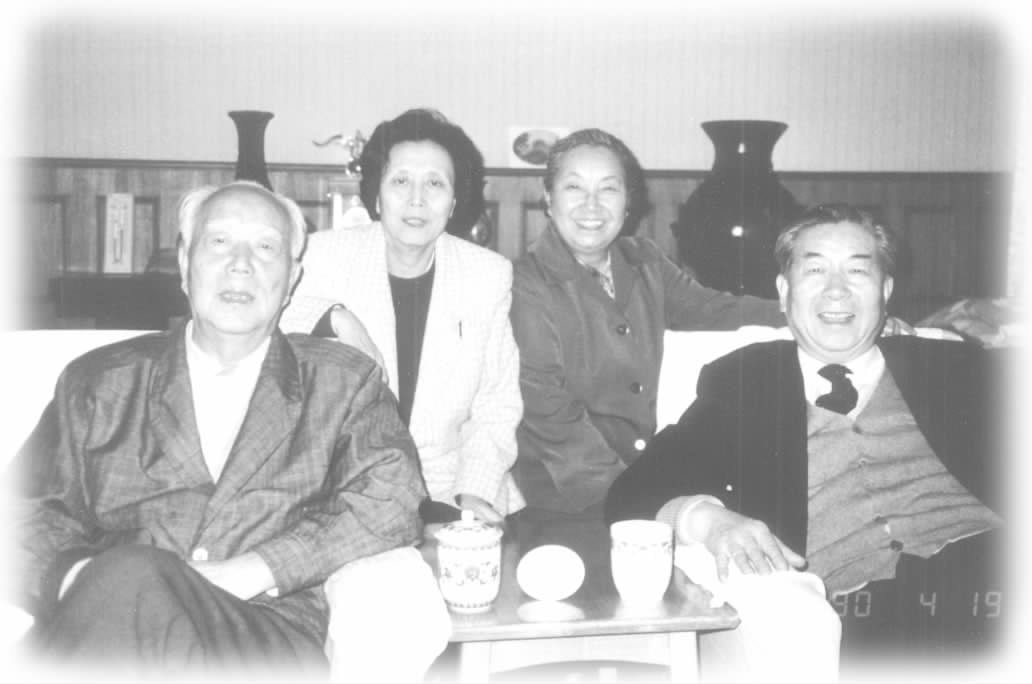
The day I arrived in West Germany, the Health Minister came out to greet me; he seemed to be one of the leaders of the Christian Democratic Union and was running for parliament; he hosted me at dinner that evening, said a few words at a brief ceremony, said he was very busy now and we could see each other in three days in Frankfurt. I said, "I'll go look around." In Munich I visited a hospital under construction — a very large hospital, eight years building and still not finished. China sometimes drags out a project for funding or material reasons; I asked the Germans, why does this happen with you? He said: also because of insufficient funds. Later in another state I heard there was the most modern hospital; visiting, I saw a kidney-stone lithotripter worth two or three million; everything else also modern, automated; the hospital cost 2.4 billion marks to build; maintenance over 100 million marks a year; even patients moved into the operating room automatically; the wards had glass walls but with isolation; family could not enter. In America I had seen modern hospitals with helicopters; this was even more advanced. I thought: if China develops medicine, probably it will be mostly small and medium hospitals; we lack funds, can treat ordinary illness; the great hospitals we cannot build. Back I chatted with Ma Haide; speaking of these large modern hospitals not really suiting China's situation. At the time Hua Guofeng wanted to build some big hospitals. Ma Haide pointed out: China cannot do as America does, building such big hospitals. If we turned the PUMC into an American-style modern big hospital, the whole electricity supply of the East City District would have to go to it. So Comrade Deng Xiaoping said modernization must have Chinese characteristics; this is hard to grasp at every level.
In Germany, visiting Frankfurt — well hosted. At breakfast, our foreign affairs director Chen Keru got a phone call from the Health Minister, inviting us to the airport for talks. We felt this rather arrogant; we had Chen reply by phone, saying we had no time; if he had time he could come to us.
The German Health Minister came; on meeting he immediately apologized: "I'm sorry, I should have come..."
I asked: "Have you eaten?"
"I have."
I said: "I have too. Now look — anything to discuss, let's discuss." After the talks he left.
Back in China, an internal reference printed a German news-agency article saying: the German Health Minister had been rude to the Chinese Health Minister; he therefore invited the Chinese Health Minister to dinner at a hotel; the Chinese Health Minister had refused.
In fact this was not so. From this you see: in dealing with foreigners, you must have your own backbone and not fear offending. We represent the country going out; how can we cower and degrade the country's standing? I am very averse to foreigners' arrogance; from young I have been averse to such an imperialist attitude.
Visiting Siemens, the boss hosted us two days. I pay close attention to ordinary people's lives. The driver assigned to me was over fifty; once familiar, I asked how his life was. He said his life was very good — at noon the company provides a free meal; the company also has a small shop selling its own products at half price to employees; his monthly wage was about 5,000-some; in addition because he had served in WWII and been wounded, he had some pension. At this a woman staffer following me said German prices had risen a lot. The driver said his father had been a baker, earning 30–40 marks a month, supporting a family of several — they could hardly eat, four or five sharing one loaf; even so not full. Now he was a worker with wife and two sons; his wife also drove a car; the sons too had cars; the second son had graduated college and had a car. He said: "I'd also like to buy a tour bus to travel to Italy, France and so on. As I'm getting old, I take 70 days vacation a year. I'm satisfied with current life. In the past one shirt was worn for years and patched; now I throw away shirts before they wear out. As long as there's work, life's good. Prices needn't frighten you, because wages are also high. As long as prices don't exceed bearing, people have purchasing power; the cycle is healthy; the people are content." I thought of China in the past — Japanese rule, Kuomintang rule — prices rose three times a day; in Beijing eating mixed flour, queueing for hours to buy a few jin of corn flour. Under such conditions, how could they not fall? Developing the economy is very important. Lenin said a country's people make revolution because they cannot live; it takes the middle stratum rising too to have a revolutionary situation; the rulers' principles and policies have all gone bankrupt. So as capitalist productive forces develop, life is not bad, unemployment not high — those people will not rise in revolution.
At Siemens, the general manager came out to introduce his enterprise; he said they had over 500 plants; pointing at the map he said only two countries had no Siemens plants: the Soviet Union and China. I said: China welcomes you. He did not know much about China then, not as relentlessly drilled in as the Japanese. I said: your nuclear-magnetic-resonance technology is excellent. He said it had only just been produced; a few units made, sent to some countries that provide them medical records. I said: give China one too; we can also provide records. Asked the boss; he wouldn't commit. I said: give us one and we'll buy ten more; they still wouldn't — showing they did not know China well.
Later the Siemens boss hosted us — very warmly. I said your Siemens has developed well, Germany too is developing fast; I hope after your development you do not go down Hitler's old road. Although we Chinese suffered little direct harm from Hitler, Japanese fascism harmed China about as much as Hitler did. The boss said: we will not go down that road again; if we did, we ourselves could not bear it.
In France I saw — modernization makes one envious; their office area is like a small city, with research institutions, security systems; you can see clearly through television, like the surveillance in some American big stores — all most advanced. Their highways are wide and trim, road surfaces flat, first-class in the world, with a fine "rough-face" finish — the wheels make a sha-sha sound, very steady. The modern highways are truly fine; the European Community is linked together by these modern expressways.
In 1984 I was the representative of the Chinese government at the inauguration of the President of Ecuador. I had been three years a vice-director of the Family Planning Commission; I felt China's population was still large; if economic development cannot rise — if it can rise, the population burden can be made up; the key is the proportion between population and economic development. China's annual birth rate was 20‰, death rate 6–7‰; in peak birth years, subtracting 6–7‰, still 18 to 20 million born; in low years, 15 to 16 million. That equals giving birth to a medium country every year; in Europe larger than a medium country. In a city, every additional person requires three or more to provide services — nursery, kindergarten, shops, primary school, secondary school, hospitals, housing, transport.
> Photograph: Comrade Wan Li and his wife with Comrade Cui Yueli and his wife, 1990.
In Ecuador attending the inauguration, the new President received representatives of important countries. One day the embassy notified us that the head of the U.S. delegation — Vice President Bush — wanted to meet the head of the Chinese delegation. What was this about? I had the embassy consult the Foreign Ministry; the Foreign Ministry replied: probably nothing special, just routine friendly contact. On inauguration day the Ecuadorian President received the various delegations; the U.S. and Soviet representatives happened to be next to each other. Bush had his interpreter find me, said he wanted to meet the head of the Chinese delegation. I thought: at such a venue, what shall we talk about? They were ranked ahead, we behind. After meeting, Bush was very polite — exchanged pleasantries, asked me to convey his regards to Chinese leaders. I asked him to convey our leaders' regards to President Reagan. We did not talk anything substantive. He was at the time negotiating with the Soviets and wanted to use China as a card, letting the Soviet delegation see he could maintain close relations with China at any time. Capitalist politicians are very fine in their thinking.
My second meeting with Bush was in May 1986, when I went as Chairman Li Xiannian's special envoy to attend the inauguration of Portugal's President. The main matter was to discuss with Portugal the Macao question; the vice foreign minister accompanying me was in charge of European countries and knew the situation well. The previous Portuguese President had come to China for one round of talks and laid initial ground, showing the question could be resolved by friendly negotiation. We first congratulated the new President; we believed that under him China-Portugal relations would grow more friendly. In spring 1987 the Portuguese President visited China and asked me to accompany him. Later the Macao question was smoothly resolved by the "one country, two systems" principle.
After this, the Swedish Prime Minister was assassinated; China sent people to attend the funeral; we flew directly to Sweden by command. Prime Minister Olof Palme had high standing among the people. It was winter, the snow just melting; at the place where the Prime Minister was killed, the people had piled roses higher than a man. I asked them where the flowers came from. They said all flown from South America. You can imagine the price of fresh flowers; but flower shops there were many; the standard of living of the Swedish people was clearly high. At the memorial of various countries' representatives, in front of me sat U.S. Secretary of State Shultz and French President Mitterrand, accompanied by only one secretary and one interpreter — and if their foreign language is good, even no interpreter; at most two or three people; the Spanish President had brought no one. At the embassy they said: capitalist heads of state on visits have very small entourages, while socialist countries — like the Soviets — this time brought over seventy in a special train, with bullet-proof cars. Soviet socialist leaders going abroad are less casual than capitalist leaders. Looking at upper-level social activities in various countries, our country has much to reform; not as casual as some countries — heavily guarded, surrounded by entourages. I once suggested to Comrade Hu Yaobang: "When responsible comrades go down, they need not bring many people; two or three escorts is fine; the people will not notice; making a big show is no help in understanding the situation, no help in work." I said: "Wherever you go, banquets must be hosted; the trend cannot be stopped. I suggest: whoever invites pays; the eaters bear no responsibility; eat free, no review." Comrade Hu Yaobang appreciated my suggestion; the secretary asked me whether I would publicly endorse it. I said of course. After the public broadcast, the banquet trend was still not stopped; some banquets needed; some not; serious waste.
Northern Sweden's per-capita yearly income was over $10,000. I wanted to see Swedish countryside, because the countryside reflects a country's economy and culture. Cities of course are advanced, but do not necessarily reflect the whole. Like some African countries — cities built by imperialism and capitalism; in the countryside it seems they remain in primitive society, slave society. In Mali I had insisted on seeing the countryside; the Minister agreed. In one peasant home an old man over sixty had four wives; the eldest at most forty, the youngest only twenty. The man did nothing; the four wives took turns serving him; one took care of the household, the other three farmed; in fact the man was supported by the women. Houses and tools were very backward; the houses were low; in the tropics it was very damp; no bed — they spread a mat and slept on the ground. People were lazy; the man sat at the village edge doing nothing; when hungry he picked breadfruit, banana, pineapple from a tree to eat.
The Swedish countryside is not like ours, with dozens or hundreds of households together; rather, two or three households make a "village," sometimes one — extremely scattered. One household, a man over forty, three children, specialized in agriculture. After graduation he had borrowed from the government, bought over 100 hectares — forest, grassland — for animal husbandry, and opened a dairy farm with two workers. Although a farm owner, his salary was about the same as the workers'. The loan was repaid in installments, over a long term. He took me to his home; his wife was clearly an educated woman, very refined. They had a two-story house: bedrooms upstairs; downstairs study, living room, kitchen, dining room, bathroom. On the staircase was an iron chain. I asked what for. He said: he had a daughter in middle school first year; her legs were diseased and she couldn't walk; this chain was specially installed to help her go up and down stairs. Although there were three children in the family, the rooms were clean and orderly. His wife also worked at the farm — bookkeeping, errands — for a wage. I asked: "You live so scattered; isn't school far for the children?" He said yes. I asked if he drove the children to school every day. "No, the school has buses; the children have lunch at school; the school bus brings them back; this is a state benefit."
In a small town we visited a primary hospital serving the countryside — quite well equipped; all medical costs including hospitalization and meals borne by the state. The host asked me whether I'd be interested to see a nursing home. We went; all newly built, very fine; private rooms, also rooms for old couples; over fifty old people, with forty nurses serving them. The old people were neatly dressed, the old ladies wearing makeup. Food was good, fruit at every meal. I asked the host: "You bring me here; the level here is rather high; are you intentionally showing the Chinese Health Minister your best place?" He said: "Minister, I would not deceive you. If you don't believe me, I can take you anywhere; every nursing home of ours is like this." Because Sweden is a welfare state, all its welfare provisions are high.
The Swedish Health Minister had previously invited me; on meeting, I said: this trip was for the funeral, time pressed; I'd come back another time.
I first went to the Soviet Union in February 1951. The second time was when, on a visit to Poland, I passed through the Soviet Union, stopping three days.
In May 1986 — thirty-five years after my first visit — I was very interested to see how the Soviet Union had changed. We stayed at the Chinese embassy. We planned to look at Red Square and the department store across from it, see whether goods were abundant, whether the masses queued. We found that although shop shelves were full and goods many, people still queued, because daily-life industrial goods were short. The first time at the Soviet underground I had thought it beautiful, with marble statuary built by Komsomol volunteer labor. This time I went to more stations; the stations were not small but their facilities ordinary, very crowded. On Moscow's main streets, walkers were few; mostly cars. But in the underground the people were dense, mountains-and-seas of them; 70–80% relied on underground transport. The streets had no pedestrians, no bicycles; orderly, very clean. May already, snow not yet melted; apart from new buildings, no great change.
Warsaw, Poland, has changed greatly; the war had nearly destroyed the city; after decades of construction, the war's traces are gone; new buildings; greenery is also done well.
In Poland I visited Kharkov, an ancient city. So when the Soviet army pushed south, they had not opened fire, deliberately preserving the old city. In this old, dignified city we visited its medical school — a hundred or two hundred years old; not open to the outside, with little exchange with the world; the school's facilities and atmosphere were still conservative.
The famous astronomer Copernicus was from Kharkov; he was a priest, author of the heliocentric theory, opposing geocentrism. Poland gives great weight to its great scientists and artists. The musician Chopin was Polish too; he often performed abroad and died abroad; on dying he asked that his heart be taken out and sent back to the homeland. Many historical scientists were patriotic. Especially Poland; in the past century there has always been foreign aggression; deeply marked by war. After WWII it became independent, much influenced by the Soviet Union; established a socialist country. When our 8th Party Congress 2nd plenary meeting was held in 1956, Polish Party chief Bierut visited China.
Poland made a deep impression of Warsaw's recovery. Poland had reformed early but basically failed; the country was always unstable; Gdansk had constant strikes. Because we were trying our own reform, I asked the embassy comrades why theirs had failed. They said: mainly production did not rise, daily necessities were few, life was hard. In reform some imported foreign daily goods — equivalent to borrowing. Although it met part of the demand, the people's purchasing power was insufficient; raise wages; once raised, goods are short; import again. The debt mounts; the people's life is not fundamentally raised; vicious cycle. Borrowing foreign debt, prices rise, inflation. I thought of this then; we too could face inflation, especially in 1988. Prices rose much; the central authorities began to put effort into solving the price problem. Prices and wage levels should be set around production, not divorced from it.
Poland's reform failed. Several tens of millions of people; foreign debt of 10–20 billion every year, hard to solve. The factories built with investment cannot recover their costs at once. I have lived through two inflations: one under Japanese aggression, one under the Kuomintang. Just before the Japanese-puppet bank fell, ¥100 could not buy a single sesame cake; the Japanese economy collapsed; everything for war; production was destroyed. The Kuomintang first issued fabi, then changed to gold yuan; when the Kuomintang fell, people bought houses with gold bars and silver dollars. Our situation is different; our production is to raise the people's standard of living; political power is in our hands. I believe we can adjust the situation. I think on the price question — for the common people, that is the foremost question. Whether the ruling Party's line is correct, the common people grasp from their own life. If the line is correct and life improves, we can lead. If life does not improve, prices rise, wages do not rise, propagandize the line however well, no one will support. Not paying attention to price stability — the impact is great; it easily creates separation from the masses. Any party, group, individual cut off from the masses — words have no force. So if the people's life problem is not well solved, political problems arise; dissatisfaction with the leadership, with the Party. We must pay attention to prices, seek growth in stability.
I have been to France several times. This time I notified the French Ministry of Health; the Minister hosted me at dinner and arranged hospital visits — half-official. The French Minister was not old, in his 40s. I asked them: in Paris how many people per CT? Answer: one CT for over 200,000 people. Originally France did not make CT machines; later the President approved making them, so CTs became domestic. I looked at hospitals — fairly ordinary; no newly built modern hospitals. Among the modern hospitals I had seen, what impressed me most was the Munich State Hospital in West Germany — fully automated, convenient and simple; even America cannot match it. That had cost 2.4 billion marks, taken 38 years to build. Maintenance 1–200 million marks a year. France has a Hospital Federation; the head of this organization led our visits and introductions. This way is good — many things the Health Ministry need not do, the Hospital Federation does. We had not researched it, but during my time as Health Minister I felt our Health Ministry undertook too much, big and small. Hospitals are relatively fixed; they should have organizations to exchange experience, share information, help one another, learn each other's strengths. If associations of hospital administration were set up by city, at the very least many administrative chores could be reduced; even more, academic activities organized.
In Paris we toured the Louvre, the Eiffel Tower, the Arc de Triomphe. In their palaces are mostly famous paintings, works by some European masters. The royal rooms are very large, arranged in a circle; the room layout has character; furniture too has character; gold-and-jade splendor; lights too — very luxurious and beautiful.
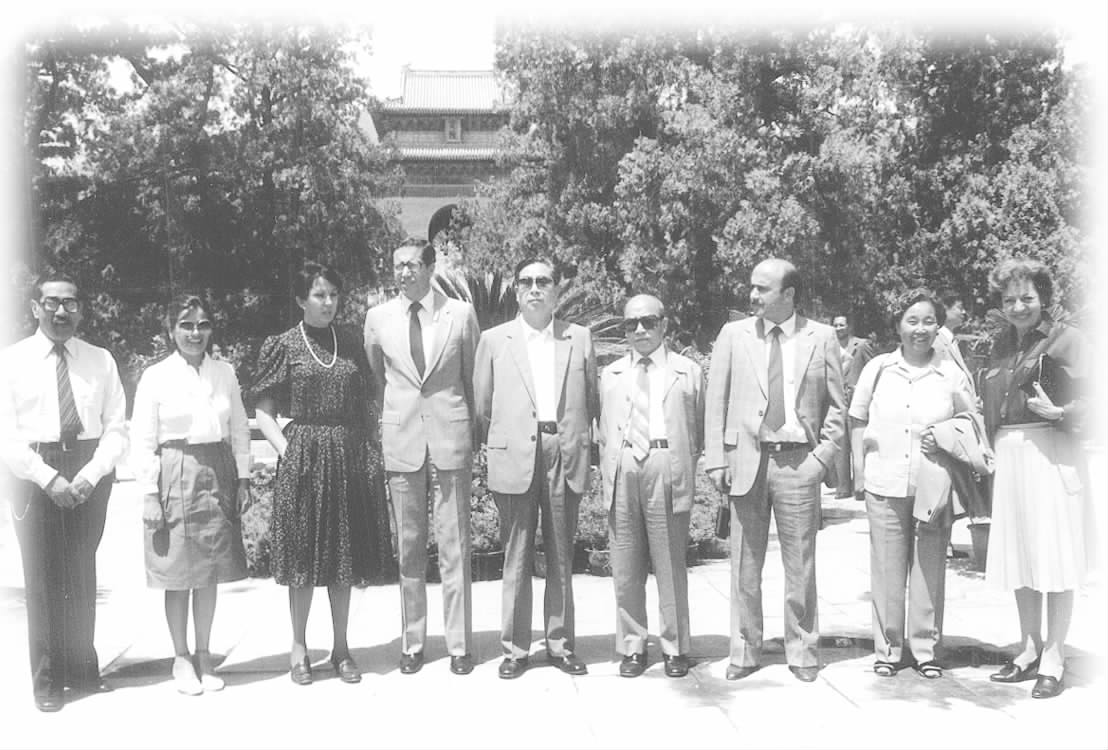
In 1988, transiting France on the way to Italy, I looked at only two sides: vegetable markets and grocery shops. Going to Italy I also looked at the people's life, how much they earn. Their vegetable market goods are abundant, prices not high. Compared with China's vegetable prices, very expensive; but compared to people's income, vegetables are cheap, varieties rich, all processed — not like ours where vegetables come from the field and go straight to the customer; cabbage piled, spinach piled, until rotten. The embassy suggested we see a major grocery supply base. We saw a nearby base, supplying Paris and several other places. Rows of buildings, several times the size of Tiananmen Square. Meat market — slaughtered animals from the slaughterhouse processed here, stored in cold stores, delivered as ordered. Pork, beef, chicken, duck — all categorized; whatever meat, however much you want. The embassy people said: see, capitalist materials are abundant, so prices are stable. Looking at retail: foods all packaged, with use-by dates, expired ones discarded; some discarded look still fit to eat. We are far behind in this. Production must develop, construction must develop. I expect the Commerce Ministry and Agriculture Ministry will come to inspect; China too will catch up step by step. In every country I went to I would look at the market — markets best show people's life. In Korea the market was very poor; I could not even buy chopsticks; in some places you needed coupons; about like our three years of hardship.
The other was visiting the countryside. Two embassy comrades took me to a cooperative 150 km from Paris. The place was called Gang, with 7,000 households. The embassy comrades had not been; they got out and asked directions. A motorcyclist came up; knowing where we were going, he led the way. After a long way he said: "We're here," and turned and rode off without giving us time to thank him.
The director of the cooperative was not in; the deputy director gave us a brief introduction. I asked the number of households, income, the cooperative's factory output; the cooperative was on private ownership; the largest farmer how many mu, the smallest. With these in general I had a basic understanding. He suggested we see a few places: one was grain drying and storage, one was the supply of production materials. Half an hour by car to a great factory with only one worker. Cooperative members' grain is dried here before sale; what is not sold immediately is stored here, but drying and storage cost money. The cooperative runs it itself; centralized drying and storage is cleaner and easier to preserve than scattered to each household. It was already noon; I said skip the production materials; let's see a peasant household. The deputy director said: "First to my home then." I asked his household. He said only he and his wife. "How much land do you farm?" "I farm 40 hectares." I figured — 600 mu. "How many do you hire?" "Why hire? 40 hectares, two of us." The level of mechanization and modernization was clearly that high. "You're deputy director and you farm 40 hectares; what else?" "I also raise 700 pigs." "Heaven — raising pigs is no small thing, can two of you do it without hiring?" "Why not — my wife alone raises them." "How old is your wife?" "Fifty-three." I said I must see this.
At his home his wife had prepared lunch. Each household in the cooperative was very scattered. I asked: "Where is your toilet?" "Upstairs, go ahead." A two-story house; upstairs the toilet was not large but had a bath; the floor was carpeted, truly clean — even Chinese ministers do not enjoy this. They knew I was Health Minister, so invited the cooperative hospital director and a famous doctor to keep me company. At table I said: "I know how much land you farm; how much grain do you reap a year?" I remember he said 60 tons. After lunch I asked to see his pigs; the pigsty was nearby — a row of buildings; in one small room 13 pigs, each compartment computer-controlled with air-conditioning installed. In a great trough fodder is loaded, water above, mixed and sent to the troughs; the whole process is computer-controlled; auto-stop on time; even feed amount and weight gain are computer-calculated; runs in a closed system. I said: "No wonder you say your wife at 53 can still raise 700; even at 80 she could."
As society develops, mechanization, electrification, electronics in production are an enormous boost to productive forces. Don't say China has too many people; if we develop the economy, develop science and technology, perhaps the population isn't too many. In the three hard years, Chairman Mao asked Guo Moruo to investigate Xinjiang. Xinjiang's 1.6 million sq km had only 10 million people then; the water from the Tianshan flowed down with very low utilization; most seeped underground; the underground water was rich. By scientific analysis, Xinjiang could hold 300 million people. China is very large; I have been to many places with many feelings. China's economy is backward; many places are undeveloped. China has many people, yes, but mostly concentrated on the coast and in large cities. Xinjiang 1.6 million sq km, 10 million people; Tibet 1.1 million sq km, 2 million people; Japan only 370,000 sq km supports over 100 million. Japan has no resources of its own — what does it depend on? Trade, developed economy, buying foreign factories, earning others' money. Inner Mongolia too over 1 million sq km has 18–20 million people; Qinghai over 700,000 sq km, half larger than Japan, only 4 million people. The Northwest is just undeveloped; no money.
China's underground resources, preliminarily proved: coal alone 100 billion tons. America cannot produce 1 billion tons a year now; 10 billion in 10 years; 100 billion in 100.
At present the Central Committee's line is entirely correct: everything by the standard of developing productive forces. Whether work is well or poorly done is judged by whether it is good for productive forces. In the past, "class struggle as the key" — people struggled with people; now productive forces as the standard — that is, the human struggling with nature; this is the most basic theory of socialism and communism. Communism eliminates exploitation; among people no antagonism; united facing nature — this is socialism's superiority. The present line is to look at productive forces, gradually leading 1 billion people into production, or various economic activities related to production. Only thus can socialism develop fast; only with good economic base can transition to communism be discussed.
Visiting the French rural cooperative produced these thoughts: as science and technology develop, productive forces will greatly develop.
At the deputy director's home, I asked: "How many households around here?" He said over 300. I asked how many of the 300 hire workers — to compare with our country, the difference between exploitation and non-exploitation systems.
"Two or three."
"How many do they hire?"
"Two is already much; basically no exploitation."
"At the busy season can you handle it? If a machine breaks?"
"The cooperative serves all households; the cooperative coordinates. A phone call, whatever you need, comes at once."
Later I learned the cooperative arranges everything in advance — for example whoever is responsible for seed knows clearly which household needs what seed and how much; on time it is delivered; after sowing, checked every five days; if not sprouting or other problems, not only is the seed replaced, compensation is paid. In our country, plastic film, fertilizer and other production materials — supply is short, peasants are often cheated; high-priced "back-door" purchases turn out fake; money lost, production delayed. Our system and management are not as good as theirs. I said: "With this cooperative you save much trouble; every household has a phone; whatever, a call resolves it. Peasants selling produce can rely on the phone too — much simpler."
In conversation I learned this cooperative had exchange with Daqiuzhuang in China. Returning to the cooperative office, I met the actual director, who said: "Our cooperative is different from China's; ours is a cooperative on the basis of private ownership."
I asked: "On private-ownership basis, more rich peasants joining or middle and poor?"
He said: "Hard to say; in our average cooperative members hire few."
I asked the deputy director: "You don't hire now; have you hired before?"
"Hired one. Mainly to help with pigs, raising those breeding sows. Later I stopped raising breeders; he went home and raised them himself, earning more than I did."
In 1984 I represented the Chinese government at North Yemen's National Day. North Yemen is an open country, very poor, mountainous, with three concrete highways crossing it — built respectively by the Soviets, Americans, and Chinese; from those three highways one can see what their foreign policy is. At the ceremony, the planes overhead were American, the tanks below Soviet, the rifles, pistols, and submachine guns in the soldiers' hands Chinese-made. As I arrived at the airport in North Yemen, a minister meeting me spoke of their open policy.
I went to North Yemen for three things: to attend National Day, to attend the opening ceremony of a children's hospital we helped build in their capital, and to look at how our medical team there was working.
North Yemen is small; I saw its main large and middle cities. Of the three highways above, the one they were most pleased with was the Chinese-built one. After the feudal monarchy was overthrown, the old-power rulers had fled to Saudi Arabia. Saudi Arabia supported the old rulers' return; the country's revolutionaries fought against the reactionary forces; the reactionary counter-attack grew fierce; they besieged the capital. After the siege, all foreign embassies pulled out; only the Chinese embassy and medical team did not. Because they were still backward, in combat doctors and medical teams were few; the Chinese medical team helped tend to the wounded in the rear; they were deeply moved. In addition, at that time Egyptian President Nasser was carrying out an Arab Union plan. After Nasser's revolutionary force took power they had been besieged by reactionary forces; Nasser used the Chinese-built highway to bring relief — passing through unobstructed. To North Yemen's revolutionary force, the Chinese-aided road was what made them. They specially assigned a colonel as my guard, with several others to accompany me. I got along well with the colonel. I asked him: "May I be a guest at your home?" "Yes, very welcome!"
His home was in a two-story house in the suburbs; three or four children; his wife wore a veil — I could not see her face. The colonel explained: because they treated me as an honored guest, his wife came out to greet me; ordinarily women do not see visitors. I gave them some gifts; they served some pastries; their life seemed ordinary, not high.
Visiting the medical team in North Yemen, I saw two phenomena. One: the mountain roads were well built but houses were on the hilltops; how was water solved? In remote countryside, in front of houses were many streamlined small cars. I asked why so many cars in the countryside. They told me: it's their labor export. North Yemen's 7 million-plus people; over a million working abroad. Mainly Saudi Arabia; in a year you can earn several thousand dollars; buying a car is easy. These cars are all earned. So the country encourages young able-bodied to work abroad; the country also takes in much foreign exchange. Many families' standard of living is raised by labor export. It seems in the past twenty years, labor export has commonly been valued. China has many people, also much talent, but China started late on this; in recent years some tens of thousands have gone out and earned some foreign exchange. North Yemen is very small; though much of the foreign exchange earned is dispersed among the people, it solves much; this is a fine policy for enriching the country.
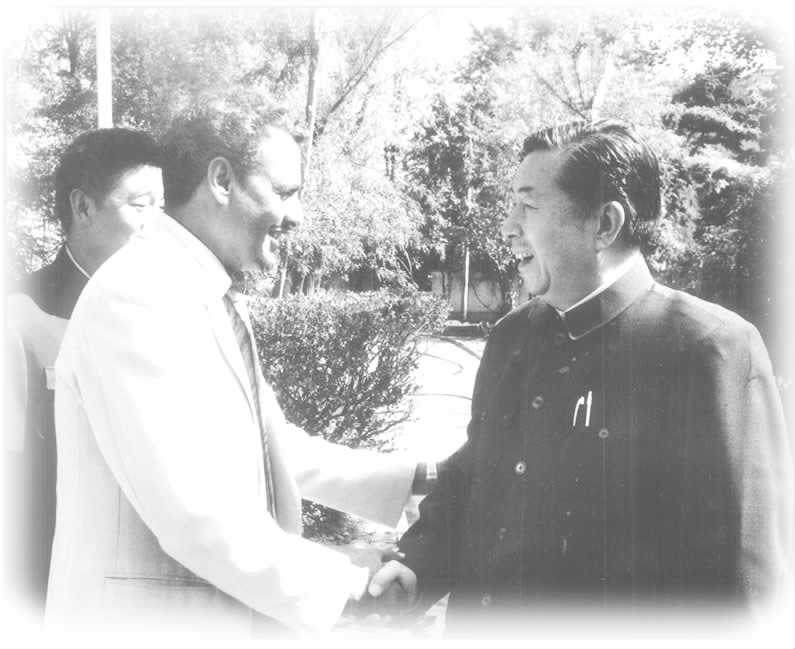
Another phenomenon: although quite a few in North Yemen live well, public services are very backward. The Chinese medical team had no good hospital to rely on; many medical teams rented houses to practice. I asked why not in the hospital; they said the hospital had nothing; even medicines and instruments brought from home were sometimes taken by hospital nurses; to see a doctor in the hospital you had to bribe. The country lacked health facilities and equipment; very backward. You can see: a poor country, even if part of the people live well, public services cannot rely entirely on foreigners; if it cannot independently produce, rely on itself, regardless of size, the people's standard cannot be fundamentally improved. So foreign aid not abandoned, but develop production. This many African and Arab Third World countries have not solved well — production has not been comprehensively developed.
In April 1987 I visited the South Pacific five — Australia, New Zealand, Western Samoa, Fiji, Papua New Guinea. This was arranged by the WHO Western Pacific Region director, the Japanese Nakajima Hiroshi, in 1976; he wanted to use China's influence to help the South Pacific countries' health work. Our delegation of five reached Australia first; we stayed a week. In Sydney we examined a province-equivalent's health work and budget. Their health funds were high, welfare was high; but effects were sometimes good, sometimes poor. I spoke with that province's Health Minister and briefed him on the achievements of our principle of "prevention first." He happily said he wanted to learn from China — even better equipment, better doctors, are not as good as fewer illnesses, no illness. He very much approved our prevention-first principle. On my visits to their grassroots, they had begun arrangements for how to do prevention well in the masses, so contagious disease be less, so there be health protection against various illnesses; this can save expense.
To Australia's capital Canberra, I saw it was very well built. Canberra is on hills; the city is very large, very beautiful, no pollution. The newly built Parliament had offices. I saw other large buildings. I asked again to see a grassroots hospital. They took me to a clinic near the city — outside was the pharmacy, inside the consulting room. I went in — all Chinese doctors. I said: in your clinic, where are the Australian doctors? They said: "Eight of every ten in this clinic are Chinese." I asked the doctors with interest: "Where are you from — China? When did you come?" Most were from Southeast Asia, where the standard of living was below Australia's.
In Canberra I stayed at a Hilton five-star hotel; downstairs was a Chinese restaurant whose 52-or-53-year-old manager, hearing I was the Chinese Health Minister, was eager to chat. He said the restaurant was not his; it was the hotel's; he only ran it as manager. He had come from Canada two years before. I asked how he was doing; he said very well; pay was by the hour; he made good wages, and overtime brought more. A year ago his son and daughter-in-law had come; they bought a house; life was good. Australia's population was only over 10 million in 8-some million sq km; some of it undeveloped; the population is too small for the area. I said: in the wild aren't there many kangaroos; where can I see them? They said: tomorrow we'll take you to a natural park. It's a place without artificial traces. There I saw two kangaroos and ostriches; the ostriches did not fear people; you could go up to take photos and they wouldn't run. This country is at present capitalist-style development; not yet truly developed; capitalism may impose some limits on its productive forces. Because there are still rich and poor. Australia mainly exports wool and iron to Japan and China and other countries — large amounts. In 1979 first time in Sydney I was a guest at some professors' homes; in chats they said annual immigration to Australia was 250,000, later gradually reduced; once successfully immigrated, from age one to fourteen all education paid by the state; high welfare.
At an Australian hospital outpatient I saw doctors from Singapore, from Hong Kong, Thailand — all overseas Chinese; some even graduates from China. I asked how their lives were; they said okay, earnings good, no serious illnesses. I asked their views. They said: "To be honest, the people here are too lazy; with such high welfare they are still dissatisfied, and don't work hard. Soldiers mostly seek pleasure; for war they're probably no good. Joke: not that we want to invade them — but in war, one of our armies could wipe them out."
Visiting the capital medical school I asked if there were Chinese students. They said two girls; I asked them to come and chat. One was from Beijing's Xuanwu District TCM Hospital, a Western doctor; one from Hong Kong. I asked how they studied; they said work-study, no tuition; finding lodging was easy; food and book costs needed not much work to fill. Because they studied medicine, they knew basic nursing; weekends Australians are off, no one wants to work overtime; on these two days they earn double pay, and at night double again; a few times a month gives enough pocket money. So in this country it's easy to support life; but immigration is controlled; less than 100,000 a year allowed; in 1984 not over 250,000 — also not many.
New Zealand made a very good impression on me. At our 8th Party Congress in 1956 I had accompanied several countries' Party leaders on a visit, including a New Zealand Politburo member. We went from Beijing to Xi'an, then to Chongqing, then down the river. On the way I asked him about New Zealand. Just after Liberation, I knew little about foreign countries. He said the New Zealand Communist Party had gone Left, treating middle peasants as rich peasants; in fact they were owner-operators with much land and good income but no hired hands; they were treated as targets of revolution; cut off from the masses. Speaking of New Zealand's wealth, he said New Zealand was 200,000-some sq km with only 3 million people; very rich. In recent years, owing to trade and so on, life had declined somewhat, but still quite rich.
In New Zealand's capital Wellington, also discussed with medical units. Met Ma Haide's nephew, also a doctor. The ambassador to New Zealand, Zhang Haifeng (Ming), had been head of the Foreign Ministry's International Bureau; he hosted me at a Chinese restaurant. He said New Zealand's economy was somewhat in trouble but life standards were not low. On TCM he said if we sent TCM doctors and acupuncturists to practice or for labor export, there'd be a future. After return I contacted the TCM Bureau; nothing came of it; some technique good, language not, paperwork complex.
In our touring there was a Maori area; this people's custom is to greet by touching noses to show friendship. The Maori are now modernized; the area has rich geothermal energy, hot springs hot, around them many restaurants and entertainment places. We saw a dance performance with rich ethnic flavor. We were invited to visit a Maori temple; they told me beforehand that at the welcome ceremony I would walk in front, they on either side; when several gun-bearing men came out to shout at the visitors, I must show no malice, or they would strike. This was a custom from their ancestors. We followed it into a round house; on either side sat a row of people; we touched noses three times with each as we passed, then sat down; after the Maori welcome speech, I gave a reply. Finally I gave them gifts. They served us their ethnic food. They keep these ethnic-character ceremonies, also to attract tourists; of course only for honored guests is it so grand.
From New Zealand to Western Samoa, three hours flight. This South Pacific small country has 250,000 people, several thousand sq km; it consists of two islands, the smaller undeveloped, mostly forest with some inhabitants. The big island is all tropical plants, especially coconut groves. In WWI, Germany seized this island and brought 2,000–3,000 young able-bodied Chinese here as laborers; these coconut groves were planted then by the Chinese laborers. Patches of coconut grove — looking from a small plane in the air, endless. After German defeat, the British drove the Chinese back; few remained. I asked: "Could you find me one or two overseas Chinese; I'd like to learn about the past." They said: "Yes, yes." They found an old overseas Chinese; he had come at eighteen or nineteen, with son and daughter, both intellectuals. The daughter had just returned from Australia, studying business, master's. He did business and seemed to earn well; he hosted me at home and told his story. He was from Guangdong, taken by the Germans young, married a local woman, stayed. I asked if he had been back; yes, after China's reform and opening. I asked if he planned to return; he said: "I'm old, in poor health, I won't return." His house had a small car; life was good.
Another old overseas Chinese had little culture; his son had been a vice Health Minister. He ran a small inn; the family had many rooms; two generations lived; life was good. He too had married a local and stayed; when I went his wife had just died; his spirits were low.
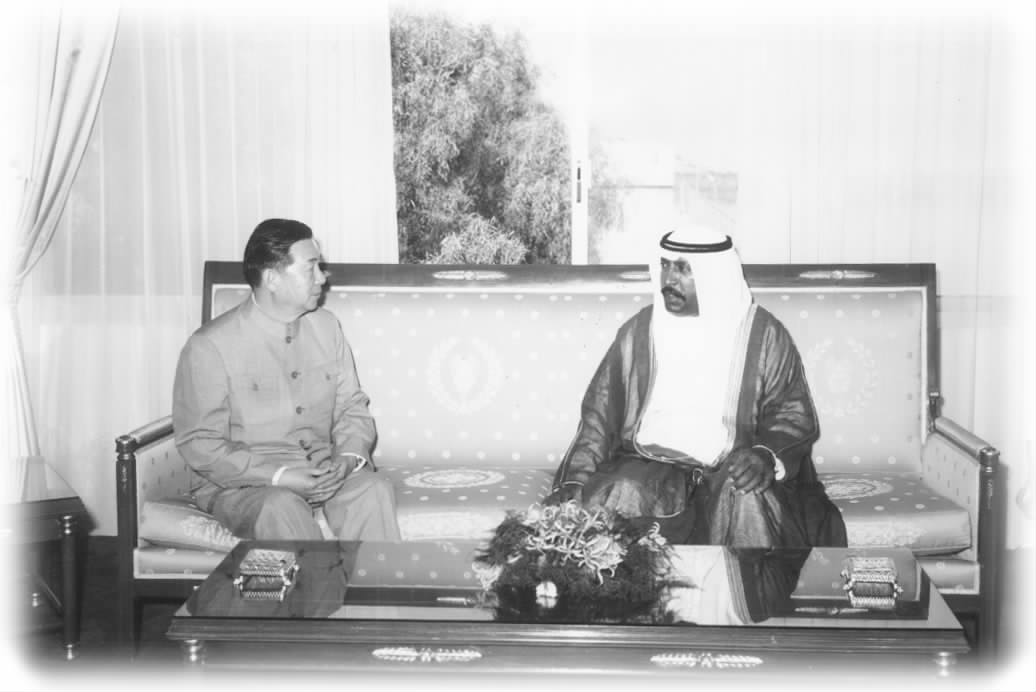
We went to various places. We saw Chinese helping plant peanuts for them. Locally there were no peanuts; all were transplanted by the Chinese. With the very hot climate, peanuts grew well. But two pests cannot be prevented: insects, and birds eating the peanuts; at most you can harvest half. We were just in time for harvest. Later their Health Minister said New Zealand's food was monotonous; two things they liked: tofu and bean threads. The New Zealanders are heavy; we went to their women's association; one heavier than another, in colorful long robes, swaying as they walked; one of them equaled one and a half of us. The Health Minister said tofu does not fatten; but their country had no soybeans. I visited their crop test farm — corn, peanuts, and a few other crops; soybeans had only just begun to be planted. They were eager to import soybeans from China to make tofu, and hoped we'd help them make bean threads, set up a bean-thread plant. After my return, I asked the relevant Shandong factory to send people with raw materials to help New Zealand make bean threads. Sesame, beans — many things they did not have, but tropical plants grew very well.
The Prime Minister of Western Samoa received us; the residence was a three-story dilapidated building; the Prime Minister was tall, barefoot, in local dress. I said: "Yours is a real treasure land; if you seriously plant various things, all would grow well — but most land lies fallow." The Prime Minister said: only 250,000 people, few able-bodied, no farming technique; many things imported; the country exports some seafood, coconuts and the like; the economy can't be lifted up. He too felt that planting various tropical crops suited to the country would raise the people's life.
Western Samoa has only one national hospital with 300 beds. They wanted to invite Chinese acupuncturists and made a plan; later WHO put up the money, the country contributed some, and several Chinese doctors went — very welcome.
A newly opened small restaurant — the elder a 50-some woman, a young couple in their 20s, a sister 17 or 18. They knew a few English everyday phrases. Whenever Chinese came, they invited them to a meal; business was good. Chinese seemed welcome; some government officials ate there too. The restaurant's ingredients came partly from China, partly imported from Australia.
Fiji is somewhat larger, 900,000-some people; relatively developed. But the natives have not entirely shed backwardness. The Fijian capital's buildings are not bad. There is a medical school; not large; said over a hundred years old — longer than China's medical schools; capitalism's invasion of it was earlier. It is said (whether true I do not know) that on Hu Yaobang's visit to Fiji, in a speech he said Fiji had driven imperialism out so life was good. Fijians could not accept this view; they felt without imperialism they could not have developed; before imperialism's coming, they were still in semi-savage state.
Rural medical institutions are run by the government; relatively progressive; not bad. Villages still have a chief system. To welcome us, they served kava — a plant, thicker than a thumb, earth-yellow; cut and crushed into flour, put in water, mixed in a pot. At the ceremony the chief — like a village head — chose someone to give the welcome speech, and ladled a bowl for the guest to drink; we could not refuse; said to have a stimulant. North Yemen has a plant, very expensive; local drivers like to chew and become addicted. This kava drink is also addictive.
We visited a museum, very large, showing the original homes and life of the natives, and how the chiefs enslaved tribe members — truly cruel! The chief could appropriate village women freely. Their houses are grass-woven, quite beautiful, with inner and outer rooms. I saw a row of mallets on the wall and asked their use; these were instruments of punishment. When the chief executed a tribe member, he would tie him, force him to kneel, then crush in his head with the mallet; after death, either eat the flesh or put the corpse in a basket and cast it into the sea as offering. This was the situation in their transition from primitive to slave society; all property and people belonged to the chief.
In another village, the welcome was larger; people from nearby villages all turned out — three or four hundred. Each man held a great sickle, in neat formation, shouting slogans, brandishing the sickles — formidable. Welcoming guests, the guest must donate money. As Minister I could not give too little, or it would seem disrespectful. After the ceremony, the tribe slaughters a pig for the guest to take away; sometimes two or three pigs. We took the pigs back to the embassy and quickly handled them, or they would spoil.
From Fiji to Papua New Guinea — its island totals over a million sq km, half belongs to Indonesia, half to Papua New Guinea, a 400,000-some sq km territory. Population very sparse, only two or three hundred people in the country (2 to 3 million). I was very interested in their natives.
I asked the ambassador: "Do you have material on the natives?"
He said yes — videos showing the past and present situation of the native peoples. I copied the videos and brought them back; I still have them. In WWI, when British and German helicopters flew over the country, the natives thought gods had descended; they knelt and prayed; naked, holding work-sticks, still in primitive state. Now their life is modernized; the country still keeps primitive remnants.
At their seacoast there are sea cucumbers, very large. At dinner I said: "The sea cucumbers here are really thick." The embassy people said: "These are local; need not be bought. The cook often takes everyone to the sea to gather them; each with a big sack, fill as you like." Some are very experienced; on the flight from Papua New Guinea to Hong Kong, beside me sat a forty-some Chinese, also going to Hong Kong; I asked what business he was on. He said he sold sea cucumbers; one trip a ton; each trip earned much. He hired workers in Papua New Guinea, gathered them by his methods, dried and shipped to Hong Kong.
The world has many kinds of resources, much undeveloped. For example, on Peru's west coast jellyfish abound, ships cannot dock. The jellyfish grow thick; the locals do not value them; we Chinese consider jellyfish a delicacy. Fiji and Papua New Guinea both produce sea cucumbers, but the locals don't value them, no one treats them as an important resource to be cultivated and processed; they are left to grow wild. Papua New Guinea has much primary forest, abundant good timber. China negotiated with them to log; some timber to be shipped back to China, some sold internationally. After three years of talks, no agreement, because their condition was to build local primary schools and roads; we did not accept and gave up.
> Photograph: Minister Cui Yueli meeting the Mauritanian Health Minister in Beijing, 1983.
Result: the Japanese closed the deal at once. The ambassador had strong views about our way of doing foreign trade; we should not give such good chances to the Japanese.
Some of our provinces also do business abroad. For example in Fiji, one day they suggested we eat at a Sichuan restaurant. I said: "How can there be a Sichuan restaurant here?" They said Sichuan province wanted to develop in Fiji; first opened a restaurant. Going there I learned the boss was a Chinese; the staff were local Chinese-descent. I asked the boss how things were; he said: "All right, no losses. Our aim is to do other things, but we must first gain a foothold."
In international economic competition we must have a set. One is people, one is policy. Without people, won't do; without good policy you can't compete. These three small countries are all tropical Pacific countries; whatever you plant grows; like our Hainan island; but still relatively backward. When imperialism invaded they mainly developed cities, because that was to imperialism's benefit; what wasn't they didn't do. In developing trade with these countries, the problems of competing with others are not to be ignored.
In November 1983 I went to Egypt to attend a conference of the Red Cross presidents of 22 Arab countries, as observer, mainly discussing cooperation among Arab countries' Red Cross organizations. The most powerful voice was Saudi Arabia's; with strong economic strength, to relieve Angola they pledged on the spot $30 million. The conference lasted five days; China was not arranged to speak. I wrote a paper of general meaning — strengthen cooperation, contact — and distributed it. On the last day the chair asked if the Chinese representative had something to say. I had not prepared, but first thanked them for the chance and spoke some friendly words.
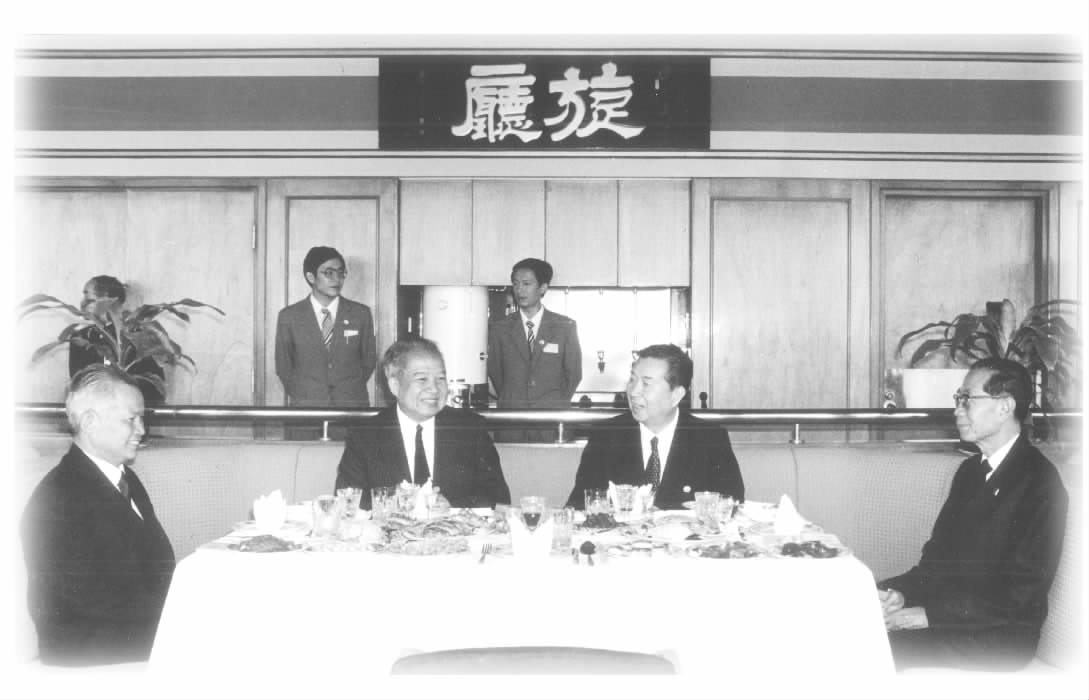
Attending this conference let us strengthen relations with Arab countries; another reason was Egypt is an ancient country with many relics. Reaching Cairo I saw how lively — over 13 million people, larger than Beijing. Said to have over 2 million cars; underground is one road, overhead another. Their economic level seemed higher than China's.
Egypt has three big incomes: labor export — they have over 4 million working abroad as doctors, teachers etc., earning 1–2 billion in foreign exchange; oil; tourism.
The Suez Canal is no small scale, 100–200 km, all dug from the desert; banks heaped with sand. Following it to a depression where the river forms a small sea, they built a tourist district there with many villas, each different, with many flowers; many tourists; locals make money this way.
Said Napoleon planned the Suez but didn't finish it. Later, after a long time and over a million laborers' deaths, it was finished — desert, hot, water short, contagious diseases rampant. Standing at the Suez we saw a ship pass every short while. The maximum tonnage allowed is 300,000; not long ago a 150,000-ton U.S. aircraft carrier passed. On average each ton brings over $40,000 in revenue — a big income, over a billion a year. Plus labor export, oil, tourism — four together — six or seven billion in foreign exchange. Recently oil down, foreign exchange has dropped, prices are up. We export 3,000 laborers to Egypt; the contract pays in Egyptian pounds; the pound has fallen and we lost; engineering can't continue — 3,000 dropped to 2,000, then to 1,000. When I went only 1,000-some left. But Taiwan does well there. They unlike us — the contract pays half in dollars, half in pounds; when the pound fell, the dollar rose; no loss. Beyond that, the projects Taiwan contracted only sent technical and management personnel, ordinary workers were locals. China sends all home workers, not only paying wages but bearing clothing allowance, round-trip fares; a three-month abroad lets you buy big items; longer, more big items. When the pound fell, workers were not motivated. This needs reform. When Taiwan finishes a project, the workers disperse and the money is made.
In Sharjah I met Minister Zhao of Machinery and Electronics; on the plane we talked much. He wanted to contract work in Iran; Iran said they couldn't pay cash, could give oil, condition being you cannot sell it abroad, can't compete with their market. But their oil is unlike China's; brought home it can't be used. So no agreement; he had to bring back his dozen experts. I found labor export an issue worth studying.
In 1984 I went to Turkey and Kuwait. Kuwait has under a million people; over a third are Kuwaiti, a third foreign; technicians mostly foreign. I saw a district's specialty hospitals — surgical, pediatric, gynecological — equipment all modern; technical staff mostly from the U.K., U.S. and elsewhere; managers Kuwaiti. Chief director Kuwaiti, deputy foreign; the locals mainly play supervisory roles, with low ability.
Meeting the Prime Minister of Kuwait, I said: "Your standard of living is high; the gap between China and you is great; your education level too will rise."
He said: "Not necessarily; our young people now have too good a life and don't study hard. I worry that this way each generation will degenerate."
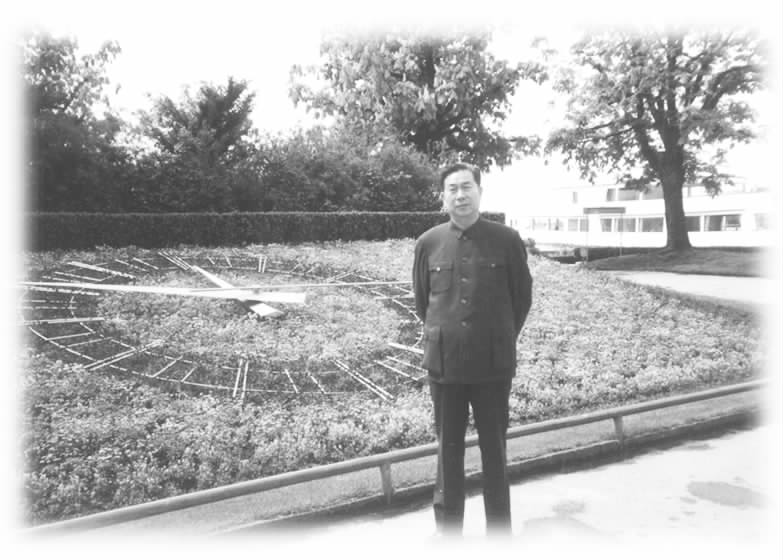
Men get a house when they marry; because population is small, when a child is born there's a subsidy. In such a system people's enthusiasm for labor isn't high. Medical regulation: if a doctor signs that the patient cannot be treated at home and needs to go abroad, he can fly out at once at state expense. Welfare too high makes citizens lazy.
I had heard much of Italy and Vatican. Especially I wanted to see the Vatican as origin of Catholicism. Since this was a routine visit, no major inspections; I called on the Italian Red Cross; otherwise no official activity. In Italy I also looked at people's life. Some years ago Italian currency had depreciated; said now inflation and depreciation were basically controlled, economy relatively stable. The Italian cabinet is probably one of the most often replaced in the world — also reflects domestic situation; many contradictions. By market prices and income, Italian per-capita income is high.
The Vatican and the Colosseum are both grand. The Colosseum is like a present-day open-air stadium, but the steps are taller; it had originally been faced in white marble; said to have been stripped to build the Vatican; many stones still remain. The Colosseum was well designed — tiered seats; below, a river; sluice opens, slaves on each side acted as two armies fighting; the loser stabbed dead, the winner sailed away. Or slaves fought lions, tigers; nobles watched above. Building the Colosseum required great manpower and material; this shows ancient Rome's productive forces were high, culture developed. Near the Colosseum is the old palace, built along the hills, large in extent. There is also an oldest palace buried underground; from a distance the frame still stands but the roof is gone. European countries give great weight to relics; many tourists.
Then we visited the Vatican. Entering a great courtyard, what we saw was tall pillars like outside our Great Hall of the People. First the church, perhaps the largest Catholic church in Europe. Very tall; every priest of some renown has a preaching place; a great hall probably for service; the famous priests' coffins are inside. Vast project. Also in the church a relic museum.
After coming out I felt strange. The Vatican is not a country; what we saw was just a big church! It turned out the Vatican was right beside, connected to the great church; at the gate two soldiers in old-style uniforms held arms motionless; I took a picture with them. The Vatican's cardinal often takes part in international activities; I had met him twice but he ignored us. Because the Vatican has not established relations with us, politically it is reactionary — opposes the Communist Party, unwilling to relate to Communist countries.
Accompanying me on the visit was an old doctor very interested in Chinese acupuncture; he had been chair of the Italian Acupuncture Society. Now he had become interested in qigong. Last year our country held an international qigong symposium and he attended. I asked him: "Yours is a Catholic country; how many really believe in Catholicism?"
He said: "Real believers don't reach 10%." So no need to overestimate religious force.
In Britain there is a woman bishop, opposed by many. In South America in Venezuela, many nuns are married, have families, working like a regular job. In Japan monks too marry; young nuns dress like ordinary girls, going to temple-monastery is treated as work. This is unlike China.
In 1984 visiting Turkey, an ancient country. Over a hundred years ago called the Ottoman Empire; it had wiped out many small countries; territory great, history long, culture also developed.
We visited the capital, the old palace, the new palace. The old palace has things from when many small countries paid tribute at the height of the Ottoman Empire — chairs of solid gold, some rooms with all gold vessels — outshining the Forbidden City's. The king's quarters are a great hall, a row of buildings, residence of the king and his favorite consorts. Toilets had flush mechanisms, but all of white jade.
The new palace is fully modernized. Lamps and furniture mostly French. Because this country is also ancient, some old castles are 2,000 years old, dimly visible. I particularly looked at Istanbul — a great city of over 3 million, straddling Europe and Asia; a sea river through the city is an important international waterway; from China to the southern Soviet Union one must pass here.
There is a great bridge over the sea river spanning Europe and Asia, very long, built with British help. Visited some exhibitions; happened to see a National Day ceremony. Few troops; army, navy, air force in turn marched past; in front of each column a drum-and-music corps; a conductor twirled the baton dazzlingly, threw it up high, caught it steady — splendid skill. The troops in old-style clothing and the people in ethnic dress all reflected Ottoman customs — characterful, robust. Their writing is close to Xinjiang's.
This country is friendly to China. In our delegation was a head of Xinjiang Health Bureau. He said: "Look — much of their writing is much like ours." We saw Xinjiang people working there. If we develop friendly relations with these countries, communication among ethnic groups is helpful for economy and culture.
In Kuwait and Turkey, traditional medicine was discussed too. Kuwait wants very much to do it but has none; they invited Indian doctors to set up a small herbal practice. Turkey believes in our Xinjiang's Uyghur medicine; they proposed exchange with Chinese Uyghur medicine. I noted this; back I sought out the Xinjiang authorities and proposed setting up Uyghur medical hospitals. Later Xinjiang adopted my view; not only set up hospitals widely but also opened higher specialty Uyghur medical schools. This both serves Uyghur and other minority masses, and helps neighboring countries' traditional medicine.
In May 1986 I went to Geneva, Switzerland for the World Health Assembly. Toured Geneva's scenery, saw Lake Geneva. Geneva over a hundred years ago was poor; using Lake Geneva and the chance of European capitalist countries' development, today is unlike before. Switzerland does tourism, banking, conferences — quickly earned money, prospered. Switzerland has a neutral policy internationally — mainly for its own national interest. Bern, the capital, I had not been to; in 1986 going there I happened to need to negotiate with the Swiss Red Cross. They had been in touch with the Panchen Lama's people, hoping to establish a hospital in Shigatse. Before I went abroad, the Panchen was at the Western Hills sanatorium in Beijing; I talked with him once, very well. I said I hoped going to Switzerland we could fix the hospital matter; he was eager, also found Secretary Wu Jinghua. In Bern the Swiss Red Cross side, not knowing the situation, proposed to investigate first; after, they felt Shigatse's medical institutions were not few; what was lacking was talent; existing personnel were of low level. They hoped to set up a training place to raise medical staff level. After return I found Vice Chair Panchen again; he still hoped for a higher-level hospital in Shigatse. I said: very good; if we can arrange for funds for equipment etc., better. The result: the foreign side gave little; no new hospital was built; only training in the old hospital.
To Bern one detoured a small country, Liechtenstein, an independent country of 15,000 people, two main income sources — tourism and stamps. They collect every country's stamps and resell them to foreigners; on this they keep 15,000 people alive. Liechtenstein's capital is beautiful, the scenery good — two mountains on each side, an old castle; these old buildings are kept as tourist sights. Many tourists come, but I felt few sights; tourists mainly come to buy stamps; in the largest stamp hall, every country's stamps. This shows that as European capitalist countries' economy has developed, cultural life has grown rich; this small country lives by stamps to feed its 15,000. Their standard of living is not low; municipal construction not bad either.
In July 1985 I visited the Soviet Union, Poland, France, Senegal, Mali. In Africa their leaders were especially warm; usually presidents and prime ministers came out to meet. In Tunisia, President Bourguiba at age 80 grasped my hands with both his, thanking China for its aid — for helping build a canal that solved the southern half's water shortage; thanking our medical team. Then to Senegal, both visiting and looking up our medical team. Nine hours after landing, the President received us; because our medical team had saved lives there and was very welcome, the President valued visiting Chinese officials greatly. At the meeting he said: "You are our most distinguished guest." He even sent a special plane to take us to see the medical team. The plane took off from Senegal airport with twenty or thirty aboard; flew three hours; preparing to land, circled several times without landing; I began to be tense; either the plane had a fault or there was a ground problem. I saw young Song and others' faces change too; it circled almost half an hour; finally the plane came down — but on touching the runway the rubber tires burst; air escaped; the plane bumped along the runway and finally stopped. I looked — all wheels flat, only one meter from the dirt; if it had slid onto dirt the plane would have flipped and exploded. I said to young Song: "See, when a plane goes up you must be ready for it to come down; if it doesn't come down, you've gained a life — that's good. You must have this preparation."
He said: "Don't say it, don't say it; the year before I was on a flight; the plane's fault wasn't this serious and I was so frightened I didn't speak two days."
Senegal is near the Sahara; sandstorms reduce visibility; landing at a small town with a small airport and short runway, the pilot couldn't find the runway; managed to feel his way down but landed mid-runway; not enough distance, forced emergency braking; tires burst.
The pilot was a colonel, with a five-person crew; I thanked them: "You've worked hard; your flying skill is good." He said: "We caused you alarm."
At the medical team I made a special arrangement to host the crew; they cabled the capital for a tire to be sent before we departed.
## Appendix: A Style for Health Diplomacy
— by Chao Yueyun
> Comrade Cui Yueli, during his term as Health Minister, was entrusted by the Foreign Ministry — during visits to China by Egyptian President Mubarak, Cambodian King Sihanouk, Ecuadorian President Osvaldo, Gabonese President Bongo, and others — to serve as head of the host delegation, and many times as state special envoy. > > In diplomatic settings, he knew well that he represented our nation's image; so his bearing, manner, and speech were always exactly right, showing a gracious personal charm and the modest style of a leader, playing an admirable role. In any foreign affairs setting he was neither obsequious nor arrogant — warm and generous. Before foreign guests' visits he carefully read, analyzed, and absorbed every document and material the Foreign Ministry sent; humbly listened to the Foreign Ministry's responsible leaders and the comrades in charge; preparation was thorough and detailed; he gave great attention to his appearance — hairstyle and dress carefully attended; he was very strict about time, willing to be 15 minutes or even half an hour early rather than ever be one minute late; whatever commitment he made to a foreign friend he kept — words lived up to, deeds completed, never going back on his word. > > Not only in state foreign affairs was he careful and meticulous; in health foreign affairs likewise. With his personal foresight he actively pushed the Ministry's opening and exchange. He firmly believed and often said: TCM not only plays an important role in the health enterprise of the Chinese people, but will surely go to the world, to the developed countries, and play an important role for the world's people's health. Now his foresight is becoming reality: TCM is gradually flowering and bearing fruit across the world. > > In foreign affairs work he also gave attention to training cadres of ethnic minorities. Once when I accompanied him on a visit to Kuwait and Turkey, in arranging the delegation he first thought of Comrade Ishaq Jiang, head of Xinjiang's Health Bureau. On the trip he greatly respected Director Yi's living habits, and carefully learned about Xinjiang's health enterprise. Because of historical and ethnic-religious ties, Director Yi connected easily with the Turkish people; on the Turkey visit he played a fine role no one else could have replaced.
> Photograph: Comrade Cui Yueli at Greenwich, England.