My Father Cui Yueli and the Birth of the State Administration of Traditional Chinese Medicine
In 2020, COVID-19 swept the globe. Among those on the front lines was a team that kept a quiet, steady posture and produced results people noticed — the Chinese-medicine corps led by the National TCM Medical Team. From the late 1970s through the late 1990s, my father Cui Yueli led the whole of that corps. He held the top TCM portfolio for nine years, and concurrently served as president of the China Association of Chinese Medicine (formerly the All-China TCM Association) for nineteen years, writing vividly in the ledger of reviving Chinese medicine. During his time at the Ministry of Health, he built two important Chinese-medicine institutions — the State Administration of TCM (later renamed the State Administration of TCM and Pharmacology) and the All-China TCM Association (later renamed the China Association of Chinese Medicine). The birth of these two bodies opened, in administration and in learning, the autonomous space in which Chinese medicine could develop. Here I want to focus on the birth of the State Administration of TCM.
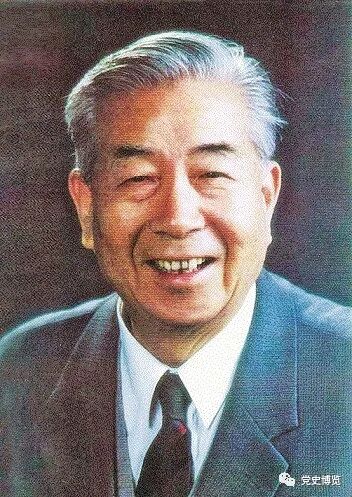
Cui Yueli in later years
After the Cultural Revolution: TCM was in no shape to be optimistic about
In 1978, my father was appointed Vice-Minister of Health. Soon after he arrived at the ministry, Minister Jiang Yizhen asked him whether he was interested in Chinese medicine — could he take that portfolio. That is how my father came to take over the management of Chinese-medicine work.
The first thing he did was a survey of the state of Chinese medicine nationwide. The state was not good. His survey showed that Chinese medicine had dropped significantly in both quantity and quality. The number of Chinese-medicine practitioners had fallen from more than 360,000 in 1959 to 240,000 in 1977. Large numbers of collectively-owned TCM hospitals had been torn apart; their senior physicians had been labelled "cow-devils and snake-spirits" and sent back to their home villages. Before the Cultural Revolution, there were 371 TCM hospitals at the county level or above nationwide; by 1978 only 171 remained. And in what remained, Western medicine was usually in charge. On an inspection visit he even saw one TCM hospital with a Western-medicine department sign up on the wall. From this, my father concluded that traditional Chinese medicine had been damaged from two sides during the Cultural Revolution: its theory and its practice had been denounced as "feudal remnants," and the Chinese medicine that had managed to survive was being seriously Westernized.
Discrimination against Chinese medicine had a long history. After Western medicine entered China, Chinese medicine had gradually lost its mainstream place in Chinese medical circles — the pattern became "Western medicine in power, Chinese medicine in opposition." Should China keep Chinese medicine at all? What role and position should Chinese medicine and Chinese herbs have in our country's medical and health work? Should they be developed proportionally, according to plan? These were the questions he had to face.
Inside the profession, two views prevailed. One view represented the Chinese-medicine community: that Chinese medicine was widely neglected and being Westernized, and sharply asked: "Is a TCM hospital a Chinese-medicine hospital or a Western-medicine hospital? In a TCM hospital, is Chinese medicine in charge or Western medicine?" The other represented a portion of health-sector cadres and Chinese-Western-integration specialists, who held that "sound, light, chemistry, electricity are running ahead — why hitch a broken cart to an old ox? — promoting traditional Chinese medicine now is backward."
Between the two sharply opposed views, my father chose inheritance and development of Chinese medicine. His decision rested on two basic facts. First, in the vast rural areas of China, Chinese medicine was the form of medical service the common people loved and could afford — China's prevention and treatment of disease could not do without it. Second, among the world's traditional medicines, Chinese medicine has the most complete theoretical system and the richest practical experience; it is a medical resource unique to China.
In 1979 the head of the Japan Medical Association, Takeda, said to him: "You in China still have traditional medicine; we no longer do. Traditional medicine is the medicine of the 21st century — in the 21st century it will be recognized and valued by every country." This hit my father hard. He said: "You abolished Chinese medicine (kampo — the term for Chinese medicine as it reached Japan). Take a lesson from your experience: we in China must value Chinese medicine. We must train large numbers of people who truly understand it."
On his overseas surveys he also found that the United States and Europe had essentially no complete traditional medicine; that India's and Sri Lanka's traditional medicine was mostly rural; that Native-American traditional medicine in South America had heavy elements of superstition and shamanism, without a theoretical system. Only China had preserved a relatively complete traditional medicine — a unique landscape in the world's medicine.
Since 1949, Chinese-medicine work had been managed by the Ministry of Health. In 1952 the ministry set up a "Chinese-Medicine Section" within the Department of Medical Administration, as the national TCM administrative body. In 1953 the Section was upgraded to a Division; in 1954, to a Bureau. But through every renaming and upgrade, for a long time the Chinese-Medicine Bureau had only eight staff — eventually rising to fifteen. Compared with the Ministry's headcount of more than five hundred, the Chinese-Medicine Bureau's allocation was tiny. And every other departmental bureau in the Ministry — Medical Administration, Maternal and Child Health, Epidemic Prevention, Science and Education — all served Western medicine.
From 1966 to 1975, not only did TCM technical staff drop by a third — the Chinese-Medicine Bureau's direction of work itself drifted seriously away from Chinese medicine, becoming an office for "Chinese-Western integration," with Chinese medicine gradually replaced by integration. In July 1975 the Ministry formed the "Office of the Leading Group for Chinese-Western Integration" — displacing the Chinese-Medicine Bureau altogether.
In a 2006 interview, Tian Jingfu — former Vice-Director of the State Administration of TCM — noted that in the Ministry's compound there were seventeen or eighteen departments, and only one of them, the Chinese-Medicine Bureau, oversaw Chinese medicine. The Ministry's administrative apparatus had, consciously or not, put Chinese medicine in a subordinate place.
The Hengyang Conference — Chinese medicine's place and direction turn around
A turning point arrived in September 1978. It came from a report the Ministry of Health submitted to the Central Committee: Report on Earnestly Carrying Out the Party's Chinese-Medicine Policy and Solving the Problem of a Dwindling TCM Corps. On September 7, Deng Xiaoping annotated the report: "This problem should be taken seriously. In particular we should create good material conditions for the development and improvement of Chinese medicine." On the 24th, the CCP Central Committee forwarded the ministry's report as Document [1978] No. 56, requiring stepwise implementation — "in basic-construction planning, priority shall go to the development of Chinese-medicine institutions; in the allocation of funds, Chinese-medicine institutions shall receive priority." Against this backdrop, the Chinese-Medicine Bureau was restored in October 1978.
In May 1982 my father was appointed Minister of Health. Before the announcement, he had been the Vice-Minister overseeing higher medical education and Chinese medicine. At the end of April he had just chaired an extraordinarily important conference in modern TCM history: the national conference on TCM hospitals and higher TCM education. Because it was held in Hengyang, Hunan, it came to be called the "Hengyang Conference." Its purpose was to unify thinking and create conditions for TCM development; its impact on the Chinese-medicine community was profound. Master physician Deng Tietao, former Vice-President of Guangzhou University of TCM, said the Hengyang Conference was the beginning of the change in Chinese medicine's subordinate position. The conference clarified a direction-of-development question: TCM's direction is not to be reformed by Western medicine, not to be replaced by Chinese-Western integration — but to preserve and develop the distinctive features of Chinese medicine in TCM hospitals and TCM colleges.
The conference held that Chinese medicine was the weak spot in health work; that finance and policy should set its relationship with Western medicine straight; that Chinese medicine should receive the same respect Western medicine did. These formulations broke the long-standing pattern of managing Chinese medicine by Western-medicine methods, and held that the key to TCM development was to keep the TCM medical system inherited and preserved in full. This was the first time since 1949 that the health administration reversed course on Chinese medicine's place and direction.
My father's first move was to have Lü Bingkui, head of the Chinese-Medicine Bureau, sit in on the ministry Party committee meetings — so that he could raise Chinese-medicine issues there. Lü made a suggestion to my father: "Chinese medicine should develop independently; it must develop independently. Chinese people should have that backbone." My father took this seriously. After Hengyang, my father began to explore how to put Chinese medicine and Western medicine on equal footing.
Tian Jingfu recalls that during his time as head of the Chinese-Medicine Bureau, my father discussed this question with him many times, and came to two conclusions about what needed to be done. First, for Chinese medicine and Chinese herbs to develop sustainably, stably, and healthily, there had to be a relatively independent management body, training a corps of strong-Party, dedicated cadres — and thereby providing organizational support. Second, the Chinese-medicine corps had to strengthen itself — to do the inner work and steadily raise its clinical level. Neither could be missing. The two institutions my father led into being — the State Administration of TCM and the All-China TCM Association — were built precisely for this: to bring together Chinese-medicine strength nationwide, to find and train talent, and to push the enterprise forward.
The idea of autonomous TCM development, once proposed, was welcomed by the Chinese-medicine community. From there, establishing a national-level independent TCM administrative body went onto the agenda.
The establishment of the State Administration of TCM, as the saying goes, was a good thing that took many tries. Under my father's leadership, the Chinese-Medicine Bureau of the Ministry of Health and the nationwide Chinese-medicine community worked nearly two full years on it.
After the Hengyang Conference, my father had the Chinese-Medicine Bureau prepare the paperwork for the TCM Administration's founding. Deng Tietao recalls that Minister Cui, who was then also president of the All-China TCM Association, worked with the Association's standing directors on a proposal: first establish a vice-ministerial-level bureau dedicated to managing Chinese medicine. The proposal made clear that the TCM Administration was only an adjustment and consolidation of existing bodies — no new spending. But the idea came just as state bodies were being downsized, and the proposal was shelved.
The birth of the State Administration of TCM
In March 1984, Marshal Xu Xiangqian was recuperating in Guangzhou when he suddenly came down with a high fever that would not break. Western-medicine consultation did not bring it down. Marshal Xu's wife insisted on calling in Deng Tietao. Deng took him off antibiotics and put him on Chinese medicine — the fever broke in a few doses. Marshal Xu asked Deng if he had any request; Deng said: "I'd ask you to pay some attention to Chinese medicine." Deng entrusted Marshal Xu with a letter for the Central Committee, saying that in Guangdong there were fewer and fewer Chinese-medicine doctors — another decade and there would be none. Through Xu's transmission, the letter quickly reached Hu Yaobang, who annotated it, and it became reference material for a Politburo meeting. Coincidentally, He Ren — a celebrated physician in Zhejiang — initiated a joint letter with ten other noted specialists including Zhang Canjiu of Shandong and Li Jinyong of Hubei, petitioning the State Council that defects in the management system were holding Chinese medicine back, and urgently calling for an independent TCM-and-pharmacy administrative system.
In 1985, to address the Chinese-medicine question at its root, the Ministry of Health Party Group submitted six reports to the State Council on reforming the Chinese-medicine management system. The Central Committee and the State Council discussed Chinese medicine five times. The Ministry then drafted a more detailed document — one that proposed not only the establishment of a State Administration of TCM but also state-level TCM dedicated funding. The document reached the State Council on January 3, 1986. On January 4, the State Council convened its 94th standing-committee meeting. My father brought Vice-Minister Hu Ximing (who oversaw Chinese medicine) and Chinese-Medicine Bureau head Tian Jingfu with him to report. On behalf of the Ministry Party Group, my father gave a detailed presentation of the Request to the State Council on the Establishment of a TCM Administration.
After heated discussion, the meeting issued four points on Chinese medicine's position, research, title evaluation, and herbal-materials:
1. Chinese medicine should be put in an important position. Chinese-Western integration is correct, but Chinese medicine cannot be reshaped by Western medicine. Western medicine should develop, and Chinese medicine should develop — Chinese medicine must not be treated as a subordinate of Western medicine.
2. The research of Chinese medicine should be taken seriously. It must be summarized and studied in both theory and practice; it must not be reduced simply to a Western-medicine explanation.
3. On title evaluation, Chinese medicine should be evaluated by Chinese-medicine standards. For senior TCM physicians, evaluation should center on practice.
4. Earnest work must be done on the cultivation, procurement, and processing of Chinese herbal materials.
At this meeting my father secured three kinds of support for Chinese medicine: (1) establishment of the State Administration of TCM, responsible for unified management of the Chinese-medicine enterprise and the cultivation of talent; (2) annual state allocation of ¥100 million in TCM subsidies (including TCM education) — on top of the 1985 allocation of ¥43 million, making up the ¥57 million gap with ¥40 million from the Ministry of Finance and ¥17 million from the State Planning Commission; (3) tax exemption for the processing and production of prepared Chinese herbal medicines.
Tian Jingfu recalls: winning the state's policy support for Chinese medicine was not easy — that credit belongs to old Minister Cui Yueli. Without a Party-group secretary like him, these proposals would not have made it out the Ministry's gate. At that year's nationwide Provincial Health Department (Bureau) Chiefs' Conference, my father said to the assembled heads: "Now that we have this much money to develop traditional medicine, I will make only two demands. First, every county must establish a TCM hospital; in minority areas, appropriate ethnic-minority hospitals should be built per the needs of those peoples. Second, strengthen higher education for Chinese-medicine talent; for ethnic-minority medicines — Tibetan, Mongolian, Uyghur — set up medical colleges; for Dai medicine, set up a health school. First build the temples of traditional medicine. Once the temples stand, inviting in the deities becomes the easier task." By 1995, more than 2,000 county-level TCM hospitals and 30 TCM colleges had been built.
On July 20, 1986, the State Council formally issued the Notice on the Establishment of the State Administration of Traditional Chinese Medicine. The Notice specified that the Administration's "principal task shall be the management of the Chinese-medicine enterprise and of Chinese-medicine talent cultivation, and the inheritance and promotion of the learning of Chinese medicine and Chinese herbs." On December 20, the Administration formally opened. The State Council appointed Hu Ximing as Vice-Minister of Health concurrently serving as Director of the TCM Administration, with Tian Jingfu and Zhu Guoben as Vice-Directors. That day, my father spoke at the founding ceremony and the accompanying press conference on the major 1986 TCM research achievements. He said: The founding of the State Administration of TCM marks the start of a new phase in our Chinese-medicine work — the phase of planned construction of Chinese medicine. In the past Chinese medicine had no independent leadership or management body; no independent funding; a great deal was said but much of it was empty. We need to say less and do more — and that requires putting it on the financial register, and putting it on the organizational register. Without that, it's empty talk.
After its establishment, the State Administration of TCM began to implement autonomous management of the Chinese-medicine enterprise. But the herb-management portfolio remained with the State Administration of Medicine — a division that went against the principle that Chinese medicine and Chinese herbs cannot be separated. In 1987 my father retired. On May 3, 1988, the State Council decided to transfer the herb-management functions of the State Administration of Medicine to the TCM Administration; the body was renamed the State Administration of Traditional Chinese Medicine and Pharmacology — and at last the independent management system for the Chinese-medicine enterprise was in place.
(Source: Dangshi Bolan — Party History Panorama, 2021 Issue 4)