Courtyard Deep in the Health Ministry — No More Cui Yueli
Courtyard Deep in the Health Ministry
No More Cui Yueli
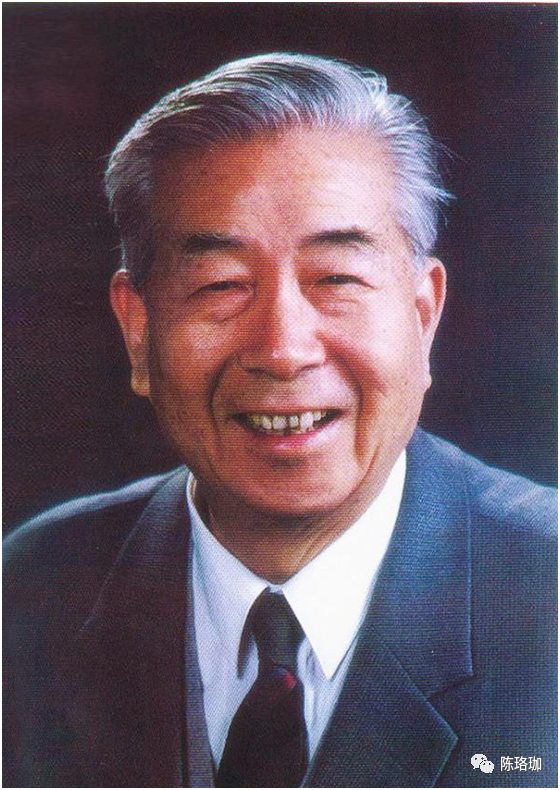
Former Minister of Health, Cui Yueli
On November 18, the China Association of Chinese Medicine held a symposium in Beijing marking the one-hundredth anniversary of Comrade Cui Yueli's birth. The gathering drew more than fifty attendees: Wang Guoqiang, president of the Association and former Vice-Minister of the former National Health and Family Planning Commission and former Director of the State Administration of Traditional Chinese Medicine; She Jing, former Vice-Minister of Health and former Director of the State Administration of TCM; Yu Wenming, current Director of the State Administration of TCM; Zhang Boli, member of the Chinese Academy of Engineering and president of Tianjin University of TCM; Sun Guangrong, master physician of Chinese medicine; Wang Guochen, Secretary-General of the Association; scholars of Chinese medicine, and members of Minister Cui Yueli's family. Wang Guochen chaired.
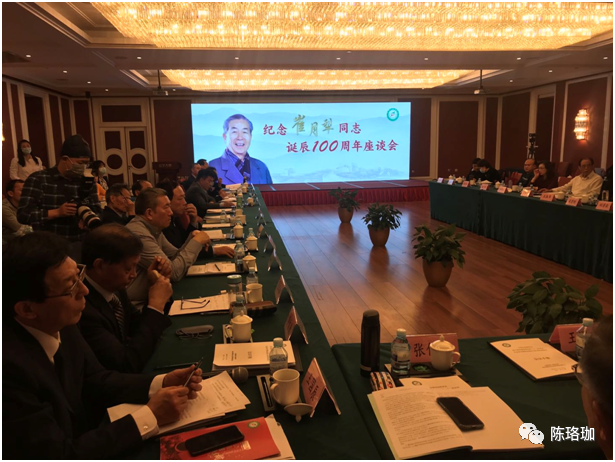
Symposium hall
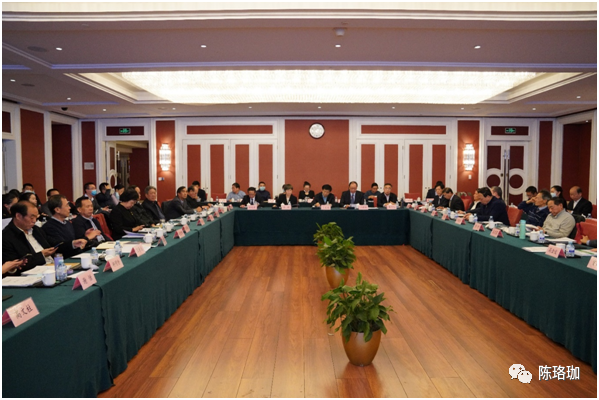
Symposium hall
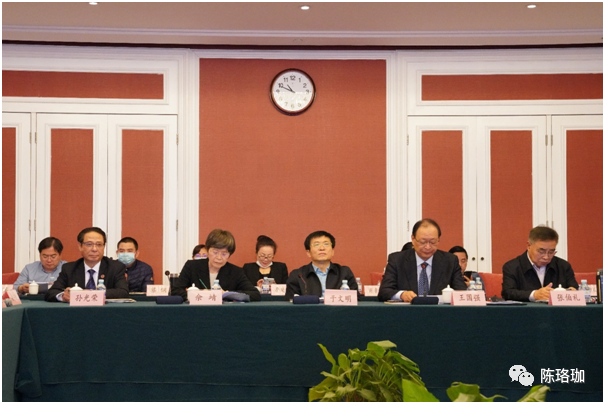
Left 1: Sun Guangrong (master physician of Chinese medicine); Left 2: She Jing (former Vice-Minister of Health, former Director of SATCM); Left 3: Yu Wenming (current Director of SATCM); Left 4: Wang Guoqiang (Association president, former Vice-Minister of NHFPC, former Director of SATCM); Left 5: Zhang Boli (CAE academician, president of Tianjin University of TCM).
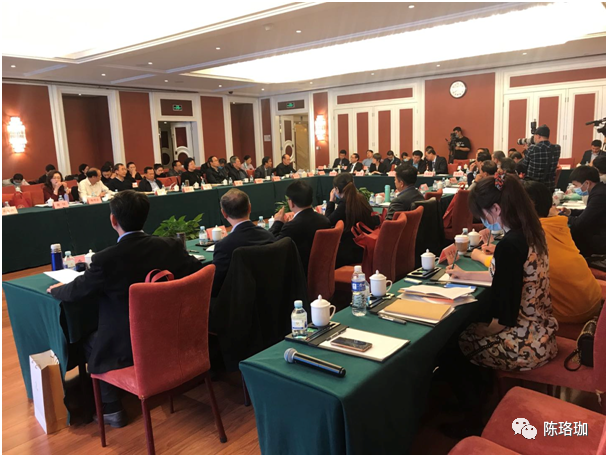
Symposium hall
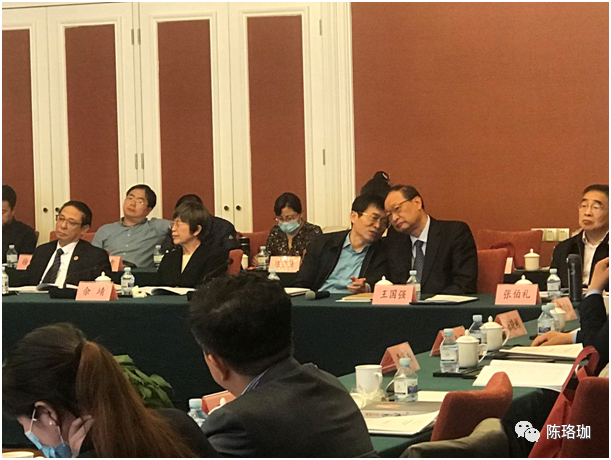
Wang Guoqiang, She Jing, Yu Wenming, Li Junde, Chen Luojia, Li Zhizhong, Fan Zhenglun, Gao Wenzhu, Zhang Xiaobin, and others spoke at the meeting. Attendees recalled how, at the time when Chinese medicine was exceptionally weak and in decline because of the Cultural Revolution, Minister Cui — with far-reaching vision, an overall grasp of the health work of the country, and through bold, decisive, responsible, and visionary action — initiated a sequence of major measures that accomplished much for the Chinese-medicine enterprise and laid a strong foundation for today's all-round revival. Attendees also praised Minister Cui's steadfast Party character and his rare personal virtues: in the face of persecution by the Gang of Four he stood his ground and would not bow to power; for the development of the country's health enterprise, he gave everything he had.
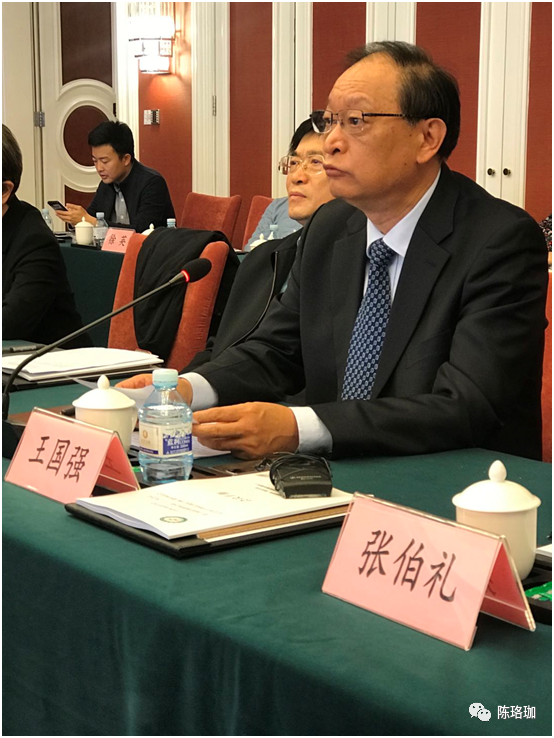
Wang Guoqiang (Association president, former Vice-Minister of NHFPC, former Director of SATCM) speaking.
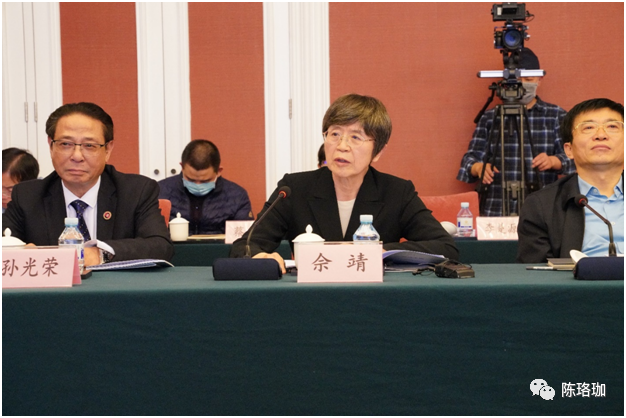
She Jing (former Vice-Minister of Health, former Director of SATCM) speaking.
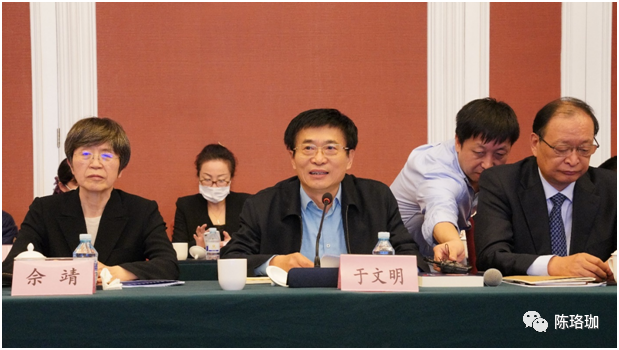
Yu Wenming (current Director of SATCM) speaking.
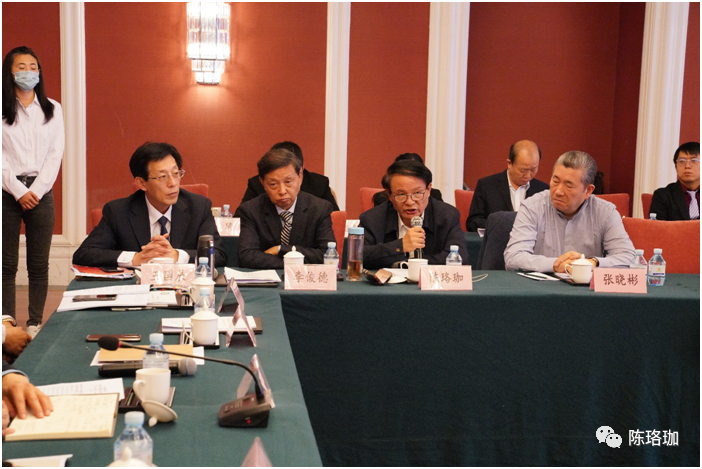
Chen Luojia, president of the China Folk TCM Research and Development Association and dean of the School of Life and Health of the Open University of China, spoke as follows:
The title of my remarks is "The Standard-Bearer of Chinese Medicine's Revival." Minister Cui Yueli's contributions to Chinese medicine can be summarized under five main heads.
1. During his time as Minister, he proposed — and saw through to completion — the revision of Article 21 of the Constitution of the People's Republic of China: the state shall "develop modern medicine and our traditional medicine." Article 21 is the legal basis for all later major decisions of the Party and the state on Chinese medicine — the TCM Law, the Party's Chinese-medicine policy, the establishment of the State Administration of TCM, and more.
2. As Minister, he repeatedly made the case to the Party Central Committee and the State Council — and in the end helped bring about — the establishment of the State Administration of TCM. At the 94th State Council standing-committee meeting on January 4, 1986, in Zhongnanhai, he made an impassioned speech and laid out in detail the "Report of the Ministry of Health to the State Council on the Establishment of the State Administration of Traditional Chinese Medicine." The meeting resolved to establish the Administration and to create dedicated central-government TCM funding. This decision — a milestone in the history of Chinese-medicine development — gave Chinese-medicine development and management a formal institutional footing, and was the origin of today's provincial and municipal TCM bureaux and dedicated TCM funding nationwide.
3. So that our Chinese-medicine enterprise and Chinese-herb industry would not be discriminated against or crowded out, and could develop and be protected over the long term, he decided to initiate and draft the Chinese Medicine Law of the People's Republic of China. Several successive directors of the State Administration of TCM and the entire Chinese-medicine community worked toward this — through setbacks and restarts — for thirty-two full years, until under Director Wang Guoqiang, Minister Cui's long-held wish was realized: the National People's Congress passed the Chinese Medicine Law — the first national law governing our traditional medicine in the history of the Chinese nation.
4. He was the first to raise the call "Revive Chinese Medicine," and on February 10, 1984 he traveled personally to Chengdu to attend the first nationwide "Revive Chinese Medicine Conference" held by the Sichuan Provincial Party Committee and Provincial Government. He gave the rousing speech "Making a Greater Contribution to the People's Health." From there on, provincial committees and governments followed suit, and a national revive-Chinese-medicine wave took shape — lifting the Chinese-medicine enterprise significantly.
5. In April 1982 he led and hosted the famous Hengyang Conference, at which he said: "A great many Chinese-medicine hospitals hang out the Mei Lanfang sign and sing in Zhu Fengbo's voice — they hang the sheep's head and sell dog meat." He was the first to put forward that Chinese-medicine institutions must preserve and develop the distinctive features of Chinese medicine, calling this the fundamental direction for the enterprise — a position that remains Chinese-medicine work's core policy to this day.
"The people's verdict follows the man after he is gone." In those days of difficulty and setting-things-right for Chinese medicine, even with the Party and the government's support, the commanding-general role Minister Cui played, and his capacity for leadership, were decisive.
The sun does not speak, and its splendor is known; the mountain does not speak, and its height is known; the sky does not speak, and its breadth is known; the earth does not speak, and its vastness is known. Minister Cui was a high-flying banner in our Chinese-medicine world.
"The east wind quickens the dawn moon; the great earth awaits the spring plough." Remembering Minister Cui, we should take up his never-forgetting-the-original-intent, his unshakable pursuit of the mission to revive Chinese medicine; we should take up his responsibility and drive for implementing the Party's Chinese-medicine policy. Our Chinese-medicine enterprise needs continuity in its learning, and also in its management. Let us carry forward the essence, keep to what is right, and innovate — so that the thousand-year national healing art shines bright.
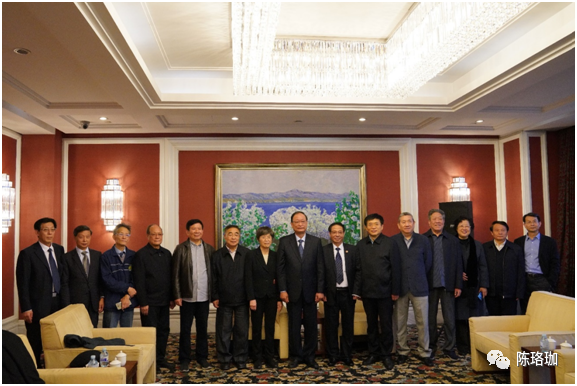
Group photograph of the leaders and specialists who attended the symposium.
Zhongyiren
November 18, 2020
---
A Brief Life of Cui Yueli
Cui Yueli (1920–1998), birth name Zhang Guangyin, joined the revolution in 1937. From 1943 on he did extensive work in the Beiping-Tianjin underground Party and in bringing about the peaceful liberation of Beiping; after 1949 he served in the leadership of Beijing. During the Cultural Revolution he suffered persecution by the Gang of Four and was imprisoned in Qincheng for eight years. From 1976 he served as Vice-Minister and then Minister of Health, devoting himself body and soul to the restoration and development of the Chinese-medicine enterprise.