Zhang Xiaotong: Where Is the Hope of Chinese Medicine? (1) — The Spirit of Fortitude
At Pingxintang we have gathered some of Beijing's most effective TCM physicians, and we have witnessed medical marvel after medical marvel. Mr. Zhang Xiaotong was moved to remark: "Chinese medicine is like a cry of 'open sesame' — what I see inside is a vault of treasure in every color."
And yet so fine a medicine is steadily falling into decline, and this pained him deeply. Where the love is deep, the longing is sharp; so long as a spark remains, there is still hope for Chinese medicine. The essay below, written by Zhang Xiaotong in 2022, lays out his sense of where that hope must be found.
Where Is the Hope of Chinese Medicine? (1) — The Spirit of Fortitude
Chinese medicine is sick. It really is sick, and the illness is serious. For nearly a century now, not a few months go by without another "medicine for medicine" essay being published. The illness they treat gathers around one theme: the Westernization of Chinese medicine. What hangs over everyone's heart is that Chinese medicine has lost its self, lost its efficacy, and with it the trust of the people. As a dyed-in-the-wool TCM enthusiast myself, I can hold back no longer; I want to join the "medicine for medicine" ranks and see if I can treat this illness of Chinese medicine.
I. Why is Chinese medicine steadily in decline?
It is something I have never been able to make peace with — the condition Chinese medicine has been reduced to. Two thousand years of foundation cannot withstand a hundred years of shock; the practice of hundreds of millions reduced to "dross and worn-out shoes" — the harder we try to lift it up, the less it stands up. The French are making a documentary about Chinese medicine just now, and the noted director Carré asked me the same question: "You say Chinese medicine is right about this, strong about that, good everywhere — so why is it steadily in decline?"
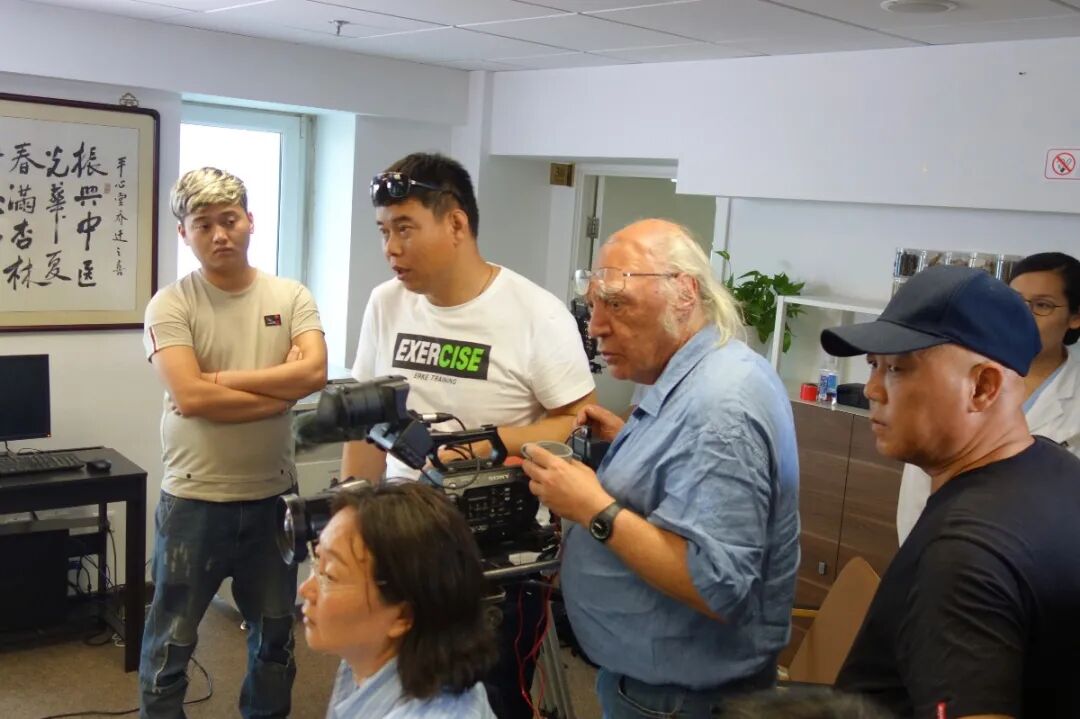
(The joint France-China TCM documentary crew filming on location at Pingxintang.)
There's no denying the excellence of Chinese medicine shows up most clearly in its efficacy. At Pingxintang I have seen with my own eyes the uncanny results — as if "open sesame" had unlocked a vault of rare and strange jewels in every color. The so-called "untreatable" and "irreversible" diseases that Chinese medicine can in fact treat are more than I can count; all but daily we see another medical miracle.
II. Settling willingly into a "subordinate to the self" position
Why do these miracles receive no acknowledgement, no endorsement for wider use? Why is it that any one standard, plucked at random from so-called modern scientific research, can shoot you down? "Not repeatable" — that has become the hurdle Chinese medicine cannot clear. Individualized medicine, precisely the distinctive strength of Chinese medicine — to throw away your own dignity, your own confidence, to beg for another's nod; to build your own standard by cutting off your feet to fit another's shoe — when your knees are that soft, how can you stand?
Add to this the way Western hegemony, year upon year, has seeped into our flesh and hair. Those who speak for the West are many, loud, and bold as bulls; we ourselves, by contrast, stammer when we try to speak, hesitate when we try to act, lean toward the West, and have long since given up our own voice — settled willingly into the "subordinate to the self" position. When it is a football referee — and the most authoritative international one at that — blowing the whistle on the basketball court, how can the game be played?
III. Citizens brain-washed by Western discourse
"Gold tablet, silver tablet — none is worth the tablet in the hearts of the people." Winning ordinary people's trust is of course Chinese medicine's root. But look from the other side: very few people are out there erecting gold and silver tablets for Chinese medicine; very few are standing up for the "heretical science" against the rising tide of hostile opinion. Even the tablet in the hearts of the people is hard to come by — because if we do cure you, it was "a lucky hit."
Inside heads worn thin by Westernization, the true crown of science does not belong to you; it belongs to those "experts" with their modern titles. They cannot tell you cause or mechanism, cannot answer "how did I get sick," can only tell you your illness is incurable and you will need lifelong medication. If a conclusion like that can be made unshakable in people's minds, can you help admiring the experts' brainwashing capacity? Can you help grieving over the patient?
A hegemonic discourse above, brain-washed citizens below — what they leave to the practitioner of Chinese medicine is only a helpless grief. To restore trust in Chinese medicine, to rebuild confidence in Chinese medicine, to re-establish Chinese medicine's place in people's hearts — it is really, really hard. I can't blame the foreigners for not seeing how; even I, now and then, feel like giving up.
IV. The Chinese-medicine people who have never stopped fighting
The situation may not have quite gone that far — because Chinese-medicine people have never stopped fighting back. The dedicated ones, beaten but not broken, persistent beyond ending, keep advancing not only in medicine (relieving suffering, saving lives) but also in the shaping of policy. From the "Five Elders' Petition" in the 1950s on, the fight has never paused. To untie the ropes binding us, to make a bit of elbow room, we have given everything we had to the drafting of the TCM Law — and regrettably, what we got was only "a law of barely-surviving."
For the sake of that care for Chinese medicine, that steadfastness, the Chinese-medicine people have fought hard. Two or three years back I saw on WeChat a dialogue between Xu Wenbing and a certain reporter. I admired the sharpness of his edge — the exhilarating clarity of it — and even more I admired his willingness to defend Chinese medicine without yielding an inch.
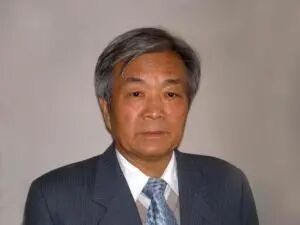
Jia Qian (1941 – January 9, 2013)
Few outside the field know of Jia Qian, a great defender of the TCM enterprise, whose footsteps reached the SARS front lines, the AIDS villages, and the poorest back-country towns. Frail and often ill, he walked head-high through grievances and setbacks, buried himself in field research in cities and countryside, wrote at a pace that let him forget food and sleep, and produced essay after essay — sharp-edged and dead-on-target. But heaven did not grant him time; he fell before he could finish, riding the crane into the west. Still, the force he stood for, and the spirit he left behind, are themselves the hope of Chinese medicine's revival.
So long as the spirit is there, hope will not die.