Spy Shadows — The Intelligence Source Behind Mao Zedong's 1948 'Empty-Fort Stratagem'
About the author

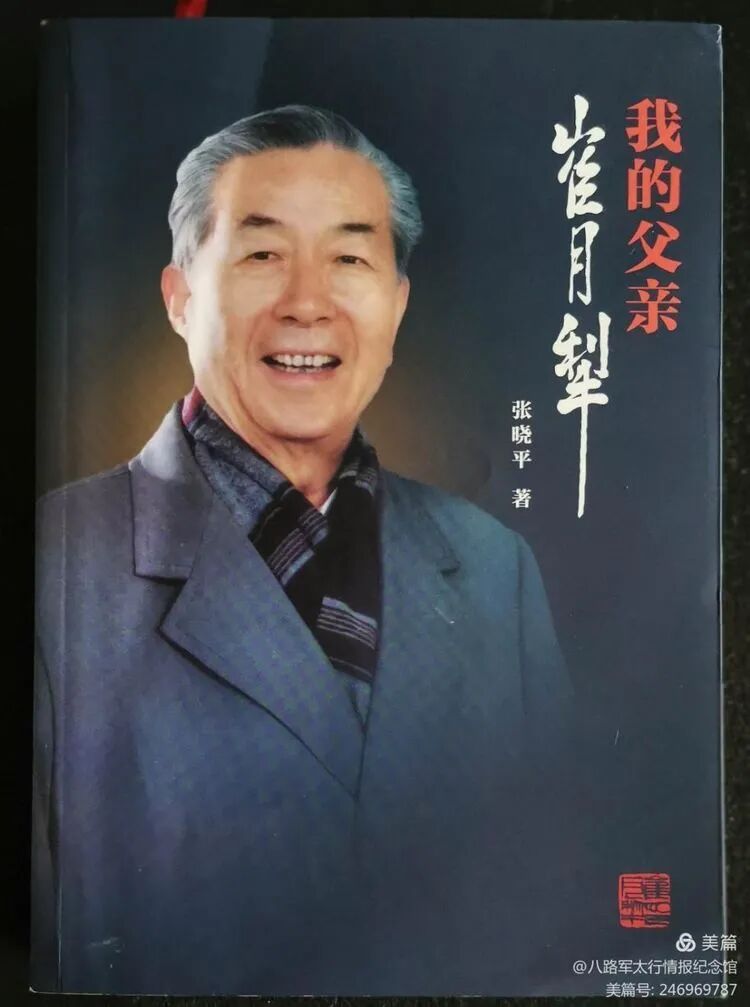
Zhang Xiaoping, born 1949. Graduated in 1966 from the junior-high program at Beijing Normal University Girls' School. Sent down to Inner Mongolia during the Cultural Revolution; later an internist in Beijing. In 1988 went to the United States at her own expense; earned a master's in public health at the University of Hawai'i. In 1993 co-founded a biotechnology company in Seattle. Retired 2015. This article is one chapter of the biography of her father, My Father Cui Yueli.
Original title: "The Modern-Chinese-War Version of the Empty-Fort Stratagem"
By Zhang Xiaoping
Prologue
In May 1948, the CCP Central Committee moved its headquarters to a small, then-unknown village in Pingshan County, Hebei: Xibaipo. Xibaipo sits on the Hutuo River, about 75 kilometres from Shijiazhuang, which our field army had taken a year earlier. As everyone knows, this is where the three decisive campaigns of the War of Liberation were directed. What fewer people know is that at a moment of extreme danger, the CCP command staged a modern "Empty-Fort Stratagem" (kongcheng ji) right here — turning back the enemy's surprise attack. The precondition for pulling it off was the CCP's formidable intelligence system, and the loyalty of the nameless heroes who ran it. This article tells the story behind that stratagem.
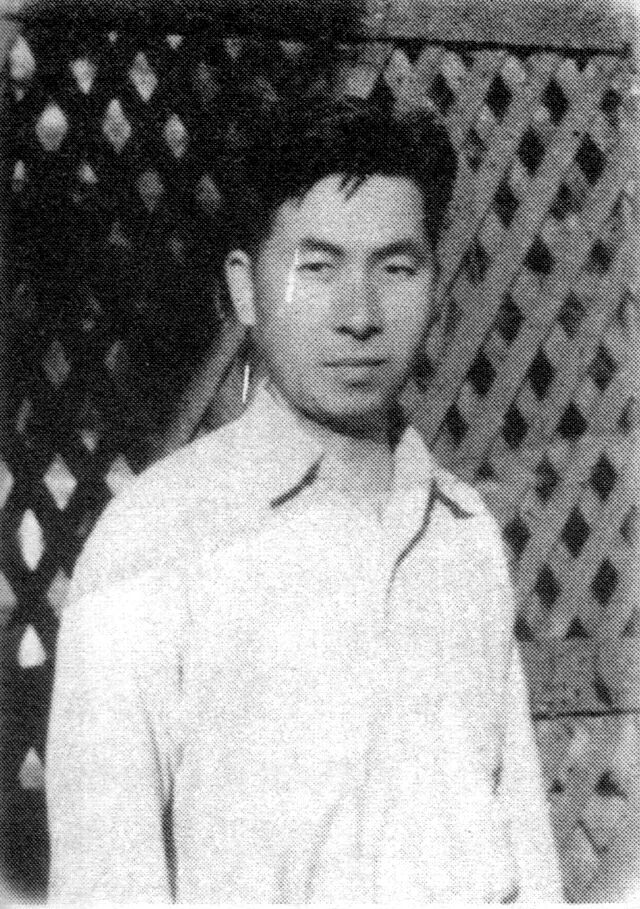
Cui Yueli in Beiping, 1948.
A moment of hair-trigger urgency
On October 15, 1948, the Northeast Field Army captured Jinzhou. On the 21st, the garrison at Changchun laid down its arms. With that, of the three strategic centres of the Northeast, only Shenyang remained in Nationalist hands. Chiang Kai-shek, unable to sit still, flew in from Shenyang to Beiping, conferred in secret with Fu Zuoyi (commander-in-chief of the North China Suppression Headquarters), and decided to launch a surprise attack on Shijiazhuang with heavy force. They had deduced that the CCP command was somewhere in that area, and the aim was to capture Mao Zedong alive. On the 23rd, Fu held a secret military conference to set the operational plan. Internally it was code-named "Piercing-Heart Tactic"; outwardly they called it the "Reinforcement-for-Shanxi Detachment." The action was set for the 28th.
The "Reinforcement-for-Shanxi" cover was chosen because Fu Zuoyi's old superior Yan Xishan was based in Taiyuan, the capital of Shanxi, which was under siege by the North China Field Army. The action would supposedly relieve pressure on Taiyuan. At that time, the Northeast Field Army had not yet come south through the Shanhaiguan pass; the North China Field Army had been deployed elsewhere; the Shijiazhuang area was essentially empty of troops. The CCP Central Committee was in extreme peril.
Within the CCP North China Bureau's Urban Work Department — specifically in the Beiping underground Party's Student-Work Committee, Professional-Youth Section — there was an agent placed in Fu Zuoyi's immediate circle: Liu Shiping.[2] His cover was as head of the news department of Yishi Bao, one of the "Four Great Newspapers" of the Republican era, founded in the early Republic by the Catholic Church and with significant readership across the Beiping-Tianjin region. The professional cover was ideal for him. Liu's superior was Li Bingquan, Party-branch secretary of the Professional-Youth Section; Li's superior was Cui Yueli, Secretary-General of the Student-Work Committee.
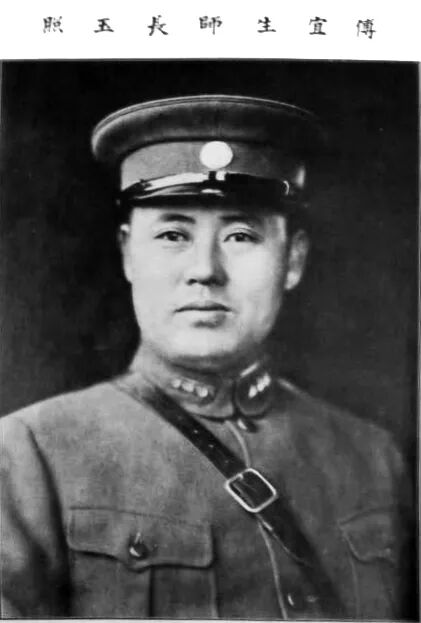
Fu Zuoyi, commander-in-chief of the Nationalist North China Suppression Headquarters.
Liu Shiping was from Suiyuan.[3] Fu Zuoyi had long held Suiyuan and kept many Suiyuan officers in his staff. Liu's three closest among them were all Suiyuan men: E Yousan, commander of the 12th Cavalry Brigade (reorganized); Du Changcheng, chief of the Secrecy Bureau's North China Special Station and concurrently commander of the North China Suppression Headquarters' Demolitions Battalion; and Liu Jianlong, commander of the 3rd Gendarmerie Battalion. The four men were close; whenever they met, the drinking began.
On October 17, the day Chiang Kai-shek arrived in Beiping, the Urban Work Department started watching his movements. On the morning of the 23rd, Liu Shiping noticed that the Suppression Headquarters' western-suburbs compound was suddenly ringed with posted guards, security drastically tightened. Just after ten, key military officials filed out; the word was, they had just attended a highly secret, small-scale, urgent military meeting. Jinzhou was already taken; after cancelling the "relieve Jinzhou" plan, the Suppression Headquarters had suddenly grown tense again — the contradiction caught Liu's eye.
That evening Liu Shiping invited E Yousan, Du Changcheng, and Liu Jianlong to a small gathering at the 12th Brigade's Beiping liaison office, near Yangfengjiadao in the western city. These three reported to Fu Zuoyi now, but all were Chiang Kai-shek loyalists. Since Yan Xishan entered Suiyuan in 1926, every provincial governor — including Fu — had been a Shanxi man. Suiyuan men had long resented "Shanxi ruling Suiyuan," and Liu used the theme to stir their feelings.
Liu poured the wine and drew E Yousan into conversation. Three cups in, and E's tongue loosened: "Losing Jinzhou put Chairman Chiang in a very bad mood. The Chairman ordered old Fu to go tomorrow and rip the Communists' nest out. This time your elder brother here is going to really make his name — let them see what Chaha-Sui men are made of!" Liu's stomach jumped — but immediately he forced himself calm. To learn more, he kept drinking, back and forth. Tired as he was, he had to get the news to Li Bingquan. While E Yousan was asleep, he got up and took his leave from Du and Liu.
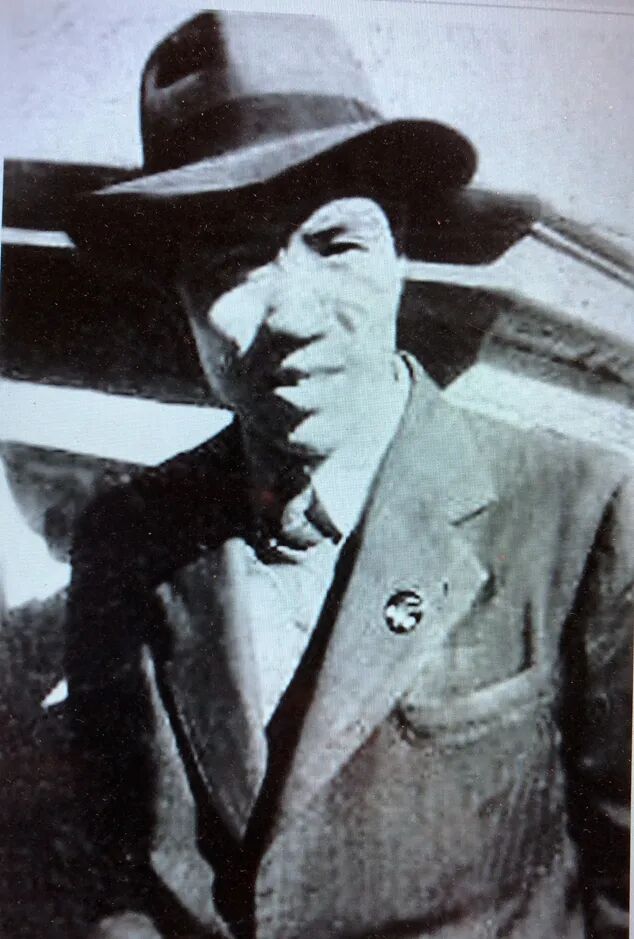
Liu Shiping — news-department head of Beiping's Yishi Bao and underground Party member of the CCP Beiping Professional-Youth branch.
It was already the small hours of October 24. The cold wind carried a fine rain that hit Liu Shiping's face — and sobered him. He recalled that at dinner Du Changcheng had said the Demolitions Battalion was already loading transport at Xizhimen Station, ready to go. To guard against a ruse, Liu decided to verify it himself. He strode straight to Xizhimen Station. On the strength of his press-department credentials, he got through the checks without trouble. Inside the station, soldiers were hurrying in every direction; trains loaded with military supplies, vehicles, and horses were already camouflaged and waiting for departure orders. Liu, with care, worked out unit numbers, destination, and scheduled departure — then hurried to the residence of his superior Li Bingquan (news-department head at Pingming Ribao).
Early on the 24th, Cui Yueli received urgent intelligence from Li Bingquan: Fu Zuoyi had ordered a surprise attack on Shijiazhuang; military supplies were being loaded at Xizhimen Station. The moment it arrived was not one of the radio's scheduled send-windows. But Cui Yueli judged the matter so grave that every second counted, and he ordered the secret radio to break scheduling and send. The urgent cable went immediately to Liu Ren, head of the Urban Work Department at Cang county's Bozhen, and on to the North China Bureau, the North China Military District, and the Central's Xibaipo headquarters.
The Urban Work Department's radio was the first channel to get that intelligence out; the accuracy of the content was then further confirmed by two other channels from the Social Affairs system: the Ganling intelligence group, and Li Zhi, planted inside the Secrecy Bureau's Shimen intelligence station. Because of radio failure, the Ganling group could only pass the intelligence by courier; it reached the base in Dingxing, Hebei, on the morning of the 24th and was relayed to the North China Bureau Social Affairs Department by phone. Li Zhi's intelligence went through the CCP leadership body in Shijiazhuang.
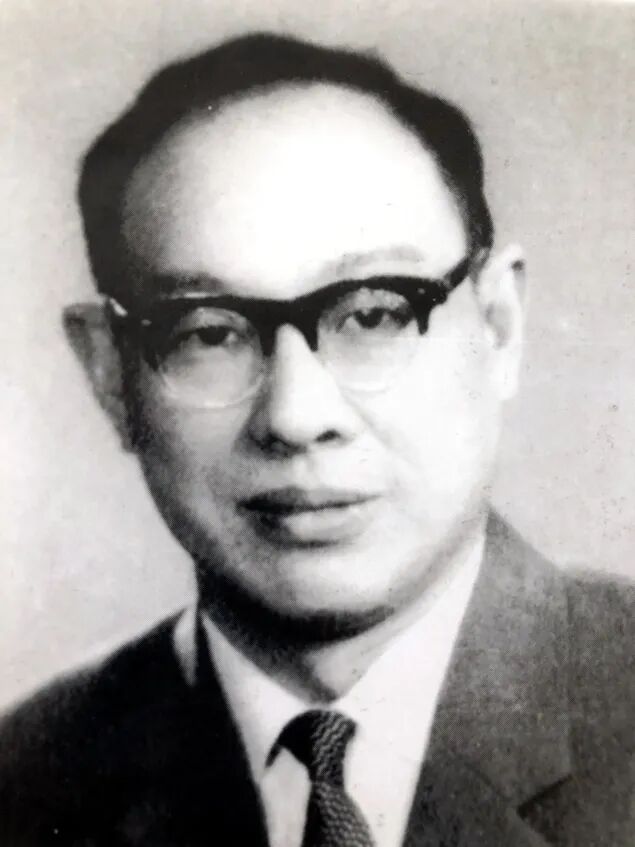
Li Bingquan — news-department head of Beiping's Pingming Ribao and Party-branch secretary of the CCP Beiping Professional-Youth Section.
The modern Empty-Fort
When Cui Yueli decided to release the intelligence, he did not know the danger the Central Committee was actually in. At that moment, Shijiazhuang had no standing force. To concentrate strength for the war of annihilation, Mao Zedong had pulled nearly every unit to the front; even the Central Guard Regiment had been sent to Taiyuan. Xibaipo had only one guard company and some local militia — fewer than one thousand people in all. Fu Zuoyi's mechanized force of one hundred thousand had already moved and was massing at Baoding. The rail line north of Baoding was essentially under Fu's control; if the surprise force pushed at speed using its transport and air superiority, it could reach Shijiazhuang in three days. The main body of the North China Field Army was far away along the Ping-Sui line — even on forced march, it would take four days to reach south of Baoding. Which is to say: the thousand at Xibaipo had to hold the enemy back for three days along a corridor of under a hundred kilometres, from Xushui to Ding County, waiting for the main force to arrive. If the enemy learned the exact location of the CCP Central, Xibaipo was in mortal peril.
The forces were wildly unequal. In the worst case, the enemy would reach the gates before the main reinforcements arrived. The Biography of Hu Qiaomu mentions that on the evening of October 25, when the Central Military Commission received the Urban Work Department's urgent cable, Zhou Enlai was watching a film with everyone else. The cable read: "Chiang Kai-shek is personally directing from Beiping, and intends to deploy more than one hundred thousand men from Beiping and Taiyuan to surround Jixi on all sides in a surprise attack…" According to Zhou Enlai: A Biography, Zhou decided that the Central Committee should prepare to evacuate immediately, ordered the North China Field Army's Seventh Column to move instantly on Baoding and the Third Column to race for Wangdu on a five-day forced march without regard for fatigue; ordered the Northeast Field Army's Eleventh Column to enter eastern Hebei swiftly to threaten Beiping and force Fu Zuoyi's southbound force to turn back; and in the middle of the night ordered the Central Guard Regiment back by train to Xibaipo.
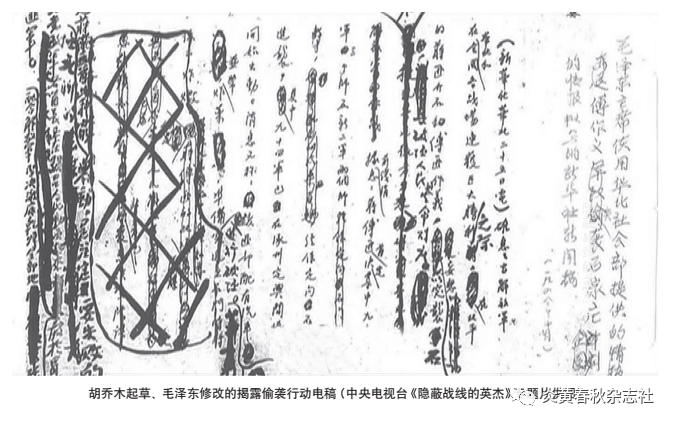
Telegram draft exposing the surprise-attack plan — drafted by Hu Qiaomu, revised by Mao Zedong.
With Zhou Enlai's deployment done, reinforcements still had to reach their positions — and anything could happen in the meantime. So Mao staged what we can call "retreating ten thousand troops with a telegram" — a modern kongcheng ji. He immediately directed Hu Qiaomu, then head of Xinhua News Agency, to write a dispatch titled "The Chiang–Fu Bandit Army Attempts a Surprise Attack on Shijiazhuang" and broadcast it nationally, exposing Fu Zuoyi's operation fully.
War does not shrink from deception. Two days later Xinhua Broadcasting issued, in still sharper language, a second dispatch from Mao's own pen: "North China's Commanders Call on the People Along the Baoding–Shijiazhuang Line to Prepare to Mobilize Every Force to Meet the Bandit Army's Incursion." It said: the People's Liberation Army knows Fu's plan inside out; it stands on high alert; it is ready to meet them.
On October 31, Mao wrote another Xinhua editorial, mocking the enemy: you have only a few months left before the end; you still want to raid Shijiazhuang? Do you still want Beiping or not?
According to The Biography of Hu Qiaomu, Mao and Hu produced at least six such broadcast dispatches in that stretch, all meant to scare Fu's force off.
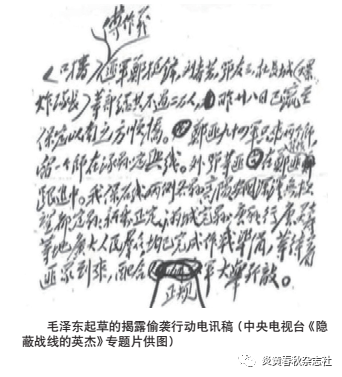
Telegram draft exposing the surprise-attack plan — in Mao's hand.
Chiang Kai-shek and Fu Zuoyi were stunned by the broadcasts. Soon the attacking force reported being under ambush and unable to advance — mines everywhere — and recommended halting. Fu Zuoyi ordered the just-massed troops back to Beiping.
It should be noted: Fu Zuoyi's force was no weak reed. It had beaten back the Japanese repeatedly during the War of Resistance; in 1946 it had struck hard at Jin-Cha-Ji and taken Zhangjiakou, inflicting real losses on our side. But two full years later the Nationalist cause was collapsing: Fu's force had lost its edge, his soldiers had no fight in them. The enemy's hesitation and panic bought Mao time. On the way back, the retreating force was intercepted by the advance elements of the reinforcements coming to Xibaipo, losing more than 3,700 officers and men and a great quantity of strategic supplies.
On November 1, Chiang and Fu at last understood: the CCP Central was at Xibaipo, just over fifty kilometres outside Shijiazhuang, with no major forces defending it. The moment had passed; nothing for them now but regret.
Neither Chiang nor Fu grasped the bigger consequence. The failed raid had not merely cost them troops — the real danger was that it pushed Mao to decide to solve the Fu Zuoyi question on-site, in the Beiping-Tianjin region, sooner rather than later. In the very act of pulling reinforcements in, the Northeast Field Army's forward column, acting on Zhou Enlai's urgent order, had slipped secretly through the pass and reached Jixian — placing itself in the extremely advantageous position of splitting Beiping from Tianjin. From there on, the most important strategic piece of the Pingjin Campaign was in place.
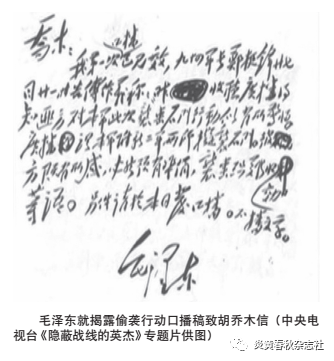
Mao's letter to Hu Qiaomu on the broadcast exposure.
Many nameless heroes
Beyond the Liu Shiping–Li Bingquan channel, the Beiping underground Party had at least three other sources confirming the plan. One came through Wang Su, a single-line contact of Cui Yueli's handling military-side efforts, via Zhao Longtao, a major-general deputy commander of the Joint-Logistics Fifth Supply District.
Wang Su recalls: "The enemy had ordered Joint Logistics to load several freight cars of explosives and wait. Zhao Longtao passed this to me immediately; I reported it to the Urban Work Department, which had already heard from other channels that Fu Zuoyi was preparing a surprise raid on Xibaipo."
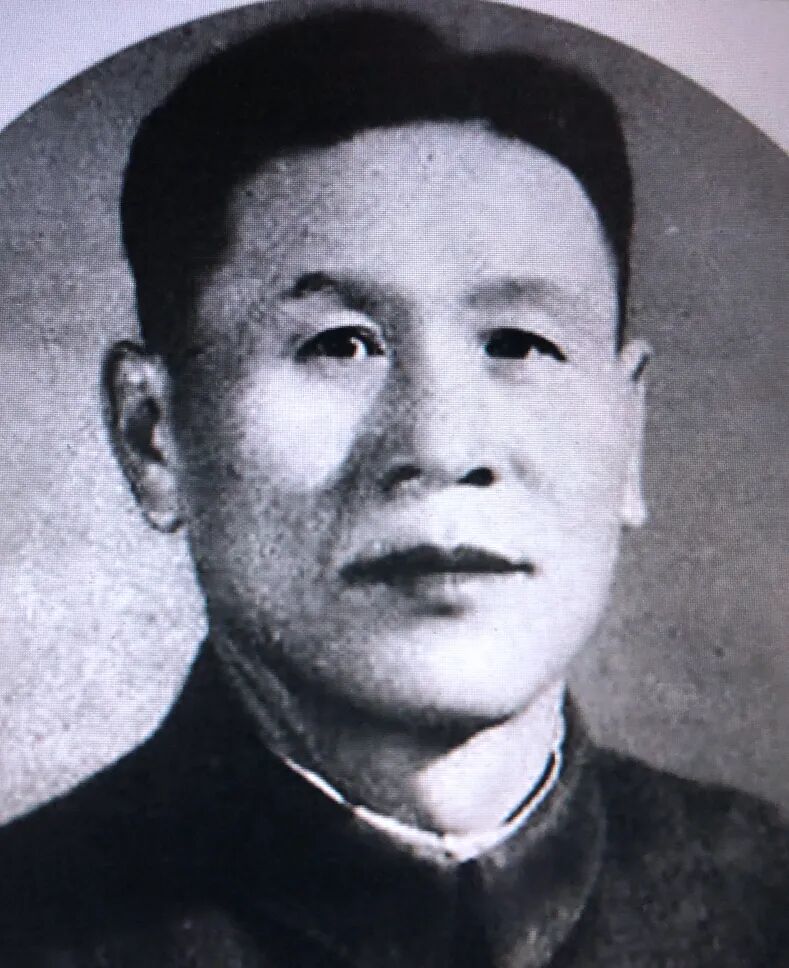
General Zhao Longtao.
Another source was a rail dispatcher named Sun Guan. Sun belonged to the underground Party's Rail Committee; he saw the rail system's scheduling in full — the number of military trains, their directions, how many tank cars, what was loaded on them. Every day Wang Su delivered Sun's concealed-writing dispatch reports to Cui Yueli.
A further, even more covert source, noted by the writer Zhao Lizhong (who interviewed Cui Yueli) in his book: an underground CCP member of the Urban Work Department embedded in the Secrecy Bureau's Beiping Station, codename 608. When Chiang arrived in Beiping, 608 was assigned to security duty. He noticed that Chiang and Fu Zuoyi convened a very small secret military conference; and from fragmentary speech from the Beiping Station's intelligence chief, inferred that the meeting concerned a raid on the CCP Central's location. This intelligence — not detailed, but weighty — was sent via secret courier to Wu Kuande's movable cigarette stand outside Xidan Market, which was precisely Cui Yueli's underground-radio intelligence exchange point.
To verify the transmission, the author had intended to look up the telegram drafts from the time. After reading Walking Out of the Gunsmoke, compiled by the Beijing Municipal Party History Research Office, the author realised this was unnecessary. That book's author interviewed Kadi, a cipher-room officer from the liberated area at the time. Kadi said: per secrecy rules, telegrams decoded at the Beiping underground radio never kept drafts — everything was destroyed on the spot after reading — while telegrams received at the base had to be retained. Not long after Beiping's liberation, Liu Ren and Kadi organized every telegram and handed them over to the North China Bureau. Walking Out of the Gunsmoke lists the main contents sent by the three radios Cui Yueli oversaw during the War of Liberation. The radio staff recalls: in late October 1948, the surprise-raid intelligence on Shijiazhuang went out over one of those three radios.
In October 2018, Shi Jianxia, formerly of the Beijing Municipal Party History Research Office, gave the author the details of how Cui Yueli broke protocol and ordered the transmission. For her history of the Urban Work Department she had interviewed Cui. Asked about that intelligence, Cui said: "It was that urgent. The radio operator said that sending outside the scheduled window was a violation of discipline — what do we do? I said, at a time like this, who cares about discipline? I'll take responsibility. I made the exception. I'd prepared myself for a reprimand afterwards. But at the moment itself, there wasn't time for any of that."
Where did "confirmed news from Beiping" come from?
The kongcheng ji went over successfully. But what stayed with the commanders was the accuracy and speed of the intelligence. In 1985, Zheng Weishan — then commander of the North China Field Army's Third Column, who had led rescue forces on a forced march through the night to Wangdu to block the raid on Shijiazhuang — raised this question publicly for the first time in his memoir From North China to Northwest — Recollections of the War of Liberation:
"I remember what Commander Nie said to me in his first phone call was, 'according to confirmed news from Beiping.' Later I saw the first five characters of the Military Commission's telegram also read 'according to confirmed news from Beiping.' Who in Beiping — and how — had such reliable information?"
He went on: "The success in defending Shijiazhuang, obviously, was the product of many factors. But I have always thought the accurate, timely intelligence was the precondition for all the others to work. Without knowledge of the enemy, no commander can act — that goes without saying. With wrong or late intelligence, there would be serious consequences. Had the enemy's raid intelligence arrived a day later — even a few hours later — what would the picture have been?" "Where did 'confirmed news from Beiping' come from?" — the question stayed in the general's head a long time.
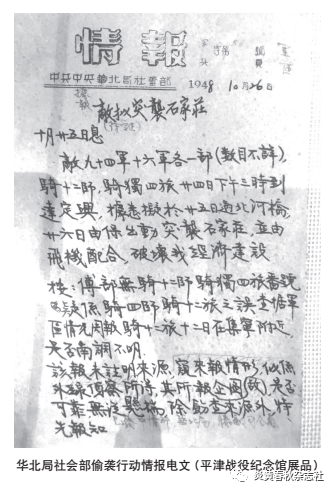
Telegram from the Social Affairs Department of the North China Bureau on the surprise-attack plan.
The question came back in 1979. By then Zheng Weishan — labelled as having "boarded Lin Biao's pirate ship" — had been imprisoned eight years and was still in labour reform at a farm in Anhui. Late in January that year, he happened to see Nie Rongzhen's article in the January 24 issue of People's Daily: "Fighting on the Second Front — In Memory of Comrade Liu Ren." The piece mentioned that Fu Zuoyi's 1948 surprise-attack operation "was understood by our underground Party the same day, and urgently cabled to the Urban Work Department through the underground Party radio, then on to the Central." Zheng was deeply shaken. He wanted to re-examine the source of that "confirmed news from Beiping." By year-end his own case — the "North China hill-ism" fabricated charge — was reversed, and he returned to Beijing to visit the Beiping underground Party's Liu Shiping, She Diqing, Li Xiaolu, and Cui Yueli. (Li Bingquan had died of persecution in the Cultural Revolution.) In his memoir appeared the following passage:
"About eight o'clock that morning, the Student-Work Committee official, on Liu Shiping's report, drafted a cable and relayed it to Cui Yueli. Cui Yueli and the underground-radio comrades, at the risk of their radio being destroyed and themselves killed, broke protocol and opened the set in the morning. About ten, that gravely consequential urgent military intelligence turned into invisible radio waves, heading for the Urban Work Department, the North China Military District, the Central Military Commission… The riddle of 'confirmed news from Beiping' was resolved, and admiration for the comrades of the Beiping underground Party welled up."
Zheng Weishan was the first to tell the public how the Urban Work Department obtained and transmitted that crucial intelligence. Afterwards Liu Shiping quoted Zheng's description verbatim in his own writing.
The author was deeply moved reading this story. In history, for all sorts of reasons, the nameless heroes who supplied intelligence have long kept silent. Today, many of the stories — of successful intelligence delivered again and again by the CCP's concealed-front workers, rescuing the cause from crisis and turning defeat into victory — have begun to be told; they were never told before. Back then, at the Central's order, the Third Column had forced-marched five hundred li across mountains in four days to relieve Shijiazhuang. Zheng Weishan recalled that along the way, Zhou Enlai and Nie Rongzhen kept pressing for the Third Column's coordinates — a telltale of how urgent the military situation was. That one-hundred-mile "flying march" stayed with him the rest of his life. Yet the general did not take the credit into his own head. Thirty years later he was still stubbornly seeking the cause of the victory — the source of that intelligence — returning to history its true shape, so that the nameless heroes of years past and their labor would not be wiped out by time.
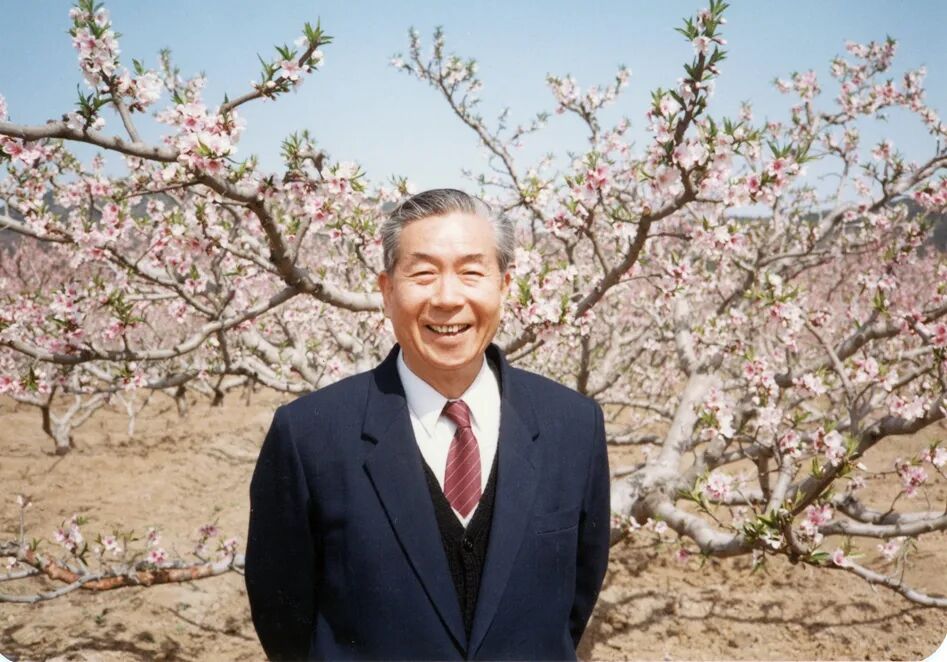
Cui Yueli in later years, 1997.
---
Notes
[1] Cui Yueli (1920–1998), birth name Zhang Guangyin, from Shen County, Zhili (now Hebei). After finishing primary school he left home to apprentice. In October 1937 he joined the CCP; served as a military medic in the Jin-Cha-Ji base. In 1943 he was assigned to Beiping to do underground work; later served as Secretary-General of the underground Student-Work Committee, responsible for the underground radio and upper-level united front — making notable contribution to the peaceful liberation of Beiping. After 1949, political secretary to Peng Zhen; then deputy director of the CCP Beijing Committee Research Office, head of its United Front Department, head of its Health and Physical Education Department; Vice-Mayor of Beijing; Vice-President and Secretary-General of the Beijing Political Consultative Conference; Standing Deputy Secretary-General of the Chinese People's Committee for World Peace. Dismissed in 1966, imprisoned in 1968, released in 1975, rehabilitated in 1978. Subsequently served as Vice-Minister, Minister, and Party Group Secretary of the Ministry of Health of the PRC; Vice-Minister and Deputy Party Secretary of the State Family Planning Commission; President of the Red Cross Society of China; member of the 12th Central Committee of the CCP and of the 13th Central Advisory Commission.
[2] Liu Shiping (1915–1999), from Baotou, Suiyuan. Joined the CCP in 1937. Graduated from the History Department of the National Southwestern Associated University in 1946. After 1949 served as: head of news reception at Jiefang Ribao; associate professor in the Journalism Department of Fudan University; deputy head of the local-correspondents group at People's Daily; and deputy director of the Journalism Department of the Graduate School of the Chinese Academy of Social Sciences.
[3] Suiyuan was one of the four "northern frontier" provinces of the Republic of China, with its capital at Guisui (now Hohhot). The Beiyang government, to strengthen control over the Inner Mongolia region, divided it into four provinces: Rehe, Chahar, Suiyuan, and Ningxia. In 1954 Suiyuan was merged into the Inner Mongolia Autonomous Region.
---
References
1. Song Zhi, The Secret War of the Pingjin Campaign, Contemporary China Press, 2009.
2. Zheng Weishan, From North China to Northwest — Recollections of the War of Liberation, PLA Press, 1985.
3. Beijing Municipal Party History Research Office, The Best of Campaigns — The Realization of Beiping's Peaceful Liberation, Central Party Literature Press, 2009.
4. Wang Su, The Winds and Rains of Fighting in the Enemy's Hole, in Materials on the Beiping Underground Party Struggle, Beijing Press, 1988.
5. Beijing Municipal Party History Research Office, Walking Out of the Gunsmoke — Three Approaches to the Pingjin Campaign, Beijing Yanshan Press, 2006.
6. Zhao Lizhong, Top-Secret Operation: 1949 Beiping Chronicle, Popular Literature Press, 1999.
7. Beijing Municipal Party History Research Office, ed., The North China Bureau Urban Work Department of the CCP Central, CCP Party History Press, 1995.
8. Jin Chongji, ed., Zhou Enlai: A Biography (1898–1949), Central Party Literature Press, 1998.
9. The Biography of Hu Qiaomu, Contemporary China Press / People's Publishing House, 2015.
First published in Yan Huang Chun Qiu (Yellow-Emperor Spring-Autumn), 2020 Issue 3.
Shared with the author's permission, with minor additions.